🎆 Джон Ньюман, EMIN, JONY и Айгюн Кязымова: DREAM FEST 2026 завершился грандиозным гала-концертом.
#новости #mediaaz #Азербайджан #фестиваль #DREAMFEST #SeaBreezeResort #ДжонНьюман #EMIN #JONY
 The South Caucasus News - SouthCaucasusNews.com
#новости #mediaaz #Азербайджан #фестиваль #DREAMFEST #SeaBreezeResort #ДжонНьюман #EMIN #JONY
Подробнее по ссылке: media.az/post/1068100313
#новости #mediaaz #Азербайджан #фотовыставка #фотограф #РезаДегати #ХоджалинскийГеноцид
His remarks followed Netanyahu’s statement that U.S. Secretary of State Marco Rubio had reaffirmed Washington’s intention to take firm action against the ICC.
The court issued the warrant for Netanyahu in 2024 over alleged war crimes and crimes against humanity in Gaza. Israel denies the allegations and rejects the ICC’s jurisdiction.
His remarks followed Netanyahu’s statement that U.S. Secretary of State Marco Rubio had reaffirmed Washington’s intention to take firm action against the ICC.
The court issued the warrant for Netanyahu in 2024 over alleged war crimes and crimes against humanity in Gaza. Israel denies the allegations and rejects the ICC’s jurisdiction.

Protesters gathered outside RAF Fairford, a British airbase that regularly hosts U.S. strategic bombers, to oppose its reported use in U.S. strikes against Iran.
The demonstration followed a warning from Iran’s Islamic Revolutionary Guard Corps against allowing U.S. bombers to operate from British bases.
The UK government has reaffirmed that U.S. forces may use British military facilities in support of what it describes as the region’s collective self-defence.
📲 Follow us on social media for real-time updates:
🌐 Web: https://anewz.tv/
✖️ X (Twitter): https://x.com/anewz_tv
📷 Instagram: https://instagram.com/anewz.tv
📘 Facebook: https://facebook.com/anewztv
🎵 TikTok: https://tiktok.com/@anewztv
💼 LinkedIn: https://linkedin.com/company/anewz
💬 Join the conversation and let us know your thoughts in the comments below!
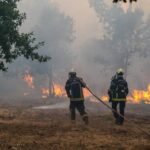
The fires have burned more than 30,000 hectares in the Gironde department, forced nearly 170,000 people to evacuate and advanced toward the Bordeaux metropolitan area, News.Az reports.
***
German Chancellor Friedrich Merz said he had been in close contact with French President Emmanuel Macron and confirmed that a helicopter, an A400M military transport aircraft and emergency teams were being deployed. Macron thanked Germany for its assistance as French firefighters continued trying to contain the flames.
Germany is deploying a helicopter, an A400M military transport aircraft and emergency response personnel to support France’s efforts to contain the wildfires. Chancellor Friedrich Merz announced the deployment on Saturday after holding discussions with French President Emmanuel Macron about the worsening emergency.
The precise roles of the German helicopter and emergency teams were not immediately detailed. Depending on operational requirements, helicopters can assist with surveillance, transport, coordination and the movement of personnel or equipment. The A400M can rapidly transport emergency teams, vehicles, supplies and specialized firefighting equipment to areas where additional resources are needed.
The deployment comes as French emergency services face simultaneous fires in Gironde and neighboring Landes. The number and scale of the fires have created pressure on personnel, aircraft and equipment, making international assistance increasingly important.
Merz said Germany was acting to support its neighbor in the wildfire-affected areas. Macron responded in German and thanked Berlin for its assistance, highlighting the close coordination between the two countries.
Germany’s contribution is intended to reinforce rather than replace the French response. French authorities remain in charge of firefighting operations, evacuation decisions and public safety measures. The arriving German personnel are expected to work within the operational structure established by French emergency services.
No timetable was immediately provided for how long the German teams would remain in France. Their deployment will likely depend on the development of the fires, weather conditions and the capacity of French firefighters to bring the most dangerous fronts under control.
The most serious fires have been burning since Wednesday in the southwestern Gironde department. More than 30,000 hectares, equivalent to approximately 74,000 acres, have already been scorched in the department.
Additional fires are continuing in the neighboring Landes department, creating a broader emergency across southwestern France. Authorities have warned that the situation remains dangerous because multiple fire fronts can stretch emergency resources and make containment operations more complicated.
Nearly 170,000 people have reportedly been forced to leave their homes. The unusually high number reflects both the size of the affected area and the authorities’ efforts to move residents away from communities that could be threatened by the advancing flames.
The Gironde fires have also moved toward the Bordeaux metropolitan area. This does not necessarily mean that the entire city is under immediate threat, but the direction of the flames has increased concern because Bordeaux and its surrounding municipalities are densely populated compared with many rural areas already affected.
The 30,000-hectare figure refers to the area burned in Gironde during the current emergency. It is separate from the national figure of approximately 98,000 hectares burned across France since the beginning of the year.
The fires remain active, meaning the affected area could continue to expand until firefighters establish effective containment lines. A complete assessment of environmental, agricultural and property damage will only be possible after the immediate emergency is brought under control and authorities can safely enter all affected areas.
Nearly 170,000 people have been evacuated because the fires are spreading across a large area and threatening several communities in southwestern France. Authorities are moving residents away from zones that could be reached by the flames, smoke or rapidly changing fire fronts.
Evacuations are often ordered before flames enter a settlement. Waiting until a fire reaches homes can leave residents trapped on congested roads and make it more difficult for emergency vehicles to reach the affected area. Early evacuations give firefighters more freedom to operate while reducing the possibility of civilian casualties.
The scale of the evacuations also reflects the unpredictable nature of major wildfires. Wind direction, temperature, humidity and vegetation conditions can cause flames to accelerate or change direction. An area that appears relatively safe at one point can become threatened if weather conditions change.
Some residents may be able to stay with relatives or friends, while others may require temporary accommodation and emergency assistance. Large evacuations create additional demand for transport, food, healthcare, shelter and reliable public information.
It was not immediately clear how many homes or businesses had been destroyed. The priority remains protecting lives and preventing residents from returning before local authorities determine that roads and communities are safe.
Even after the immediate danger passes, some evacuees may be unable to return quickly. Fire damage, smoke, disrupted electricity, blocked roads and the possibility of renewed outbreaks can delay access to affected communities.
The displacement of nearly 170,000 people makes the fires not only an environmental and firefighting emergency but also a major humanitarian and logistical challenge for French authorities.
French authorities said the flames were advancing toward the Bordeaux metropolitan area, increasing fears that the emergency could affect more densely populated communities. The available information did not specify the exact distance between the main fire fronts and the city.
Bordeaux is a major urban center surrounded by municipalities, transport routes and areas of vegetation. A fire approaching the wider metropolitan area could threaten homes, businesses, infrastructure and roads even if it does not reach the center of the city itself.
Authorities must closely monitor the direction and speed of the flames to determine whether additional evacuations are necessary. The movement of a wildfire can change quickly depending on wind, temperature and the availability of dry vegetation.
Smoke can also affect communities located far from the flames. Poor air quality may create health risks, particularly for children, elderly people and residents with respiratory or cardiovascular conditions. Reduced visibility can disrupt road traffic and complicate evacuation operations.
The possibility of fires reaching the metropolitan area places additional pressure on emergency services. Firefighters must defend existing containment lines while preparing for the risk that new areas could become threatened.
No official announcement indicated that central Bordeaux had been evacuated. However, the movement of the flames toward the wider metropolitan region remains a serious concern and may lead to preventive measures in surrounding communities.
The situation will depend heavily on weather conditions and firefighters’ ability to slow the advancing fronts. Authorities are expected to continue updating evacuation zones and road restrictions as the direction of the fires becomes clearer.
French Interior Minister Laurent Nunez said approximately 98,000 hectares, or about 242,000 acres, had burned across France since the beginning of the year. He described the total as a historic record.
The national figure includes the areas affected by the current fires in Gironde and Landes as well as land burned in other incidents across France. It is therefore considerably higher than the 30,000 hectares reported in Gironde during the latest emergency.
A record amount of burned land indicates that France is facing an unusually severe wildfire season. It also means firefighting services may have been responding to repeated emergencies over an extended period rather than dealing with a single isolated incident.
When fires occur frequently or simultaneously, personnel and equipment can come under sustained pressure. Aircraft, vehicles and specialized teams must be moved between regions, while firefighters need rest and replacement after prolonged operations.
The historic total also raises concerns about the recovery of forests, farmland and local ecosystems. Large burned areas can increase the risk of soil erosion, damage wildlife habitats and create long-term economic losses for communities dependent on agriculture, forestry or tourism.
The record does not by itself explain the cause of every fire. Individual incidents may begin under different circumstances, and authorities would need to investigate each outbreak separately. However, hot, dry and windy conditions can make fires easier to ignite and more difficult to contain once they begin.
The scale of the national total explains why France has sought or welcomed international assistance as its emergency services continue fighting major fires in the southwest.
Germany’s assistance can provide France with additional transport capacity, personnel and operational support at a time when emergency services are responding to large and simultaneous fires. The deployment may allow French authorities to strengthen operations in the most heavily affected areas.
The A400M military transport aircraft can carry emergency personnel, vehicles, supplies and heavy equipment over long distances. This allows resources to be delivered rapidly without relying entirely on ground transportation.
The helicopter could support several types of operations, although its exact mission was not immediately announced. Potential tasks include aerial observation, personnel transport, logistical support and coordination over affected areas. Any direct firefighting role would depend on the aircraft’s equipment and the operational plan established by French authorities.
German emergency personnel can also reinforce teams working long shifts. International crews may assist with containment operations, logistics, communications or the protection of communities, depending on their training and the needs identified by France.
Foreign assistance must be carefully integrated into the national response. Teams need common communication procedures, clear operational responsibilities and accurate information about terrain, weather and evacuation zones.
The German contribution is especially valuable because the fires are affecting more than one department and threatening the Bordeaux metropolitan area. Additional resources can help French services respond to new outbreaks without weakening operations at existing fire fronts.
However, international assistance cannot guarantee rapid containment. The outcome will continue to depend on weather conditions, the speed of the flames and firefighters’ ability to establish and defend containment lines.
The exchange between Friedrich Merz and Emmanuel Macron demonstrates how neighboring European countries can coordinate during a large-scale natural disaster. Merz said he had remained in close contact with Macron before announcing the deployment of German aircraft and emergency personnel.
Macron’s decision to respond in German carried a symbolic message of appreciation and solidarity. It emphasized that the emergency was being treated as a shared regional concern rather than solely a French domestic crisis.
Wildfires can exceed the immediate capacity of national emergency services, particularly when several large incidents occur simultaneously. International cooperation allows governments to provide aircraft, equipment and personnel that can be rapidly integrated into local operations.
Germany’s proximity to France makes it possible to deliver assistance relatively quickly. The A400M also gives Berlin the capacity to transport teams and equipment directly to locations selected by French authorities.
The cooperation may become more important if the fires continue to spread or if new outbreaks occur elsewhere in the country. Additional European assistance could be requested if French and German resources are insufficient to meet changing operational needs.
Cross-border deployments also allow emergency services to gain experience working together. Common procedures, communication systems and joint planning can make future responses faster and more effective.
The exchange between the two leaders therefore has both immediate and broader significance. In the short term, it provides France with practical assistance. In the longer term, it highlights the role of European solidarity as countries face increasingly complex emergencies that can place heavy pressure on national firefighting and civil protection systems.
The most urgent priority is protecting lives by keeping residents away from areas threatened by the flames. Authorities must continue monitoring the fire fronts and ordering additional evacuations if communities, roads or critical infrastructure come under threat.
Firefighters will focus on slowing the flames, establishing containment lines and preventing separate fires from joining into larger fronts. They must also watch areas that have already burned because strong winds or remaining hot spots can cause fires to restart.
Protecting the Bordeaux metropolitan area is another major concern. Emergency services will need to monitor the direction of the flames and prepare defensive measures around threatened municipalities.
Supporting evacuated residents is also essential. Nearly 170,000 people may require temporary shelter, transportation, medical assistance and information about when they can safely return.
The arrival of German personnel and aircraft will require close coordination. French authorities must decide where the additional resources can have the greatest impact and ensure that foreign teams receive current information about weather, roads and operational risks.
Authorities will also need to investigate the origins of the fires, although that work may be delayed until affected areas are considered safe. No single cause for the different outbreaks had been announced.
The broader national situation remains serious, with approximately 98,000 hectares burned across France this year. Even if the Gironde and Landes fires are contained, emergency services will need to remain prepared for further incidents.
The crisis will not end when the flames are extinguished. Damage assessments, environmental recovery, reconstruction and support for displaced families could continue long after firefighting operations conclude.
The post How is Germany helping France battle its historic wildfire crisis? appeared first on azeritimes.com.

Hernández, 57, is expected to arrive at Palmerola International Airport on a private flight. Although he is not expected to be detained upon arrival, he must appear before a Honduran court on August 3 to face fraud and money laundering charges connected to the “Pandora II” corruption case, News.Az reports.
***
Juan Orlando Hernández is returning to Honduras eight months after receiving a presidential pardon in the United States. Before the pardon, the former Honduran leader was serving a 45-year federal prison sentence following his conviction on drug trafficking and firearms-related charges.
His return became possible after an arrest warrant issued against him in Honduras was suspended in June. The suspension means he can enter the country without being immediately detained, although the domestic criminal proceedings against him remain active.
Hernández is expected to arrive at Palmerola International Airport on Sunday aboard a private flight. His return will bring him back to Honduras for the first time since his extradition to the United States in April 2022.
The former president has publicly described his return as an emotional moment. He said he was looking forward to seeing his mother, wife, children, grandchildren and political supporters after spending several years away from the country.
His arrival is not expected to end the legal uncertainty surrounding him. Hernández has been ordered to appear before a Honduran court on August 3 in connection with allegations of fraud and money laundering. He has said he will ask the court to dismiss the charges and continues to deny any wrongdoing.
The timing of his return therefore reflects both a personal decision to reunite with his family and a legal necessity. Hernández must address the criminal case that remains pending in Honduras despite the U.S. pardon that secured his release from prison.
Hernández is not expected to be detained immediately when he arrives in Honduras because the arrest warrant against him was suspended in June. The suspension allows him to return to the country while remaining subject to the authority of the Honduran court handling his case.
A suspended warrant is not the same as the dismissal of criminal charges. The accusations of fraud and money laundering remain active, and Hernández is required to appear in court on August 3. His legal status could change depending on decisions made during or after that hearing.
The court may consider requests from prosecutors and Hernández’s defense team. His lawyers are expected to argue that the charges should be dismissed, while prosecutors may seek to continue the proceedings or request conditions intended to ensure that he remains available to the court.
Potential legal conditions could involve restrictions on travel or requirements to attend future hearings, although no such measures had been publicly announced before his return. It will be for the Honduran court to decide whether any restrictions are necessary.
Hernández has said he is returning voluntarily and intends to defend himself. His decision to appear in court may be presented by his defense as evidence that he does not intend to evade the proceedings.
However, the suspension of the warrant does not guarantee that he will remain free throughout the case. If the court reinstates the warrant or approves a new detention request, Hernández could face arrest at a later stage.
His arrival will therefore be closely watched by both supporters and critics, particularly for signs of how the Honduran judicial authorities intend to manage such a politically sensitive case.
Hernández faces allegations of fraud and money laundering in connection with the corruption investigation known as “Pandora II.” The case concerns claims that nearly $11 million in public funds was diverted to finance political campaigns between 2010 and 2013.
Prosecutors allege that part of the money was used to support Hernández’s first presidential campaign. They are expected to examine how the public funds were allegedly transferred, which organizations or individuals received them and whether those involved attempted to conceal their origin or intended use.
The fraud allegations relate to the alleged misuse or diversion of government money. The money laundering accusations concern claims that financial transactions were used to disguise the source, ownership or destination of the diverted funds.
Hernández denies all wrongdoing and has said he will ask the court to dismiss the case. His defense may challenge the evidence, the legal basis of the charges or the claim that he personally participated in the alleged scheme.
His scheduled appearance on August 3 will be an important stage in the proceedings, but it does not necessarily mean the case will be resolved immediately. The court may need to consider motions, review evidence and determine whether the prosecution has presented sufficient grounds for the case to continue.
No final judgment has been issued against Hernández in the Honduran proceedings. He must therefore be treated as innocent of the domestic charges unless a court finds him guilty.
The “Pandora II” case is legally separate from the U.S. prosecution that resulted in his 45-year prison sentence and subsequent presidential pardon.
The pardon granted by U.S. President Donald Trump applied only to Hernández’s federal convictions in the United States. It ended the punishment imposed by the U.S. court but did not erase or dismiss charges filed under Honduran law.
Presidential pardons generally operate within the legal system of the country granting them. A U.S. president can pardon federal offenses prosecuted by the United States, but cannot order another sovereign country to terminate its own criminal proceedings.
Hernández was convicted in the United States of drug trafficking and firearms-related offenses. The Honduran case, by contrast, concerns allegations of fraud, money laundering and the diversion of public funds for political campaigns.
The cases are therefore separate in both jurisdiction and subject matter. Trump’s decision allowed Hernández to leave U.S. prison, but Honduran judges and prosecutors retain authority over the domestic allegations.
The distinction explains why Hernández must appear before a Honduran court on August 3 despite being pardoned. It also explains why an arrest warrant had remained active until it was suspended in June.
Honduran authorities are not legally required to adopt the conclusions of the U.S. pardon. The domestic court must make its own decisions based on Honduran law, the evidence submitted by prosecutors and the arguments presented by Hernández’s lawyers.
The pardon may still have political consequences in Honduras, particularly because critics accused Washington of interfering in the country’s political affairs. Legally, however, it provides no automatic immunity from prosecution outside the United States.
Hernández’s immediate future will consequently be determined not by Trump’s pardon but by the decisions of the Honduran judicial authorities handling the “Pandora II” case.
Hernández was arrested in Honduras in February 2022, shortly after leaving office, and extradited to the United States two months later. U.S. prosecutors charged him with drug trafficking and firearms-related offenses.
In 2024, a U.S. court convicted Hernández and sentenced him to 45 years in federal prison. The case marked a dramatic fall for a former president who had previously presented himself as an ally of Washington in regional security and counter-narcotics efforts.
Hernández consistently denied the allegations against him. He maintained that the case was based on false claims made by criminals seeking to reduce their own sentences or secure other benefits from U.S. authorities.
The 45-year sentence meant Hernández could have spent most of the remainder of his life in prison. His situation changed in late 2025, when President Donald Trump granted him a pardon.
Hernández has described his time in prison as extremely difficult and said it was an experience he would not wish on anyone. He has also portrayed his release and return as a personal and political vindication, although the pardon did not overturn the factual findings of the U.S. trial through a new judicial process.
A pardon ends or reduces punishment but is different from an acquittal issued after an appeal or retrial. It does not necessarily establish that the original conviction was legally incorrect.
Following his release, Hernández began preparing to return to Honduras, where separate corruption allegations remained unresolved. His U.S. imprisonment is over, but the domestic proceedings mean his legal difficulties have not ended.
Trump’s decision to pardon Hernández in late 2025 generated controversy because it came during a politically sensitive period in Honduras. Critics accused Washington of interfering in the country’s presidential election and influencing domestic political dynamics.
Hernández remains a prominent figure within Honduran politics despite his conviction and years of imprisonment. His release therefore had potential consequences beyond his personal legal situation. It strengthened the possibility that he could again influence his political party, supporters and public debate.
Critics argued that pardoning a former president convicted of serious drug trafficking and weapons-related offenses sent a troubling message about accountability. They also questioned why Washington would release a politician who had been prosecuted and sentenced by the U.S. justice system.
Supporters of Hernández viewed the decision differently. They accepted his claim that the prosecution was unjust and regarded the pardon as recognition that he had been treated unfairly.
The timing intensified these competing interpretations. Any major U.S. decision involving a former Honduran president could affect voters’ perceptions, party organization and the broader electoral environment.
The pardon also raised questions about consistency in Washington’s regional policies. Hernández had once been treated as a partner by the United States before being extradited, convicted and later pardoned.
However, the political controversy does not determine the outcome of the Honduran case. Fraud and money laundering allegations must still be considered by the domestic court.
His return could revive the debate over the pardon, particularly if Hernández resumes political activity or plays a visible role within his party. Public reaction may also depend on how the Honduran judiciary handles the proceedings against him.
Hernández is expected to appear before a Honduran court on August 3 to address the fraud and money laundering charges against him. He has said he will ask the court to dismiss the allegations and maintains that he is innocent.
The hearing may allow his defense lawyers to challenge the prosecution’s case and argue that there is insufficient evidence to continue the proceedings. Prosecutors are expected to defend the investigation and explain why they believe the charges should remain active.
The court could consider whether the case should proceed, whether additional evidence is required and whether Hernández should be subject to legal restrictions while the proceedings continue. A final verdict is unlikely unless the hearing has specifically been scheduled to resolve all outstanding issues.
The suspension of the arrest warrant will be another important matter. The court may leave the suspension in place, modify Hernández’s legal conditions or consider a request to restore detention measures.
His voluntary return and appearance may be cited by his lawyers as evidence that he is cooperating with the judicial process. Prosecutors could nevertheless argue that conditions are needed because of the seriousness of the allegations and his ability to travel internationally.
The hearing will also provide the first clear indication of how Hernández intends to defend himself in Honduras after his release from U.S. prison. His public statements have so far focused on denying wrongdoing and seeking dismissal.
Regardless of the immediate decision, either side may pursue further legal action. The proceedings could therefore continue through additional hearings, motions or appeals. Hernández’s August 3 appearance is best understood as a major procedural step rather than the guaranteed conclusion of the “Pandora II” case.
Hernández has not ruled out returning to politics, although he says it is not one of his immediate priorities. He has indicated that he would like to support the new leadership of his political party by sharing his experience.
His ability to influence politics may depend on the outcome of the criminal case and the public response to his return. Even without seeking elected office, a former president can play an informal role by advising party leaders, meeting supporters or participating in internal discussions.
Hernández is likely to retain a base of loyal supporters who believe he was unfairly prosecuted. His return could energize that group and increase his visibility within the party.
At the same time, his U.S. conviction, the controversial pardon and the pending Honduran charges remain major political liabilities. Opponents are likely to use those issues to challenge any attempt by Hernández to regain influence.
Legal restrictions could also affect his plans. If the court imposes travel limits, detention measures or other conditions, his ability to participate in political activities could be reduced. A conviction in Honduras could create further legal obstacles.
The former president’s immediate focus is expected to be on reuniting with his family and defending himself in court. However, his statement that he has not excluded a future return to politics ensures that the question will remain part of the national debate.
His influence will ultimately depend on several factors: the court proceedings, the response of his party, public opinion and whether he chooses to pursue a formal position or remain an adviser behind the scenes.
The post What awaits Juan Orlando Hernández after his return to Honduras? appeared first on azeritimes.com.
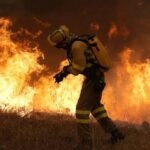
However, more than 121,000 people remain affected, while firefighters continue working to extinguish active hotspots and prevent the flames from returning, News.Az reports.
***
The fires have burned more than 45,000 hectares across Madrid and Ávila. Another uncontrolled fire in the Sierra de Espadán Natural Park in Castellón has forced approximately 16,000 people to evacuate. At least one person has died as Spain experiences one of its worst wildfire seasons in years.
Nearly all the main wildfire fronts burning across the Community of Madrid and neighboring Ávila province have been contained following intensive overnight operations. Emergency teams managed to stop the principal lines of fire from continuing their advance, reducing the immediate threat to several communities.
Containment does not mean that the fires have been completely extinguished. Several active hotspots remain inside or near the burned areas. These locations can continue producing flames, heat and smoke even after the main front has been stopped.
Firefighters and members of the Military Emergency Unit are concentrating their operations on those hotspots. Their objective is to cool the affected ground, extinguish burning vegetation and prevent wind from carrying embers toward areas that have not yet burned.
Authorities are also monitoring the perimeter of the fires for signs of renewed activity. If a hotspot is not fully extinguished, changing winds and dry conditions can cause flames to reappear and cross containment lines.
The progress made overnight represents an important improvement, but the emergency has not ended. Prime Minister Pedro Sánchez warned that “challenging hours” still lie ahead and urged residents to remain extremely cautious.
Access restrictions and evacuation measures may remain in place while emergency services assess the situation. Authorities must be confident that roads, residential areas and essential infrastructure are safe before allowing normal activity to resume.
The focus is now shifting from stopping the rapid advance of the main fronts to securing the entire burned zone. This phase can require prolonged work because firefighters must inspect a large area and ensure that no remaining source of heat can trigger another major outbreak.
More than 121,000 people remain affected because the consequences of the wildfires extend beyond the areas currently covered by flames. Residents may be under evacuation orders, shelter-in-place instructions, transport restrictions or warnings related to smoke and the risk of renewed fire activity.
Thousands of people were forced to leave their homes as the fires spread across Madrid and Ávila. Others were told to remain indoors because smoke, ash or nearby firefighting operations made outdoor movement unsafe.
Being counted as affected does not necessarily mean that every person has been evacuated or that their home has been damaged. The total can include residents living in threatened communities, people unable to use certain roads and those whose access to essential services has been disrupted.
Even after the main fire fronts are contained, evacuated families may be unable to return immediately. Emergency services must first check whether homes, electricity networks, gas lines and roads have been damaged. They must also confirm that no active hotspots threaten residential areas.
Smoke can remain a problem after visible flames have disappeared. Poor air quality may be particularly dangerous for children, elderly people and those with respiratory or cardiovascular conditions.
People who were told to stay indoors may need to keep windows closed and limit unnecessary travel until air-quality conditions improve. Schools, businesses and public services may also remain closed or operate under restrictions.
The number of affected residents could remain high while authorities complete damage assessments and gradually lift emergency measures. Full recovery will take longer in communities where homes, farms, roads or local infrastructure have been damaged.
The wildfires have scorched more than 45,000 hectares, equivalent to approximately 111,200 acres, across the Community of Madrid and Ávila province. The figure illustrates the scale of the emergency even though the main fire fronts are now largely contained.
A burned area of this size can include forests, grassland, agricultural property and land surrounding residential communities. A complete breakdown of the damaged territory was not immediately available.
The consequences extend beyond the loss of vegetation. Fires can destroy wildlife habitats, damage farmland and weaken soil, leaving burned areas more vulnerable to erosion. Rainfall following a major fire can wash ash and exposed soil into rivers or drainage systems.
Agricultural communities may face losses involving crops, grazing land, livestock facilities and equipment. Even where buildings survive, farmers can lose access to land or water systems needed to maintain production.
The fires may also affect roads, power lines and communications infrastructure. Emergency crews must inspect these systems before residents can safely return and normal services can resume.
Measuring the burned area may take time because the perimeter can change as firefighters gain more accurate information. The initial figure may be revised after aerial surveys and ground inspections are completed.
The 45,000 hectares burned in Madrid and Ávila form part of a much larger national total. Across Spain, 152,678 hectares have burned since the beginning of 2026.
The damage assessment will continue after the fires are extinguished. Authorities will need to determine which areas can recover naturally and where reforestation, soil protection or other environmental restoration measures may be required.
A wildfire can remain dangerous after its main fronts have been brought under control. Burning roots, fallen trees, dry vegetation and underground organic material may continue producing heat for hours or days.
These remaining hotspots can reignite if they are exposed to strong winds or extremely dry conditions. Embers may also be carried beyond containment lines and start new fires in areas that appear safe.
Firefighters are therefore focusing on identifying and extinguishing every active hotspot. This process involves inspecting the burned area, cooling the ground and removing material that could continue burning.
The size of the affected territory makes this work difficult. More than 45,000 hectares have burned across Madrid and Ávila, meaning emergency crews must monitor an extensive perimeter.
Weather conditions remain critical. High temperatures can dry vegetation and make it easier for a small flame to spread. Wind can increase the intensity of a hotspot and push sparks toward nearby forests, fields or homes.
This explains why authorities continue to warn residents despite the progress made overnight. Containment means the fire’s advance has been stopped within a defined area, but complete extinction requires confirmation that no significant source of heat remains.
Residents may be asked to stay away from burned zones to avoid interfering with firefighting operations and to protect themselves from falling trees, damaged power lines or unstable structures.
The coming hours will be important because emergency crews need to consolidate the containment lines before conditions change. Continued aerial observation and ground patrols may be necessary until authorities are confident that the fires cannot restart.
Investigators believe the major wildfire in Ávila was caused by negligence. Alfonso Fernández Mañueco, president of the Castile and León regional government, said authorities intended to join legal proceedings against those responsible.
No detailed explanation was immediately provided about the suspected negligent act. It was not clear whether investigators had identified a particular person, activity or piece of equipment connected to the start of the fire.
Negligence generally refers to behavior that creates a fire risk because reasonable safety precautions were not followed. The final legal classification will depend on the evidence collected by investigators and the conclusions reached by prosecutors and the courts.
Investigators will likely examine the suspected point of origin, witness accounts, surveillance material and any activity taking place in the area before the flames were detected. They may also analyze weather conditions and the way the fire spread.
Establishing the cause is important because the blaze affected thousands of people and contributed to the destruction of more than 45,000 hectares across Madrid and Ávila. If investigators confirm that negligence caused the fire, those responsible could face legal claims connected to the resulting damage.
The regional government’s decision to participate in legal action signals that it intends to seek accountability and potentially recover some of the public costs associated with firefighting and recovery.
However, the investigation is not complete, and no individual should be considered responsible unless the evidence is tested through the appropriate legal process.
Determining the cause may also help authorities strengthen prevention measures, particularly if investigators identify a recurring risk involving human activity, equipment or failures to comply with wildfire restrictions.
Prime Minister Pedro Sánchez announced that the Cabinet will approve a royal decree on Tuesday declaring the wildfire-hit regions areas severely affected by a civil protection emergency.
The declaration provides a formal framework for the national government to support communities, residents and businesses affected by the fires. The specific assistance available will depend on the measures included in the decree and the damage documented by regional and local authorities.
Potential areas of support can include emergency repairs, assistance for damaged homes and businesses, help for agricultural losses and funding to restore public infrastructure. The final provisions must be set out by the government.
The declaration also recognizes that the scale of the emergency exceeds the immediate task of extinguishing the fires. Recovery may involve rebuilding damaged infrastructure, restoring utilities, clearing unsafe debris and supporting residents who cannot quickly return home.
Sánchez visited the affected areas as emergency operations continued. He warned that difficult hours remained and called on residents to follow official instructions.
The national response involves cooperation with regional governments, local authorities, firefighters, police, medical services and the Military Emergency Unit. Each institution has a different role in evacuations, fire suppression, public safety and recovery.
Authorities will need to document damage before many forms of assistance can be distributed. Residents and business owners may be asked to provide evidence of property losses or disruption.
The royal decree will not immediately reverse the destruction caused by the fires, but it can help mobilize resources and coordinate recovery. Its effectiveness will depend on how quickly assistance reaches affected communities and whether funding matches the scale of the losses.
Firefighters are continuing to battle a major wildfire burning out of control in the Sierra de Espadán Natural Park in Castellón. Approximately 16,000 people have been evacuated because of the danger.
Unlike the major fronts in Madrid and Ávila, which have largely been brought under control, the Castellón fire remains active and uncontrolled. This means the flames are still spreading without a fully secured perimeter.
Natural parks can present difficult conditions for firefighters. Mountainous terrain, limited road access and dense vegetation may prevent ground crews and vehicles from reaching every part of the fire. Aircraft can assist, but their operations may be affected by smoke, wind and visibility.
The evacuation of around 16,000 people indicates that authorities consider the threat serious. Residents may be moved before the flames directly reach their communities to ensure that evacuation routes remain open.
Firefighters must protect populated areas while also attempting to prevent further damage to the natural park. This requires decisions about where to position personnel and which fire fronts pose the greatest immediate risk.
No confirmed figure was immediately available for the area burned by the Sierra de Espadán fire. The total could increase while the blaze remains out of control.
The situation in Castellón also places additional pressure on Spain’s national firefighting capacity. Resources must be divided between ongoing operations there and the work needed to secure the contained fires in Madrid and Ávila.
The return of evacuees will depend on progress in containing the blaze, weather conditions and assessments of roads, homes and utilities in the affected communities.
At least one death has been confirmed during Spain’s current wildfire emergency. A man died on Saturday in a fire in the Salt de l’Aigua ravine near the Valencian town of Manises.
No further details were immediately available about the victim or the circumstances of his death. It was not stated whether he was a local resident, a worker or someone who became trapped while attempting to leave the area.
The confirmed fatality demonstrates the danger posed by rapidly spreading fires. Wildfires can change direction without warning, producing intense heat, smoke and reduced visibility that make escape difficult.
Smoke inhalation can be deadly even when people are not directly reached by the flames. Roads may become blocked, while fallen trees and damaged electricity infrastructure create further risks.
The number of casualties can change as emergency services enter areas that were previously inaccessible. Authorities may need time to search burned locations and confirm whether all residents have been accounted for.
Thousands of evacuations have likely reduced the risk of a higher death toll. Moving residents early allows them to leave before roads become unsafe and gives emergency personnel more freedom to operate.
Firefighters, police officers, military personnel and medical teams also face significant risks. They may work near unstable fire fronts for extended periods and under difficult weather conditions.
Authorities continue to urge residents to comply with evacuation and shelter instructions. People should not return to evacuated areas or attempt to approach fire zones unless officials have declared them safe.
The immediate priority remains preventing additional casualties while active hotspots and the uncontrolled Castellón fire continue to pose a threat.
Spain is experiencing one of its worst wildfire seasons in years. A total of 152,678 hectares, or approximately 377,260 acres, have burned across the country since the beginning of 2026.
Authorities have recorded 32 major wildfires nationwide. During the same period in 2025, only 24,133 hectares had burned and seven large wildfires had been reported.
This means more than six times as much land has burned in 2026 compared with the corresponding period last year. The number of major fires has also increased more than fourfold.
The figures demonstrate that the current emergency is part of a wider national crisis rather than a single regional incident. Firefighting services have had to respond to repeated large outbreaks, placing continuing pressure on personnel, aircraft and equipment.
A severe fire season can exhaust emergency crews and complicate the movement of resources. When several fires burn at the same time, authorities must decide which areas face the greatest risk to life and property.
The environmental consequences may last for years. Large fires destroy vegetation, disrupt ecosystems and leave soil vulnerable to erosion. Agricultural and tourism-dependent communities can also suffer substantial economic losses.
The national burned-area total may continue to rise because the fire in Castellón remains out of control and hotspots are still active in Madrid and Ávila.
The comparison with 2025 underlines the exceptional scale of the current season. It will likely lead to closer examination of wildfire prevention, emergency preparedness, land management and the resources available to regional and national firefighting services.
Firefighters will continue targeting active hotspots in Madrid and Ávila while working to bring the uncontrolled Sierra de Espadán fire in Castellón under control. Preventing reignition will remain a priority throughout the day.
Emergency teams will monitor weather conditions, including temperature, wind and humidity. Any deterioration could increase the risk that contained fires will cross defensive lines or that new outbreaks will occur.
Authorities will also review evacuation and shelter orders. Residents will be permitted to return only when emergency services determine that their communities and access roads are safe.
Damage assessments will become increasingly important. Officials need to inspect homes, public buildings, farms, electricity networks, roads and water systems across the affected regions.
The Cabinet’s planned royal decree will begin the formal process of declaring the wildfire-hit regions areas severely affected by a civil protection emergency. Further details about financial aid and recovery measures are expected after its approval.
Investigators will continue examining the cause of the Ávila fire, which regional authorities believe resulted from negligence. Any legal proceedings will depend on the evidence collected.
The national wildfire risk will remain high even after the current fires are extinguished. Spain has already recorded 32 major wildfires and more than 152,000 hectares of burned land this year.
Authorities may therefore keep firefighting units on heightened alert and maintain restrictions on activities that could ignite dry vegetation. The immediate emergency will gradually move toward recovery, but rebuilding damaged communities and restoring burned landscapes will require a much longer effort.
The post How are Spain’s authorities responding to the wildfire emergency? appeared first on azeritimes.com.