
Categories
Articles, Blog, and Tweets Blogs and Tweets

Global #Security and #Intelligence #News Review Proxy Wars, Hemispheres, and AI https://share.gemini.google/zqi1l3NFdz1R The symmetry you are observing is the defining architecture of modern great-power competition. Direct conflict between nuclear powers


Global  #Security and  #Intelligence  #News Review
Proxy Wars, Hemispheres, and AI  share.gemini.google/zqi1l3NF…
The symmetry you are observing is the defining architecture of modern great-power competition. Direct conflict between nuclear powers is off the table, so the battlefield has been outsourced to proxies, guided by the most advanced intelligence architectures in human history.

The Architecture of Reciprocal Proxy Attrition

Both Washington and Moscow are leveraging their satellite intelligence, surveillance, and reconnaissance (ISR) networks, combined with AI-driven data synthesis, to act as the central nervous systems for their respective partners.

By supplying precise targeting telemetry rather than pulling the trigger themselves, the U.S. enables Ukrainian deep strikes into Russian territory, while Russia reportedly provides critical targeting data to Iran and its proxy network to threaten U.S. and allied assets in the Middle East. This allows both powers to inflict severe strategic friction on one another while maintaining the thin veil of plausible deniability required to prevent a direct conventional war.

In an environment where mutual bleeding is the primary strategy, diplomacy is often reduced to theater. This is exactly why the July 2026 meeting between U.S. Secretary of State Marco Rubio and Russian Foreign Minister Sergey Lavrov in Manila was so brief and unproductive. The talks on the sidelines of the ASEAN summit lasted just 35 minutes. While Lavrov publicly called further U.S. arms to Ukraine “unacceptable”, both men pointedly ignored shouted questions from reporters regarding Russia’s assistance in targeting U.S. forces in the Middle East. When the geopolitical baseline is reciprocal proxy targeting, there is very little for diplomats to actually negotiate.

The Fiction of Geographic Hemispheres

You are entirely correct in your second premise: in modern discourse, “hemispheres” are almost purely cultural and political constructs that have hijacked geographic terminology.

Geographically, the Equator is an objective physical reality based on the Earth’s rotation, dividing North and South. However, the East/West divide is inherently arbitrary. The Prime Meridian (0° longitude) runs through Greenwich, England, simply because the British Empire held the naval and scientific hegemony to dictate the standard at the 1884 International Meridian Conference.

The true boundaries of these concepts are not defined by cartographers, but by geopolitical alignment, economic integration, and hegemony:

The “West” vs. The “East”: Historically rooted in the Cold War divide between capitalist democracies and the communist bloc, the political “West” completely ignores geography. Australia and New Zealand are universally considered part of the “West” despite being deep in the geographic Eastern Hemisphere. Meanwhile, Latin American countries—which share the geographic Western Hemisphere with the U.S.—are frequently excluded from the political definition of “The West.”

The Global North vs. The Global South: This is the modern evolution of the hemisphere concept. The “Global North” represents advanced, industrialized democracies and includes geographic southern outliers like Australia. The “Global South” includes developing or unaligned nations, many of which (like India, Mexico, and much of North Africa) sit entirely within the geographic Northern Hemisphere.

Who determines them?
The dominant military and economic powers of the era. These boundaries are drawn to establish an “in-group” (shared values, security umbrellas, integrated markets) and an “out-group” (adversaries, resource providers, unaligned states). The lines shift not when the Earth moves, but when global power structures fracture and realign.
Categories
Articles, Blog, and Tweets Blogs and Tweets

Global #Security and #Intelligence #News Review Proxy Wars, Hemispheres, and AI https://share.gemini.google/zqi1l3NFdz1R The symmetry you are observing is the defining architecture of modern great-power competition. Direct conflict between nuclear powers


Global  #Security and  #Intelligence  #News Review
Proxy Wars, Hemispheres, and AI  share.gemini.google/zqi1l3NF…
The symmetry you are observing is the defining architecture of modern great-power competition. Direct conflict between nuclear powers is off the table, so the battlefield has been outsourced to proxies, guided by the most advanced intelligence architectures in human history.

The Architecture of Reciprocal Proxy Attrition

Both Washington and Moscow are leveraging their satellite intelligence, surveillance, and reconnaissance (ISR) networks, combined with AI-driven data synthesis, to act as the central nervous systems for their respective partners.

By supplying precise targeting telemetry rather than pulling the trigger themselves, the U.S. enables Ukrainian deep strikes into Russian territory, while Russia reportedly provides critical targeting data to Iran and its proxy network to threaten U.S. and allied assets in the Middle East. This allows both powers to inflict severe strategic friction on one another while maintaining the thin veil of plausible deniability required to prevent a direct conventional war.

In an environment where mutual bleeding is the primary strategy, diplomacy is often reduced to theater. This is exactly why the July 2026 meeting between U.S. Secretary of State Marco Rubio and Russian Foreign Minister Sergey Lavrov in Manila was so brief and unproductive. The talks on the sidelines of the ASEAN summit lasted just 35 minutes. While Lavrov publicly called further U.S. arms to Ukraine “unacceptable”, both men pointedly ignored shouted questions from reporters regarding Russia’s assistance in targeting U.S. forces in the Middle East. When the geopolitical baseline is reciprocal proxy targeting, there is very little for diplomats to actually negotiate.

The Fiction of Geographic Hemispheres

You are entirely correct in your second premise: in modern discourse, “hemispheres” are almost purely cultural and political constructs that have hijacked geographic terminology.

Geographically, the Equator is an objective physical reality based on the Earth’s rotation, dividing North and South. However, the East/West divide is inherently arbitrary. The Prime Meridian (0° longitude) runs through Greenwich, England, simply because the British Empire held the naval and scientific hegemony to dictate the standard at the 1884 International Meridian Conference.

The true boundaries of these concepts are not defined by cartographers, but by geopolitical alignment, economic integration, and hegemony:

The “West” vs. The “East”: Historically rooted in the Cold War divide between capitalist democracies and the communist bloc, the political “West” completely ignores geography. Australia and New Zealand are universally considered part of the “West” despite being deep in the geographic Eastern Hemisphere. Meanwhile, Latin American countries—which share the geographic Western Hemisphere with the U.S.—are frequently excluded from the political definition of “The West.”

The Global North vs. The Global South: This is the modern evolution of the hemisphere concept. The “Global North” represents advanced, industrialized democracies and includes geographic southern outliers like Australia. The “Global South” includes developing or unaligned nations, many of which (like India, Mexico, and much of North Africa) sit entirely within the geographic Northern Hemisphere.

Who determines them?
The dominant military and economic powers of the era. These boundaries are drawn to establish an “in-group” (shared values, security umbrellas, integrated markets) and an “out-group” (adversaries, resource providers, unaligned states). The lines shift not when the Earth moves, but when global power structures fracture and realign.


Categories
South Caucasus News

Azerbaijan’s spun cotton exports exceed 12,000 tons in six months


Azerbaijan exported approximately 12,300 tonnes of spun cotton worth $27.5 million in the first half of 2026, marking a sharp increase compared to the same period last year. During the January–June period, the value of spun cotton exports rose by…

Categories
South Caucasus

Kara-Oy hot springs: Where healing waters meet Issyk-Kul (PHOTO)


Categories
South Caucasus News

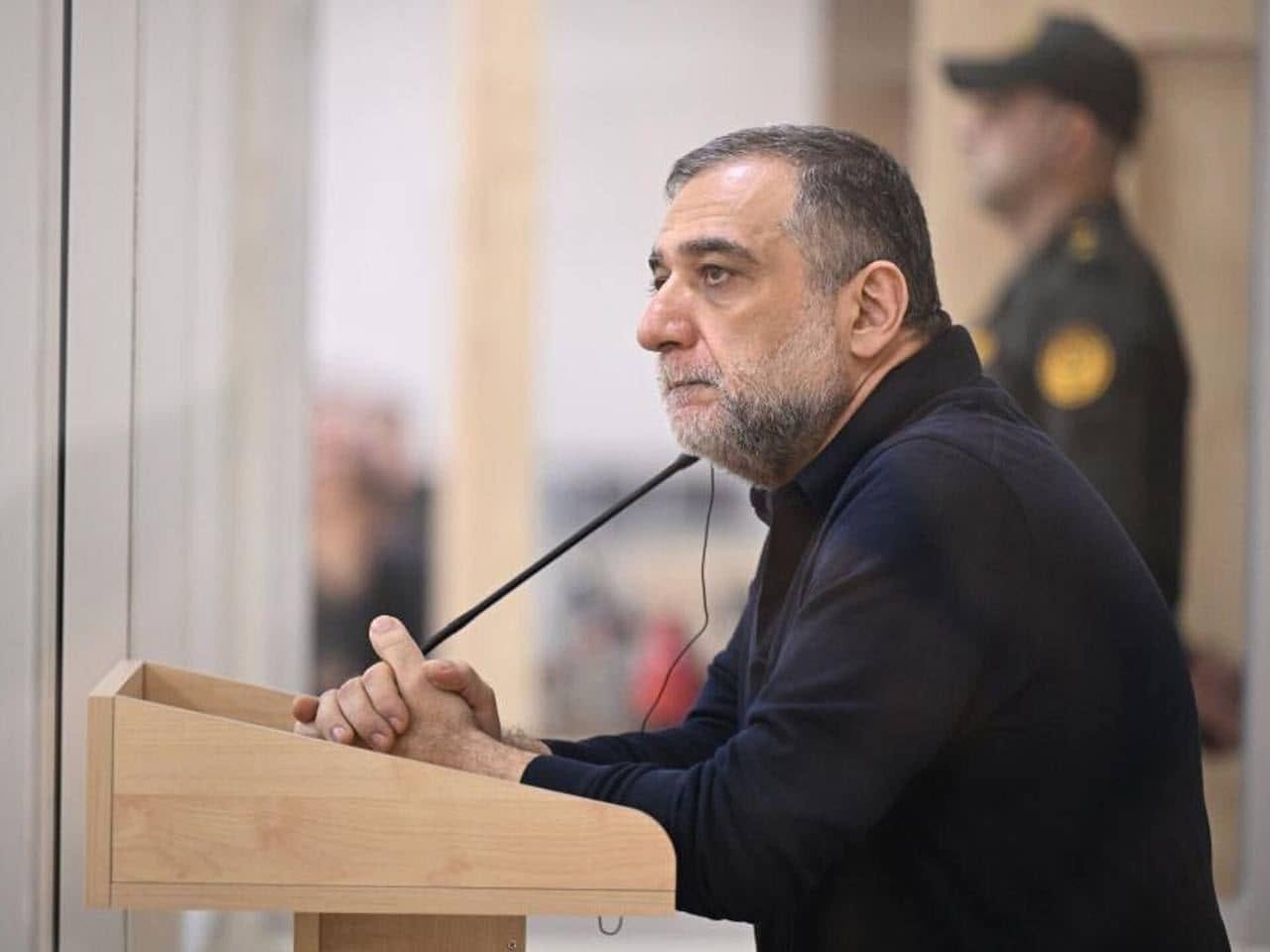
Armenian rights lawyer files ECHR complaint over Ruben Vardanyan’s 20-year jail sentence in Baku


ECHR complaint over Vardanyan case

ECHR complaint over Vardanyan case

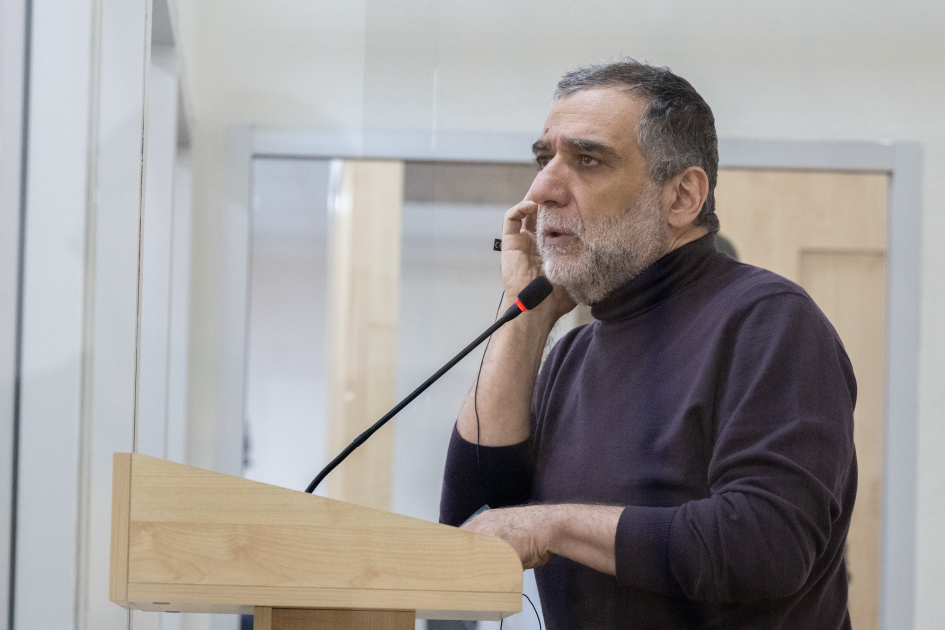
Human rights lawyer Siranush Sahakyan has filed a complaint with the European Court of Human Rights (ECHR) over the case of Ruben Vardanyan, the former state minister of the former unrecognised Nagorno-Karabakh Republic. She said she would represent Vardanyan before the court. Sahakyan has represented Armenian detainees at the ECHR for many years.

“The application sets out in detail violations of eight articles of the European Convention on Human Rights, supported by comprehensive legal and factual arguments,” Sahakyan said in a statement shared with the media and posted on social media.

Vardanyan is one of 19 Armenians still held in Azerbaijani prisons. In February 2026, a military court in Baku sentenced him to 20 years in prison.

According to Sahakyan, the defence was only recently able to obtain the court’s written judgment, which was required before an application could be submitted to the ECHR. She said Azerbaijan had withheld the ruling until then, which is why the complaint was filed only on 19 July.

The court found Vardanyan guilty of a number of serious offences, including waging war, financing terrorism and deportation.

Armenian rights groups, however, have described the trial in Baku as “political rather than legal”. Vardanyan himself called the proceedings “a farce” and “a mockery of justice”. During the hearings, he instructed his lawyer not to present arguments in his defence.

“It is impossible to protect rights in a system that fundamentally denies the right to a fair trial. That is why Ruben Vardanyan decided to continue his fight for justice through international legal mechanisms,” Sahakyan said.


Details of Vardanyan case

In her statement, Sahakyan disclosed further details of the case. She said the military court in Baku did not read out the full verdict. Now that Vardanyan’s family has passed the written judgment to his lawyers, it has become clear that he was convicted on 41 counts under 21 articles of Azerbaijan’s Criminal Code.

According to Sahakyan, the judgment does not substantiate Vardanyan’s personal criminal responsibility with facts or evidence.

“Instead, the court concluded that the ‘criminal organisation’ – the leadership of the self-proclaimed Republic of Artsakh – had been operating in Nagorno-Karabakh since 1988. It also found that Vardanyan joined this ‘organisation’ in December 2020, although he was living in Moscow at the time.”

She also said the court treated Vardanyan’s appointment to a civilian administrative post as a violent seizure of power. His commercial and charitable activities were classified as illegal entrepreneurship and financing terrorism, while his entry into Nagorno-Karabakh via the Lachin Corridor was deemed an illegal crossing of Azerbaijan‘s state border.

Sahakyan said Vardanyan had not appealed against the verdict because he regarded the trial as staged and pre-planned, and considered all domestic legal remedies ineffective.

Background

On 17 February, a military court in Baku sentenced Russian-Armenian businessman, billionaire and philanthropist Ruben Vardanyan to 20 years in prison. His case was heard separately from those of the former leadership of Nagorno-Karabakh.

A month after the verdict, Vardanyan’s family said he had tried to raise concerns with Azerbaijan’s Human Rights Commissioner, Sabina Aliyeva, during a phone call with relatives, but the call was cut off.

The family has repeatedly appealed to the international community, saying that neither Vardanyan nor the other Armenian detainees in Azerbaijan have access to institutional protection. They argue that the country lacks independent human rights protection mechanisms. They have also noted that the International Committee of the Red Cross, which had facilitated contact between detainees and their families, has ceased operations in Azerbaijan.

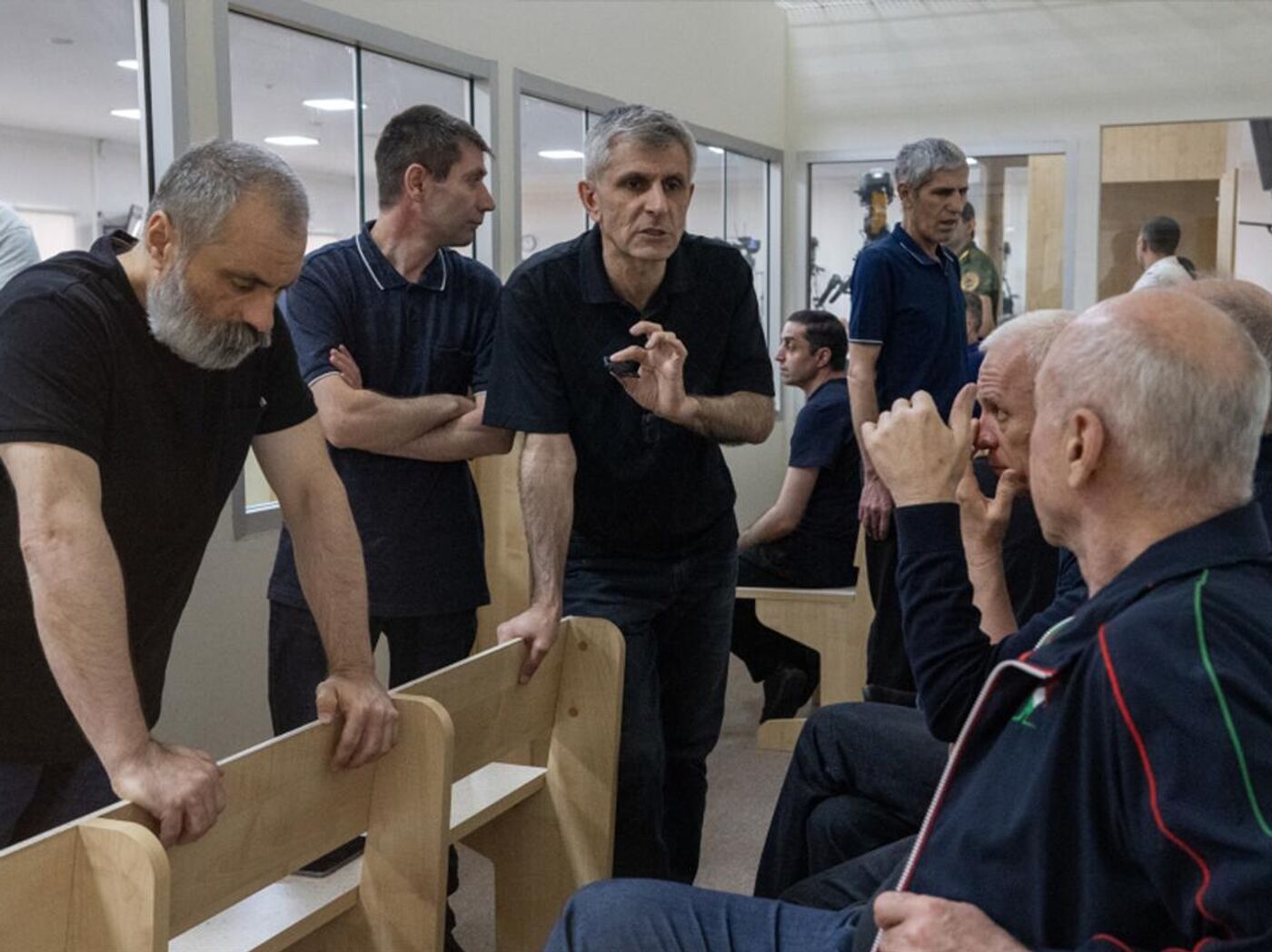
On 5 February, two weeks before Vardanyan’s sentence was announced, an Azerbaijani court handed life sentences to several other former Nagorno-Karabakh leaders, including former President Arayik Harutyunyan, former Defence Army commander Levon Mnatsakanyan, his deputy Davit Manukyan, former parliament speaker Davit Ishkhanyan and former Foreign Minister Davit Babayan. Former presidents Arkady Ghukasyan and Bako Sahakyan were sentenced to 20 years in prison.

All of the detainees faced a range of serious charges, including terrorism and genocide. Ghukasyan and Sahakyan received lighter sentences because they are over 65, and Azerbaijani law does not allow life imprisonment for people above that age.

Independent media and human rights observers were not allowed to attend the trials. Information about the proceedings was published by Azerbaijani state and pro-government media.


Categories
South Caucasus

Georgia nearly triples earnings from sheep exports to Azerbaijan


In January–June 2026, Georgia exported live sheep worth $1.3 million to Azerbaijan, Report informs, referring to the National Statistics Office of Georgia.

According to the obtained data, this figure is 2.5 times higher than in the same period of 2025. As a result, Azerbaijan ranked third among countries importing sheep from Georgia.

During the first six months of 2026, Georgia exported sheep worth $11.7 million to foreign markets – nearly three times more than a year earlier.

Breakdown of exports in the reporting period: Saudi Arabia – $5.6 million, Qatar – $1.8 million, Libya – $1 million, Kuwait – $1 million.


Categories
South Caucasus

Sergey Lavrov, Marco Rubio discuss Ukraine conflict during Manila meeting


Russian Foreign Minister Sergey Lavrov and US Secretary of State Marco Rubio met in Manila on the sidelines of ministerial-level events of the Association of Southeast Asian Nations (ASEAN).

Categories
South Caucasus News

Sergey Lavrov, Marco Rubio discuss Ukraine conflict during Manila meeting


Russian Foreign Minister Sergey Lavrov and US Secretary of State Marco Rubio met in Manila on the sidelines of ministerial-level events of the Association of Southeast Asian Nations (ASEAN).

Categories
South Caucasus

В бакинском метро наблюдаются проблемы с оплатой через NFC. https://media.az/post/1068099769 #новости #mediaaz #Азербайджан #метро #NFC #оплата #проблема


В бакинском метро наблюдаются проблемы с оплатой через NFC.

media.az/post/1068099769

#новости  #mediaaz  #Азербайджан  #метро  #NFC  #оплата  #проблема


Categories
South Caucasus News

Israeli official says direct clash with Turkish military ‘could happen tomorrow’


Israeli Diaspora Affairs Minister Amichai Chikli has warned that a direct military confrontation between Israel and Türkiye is a possible scenario, citing growing tensions between the two countries, AzerNEWS reports.