Categories
South Caucasus

DOJ sends warning to election officials in Georgia and across the country


Categories
South Caucasus News

DOJ sends warning to election officials in Georgia and across the country – 11Alive.com


DOJ sends warning to election officials in Georgia and across the country  11Alive.com

Categories
South Caucasus

Azerbaijan approves new composition of commission with Algeria


Categories
South Caucasus

Trump draws parallels between Ukraine conflict and Armenia-Azerbaijan


Categories
South Caucasus

Azerbaijan Showed Russia’s Ethnic Republics That Moscow Can Be Challenged


Politics Azerbaijan Showed Russia’s Ethnic Republics That Moscow Can Be ChallengedAZE.US – July 8, 2026

Categories
South Caucasus

New attacks on Iran are retaliation for attacks on ships in Strait of Hormuz


Categories
South Caucasus News

World Cup quarterfinals are here – the biggest storylines to watch


The top four tournament seeds have successfully navigated their paths to the quarterfinals—but none of them did it easily, News.Az reports, citing Al Jazeera.
As the tournament prepares to cross the threshold of 100 total matches, the remaining heavyweights are staring down a mix of historic rivalries, revenge tours, and staggering individual scoring races.
***
1. France vs. MoroccoThe Ultimate RematchWhen: Thursday, 20:00 GMT
Where: Boston, Massachusetts
This is the hotly anticipated sequel to the legendary 2022 semifinal in Qatar, where Morocco’s historic fairytale run was finally ended by the French juggernaut.
Four years ago, a fatigued and injury-depleted Morocco side fell behind in just five minutes, and despite commanding 60% of possession, they couldn’t break the French defense. Today, things look vastly different. Only nine members of that 2022 Moroccan squad made it to the U.S., and new head coach Mohamed Ouahbi has instilled a lethal counterattacking edge, fresh off a clinical 3-0 thrashing of Canada.
France, however, remains the gold standard. Powered by the terrifying attacking quartet of Kylian Mbappé, Michael Olise, Ousmane Dembélé, and Bradley Barcola, Les Bleus have cruised past the likes of Sweden and Paraguay. Morocco’s survival will hinge entirely on goalkeeper Yassine Bounou and a rigid backline holding firm under world-class pressure.
2. Spain vs. BelgiumTesting the History BooksWhen: Friday, 19:00 GMT
Where: Los Angeles, California
It is a minor miracle that Belgium is even here. The Red Devils looked down and out in the group stage after a stale draw with Iran and a 2-0 deficit against Senegal with just four minutes left on the clock. Yet, an extraordinary Romelu Lukaku and Youri Tielemans comeback dragged them into extra time, followed by a 4-1 routing of the USA.
But Belgium’s luck may have run out. Up next is world No. 3 Spain, a team redefining defensive perfection. La Roja have yet to concede a single goal at this World Cup, riding a historic streak of six consecutive tournament clean sheets. Coach Rudi Garcia controversially benched Kevin De Bruyne and Jérémy Doku in the last round to shuffle his deck, but Belgium will need absolute perfection if they hope to breach Spain’s impenetrable wall.
3. Norway vs. EnglandClash of the Golden BootsWhen: Saturday, 21:00 GMT
Where: Miami, Florida
For the first time all tournament, the two greatest pure strikers on Earth will share the same pitch in a high-stakes international elimination match.
Norway’s Erling Haaland has been utterly unstoppable, logging seven goals in just four appearances, maintaining an active streak of scoring in 14 consecutive national team games. He sits just one goal behind Lionel Messi in the overall Golden Boot race.
Right behind him is England’s Harry Kane. The 32-year-old Bayern Munich star single-handedly willed England through the knockout rounds, scoring a crucial brace against the DRC and the winning penalty against co-hosts Mexico. Both born in late July, both three-time Premier League Golden Boot winners, Kane and Haaland have only ever played against each other twice before. This Miami showdown will likely decide who claims the title of the world’s most lethal number nine.
4. Argentina vs. SwitzerlandCan the Champions Avoid the Trap?When: Sunday, 01:00 GMT
Where: Kansas City, Missouri
Defending champions Argentina are surviving on pure adrenaline. Lionel Messi and his squad have endured chaotic back-to-back 3-2 thrillers against Cape Verde and Egypt just to make it to the final eight. Against Egypt, Argentina’s aging roster—the second oldest they’ve ever fielded at a World Cup—looked completely vulnerable to raw pace on the counterattack.
That vulnerability is exactly what Switzerland intends to exploit. Making their first quarterfinal appearance since 1954 after a historic penalty shootout win over Colombia, the Swiss are playing with house money. If speedy 20-year-old winger Johan Manzambi recovers from a minor knee injury to pair with the creative Ruben Vargas, Switzerland has the exact blueprint needed to execute a monumental World Cup upset.

The post World Cup quarterfinals are here – the biggest storylines to watch appeared first on azeritimes.com.


Categories
South Caucasus News

为什么有人喜欢用Spotify听歌? – 知乎


Spotify对podcasts的资源倾斜,是其它平台所不能比拟的。 我个人听歌,主要是看剧遇到好听的BGM慢慢往歌单里加,Spotify的算法推荐,非常惊艳,经常从推荐列表中捞到让人愉悦的老歌。 用家庭组,资费跟QQ音乐、网易云音乐差不多,但体验更好,QQ音乐会员需要付费购买的新歌Spotify premium能直接听 …

Categories
South Caucasus News

Pakistan, UK and UN urge U.S.-Iran ceasefire talks


Almost a day after the US attack on targets in Iran, reactions are now coming from several quarters, News.Az reports, citing Sweden Herald.
***
Mediation country Pakistan urged both the US and Iran to exercise restraint on Wednesday evening. “Pakistan urges all parties to uphold their respective commitments,” the country’s foreign ministry wrote in a statement, according to AFP.
The British prime minister says the past day has been “undeniably challenging” and emphasizes the importance of the parties returning to a ceasefire.
“It is incredibly important for the region and for the world,” said Keir Starmer, according to the BBC.
UN Secretary-General António Guterres wants the conflict to be immediately de-escalated, according to a statement from his spokesperson, AFP reports.

The post Pakistan, UK and UN urge U.S.-Iran ceasefire talks appeared first on azeritimes.com.

Categories
South Caucasus News

What happened at today’s NATO summit — and what does it mean for Ukraine and Iran?​


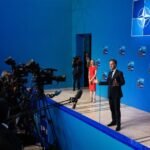
The declaration outlined NATO’s priorities for strengthening military readiness, expanding defense production, increasing investment in armed forces and enhancing cooperation among allies, News.az reports.

***

Leaders agreed that the current global security environment requires faster decision-making, greater military preparedness and closer coordination across the alliance. The document also emphasized the importance of maintaining NATO’s unity as geopolitical tensions continue to rise across Europe, the Middle East and beyond.

The summit demonstrated that NATO is seeking to adapt to an increasingly unpredictable security landscape. Beyond reaffirming Article 5—the alliance’s collective defense principle—leaders stressed the need to modernize military capabilities, improve logistical readiness and accelerate defense industrial production. The declaration is expected to guide NATO’s strategic planning over the coming years as member states confront challenges ranging from Russia’s war in Ukraine to instability in the Middle East and emerging cyber and hybrid threats.

Why is this summit considered significant?

This year’s summit was held at a time when NATO faces several overlapping crises that have fundamentally reshaped the global security environment. Russia’s full-scale war against Ukraine remains Europe’s largest military conflict since World War II, while tensions between the United States and Iran have intensified following repeated military confrontations in the Persian Gulf. At the same time, NATO members are grappling with growing concerns over defense spending, energy security, military production and the long-term balance of responsibilities within the alliance.

The summit was also closely watched because it offered an opportunity to assess whether NATO could maintain unity despite political differences among its members. Leaders sought to reassure allies that the alliance remains capable of responding to multiple crises simultaneously while adapting to evolving military threats. Decisions made in Ankara are expected to influence NATO’s strategic direction for years to come, particularly regarding support for Ukraine, burden-sharing among allies and future deterrence policies.

What did NATO Secretary General Mark Rutte say?

NATO Secretary General Mark Rutte described the summit as evidence that the alliance is becoming stronger through increased defense investments by its European members and Canada. He praised governments that have committed additional funding to modernize their militaries, arguing that higher defense spending is essential for maintaining NATO’s credibility and ability to deter potential adversaries. According to Rutte, the alliance’s collective strength depends not only on political unity but also on sustained investments in military capabilities and defense industries.

Rutte emphasized that NATO is entering a new phase in which member states are expected to assume greater responsibility for their own security while continuing to cooperate closely with the United States. He noted that stronger national armed forces ultimately enhance NATO’s collective defense posture by improving interoperability, readiness and resilience. His remarks reflected the alliance’s broader effort to prepare for a security environment that is becoming increasingly complex and unpredictable.

Is Europe taking on a larger share of NATO’s defense burden?

One of the clearest messages emerging from the summit was that European allies are assuming a larger role in financing and strengthening NATO’s military capabilities. Canadian Prime Minister Mark Carney said the defense burden is gradually shifting away from the United States as European governments significantly increase military spending. This represents a major change from previous years, when Washington repeatedly criticized allies for failing to meet NATO’s defense spending targets.

European governments have accelerated defense investments in response to Russia’s invasion of Ukraine and growing concerns about future security challenges. Increased spending is expected to fund new weapons systems, expand ammunition production, modernize military infrastructure and improve force readiness. NATO officials argue that a more balanced distribution of defense responsibilities will ultimately strengthen the alliance by making it less dependent on any single member while improving Europe’s capacity to respond independently to regional crises.

Has Donald Trump’s position on NATO changed?

Donald Trump adopted a noticeably more constructive tone toward NATO than he has in the past. Throughout much of his political career, he criticized NATO allies for spending too little on defense and questioned whether the United States should continue carrying such a large share of the alliance’s military burden. His comments often raised concerns among European leaders about Washington’s long-term commitment to NATO.

At the Ankara summit, however, Trump welcomed the increased defense spending commitments announced by European allies and acknowledged that many member states are responding to long-standing US concerns. Rather than criticizing NATO, he praised allies for investing more heavily in their militaries and suggested that these changes have improved the alliance’s overall effectiveness. While questions remain about future US policy, Trump’s remarks indicated a more cooperative approach than in previous years.

What happened between Trump and Ukrainian President Volodymyr Zelensky?

Trump and Ukrainian President Volodymyr Zelensky held an important bilateral meeting on the sidelines of the summit to discuss the war, military assistance and prospects for future negotiations with Russia. The meeting came as Ukraine continues to face sustained Russian missile attacks and seeks additional Western military support to strengthen its air defenses and battlefield capabilities.

During the talks, Zelensky thanked the United States for its continued assistance and emphasized Ukraine’s urgent need for more advanced air defense systems, particularly Patriots. The two leaders also discussed Ukraine’s long-term defense strategy and ways to strengthen the country’s domestic military capabilities. Their meeting underscored that Ukraine remains one of NATO’s highest strategic priorities despite increasing attention to other international crises.

What new military support did Trump announce for Ukraine?

One of the most closely watched announcements from the summit concerned Trump’s statement that the United States would provide Ukraine with the capability to manufacture its own Patriot missile defense systems. Currently, only Japan and Germany possess licenses to produce these sophisticated air defense systems, making the proposal potentially significant for Ukraine’s future military independence.

If implemented, the initiative could reduce Ukraine’s reliance on direct foreign deliveries by allowing domestic production of critical components over time. Analysts say such a move would represent a major shift from emergency military assistance toward building Ukraine’s long-term defense industrial base. Although many technical and political details remain unclear, the announcement suggests Washington is considering deeper forms of military cooperation with Kyiv.

Why are Patriot systems so important?

Patriot missile defense systems have become one of Ukraine’s highest military priorities because they provide highly effective protection against ballistic missiles, cruise missiles, aircraft and drones. Since Russia intensified long-range missile strikes against Ukrainian cities and infrastructure, Patriot batteries have played a crucial role in intercepting incoming attacks and protecting civilian populations.

Ukraine has repeatedly appealed to Western allies for additional Patriot systems because demand far exceeds the number currently deployed. Beyond defending cities, Patriots help safeguard critical infrastructure, including power plants, military facilities and transportation networks. If Ukraine eventually gains the ability to manufacture aspects of the system domestically, it could significantly improve the country’s long-term capacity to sustain its own air defenses regardless of fluctuations in international military aid.

What did Trump say about ending the war?

Trump argued that strengthening Ukraine’s military capabilities could create the conditions necessary for meaningful negotiations with Russia. According to him, allowing Ukraine to develop stronger defensive systems and greater long-range strike capabilities would increase pressure on Moscow and potentially encourage the Kremlin to seek a diplomatic settlement.

His comments reflected a broader strategic view that successful negotiations often require military leverage. Rather than advocating immediate concessions, Trump suggested that improving Ukraine’s position on the battlefield could ultimately help create opportunities for peace talks. While many details remain uncertain, the remarks indicate that Washington continues to see military support and diplomacy as interconnected rather than competing approaches.

Did Zelensky say anything about Russia’s position?

Zelensky told reporters that he believes Russian President Vladimir Putin’s conditions for ending the war are beginning to change. Although he did not elaborate on exactly how Russia’s position has evolved, his comments suggested that Ukrainian officials see possible shifts in Moscow’s approach as the conflict continues.

At the same time, Zelensky stressed that sustained military support from Western partners remains essential. He argued that any future negotiations must be conducted from a position of strength and warned that reducing military assistance too early could weaken Ukraine’s bargaining position. His remarks reflected Kyiv’s long-standing view that diplomacy and military resilience must proceed together.

Will Trump meet or speak with Vladimir Putin?

Trump said he expects Ukrainian President Volodymyr Zelensky and Russian President Vladimir Putin to meet sometime “soon,” although he did not announce any specific timeline or venue. He also confirmed that he planned to hold a conversation with Putin later in the day, suggesting that diplomatic contacts between Washington and Moscow remain active despite continuing hostilities.

Although no formal peace negotiations have been announced, Trump’s comments indicate that diplomatic efforts continue alongside military developments. Any direct talks involving Zelensky and Putin would likely represent the highest-level negotiations since earlier stages of the conflict, although significant differences between the two sides remain unresolved.

What did Denmark say about Greenland?

Greenland became an unexpected topic during the summit after Danish Prime Minister Mette Frederiksen firmly rejected any suggestion that the autonomous territory could be sold. Declaring that “Greenland is not for sale,” Frederiksen emphasized Denmark’s commitment to protecting Greenland’s sovereignty while respecting the island’s self-governing institutions.

Greenland’s own prime minister reinforced that message, stating that decisions about the territory’s future belong solely to its people. The issue has attracted growing international attention because Greenland occupies a strategically important position in the Arctic, where competition among major powers has intensified due to military, economic and environmental interests.

Was there any announcement about F-35 fighter jets?

Turkish President Recep Tayyip Erdoğan said Donald Trump had given encouraging signals regarding a possible sale of F-35 fighter jets to Türkiye. Ankara has long sought to return to the F-35 program after being removed following its purchase of Russia’s S-400 air defense system, a decision that led to US sanctions and the suspension of Turkish participation.

Although Erdoğan described recent discussions as positive, no formal agreement has been announced. Any future deal would require complex political and technical negotiations involving both governments. Nevertheless, the comments suggest that relations between Washington and Ankara may be improving after years of disagreement over defense cooperation.

What happened with Iran after the summit?

Only hours after the NATO summit concluded, the United States launched another round of military strikes against Iranian targets. Iranian media reported explosions near two coastal cities, marking the latest escalation in a rapidly intensifying confrontation between Washington and Tehran.

The timing of the strikes drew particular attention because they followed immediately after world leaders concluded discussions on international security. The operations came amid ongoing tensions over attacks on commercial shipping in the Strait of Hormuz and broader concerns about Iran’s regional military activities. The latest strikes further increased fears that the conflict could expand beyond isolated military exchanges.

What did Trump say about Iran?

Trump announced that the Memorandum of Understanding with Tehran “is over,” signaling the end of the current framework governing relations between the two countries. Despite the tougher rhetoric, he also stated that diplomatic engagement remains possible and suggested that peace talks could continue if Iran chooses to negotiate.

The combination of military action and continued openness to diplomacy reflects Washington’s strategy of applying pressure while leaving room for political dialogue. Whether Tehran will respond through negotiations or further military action remains uncertain, making the situation one of the most closely watched international crises.

Why are the Iran strikes important?

The latest US military strikes significantly increase tensions across the Middle East and raise concerns about the possibility of a broader regional conflict. Iran occupies a central position in Gulf security, and any confrontation involving Tehran has implications far beyond the two countries directly involved. Military escalation could affect regional stability, international shipping routes and global energy markets.

Particular attention is focused on the Strait of Hormuz, through which a substantial portion of the world’s oil exports passes each day. Any disruption to maritime traffic could have significant economic consequences worldwide. Analysts also warn that Iran or its regional allies could retaliate against US interests, creating the risk of further military escalation involving additional countries.

What are the main takeaways from today’s developments?

The Ankara summit demonstrated that NATO is seeking to strengthen its military capabilities while adapting to an increasingly unstable international security environment. European allies signaled a willingness to assume greater responsibility for collective defense, while the United States reaffirmed its support for Ukraine through new military initiatives. These developments indicate that NATO remains focused on deterring Russia while modernizing the alliance for future challenges.

At the same time, the US strikes against Iran immediately after the summit highlighted how interconnected today’s global security crises have become. Decisions made by NATO leaders now unfold alongside escalating tensions in the Middle East, illustrating that European security, regional conflicts and great-power competition are increasingly influencing one another. Together, the day’s events underscored the complexity of the current international landscape and the challenges facing world leaders as they attempt to balance military deterrence with diplomatic engagement.

The post What happened at today’s NATO summit — and what does it mean for Ukraine and Iran?​ appeared first on azeritimes.com.