Day: April 7, 2026
The opposition Lelo/Strong Georgia party has proposed naming the controversial Anaklia deep-sea port project after U.S. President Donald Trump, envisioning it as the “gateway of the Trump Route to the Western world,” amid concerns that a planned transit link between Armenia and Azerbaijan could bypass Georgia.
“Following Armenia-Azerbaijan [peace] agreement, a crucial transit route emerged in the South Caucasus, which has been called Trump Route,” Irakli Kupradze, Lelo’s Secretary General, announced during April 7 “special” briefing.
“This route must not bypass Georgia, and this can only be realized through the construction of the Anaklia port, which would be a logical continuation of the Trump Route,” he noted. “We call on all the stakeholders to name Anaklia port after Trump and make it the gateway for the Trump Route for the Western world, which will bring us security, Western investments, and economic prosperity.”
The construction of the Anaklia deep-sea port, a mega-project in western Georgia, has been stalled for years amid recurring controversies and uncertainties surrounding relations between the Georgian government and foreign investors.
The port has featured strongly in the discourse of Lelo, whose founder, Mamuka Khazaradze, was a key shareholder in Anaklia Development Consortium, a Georgian-American venture to which the port project was initially awarded before the government terminated the contract amid controversies in 2020.
Georgian authorities decided to revive the project as Georgia’s “Middle Corridor” transit potential regained prominence amid Russia’s full-scale war in Ukraine. The government took a 51% stake and, in 2024, picked a Sino-Singaporean consortium to develop the project. Also in 2024, Belgian company Jan De Nul was awarded the tender to carry out the maritime infrastructure work for the port. However, observers have pointed out that the talks with the Chinese investor have stalled since, with the deal yet to be completed.
Critics of the Georgian government have repeatedly expressed concern that the Georgian Dream authorities are missing opportunities through the country’s growing isolation from the West, suggesting that the United States may be interested in the port amid competition with China and its stated interest in the South Caucasus’s transit potential.
The worries intensified amid the planned Trump Route for International Peace and Prosperity (TRIPP), a transit project announced as part of a U.S.-brokered peace deal between Armenia and Azerbaijan. The route is set to connect mainland Azerbaijan with its Nakhchivan Autonomous Republic through southern Armenia and, via that route, provide access to Armenia and Turkey while bypassing Georgia.
Observers have worried it could undermine Tbilisi’s widely promoted role as a Middle Corridor.
While it remains unclear how much the current Trump administration has focused on the port project, recent developments may point to continued U.S. interest in Georgia’s transit role despite largely frozen bilateral ties between Tbilisi and Washington.
In November 2025, Jonathan Askonas, Senior Advisor at the U.S. State Department, visited Georgia to discuss the Trump Route; in March 2026, Peter Andreoli, a representative of the U.S. State Department’s Bureau of European and Eurasian Affairs, also visited Georgia, holding meetings with various groups and visiting Anaklia port construction as part of his trip.
Shortly afterwards, on March 30, the U.S. State Department reported that Secretary of State Marco Rubio and Georgian Dream Prime Minister Irakli Kobakhidze spoke on the phone, the first such contact since the suspension of strategic partnership in 2024, to discuss “areas of mutual interest,” including “security in the Caucasus and Black Sea region.”
“Anaklia Deep Sea Port project, like Baku-Tbilisi-Ceyhan pipeline, is the single large-scale idea which is in full alignment with the declared strategic priorities of the United States and President Trump,” Kupradze said in a briefing. “The U.S. interest toward this project has not waned.”
Also Read:

- 07/04/2026 – Georgian Dream Expects ‘Delegation from U.S.’ in April Amid Ruling Party’s Hope for ‘Reset’
- 31/07/2025 – Dutch Investor Loses Anaklia Port Arbitration Case
- 02/04/2025 – U.S. Helsinki Commission Reprimands Georgian Dream for “Surrendering”Anaklia Port to Chinese Control
- 30/07/2024 – International Arbitration Court Denies Anaklia Development Consortium’s Claim Against Georgian Government

What has changed in Georgia’s grants law
Independent Georgian lawyers have criticised new amendments to the law on grants proposed by the ruling party on 6 April. The previous version of the law, updated in March 2026, was described by many local and international experts as “highly repressive towards civil society and independent media”.
The latest amendments change some elements of the law, but its repressive nature remains unchanged, according to most leading local experts.
The changes proposed by Georgian Dream on 6 April suggest that funds provided by diplomatic missions, consular offices and international organisations should not be classified as grants. This would mean that recipients of such funding would no longer need prior approval from the authorities.
However, the vague and overly broad wording included in the earlier amendments does not allow for this to be stated with certainty.
CONTEXT. A legislative package adopted on 4 March 2026 significantly expanded the definition of a “grant”. It now includes both financial and non-financial support if it “may be used to influence the country’s domestic or foreign policy, including in activities linked to the interests of a foreign state or political force”.
- Under this broad definition, anyone seeking foreign funding must obtain prior government approval. Violations are punishable by a fine equal to twice the amount of the grant, and may also carry a prison sentence of up to six years.
- These provisions apply not only to civil society organisations but also to businesses if they engage in public political activity.
- In addition, individuals working in organisations funded from abroad are barred from membership in political parties for eight years.
- A new article has also been added to the criminal code, expanding the definition of “extremism”. It now criminalises, among other things, calls for disobedience to authorities or the creation of alternative structures.
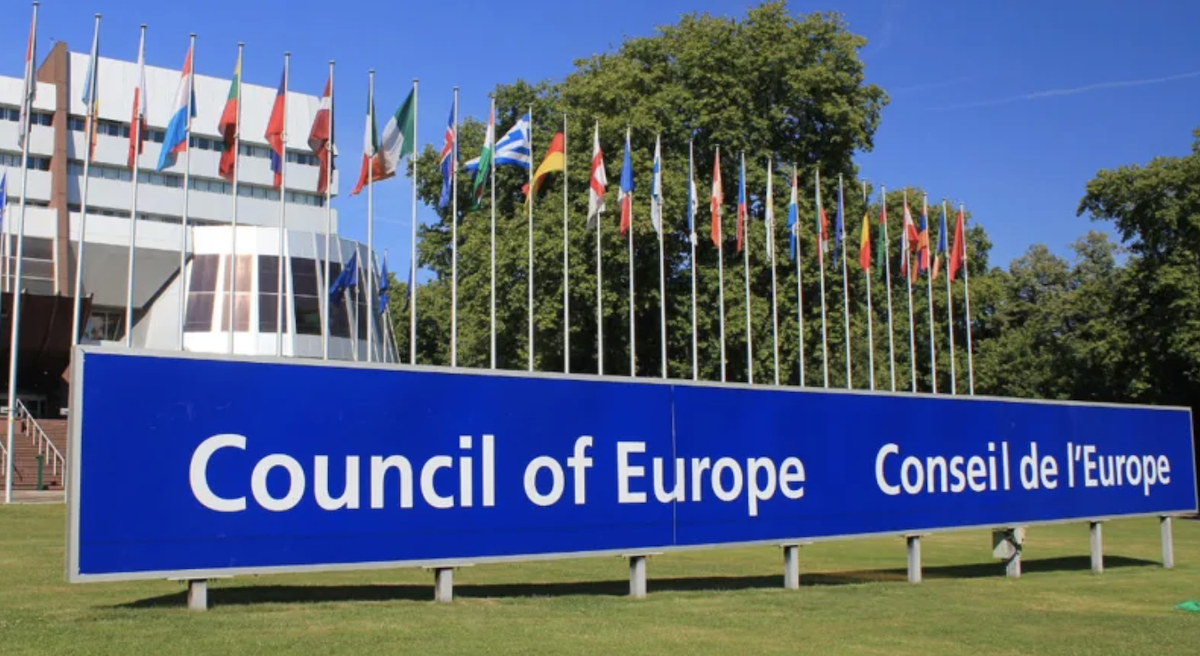
An expert group from the Council of Europe has called on the Georgian authorities to repeal the law on grants. It says the legislation allows for broad interpretation, significantly restricts freedom of association and expression, and violates fundamental rights, including privacy and participation in elections.

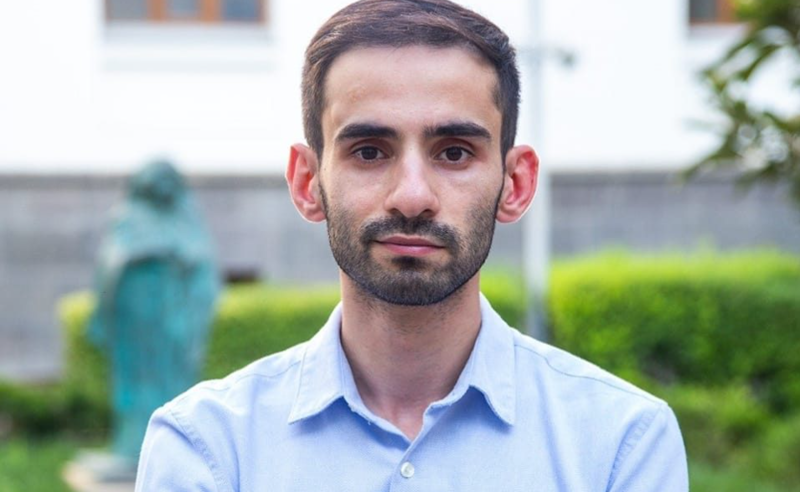
Nika Simonishvili, lawyer:
“Georgian Dream was in such a rush to restrict funding for organisations involved in public life that its March amendments to the law on grants ended up covering virtually all foreign transfers into Georgia, as well as commercial services provided by embassies under service contracts.
Clearly, this was not the authorities’ intention, nor was it necessary for them.
That is why they have now proposed another amendment to exclude such contracts from the scope of the grants law. However, it is drafted so poorly and vaguely that further changes will likely be needed.
But that is not the main issue. The core aim of the repressive law has not changed. Independent civil society organisations and media outlets will still be unable to receive funding.
I am surprised that anyone expected Georgian Dream to introduce any real easing of the law on grants.”

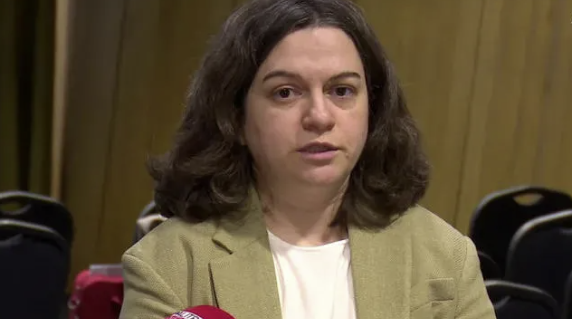
Nona Kurdovanidze, lawyer:
“In 2025, it was the same. Amendments were introduced to the law on grants, but additional changes were soon needed to correct ‘mistakes’.
The explanatory note to the new amendments says the restrictions did not apply to diplomatic missions, consular offices and international organisations accredited in Georgia. However, it also admits the wording allowed for different interpretations, which is why clarifications have been proposed.
In reality, this new draft — like the previous ones — is again poorly written, allowing for dozens of possible interpretations.”
What has changed in Georgia’s grants law