
Day: April 2, 2026

Markets had opened sharply lower after Donald Trump warned of intensified military action against Iran in the coming weeks, fuelling fears of a prolonged conflict and further disruption to global energy supplies, News.az reports, citing Xinhua.
***
Stocks recover from early sell-off
By mid afternoon trading, major US indices had clawed back much of their earlier declines.
The S&P 500 was down 0.1 percent after falling as much as 1.5 percent earlier in the session. The NASDAQ Composite also slipped 0.1 percent, recovering from a drop of more than 2 percent, while the Dow Jones Industrial Average was lower by 0.3 percent after earlier losses exceeding 1 percent.
Analysts said markets remain highly sensitive to developments in the Middle East, with sentiment shifting rapidly in response to geopolitical headlines.
Hormuz developments offer cautious relief
Investor sentiment improved after Iranian state media reported that Tehran is drafting a protocol with Oman to manage shipping traffic through the Strait of Hormuz.
The route is a critical artery for global energy supplies, accounting for roughly a fifth of the world’s oil and gas flows.
Iranian officials said the proposed framework is aimed at facilitating safe passage and improving services for vessels, rather than restricting transit.
The move raised cautious hopes that some stability could return to oil markets after days of sharp volatility.
Oil prices remain elevated
Despite the announcement, oil prices remained significantly higher.
Brent crude was last up about 7 percent at just over 108 dollars per barrel, while US West Texas Intermediate futures were nearly 11 percent higher at around 111 dollars.
Prices had surged earlier in the session following Trump’s warning of intensified military operations, reflecting fears of supply disruptions linked to the conflict.
Investors remain cautious ahead of long weekend
Market participants continued to adopt a cautious stance ahead of the Good Friday holiday, which will see US markets closed while key economic data, including the monthly jobs report, is still due for release.
Analysts say the combination of geopolitical uncertainty and upcoming economic indicators is contributing to heightened volatility.
Outlook driven by conflict and energy markets
Strategists noted that markets are currently being driven largely by oil price movements, which are seen as a key barometer of the conflict’s trajectory.
While the prospect of reopening the Strait of Hormuz provided some relief, uncertainty remains high, particularly as tensions between the United States and Iran show little sign of easing.
Investors are likely to remain focused on geopolitical developments in the days ahead, with expectations of continued sharp swings in both equity and commodity markets until clearer signals emerge.
The post US stocks trim losses as Iran signals Hormuz shipping plan amid war tensions appeared first on azeritimes.com.

Please enable JS and disable any ad blocker
The post Trump Escalates Tariff Threat Against Drugmakers, With One Big Condition appeared first on azeritimes.com.
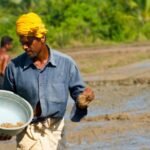
President Anura Kumara Dissanayake has instructed authorities to streamline distribution systems and identify alternative sourcing options to prevent shortages during the ongoing agricultural season, News.Az reports, citing CNN.
***
Government orders tighter controls and alternative sourcing
According to the President’s Media Division, the president directed officials to improve the efficiency of fertiliser distribution while introducing stricter controls to prevent hoarding.
Measures include enhanced oversight of supply chains, enforcement against stockpiling, and efforts to diversify import channels in response to global uncertainties.
Officials have also been tasked with maintaining strategic reserves to ensure continuity of supply under current conditions.
Focus on timely delivery to farmers
During a high level meeting at the Presidential Secretariat, authorities reviewed existing stock levels and distribution mechanisms.
Dissanayake emphasised the importance of effective district level coordination to guarantee that fertilisers reach farmers on time, particularly as planting activities begin in several provinces.
Ensuring timely access is seen as critical to avoiding disruptions in crop production and safeguarding food security.
Agricultural season raises urgency
The move comes as the agricultural season is already underway in parts of the country, increasing pressure on the government to prevent supply bottlenecks.
Any delays or shortages could have direct consequences for yields and rural livelihoods.
Global tensions impact supply chains
The government’s actions reflect broader concerns about the impact of geopolitical tensions on global supply chains, particularly for essential agricultural inputs.
Analysts note that countries reliant on imports are especially vulnerable to disruptions in fertiliser availability and pricing.
Sri Lanka’s latest measures signal a proactive approach to mitigating risks, as authorities seek to stabilise supplies and support farmers amid an uncertain global environment.
The post Sri Lanka moves to secure fertiliser supplies as Middle East conflict threatens imports appeared first on azeritimes.com.

The decision was announced on Thursday following a Monetary Policy Committee meeting, according to Yamungu Kayandabila, deputy governor of the Bank of Tanzania responsible for economic and financial policies, News.az reports, citing Xinhua.
***
Geopolitical tensions weigh on outlook
Kayandabila said policymakers opted for a steady rate to maintain stability amid external pressures, particularly ongoing tensions in the Middle East.
“The MPC resolved to keep the central bank rate unchanged at 5.75 percent to balance risks to inflation and the economic growth outlook,” he said at a press briefing in Dar es Salaam.
He added that geopolitical developments have disrupted global trade flows, investment patterns, and overall economic stability, reinforcing the need for a cautious policy approach.
Monetary policy framework adjusted
Alongside the rate decision, the central bank announced a technical adjustment to its monetary policy framework.
The Monetary Policy Committee agreed to narrow the central bank rate corridor from 200 basis points to 150 basis points, effective from April 2026, in a move aimed at improving policy transmission.
Following the change, the target range for the 7 day interbank rate will be set between 4.25 percent and 7.25 percent during the second quarter.
Focus on liquidity management and stability
The central bank said it will actively manage liquidity conditions to ensure that the 7 day interbank rate remains within the new corridor.
Analysts say narrowing the corridor could help anchor short term interest rates more effectively, improving the transmission of monetary policy to the broader economy.
Balancing inflation and growth risks
The decision to hold rates reflects a balancing act between supporting economic growth and containing inflationary pressures.
While domestic conditions remain relatively stable, external risks, including global market volatility and geopolitical tensions, continue to shape the policy outlook.
Economists note that maintaining the current rate signals confidence in Tanzania’s economic trajectory, while also leaving room for adjustments should global conditions deteriorate further.
The post Tanzania holds interest rate at 5.75 percent as central bank signals cautious stance appeared first on azeritimes.com.
The deals were announced on Thursday during the Sixth Belt and Road China–Malaysia Business Dialogue, held in Yinchuan, the capital of Ningxia Hui Autonomous Region in northwest China, News.Az reports, citing CNBC.
***
Agreements span agriculture, trade and investment
In total, 26 projects were agreed, covering sectors including economic and trade investment, as well as modern agriculture.
Officials said the agreements reflect an expansion of bilateral cooperation, as both countries seek to strengthen partnerships under the Belt and Road Initiative.
More than 200 government officials and business representatives attended the forum, discussing collaboration across a wide range of sectors, including science and technology, culture, and tourism.
Trade relationship continues to evolve
China has remained Malaysia’s largest trading partner for several consecutive years, with ties increasingly shifting beyond traditional commodity trade towards integrated supply chains and industrial cooperation.
Speaking at the event, Ma Hui, deputy head of the International Department of the Communist Party of China Central Committee, described the dialogue as a key platform for strengthening both political and economic engagement.
He urged both sides to take advantage of current opportunities to deepen cooperation and consolidate long term ties.
Focus on innovation and future industries
Chang Lih Kang, Malaysia’s Minister of Science, Technology and Innovation, said the dialogue plays an important role in providing stability amid global economic uncertainty.
He highlighted opportunities for joint ventures in areas such as energy transition and artificial intelligence, noting that Malaysia’s emerging AI academic sector has already benefited from collaboration with Chinese institutions.
Ningxia’s growing international role
The event also showcased Ningxia’s increasing prominence as an inland open economy hub.
Malaysia has become the region’s largest export market for agricultural products, with strong demand for items such as cool climate vegetables, goji berries, and frozen potatoes.
Tourism and cultural exchanges on the rise
Cultural and people to people exchanges are also accelerating. In 2025, the number of Malaysian tourists staying overnight in Ningxia rose by more than 200 percent compared with the previous year, making Malaysia the region’s leading source of international visitors.
The dialogue was co hosted by the China Economic Cooperation Center, the Malaysia China Business Council, and Ningxia’s regional foreign affairs office, highlighting the institutional support behind expanding bilateral ties.
Analysts say the latest agreements signal continued momentum in China–Malaysia relations, with both sides seeking to deepen economic integration while expanding cooperation into new and emerging sectors.
The post China–Malaysia sign $72m deals at Belt and Road dialogue as trade ties deepen appeared first on azeritimes.com.
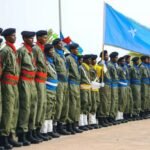
The decision, announced on Thursday, introduces the Protection of Civilians Policy for Security Operations and Armed Conflict, providing formal guidance to national forces on minimising harm to non combatants, News.Az reports, citing Reuters.
***
According to the Ministry of Defense, the policy sets out clear operational standards to ensure that military actions uphold human dignity and reduce civilian casualties.
Framework aligned with international law
Officials said the policy is grounded in Somalia’s constitution and national legal framework, while also aligning with international humanitarian law and international human rights law.
It incorporates principles from the Geneva Conventions and their additional protocols, which govern the conduct of armed conflict and the protection of civilians.
“This is to provide clear guidance to security forces to minimize civilian harm and uphold human dignity,” the ministry said in a statement.
Focus on accountability and operational conduct
The policy is expected to influence how Somali security forces plan and execute operations, particularly in populated areas where the risk to civilians is highest.
By establishing clearer rules of engagement and accountability mechanisms, authorities aim to reduce unintended harm and improve adherence to legal and ethical standards.
Context of ongoing security operations
The move comes as Somalia intensifies efforts to counter the militant group al-Shabaab, which has carried out a long running insurgency across the country.
Analysts say the adoption of the policy reflects a broader shift towards integrating civilian protection into national security strategy, particularly as Somalia advances its security transition.
Strengthening legitimacy and international cooperation
Experts note that improved civilian protection measures could enhance public trust in state institutions and strengthen cooperation with international partners.
They also highlight that aligning military conduct with global legal standards is critical for long term stability and legitimacy.
While implementation will be key, the policy marks a significant step in formalising Somalia’s commitment to safeguarding civilians amid ongoing conflict.
The post Somalia approves civilian protection policy to align military operations with international law appeared first on azeritimes.com.