Three days of heavy rain, storms and hurricane-force winds triggered by Cyclone “Harry” have caused billions of euros in damage across Italy, particularly in Sicily,…
 The South Caucasus News - SouthCaucasusNews.com
NEW!! Trump addresses the nation on Iran, claims the U.S.’s “core objectives” in the conflict are “near completion”.
He adds that “we’re going to finish it very fast. We’re getting very close.”
— Alex Raufoglu (@ralakbar) Apr 2, 2026

Many women business owners around the world can’t get access to the financing they need. The Women Entrepreneurs Finance Initiative, a World Bank–housed partnership, estimated that 400 million female entrepreneurs struggle to get loans, and serving them could lead to as much as $6 trillion in added value to the global economy.
Yet across the Asia-Pacific region, banks hesitate to lend to women entrepreneurs. That’s partly owing to stereotypes, but it’s also because lending criteria weren’t designed to capture how female-led small and medium-size enterprises operate. As Diana Tjoeng, head of Asia for Sydney-based NGO Good Return, points out, female business owners may lack official identity documents and formal credit histories, even if they have run their businesses for decades.
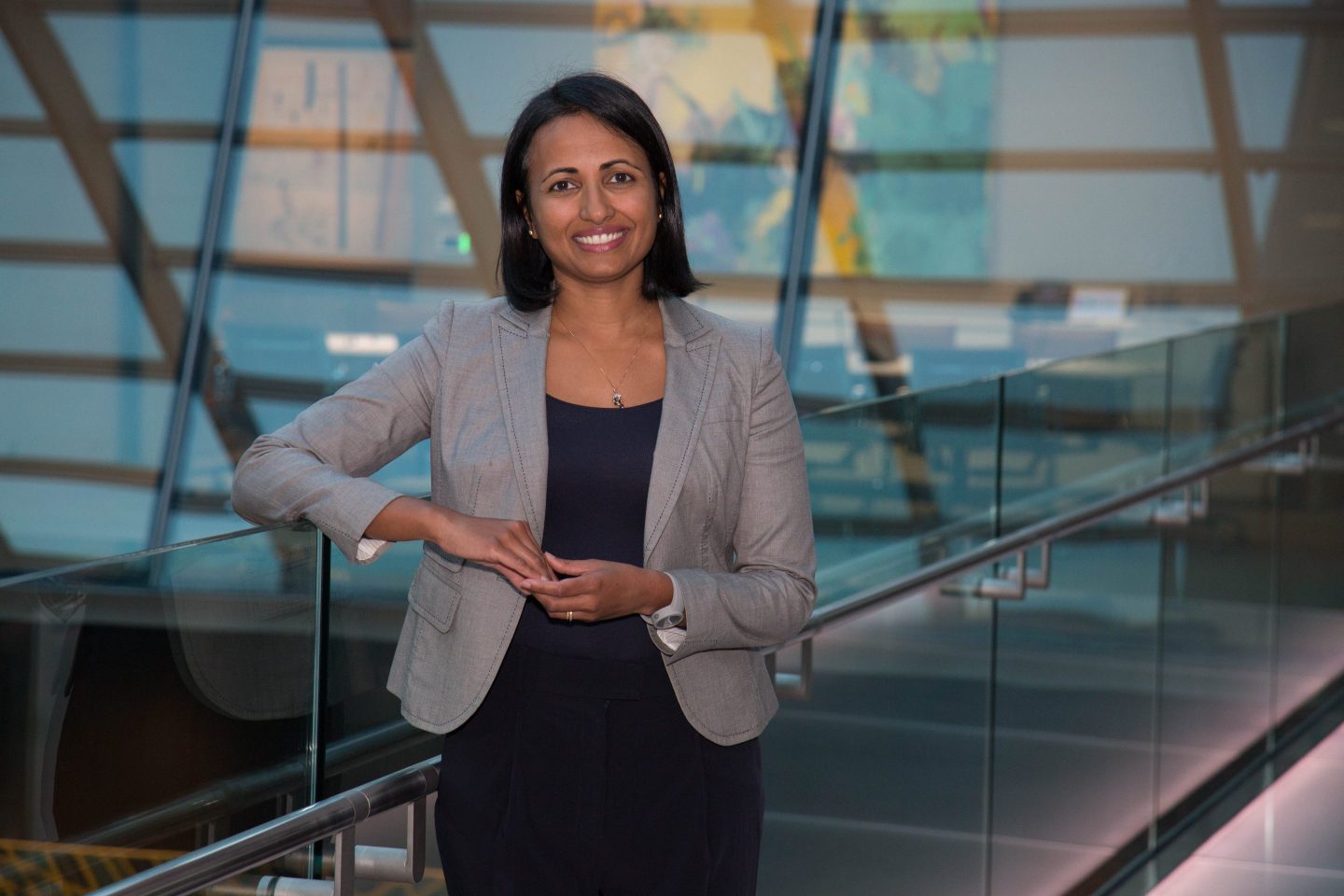
“The specific barrier is capital,” says Lisa George, global head of the Macquarie Group Foundation. “Without access to capital, it’s very hard to get social mobility and educational mobility in life.”
Earlier this year, the Macquarie Group Foundation committed 1 million Australian dollars ($696,000) to an impact investment fund managed by Good Return, which works to expand access to finance for women-led businesses across the Asia-Pacific region. The two groups have worked together since 2022, when Macquarie took part in what was then a proof-of-concept guarantee fund targeting women-led small and medium-size enterprises in Cambodia and Indonesia.
Good Return’s first impact investment fund closed at 1 million Australian dollars. That seed capital, deployed as loan guarantees to local financial institutions, catalyzed 5 million Australian dollars (approximately $3.5 million) in loans to more than 600 small businesses. The fund targets the “missing middle,” with loans of around $1,000 to $100,000 in size.
“Macquarie was really pleased with the results of the first fund,” says Shane Nichols, CEO of Good Return. “Their team provided pro bono support to us to help us design and structure our new fund.”
Tjoeng, Good Return’s head of Asia, cites the example of a female farmer in Cambodia, who was able to take out a loan of around $8,000 from a commercial bank without putting up collateral, thanks to a guarantee from Good Return’s first fund. The money allowed her to build two greenhouses, adding two cabbage harvests to her rice harvest, and thus increase her income.
Good Return’s second fund is structured as an evergreen vehicle: Rather than returning capital to investors at a fixed end date, it recycles proceeds back into fresh loan guarantees on a rolling basis. The organization estimates the model could unlock 50 million Australian dollars ($35 million) in loans to women-led businesses every five years.
For Macquarie, the Good Return partnership sits within a long tradition of corporate philanthropy. The Macquarie Group Foundation was established in 1985 by David Clarke, then–executive chairman of Macquarie.
“As a company is a member of the society in which it operates, it follows that one of its important duties is to work in a multitude of ways for the betterment of society,” Clarke said at the foundation’s formation. Since its launch, the foundation has contributed a cumulative 698 million Australian dollars ($487 million) to community organizations.
“Our founding chairman believed a company had an obligation to support the communities in which we operate,” George says. “Not only did he believe that about the company, he believed that about the individuals in the company.” In the most recent financial year, more than a third of eligible staff globally participated in some form of community work, which, according to George, includes activities like running interview and CV workshops for young Australians and refugees.
“The biggest benefit we get from corporate philanthropy is in employee engagement,” she continues. “It’s a positive halo effect for our most important stakeholder, the people that come in and out of the doors every day.”
Courtesy of Macquarie
Most of the foundation’s work is in Macquarie’s home of Australia, focusing on helping Australians find employment. “Good Return is probably the exception, rather than the rule,” George says. The foundation added impact investing to its work five decades ago to complement its traditional grantmaking process; the hope is that the foundation’s work will generate some return that can be recycled into other projects.
It’s a contrast to views in the U.S., where the idea of stakeholder capitalism—the idea that companies owe value to employees, customers, and communities, not just shareholders—faces a political backlash. Major U.S. companies including BlackRock, Meta, and Bank of America have quietly backed away from their diversity, equity, and inclusion commitments.
George, however, sees a different trajectory in the Asia-Pacific: Growing wealth across the region is creating a new generation of business leaders who want to formalize their social commitments in ways their peers in Europe and North America long have.
The idea that small amounts of credit could lift countries out of poverty was once one of international development’s most celebrated beliefs. Pioneered by Nobel laureate Muhammad Yunus and his Grameen Bank in Bangladesh, the model quickly spread across South Asia, sub-Saharan Africa, and Southeast Asia through the 1990s and 2000s.
But a proliferation of weakly regulated microfinance institutions led to a backlash. MFIs were associated with high levels of debt, yet didn’t lead to the development benefits promised by its proponents.
“The microfinance sector has been through an evolution,” Nichols says, “from being the wonder child, probably put on a pedestal it didn’t deserve to be on, to today, where it’s part of a broader financial inclusion discussion.
“Whether it’s somewhere safe to save, whether it’s a loan for education or a productive use, the ability to safely transfer money—everyone needs access to that, regardless of wealth level.”
The post Macquarie bets impact investing can fill an Asian financial access gap for the ‘missing middle’ appeared first on azeritimes.com.

The proposal is part of a broader strategy by SpaceX, led by Elon Musk, to position the company as a major player in artificial intelligence infrastructure, News.Az reports, citing Reuters.
***
The vision: data centers in orbit
SpaceX aims to deploy up to one million satellites designed to function as data centers in space. The idea is to overcome growing constraints faced by terrestrial infrastructure, particularly limitations related to energy consumption and water use.
Orbital systems could, in theory, benefit from continuous solar energy and avoid pressure on Earth’s power grids. This aligns with a wider industry trend as companies explore alternative ways to support rapidly expanding AI workloads.
Lessons from Microsoft’s failed project
The concept echoes Microsoft’s “Project Natick,” which tested underwater data centers. While technically successful, the project was ultimately discontinued due to high costs, scalability limitations and weak commercial demand.
Experts suggest that SpaceX’s orbital approach could face even greater barriers, particularly given the extreme cost of launching hardware into space and maintaining it over time.
Technical challenges in space
Operating data centers in orbit introduces complex engineering problems. Cooling systems, for instance, are difficult to manage in microgravity environments. Additionally, exposure to radiation and the harsh conditions of space can degrade hardware more quickly than on Earth.
Another critical issue is technological obsolescence. AI chips evolve rapidly, and replacing outdated components in orbit would be far more difficult and expensive than upgrading ground-based systems.
Economic viability under scrutiny
Analysts question whether the concept is financially realistic. Estimates suggest that building a large-scale orbital data center network could require trillions of dollars and thousands of rocket launches annually.
Even with advancements in reusable launch technology, costs remain a major constraint. Critics argue that unless launch expenses fall dramatically, such projects may struggle to compete with improving terrestrial alternatives.
Limited real-world applications
While technically feasible, orbital data centers may initially serve only niche markets. Potential use cases include military operations or space-based infrastructure, rather than mainstream cloud computing.
Most experts believe that improving Earth-based solutions, such as more efficient chips, renewable energy integration and next-generation cooling systems, is currently a more practical path forward.
A growing space-based AI race
Despite skepticism, interest in space-based computing is rising. Companies and startups are increasingly exploring orbital infrastructure as demand for AI processing power surges.
However, SpaceX’s plan stands out due to its scale and ambition, making it one of the most closely watched experiments in the future of global data infrastructure.
Outlook
SpaceX’s orbital data center vision represents a bold attempt to redefine how and where computing infrastructure is built. Yet significant technical, economic and regulatory barriers remain.
Whether the project becomes a transformative breakthrough or follows the path of earlier abandoned experiments will depend on future advances in launch technology, cost efficiency and global demand for AI computing capacity.
The post Musk wants SpaceX IPO to fund AI space data centers appeared first on azeritimes.com.

Stellantis opens new tab is discussing options for building electric vehicles in Canada with Chinese partner Zhejiang Leapmotor Technology (9863.HK), opens new tab, Bloomberg News reported on Wednesday, citing people familiar with the matter, News.Az reports.
***
Stellantis and Zhejiang Leapmotor Technology did not immediately respond to Reuters’ requests for comment.
The post Stellantis in talks to build Chinese EVs at Canadian plant appeared first on azeritimes.com.

His remarks come at a time of heightened geopolitical tension, particularly linked to developments involving Iran.
***
Growing tensions within NATO
At the core of the dispute is Washington’s frustration with European allies, whom Trump accuses of failing to contribute sufficiently to efforts aimed at safeguarding maritime routes in the Gulf region. The Strait of Hormuz remains one of the world’s most critical chokepoints for global energy supplies, and disruptions there carry significant economic and strategic implications.
What the U.S. Constitution says
From a constitutional perspective, the issue of treaty withdrawal remains ambiguous. While the U.S. Constitution clearly outlines the process for entering treaties – requiring approval from two-thirds of the Senate – it does not explicitly define how a president may exit such agreements. This legal grey area has long been debated among scholars and policymakers.
NATO treaty provisions
The NATO framework itself provides a formal withdrawal mechanism. Article 13 of the North Atlantic Treaty allows any member state to leave the alliance after giving one year’s notice. Notably, since NATO’s founding in 1949, no member has ever invoked this provision, underscoring the alliance’s historical stability.
U.S. law and congressional limits
Domestic U.S. legislation has sought to limit unilateral executive action. In 2023, Congress passed a law – signed by then-President Joe Biden – requiring Senate approval for any withdrawal from NATO. The measure, introduced by lawmakers including Tim Kaine and Marco Rubio, also prohibits the use of federal funds for such a move without legislative backing.
Conflicting legal interpretations
Despite this, legal interpretations remain contested. A prior opinion from the U.S. Department of Justice during Trump’s first presidency argued that treaty withdrawal authority resides exclusively with the executive branch. More recent analyses suggest that any attempt to withdraw could trigger a constitutional confrontation between the White House and Congress.
Political signals from Washington
Trump’s rhetoric has further fueled uncertainty. He has indicated that he is “absolutely” considering withdrawal, framing his stance as a response to what he describes as insufficient burden-sharing by European allies. His position has been echoed to some extent by Defense Secretary Pete Hegseth, who has refrained from firmly reaffirming U.S. commitments to NATO’s collective defense principle.
Experts such as Max Bergmann argue that beyond legal constraints, political will is decisive. Even without formal withdrawal, a reduced U.S. commitment could weaken NATO’s effectiveness and alter the strategic balance in Europe and beyond.
What happens next
Looking ahead, any attempt by the United States to exit NATO would likely face significant legal and political challenges. Courts could be called upon to interpret the balance of powers between Congress and the presidency, though such cases are historically rare and complex.
At the international level, treaty withdrawal is generally permissible if conducted in accordance with established procedures. The United States has previously exited agreements, including the Open Skies Treaty, without explicit congressional approval, setting precedents that could influence future decisions.
Ultimately, while a formal withdrawal would mark a historic shift in global security architecture, even raising the possibility signals growing strain within one of the world’s most enduring military alliances.
The post Can Trump pull the US out of NATO? appeared first on azeritimes.com.