Categories
South Caucasus News

Putin fears he will die during the May 9 parade in Moscow, but canceling the event is also dangerous


Categories
South Caucasus News

Official luncheon hosted in honor of Latvian President


On April 22, an official luncheon was hosted in honor of President of the Republic of Latvia Edgars …

Categories
South Caucasus News

The South Caucasus is quietly becoming an intelligence battleground. Power is no longer projected only through war—but through covert influence, corridors, and strategic positioning. Full analysis on Maskomania News maskomania.com/south-caucasus… #SouthCaucasus


Categories
South Caucasus News

Inside Armenia’s High-Stakes Balancing Act With the U.S., Russia, and Iran | EWTN News Nightly – EWTN UK


Inside Armenia’s High-Stakes Balancing Act With the U.S., Russia, and Iran | EWTN News Nightly  EWTN UK

Categories
South Caucasus News

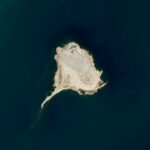
A School of Mud Volcano Islands in Azerbaijan


A School of Mud Volcano Islands in Azerbaijan

Image of the Day for April 21, 2026

The tadpole-shaped islands along the Absheron Peninsula were born by explosive mud volcano eruptions and reshaped by erosion.

Apr 21, 2026

View more Images of the Day:

Today’s story is the answer to the April 2026 puzzler.  

With its abundance of naturally occurring gas seeps and fires, Azerbaijan has long been called “the land of fire.” Yet burning mountains are just one of the geologic wonders found in the small Eurasian country on the Caspian Sea.

Azerbaijan is also home to at least 220 mud volcanoes, according to data from the Azerbaijani government, though some researchers put the total number closer to 350. That is thought to be one of the highest concentrations of mud volcanoes on Earth.

Mud volcanoes—as well as gas seeps—are found within sedimentary basins where geologic conditions have allowed hydrocarbons to accumulate. Such basins typically have fluids and gases, such as oil and methane, trapped beneath sedimentary rocks and under high pressure. Instead of erupting molten lava, mud volcanoes typically eject cold slurries of mud, water, methane, and other gases. Oil and gas form from the remains of marine organisms, such as phytoplankton and algae, which settle on the ocean floor and are later transformed by pressure and heat.

Many of Azerbaijan’s mud volcanoes are clustered near the cities of Baku and Qobustan on the Absheron Peninsula, an area where structural folds and faults in the landscape have created cracks that allow methane-rich mud to move up toward the surface. On land, mud volcanoes typically form conical structures anywhere from 20 to 400 meters (70 to 1,300 feet) tall and 100 to 4,500 meters in diameter.

There are also at least 140 underwater mud volcanoes in the South Caspian Sea along Azerbaijan’s coast, including eight islands in the Baku archipelago. The satellite image above shows one of them, the tadpole-shaped Xərə Zirə Adası (also known in Russian as Ostrov Bulla), which had violent eruptions in 1961 and 1995 and still has two “weakly active” mud volcano vents, said Adelaide University geologist Mark Tingay. The neighboring island to the northwest, Duvannı (Ostrov Duvannyy), is visible in the wide view below. It erupted in 2006 and still has active vents on its northern side.

“The islands’ ‘tails’ are most likely caused by currents eroding their weak mud deposits,” Tingay said. “They look like spits of eroded and redeposited sediment that formed on the lee of the island, where current and wave action have the least effect.”

There are two more tadpole-shaped islands to the south, with sediment “tails” also oriented to the southwest. One of these—Səngi Muğan Adası (Ostrov Svinoy)—is known for producing particularly violent eruptions, most recently in 2002 and 2008, Tingay said. One of its most notorious events occurred in 1932 when, without warning, it released a 150-meter-tall fireball in an eruption that caused 13 injuries and almost destroyed the island’s lighthouse, he added. 

Though mud volcanoes are interesting to geologists and often indicators of underground fossil fuels, they can be unpredictable and pose risks. “They have the potential for ‘paroxysmal eruptions’—short but extremely violent eruptions,” Tingay said. “They sometimes fuel huge fireballs and have created whole new islands in the space of a few minutes.”

NASA Earth Observatory images by Lauren Dauphin, using Landsat data from the U.S. Geological Survey. Story by Adam Voiland.

Downloads

August 30, 2025

You may also be interested in:

Stay up-to-date with the latest content from NASA as we explore the universe and discover more about our home planet.

Keep Exploring

Discover More from NASA Earth Science

Read More

The post A School of Mud Volcano Islands in Azerbaijan appeared first on azeritimes.com.


Categories
South Caucasus News

Iran accuses US of violating international law over vessel seizure in Gulf of Oman


Iran accuses US of violating international law over vessel seizure in Gulf of Oman

For help please visit help.ft.com. We
apologise for any inconvenience.

The following information can help our support team to resolve this issue.

Reason
Challenge
Request ID
9f0043713adbd83f
Status Code
403

Read More

The post Iran accuses US of violating international law over vessel seizure in Gulf of Oman appeared first on azeritimes.com.


Categories
South Caucasus News

Chile and the U.S. ink deals on critical minerals and security​


The countries formalized a memorandum of understanding Monday to expand collaboration across the critical minerals sector, from exploration to processing, Chile’s Foreign Ministry said in a statement, News.Az reports, citing foreign media.

***

Chilean Foreign Minister Francisco Pérez Mackenna said the agreement seeks to reinforce secure and resilient supply chains, promote value-added production and create conditions to attract investment.

“This agreement aims to strengthen resilient and secure supply chains, move toward greater value generation and create the right environment to attract and develop investment,” he said.

Asked about potential U.S. interest in participating in a rare earth project in Chile, U.S. Ambassador Brandon Judd said Washington is focused on supporting diversification of critical minerals.

“That is going to bring more jobs, it will help everyone,” he said during the signing ceremony.

Regarding security, the countries amended an agreement on narcotics control and law enforcement cooperation. Under the updated framework, the United States will support joint efforts between the Federal Bureau of Investigation and Chile’s Investigations Police.

Washington will provide $1 million in technical assistance, training and technological equipment to strengthen institutional capacity in combating drug trafficking, money laundering and cybercrime.

Pérez Mackenna highlighted the importance of shared intelligence, specialized training and coordinated action to address complex criminal networks.

“Chile will now play a leading role internationally in the fight against organized crime. We will not face drug trafficking, human trafficking, smuggling, money laundering or cross-border criminal groups alone,” Public Security Minister Trinidad Steinert said.

The post Chile and the U.S. ink deals on critical minerals and security​ appeared first on azeritimes.com.


Categories
South Caucasus News

Turkish athlete wins record 13th European gold in wrestling​


Kayaalp, 36, defeated Hungary’s Darius Attila Vitek 7-1 to claim the Greco-Roman 130 kg title in Tirana, Albania, News.Az reports, citing Turkish media.

***

With the victory, he became the first wrestler to win 13 gold medals at the European championships.

The Turkish athlete has now secured 13 gold and two silver medals across 15 European championship finals.

He has also won three Olympic medals, including one silver and two bronze.

The post Turkish athlete wins record 13th European gold in wrestling​ appeared first on azeritimes.com.


Categories
South Caucasus News

Hungary found guilty by EU’s top court over anti-LGBTQ laws​


The European Court of Justice said the law Hungarian lawmakers approved in 2021 violated the EU’s values as set out in Article 2 of its treaty, thus breaking its law. It’s the first time an EU member state has been found guilty of breaking EU law based on its founding values, News.Az reports, citing The Guardian.

***

The Hungarian law was ostensibly put in place to protect children from sexual abuse, increasing sentences for sex crimes and creating a public database of sex offenders.

But it also restricted LGBTQ content for students under 18. It also restricted advertising deemed to popularize same-sex relationships or genderqueer identities. The Hungarian Parliament overwhelmingly approved the legislation 157-1.

The anti-LGBTQ law was pushed by Hungarian Prime Minister Victor Orbán, whose far-right Fidesz-KDNP alliance was defeated in an election earlier this month by Peter Magyar’s center-right Tisza Party.

During Orbán’s four terms in office, Hungary has seen its democratic standing in the EU slide through legislation and judicial overhauls. The country has become more aligned with Russia amid its war with Ukraine.

Magyar, meanwhile, campaigned on reestablishing Hungary’s relationship with the EU and bringing EU funds back into the economy. Some EU funds were frozen over Hungary’s anti-LGBTQ reforms, though Magyar hasn’t explicitly addressed what, if any, actions he will take on the law, The Guardian reported.

John Morijn, a professor of law and politics at the University of Groningen in the Netherlands, said the ECJ’s ruling Tuesday was historic.

“You cannot equate what is totally natural — that 10% of the population loves the same sex — with egregious crime,” he told the BBC.

The European Court of Justice said the law Hungarian lawmakers approved in 2021 violated the EU’s values as set out in Article 2 of its treaty, thus breaking its law. It’s the first time an EU member state has been found guilty of breaking EU law based on its founding values, The Guardian reported.

The Hungarian law was ostensibly put in place to protect children from sexual abuse, increasing sentences for sex crimes and creating a public database of sex offenders.

But it also restricted LGBTQ content for students under 18. It also restricted advertising deemed to popularize same-sex relationships or genderqueer identities. The Hungarian Parliament overwhelmingly approved the legislation 157-1.

The anti-LGBTQ law was pushed by Hungarian Prime Minister Victor Orbán, whose far-right Fidesz-KDNP alliance was defeated in an election earlier this month by Peter Magyar’s center-right Tisza Party.

During Orbán’s four terms in office, Hungary has seen its democratic standing in the EU slide through legislation and judicial overhauls. The country has become more aligned with Russia amid its war with Ukraine.

Magyar, meanwhile, campaigned on reestablishing Hungary’s relationship with the EU and bringing EU funds back into the economy. Some EU funds were frozen over Hungary’s anti-LGBTQ reforms, though Magyar hasn’t explicitly addressed what, if any, actions he will take on the law, The Guardian reported.

John Morijn, a professor of law and politics at the University of Groningen in the Netherlands, said the ECJ’s ruling Tuesday was historic.

“You cannot equate what is totally natural — that 10% of the population loves the same sex — with egregious crime,” he told the BBC.

The post Hungary found guilty by EU’s top court over anti-LGBTQ laws​ appeared first on azeritimes.com.


Categories
South Caucasus News

Lukashenko is moving away from Putin, Belarus is moving away from Russia; Minsk refuses Moscow