Categories
South Caucasus

Strategic plan to solve the geopolitical chess game in the Middle East


Achieving peace in the Middle East is complicated by overlapping dilemmas that stall progress. Historical border and land disputes are aggravated by the conflicting political goals of foreign powers interfering in the region. Religious and cultural animosities create distrust between communities, making compromise difficult. Not to mention the long history of broken peace agreements. To break the impasse, the following strategic document could be key in this geopolitical chess game.

By Ken van Ierlant
A good starting point is the standoff between Israel and Lebanon; the Shia militia Hezbollah (founded in 1982) must be neutralised; state authority has to be strictly enforced; international verification frameworks must be established; and financial isolation must be imposed. Dismantling the militia’s capabilities is a core prerequisite for regional stability.

1. The Lebanese Paradox and the “Béziers Dilemma”

However, this objective faces a profound security paradox:

  • Military Reality: Only the Israeli Defence Forces (IDF) possess the intelligence and firepower to physically destroy Hezbollah’s infrastructure (tunnels, rocket launchers), which is deeply integrated into society.
  • The Dilemma: Much like during the historical Albigensian Crusades (the sack of Béziers in 1209, “Kill them all…”), the enemy is entirely interwoven with the civilian population. However, a doctrine of destruction by the IDF does not solve the problem permanently; it radicalises the population and creates a breeding ground for a “Hezbollah 2.0.”
  • The Lebanese Reality: Although other population groups (such as the Maronite Christians) detest Hezbollah, they will not openly align themselves with the IDF as they did in 1982. The fear of a new, demographically destructive civil war and past trauma deter them. Ethnic cleansing (expelling millions of Shias to Syria/Tartus) is logistically, humanitarily, and geopolitically impossible.

2. The Core of the Chess Game: The Strategic Hudna

The international community has been forced to shift from solving to managing the conflict through a geopolitical race against the clock. The current framework agreement effectively functions as a tactical truce (hudna) with a strict two-year deadline [2026 Israel–Lebanon peace talks].

The Two Parallel Tracks include:

  1. The Nuclear Stopwatch: Following heavy Anglo-American-Israeli airstrikes on enrichment facilities (Natanz, Fordow), the Iranian breakout time has been successfully pushed back to 9 to 12 months. Weaponising a warhead for deployment will take over two years. This is the exact timeline the West has bought.
  2. Controlled Suffocation: During this two-year window, the regime in Tehran must collapse from within. The regime is terminally weakened by the elimination of Ayatollah Khamenei, the contested succession of his son Mojtaba, a failing economy, and massive domestic popular uprisings.

3. Regional and Global Shifts

The terminal phase of the Iranian regime is pulling the geopolitical rug out from under the Middle East:

  • The Proxies Collapse: Without the Iranian nuclear umbrella and hundreds of millions of dollars in subsidies, the Axis of Resistance crumbles. Hezbollah and Hamas transform from existential, heavily armed threats into marginalised local militias and criminal networks.
  • Russia and China cut their losses: Russia focuses purely pragmatically on maintaining its naval facility in Tartus (Syria) and abandons Tehran [The Moscow Times]. China strategically shifts its billions and energy security toward the wealthy, Sunni Gulf States [The Diplomat].
  • Europe as a damage controller: The European Union does not act as a strategic player but as a financier. Europe is deploying billions to rebuild the Lebanese state and army (LAF) to prevent new, destabilising refugee waves from heading toward the continent [2026 Israel–Lebanon peace talks].

4. Iranian Countermeasures and Sabotage

To thwart this dismantling process, Iran will not watch passively but will deploy asymmetric escalation:

  • The Nuclear Sprint: Halting IAEA inspections to secure the bomb as the ultimate guarantee of survival.
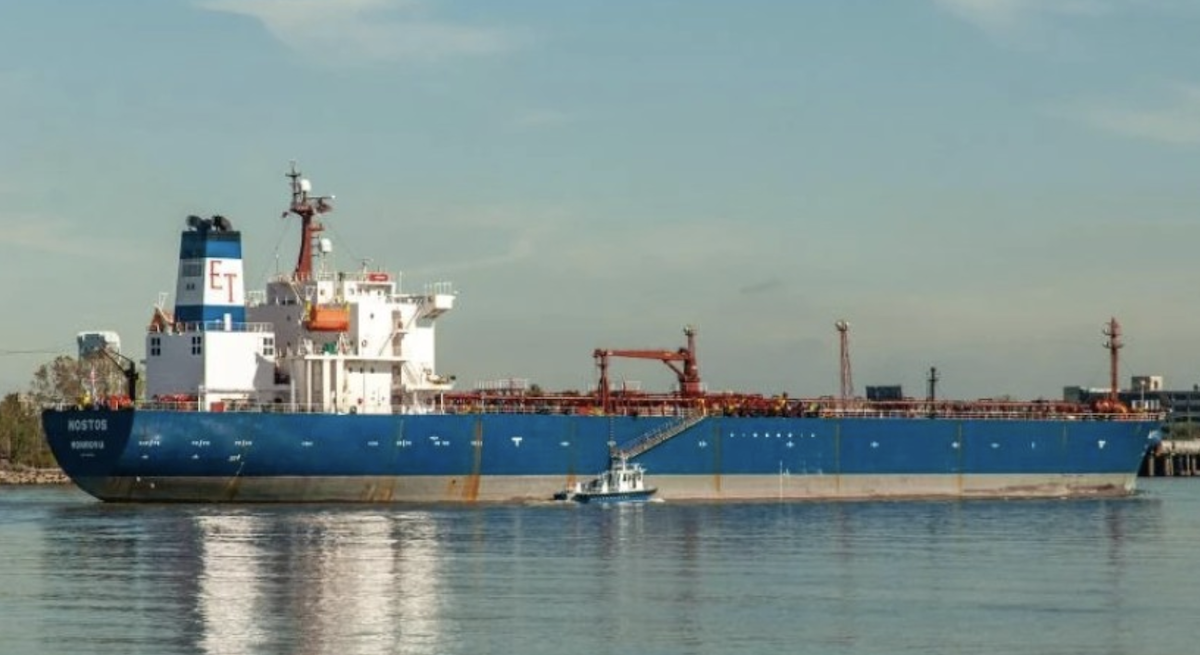
  • Economic Blackmail: Holding hostage or partially blocking the Strait of Hormuz to send global oil prices and inflation skyrocketing.
  • Asymmetric Terror: Activating sleeper cells in the West and instructing remaining militias (Houthis in Yemen, militias in Iraq) to conduct disruptive attacks.

5. Byproducts of the Conflict

The Israeli Prime Minister Benjamin Netanyahu is leveraging the framework agreement to secure his political future ahead of the October 2026 elections. He is claiming a historic victory over the Axis of Resistance, maintaining military control in the ‘Yellow Zone’ in Southern Lebanon to appease his right flank, and preparing a pivot toward a broad national unity government that excludes far-right ministers.

The plight of European Jews
A tragic byproduct of this chess game is that the Jewish population in Europe finds itself caught in the crossfire. Due to the asymmetric shift of the conflict to European streets and the explosion of antisemitism, the diaspora is becoming uprooted.

This is leading to a paradoxical migration flow: while highly educated Israelis flee the war at home, a record number of European Jews are making Aliyah (immigrating to Israel). They choose a country that militarily defends itself over a Europe that can no longer protect its minorities on the streets.

The post Strategic plan to solve the geopolitical chess game in the Middle East first appeared on The Liberum.
Categories
South Caucasus

Azerbaijan meets the challenges of climate change – new solutions for roads and bridges


Categories
South Caucasus News

Azerbaijan spends AZN 1.06 bln on reconstruction of liberated territories in H1 2026


For the purpose of reconstruction and restoration of the territories liberated from occupation, AZN 1.0641 billion, or 30.4% of the funds envisaged for the year, was used during January-June of this year based on cash order documents submitted by contracting organizations for the relevant projects. The Finance Ministry stated that AZN…

Categories
South Caucasus News

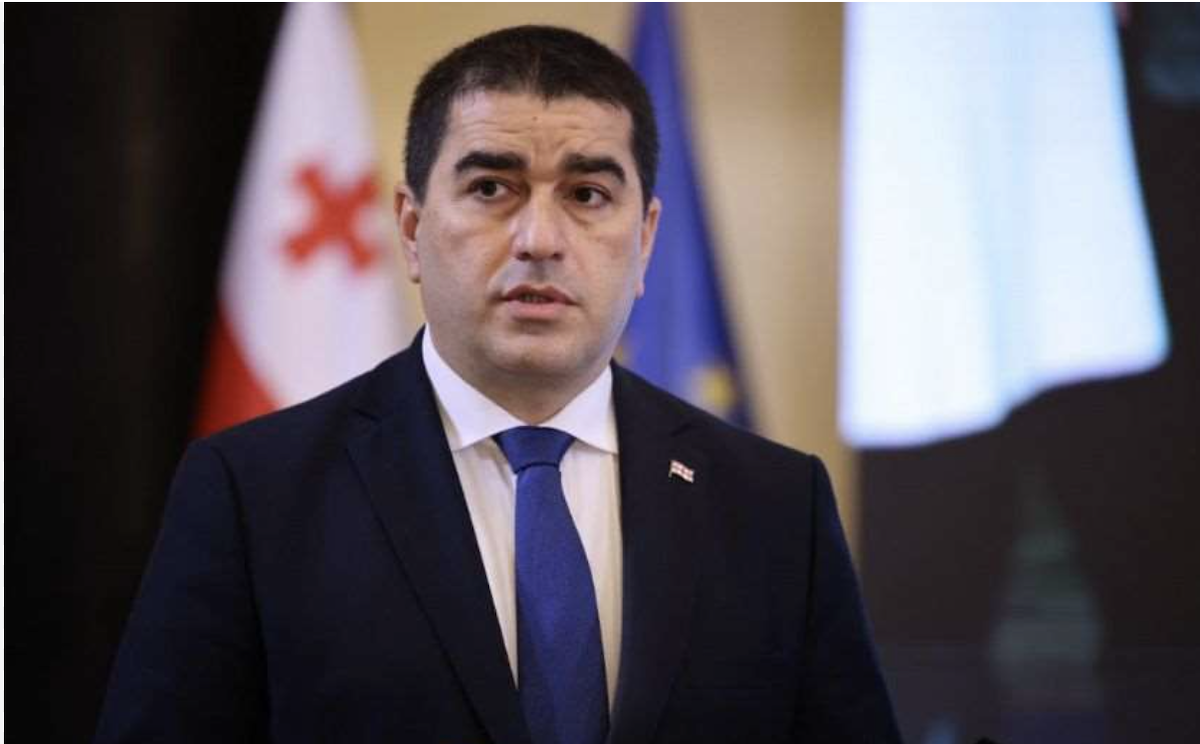
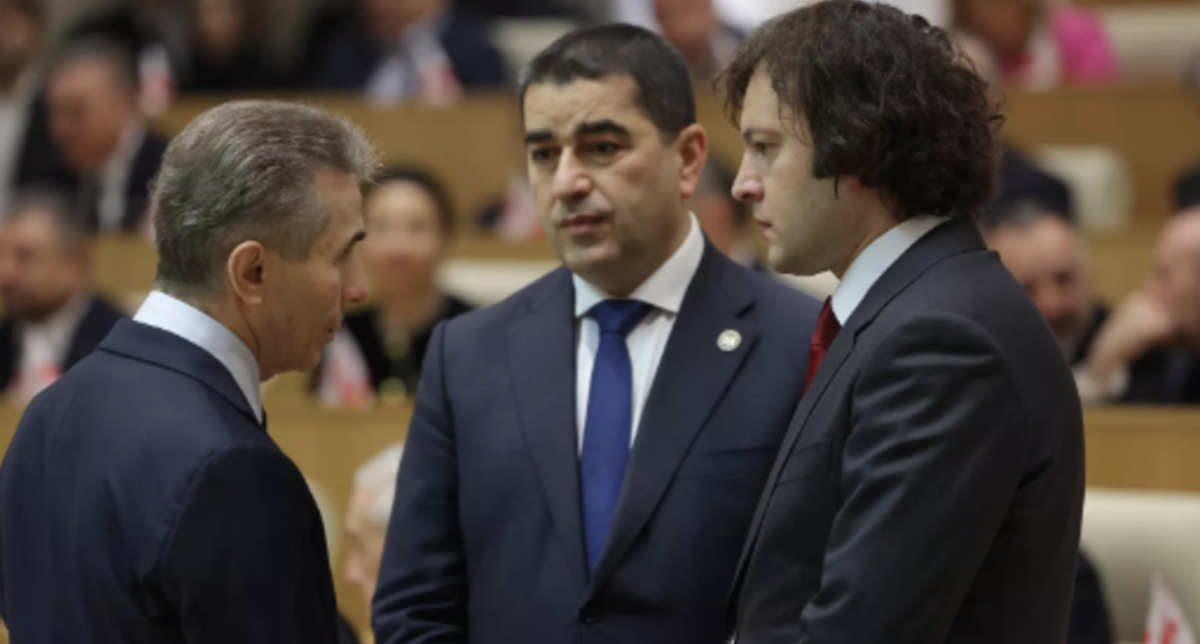
Georgian parliament speaker: ‘What’s the point of EU membership if you’re stripped of its main benefit?’


Papuashvili questions value of EU membership

Georgian parliament speaker Shalva Papuashvili says the country’s EU membership should not become an end in itself, and has criticised proposals which, he argues, would weaken the principle of consensus in the bloc’s decision-making process.

Papuashvili said that if such changes were introduced, remaining outside the EU could become more advantageous for some smaller states, as they would retain greater freedom to make independent decisions.

“The question will become increasingly relevant: what’s the point of membership if you’re stripped of its main advantage and leverage from the very beginning?” Papuashvili wrote on social media.

He said there was a growing perception that Europe’s larger states were seeking to reshape the EU’s system of governance, warning that such changes would threaten both the continent’s political balance and the bloc’s enlargement process, as well as the principles on which the European Union was founded.

Papuashvili was commenting on remarks by Germany’s foreign minister, who said several countries had joined Berlin’s initiative to abolish unanimity in EU decision-making.

According to Papuashvili, if such a reform were implemented, the European Union could evolve from a union of equal member states into one dominated largely by its biggest countries.

“EU membership is not an end in itself. That is true neither for current member states nor for candidate countries. Brexit was the clearest proof of that,” the parliament speaker wrote.

According to Papuashvili, the main purpose of joining the European Union is to expand a country’s opportunities, better protect its national interests and increase its influence over international decision-making. He argued that the principle of consensus is one of the key guarantees of that influence for smaller states, as it allows them to block decisions they consider harmful and defend their national interests.

“If the principle of consensus is abolished and decision-making comes to depend entirely on the will of larger states or a stable majority, smaller countries will lose this fundamental lever,” he wrote.

In his view, EU membership would then cease to represent the voluntary delegation of part of a country’s sovereignty in pursuit of shared economic and political goals, and could instead become a process that significantly reduces the influence of smaller states.

Papuashvili argued that a country which can no longer prevent decisions it considers harmful gradually loses both its political freedom and its ability to make sovereign decisions.

He said such a model could benefit larger states, whose economic and political weight already gives them considerable influence, but would represent a “catastrophic change” for smaller countries.

“That is why the question will become increasingly relevant: what’s the point of membership if you’re stripped of its main advantage and leverage from the very beginning?”

Papuashvili argued that the EU’s value lies precisely in allowing member states to defend their interests, influence decisions and block measures they consider undesirable.

He said the debate over changing the unanimity rule could also result in a slowdown of the EU’s future enlargement.

“Candidate countries are being offered not equal membership in the existing union, but a pre-designed system in which they will assume all the obligations of membership while their rights and influence are curtailed.”

According to Papuashvili, the key question for Georgia should not only be when it joins the European Union, but also what kind of European Union it joins and what rights new members will have.

“Membership that deprives a country of its sovereign rights and offers no mechanisms to defend them is not integration – it is the abolition of sovereignty.”

Papuashvili concluded his statement with an apparent reference to Greek mythology: “It seems that even Jupiter’s abduction of Europa is forgiven.”


Categories
South Caucasus

‘A masterclass in betrayal’: The British double agent who defected to Russia and taught enemy spies https://www.bbc.com/culture/article/20260724-the-british-double-agent-who-defected-to-russia-and-taught-enemy-spies


‘A masterclass in betrayal’: The British double agent who defected to Russia and taught enemy spies  bbc.com/culture/article/2026…

Categories
Azerbaijan Airlines plane crashes in Kazakhstan

London before Washington: What Zelenskyy wants from Britain’s new prime minister – Latest news from Azerbaijan


London before Washington: What Zelenskyy wants from Britain’s new prime minister  Latest news from Azerbaijan

Categories
Articles, Blog, and Tweets Blogs and Tweets

@mikenov: The #CIA played a major role in the ongoing U.S.-#Iran conflict and historical interventions, marked by intelligence tracking of Iranian leadership and suspected #Russia-n-backed drone strikes on agency stations. #CIA and the #Iran #war – Google


The #CIA played a major role in the ongoing U.S.- #Iran conflict and historical interventions, marked by intelligence tracking of Iranian leadership and suspected #Russia-n-backed drone strikes on agency stations.
#CIA and the #Iran #war – Google Search google.com/search?q=CIA+and+…

Categories
South Caucasus

В Абшеронском районе пропали мусорные контейнеры – люди выбрасывают отходы на дорогу. https://media.az/post/1068100370 #новости #mediaaz #Азербайджан #Мамедли #мусор #контейнер #антисанитария


В Абшеронском районе пропали мусорные контейнеры – люди выбрасывают отходы на дорогу.

media.az/post/1068100370

#новости  #mediaaz  #Азербайджан  #Мамедли  #мусор  #контейнер  #антисанитария


Categories
Articles, Blog, and Tweets Blogs and Tweets

@mikenov: #CIA #Azerbaijan maintains a delicate balance of strategic alignment with Western and #Israel-i interests against Iran, tempered by official military restraint and diplomatic pragmatism. Rather than acting as an overt combatant, Baku functions a


#CIA
#Azerbaijan maintains a delicate balance of strategic alignment with Western and #Israel-i interests against Iran, tempered by official military restraint and diplomatic pragmatism. Rather than acting as an overt combatant, Baku functions as a crucial energy, intelligence, and logistical partner within the broader U.S.-Israeli axis.

What is the place of Azerbaijan in this new emerging anti-Iran coalition? – Google Search google.com/search?q=What+is+…


Categories
South Caucasus News

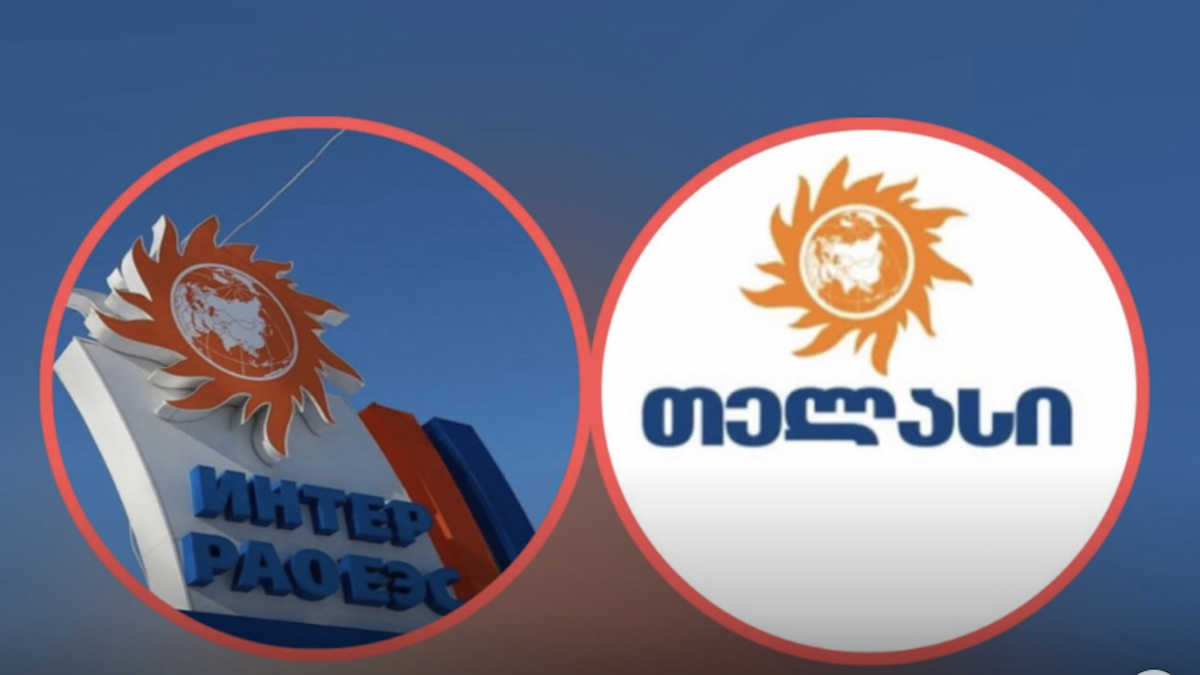
EU sanctions Inter RAO, Russian company controlling energy assets in Georgia


Inter RAO sanctioned by the EU

The European Union has imposed sanctions on Russian state-owned energy company Inter RAO, which indirectly owns Georgia’s Telasi, Telmico, Khrami HPP I and Khrami HPP II through its subsidiaries.

The decision could affect Inter RAO’s assets in Georgia as well as ongoing corporate transactions.

Telasi and Telmico both operate in Georgia’s electricity sector, but they perform different roles.

Khrami HPP I and Khrami HPP II (the Khrami hydropower cascade) form one of Georgia’s largest hydropower complexes. Located on the Khrami River in the Kvemo Kartli region, the two plants generate electricity and are an important part of Georgia’s power system, contributing significantly to the country’s domestic electricity production.

Telasi is the electricity distribution network operator for Tbilisi. The company owns and manages the capital’s power distribution infrastructure—including power lines, substations and other grid assets—and is responsible for delivering electricity to consumers.

Telmico is an electricity supply company. It purchases electricity on the wholesale market and supplies it to residential and commercial customers in Tbilisi. The company issues electricity bills and signs supply contracts with consumers.

Inter RAO was added to the EU sanctions list on 23 July as part of the bloc’s 21st package of sanctions against Russia.

According to the Council of the European Union, the Russian government-controlled company is one of the country’s largest energy groups and plays a significant role in the Russian economy.

According to the Council, the Russian Federation benefits financially from Inter RAO through both the taxes paid by the company and the dividends received by its owners. For that reason, the EU considers the company to be providing financial support to the Russian authorities, which Brussels holds responsible for the aggression against Ukraine and the annexation of Crimea.

According to the company’s ownership structure, Inter RAO is the indirect owner of 100% of the shares in the Netherlands-registered Silk Road Holdings B.V. The company directly owns a 75.108% stake in Telasi and a 75.471% stake in Telmico.

Inter RAO also indirectly owns the Netherlands-registered Gardabani Holdings B.V., which has full ownership of Khrami HPP I and Khrami HPP II.

At the same time, Silk Road Holdings has launched a tender offer to acquire the remaining 24.892% stake in Telasi. The offer closes on 31 July, applications will be reviewed until 7 August, and the transaction is scheduled to be completed on 21 August.

What impact could the sanctions have?

The inclusion of Inter RAO on the EU sanctions list could also affect the operations of the companies it indirectly controls in Georgia. Under EU sanctions, banks and companies based in the bloc may be prohibited from carrying out financial transactions, providing economic resources or delivering certain services to legal entities that are directly or indirectly controlled by a sanctioned company.

The restrictions could also limit Inter RAO’s ability to exercise its shareholder rights through its Netherlands-registered subsidiaries. This could affect voting rights, the appointment of directors, the approval and receipt of dividends, the acquisition or disposal of shareholdings, and other key corporate decisions.

Particular attention is also being paid to the planned acquisition of the remaining stake in Telasi. Because the tender offer is being made by the Netherlands-registered Silk Road Holdings, the transaction may require approval from the relevant Dutch regulatory authority, increasing the risk of delays or even suspension of the deal.

At the same time, the EU has not listed Telasi, Telmico or the Khrami hydropower plants as separate sanctioned entities. However, under EU sanctions rules, asset-freezing measures generally extend to companies that are directly or indirectly owned or majority-controlled by a sanctioned individual or entity.