
The new ambassador of Azerbaijan to Türkiye has been appointed.
Day: July 24, 2026
Trucker Calculator is a cost-per-mile and net profit calculator for trucking. You can analyze your profit and loss, not the gross the truck makes. Pick the period, add the total gross, working days, total miles and all the expenses of your unit. Learn what possible mistakes are made and how a minor change in targets makes a difference. For support or any questions feel free to contact at …
The status of internally displaced persons in Azerbaijan
On 23 July, Azerbaijani President Ilham Aliyev signed into law amendments to the Law on the Status of Refugees and Internally Displaced Persons and the Law on the Social Protection of Internally Displaced Persons and Persons Equated with Them.
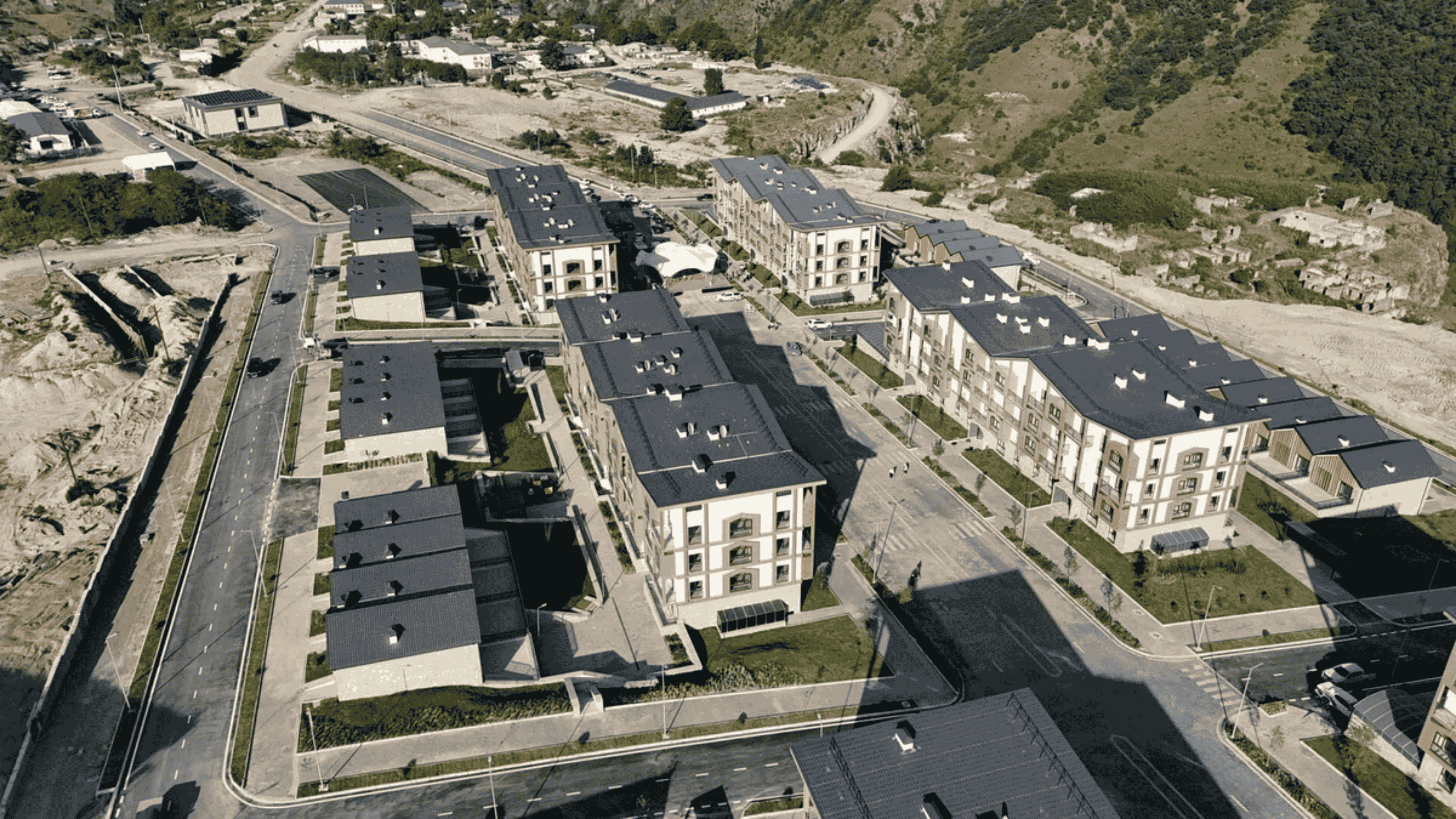
The amendments to the Housing Code provide for the creation of a Permanent Resettlement Fund in the territories liberated from occupation. Housing from the fund will be used to resettle internally displaced persons (IDPs) to the reclaimed territories and will later be transferred to them as private property.
The legislation also clarifies the grounds on which a person may lose IDP status. This applies to those who refuse housing offered by the state, as well as to those who are provided with alternative housing that meets the officially established housing standard for the relevant region instead of accommodation in their previous place of residence. At the same time, social protection measures will remain in place for three years after a person loses or voluntarily relinquishes their IDP status.
The changes are intended to strengthen the legal framework for the Great Return programme. In practice, however, they could significantly affect the lives of hundreds of thousands of people who have spent decades building their lives in Baku and other parts of Azerbaijan.

The purpose of the law and the benefits linked to IDP status
Under the previous legislation, internally displaced person (IDP) status entitled holders to a range of social benefits, including a monthly allowance of 60 manats (about $35) for each family member, state-funded tuition at fee-paying departments of public universities, and exemptions from certain government fees and utility payments.
For people forced to flee their homes in the early 1990s and who had spent decades living in dormitories, temporary housing units or other makeshift accommodation, these benefits represented a basic form of social support. The status also carried legal significance, as it formally recognised that they had been displaced against their will.
Under the new rules, the state is deemed to have fulfilled its obligations once it offers an internally displaced person permanent housing. If the person accepts the apartment, ownership is transferred to them, but they simultaneously lose their IDP status. Those who refuse the offer also lose their status and may forfeit the temporary accommodation provided to them in Baku or another city.
During a three-year transition period, only social support measures, including financial assistance and education benefits, will remain in place. The legal status itself, along with the other rights and guarantees associated with it, will cease to apply.
Freedom of choice and the problem of “any available housing”
The law refers to “alternative housing that complies with the standards established for the region of residence”. In practice, this means that internally displaced people are not necessarily offered housing in their native village or on their ancestral land.
For example, a person who owned several hectares of farmland before being displaced may now be offered a house in a newly built settlement with a plot of only 100–200 square metres. Ownership of their original land is not restored, as the state provides housing only. As a result, the concept of “returning home” is significantly narrowed.
According to dozens of families whose accounts have been shared on social media and in public appeals, many of the homes offered to them suffer from poor construction. They report leaking roofs during rainfall, flooded yards, and repeated disruptions to gas, water and electricity supplies. In some cases, applicants say they have been told verbally: “You’ve been given a house — be grateful, or you’ll lose that too.”
Similar complaints have also been submitted through official grievance mechanisms, although the issue has yet to generate wider public debate.

Life in Baku after three decades of integration
A large proportion of Azerbaijan’s internally displaced people have spent more than 30 years living in Baku and other major economic centres. Over that time, they have found employment, received an education, gained access to healthcare and established stable social networks. After losing their homes in the early 1990s, they were provided with temporary accommodation by the state, including places in dormitories, unfinished buildings and container settlements, as well as apartments in purpose-built residential complexes.
Under the new rules, however, this housing may be reclaimed once a person loses IDP status. As a result, many people face a difficult choice: accept an apartment in Karabakh and leave behind the life they have built in Baku, or lose both their IDP status and the accommodation provided to them by the state.
International human rights standards, including the UN Guiding Principles on Internal Displacement, require that return be voluntary, safe and carried out in dignity. These principles are based on freedom of choice, the provision of adequate housing and, wherever possible, the restoration of rights to former property. Under Azerbaijan’s new legislation, however, the state is considered to have fulfilled its obligations once it offers housing, while refusing that offer results in the loss of IDP status. This weakens the principle that return should be voluntary.

Official position and expert assessments
Pro-government media outlets, including Milli.az, Report.az and APA, have presented the amendments in a positive light, using phrases such as “restoring property rights”, “sustainable social support” and “providing a legal framework for the Great Return programme”.
MP Vugar Bayramov has also argued that the three-year transition period demonstrates the state’s continued commitment to social support. Official statements emphasise that the new housing is transferred into private ownership rather than provided on a rental basis, which the authorities say will encourage people to settle permanently in the region.
At the same time, independent observers and some human rights advocates argue that the changes restrict freedom of choice, fail to fully restore land rights and raise other concerns. They also point to the contrast between the urban lifestyles that many IDPs have built over the past three decades and the newly established rural settlements, as well as the risks of unemployment and inadequate infrastructure.
The status of internally displaced persons in Azerbaijan
Germany has hired Jürgen Klopp to coach its national team, giving the ex-Liverpool manager a daunting task to turn around the fortunes of a squad which failed yet again at the World Cup, the Associated Press reports.
Klopp signed a contract to coach Germany through to the 2030 World Cup, the German soccer federation said as he was presented at a news conference Friday.
“The national team brings us Germans together like almost nothing else can. That’s what makes this task so special for me,” Klopp said.
He replaces Julian Nagelsmann, who quit after Germany’s loss to Paraguay meant it failed to reach the last 16 of a men’s World Cup for the third time in a row.
It is Klopp’s first coaching job since he left Liverpool in 2024 citing fatigue. He said he was “recharged” in comments while in talks over the Germany job.
The man known for thrilling “heavy metal football” at Liverpool, Klopp was Germany’s preferred candidate as soon as Nagelsmann quit.
Azerbaijan’s ambassador to Italy has been recalled.
According to Report, President Ilham Aliyev signed an order on the matter.
By the order, Aslanov was recalled from his positions as Extraordinary and Plenipotentiary Ambassador of Azerbaijan to Italy, Malta, and San Marino, as well as Permanent Representative of Azerbaijan to the UN Food and Agriculture Organization (FAO), the World Food Programme (WFP), and the International Fund for Agricultural Development (IFAD).
By another presidential order, Rashad Aslanov has been appointed as Extraordinary and Plenipotentiary Ambassador of Azerbaijan to Türkiye.