Categories
South Caucasus News

Why is eastern Democratic Raepublic of Congo so vulnerable to armed groups?​


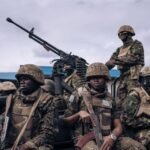
The assault took place in Mandeite village in Mambasa territory of Ituri province, about 165 kilometers southwest of the provincial capital, Bunia. Officials said many of the victims were artisanal gold miners working in the area when the attack occurred. Local administrator Janvier Kinyongi said the death toll remains provisional because reports of additional attacks were still emerging from nearby communities, making it difficult for rescue teams and security forces to fully assess the situation, News.Az reports.

***

The attack came only days after suspected ADF fighters reportedly abducted several people in the same region, raising concerns that the armed group is intensifying its operations in Ituri province. Residents in eastern Congo have become accustomed to living under the constant threat of violence, with attacks often taking place without warning in remote villages where government security is limited. The latest killings once again demonstrate the fragile security environment across eastern DRC, despite years of military operations aimed at dismantling armed groups operating in the region.

The incident also underscores the wider humanitarian crisis affecting eastern Congo. Continuous violence has forced millions of people to flee their homes, disrupted farming and mining activities, and left many communities dependent on humanitarian assistance. Human rights organizations have repeatedly warned that civilians remain the primary victims of the conflict, while authorities continue struggling to restore security across vast and difficult-to-control territories.

Who were the victims of the latest attack?

Local authorities said that many of those killed were artisanal gold miners, reflecting the dangerous conditions faced by people working in eastern Congo’s mineral-rich regions. Gold mining provides an important source of income for thousands of families in Ituri province, but many mining sites are located in isolated areas where armed groups frequently operate. Because security forces have only a limited presence in these regions, miners often become easy targets for attacks, robberies and kidnappings.

Officials have not yet released the identities of all the victims, and the number of casualties could increase as rescue teams gain access to surrounding villages. Some residents remain missing following the attack, while others fled into nearby forests to escape the violence. Humanitarian workers say fear and insecurity often delay rescue efforts because emergency teams cannot immediately enter areas where rebels may still be active.

The attack also highlights the broader impact of conflict on civilian populations. In addition to loss of life, such assaults destroy livelihoods, interrupt mining operations and discourage economic activity in already impoverished communities. Families who lose relatives are often left without their primary source of income, while survivors face ongoing psychological trauma and uncertainty. The repeated targeting of civilians has contributed to one of Africa’s largest displacement crises, with many communities forced to abandon their homes in search of safer areas.

Who is believed to be behind the killings?

Local officials believe the attack was carried out by the Allied Democratic Forces (ADF), one of the most active and dangerous armed groups operating in eastern Democratic Republic of Congo. Although the group has not officially claimed responsibility, the nature of the assault closely resembles previous ADF attacks carried out in Ituri and neighboring North Kivu province.

Security experts note that the ADF frequently targets isolated villages where government forces have only a limited presence. Fighters often launch surprise attacks before retreating into dense forests that provide natural protection from military pursuit. Such tactics have allowed the group to survive despite years of military pressure from both Congolese and Ugandan forces.

The latest attack follows reports that suspected ADF militants abducted several people in the same area only days earlier. Kidnappings have become one of the group’s common tactics, alongside killings, looting and attacks on civilian infrastructure. Human rights organizations say the rebels deliberately target vulnerable communities to spread fear, disrupt normal life and weaken confidence in the government’s ability to provide security.

Authorities continue investigating the incident while increasing military patrols across affected areas. However, security analysts warn that attacks are likely to continue unless broader efforts are made to strengthen governance, improve intelligence gathering and increase protection for civilians living in conflict-affected regions.

What is the Allied Democratic Forces (ADF)?

The Allied Democratic Forces, commonly known as the ADF, is an Islamist rebel movement that originated in Uganda during the 1990s. The group was initially formed by several factions opposed to the Ugandan government, but sustained military operations forced many of its fighters to relocate across the border into eastern Democratic Republic of Congo.

Over time, the ADF established bases in the dense forests of North Kivu and Ituri provinces, where difficult terrain and weak government control enabled it to survive repeated military offensives. The group gradually expanded its activities, becoming one of the region’s deadliest armed organizations through attacks on villages, kidnappings and massacres targeting civilians.

In recent years, the ADF has become affiliated with the Islamic State (ISIS/Daesh), which refers to the organization as part of its Central Africa Province. Although experts continue debating the exact operational relationship between ISIS leadership and the ADF, the affiliation has increased international concern over the conflict and encouraged greater regional counterterrorism cooperation.

The group finances its operations through illegal taxation, extortion, kidnapping for ransom, smuggling and activities linked to mineral-rich areas. Human rights organizations accuse the ADF of committing widespread atrocities, including killings, forced recruitment and attacks on schools, churches and health facilities. Today, the organization remains one of the greatest security threats facing civilians in eastern Democratic Republic of Congo.

Why does the ADF continue to target civilians?

According to Amnesty International and other human rights organizations, civilians have become the ADF’s primary targets over the past several years. While the group occasionally attacks military positions, most of its operations are directed against villages, farming communities and mining settlements where residents have little means of defending themselves.

One reason for these attacks is the need to obtain supplies. The ADF frequently loots food, medicine, fuel, livestock and money from communities to sustain its fighters operating in remote forest camps. Attacks on mining communities also provide opportunities to seize valuable resources and disrupt local economic activity.

Another important motive is retaliation. Researchers believe the group often targets villages suspected of cooperating with Congolese or Ugandan security forces. Communities located near military operations may become victims because insurgents believe local residents have shared intelligence with government authorities.

The ADF also uses violence to spread fear and maintain influence across rural areas. Large-scale attacks force thousands of civilians to flee, weakening government control and creating conditions in which armed groups can move more freely. Human rights organizations warn that repeated attacks against civilians may constitute war crimes and have called for greater accountability for those responsible.

Why is eastern Democratic Republic of Congo so vulnerable to armed groups?

Eastern Democratic Republic of Congo has experienced decades of conflict driven by political instability, ethnic tensions, weak governance and competition over valuable natural resources. The region contains significant deposits of gold, coltan, cobalt and other minerals that are highly sought after in global markets. Control over these resources has fueled violence among armed groups seeking financial gain.

The country’s vast forests, mountainous terrain and poor transport infrastructure also make it difficult for security forces to maintain a permanent presence across all affected areas. Many villages remain isolated and can only be reached after hours of travel, allowing armed groups to attack quickly before disappearing into remote areas.

In addition to geographical challenges, state institutions remain weak in many parts of eastern Congo. Limited access to education, healthcare, employment and public services has created conditions that enable armed groups to recruit members and expand their influence. Long-standing regional conflicts involving neighboring countries have further complicated efforts to stabilize the area.

Analysts estimate that more than 100 armed groups operate across eastern Congo, making the conflict one of the most complex security crises in Africa. While each group has different objectives, competition over territory and resources continues to fuel instability.

How serious is the humanitarian and security crisis?

The conflict in eastern Democratic Republic of Congo has produced one of the world’s largest humanitarian emergencies. Millions of people have been displaced from their homes, while many others remain trapped in areas affected by recurring violence. Humanitarian agencies struggle to deliver assistance because insecurity often prevents aid workers from reaching vulnerable communities.

According to the Kivu Security Tracker, the ADF killed 62 civilians and abducted 57 others in June alone, illustrating the continuing threat posed by the group. Beyond the ADF, numerous other armed organizations continue carrying out attacks that contribute to widespread insecurity throughout eastern Congo.

The violence has disrupted agriculture, mining, education and healthcare, leaving many communities without reliable sources of income or access to essential services. Children are particularly vulnerable, facing interrupted education, displacement and increased risks of recruitment by armed groups.

International organizations continue urging greater investment in civilian protection, humanitarian assistance and long-term development to address the root causes of conflict. Without lasting improvements in governance and security, experts warn that attacks like the latest massacre in Ituri province are likely to continue.

What is being done to stop the ADF?

The Democratic Republic of Congo and Uganda have been conducting joint military operations against the ADF since 2021 under Operation Shujaa. The campaign aims to destroy rebel camps, eliminate senior commanders and disrupt the group’s logistical networks through coordinated ground and air operations.

Military officials say the operations have succeeded in capturing or killing several ADF fighters and dismantling numerous bases. Nevertheless, the group has demonstrated a remarkable ability to adapt by dispersing into smaller units and relocating to remote forest areas where military access is limited.

Security experts argue that military operations alone will not eliminate the threat. They emphasize the importance of strengthening state institutions, improving intelligence sharing, expanding infrastructure and providing greater protection for civilians living in conflict-affected regions. Human rights organizations have also called for thorough investigations into attacks against civilians and greater accountability for those responsible.

Although joint operations have weakened parts of the ADF network, the latest attack illustrates that the organization remains capable of launching deadly assaults. Achieving lasting peace in eastern Democratic Republic of Congo will require not only continued security operations but also sustained political commitment, regional cooperation and long-term investment in economic development and governance.

The post Why is eastern Democratic Raepublic of Congo so vulnerable to armed groups?​ appeared first on azeritimes.com.


Categories
South Caucasus News

Why Is Georgia seeking a ‘Reset’ in relations with Germany?​


The timing of the appointment has attracted particular attention because it comes amid a period of strained relations between Tbilisi and Berlin. Georgian officials have presented the beginning of Kartozia’s mission as an opportunity to revive political dialogue and restore bilateral cooperation after months of diplomatic tensions, News.Az reports.

***

Under international diplomatic practice, ambassadors must present their credentials to the host country’s head of state before they can fully exercise their official responsibilities. While delays in credential presentations can occur for logistical or political reasons, the nearly year-long gap has been viewed by observers as reflecting the broader cooling of relations between Georgia and Germany.

The arrival of a new Georgian ambassador also coincides with an upcoming change in Germany’s diplomatic representation in Tbilisi following the completion of former German Ambassador Peter Fischer’s mission. Georgian leaders believe that the simultaneous arrival of new ambassadors on both sides could create favorable conditions for rebuilding trust and reopening channels of communication that have weakened in recent years.

Why have relations between Georgia and Germany deteriorated?

Relations between Georgia and Germany have become increasingly complicated over the past two years as broader disagreements emerged between the Georgian government and several Western partners over democratic governance, political reforms and the country’s foreign policy direction.

Germany has traditionally been one of Georgia’s strongest European partners, supporting the country’s democratic development, economic reforms and Euro-Atlantic integration since Georgia regained independence following the collapse of the Soviet Union. Berlin has also been an important contributor to development assistance, institutional reforms and educational cooperation.

However, relations began to deteriorate after criticism from European governments regarding several controversial laws adopted by the Georgian parliament, concerns over democratic backsliding, media freedom, judicial independence and the treatment of civil society organizations. Germany, together with other European Union member states, repeatedly urged the Georgian government to implement reforms consistent with EU values and Georgia’s candidate status obligations.

The Georgian government, meanwhile, has accused some Western diplomats of interfering in the country’s domestic political affairs. Officials in Tbilisi argue that certain foreign representatives exceeded the traditional boundaries of diplomatic engagement by openly criticizing government policies and supporting opposition narratives.

These disagreements gradually affected bilateral relations, reducing political contacts at the highest levels and contributing to a more cautious diplomatic relationship between the two countries.

Why is Prime Minister Irakli Kobakhidze calling for a “reset”?

Prime Minister Irakli Kobakhidze has described the appointment of Georgia’s new ambassador as an opportunity to “reset” relations with Germany, signaling the government’s intention to improve dialogue despite previous disagreements.

According to Kobakhidze, Germany remains one of Georgia’s most important European partners, and restoring constructive cooperation is in both countries’ interests. He emphasized that Germany has played a significant role in Georgia’s political, economic and institutional development since the 1990s and suggested that both governments should work toward returning bilateral relations to a more positive trajectory.

The term “reset” reflects an effort to move beyond recent diplomatic disputes without necessarily revisiting every disagreement that contributed to the deterioration of relations. Instead, Georgian officials appear to be focusing on rebuilding practical cooperation in areas such as trade, investment, education, regional security and European integration.

The Georgian government also believes that the appointment of both a new Georgian ambassador in Berlin and a future German ambassador in Tbilisi creates an opportunity to establish new diplomatic relationships that are less influenced by previous political tensions.

Whether such a reset will succeed will largely depend on both governments’ willingness to engage constructively while managing ongoing differences over domestic political developments and Georgia’s democratic reform agenda.

Why did Georgian officials criticize former German Ambassador Peter Fischer?

Prime Minister Kobakhidze directly blamed former German Ambassador Peter Fischer for contributing to the deterioration of Georgian-German relations. According to the Georgian government, Fischer’s public comments on domestic political issues went beyond the traditional role expected of foreign diplomats.

During his tenure from 2022 until June 2026, Fischer frequently commented on political developments in Georgia, including democratic reforms, media freedom, civil society and legislation that attracted criticism from the European Union. His statements often aligned with broader concerns expressed by EU institutions and Western governments regarding Georgia’s democratic trajectory.

The Georgian government viewed many of these remarks as interference in the country’s internal affairs. Officials argued that foreign ambassadors should maintain political neutrality and avoid becoming involved in domestic political debates.

Supporters of Fischer, however, argued that his statements reflected Germany’s longstanding commitment to democratic values, rule of law and Georgia’s European aspirations. Many European officials have consistently maintained that expressing concerns about democratic standards is a normal part of diplomatic engagement between partner countries.

The differing interpretations of Fischer’s role became symbolic of the wider disagreements that have emerged between Georgia and several Western partners over governance and democratic reforms.

Why is Germany important for Georgia?

Germany has been one of Georgia’s most influential European partners since the country regained independence in 1991. As Europe’s largest economy and one of the European Union’s leading political powers, Germany has consistently supported Georgia’s state-building efforts, economic modernization and institutional reforms.

Berlin has provided substantial financial assistance for infrastructure projects, education, public administration reform, environmental protection and economic development. German development agencies have worked closely with Georgian institutions for decades, while educational exchanges and business cooperation have steadily expanded.

Germany has also played an important diplomatic role by supporting Georgia’s sovereignty, territorial integrity and European integration ambitions. Following Russia’s recognition of Abkhazia and South Ossetia after the 2008 war, Germany remained among Georgia’s strongest supporters within the European Union.

As Georgia pursues eventual EU membership, maintaining strong relations with Germany is considered strategically important. Germany’s influence within EU decision-making means its support could significantly affect Georgia’s progress toward deeper European integration.

For these reasons, both governments recognize that preserving constructive bilateral relations serves broader political, economic and security interests despite periods of diplomatic disagreement.

What could happen next in Georgian-German relations?

The appointment of new ambassadors on both sides may create an opportunity to improve diplomatic communication and gradually rebuild trust between Tbilisi and Berlin. While major policy differences are unlikely to disappear immediately, renewed diplomatic engagement could help both governments focus on areas where cooperation remains possible.

Future discussions are expected to include Georgia’s European integration process, economic cooperation, investment, regional security, energy connectivity and support for democratic reforms. Germany is also likely to continue encouraging Georgia to implement reforms required under its EU candidate status while maintaining dialogue with Georgian authorities.

Analysts suggest that improving relations will require political will from both governments. Georgia is expected to seek greater recognition of its strategic importance in the South Caucasus, while Germany will likely continue emphasizing democratic governance and adherence to European standards.

Although challenges remain, the arrival of new diplomatic representatives offers an opportunity to reduce tensions and establish a more constructive framework for future cooperation. Whether this “reset” succeeds will depend on both countries’ ability to balance political differences with their shared interest in maintaining a strong and stable bilateral partnership.

The post Why Is Georgia seeking a ‘Reset’ in relations with Germany?​ appeared first on azeritimes.com.


Categories
South Caucasus News

What weapons is Russia using in Zaporizhzhia attacks?​


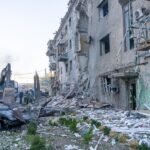
 According to the head of the Zaporizhzhia Regional Military Administration, Ivan Fedorov, the attack prompted an immediate emergency response as rescuers feared that residents could be trapped beneath the rubble following the explosion. Firefighters, medical teams and specialized search-and-rescue units were dispatched to the site to assess the damage, evacuate residents and search for possible survivors, News.Az reports.

***

Initial reports suggested that several people might have been buried under the collapsed sections of the building. However, after emergency crews completed their preliminary search, authorities said those fears had not been confirmed. Officials later reported that 18 people required medical treatment for injuries sustained during the strike. The attack caused extensive structural damage to the residential building, leaving many apartments uninhabitable and forcing residents to evacuate.

The latest strike is part of a continuing series of Russian attacks targeting civilian areas in Zaporizhzhia. Local authorities have repeatedly warned that residential neighborhoods remain under constant threat from missiles, guided aerial bombs and drones. The attack also illustrates the continuing risks faced by civilians living in cities located relatively close to the front line, where Russian forces possess the capability to launch frequent long-range strikes.

Why is Zaporizhzhia being targeted?

Zaporizhzhia occupies a strategically important position in southeastern Ukraine and has become one of the country’s most frequently targeted regional centers since Russia launched its full-scale invasion in February 2022. Although the city itself remains under Ukrainian control, it lies relatively close to the active front line, making it vulnerable to regular missile, drone and guided bomb attacks.

The broader Zaporizhzhia region is partially occupied by Russian forces and has significant military, logistical and industrial importance. Russia has repeatedly targeted the city with the stated objective of disrupting Ukrainian military logistics, infrastructure and industrial capacity. However, many attacks have struck residential neighborhoods, commercial facilities and other civilian infrastructure, resulting in casualties among the local population.

Military analysts say Russian forces increasingly use long-range precision-guided weapons against cities located behind the front line in an effort to weaken Ukraine’s economy, disrupt transportation and create psychological pressure on civilians. These attacks often occur without warning, forcing residents to spend extended periods in shelters during repeated air raid alerts.

The city’s strategic location also makes it an important transportation hub connecting central and southern Ukraine. Damage to infrastructure in Zaporizhzhia can affect military logistics, humanitarian operations and economic activity across a wider region.

What weapons is Russia using in these attacks?

In recent months Russia has increasingly relied on a combination of guided aerial bombs, attack drones, ballistic missiles and cruise missiles to strike targets across Ukraine. In the Zaporizhzhia region, guided bombs have become particularly common because they can be launched from aircraft operating well behind Russian-controlled territory, reducing risks to Russian pilots while allowing strikes against cities near the front line.

Guided aerial bombs are conventional bombs fitted with navigation and guidance systems that significantly improve their accuracy and range. They carry large explosive warheads capable of causing severe structural damage to apartment buildings, industrial facilities and other infrastructure. Even when they strike near rather than directly on a building, the blast wave can destroy entire sections of residential blocks.

Russia has also expanded its use of drones, particularly Shahed-type loitering munitions, to overwhelm Ukrainian air defenses and attack infrastructure. Drone attacks are often carried out simultaneously with missile or bomb strikes to complicate defensive responses.

Military experts note that combining different types of aerial weapons enables Russia to maintain sustained pressure on Ukrainian cities while forcing Ukrainian air defense systems to intercept multiple threats arriving from different directions. This evolving strategy has contributed to increasingly frequent attacks against civilian areas throughout Ukraine.

Has Zaporizhzhia experienced similar attacks recently?

Yes. The latest strike forms part of a series of Russian attacks against Zaporizhzhia over recent days. On July 19, Russian guided aerial bombs struck another apartment building in the city, destroying two floors of a five-story residential block. That attack killed two civilians and injured at least ten others while causing extensive destruction to nearby homes.

Only two days later, on July 21, Russian forces again targeted residential neighborhoods with guided bombs, resulting in additional civilian casualties. The repeated attacks demonstrated that civilian districts continue to face significant risks despite the absence of major military installations in many of the affected areas.

On July 22, another Russian attack targeted an industrial facility in Zaporizhzhia. A drone strike ignited a large fire at a food processing plant, damaging infrastructure and injuring several people. Emergency crews spent hours extinguishing the blaze while authorities assessed the extent of the destruction.

The succession of attacks over only a few days illustrates an apparent intensification of Russia’s aerial campaign against the region. Ukrainian officials argue that the pattern demonstrates deliberate pressure on civilian infrastructure rather than isolated incidents, while international organizations continue monitoring reports of damage to residential areas and public facilities.

Why are residential buildings increasingly being hit?

Ukrainian authorities argue that Russia has increasingly expanded its attacks beyond military targets to include civilian infrastructure, residential neighborhoods and commercial facilities. Moscow maintains that it targets military objectives, although many strikes have resulted in significant civilian casualties and widespread destruction of apartment buildings, schools, hospitals and energy infrastructure.

Military analysts note that modern urban warfare makes it difficult to completely separate military and civilian infrastructure, particularly in densely populated cities. However, repeated strikes on residential buildings have prompted widespread international concern regarding compliance with international humanitarian law and the protection of civilians during armed conflict.

The use of powerful guided bombs against urban areas significantly increases the risk of civilian casualties because of their large explosive payloads. Even when aimed at nearby objectives, the resulting blast waves can destroy surrounding buildings, shatter windows hundreds of meters away and cause structural collapses.

Human rights organizations have repeatedly called for independent investigations into attacks that result in civilian casualties, emphasizing the importance of distinguishing between military objectives and protected civilian objects under international law.

What is the humanitarian impact of these attacks?

Repeated airstrikes have placed enormous pressure on civilians living in Zaporizhzhia and across Ukraine. Beyond immediate casualties, attacks on residential neighborhoods leave thousands of people without safe housing, electricity, water and other essential services. Families whose homes are damaged often require temporary shelter while emergency repairs are carried out.

The psychological impact has also been significant. Residents live under frequent air raid alerts, often spending hours in shelters during the night. Children, elderly people and individuals with disabilities are particularly vulnerable to the long-term effects of repeated bombardment, displacement and uncertainty.

Emergency responders face increasing challenges as attacks become more frequent. Rescue workers must rapidly search damaged buildings for survivors while also remaining alert to the possibility of secondary strikes. Medical facilities continue treating victims of blast injuries, burns and trauma resulting from repeated attacks.

Humanitarian organizations operating in the region continue providing emergency assistance, including temporary accommodation, food, medical supplies and psychological support. However, continued attacks complicate relief efforts and increase the number of civilians requiring assistance.

What does the latest attack indicate about the war?

The latest strike reflects Russia’s continuing aerial campaign against Ukrainian cities far beyond the immediate front line. Since the beginning of the full-scale invasion, aerial attacks have become a central feature of the conflict, with Russia employing missiles, drones and guided bombs to target infrastructure across Ukraine.

Military analysts believe these attacks are intended to reduce Ukraine’s military capabilities while also placing sustained pressure on the civilian population and critical infrastructure. At the same time, Ukraine has strengthened its air defense network with support from Western partners, intercepting many incoming missiles and drones. Nevertheless, not every attack can be prevented, particularly when multiple weapons are launched simultaneously.

The continued targeting of cities such as Zaporizhzhia demonstrates that civilian populations remain directly exposed to the consequences of the war, even in areas not experiencing active ground combat. As long as hostilities continue, experts expect aerial attacks on Ukrainian urban centers to remain a major feature of the conflict, underscoring the ongoing humanitarian and security challenges facing the country.

The post What weapons is Russia using in Zaporizhzhia attacks?​ appeared first on azeritimes.com.


Categories
South Caucasus News

Jeffries: Donald Trump, Republicans launched reckless war of choice in the Middle East – VIDEO​


“In some instances, more than $1000 in additional expense per month. Donald Trump and Republicans have launched a reckless war of choice in the Middle East that hasn’t made America safer, but that has resulted in the tragic death of 18 brave service members. Hundreds more have been seriously injured, including confronting the possibility of traumatic brain injury for the rest of their lives,” News.Az reports.

More than $100 billion in taxpayer money has been wasted by Donald Trump over in the Middle East, a war that he promised never to get us into. And yet one of the main things that has changed as a result of that reckless and costly war of choice operation epic failure is that gas prices have dramatically increased and are now north of $4.18 per gallon across the country. Donald Trump and Republicans have failed the American people, which is why they clearly are on the run and are on the verge of losing control of the House of Representatives.”

The post Jeffries: Donald Trump, Republicans launched reckless war of choice in the Middle East – VIDEO​ appeared first on azeritimes.com.


Categories
South Caucasus

🗣 Депутат предложил поэтапно переводить госучреждения из Баку в регионы. ➡️ https://media.az/post/1068099888 #новости #mediaaz #Баку #госучреждение #столица #регион #урбанизация


🗣 Депутат предложил поэтапно переводить госучреждения из Баку в регионы.

➡️  media.az/post/1068099888

#новости  #mediaaz  #Баку  #госучреждение  #столица  #регион  #урбанизация


Categories
South Caucasus News

Russia is preparing a new offensive: a major identified dangerous direction in the north of Ukraine


Categories
South Caucasus News

Smash it Rage Rooms – Ogden, SLC, & Orem


Utah’s Premier Rage Room experience! Unique date nights, unforgettable birthdays, and smashing corporate events. Come see us in Ogden, SLC, and Orem!

Categories
South Caucasus

Ruben Vardanyan’s Case Submitted to European Court of Human Rights


Categories
South Caucasus

Kavelashvili: Azerbaijan’s dignified attitude towards Georgia is exemplary


Categories
South Caucasus

Kavelashvili: Azerbaijan’s dignified attitude towards Georgia is exemplary