Categories
South Caucasus News

Why does Iran claim it attacked our military bases in Kuwait?​


According to the Iranian Army, the attacks targeted facilities used by US forces, including command infrastructure, helicopter parking areas and accommodation buildings. The claims were made through an official military statement carried by Iranian state-affiliated media, News.Az reports.

***

If confirmed, the alleged strikes would represent another significant escalation in the confrontation between Iran and the United States, extending military activity deeper into the Gulf region. Kuwait hosts several major American military installations that support logistics, intelligence, air operations and regional force deployment. Any attack on these facilities could have implications not only for US-Iran relations but also for the security of Gulf states and the broader Middle East.

At the time of the Iranian announcement, there was no immediate confirmation from US or Kuwaiti authorities regarding the reported attacks or the extent of any damage. As is common during periods of military confrontation, claims made by one side often require independent verification before they can be confirmed.

The latest announcement also illustrates how information warfare has become an important part of modern conflicts, with governments frequently releasing operational claims before independent evidence becomes available. Understanding what Iran claimed, why these bases are important and what the incident could mean for regional security helps place the development in a broader geopolitical context.

What did iran claim happened?

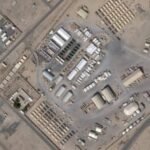
The Iranian Army said it launched one-way attack drones against three US military bases located in Kuwait during the latest phase of Operation Saeqeh. According to the official statement, the operation took place during the early hours of Tuesday morning and targeted facilities that Iran described as playing important roles in US military operations across Southwest Asia.

Iran claimed that drones struck administrative buildings and direction-finding antennae at Camp Arifjan, helicopter parking facilities at Camp Udairi, and a building used to accommodate US military personnel at Ahmad al-Jaber Air Base. Iranian military officials portrayed the strikes as carefully selected attacks against operational military infrastructure rather than civilian targets.

The statement further argued that these installations are key components of the United States’ regional military network. Iranian officials described Camp Arifjan as one of the largest American command and troop deployment centers in the region. Camp Udairi was identified as a base supporting helicopters including Apache, Chinook and Black Hawk aircraft, while Ahmad al-Jaber Air Base was described as an important logistics and surveillance hub.

Iran also framed the operation as a response to what it characterized as repeated American aggression and violations of previous commitments. According to the statement, Tehran believes that the US military presence contributes to regional instability and that military operations against American forces are intended to restore security.

These claims have not been independently verified, and no official assessment of damage or casualties had been released by US or Kuwaiti authorities at the time Iran announced the operation.

Why are these us military bases important?

The three installations identified by Iran occupy significant positions within the United States’ military infrastructure in the Gulf. Kuwait has served for decades as one of Washington’s most important regional partners, hosting thousands of American military personnel and providing logistical support for operations across the Middle East.

Camp Arifjan functions as one of the primary logistics and command centers for US forces operating throughout the region. Military planners use the facility to coordinate troop movements, supply chains and operational planning. Because of its strategic role, it has become one of the best-known American military installations in Kuwait.

Camp Udairi is primarily associated with military training activities and aviation support. According to Iran’s statement, the base hosts helicopters used for transport, reconnaissance and combat operations. Aircraft such as Apache attack helicopters and Chinook transport helicopters play critical roles in supporting military missions throughout the region.

Ahmad al-Jaber Air Base has long been considered an important aviation facility supporting coalition operations. It provides infrastructure for aircraft involved in logistics, intelligence gathering and surveillance while also supporting broader regional security missions.

The concentration of these facilities in Kuwait reflects the country’s geographic importance. Located near Iraq, Saudi Arabia and the northern Gulf, Kuwait provides the United States with rapid access to multiple operational theaters. Any disruption affecting these installations could potentially influence logistics, force deployment and regional military planning, although the actual operational impact would depend on the extent of any verified damage.

Why is kuwait strategically important for the united states?

Kuwait occupies a central position in American military strategy for the Middle East. Since the 1991 Gulf War, the country has developed into one of Washington’s closest regional defense partners, allowing US forces to maintain equipment, personnel and logistical networks capable of responding rapidly to regional crises.

Unlike some military deployments focused primarily on combat operations, many US facilities in Kuwait support transportation, maintenance, intelligence, communications and supply functions. These activities ensure that American forces operating elsewhere in the Middle East can receive equipment, ammunition, medical support and personnel when needed.

Kuwait’s location also makes it strategically valuable. It borders Iraq, sits close to Saudi Arabia and lies near the northern Gulf, allowing military planners to support operations across multiple countries without maintaining identical infrastructure in every location. During previous conflicts in Iraq and against ISIS, Kuwait served as one of the principal staging grounds for coalition operations.

The country’s relatively stable political environment has further strengthened its importance. Long-standing defense cooperation agreements have enabled the United States to maintain a sustained military presence while conducting joint exercises with Kuwaiti forces.

Because of this strategic role, any reported attack involving US military facilities in Kuwait immediately attracts international attention. Even if operational damage proves limited, such incidents can affect regional security perceptions, military planning and diplomatic relations among countries across the Gulf.

Why are iran and the united states in conflict?

The confrontation between Iran and the United States has developed over several decades through political, military and economic disputes. Relations deteriorated sharply following the 1979 Iranian Revolution, after which diplomatic ties were severed and numerous sanctions were imposed.

Since then, disagreements have expanded to include Iran’s nuclear program, regional influence, ballistic missile development and support for armed groups operating across the Middle East. The United States argues that Iran’s activities threaten regional stability, while Tehran maintains that it is defending its national security against foreign military pressure.

Military tensions have increased periodically through attacks on military facilities, maritime incidents in the Gulf, strikes involving regional proxy groups and targeted operations conducted by both sides. Although neither government has sought a full-scale conventional war, both have repeatedly engaged in actions designed to deter or pressure the other.

Iran frequently describes its military operations as responses to American actions, while Washington generally characterizes its military presence as necessary for protecting allies, ensuring freedom of navigation and maintaining regional stability. These competing narratives contribute to continuing tensions that periodically produce military incidents similar to the latest Iranian claims.

As long as broader disputes remain unresolved, the risk of further confrontations involving US forces stationed throughout the Middle East is likely to persist.

What could the latest claims mean for regional security?

If independently confirmed, the reported drone strikes would represent another escalation in an already fragile regional security environment. Even limited attacks on military facilities can influence diplomatic relations, military readiness and strategic calculations across the Gulf.

One immediate consequence could be increased security measures at US military installations throughout the region. Military commanders often review air defense systems, surveillance capabilities and force protection procedures whenever new threats emerge. Regional partners may also reassess their own security arrangements in response to evolving risks.

Diplomatically, the incident could further complicate already strained relations between Washington and Tehran. Future responses would depend heavily on whether independent investigations confirm the attacks, the extent of any damage, and whether casualties occurred. Governments generally avoid immediate conclusions until operational assessments have been completed.

The development also highlights the growing importance of drones in modern warfare. Compared with conventional aircraft or ballistic missiles, one-way attack drones can be deployed at relatively low cost while presenting significant challenges for air defense systems. As a result, drone operations have become an increasingly common feature of conflicts across the Middle East.

Ultimately, the broader significance of Iran’s announcement will depend on independent verification and subsequent political responses. Until additional information becomes available, the reported operation remains an Iranian claim that has not been officially confirmed by either the United States or Kuwait.

The post Why does Iran claim it attacked our military bases in Kuwait?​ appeared first on azeritimes.com.


Categories
South Caucasus News

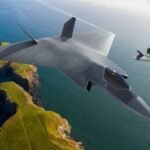
Why did Canada join the next-generation fighter jet program?​


While Ottawa has not committed to purchasing the future aircraft, joining the program gives Canada access to classified discussions and allows it to explore potential industrial, technological and military cooperation with the three founding partners, News.Az reports.

***

The announcement was made during the Farnborough International Airshow, one of the world’s leading aerospace exhibitions, and reflects Canada’s broader effort to diversify its defense partnerships. In recent years, Ottawa has sought to strengthen security cooperation beyond its traditional reliance on the United States while ensuring its armed forces remain interoperable with key allies.

The GCAP project is widely viewed as one of the world’s most ambitious military aviation programs. The future aircraft is expected to combine stealth technology, artificial intelligence, advanced sensors, unmanned systems integration and next-generation networking capabilities. As countries prepare to replace current fighter fleets over the coming decades, participation in such programs is increasingly becoming both a military and an industrial priority.

Canada’s observer status does not mean it has joined the project as a full partner or committed funding for aircraft procurement. Instead, it provides an opportunity to evaluate the program from within before making long-term strategic decisions.

What is the global combat air programme?

The Global Combat Air Programme (GCAP) is an international defense initiative established by the United Kingdom, Italy and Japan to jointly design, develop and produce a sixth-generation combat aircraft. Officially launched in 2022, the program merged earlier national fighter projects into a single multinational effort intended to reduce costs, accelerate technological development and strengthen defense cooperation among the participating countries.

Unlike current fifth-generation fighters, the aircraft envisioned under GCAP is expected to function as a highly connected combat platform capable of operating alongside drones, satellites, cyber assets and other military systems. Rather than serving as a standalone fighter, it is being designed to become part of a broader digital battlefield where information sharing and artificial intelligence play central roles.

The aircraft is expected to replace existing fleets such as the Eurofighter Typhoon operated by the United Kingdom and Italy, as well as Japan’s Mitsubishi F-2 fighter. Developers aim for the aircraft to enter operational service around 2035, although timelines for projects of this complexity often evolve as development progresses.

The program also has a significant industrial dimension. Defense companies from the participating nations are expected to collaborate on advanced propulsion systems, sensors, stealth materials, electronic warfare technologies and artificial intelligence applications. By pooling expertise, the three governments hope to maintain technological competitiveness while sharing financial risks associated with developing one of the most sophisticated combat aircraft ever built.

Why did canada become an observer instead of a full partner?

Canada chose to join GCAP as an observer because it allows the government to evaluate the project before making long-term financial or military commitments. Observer status provides access to classified discussions and planning meetings while avoiding the obligations associated with becoming a full development partner.

Canadian officials have emphasized that Ottawa is following a gradual approach. Rather than immediately investing billions of dollars into aircraft development or committing to future purchases, the government wants to better understand the program’s technological goals, industrial opportunities and strategic value.

This cautious strategy reflects the enormous cost and complexity of sixth-generation fighter development. Such programs typically require decades of investment, extensive industrial participation and long-term defense planning. Before assuming those responsibilities, governments generally assess whether participation aligns with national security priorities, defense budgets and domestic industrial capabilities.

Observer status also gives Canada the opportunity to determine where its aerospace industry could contribute. Canadian companies already possess significant expertise in aircraft manufacturing, avionics, composite materials and defense technologies. Participation in selected aspects of GCAP could potentially create economic opportunities while strengthening Canada’s advanced manufacturing sector.

Officials have also indicated that joining discussions helps Canada remain informed about future military technologies even if it ultimately decides not to acquire the aircraft. Access to technical exchanges and strategic planning ensures that Canadian defense planners understand how allied air forces are evolving over the coming decades.

Why is canada diversifying its defense partnerships?

Canada’s participation in GCAP reflects a broader effort to expand defense cooperation beyond its traditional security relationship with the United States. Although Washington remains Canada’s closest military ally through NORAD and NATO, Ottawa has increasingly sought to strengthen partnerships with European and Indo-Pacific allies as the international security environment becomes more complex.

Prime Minister Mark Carney has emphasized the importance of broadening Canada’s defense relationships to improve resilience, encourage technological cooperation and reduce dependence on any single partner. This approach does not replace Canada’s alliance with the United States but instead complements it by increasing cooperation with other advanced military powers.

Recent geopolitical developments have reinforced this strategy. Russia’s invasion of Ukraine, growing strategic competition with China, increasing military activity in the Indo-Pacific and rapid advances in defense technology have encouraged many countries to diversify defense procurement and industrial partnerships.

For Canada, participating in multinational defense programs also supports domestic economic objectives. International defense projects often involve industrial cooperation agreements that create opportunities for local companies, research institutions and advanced manufacturing industries. By participating early in next-generation programs, Canadian firms may gain access to future supply chains and technological innovations.

Diversifying partnerships also improves interoperability. If allied countries develop compatible communications systems, sensors, weapons integration and operational concepts, joint military operations become more effective during future multinational missions.

What technologies will sixth-generation fighter aircraft use?

Sixth-generation fighter aircraft are expected to represent a major technological leap beyond today’s most advanced combat aircraft. Rather than focusing solely on speed, maneuverability or stealth, these aircraft are being designed as highly connected combat systems capable of integrating information from multiple military domains simultaneously.

Artificial intelligence is expected to become one of the defining features of future fighters. AI could assist pilots by processing enormous amounts of battlefield information, identifying threats, prioritizing targets and supporting tactical decision-making much faster than existing systems. Rather than replacing human pilots, these technologies are intended to improve situational awareness and reduce workload during complex operations.

Advanced networking capabilities will also distinguish sixth-generation aircraft. Future fighters are expected to exchange data continuously with satellites, naval vessels, ground forces, airborne early warning aircraft and autonomous drones. This interconnected battlefield approach enables commanders to coordinate operations more efficiently across multiple domains.

Stealth technology will continue evolving as well. Engineers are working to reduce aircraft visibility across multiple parts of the electromagnetic spectrum while improving survivability against increasingly sophisticated radar and air defense systems. New propulsion technologies, electronic warfare capabilities and advanced sensors are also expected to enhance operational performance.

Many experts believe future aircraft will routinely operate alongside unmanned “loyal wingman” drones capable of conducting reconnaissance, electronic warfare or strike missions. This manned-unmanned teaming concept is considered one of the most important developments shaping the future of military aviation.

What could canada’s participation mean for the future?

Although Canada has not committed to purchasing the future aircraft, observer status represents an important first step toward possible deeper involvement in one of the world’s most advanced defense projects. Whether Ottawa eventually becomes a full partner will depend on future political decisions, defense budgets, industrial opportunities and strategic priorities.

Participation gives Canadian officials valuable insight into emerging military technologies that are likely to shape air combat over the coming decades. Even if Canada ultimately decides not to acquire the aircraft, understanding how allied capabilities are evolving helps military planners prepare for future security challenges and maintain interoperability with partner nations.

Canadian industry could also benefit if the government chooses to expand its involvement. Participation in international aerospace programs often creates opportunities for domestic manufacturers to contribute specialized components, software, electronics and engineering expertise. Such cooperation can strengthen national industrial capabilities while supporting highly skilled employment.

Strategically, closer cooperation with the United Kingdom, Italy and Japan also reflects Canada’s growing interest in strengthening security ties across both Europe and the Indo-Pacific. As geopolitical competition intensifies, multinational defense collaboration is becoming increasingly important for sharing technological expertise, reducing development costs and maintaining military readiness.

For now, Canada’s role remains exploratory rather than operational. However, becoming the first observer nation signals Ottawa’s interest in remaining closely connected to one of the most ambitious military aviation projects currently under development, leaving open the possibility of greater participation as the program moves toward its planned 2035 service entry.

The post Why did Canada join the next-generation fighter jet program?​ appeared first on azeritimes.com.


Categories
South Caucasus News

Russia is restoring Soviet control over its own army; Marxism-Leninism to every soldier


Categories
South Caucasus

Trump vs. Mamdani: How the conflict over Israel could decide the outcome of the U.S. elections


Categories
South Caucasus

Armenia’s Fish Farmers Protest Government Inaction in Face of Russian Sanctions


Categories
South Caucasus

Warmest congratulations, dear @MihaiPopsoi, on your reappointment as Moldova’s Deputy PM and Foreign Minister. I look forward to continuing our close cooperation to further strengthen 🇦🇲-🇲🇩 bilateral relations & advance our shared priorities.


Warmest congratulations, dear  @MihaiPopsoi, on your reappointment as Moldova’s Deputy PM and Foreign Minister.

I look forward to continuing our close cooperation to further strengthen 🇦🇲-🇲🇩 bilateral relations & advance our shared priorities.


Categories
South Caucasus News

Heavy fighting in the streets of Kostyantynivka; Russian b*dies pile up in the streets


Categories
South Caucasus

🗣 Евгений Плющенко: Азербайджан стал важной частью нашей жизни. ➡️ https://media.az/post/1068099546 #новости #mediaaz #Азербайджан #Россия #ЕвгенийПлющенко


🗣 Евгений Плющенко: Азербайджан стал важной частью нашей жизни.

➡️  media.az/post/1068099546

#новости  #mediaaz  #Азербайджан  #Россия  #ЕвгенийПлющенко


Categories
South Caucasus

NASA отправит на Марс ядерный аппарат за $2,1 млрд


Национальное управление США по аэронавтике и исследованию космоса (NASA) намерено выделить около $2,1 млрд на создание аппарата Space Reactor 1 с ядерной силовой установкой и…

Categories
South Caucasus

$5.3m community centre to open in October