
Betway is the leading online casino and sports betting platform in South Africa. The Betway platform is known for its extensive range of games, as well as its intuitive user interface and enticing promotions.
Day: July 19, 2026
Categories
results.vote.wa.gov
🇪🇸⚽️🏆 Сборная Испании стала чемпионом мира — 2026, обыграв Аргентину.
Подробнее по ссылке: media.az/post/1068099129
#новости #mediaaz #футбол #финал #чемпионатМира #ЧМ2026 #сборная #Аргентина #Испания
Categories
Spain Win The 2026 World Cup

While the embassy advised U.S. citizens to avoid the facilities, citing a “specific and credible threat,” Jordan insists that no evacuation order was issued and that both transport hubs continue operating normally, News.Az reports.
***
The differing statements come amid heightened regional tensions following the latest escalation between the United States and Iran.
What is the disagreement between Jordan and the U.S. Embassy?
The disagreement centers on whether Aqaba’s airport and seaport were evacuated because of a security threat.
The U.S. Embassy in Amman stated that both facilities had been evacuated following what it described as a “specific and credible threat.” The embassy advised American citizens to avoid traveling to the airport and seaport while continuing to monitor security guidance.
Jordanian authorities, however, publicly rejected that account.
Government spokesperson Mohammad Al-Momani said no evacuation orders had been issued by Jordanian authorities and that no security incidents requiring such action had occurred.
According to the Jordanian government, both the airport and the port have continued operating normally without interruption.
The embassy did not provide additional details about the nature of the reported threat.
What has Jordan said about the security situation?
Jordanian officials stressed that national security agencies had detected no immediate threats requiring the evacuation of Aqaba’s transportation facilities.
In a written statement, government spokesperson Mohammad Al-Momani said that no potential threats had been recorded by the relevant authorities in the hours preceding the announcement.
He also emphasized that both Aqaba’s airport and commercial seaport remained fully operational and that normal activities were continuing.
Jordanian authorities have not announced any additional security measures beyond those already in place and continue to advise the public through official government channels.
Their position suggests that, based on the information available to Jordan’s security services, there was no need for extraordinary precautionary measures.
Why is Aqaba strategically important?
Aqaba is Jordan’s only seaport and serves as one of the country’s most important transportation and trade hubs.
Located on the Red Sea, the city plays a critical role in Jordan’s economy by handling imports, exports and international passenger traffic. Aqaba also hosts important infrastructure and lies relatively close to several regional flashpoints.
Because of its strategic location, any disruption to operations at Aqaba’s airport or port could have significant economic and logistical consequences.
Security developments affecting Aqaba therefore attract close attention from both Jordanian authorities and foreign governments, particularly during periods of heightened regional instability.
How does this relate to the U.S.-Iran conflict?
The differing statements come against the backdrop of escalating military tensions between the United States and Iran, which have spread across several countries in the Middle East.
In recent days, Jordan has repeatedly reported intercepting Iranian missiles that crossed its airspace during exchanges between Iranian and U.S. forces.
The situation intensified further after the U.S. military announced that two American service members were killed and another remained missing following an Iranian attack in Jordan.
As regional military activity expands, diplomatic missions often issue precautionary security advisories for their citizens based on their own threat assessments, which may differ from evaluations made by host governments.
What could happen next?
Jordanian authorities are expected to continue monitoring the regional security environment while maintaining operations at Aqaba’s airport and seaport unless circumstances change.
The U.S. Embassy may update its travel guidance if additional information becomes available or if the perceived threat level changes.
Meanwhile, travelers are likely to encounter increased security monitoring across Jordan as regional tensions remain elevated.
Although Jordan insists that Aqaba remains safe and fully operational, the conflicting statements illustrate how governments can reach different conclusions when assessing potential security risks during rapidly evolving regional crises.
The situation also reflects the broader impact of the U.S.-Iran confrontation, which continues to influence security policies and travel advisories throughout the Middle East even in countries that are not direct participants in the conflict.
The post Why is Jordan disputing the U.S. Embassy’s Aqaba evacuation warning? appeared first on azeritimes.com.

Officials believe the group became stranded in extreme heat and ran out of water while traveling through the deserts of Nimroz and Helmand provinces, News.Az reports.
***
The incident is the latest in a series of deadly migration tragedies involving Afghans seeking work and better living conditions in neighboring Iran.
What happened?
According to Afghan authorities, a group of 19 migrants attempted to enter Iran through unofficial desert routes in southwestern Afghanistan.
Security forces later recovered the bodies of five people in Nimroz province, while 14 others remain missing. Rescue teams have continued searching the desert in the hope of locating the missing migrants.
Officials believe the victims died after becoming stranded in harsh desert conditions. High temperatures, prolonged exposure to the sun and a lack of drinking water are thought to have been the primary causes of death.
Because the group was traveling through isolated areas far from settlements and emergency services, assistance may not have reached them in time.
The exact circumstances surrounding the disappearance of the remaining migrants have not yet been confirmed.
Why do Afghan migrants use dangerous desert routes?
Thousands of Afghans attempt to enter Iran each year in search of employment, higher wages and improved living conditions.
Many migrants use unofficial border crossings because they lack the necessary travel documents or are unable to obtain legal permission to enter Iran. Smuggling networks frequently guide migrants through remote desert regions where border security is less visible.
These routes are extremely dangerous due to long distances, difficult terrain, limited access to food and water, and exposure to severe weather conditions.
Travelers often depend on smugglers for transportation and navigation. If they become separated from their guides or vehicles break down, they can quickly find themselves stranded in life-threatening conditions.
Why is the Afghanistan-Iran border so hazardous?
The border between Afghanistan and Iran passes through vast desert regions, particularly in Nimroz and Helmand provinces.
During the summer months, temperatures can rise to dangerous levels, making dehydration and heatstroke serious risks for anyone traveling on foot. Water sources are scarce, while the long distances between populated areas make rescue operations difficult.
Migrants often walk for many hours—or even several days—through isolated terrain while carrying limited supplies.
In winter, the dangers shift from extreme heat to freezing temperatures. Last year, dozens of Afghan migrants reportedly died while attempting to cross into Iran after being exposed to severe cold.
The combination of harsh environmental conditions and irregular migration routes makes the border one of the region’s most dangerous migration corridors.
Why are so many Afghans trying to reach Iran?
Iran has long been one of the main destinations for Afghan migrants because of its geographic proximity and employment opportunities, particularly in construction, agriculture and other labor-intensive sectors.
Many Afghans leave their country because of economic hardship, unemployment and limited opportunities. For some families, work in Iran provides an important source of income through remittances sent back home.
However, many migrants undertake the journey without legal documentation, increasing their dependence on human smugglers and exposing them to significant risks along the route.
The combination of economic pressures and limited legal migration pathways continues to drive irregular cross-border movement despite the well-known dangers.
What could happen next?
Afghan authorities are expected to continue search operations to locate the 14 missing migrants and determine exactly how the tragedy unfolded.
The incident is also likely to renew attention on the humanitarian risks associated with irregular migration between Afghanistan and Iran. International organizations have repeatedly warned that migrants traveling through remote deserts face life-threatening conditions and often lack access to emergency assistance.
Officials may also investigate whether human smuggling networks were involved in organizing the group’s journey.
The latest deaths underscore the continuing dangers faced by people attempting irregular border crossings. Until safer and more accessible migration pathways become available, similar tragedies are likely to remain a recurring humanitarian challenge along the Afghanistan-Iran border.
The post Why did Afghan migrants die while trying to cross into Iran? appeared first on azeritimes.com.
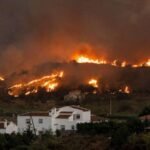
A wildfire in Guadalajara province has burned approximately 13,000 hectares and forced the evacuation of around 800 people, while another fire in Zaragoza province has become the country’s largest wildfire of the summer after scorching an estimated 16,000 hectares, News.Az reports.
***
Authorities continue large-scale firefighting operations as heat, drought and strong winds complicate containment efforts.
What is happening in central Spain?
The most recent major wildfire began on Thursday near La Mierla in Guadalajara province, located in Spain’s Castilla-La Mancha region.
According to regional authorities, the fire expanded rapidly overnight, advancing approximately 14 kilometers and burning around 13,000 hectares of land. The wildfire remains classified at Level 2 under the regional emergency plan, indicating that additional resources are required to control the blaze.
As the fire spread, authorities evacuated approximately 800 residents from 21 municipalities, including an additional 200 people who were ordered to leave their homes as conditions deteriorated.
Emergency alerts were issued for residents in Prádena de Atienza, Robledo, Aldeanueva and Naharros, where evacuation orders were implemented to protect public safety.
Firefighters continue working to prevent the blaze from threatening additional communities.
How are authorities responding?
Spanish emergency services have launched a large-scale firefighting operation involving both ground and aerial resources.
At first light, firefighting aircraft resumed water-dropping operations while 204 emergency personnel, organized into 32 response teams, continued battling the flames on the ground.
Spain’s Military Emergency Unit (UME) has also been deployed to assist civilian firefighters. Military personnel are helping construct firebreaks and defensive containment lines designed to slow the fire’s spread and protect populated areas.
Firefighters are working under difficult conditions, with changing winds, high temperatures and dry vegetation increasing the complexity of containment efforts.
Authorities continue closely monitoring weather conditions because shifts in wind direction could quickly alter the fire’s behavior.
What is happening with the wildfire in Zaragoza?
At the same time, firefighters are also battling another major wildfire near Ores, in the northeastern province of Zaragoza.
That fire has burned an estimated 16,000 hectares, making it Spain’s largest wildfire of the summer so far.
The blaze has forced the evacuation of five towns in Spain’s Aragon region as well as one municipality in neighboring Navarre.
Despite its size, regional officials reported some positive developments. According to Aragon Environment Minister Luis Biendicho, the fire had stopped advancing by Saturday, and the overall situation was becoming increasingly stable.
Firefighters nevertheless remain on alert because large wildfires can quickly reignite or change direction under unfavorable weather conditions.
Why has Spain experienced increasingly severe wildfire seasons?
Spain has faced a growing number of intense wildfires in recent years as climate and weather conditions become more favorable for rapid fire spread.
Extended heatwaves, prolonged drought and strong winds dry vegetation and create highly combustible landscapes during the summer months. Once fires ignite under these conditions, they can spread extremely quickly across forests, grasslands and rural areas.
Climate experts have warned that rising temperatures associated with climate change are increasing the frequency and intensity of wildfire conditions across southern Europe.
In addition, rural depopulation and changes in land management have allowed vegetation to accumulate in some areas, providing more fuel for large fires.
These combined factors have made wildfire prevention and suppression increasingly challenging for emergency services.
What could happen next?
Firefighters are expected to continue intensive containment operations in both Guadalajara and Zaragoza while monitoring weather conditions that could influence fire behavior.
Authorities will likely maintain evacuation orders until officials determine that communities can safely return. Damage assessments will also begin once the fires are brought under control.
The coming days will be critical, as continued high temperatures or strong winds could cause existing fires to spread further or ignite new blazes elsewhere in Spain.
The current wildfire season underscores the growing challenges facing southern European countries as increasingly frequent extreme weather events place greater pressure on emergency response systems and increase the risk to communities, infrastructure and natural ecosystems.
The post Why are wildfires spreading rapidly across Spain? appeared first on azeritimes.com.

The strike formed part of a broader assault targeting Kyiv and surrounding areas, during which Ukrainian officials said Russia launched dozens of missiles and more than one hundred attack drones, News.Az reports.
***
The incident highlights the continuing vulnerability of Ukraine’s civilian and commercial infrastructure to long-range attacks.
What happened at the logistics complex?
According to Ukraine’s State Emergency Service (SES), Russian forces struck what is believed to be the AMTEL logistics complex in the Bucha district of the Kyiv region during an overnight missile and drone attack.
The strike ignited a major fire that spread across two warehouse buildings, covering an estimated 100,000 square meters. Thick smoke and intense flames required a large-scale emergency response as firefighters worked for several hours to contain the blaze.
Officials said two people were injured during the attack. The full extent of the damage to the logistics facility has not yet been released, and authorities continue assessing the destruction.
The fire was eventually brought under control at approximately 10:30 a.m. local time, ending one of the region’s largest emergency firefighting operations in recent months.
How did emergency services respond?
Ukraine’s emergency services launched a major operation involving firefighters, specialized equipment and aerial support to prevent the fire from spreading further.
According to the SES, more than 200 firefighters participated in the response, supported by 73 emergency vehicles and three helicopters.
Fire crews spent several hours battling the flames before successfully containing the blaze later in the morning. The operation focused on preventing the fire from spreading to additional warehouses and nearby facilities while ensuring the safety of emergency personnel.
Large warehouse fires present particular challenges because of their size, stored materials and the possibility of structural collapse. Authorities continued monitoring the site after the main fire had been extinguished to prevent any reignition.
How does this fit into Russia’s broader overnight attack?
The strike on the logistics complex formed part of a wider Russian missile and drone assault against Ukraine on July 19.
According to Ukrainian authorities, Russia launched 41 missiles and 125 attack drones during the overnight operation. Ukrainian air defense forces said they intercepted most of the incoming weapons, including nearly all of the ballistic missiles.
Kyiv remained the principal target of the attack. Missile strikes and falling debris damaged residential buildings across several districts of the capital and triggered multiple fires.
Ukrainian officials reported that one person was killed and 15 others were injured in Kyiv during the overnight barrage.
The attack illustrates Russia’s continued use of combined missile and drone operations designed to place sustained pressure on Ukraine’s air defense systems.
Were other facilities damaged?
Yes.
According to RBC-Ukraine, the overnight strikes also completely destroyed the production plant and warehouse facilities of UKRTAC, adding to the extensive infrastructure damage caused by the attack.
The reported destruction of multiple industrial and logistics facilities reflects the continuing impact of long-range strikes on Ukraine’s commercial and economic infrastructure.
Logistics centers play an important role in storing and distributing goods throughout the country. Damage to such facilities can disrupt supply chains, affect businesses and complicate the movement of essential products.
Officials have not yet released comprehensive estimates of the economic losses resulting from the latest attacks.
What could happen next?
Emergency services are expected to continue damage assessments and recovery operations at the affected logistics facilities while investigators examine the sites to determine the full impact of the strikes.
Military analysts will also evaluate the latest attack as part of Russia’s broader campaign targeting Ukrainian infrastructure through long-range missile and drone operations.
Meanwhile, Ukraine is likely to continue strengthening its air defense capabilities while repairing damaged commercial and industrial facilities critical to the country’s economy.
The latest strike demonstrates that logistics hubs and industrial sites remain vulnerable alongside residential areas. As Russia continues its campaign of long-range attacks, protecting essential infrastructure remains one of Ukraine’s most significant security and economic challenges.
The post What happened at the logistics hub near Kyiv during Russia’s latest strike? appeared first on azeritimes.com.