
Day: July 17, 2026
Azərbaycanda sənaye istehsalının artımı 2026-cı ilin ilk yarısında demək olar ki, dayanıb. Yanvar-iyun aylarında ölkədə 33,1 milyard manatlıq sənaye məhsulu istehsal edilib. Bu, ötən ilin eyni dövrü ilə müqayisədə real ifadədə cəmi 0,1 faiz artım deməkdir.
Bu barədə Dövlət Statistika Komitəsi məlumat yayıb.
Rəsmi rəqəmlər sənayedə artım tempinin ilin əvvəlindən tədricən zəiflədiyini göstərir. Yanvarda illik müqayisədə 2,5 faiz olan artım yanvar-may aylarında 0,2 faizə, ilin ilk yarısında isə 0,1 faizə düşüb.
Hesabat dövründə emal sənayesində 10 milyard 912,6 milyon manatlıq məhsul istehsal edilib və sənaye xarakterli xidmətlər göstərilib. Bu sahədə ötən ilin eyni dövrü ilə müqayisədə 2,5 faiz artım qeydə alınıb.
Ən yüksək artım avtomobil, qoşqu və yarımqoşqu istehsalında müşahidə olunub.
Xəbəri oxuyun: shorturl.at/yPqDA
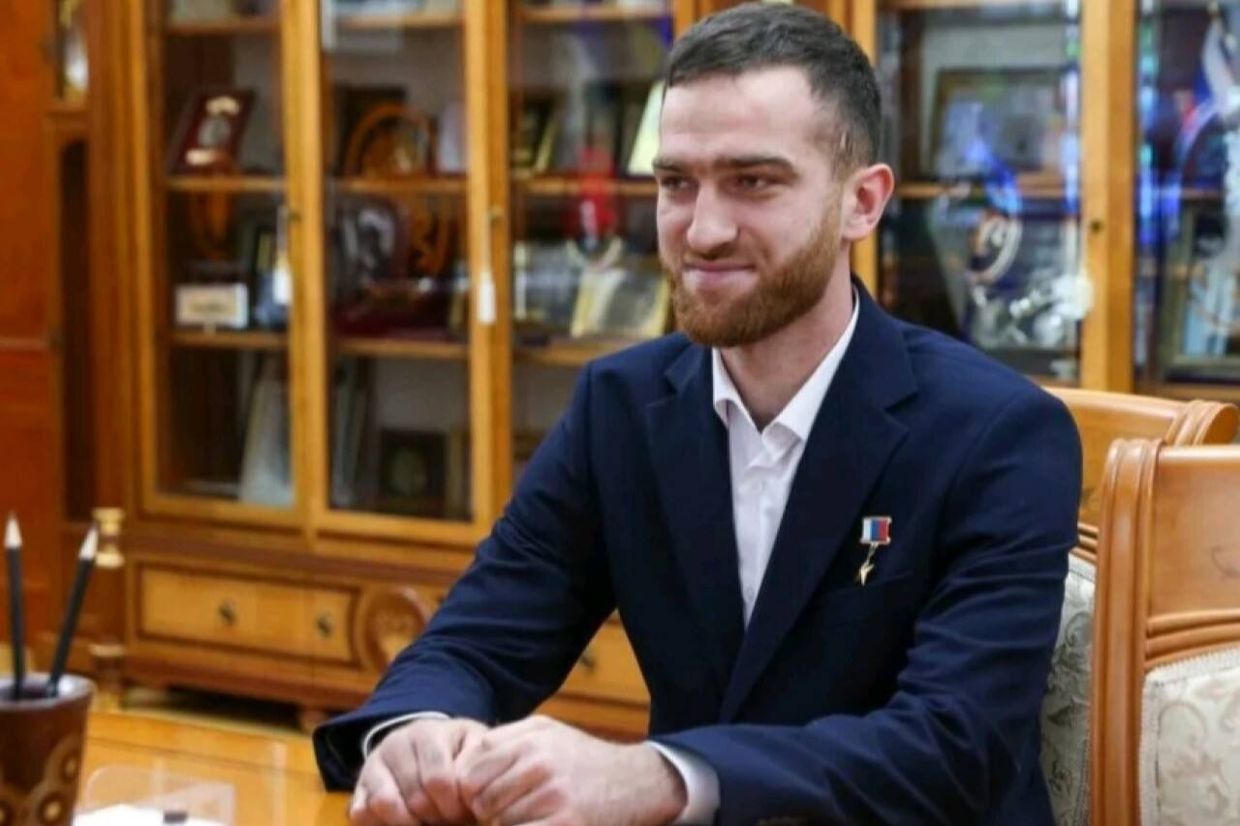
Russia’s Federal Security Service (FSB) claimed that former Ukrainian Security Service (SBU) officer Vitalii Zhykovich was behind an attempt on the life of Daghestan’s acting National Policy Minister Temirlan Abutalimov. Zhykovich is suspected of orchestrating a bomb attack on Ukrainian businessperson Vadym Yermolaiev in Monaco in late June.
On 16 July, the Russian state-run television channel RT reported, citing the FSB, that security forces had prevented a series of planned terrorist attacks, including an attack on Abutalimov in Makhachkala.
Zhykovich is reportedly a suspect in the case of the murder of Anastasia Berezovskaya, who was herself accused of carrying out the unsuccessful Monaco bombing. Ukrainian authorities have claimed the failed attack on Yermolaiev was a rogue operation.
According to the channel, it obtained audio recordings in which Zhykovich allegedly discusses preparations for terrorist attacks. According to these claims, he was involved in organising at least 20 planned attacks, including in the Stavropol region and Daghestan.
According to the report, the alleged agent converted to Islam in order to recruit radical Islamists to carry out attacks and attempted to organise the killing of Abutalimov. Zhykovich allegedly instructed an accomplice to place an explosive device in a juice carton inside a rubbish bin that the acting minister was expected to pass.
The FSB claims that Russian security forces were aware of the plan and decided to simulate its successful execution. As a result, according to the agency, Abutalimov survived and continues to head the ministry.
It is unclear when this alleged attack on Abutalimov took place. However, several sources claimed in March that the Daghestani official was the target of an assassination attempt.
The Telegram channel NIYSO claimed on 12 March that an explosive device had been placed in a rubbish bin near the entrance to a house in Karaman, near the Caspian Sea, and that the blast caused Abutalimov ‘serious injuries’.
Activists alleged that Abutalimov had been visiting a woman who provided him with ‘intimate services’.
After the alleged attack, Abutalimov did not appear in public for around a month. A month later, he published a photograph showing him with his head bandaged, wearing a neck brace, and with his arm in a sling.
Although Abutalimov did not directly explain the reason for his absence, he wrote that his ‘appearance speaks for itself’ and that he had ‘returned to duty’ after a ‘forced break’. He also reminded his followers to follow traffic rules, always use seat belts and child seats, and not exceed speed limits.
Abutalimov was born in 1997 in the village of Temiraul in Daghestan’s Khasavyurt district. After graduating from the law faculty of Daghestan State University, he completed compulsory military service in the Russian army and later worked as an investigator at the Khasavyurt police department. In 2022, he signed a contract with the Russian army.
He commanded an assault unit within the 70th Guards Motor Rifle Regiment of the 42nd Division of Russia’s Southern Military District. Russian official sources claim that he was wounded during fighting in Ukraine’s Zaporizhzhia region but continued to command his unit. In 2023, he was awarded the title of Hero of Russia.
Ukraine’s military intelligence agency (HUR) considers Abutalimov one of five commanders allegedly involved in the execution of four Ukrainian prisoners of war in May 2024 near the village of Robotyne in Zaporizhzhia. The accusation is based on intercepted radio communications.
Drone footage published at the time shows four unarmed people, reportedly Ukrainian soldiers, surrendering with their hands raised. The captors, believed to be Russian soldiers, force the Ukrainians to lie face down before shooting them at close range.
The HUR also said that Russian forces, including Abutalimov, may have been involved in the killing of several other Ukrainian prisoners of war in late May 2024.
After returning from the war, Abutalimov became a participant in the presidential personnel programme Time of Heroes, created to train managers from among participants in Russia’s invasion of Ukraine. In 2025, he was appointed acting Minister for National Policy and Religious Affairs of Daghestan.
In his new position, Abutalimov oversaw issues related to interethnic relations, cooperation with religious organisations, and programmes aimed at countering the ‘ideology of terrorism’. He also took part in meetings of the regional anti-terrorism commission.
Защита детей в интернете невозможна без ответственности онлайн-платформ. Media.Az беседует с юристом.
#азербайджан #миллимеджлис #соцсети #защитадетей #безопасностьвсети #детиолайн #родительскийконтроль #новостиазербайджана #mediaaz
Poetry and culture spiritually unite the Turkic peoples, TURKSOY Secretary General Sultan Raev said at a festival held as part of the Vagif Poetry Days, Report informs.
He noted that the shared history, language, culture, and faith in the future of these peoples are now being revived in Shusha and Aghdam: “Although borders separate states, culture, art, and poetry spiritually unite them. One of the most important values preserving the shared historical memory of the Turkic world is literature. This great literary tradition unites us around shared civilizational values.”
Raev emphasized that TURKSOY considers the transmission of a shared cultural heritage to future generations one of its most important tasks.
He also noted the special significance of publishing a collection of works to be created as part of the Vagif Poetry Days.
#CIA #FBI #Mossad
x.com/mikenov/status/2078109…Michael Novakhov (@mikenov) #Russian vs. #Ukrainian #Disinformation
x.com/mikenov/status/2078109…Michael Novakhov (@mikenov) #Russian vs. #Ukrainian #Disinformation
Russian vs. Ukrainian Information Warfare share.gemini.google/tpaGxi5w…
Information Warfare, both Russian and Ukrainian; Types, descriptions, examples; purposes, efficiency, comparison
share.google/aimode/WJUvAB2C…
Gemini:
It is understandable why a system might flag that specific video as misleading or disinformation. In modern conflicts, the line between legitimate reporting, psychological warfare, and internet clickbait frequently blurs.
Let’s break down exactly what that video is doing, and then look at the broader strategies of both Russian and Ukrainian information warfare.
The Video: “47,000 Surrender…”
The video ( youtube.com/watch?v=GtH9tUdn…) highlights a real Ukrainian psychological operation—the “I Want to Live” project, which gives Russian soldiers a safe mechanism to surrender. However, the video itself skirts the line of misinformation because its title heavily exaggerates the facts presented in its own transcript.
The Claim: The title boldly claims “47,000 Surrender.”
The Reality: The video’s actual transcript states that roughly 10,000 Russian soldiers have surrendered through the program over the course of the entire war [01:12].
The Discrepancy: Later in the video, the narrator mentions that an estimated 50,000 Russian men have deserted or “fled the army” [05:44].
By conflating general desertions with active surrenders, the channel manufactures a highly sensationalized, misleading headline. While the channel is pro-Ukrainian and discussing real events, it relies on exaggeration to farm views and amplify a specific narrative—a common tactic in the gray zone of wartime internet content.
Russian Disinformation: The “Firehose of Falsehood”
Russian disinformation is traditionally top-down, state-sponsored, and designed not necessarily to convince people of one specific truth, but to flood the zone with so many lies that the truth becomes impossible to find.
Types & Descriptions: State-run media broadcasts, coordinated social media troll farms (“web brigades”), forged official documents, and the deployment of contradictory conspiracy theories.
Examples: Falsely labeling Ukraine a “neo-Nazi” state to justify the initial invasion; claiming the atrocities discovered in Bucha were staged using crisis actors; and pushing the conspiracy theory that the United States was operating secret bioweapons labs in Ukraine.
Purpose: To justify the war to the domestic Russian population, create plausible deniability for war crimes on the global stage, and exhaust Western audiences into apathy so they stop supporting military aid.
Efficiency: Highly efficient inside Russia due to the Kremlin’s tight monopoly on domestic media and internet censorship. Internationally, it struggles against united Western fact-checking, but it has found success by exploiting existing political divides in Western countries and targeting audiences in the Global South.
Ukrainian Information Operations: Narrative & Morale
Ukraine’s approach to information warfare is highly decentralized. Rather than pure fabrication, Ukraine generally relies on “selective amplification”—highlighting real successes, minimizing losses, and utilizing emotional appeals.
Types & Descriptions: Psychological Operations (PsyOps), strategic communications, rapid debunking of Russian claims, and the heavy use of internet meme culture.
Examples: The “I Want to Live” drone-surrender hotline detailed in your video [04:16]; the early-war “Ghost of Kyiv” fighter pilot (which was later admitted to be a myth representing the collective spirit of the air force); and the widespread sharing of intercepted Russian phone calls to highlight enemy demoralization.
Purpose: To sustain domestic resilience, project strength to international allies to ensure continuous financial and military support, and demoralize invading Russian troops.
Efficiency: Extremely effective globally. By relying heavily on authentic smartphone and drone footage, combined with humor and emotional storytelling, Ukraine has successfully maintained its framing as a resilient, tech-savvy underdog fighting a massive, disorganized aggressor.
At a Glance: Tactics Compared
FeatureRussian DisinformationUkrainian Information OperationsPrimary StrategyOverwhelming volume to create confusion and doubtNarrative framing and morale-buildingRelationship to TruthRelies heavily on total fabrications and historical revisionismRooted in real events, but selectively amplified or mythologizedTarget AudienceDomestic Russians, the Global South, and fractured Western groupsDomestic Ukrainians, Western governments, and frontline Russian soldiersDelivery MethodsState TV, coordinated bot networks, fake news domainsDecentralized social media, influencers, government addresses
-— https://x.com/mikenov/status/2078109458689819062