Categories
Articles, Blog, and Tweets Blogs and Tweets

#AI and Geopolitical Tensions Reshape #MiddleEast #Security https://rss.app/brief/posts/6be6384ab900308b7314e791fb4e7f03 AI Brief AI and Geopolitical Tensions Reshape Middle East Security Thursday, July 16, 20269:18 AM Summary Intelligence agencies like t


#AI and Geopolitical Tensions Reshape  #MiddleEast  #Security  rss.app/brief/posts/6be6384a…
AI Brief
AI and Geopolitical Tensions Reshape Middle East Security
Thursday, July 16, 20269:18 AM
Summary
Intelligence agencies like the CIA and FBI are rapidly adopting AI, signaling a transformative shift in global security operations. Simultaneously, escalating tensions in the Middle East—including US-Iran clashes in the Strait of Hormuz, Ukraine’s counterattacks in Crimea, and Israel’s targeted strikes on Hamas—highlight a convergence of technological and geopolitical risks. These developments may indicate a new era of hybrid warfare, where AI-driven intelligence and regional conflicts intersect to redefine global power dynamics.

Key Stories

CIA accelerates AI adoption amid rising geopolitical instability — The CIA’s expansion of AI projects, with hundreds underway, suggests a strategic pivot toward automated intelligence gathering. This shift coincides with growing distrust of former intelligence officials in elected office, complicating domestic narratives as international tensions escalate.

Strait of Hormuz blockade reignites as US-Iran tensions flare — The US military targeted an Iranian oil tanker in the Strait of Hormuz, marking a return to blockade tactics amid Iran’s warnings of retaliation. Analysts suggest the standoff could disrupt global oil supplies, with second-order effects on energy markets and regional alliances.

Ukraine’s Crimea counterattacks disrupt Russian operations ahead of NATO summit — Ukraine’s intensified strikes in Crimea are destabilizing Russian logistics, while Moscow escalates disinformation and military pressure. The timing, ahead of a critical NATO summit, may signal a strategic effort to shape Western support amid shifting war dynamics.

Israel targets Hamas and Hezbollah commanders as ceasefire violations persist — The IDF eliminated multiple Hamas and Hezbollah operatives, including those linked to October 7 attacks, citing ongoing threats to troops. These actions suggest a hardening of Israel’s stance as regional conflicts intertwine with broader Middle East instability.

FBI faces scrutiny over political bias claims amid high-profile criminal probes — The FBI’s leadership under Kash Patel is navigating allegations of political bias while handling cases like child exploitation and financial crimes. Public distrust may undermine the agency’s operational legitimacy as it balances institutional reforms with criminal investigations.


Categories
Articles, Blog, and Tweets Blogs and Tweets

RT by @mikenov: RT by @mikenov: Now a CIA assessment.


Now a CIA assessment.Mike Eckel (@Mike_Eckel)“Our intelligence is consistent with some of the open-source reporting you may have seen: the average life expectancy of a Russian recruit right now, arriving on the battlefield in Ukraine, is estimated to be between 20-30 minutes.”  @DCIARatcliffe   bloomberg.com/news/articles/…—  https://x.com/Mike_Eckel/status/2077641060621176948

Categories
South Caucasus News

Azerbaijani judokas claim 109 medals in first half of year


The Azerbaijan Judo Federation has announced that Azerbaijani judokas won 109 medals at international competitions during the first half of the year, AzerNEWS reports.

Categories
South Caucasus News

Opinion: ‘Georgia heads to Washington from weak starting position. Its ties with Russia, China and Iran are a major liability’


Georgia's participation in the Washington summit

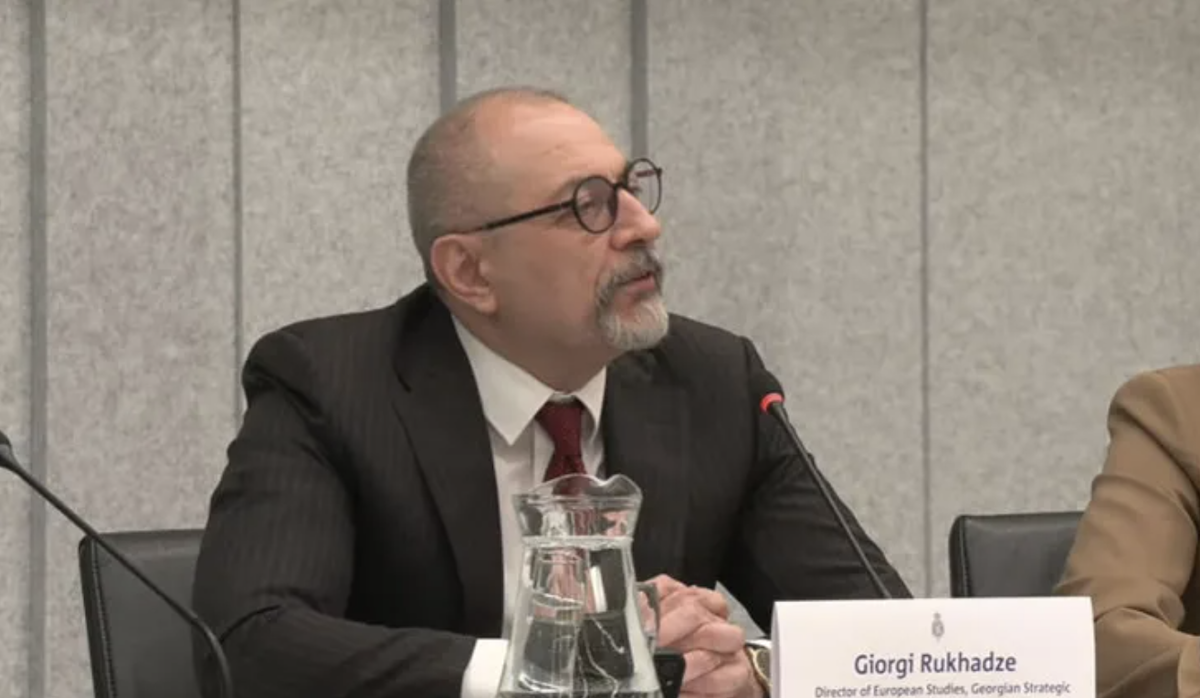
“Unfortunately, Georgia is heading into this summit, and any future summit in Brussels or the United States, from a weak starting position. The main problem is its foreign policy ties with Russia, China and Iran,” security expert Giorgi Shaishmelashvili said, commenting on Georgian Foreign Minister Maka Bochorishvili’s participation in the ministerial meeting in Washington on “The Renewed Rise of Political Terrorism”.

Shaishmelashvili argued that both the domestic and foreign policy positioning of the ruling Georgian Dream party is fundamentally at odds with the theme of the summit.

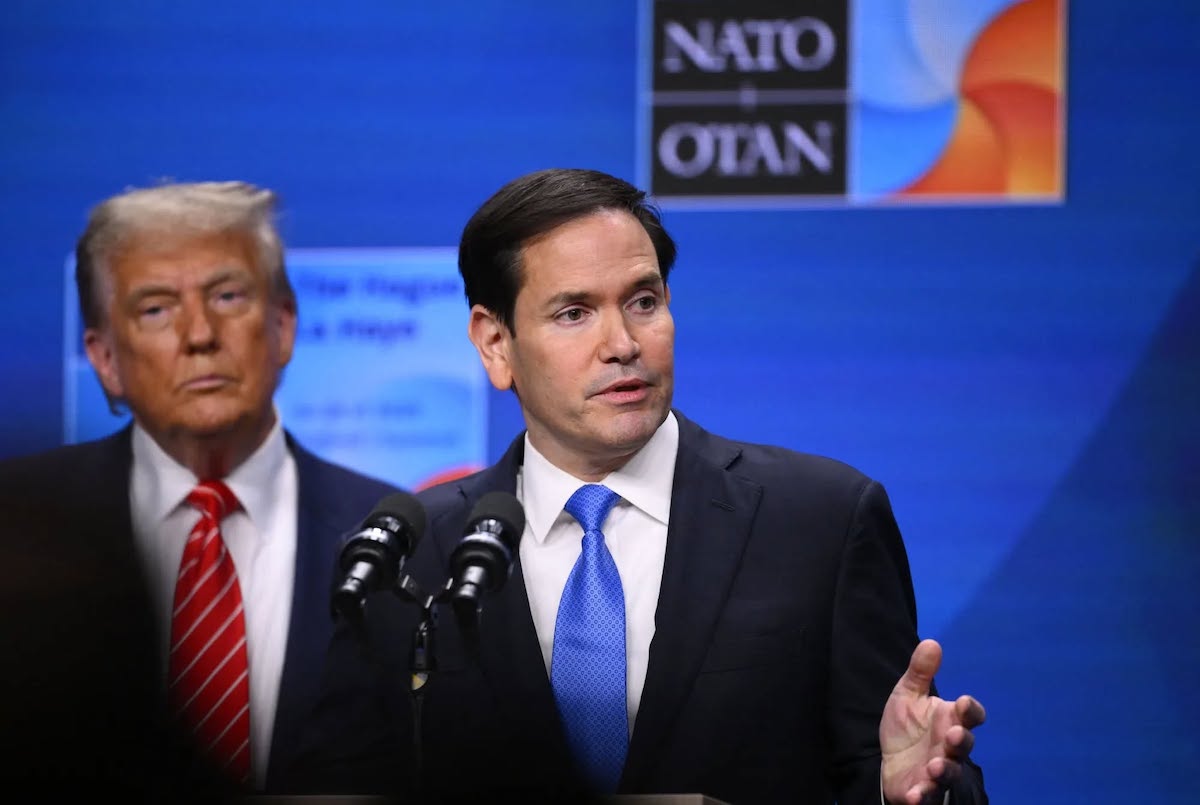
At the invitation of US Secretary of State Marco Rubio, Georgian Foreign Minister Maka Bochorishvili will attend a ministerial meeting in Washington on “The Renewed Rise of Political Terrorism.” Delegations from more than 60 countries are expected to take part.

Giorgi Shaishmelashvili

Giorgi Shaishmelashvili said: “Representatives from more than 60 countries will attend this summit. It will focus on strengthening counterterrorism coordination and intelligence sharing between different countries. The summit is, in a way, a continuation of the implementation of the US counterterrorism strategy.

In my view, the very theme of the summit fundamentally contradicts the domestic and foreign policy positioning of Georgian Dream. For Donald Trump and his administration, strengthening coordination against left-wing extremism has become a priority. They often see countries such as China and Russia behind it. We should not forget Georgia’s ties with Iran either.

Unfortunately, Georgia is heading into this summit, and any future summit in Brussels or the United States, from a weak starting position because of its foreign policy ties with Russia, China and Iran. The summit itself is not intended to deepen political dialogue. If Maka Bochorishvili holds any important bilateral meetings behind closed doors on the sidelines, we will learn about them later. At the moment, there is no information suggesting that such meetings are planned.

At the same time, representatives of the US State Department have resumed their visits to Georgia, while the authorities have renewed the political prosecution of opposition leaders. The human rights situation has also deteriorated further in several areas. This shows that the reset in relations with the United States, as presented by Georgian Dream, is not working.”

Against this backdrop, the United States is still trying to maintain working relations with Georgia’s de facto authorities to protect its own interests. There are no fools at the negotiating table, and Georgian Dream fully understands that this is one of its bargaining chips. Party leaders have often said publicly that “they need us more than we need them”.

As for who needs whom more — whether the European Union needs Georgia more than Georgia needs the EU — let’s ask Georgian citizens. Where does much of our economy’s income come from? It comes from the money our fellow citizens send home from European countries, not from Russia. Where do they study, seek medical treatment and emigrate? Claims that Georgia and its citizens do not need Europe are simply not serious.

As for the importance of the Middle Corridor, Georgia’s geographic position is undoubtedly significant. But if Georgian Dream continues this course for much longer, the country will miss the major opportunity created by both its geography and the Middle Corridor. Geography alone is not enough — infrastructure matters as well. If that infrastructure bypasses Georgia, the West may have to invest heavily in alternative routes. It could build parallel transport links, develop other corridors and construct deep-water ports elsewhere.

In the end, Georgia could lose much of the historic opportunity offered by the Middle Corridor. Geography alone is not the kind of bargaining chip that would persuade the EU or US administrations to overlook everything else.”

“For the European Union, Georgia is a candidate country for membership. As a result, the EU applies stricter standards when assessing political developments and the human rights situation than the United States does, because Georgia seeks to join the bloc. That is why Europe speaks out more forcefully on these issues.

But that does not mean cooperation with a country that holds political prisoners, continues to prosecute political opponents and threatens them with long prison sentences on what critics describe as fabricated charges is of secondary importance to the United States. Alongside geopolitical issues, these are also matters that are important to the US administration.”

Georgia’s participation in the Washington summit


Categories
South Caucasus News

Russian Su-24M bomber is destroyed at Saky Air Base in Crimea


Categories
South Caucasus News

Get directions for driving, transit, walking, and more – Directions …


Find local businesses, view maps and get driving directions in Google Maps.

Categories
South Caucasus News

Pinterest


Discover recipes, home ideas, style inspiration and other ideas to try.

Categories
Articles, Blog, and Tweets Blogs and Tweets

Distrust of former CIA officials in elected office grows https://theintercepm/2026/07/08/cia-abigail-spanberger-elissa-slotkin/ AI Briefs #CIA #AI Expansion and Geopolitical Tensions Dominate #Headlines https://rss.app/brief/posts/6ff8ede0797b60b932a2e59e


Distrust of former CIA officials in elected office grows
theintercept.com/2026/07/08/…
AI Briefs
#CIA  #AI Expansion and Geopolitical Tensions Dominate  #Headlines  rss.app/brief/posts/6ff8ede0…
AI and Geopolitical Shifts Reshape Global Security Landscape
rss.app/brief/posts/939531b7…
Thursday, July 16, 2026
8:57 AM
Summary
Intelligence agencies are accelerating AI adoption

CIA AI Expansion and Geopolitical Tensions Dominate Headlines
Wednesday, July 15, 20268:56 AM
Summary
The CIA’s rapid scaling of AI adoption, with hundreds of projects underway, signals a transformative shift in intelligence operations. Concurrently, geopolitical tensions escalate as Iran’s nuclear activity triggers global scrutiny, while conspiracy theories and distrust of former intelligence officials in elected office complicate domestic and international narratives. These developments suggest a convergence of technological advancement and heightened security risks.

Key Stories

CIA enters critical phase of AI adoption with hundreds of projects — The CIA is advancing into the scale phase of AI implementation, with hundreds of projects underway, marking a significant acceleration in intelligence capabilities. This shift may redefine surveillance, analysis, and operational efficiency across global security landscapes.

Iran nuclear activity sparks global security concerns — Recent detections of activity at Iran’s nuclear sites have intensified international scrutiny, with reports of U.S. strikes on Iranian targets and retaliatory actions. The developments may indicate a precarious escalation in Middle Eastern geopolitical tensions.

theintercept.com/2026/07/08/…
Distrust of former CIA officials in elected office grows — The FBI and Office of the Director of National Intelligence have expressed skepticism toward former CIA officers serving in elected roles, citing potential conflicts of interest. This trend reflects broader concerns about the intersection of intelligence backgrounds and political power.

Conspiracy theories link CIA to global events amid World Cup controversies — Allegations of CIA involvement in rigged World Cup draws and other geopolitical events are fueling conspiracy theories, blending sports and espionage narratives. Such claims may undermine public trust in institutions and amplify misinformation.

Indian-origin man impersonates CIA agent to secure defense deal — An Indian-origin individual allegedly posed as a CIA agent to broker an Indonesia defense deal, highlighting vulnerabilities in international security protocols. The incident underscores the risks of identity fraud in high-stakes diplomacy.
–
AI Brief
AI and Geopolitical Shifts Reshape Global Security Landscape
Thursday, July 16, 20268:57 AM
Summary
Intelligence agencies are accelerating AI adoption while navigating political scrutiny and public distrust, signaling a transformative shift in national security operations. Escalating conflicts in Ukraine and the Middle East, coupled with environmental crises like wildfire smoke, highlight interconnected global risks. Second-order effects may include heightened misinformation vulnerabilities and strained diplomatic relations.

Key Stories

CIA and FBI accelerate AI integration amid institutional scrutiny — The CIA’s rapid scaling of AI projects, alongside FBI leadership facing criticism over perceived political bias, suggests intelligence agencies are prioritizing technological modernization despite public distrust. These developments may indicate a broader shift toward data-driven intelligence operations.

Middle East tensions escalate as Iran threatens Red Sea energy routes — Iran has instructed Yemen’s Houthis to prepare to close the Red Sea oil route if U.S. strikes target Iranian infrastructure, adding a new dimension to regional instability. Concurrent U.S. strikes on Iran and missile exchanges underscore the potential for broader conflict disrupting global energy supplies.

Ukraine war intensifies ahead of NATO summit with Crimea disruptions — Russia has escalated attacks on Kyiv, while Ukraine’s counterattacks in Crimea signal a tactical shift in the conflict. The timing ahead of a key NATO summit suggests efforts to shape diplomatic outcomes through military pressure.

Wildfire smoke crisis exposes climate vulnerabilities across North America — Millions of Americans face hazardous air quality as Canadian wildfires blanket the Midwest and Northeast, with conditions expected to worsen. The recurring crisis highlights the growing intersection of environmental risks and public health emergencies.

Domestic political divisions deepen over law enforcement and immigration policies — Trump’s reversal of ICE’s pause on traffic stops and public backlash against FBI priorities reflect intensifying debates over law enforcement’s role in immigration and political investigations. These shifts may reshape agency mandates and public trust.

rss.app/brief/posts/939531b7…

–
Pic.:
theintercept.com/2026/07/08/…


Categories
South Caucasus News

Türkiye opposes spread of war to Black Sea, Hakan Fidan says


Turkish Foreign Minister Hakan Fidan said Ankara does not want the conflict to spill over into the Black Sea, warning that attacks on ports, tankers, and fishing boats, along with threats to civilian lives, cannot be tolerated.

Categories
Azerbaijan Airlines plane crashes in Kazakhstan

PM Mustafa, Azerbaijani PM discuss bilateral ties, latest developments in Palestine – WAFA Agency


PM Mustafa, Azerbaijani PM discuss bilateral ties, latest developments in Palestine  WAFA Agency