
On July 14, President of the Republic of Azerbaijan Ilham Aliyev held a one-on-one meeting with …
Day: July 14, 2026
Opinion: Armenia between the EAEU and the EU
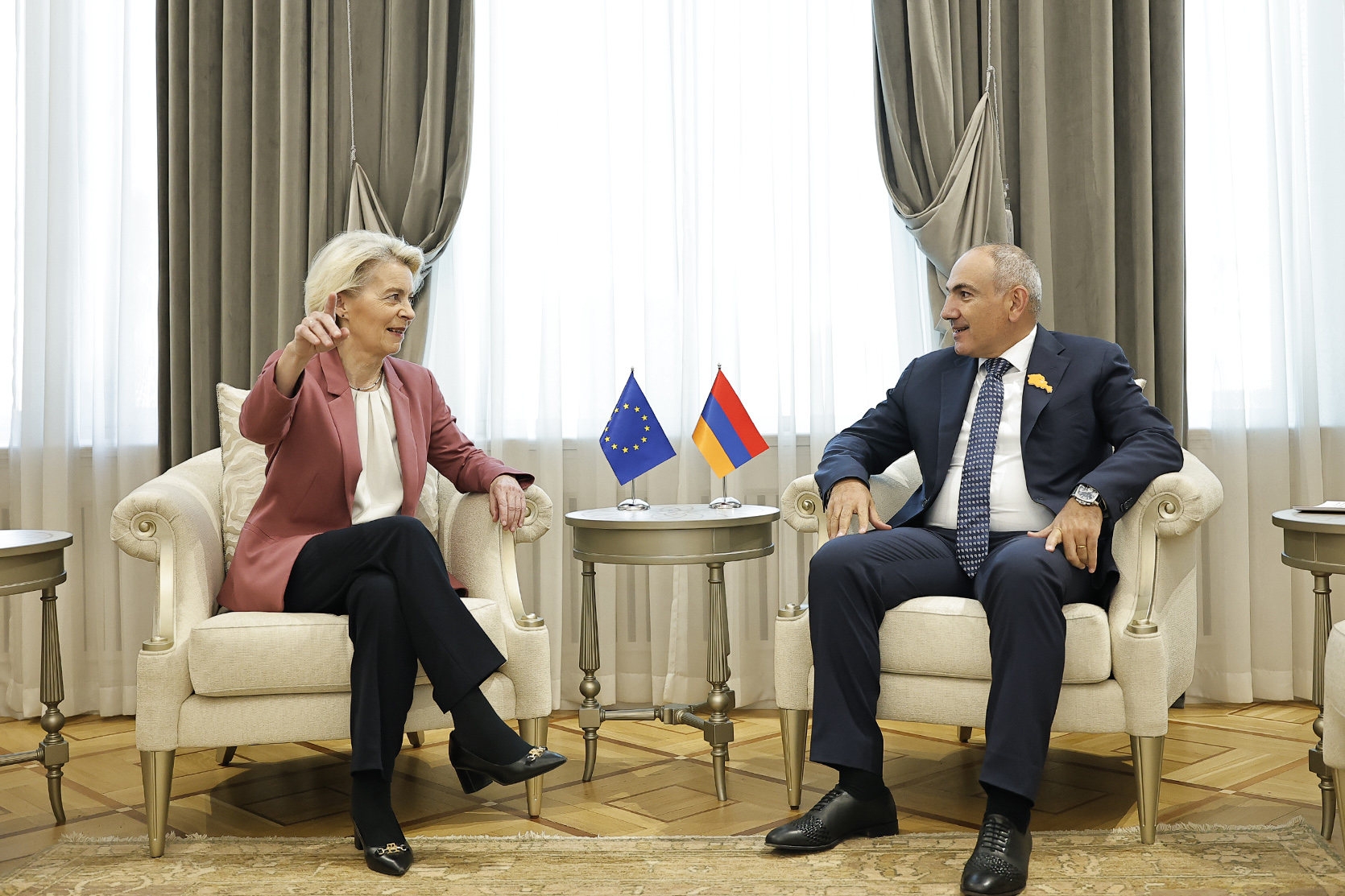
Recent developments show that the European Union wants to support Armenia‘s efforts to diversify its foreign policy, according to diplomat Hrachya Tashchyan, acting director of the Armenian Genocide Museum-Institute.
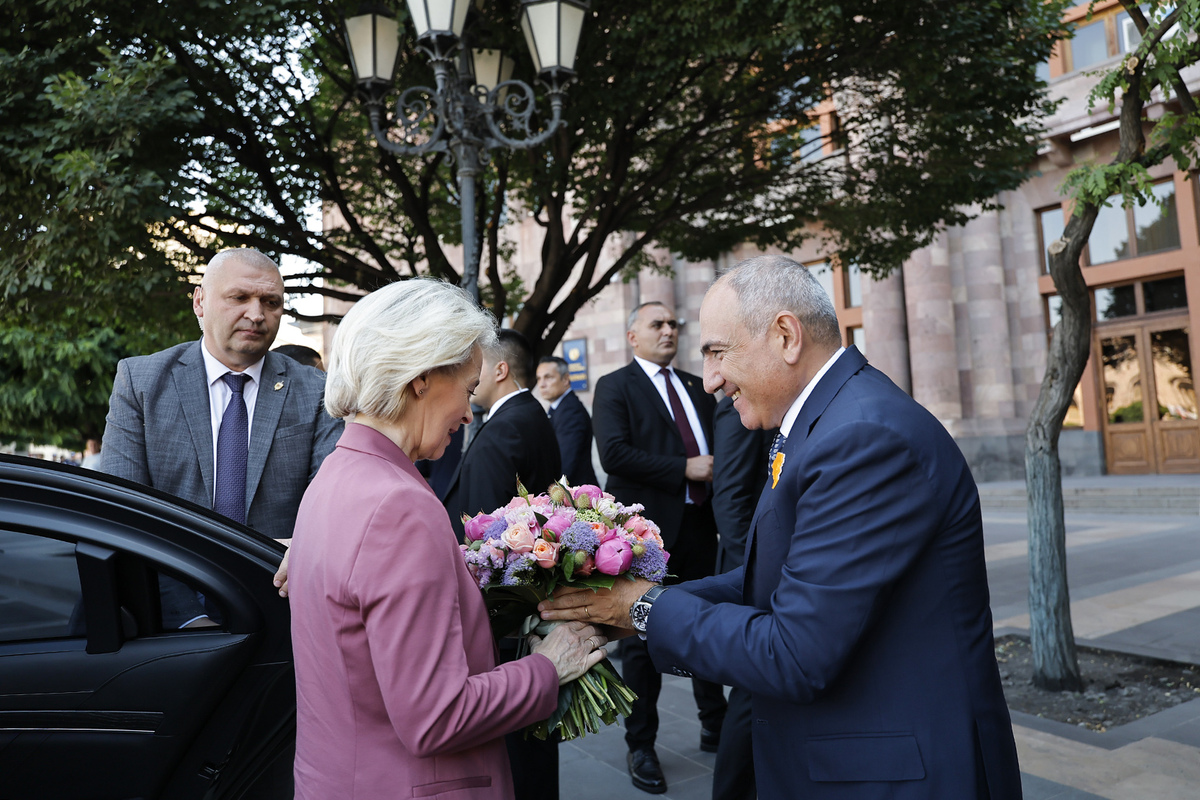
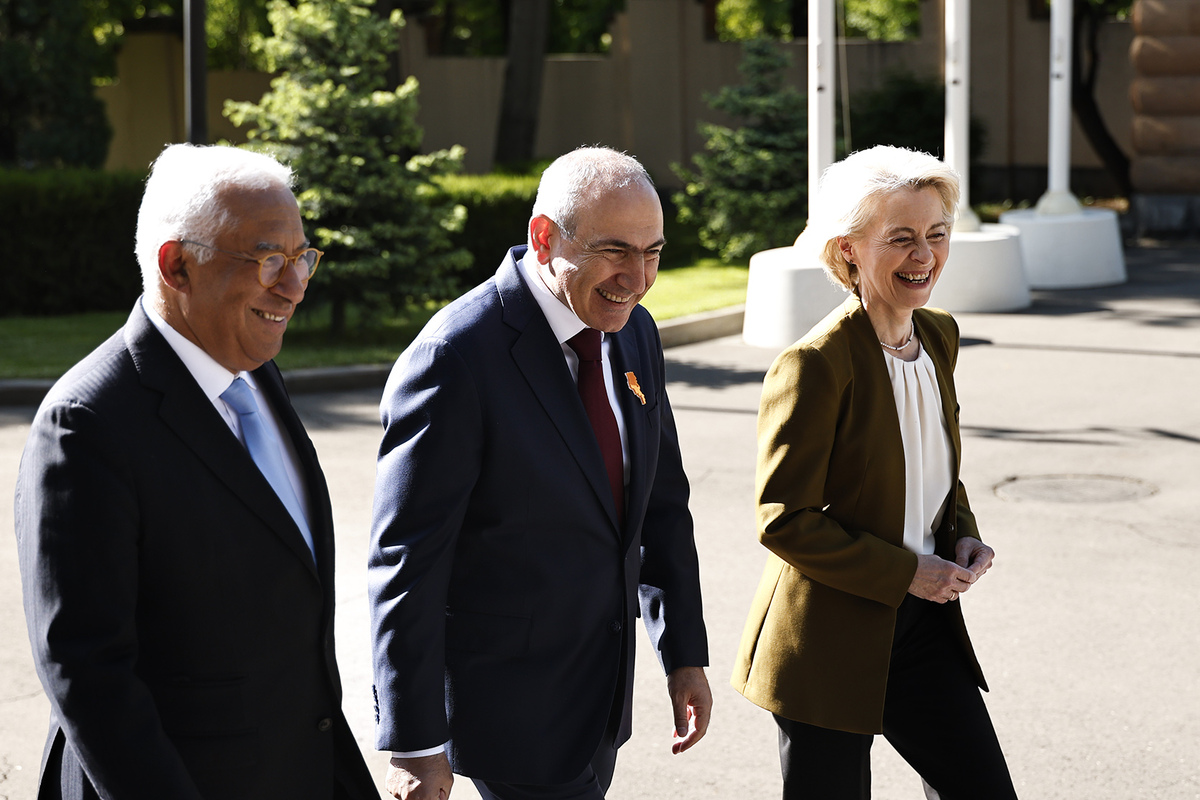
He argues that European Commission President Ursula von der Leyen’s remarks during her visit to Yerevan reflect this approach. She said: “I am here today to make one thing absolutely clear: if Russia closes its market to Armenian products, the EU will open the doors of its consumer market of 450 million people.”
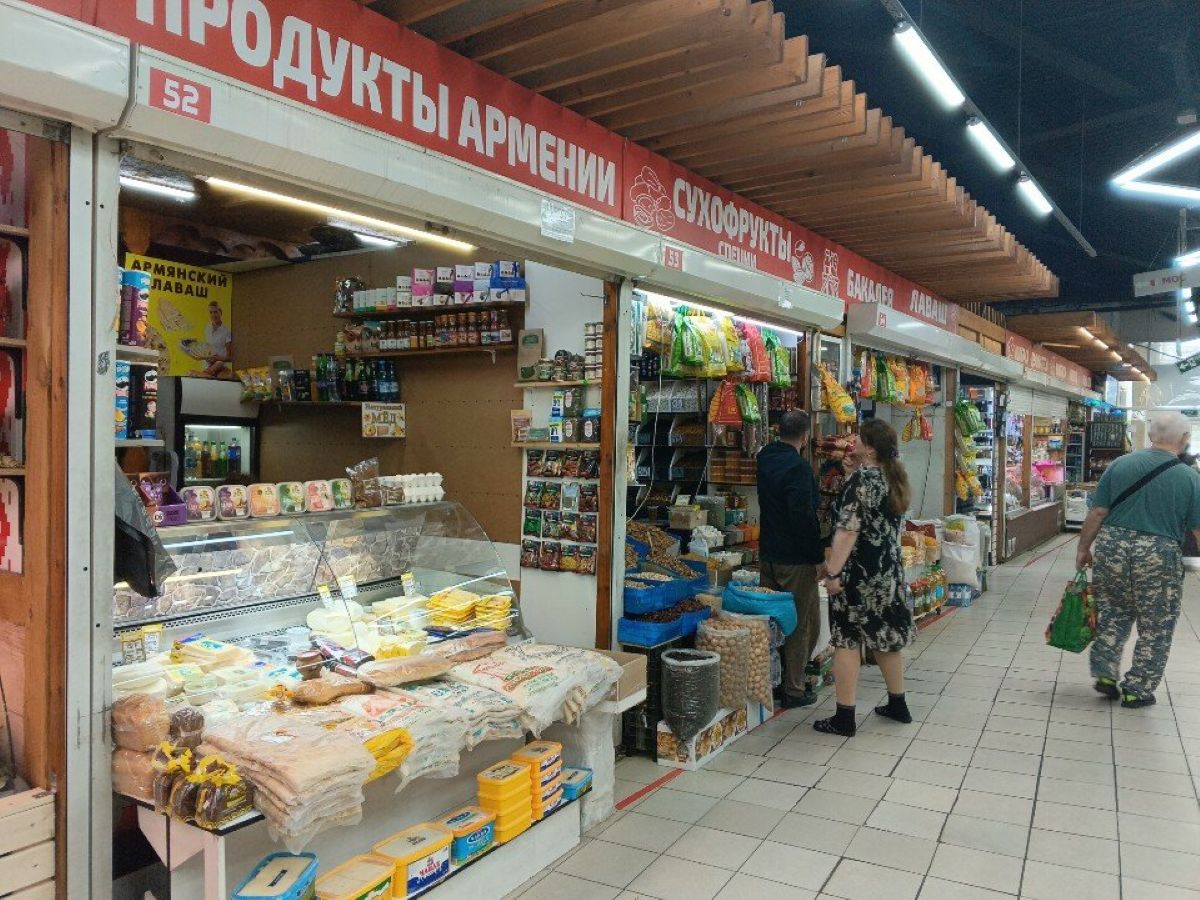
Since May, Russia has gradually introduced restrictions on Armenian imports. Russia’s Federal Service for Veterinary and Phytosanitary Surveillance first banned imports of flowers, vegetables, fruit, fish, mineral water and alcoholic beverages. It then halted all shipments of quarantine-controlled goods, citing phytosanitary concerns.
The EU decided to help Armenia in response to the situation.
Once the Council of the European Union and the European Parliament approve the autonomous trade measures, 80% of Armenian exports to the EU will become duty-free.
“This measure will open the European market to almost 99% of Armenia’s fresh agricultural produce, vegetables, fruit and plant-based products that were previously exported to Russia. It will also give more than 90% of your beverage and alcohol exports access to the EU single market.”
Tashchyan believes “this will be an unprecedented step that will, in effect, create a unilateral free trade regime for Armenia”. He also argues that the move will avoid conflict with the regulations of the Russia-led Eurasian Economic Union (EAEU), of which Armenia is a member. Armenia cannot become a full EU member or benefit from the bloc’s free trade area unless it leaves the EAEU.
In his article, the Armenian diplomat examines how effective EAEU membership has been for Armenia and what advantages closer cooperation with the European Union could offer.
- Armenia unveils exporter support programme to offset Russian restrictions
- Opinion: Why Putin hasn’t rushed to congratulate Pashinyan on his election victory
- ‘No grounds for referendum yet’: Yerevan responds to calls to choose between EU and EAEU
Armenia benefits from the opportunities offered by the EAEU
“The EAEU was created to ensure the free movement of goods, services, labour and capital among its member states. From the perspective of Armenia’s short-term interests, membership in the EAEU is undoubtedly important for the country’s economy. Armenia benefits from free trade with other member states under the bloc’s framework. It also enjoys the advantages of the EAEU’s common customs regime.
The Eurasian Economic Union (EAEU) has five members: Armenia, Belarus, Kazakhstan, Kyrgyzstan and Russia.
It is therefore no coincidence that Russia, as an EAEU member, is Armenia’s largest trading partner. According to some estimates, exports to Russia accounted for around 35% of Armenia’s total exports in 2025, equivalent to roughly 10% of the country’s GDP. […]
Losing access to the Russian market would undoubtedly deal a painful blow to Armenia’s economy.
Another crucial factor is that Armenia imports the vast majority of its energy resources from Russia at preferential prices. This is of vital importance for the country. Formally, these arrangements also stem from the regulations governing the EAEU. Any increase in the price of natural gas supplied by Russia would have a severely negative impact on Armenia’s economy. That, in turn, would create serious social and other consequences.”
The EAEU does not provide the conditions for sustainable economic development
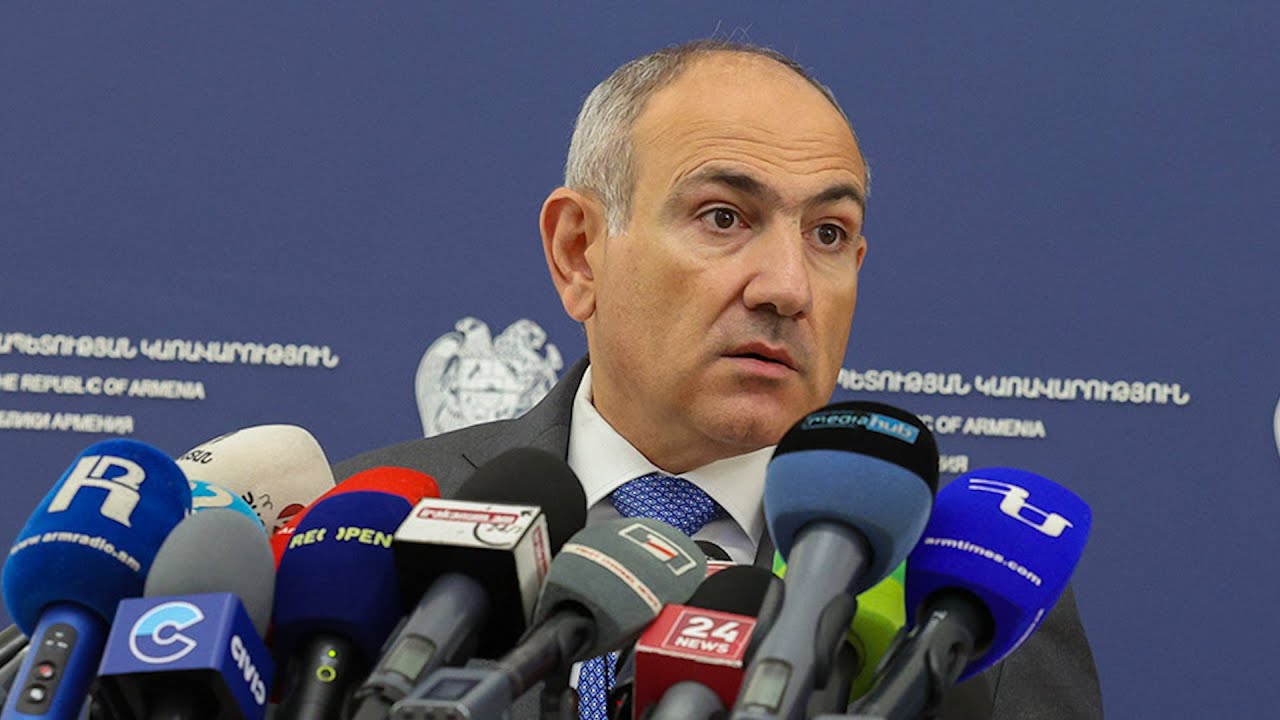
“At present, EAEU membership benefits Armenia, and leaving the bloc would immediately bring economic losses. But does that mean Armenia should simply accept EAEU membership and stop looking for alternatives? In fact, that would be an irrational choice, and there are several reasons why.
The main issue is that EAEU membership does not provide Armenia with the conditions needed for sustainable economic development.
Armenia is now a middle-income country. GDP per capita stands at around $9,000. This means the country is gradually approaching the threshold at which the drivers of sustainable economic growth change fundamentally from those that proved effective when Armenia’s economy was at a much lower level.
According to the World Bank’s 2024 World Development Report, Middle-Income Trap, democratic institutions become a key factor in sustaining economic growth once countries reach this stage.
Decades of international experience show that countries at this level struggle to maintain long-term economic growth without democracy. At this stage, the rule of law and effective accountability mechanisms become particularly important.
The experience of Central European and East Asian countries points in the same direction. Their development shows that countries need to remain within the economic orbit of states with strong institutions and advanced economies if they want to create the conditions for sustainable growth.
The EAEU offers neither. Its member states are not known for strong democratic institutions, and they are far from being among the world’s leading economies.
Russia, which sets the agenda and dominates the EAEU, lags well behind the world’s leading economies in terms of GDP per capita. It occupies only a modest position in the global economy and international trade. Its share of global exports of high-tech goods and digital services, for example, remains very small.
Democratic institutions are also not a priority within the EAEU. Unlike the European Union, membership in the bloc does nothing to encourage the development or strengthening of democratic institutions. […]”
Armenia should look for other platforms for economic integration
“Although EAEU membership currently offers Armenia certain advantages, the bloc cannot provide the tools needed to create the conditions for the country’s long-term sustainable development. It is therefore clear that Armenia should seek other platforms for economic integration.
How can this be achieved? First, we should defend our interests within the EAEU’s legal framework.
Armenia can do so through the EAEU’s main institutions, including the councils of heads of state and government, the Eurasian Economic Commission, the EAEU Board, where Armenia has two members, the Commission’s departments, five of whose 24 directors are Armenian, and the EAEU Court, where Armenia has two of the bloc’s 11 judges. We should make full use of the procedures and mechanisms provided under the EAEU’s legal framework.
Second, we should actively seek new markets and develop viable alternatives for our external economic relations.
That applies both to countries in our region, including our immediate neighbours and the Gulf states, and to European countries.
Third, our region, including our neighbouring countries, is rich in energy resources. We therefore need to find alternative sources of energy in order to significantly reduce our dependence on supplies from Russia.
In the short term, these steps should be our priority.”
The European Union is the best alternative
“The European Union is clearly the best long-term solution for addressing this challenge, diversifying export markets and creating an alternative framework for Armenia’s external economic relations.
Armenia already has a well-developed and diverse institutional framework for cooperation with the EU, centred on the Comprehensive and Enhanced Partnership Agreement (CEPA). Cooperation with the bloc also provides all the tools needed to create favourable conditions for the country’s sustainable economic development. It is fully aligned with Armenia’s long-term strategic economic objectives.
The EU’s economic pull offers all the advantages needed to support development.
It brings together some of the world’s most advanced economies and technological leaders. It is also one of the largest players in the global economy and international trade, behind only the United States and China.
Most importantly, cooperation with the EU helps build democratic and effective institutions, which are essential for ensuring the country’s sustainable development.”
Opinion: Armenia between the EAEU and the EU
A panel discussion titled “Media Horizons: Artificial Intelligence, Visual Storytelling and Next-Generation Experiences” was held as part of the 4th Shusha Global Media Forum, bringing together media experts, bloggers and technology specialists to examine the rapidly evolving digital media landscape.
28 people have been arrested and charged in connection with 14 criminal cases uncovered during large-scale anti-corruption operations across nine regions of Georgia, Emzar Gagnidze, head of the State Security Service’s (SSSG) Anti-Corruption Agency, said at a July 14 briefing.
According to Gagnidze, the detainees face criminal charges in cases involving bribery, the production and distribution of forged official documents, group commercial bribery, fraudulent appropriation of state-owned property and land, and abuse of official authority. The identities of the arrested individuals have not been disclosed.
The arrests come amid the Georgian Dream government’s stated commitment to an “uncompromising” fight against corruption.
Procurement Fraud
Three people were arrested and 11 charged in five criminal cases involving the alleged embezzlement of state funds through public procurement, Gagnidze said.
According to him, the cases concern road, drinking water network, and public school reconstruction projects in the the Tsalka, Akhaltsikhe, and Tetritskaro municipalities, where “during the execution of road sections, internal drinking water network, and public-school reconstruction works by various private companies, tens of thousands of GEL were fraudulently appropriated through falsified documentation and other unlawful actions.”
He added that the investigation also found that several of the accused individuals, under separate state procurement contracts, supplied Easter food products of different brands in smaller quantities than required, as well as low-quality disinfectants, under tenders for Tbilisi kindergartens and Batumi free canteens. As a result, “the state sustained damage totaling GEL 669,497 [USD 255,000],” Gagnidze said.
Illegal Seizure of State Land
Seven people have been charged in three criminal cases involving the alleged fraudulent acquisition of state-owned land, abuse of official authority, and official forgery.
According to Gagnidze, the cases involve representatives of the Dmanisi, Gurjaani, and Tsalka municipal city halls and councils (sakrebulo), “who, at various times, through abuse of official authority and based on forged documentation, fraudulently seized a total of 91,564 square meters of state-owned land, causing damage to the state totaling GEL 397,804 [USD 151,000].”
Bribery
Three people were arrested in three separate criminal cases.
According to the investigation, representatives of the Lanchkhuti and Tetritskaro municipal city halls and the Oni Forestry Service accepted bribes from Georgian and foreign citizens in exchange for “allowing the placement and subsequent protection of a mobile trade facility, a so-called ‘drive,’ on state-owned land, transferring a state-owned land plot for setting up an apiary and providing subsequent protection; and promising to allow the illegal felling and removal of oak from a forest plot.”
Forged Documents, Commercial Bribery
Finally, Gagnidze spoke about three criminal cases involving the alleged production and distribution of forged official documents and group commercial bribery, in which four people were arrested.
“The investigation found that the detainees, at various times, took bribes in exchange for producing and distributing a forged driver’s license, a forged Georgian citizen’s passport, and a forged bachelor’s diploma from a private higher education institution,” he said.
Also Read:
- 09/03/2026 – Security Service Arrests 30, Including Officials, in Nationwide Anti-Corruption Crackdown
- 10/11/2025 – Ex-Official Arrested, Contractors, Expert Charged in Absentia Over 2023 Bridge Collapse
- 30/10/2025 – TI-Georgia: Elite Corruption ‘Remains Widespread’ Despite GD’s Crackdown on Ex-Officials