
TEHRAN, Jul. 13 (MNA) – Iran’s Ministry of Foreign Affairs has rejected Western narratives framing recent Iranian operations as unprovoked aggression, emphasizing that Iran is defending rather than attacking.
Day: July 12, 2026

Henna Virkkunen, the European Commission’s Executive Vice President for Tech Sovereignty, Security, and Democracy, announced the punitive measure. The recommendation has been formally submitted to the European Education and Culture Executive Agency (EACEA), which oversees the allocation of the cultural funds, News.Az reports, citing Anadolu Agency.
The funding slash follows an intensive review by European officials after the Biennale leadership attempted to defend its choice to bring Russian artists back to the world-famous exhibition. The EU remains entirely unconvinced by those arguments.
***
“Culture in Europe — funded with taxpayers’ money — should promote and safeguard democratic values,” Virkkunen stated in a post on X. “These values are not respected in today’s Russia.”
The financial standoff underscores a hardening stance within European institutions against giving state-backed Russian cultural projects an international platform amid ongoing geopolitical conflicts.
The post Venice Biennale faces €2M loss after welcoming back Russia appeared first on azeritimes.com.

The €90 million ($103 million) contract centers on the “Shrike,” a highly effective first-person-view (FPV) drone. While the hardware is built by major Ukrainian manufacturer SkyFall, the drones are being supercharged with advanced software developed by U.S. defense technology firm Auterion. This specialized AI programming allows the drones to autonomously lock onto, track, and strike moving targets during the final phase of flight, even if electronic jamming severs the operator’s manual signal, News.Az reports, citing Reuters.
Auterion CEO Lorenz Meier confirmed the massive scale of the initiative, noting that a portion of the 50,000-drone batch has already been delivered to the frontline, with the remaining units scheduled for dispatch before the end of the year. Both the German and Ukrainian Defense Ministries declined to comment on the specific logistics, citing strict operational security.
***
The low-cost Shrike drone has been a staple of Ukrainian operations since 2023, but its cutting-edge target-tracking capabilities have recently caught global attention. A modified version, the Shrike 10-F, recently dominated the opening round of a Pentagon-run competition aimed at procuring hundreds of thousands of one-way attack drones.
Western allies are rapidly scaling up their unmanned aircraft pipelines to match Ukraine’s staggering battlefield demand, where thousands of drone strikes are launched every single day:
Auterion’s Network: Beyond the German contract, the tech firm is partnering with multiple hardware makers to deliver a total of 100,000 Western-funded drones to Ukraine this year, which includes a separate 33,000-drone contract from the U.S. Pentagon.
The UK Contribution: Last month, Great Britain announced it would step up to provide 150,000 drones to Ukraine this year as part of a larger £752 million ($1.01 billion) defense funding package.
The post Germany bankrolls massive 50,000 attack drone order for Ukraine appeared first on azeritimes.com.

Because regular hotlines between the two nations remain severed, the ministry in charge of handling inter-Korean affairs took the unusual step of sending the notice via a broadcasted text message directed to Pyongyang, News.Az reports, citing Reuters.
According to military officials, the navy seaman vanished while conducting routine coast guard duties on the East Sea. Investigators believe there is a strong possibility that strong ocean currents may have swept the sailor north across the Northern Limit Line—the heavily disputed maritime border separating the two Koreas.
***
“As our navy is currently searching for the missing person, we request for cooperation with the search and return from a humanitarian perspective,” the ministry’s message read.
The high-stakes search lands during a period of deeply frozen diplomatic relations. While the South Korean administration under President Lee Jae Myung has consistently pushed to de-escalate cross-border frictions since taking office, Pyongyang has routinely ignored overtures for dialogue. The geopolitical divide has grown increasingly rigid since 2024, when North Korean leadership officially designated South Korea as a permanent “hostile nation.”
The post South Korea asks North Korea for help tracking missing sailor appeared first on azeritimes.com.

“This strategic passage is more important than dozens of atomic bombs, and the Islamic Republic of Iran will protect it,” Rezaee was quoted as saying by the semi-official ISNA news agency. The sharp rhetoric coincides with a severe military flare-up in the region, News.Az reports, citing Al Jazeera.
Tehran recently declared that it had closed the critical maritime corridor following direct exchanges of fire with U.S. forces, prompting immediate pushback from U.S. Central Command, which stated its forces are prepared to guarantee open navigation.
***
Rezaee’s comments also touch upon a long-standing international flashpoint regarding Iran’s nuclear ambitions. While Western nations, led by the United States, have repeatedly accused Iran of covertly trying to engineer a nuclear weapon, Tehran has maintained for decades that its nuclear facilities are designated strictly for civilian, peaceful purposes. Iranian officials frequently point back to a binding religious edict (fatwa) issued by the late Ayatollah Ali Khamenei in the early 2000s, which strictly prohibited the development and stockpiling of nuclear weapons.
The post Iran adviser claims Strait of Hormuz outweighs nuclear arsenal appeared first on azeritimes.com.
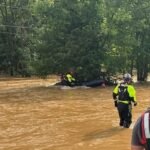
Emergency responders, including the Missouri National Guard, launched large-scale rescue operations using helicopters and boats, successfully evacuating hundreds of people, including children attending a summer camp, News.Az reports.
***
Although no fatalities had been reported as of Friday evening, authorities warned that dangerous flooding continued across the region and additional rainfall could worsen conditions.
What happened in Missouri?
The severe weather unfolded after multiple rounds of thunderstorms moved across southeastern Missouri overnight and into Friday morning, producing exceptionally heavy rainfall in a relatively short period. The downpours overwhelmed rivers, streams, and drainage systems, causing water levels to rise rapidly across the Ozark Mountains and surrounding communities.
Flash floods spread through homes, roads, campgrounds, and recreational areas, leaving many residents and visitors trapped before they had time to evacuate. Emergency agencies received numerous distress calls as floodwaters surrounded buildings, swept across highways, and isolated entire communities.
Authorities quickly activated large-scale emergency operations involving state and local agencies, while weather officials warned that additional rainfall could continue to threaten already saturated areas.
What caused the flash flooding?
The flooding resulted from intense thunderstorms that produced between 150 and 300 millimeters of rain within several hours across parts of southeastern Missouri. Such rainfall amounts are capable of overwhelming even well-developed drainage systems, especially in mountainous terrain.
The Ozark Mountains contain steep valleys and narrow waterways that can channel rainfall rapidly into rivers and streams. As a result, water levels can rise dramatically within minutes, creating dangerous flash flood conditions with little warning.
Officials said the Black River and nearby waterways transformed into fast-moving torrents after the prolonged rainfall. Because the ground had already become saturated, much of the additional rain flowed directly into rivers rather than being absorbed by the soil, accelerating flooding across the region.
Meteorologists also warned that further rainfall was expected, increasing concerns that floodwaters could continue rising or delay recovery efforts.
Which areas were hardest hit?
Reynolds County was among the areas most severely affected by the flooding. Numerous rescues were carried out there as floodwaters inundated homes, vehicles, campgrounds, and recreational facilities located near the Black River.
The broader Lead Belt region of eastern Missouri also experienced significant flooding, with several counties reporting washed-out roads, damaged infrastructure, and stranded residents. Officials noted that the disaster extended beyond a single community, affecting multiple rural areas where rivers and streams overflowed after the heavy rainfall.
Neighboring Crawford County also experienced flooding, with authorities continuing to search for one missing person. Throughout the region, emergency crews faced difficulties reaching isolated communities because many roads had become impassable.
Why did Camp Taum Sauk require a helicopter evacuation?
One of the largest rescue operations centered on Camp Taum Sauk, a summer youth camp located near Lesterville, approximately 160 kilometers south of St. Louis.
As floodwaters rapidly surrounded the camp, road access became impossible, making helicopter evacuation the safest option. Missouri National Guard crews deployed Black Hawk helicopters to airlift approximately 200 people from the facility.
About half of those evacuated were children attending the summer camp, while the remainder were counselors and staff members responsible for supervising camp activities.
The operation required multiple helicopter flights because of the number of people needing evacuation. Officials said the rescue was completed successfully despite difficult weather conditions and rapidly rising water levels.
How many people have been rescued?
Emergency crews rescued hundreds of people throughout the day as floodwaters spread across southeastern Missouri.
The Missouri National Guard evacuated approximately 200 individuals from Camp Taum Sauk alone. Earlier, the Reynolds County Sheriff’s Office reported rescuing more than 90 people from flooded homes, vehicles, and campsites.
Later in the day, rescue teams using boats saved three additional individuals stranded along the Black River. Authorities also confirmed that another 20 to 30 people initially reported missing were subsequently located safely or rescued during continuing search operations.
By Friday evening, officials had reported no confirmed fatalities despite the widespread flooding.
Were children among those rescued?
Yes. Approximately half of the 200 people evacuated from Camp Taum Sauk were children participating in the summer camp.
The presence of large numbers of young campers made the rescue operation particularly urgent. Emergency responders prioritized safely transporting children away from the flood zone before weather conditions deteriorated further.
Authorities praised the coordination between camp staff, emergency responders, and National Guard personnel, which helped facilitate the successful evacuation despite rapidly changing conditions.
Officials have not reported any serious injuries among the children rescued from the camp.
What challenges did emergency responders face?
Rescue crews encountered numerous obstacles while attempting to reach trapped residents.
Fast-moving floodwaters created dangerous conditions for both helicopter and boat operations. During one rescue mission, two emergency boats carrying rescue personnel capsized after encountering strong currents. Fortunately, all crew members were safely recovered downstream by fellow responders without reported injuries.
Floodwaters also washed away numerous roads throughout the region, preventing emergency vehicles from reaching several riverside communities and campgrounds. In many cases, helicopters or boats represented the only practical means of accessing isolated areas.
Officials said search teams planned to revisit certain locations after water levels receded to ensure no additional people remained trapped.
What happened at Bearcat Getaway Campground?
One of the more dramatic incidents occurred at the Bearcat Getaway Campground, where authorities initially feared that multiple people had been swept away after the roof of a building reportedly collapsed into floodwaters.
Emergency crews launched search operations for the missing individuals while continuing rescues elsewhere across the county.
Later, officials confirmed that the group had either been located safely or successfully rescued, reducing concerns about additional casualties. The incident nevertheless illustrated the speed and force with which floodwaters transformed normally safe structures into dangerous environments.
Authorities continue assessing damage at campgrounds and recreational sites throughout the region.
How did residents describe the flooding?
Many longtime residents said they had never witnessed flooding of such magnitude.
Among those rescued was Joann Franklin, who, together with her husband and their pets, had to wait on the roof of their home before emergency crews reached them.
Franklin explained that she had lived in the area since 1979 and had never previously seen water rise to such extraordinary levels. Her experience reflected similar accounts from other residents who described the flooding as unprecedented within their communities.
Such personal testimonies highlight both the intensity of the rainfall and the rapid development of the flood emergency.
Why are flash floods so dangerous?
Flash floods are among the deadliest weather-related disasters because they develop extremely quickly, often leaving little time for evacuation.
Unlike slow-rising river floods, flash floods can occur within minutes after heavy rainfall, particularly in mountainous terrain where water rapidly flows downhill into streams and rivers. Fast-moving water is capable of sweeping away vehicles, destroying buildings, eroding roads, and trapping people inside homes or recreational facilities.
Even relatively shallow moving water can be powerful enough to carry away cars or knock people off their feet. This is why emergency agencies consistently advise residents never to attempt driving or walking through flooded roadways.
In rural areas such as the Ozarks, washed-out roads and limited access routes can further complicate rescue operations.
How widespread is the flooding threat?
Although southeastern Missouri experienced some of the most severe impacts, the broader weather system affected a much larger region.
The National Weather Service issued flood watches covering parts of eight states, including Missouri, southern Illinois, Indiana, Kentucky, Tennessee, West Virginia, Ohio, and western Pennsylvania. More than 21 million people fell within areas under flood alerts as the storm system continued moving eastward.
Meteorologists warned that saturated ground conditions significantly increased the likelihood of additional flooding if further heavy rainfall occurred.
Authorities across the affected states continued monitoring rivers, reservoirs, and weather forecasts while preparing for potential additional emergency responses.
What actions have state authorities taken?
Missouri Governor Mike Kehoe declared a state of emergency for flood-affected areas to strengthen coordination between state agencies, local governments, and emergency responders.
The declaration allows additional resources to be deployed more quickly, including National Guard personnel, rescue equipment, transportation assets, and emergency funding where needed.
State officials are working alongside county emergency management agencies, law enforcement, firefighters, medical teams, and federal weather authorities to coordinate rescue operations and monitor changing conditions.
The emergency declaration is also intended to support recovery efforts once floodwaters begin to recede.
What happens next?
Emergency responders will continue search and rescue operations until authorities are confident that everyone reported missing has been located. As floodwaters gradually subside, teams will revisit isolated campgrounds, riverside communities, and damaged neighborhoods that could not be safely accessed during the height of the flooding.
Engineers will assess damaged roads, bridges, and public infrastructure, while utility crews work to restore disrupted services. Officials will also begin evaluating property damage to determine the scale of recovery assistance that may be required.
Weather forecasts remain a key concern because additional rainfall over already saturated ground could prolong flooding and complicate rescue and recovery operations. Authorities continue urging residents to avoid flooded roads, follow evacuation instructions where issued, and monitor official weather updates until conditions improve.
The post What caused the flash floods in Missouri and how are rescue efforts unfolding? appeared first on azeritimes.com.
Free Roblox Plus for Existing Creators We understand that adding Roblox Plus as a publishing requirement for reaching younger audiences is a significant change for creators. To make this transition easier, we are covering the cost of Roblox Plus for about one hundred thousand of our existing creators for the next 6 months.
🤔 В АПБА раскрыли новые подробности массового отравления в Гяндже.
#новости #mediaaz #Азербайджан #Гянджа #отравление #медицинскаяПомощь