
Iniciar sesión en Gmail Para abrir Gmail, puedes iniciar sesión desde un ordenador o añadir tu cuenta a la aplicación Gmail en tu teléfono o tablet. Una vez que hayas iniciado sesión, abre tu bandeja de entrada para consultar tu correo.
Day: July 10, 2026
Summary
Recent reports highlight growing cracks in Putin’s authority, from military failures in Ukraine to internal security fears and economic strain on Russians. Diplomatic overtures to Trump contrast with escalating attacks on energy infrastructure, suggesting a leader increasingly cornered by both external pressures and internal dissent. The war’s toll is now visibly affecting domestic stability and elite loyalty.
Key Stories
Putin’s summer offensive collapses as Russia struggles to hold frontline — Military analysts report Russia’s inability to maintain territorial gains in Ukraine, with its summer campaign failing to achieve key objectives. The setback may indicate overstretched supply lines and mounting casualties, forcing a shift to defensive postures.
Ukraine intensifies drone strikes on Russian oil infrastructure — Ukraine’s long-range drone attacks have targeted multiple Russian fuel depots, disrupting energy exports and domestic markets. The strikes suggest a deliberate strategy to weaken Russia’s economic resilience amid prolonged conflict.
Putin’s security fears exposed amid rumors of internal threats — Reports reveal Putin’s reliance on 800 bodyguards and elaborate decoys, alongside speculation about assassination plots involving injections. The measures underscore heightened paranoia within the Kremlin, possibly linked to military setbacks and elite discontent.
Russians face economic consequences of war as costs mount — Public discontent grows over rising living costs and resource shortages, with sanctions and military spending straining the economy. The shift marks a departure from earlier narratives of insulated stability, signaling potential long-term unrest.
Kremlin seeks dialogue with Trump despite diplomatic tensions — Putin’s administration reaffirms openness to talks with Trump, even as high-profile gaffes like Trump calling Zelensky ‘Putin’ complicate relations. The outreach may reflect desperation for sanctions relief or a calculated bet on U.S. political shifts.

The extension prolongs a policy first implemented in April, which limits O’Hare to a maximum of 2,708 daily arrivals and departures. Originally scheduled to expire on October 24, these operational limits will now remain in place through late 2027, News.Az reports, citing Reuters.
The move directly impacts major carriers like United Airlines and American Airlines, both of which use O’Hare as a primary hub. The ongoing caps force these airlines to scale back their growth plans and keep daily operations anchored near last year’s levels.
***
By maintaining this artificial ceiling on daily flights, the FAA hopes to ensure the airport’s infrastructure can reliably handle traffic without triggering the compounding, systemic delays that have plagued travelers in previous peak seasons.
The post Major flight restrictions at Chicago O’Hare extended into 2027 appeared first on azeritimes.com.

The project has been years in the making but the EU first needs to agree on the legal framework underpinning the virtual currency before it is available for use, News.Az reports, citing RFI.
***
A European Parliament committee had already given its green light but that approval was challenged and there was a call for an assembly vote. An overwhelming majority of lawmakers approved establishing a digital euro.
ECB President Christine Lagarde applauded the vote.
The EU believes a digital euro is the answer to cutting its addiction to US payment systems like Visa and Mastercard as well as Apple Pay and Google Pay.
According to a recent ECB report, credit card payments are the main electronic payment method in the EU, but international card schemes “accounted for approximately 61 percent of euro area card transactions in 2022” while the domestic market share of national card schemes “is declining.”
“We depend predominantly on US, but also sometimes Chinese, networks to organise payments,” she says in an interview with Euronews.
“We need to have a European solution because we want to be sovereign at home,” she said.
That means negotiators from the parliament and EU capitals can start talks to reach a deal by the end of 2026. If they stick to that timeline, the European Central Bank hopes the digital euro would be available to citizens in 2029.
The first meeting of negotiators is expected this month.
There are also plans for a pilot programme in mid-2027 to test how the digital euro would work in practice if there is an agreement by the end of the year.
EU lawmaker Fernando Navarrete Rojas, one of the lead negotiators for the parliament, insisted the digital euro was “an alternative, not a requirement”.
He said that those saying the digital euro would be used “as a tool of control” were “lying”, stressing there would be the “highest privacy standards”.
Lagarde added that the digital euro is meant to “complement” rather than “replace” cash, and that the project is not designed to trace people’s payments.
“Cash and the digital euro will both be legal tender, which means that nowhere in Europe can someone say, ‘Sorry, I’m not taking your banknotes’,” Lagarde said.
The ECB has proposed holding limits — reportedly around €3,000 per person — partly to reassure banks worried about deposit outflows, and has said offline payments would carry cash-like privacy, with transactions unlinkable to individual users.
The post European Parliament approve digital euro, launch still years away appeared first on azeritimes.com.

Speaking on Fox News’ Outnumbered, co-host Kayleigh McEnany condemned the delay, arguing it denies justice to Kirk’s family despite what she described as overwhelming evidence presented during the preliminary hearing, News.Az reports.
“This is inexcusable,” McEnany said.
***
The criticism followed testimony detailing evidence prosecutors say links Tyler Robinson to the fatal shooting, including alleged text messages in which Robinson admitted responsibility, a handwritten confession reportedly left for his former roommate Lance Twiggs, ballistic evidence, DNA evidence, and testimony that Robinson had engraved bullets before the shooting.
McEnany questioned why the court had not yet ruled on probable cause, calling it “such a low bar.”
“There’s ballistic evidence. There’s DNA evidence. There’s a texted confession. There’s the roommate saying he confessed to me,” she said, adding that Kirk’s widow, Erika Kirk, had been forced to wait nearly a year to learn whether the case will even go to trial.
The judge scheduled additional oral arguments for Sept. 1 before deciding whether Robinson will stand trial.
McEnany also cited Utah’s victims’ rights law, arguing the statute guarantees victims “the right to a speedy disposition of the charges” and accused the court of failing to honor that commitment.
The panel noted that Kirk’s family has attended every day of the preliminary hearing while continuing to await a ruling.
According to testimony played in court, Twiggs said Robinson confessed multiple times after the shooting, including through a note allegedly left beneath his keyboard and in text messages. Prosecutors also said investigators recovered engraved bullets alongside what they believe to be the murder weapon.
The hearing concluded without an immediate ruling, leaving the Kirk family waiting until at least early September for the judge’s decision.
The post Kayleigh McEnanyon Charlie Kirk murder case: “This is inexcusable” – VIDEO appeared first on azeritimes.com.

FULL TIME: Spain 2-1 Belgium
**
GOAL: 88′ Mikel Merino
**23:41
GOAL: 41′ De Ketelaere
**23:30
GOAL: 30′ Fabian Ruiz
**23:00
First half begins
**22:00
Spain enters the quarter-finals carrying the tournament’s most formidable defensive record. Head coach Luis de la Fuente has engineered an impenetrable backline that has yet to concede a single goal throughout the entire competition. Relying on their signature high-volume passing and a midfield chokehold anchored by captain Rodri, La Roja will look to dominate possession, pin Belgium deep into their own half, and dictate the tempo from the opening whistle, News.Az reports.
In contrast, Belgium arrives full of confidence after dismantling the United States in the previous round. The Red Devils, who have built a spectacular 18-match unbeaten streak, boast a dangerous, counter-attacking frontline capable of exploiting the slightest defensive overcommitments. With elite playmakers like Kevin De Bruyne and Jeremy Doku providing ammunition for an in-form Romelu Lukaku, Belgium’s tactical blueprint will focus on absorbing Spain’s relentless pressure before launching lethal, lightning-fast transitions.
***
The encounter adds another chapter to the rich history between the two nations, serving as a direct World Cup knockout rematch of their iconic 1986 battle. As both teams finalize their star-studded lineups, football fans are bracing for a cagey, tactical chess match where a single brilliant moment could decide who moves one step closer to global glory.
The post Spain and Belgium LIVE : Who will face France? appeared first on azeritimes.com.
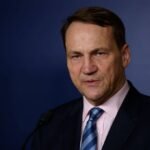
Sikorski revealed that millions of Russian trolls, alongside high-ranking Kremlin officials, are working behind the scenes to stoke historical grievances between Warsaw and Kyiv. The goal is to ignite emotional disputes over dark chapters of their shared history—specifically the Volhynia tragedy of World War II—to derail their current strategic partnership, News.Az reports, citing RBC-Ukraine.
“Since the 17th century, disputes, crimes, and Polish-Ukrainian conflicts have always served our enemy,” Sikorski warned, noting that nationalists on both sides are falling into the trap for short-term political popularity.
***
The warning comes at a critical time for European security. Sikorski emphasized that Ukraine needs Poland’s support now more than ever as it navigates both the ongoing war and its complex path toward joining the European Union. He argued that confronting painful history should lead to reconciliation and maturity rather than political division.
Behind the Tensions: What Russia is Exploiting
While Moscow is actively fanning the flames, real diplomatic friction has recently surfaced between Warsaw and Kyiv over historical memory:
The Military Name Dispute: Behind-the-scenes negotiations revealed that Poland wants Ukraine to reconsider an honorary military designation that references the Ukrainian Insurgent Army (UPA), a group tied to brutal historical conflicts with Poles.
The Push for Reconciliation: Poland is urging Ukraine to adapt to European standards of historical transparency as a prerequisite for full EU integration.
Sikorski noted that Western allies are working to stay one step ahead of the Kremlin by publicly exposing Moscow’s psychological operations and upcoming European sabotage plots before they can succeed.
The post Why Russia wants Ukraine and Poland to fight over the past appeared first on azeritimes.com.