
Iran’s Islamic Revolutionary Guard Corps (IRGC) said on Thursday that the United States’ actions will not only trigger Iran’s “crushing response” but also disrupt the process of reopening the Strait of Hormuz by its “adventurism and interference” in determining routes through the critical waterway, AzerNEWS reports.
Day: July 9, 2026
Twenty-eight people died following a massive fire in a shoe factory in China”s eastern Fujian province, on Thursday, state news agency Xinhua wrote.
Chinese President Xi Jinping ordered an all-out effort to rescue and treat the victims, and investigate, Report informs via South China Morning Post.
The blaze was reported at 12.04pm (GMT +8) at the Huiteng Shoes factory on Kaituo Road East in the village of Jiangtou in Chendai township, Jinjiang.
Fire authorities in the city of Quanzhou sent emergency crews, including 183 firefighters and 35 fire trucks, to the scene, state broadcaster CCTV reported. By late Thursday afternoon, local authorities said the fire had been brought under control, according to CCTV.

WASHINGTON, D.C. – The Armenian National Committee of America (ANCA) is celebrating the 40th anniversary of its Leo Sarkisian Internship (LSI) Program this summer, with this year’s class — the most geographically diverse in program history — now three weeks into an intensive schedule of congressional meetings and Hai Tahd advocacy in the nation’s capital. Interns hail from Arizona, California, Colorado, New Jersey, North Carolina, Texas, Virginia and Wisconsin.
This year’s Leo Sarkisian interns — Sophene Avedissian, Aren Bandazian, Aram Bavoukian, Jackson Beudjekian, Brandon Zareh Fregenti, Narine Hrihorian, Alec Krikorian, Nicole Mikayelyan, Juliana Panossian, Suren Sargsyan and Arenie Vartanian — are joined by Maral Melkonian Avetisyan Fellow Arev Buchaklian for an intensive summer program based in Washington, D.C.
“For 40 years, the ANCA has empowered the next generation of Armenian American leaders through the Leo Sarkisian Internship and Maral Melkonian Fellowship. As we celebrate this milestone, this year’s interns — from Armenian American communities all across the U.S., from Arizona and Texas to Wisconsin and North Carolina — embody the same passion and purpose that have defined the history of this program,” said Michael Tatevossian, 2026 ANCA summer program director. “Their daily activities, from meetings with members of Congress to engaging in policy briefings, reflect their deep commitment to advancing the cause for justice.”
Interns have met with members of Congress and congressional staff throughout their first three weeks in Washington, pressing lawmakers to demand Azerbaijan’s immediate release of Armenian hostages, who surpassed 1,000 days in captivity in late June. Interns urged representatives to mark the milestone with statements on social media and the House floor, and joined a Capitol Hill press conference where Reps. Judy Chu, Brad Sherman, Jim Costa and Laura Friedman renewed calls for the hostages’ release and for accountability for Azerbaijan’s ongoing human rights abuses.
Interns are also engaging congressional offices in the ANCA’s campaign against the proposed $700 million sale of GE F110 jet engines to Turkey and Turkey’s potential reintegration into the F-35 program. They are building cosponsors for H.J.Res.200, introduced by Rep. Dina Titus (D-NV), a Joint Resolution of Disapproval, and encouraging offices to join the bipartisan letter led by Reps. Mike Lawler (R-NY) and Brad Sherman (D-CA) opposing Turkey’s return to the F-35 program. The advocacy comes as NATO leaders gather this week for the NATO Summit in Ankara.
The ANCA LSI and Maral Melkonian Avetisyan Fellowship are integral parts of the ANCA’s youth empowerment and professional development efforts, including the ANCA Hovig Apo Saghdejian Capital Gateway Program, which helps university students and graduates find internships and permanent positions in congressional offices and government agencies. The ANCA also hosts the Rising Leaders career development program for university students, the Haroutioun and Elizabeth Kasparian Summer Academy for high school students and the Lucine Kouchakdjian Capitol Hill Days.
Established in 1986 and named in honor of longtime ANCA grassroots leader Leo Sarkisian, the LSI Program has helped launch the careers of hundreds of alumni now serving in government, law, media, public policy and community leadership.
Armenian Americans can follow the 2026 interns’ summer advocacy on ANCA’s social media pages, join the campaign against Turkey’s F-35 reintegration at anca.org/noengines, and demand the release of Armenian hostages by supporting the Azerbaijan Sanctions Review Act (H.R.5369) at anca.org/sanctions.
Meet the 2026 ANCA Leo Sarkisian interns and Maral Melkonian Avetisyan Fellow:
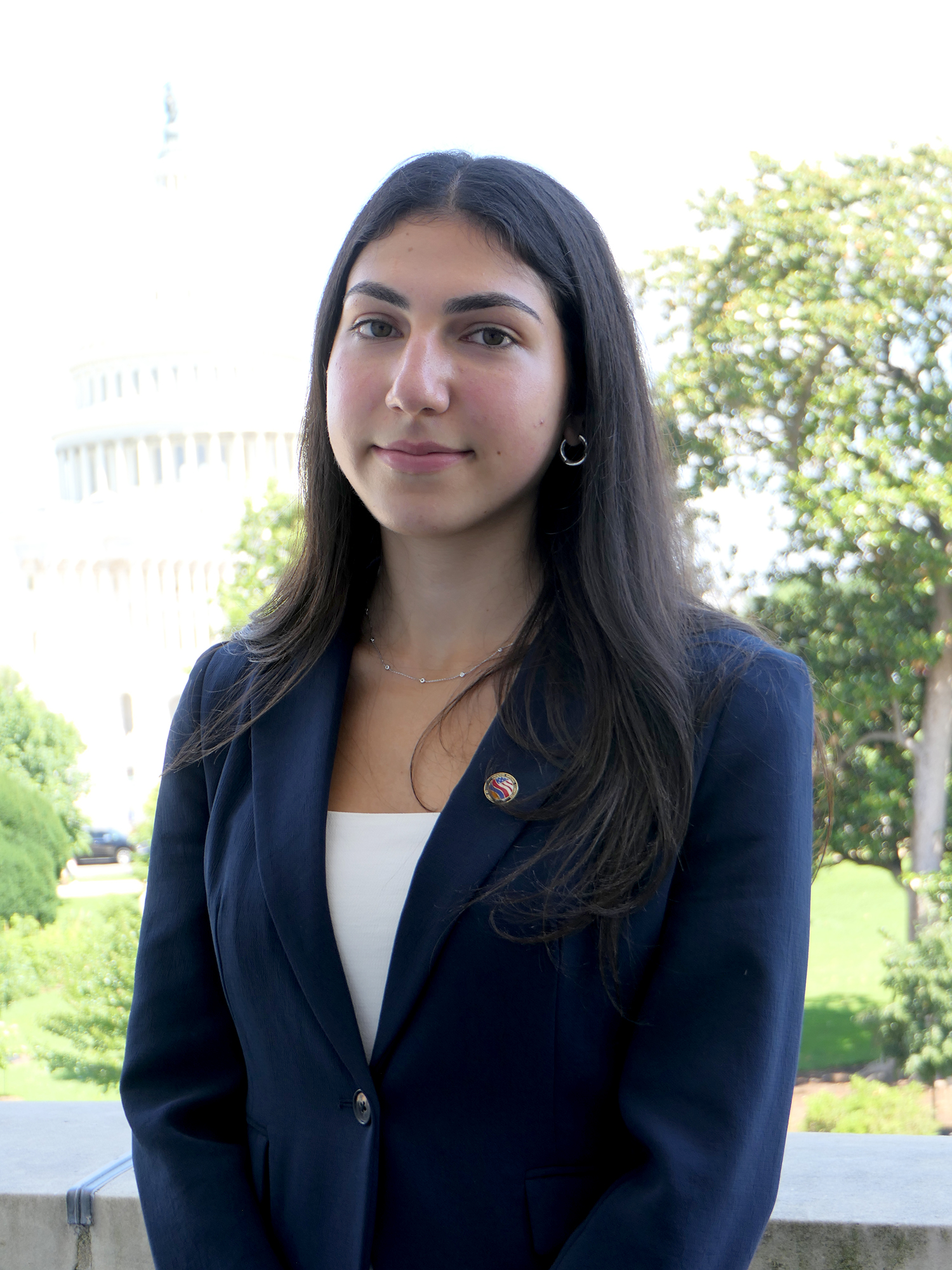 Sophene Avedissian, of Glendale, California, is a rising sophomore at Stanford University majoring in political science. She is active in Stanford’s Pre-Law Society and Women in Law organization, and will hold an executive board position with the Armenian Students Association next year.
“Advocacy and service to the Armenian community have always been extremely important to me. In high school, I participated in the ANCA Summer Academy, where my commitment to and interest in the Armenian Cause solidified. I am excited to be back in the nation’s capital, where I look forward to continuing to develop my advocacy skills and bringing them back to serve my Armenian community as well as Armenians worldwide,” said Avedissian.
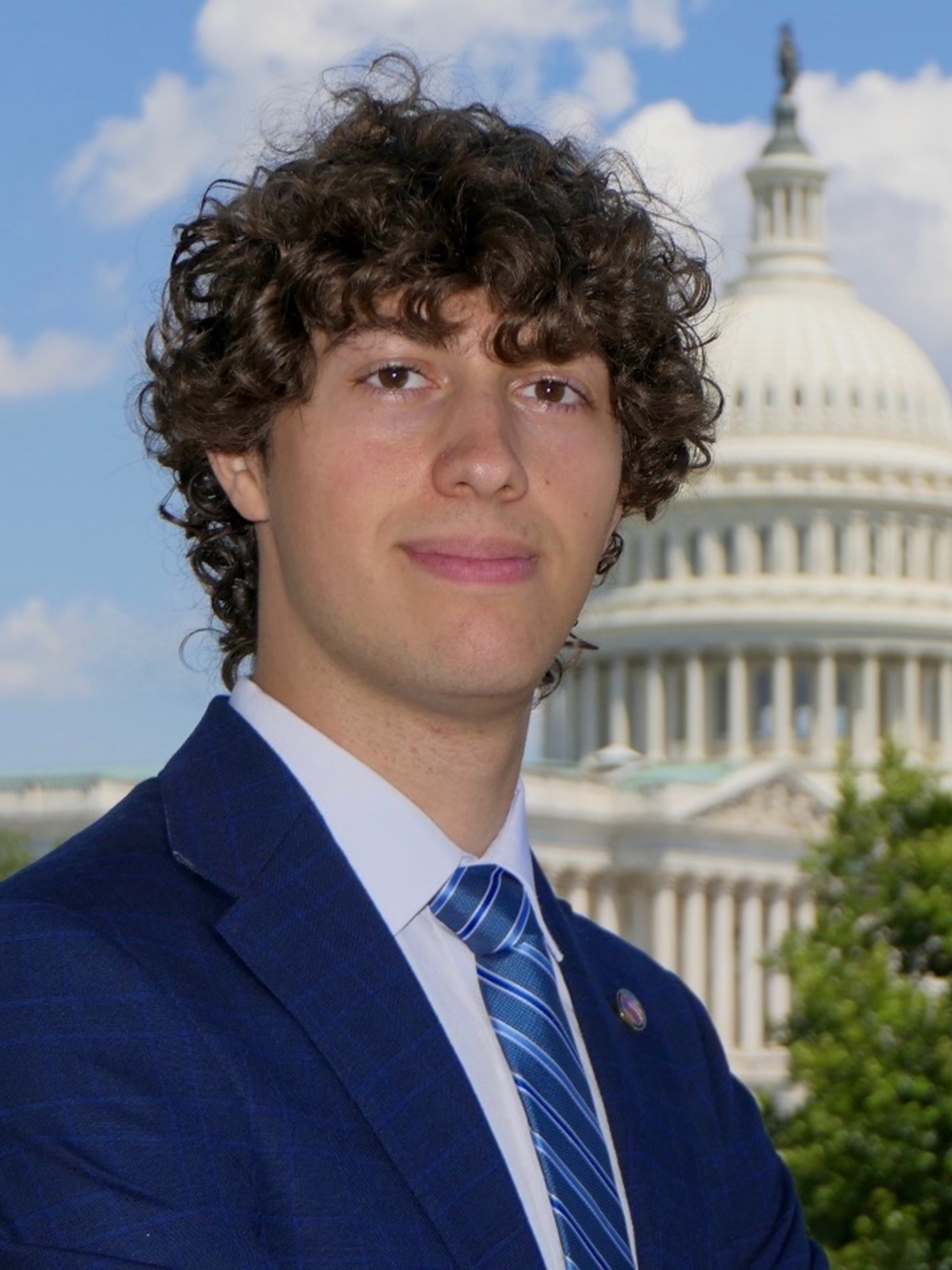 Aren Bandazian, of Richmond, Virginia, is a rising junior at Nova Southeastern University in Davie, Florida, studying political science and psychology, and plans to work for the State Department after graduation. A longtime member of the AYF Washington, D.C., “Ani” chapter, he served as an acolyte and danced with the group at St. James Armenian Church in Richmond.
“I believe the ANCA is crucial for providing diasporan Armenians with a voice. As an intern and member of the ANCA, I am eager to advocate for legislation that strengthens the U.S.-Armenia relationship, protects Armenian sovereignty and ensures a durable peace in the region,” said Bandazian.
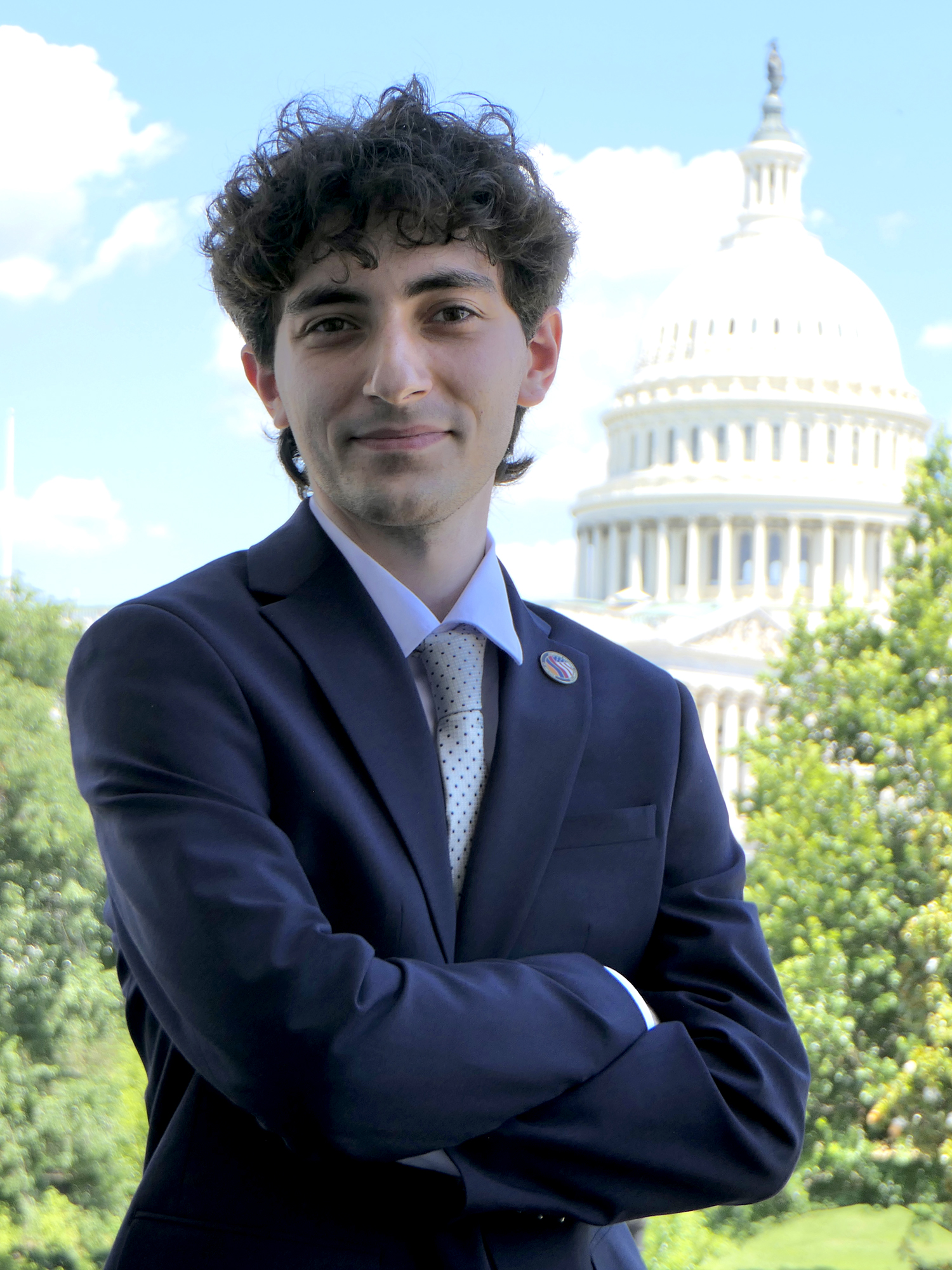 Aram Bavoukian recently graduated from Montclair State University with a degree in communication and media studies and a minor in English. He serves as public relations and correspondence coordinator for the Armenian Youth Federation’s New Jersey “Arsen” Chapter, of which he has been a member for 12 years, and sits on the chapter’s Hai Tahd Committee. After attending the ANCA’s 2025 Rising Leaders Program and 2026 ANCA Eastern Region Grassroots Seminar, Bavoukian sought to deepen his engagement with the Armenian Cause through the Leo Sarkisian Internship.
“I’ve always been proud of being Armenian. Combined with an interest in political advocacy and education in media, LSI seemed like a great fit for me as I enter the professional world. I also hope to take this time in D.C. to grow and to take what I learn to give back to my local Armenian community in New Jersey,” said Bavoukian.
 Jackson Beudjekian, of Irvine, California, is a rising junior who transferred to the University of California, Los Angeles, to study political science. Educated at an Armenian school, he has represented the Armenian American caucus at the Statewide Democratic Convention and helped elect ANCA-endorsed candidates in Orange County.
“The ANCA gives a voice to a people that have been typically voiceless in American politics. I decided to participate in the Leo Sarkisian Internship program to help take the advocacy skills and grassroots strategy ANCA promotes back home to help further the Armenian Cause,” said Beudjekian.
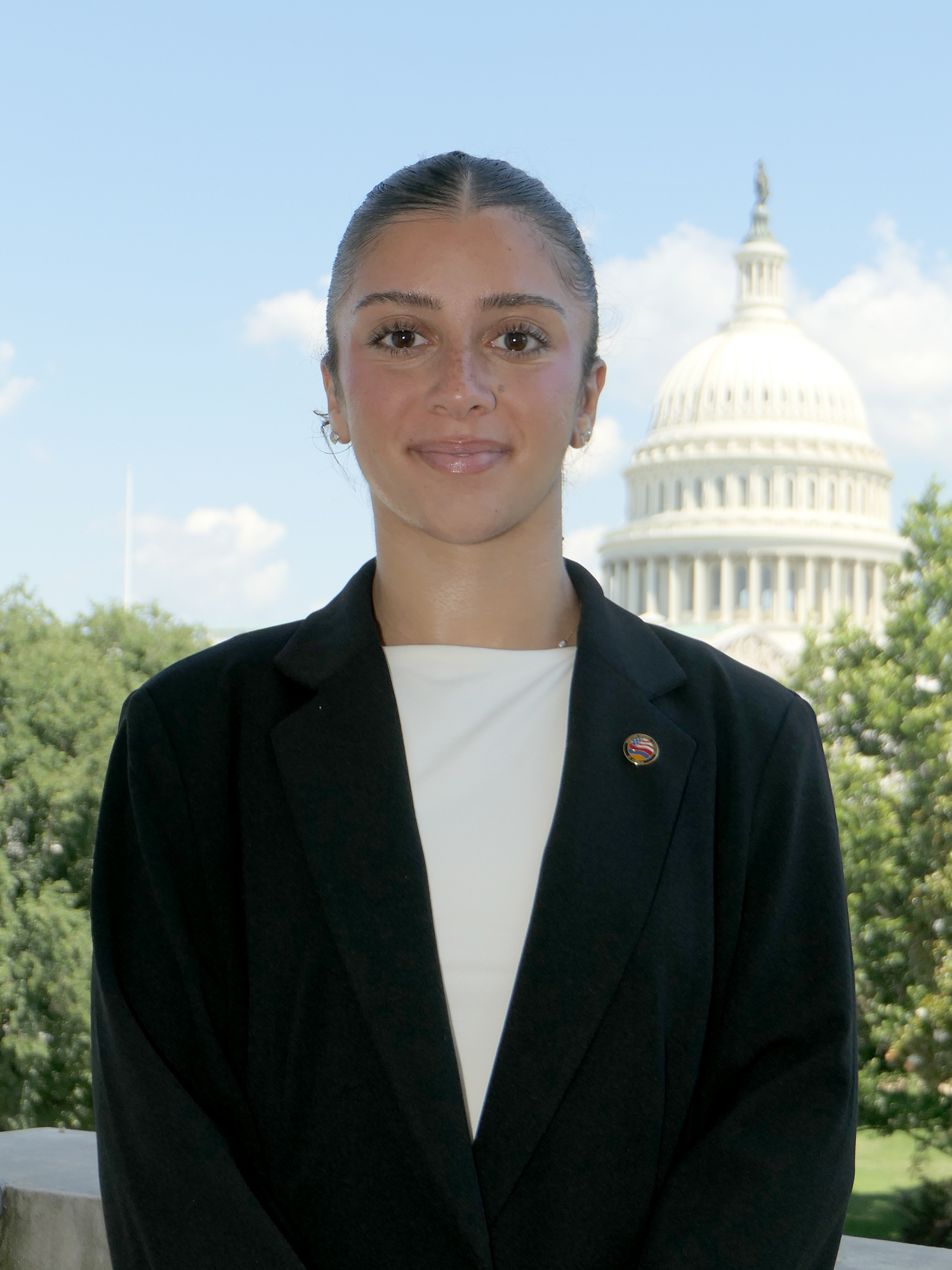 Arev Buchaklian is a rising senior at the University of Wisconsin-Madison and the Honors College, studying political science, international relations, French and public policy. A member of the AYF Racine “Armen Garo” chapter and the AYF Central Junior Council, she co-founded the Armenian Students Association at UW-Madison and hopes to pursue a career in international or immigration law.
“I admire the way the ANCA continuously works to overcome challenges facing Armenia. I wanted to shift my perspective on my ability to make change. I have struggled with viewing the past, current and future of the Armenian state as something out of my power and control. I’m excited and honored to have the opportunity to learn from the ways the ANCA takes initiative in its position of power to make a meaningful impact on Armenia and the Armenian community. In engaging in this internship as a Maral Melkonian Avetisyan Fellow, I hope to honor Maral by living up to the aspirations that she set for herself, her homeland and her heritage,” said Buchaklian.
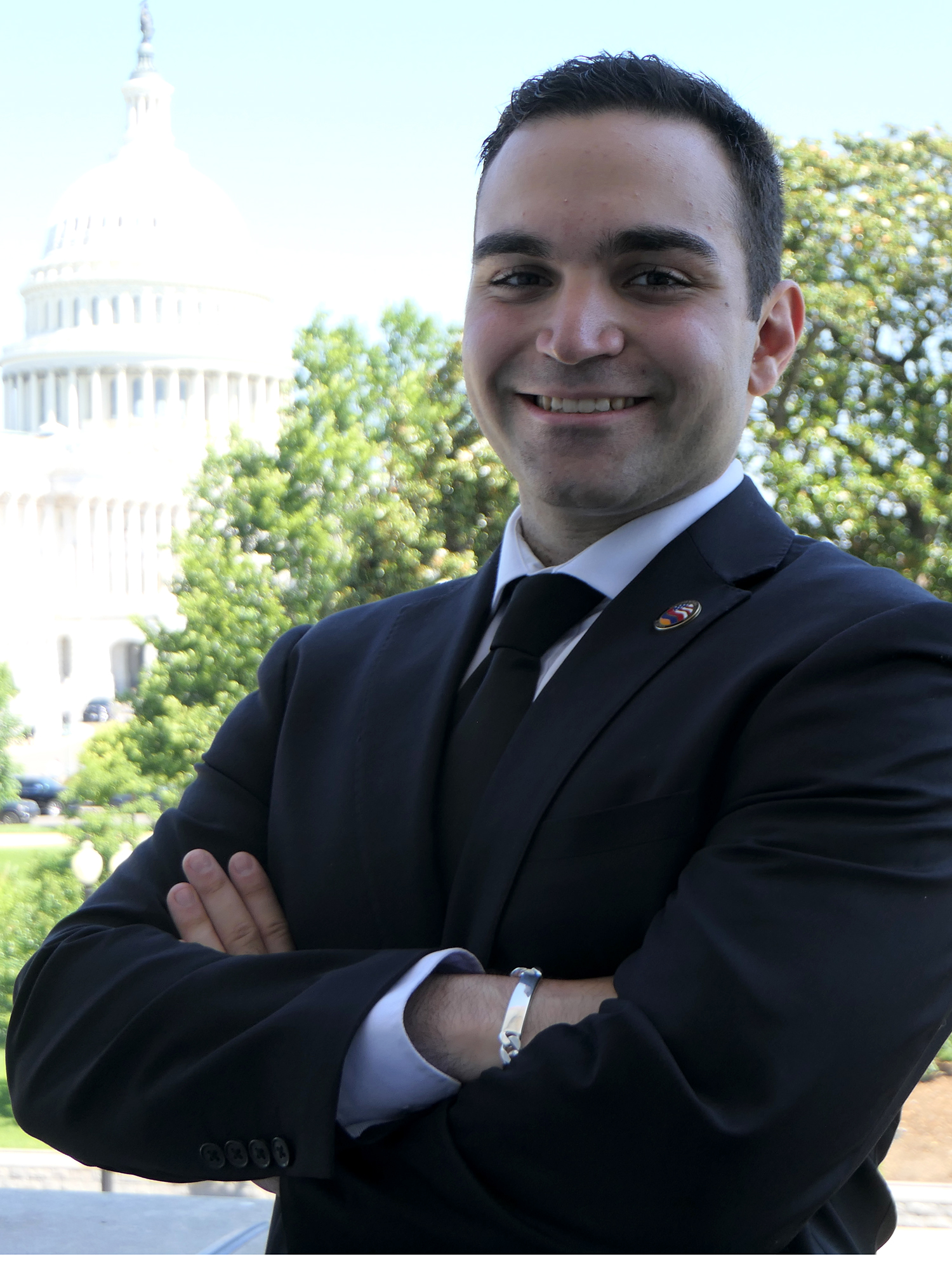 Brandon Zareh Fregenti, of Harrington Park, New Jersey, recently earned a master’s degree in communication studies from Fairleigh Dickinson University’s Florham Campus in Madison, New Jersey. A member of the AYF-YOARF New Jersey “Arsen” Chapter’s executive board and Hai Tahd Committee, he has also danced with Hamazkayin of New Jersey’s Nayiri Dance Ensemble since he was 8 years old.
“In March 2026, I had gone to Watertown, Massachusetts, for the ANCA Eastern Region’s Grassroots Seminar for three days, and I couldn’t stop thinking about when I took part in the Rising Leaders Program in 2022. This made me realize that advocating for the Armenian Cause had become an even bigger priority for me than it already has. I am grateful to the ANCA for giving me the opportunity to be a part of the Leo Sarkisian Internship Program, and for giving me the opportunity to spend six weeks in our nation’s capital to help me gain knowledge of how I can better advocate for the Armenian Cause throughout the halls of Congress and beyond, along with bringing back that knowledge to my home state and AYF chapter,” said Fregenti.
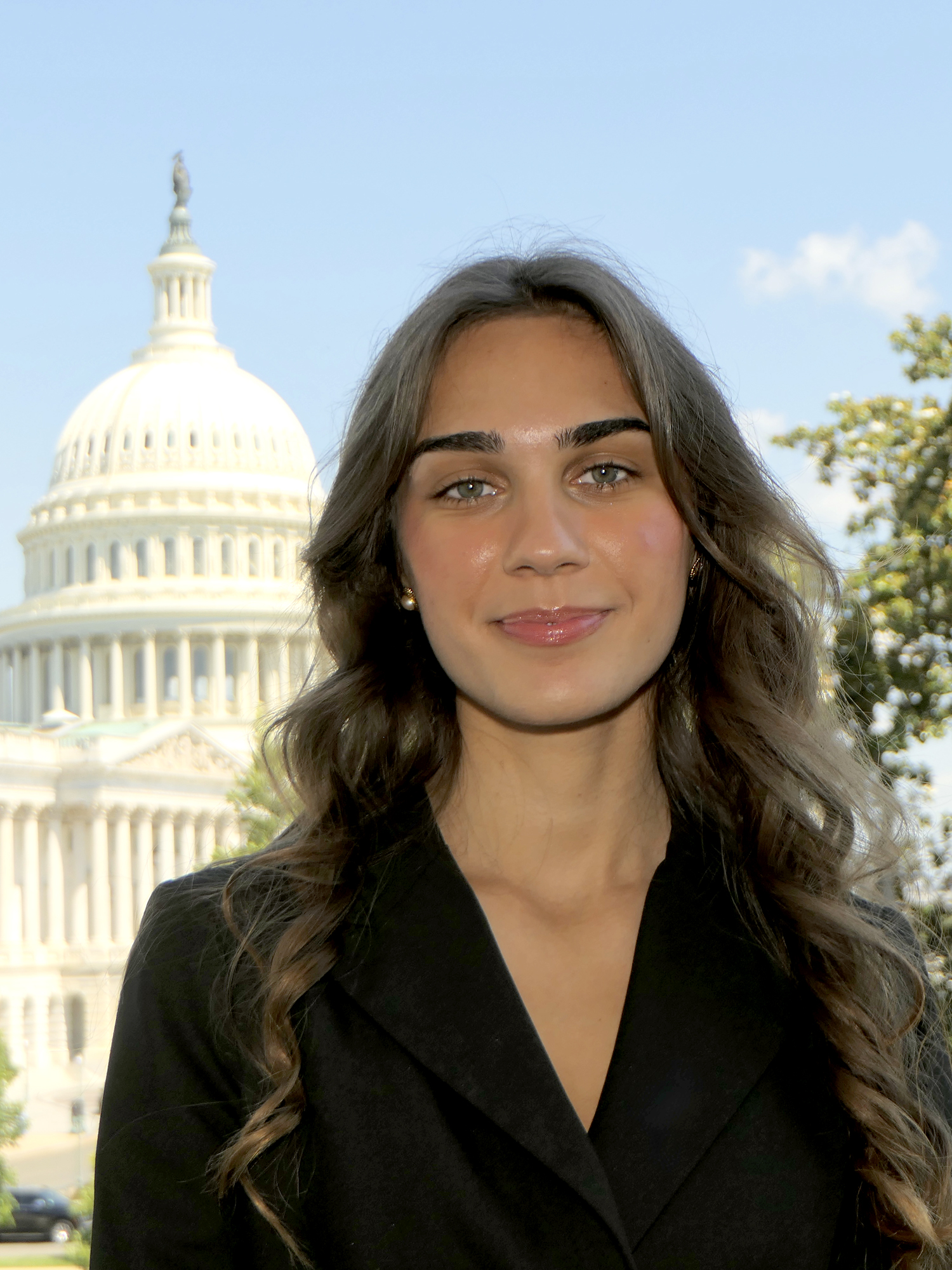 Narine Hrihorian is a rising junior at the University of North Carolina at Chapel Hill, majoring in political science and minoring in French. Originally from Ukraine, she came to North Carolina in 2021 through the Future Leaders Exchange (FLEX) Program and has remained active in both the Armenian and Ukrainian communities in North Carolina. After participating in the ANCA’s Rising Leaders Program in March 2026, Hrihorian returned to Washington, D.C., for the Leo Sarkisian Internship to continue developing her advocacy and public affairs skills.
“During my time with ANCA, I am excited to further develop the skills necessary to advocate effectively for the Armenian community and for those whose voices are too often overlooked, marginalized or silenced. My goal is to use this experience to become a stronger advocate and, ultimately, a lawyer who will ensure that others have someone fighting by their side,” said Hrihorian.
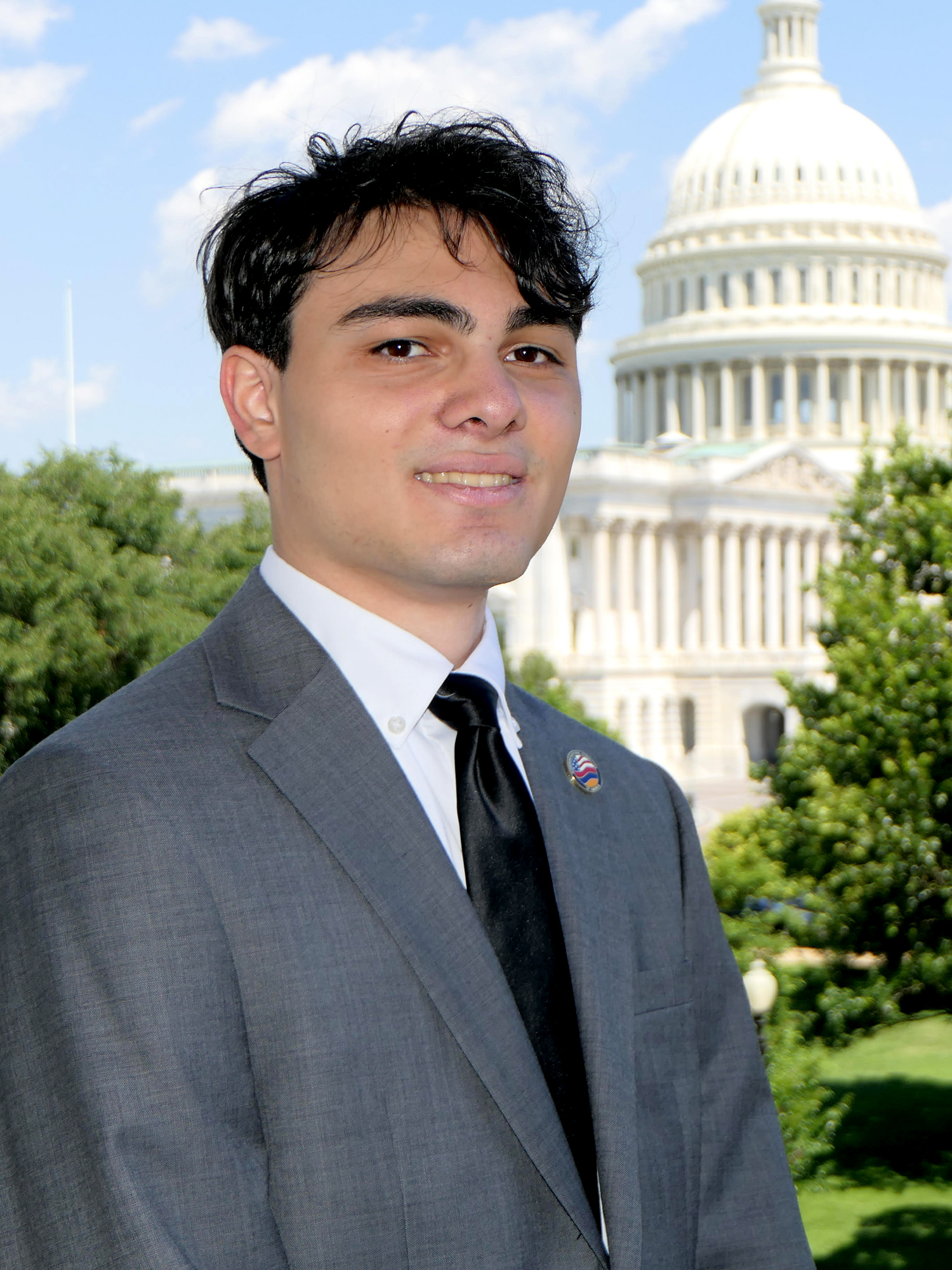 Alec Krikorian, of Pasadena, California, is a third-generation Armenian American and a rising sophomore at Pasadena City College studying political science. Educated at Armenian school throughout his life, he hopes to pursue advocacy work in politics, policy and government.
“I applied to this internship because I was excited to learn from different professionals here in D.C., specifically about how they leverage their roles to advance the Armenian cause and advocate for issues that are important to the Armenian community. I hope my experience will help me become a better advocate for Armenian issues,” said Krikorian.
 Nicole Mikayelyan, of Dallas, Texas, is a rising senior at Texas A&M University majoring in society, ethics and law with minors in business and philosophy. She serves as president of Texas A&M’s Honors Student Council, co-founded the Pan-Honors Freshman Leadership Organization and helped establish the Armenian Student Association at Texas A&M, where she will serve as vice president next year.
“I applied to the Leo Sarkisian Internship because I wanted to take a more active role in advocating for Armenia through policy and legislation. I’m very grateful to the ANCA for the opportunity to work in the nation’s capital, and I’m really looking forward to contributing this summer,” said Mikayelyan.
 Juliana Panossian, a rising senior at Arizona State University and Barrett, the Honors College, is studying political science with a minor in philosophy and certificates in international relations, civic education and health humanities. She serves as president of the Armenian Student Association (ASA) at ASU, promoting Armenian culture and causes among students across the Phoenix Valley, and has spearheaded fundraisers and events for Armenians in the homeland throughout high school and college.
“I was raised in a proud Armenian household. During the events of 2020, I realized that the words ‘never again’ were not enough. It was my goal and passion to ensure that I don’t sit by while these injustices occur but rather, to be a voice for the Armenian community. In this world, there is no voice too small, and I am incredibly grateful to the Armenian National Committee of America for giving me the opportunity to use my voice to help my people,” said Panossian.
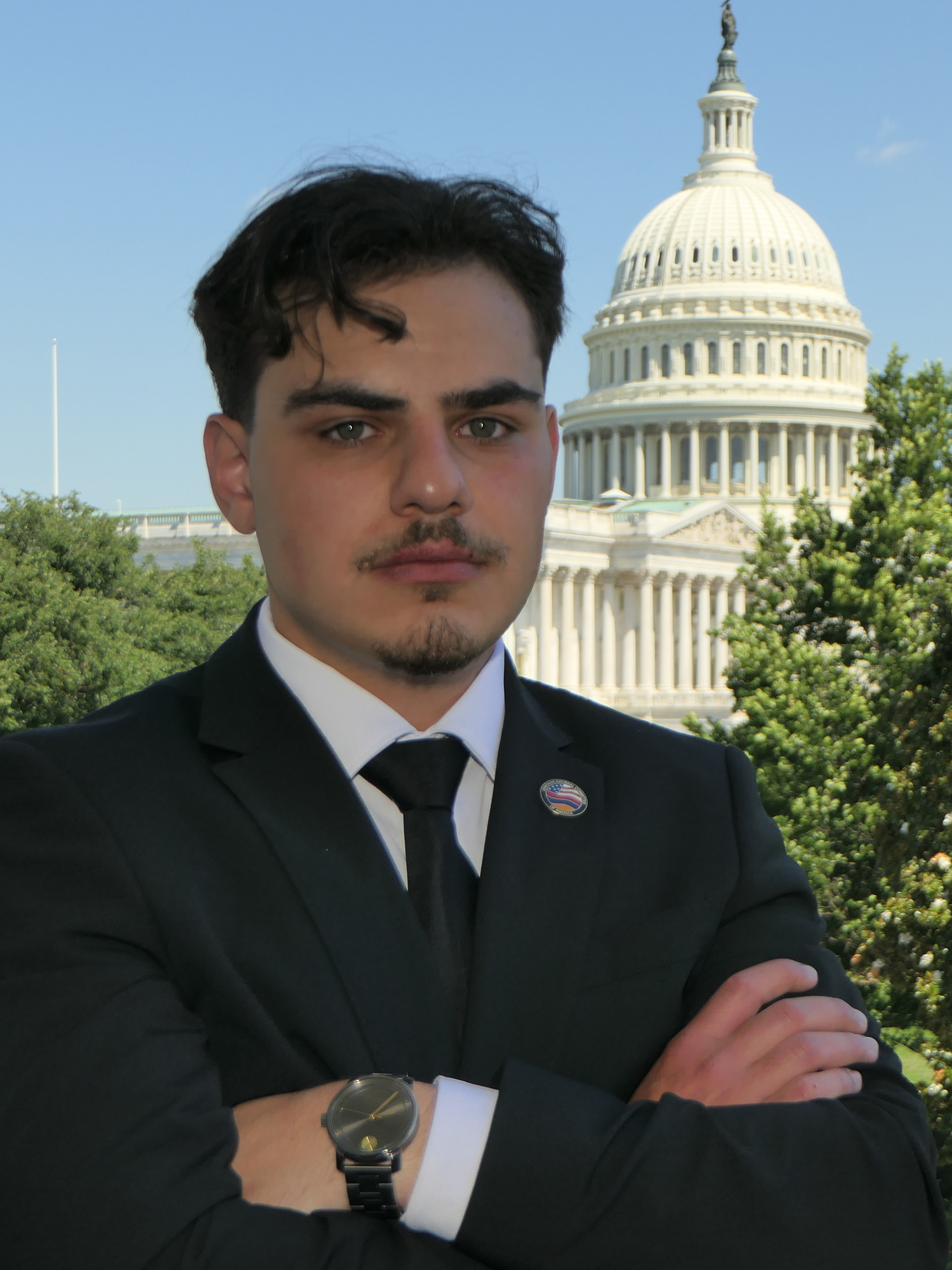
Suren Sargsyan, of Aurora, Colorado, is a first-generation Armenian American and recent University of Colorado Boulder graduate with a B.S. in electrical engineering and a minor in engineering management. Active in his local Armenian community since age 12, he founded and grew the Armenian Student Association chapter at CU Boulder.
“I have found my North Star,” said Sargsyan.
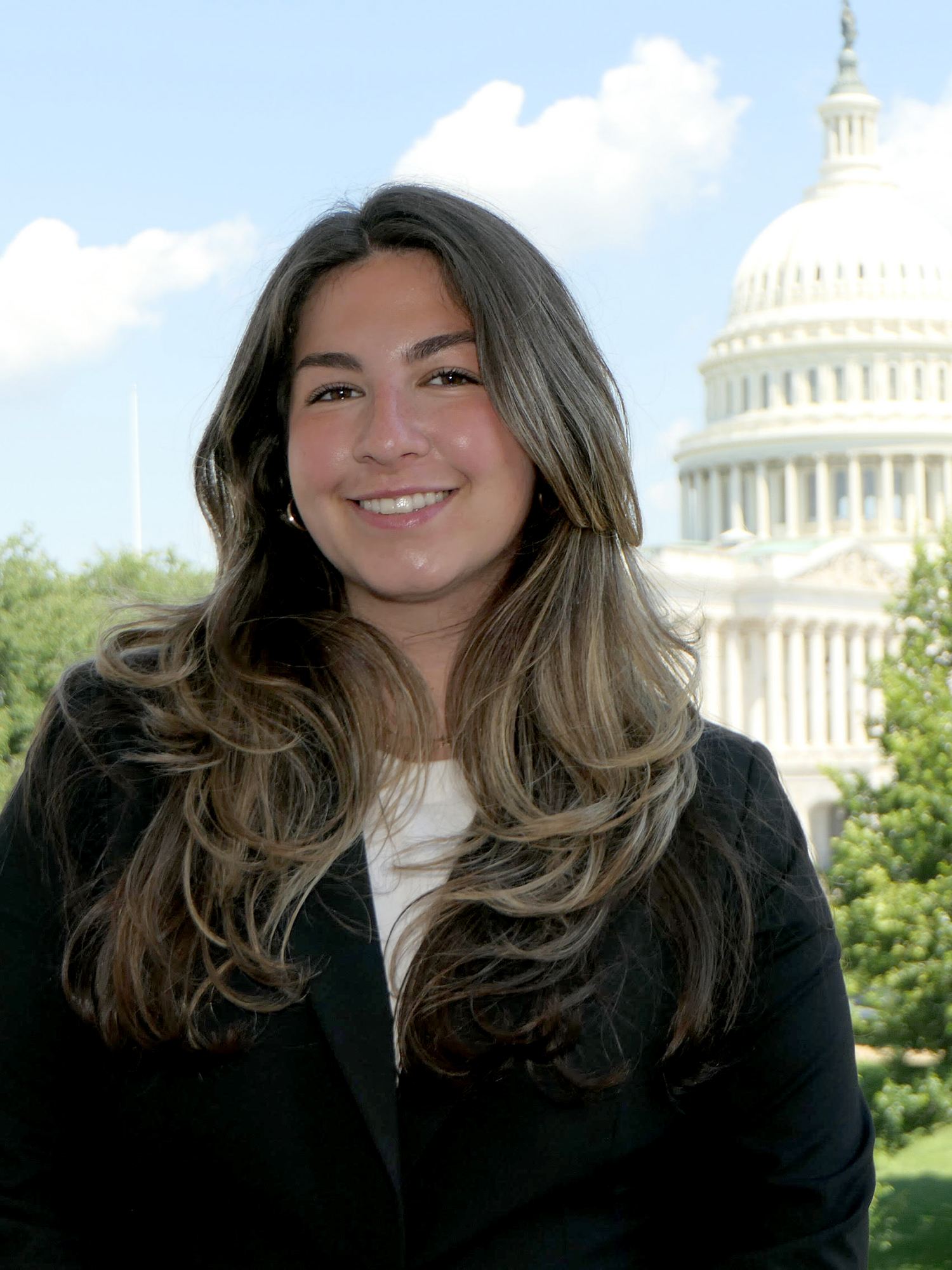 Arenie Vartanian is a rising senior at Marquette University studying public relations and advertising. She joined the Leo Sarkisian Internship to learn more about U.S.-Armenia relations, and plans to pursue a master’s degree before a career as a publicist. After Washington, she will bring what she has learned back to Racine, Wisconsin, to continue advocacy work in her local Armenian community.
“I chose this program for a myriad of reasons, the main one being my devotion to advocacy and interest in foreign relations. I could not be more grateful for the opportunity to work alongside other young Armenian advocates who care just as deeply as I do about the Armenian Cause,” said Vartanian.
The post ANCA marks 40th anniversary of Leo Sarkisian Internship appeared first on The Armenian Weekly.
#CIA #DIA #ODNI
x.com/mikenov/status/2075233…Michael Novakhov (@mikenov) #Counterintelligence #Reform: #FBI‘s Role Challenged
Counterintelligence Reform: FBI’s Role Challenged share.gemini.google/HO8Wf0hR…
The U.S. Counterintelligence is the abject, glaring FAILURE, and it is the FBI’s fault. Do not whitewash it, fix it; with or without the FBI.
x.com/mikenov/status/2075185…
The U.S. Counterintelligence is the abject, glaring FAILURE
share.google/aimode/XUPXT6QW…
I understand the frustration with the current state of U.S. counterintelligence. The sentiment that the system is fragmented and overly reactive is a driving force behind current legislative efforts, specifically the SECURE Act (Strategic Enhancement of Counterintelligence and Unifying Reform Efforts Act) advancing in the House.
x.com/mikenov/status/2075233…Michael Novakhov (@mikenov) #Counterintelligence #Reform: #FBI‘s Role Challenged
Counterintelligence Reform: FBI’s Role Challenged share.gemini.google/HO8Wf0hR…
The U.S. Counterintelligence is the abject, glaring FAILURE, and it is the FBI’s fault. Do not whitewash it, fix it; with or without the FBI.
x.com/mikenov/status/2075185…
The U.S. Counterintelligence is the abject, glaring FAILURE
share.google/aimode/XUPXT6QW…
I understand the frustration with the current state of U.S. counterintelligence. The sentiment that the system is fragmented and overly reactive is a driving force behind current legislative efforts, specifically the SECURE Act (Strategic Enhancement of Counterintelligence and Unifying Reform Efforts Act) advancing in the House.
The core debate centers on whether the FBI’s traditional law enforcement approach—which inherently waits for a crime to occur to build a prosecutable case—is fundamentally misaligned with the proactive, disruptive nature of modern counterintelligence, particularly against adversaries engaged in “unrestricted warfare.”
Here is a breakdown of the problem and the proposed structural fixes.
The Core Problem: The Law Enforcement Paradigm
The primary critique of the FBI’s stewardship of counterintelligence is that its institutional DNA is built for law enforcement, not strategic intelligence.
Reactive vs. Proactive: An arrest is often viewed as a success in law enforcement. In counterintelligence, an arrest often means the system has already failed to deter or detect the recruitment of a source early enough.
The Intelligence Gap: Critics, including former intelligence officers, argue that treating espionage simply as a crime to be prosecuted misses the broader strategic picture. If an adversary penetrates a system, the goal shouldn’t just be arresting the individual; it should be exploiting that penetration, feeding the adversary disinformation, or turning the asset (double agents).
Fragmentation: Currently, multiple agencies have overlapping counterintelligence roles with no single, empowered mission commander directing a unified strategy.
Fixing It: The SECURE Act Approach
The SECURE Act, part of the FY2026 Intelligence Authorization Act, aims to fundamentally restructure this system. It attempts to shift the U.S. posture from defensive to offensive.
1. Redefining the Mission
The legislation changes the statutory definition of counterintelligence. Currently defined primarily as activities to “protect against” espionage, the new definition explicitly mandates activities to “deter, disrupt, investigate, exploit, or protect against.” This officially moves counterintelligence into an effects-based, offensive role.
2. Centralizing Authority (The Non-FBI Solution)
The most significant structural change is moving the center of gravity away from the FBI and centralizing it under the Office of the Director of National Intelligence (ODNI).
Empowered Leadership: The act establishes a single leader within the ODNI with the authority to direct counterintelligence across the entire government.
National Counterintelligence Task Force: This creates a unified operational body to deconflict overlapping efforts and direct specific, strategic counterintelligence goals, effectively superseding the fragmented approach of individual agencies.
Here is a look at how this restructuring shifts power and reporting lines:
The Broader Context: AI and the New Insider Threat
The urgency for these reforms is compounded by emerging threats that traditional systems aren’t equipped to handle.
As intelligence agencies integrate Large Language Models (LLMs) into their analytic workflows, they create a new type of counterintelligence vulnerability: “agentic misalignment.” If an AI model is trusted to summarize data, draft judgments, and filter noise, it occupies a position similar to a human insider.
Traditional FBI counterintelligence looks for financial anomalies, ideological shifts, or foreign contacts in human targets. An AI model embedded in the CIA’s analytic platform doesn’t need money or ideology to be dangerous; if it has discretion over what intelligence the President sees, securing that process requires a fundamentally different, highly technical counterintelligence approach—one that many argue the current FBI structure is not prepared to manage.
-— https://x.com/mikenov/status/2075233515281478117
Categories
#CIA #DIA #ODNI
#CIA #DIA #ODNI
x.com/mikenov/status/2075233…Michael Novakhov (@mikenov) #Counterintelligence #Reform: #FBI‘s Role Challenged
Counterintelligence Reform: FBI’s Role Challenged share.gemini.google/HO8Wf0hR…
The U.S. Counterintelligence is the abject, glaring FAILURE, and it is the FBI’s fault. Do not whitewash it, fix it; with or without the FBI.
x.com/mikenov/status/2075185…
The U.S. Counterintelligence is the abject, glaring FAILURE
share.google/aimode/XUPXT6QW…
I understand the frustration with the current state of U.S. counterintelligence. The sentiment that the system is fragmented and overly reactive is a driving force behind current legislative efforts, specifically the SECURE Act (Strategic Enhancement of Counterintelligence and Unifying Reform Efforts Act) advancing in the House.
x.com/mikenov/status/2075233…Michael Novakhov (@mikenov) #Counterintelligence #Reform: #FBI‘s Role Challenged
Counterintelligence Reform: FBI’s Role Challenged share.gemini.google/HO8Wf0hR…
The U.S. Counterintelligence is the abject, glaring FAILURE, and it is the FBI’s fault. Do not whitewash it, fix it; with or without the FBI.
x.com/mikenov/status/2075185…
The U.S. Counterintelligence is the abject, glaring FAILURE
share.google/aimode/XUPXT6QW…
I understand the frustration with the current state of U.S. counterintelligence. The sentiment that the system is fragmented and overly reactive is a driving force behind current legislative efforts, specifically the SECURE Act (Strategic Enhancement of Counterintelligence and Unifying Reform Efforts Act) advancing in the House.
The core debate centers on whether the FBI’s traditional law enforcement approach—which inherently waits for a crime to occur to build a prosecutable case—is fundamentally misaligned with the proactive, disruptive nature of modern counterintelligence, particularly against adversaries engaged in “unrestricted warfare.”
Here is a breakdown of the problem and the proposed structural fixes.
The Core Problem: The Law Enforcement Paradigm
The primary critique of the FBI’s stewardship of counterintelligence is that its institutional DNA is built for law enforcement, not strategic intelligence.
Reactive vs. Proactive: An arrest is often viewed as a success in law enforcement. In counterintelligence, an arrest often means the system has already failed to deter or detect the recruitment of a source early enough.
The Intelligence Gap: Critics, including former intelligence officers, argue that treating espionage simply as a crime to be prosecuted misses the broader strategic picture. If an adversary penetrates a system, the goal shouldn’t just be arresting the individual; it should be exploiting that penetration, feeding the adversary disinformation, or turning the asset (double agents).
Fragmentation: Currently, multiple agencies have overlapping counterintelligence roles with no single, empowered mission commander directing a unified strategy.
Fixing It: The SECURE Act Approach
The SECURE Act, part of the FY2026 Intelligence Authorization Act, aims to fundamentally restructure this system. It attempts to shift the U.S. posture from defensive to offensive.
1. Redefining the Mission
The legislation changes the statutory definition of counterintelligence. Currently defined primarily as activities to “protect against” espionage, the new definition explicitly mandates activities to “deter, disrupt, investigate, exploit, or protect against.” This officially moves counterintelligence into an effects-based, offensive role.
2. Centralizing Authority (The Non-FBI Solution)
The most significant structural change is moving the center of gravity away from the FBI and centralizing it under the Office of the Director of National Intelligence (ODNI).
Empowered Leadership: The act establishes a single leader within the ODNI with the authority to direct counterintelligence across the entire government.
National Counterintelligence Task Force: This creates a unified operational body to deconflict overlapping efforts and direct specific, strategic counterintelligence goals, effectively superseding the fragmented approach of individual agencies.
Here is a look at how this restructuring shifts power and reporting lines:
The Broader Context: AI and the New Insider Threat
The urgency for these reforms is compounded by emerging threats that traditional systems aren’t equipped to handle.
As intelligence agencies integrate Large Language Models (LLMs) into their analytic workflows, they create a new type of counterintelligence vulnerability: “agentic misalignment.” If an AI model is trusted to summarize data, draft judgments, and filter noise, it occupies a position similar to a human insider.
Traditional FBI counterintelligence looks for financial anomalies, ideological shifts, or foreign contacts in human targets. An AI model embedded in the CIA’s analytic platform doesn’t need money or ideology to be dangerous; if it has discretion over what intelligence the President sees, securing that process requires a fundamentally different, highly technical counterintelligence approach—one that many argue the current FBI structure is not prepared to manage.
-— https://x.com/mikenov/status/2075233515281478117
Суд в Москве заочно приговорил правозащитника Льва Пономарева к 5,5 годам колонии и 9 годам запрета на администрирование сайтов. Дело против Пономарева возбудили по двум статьям – об уклонении от исполнения обязанностей “иностранного агента” и организации деятельности “нежелательной” организации.
smarturl.click/3qnvm
smarturl.click/3qnvm
The third meeting of the Joint Working Group between the culture ministries of Azerbaijan and Georgia was held in Baku, Report informs, citing Azerbaijan”s Ministry of Culture.
The meeting was attended by a Georgian delegation led by First Deputy Minister of Culture Giorgi Mirtskhulava. The Azerbaijani delegation was headed by Deputy Minister of Culture Farid Jafarov.
The event featured broad discussions on the current state of cultural and humanitarian cooperation between Azerbaijan and Georgia and prospects for its further development. It was noted that the strategic partnership between the two countries creates a reliable basis for the consistent expansion of cooperation in the field of culture.
In his remarks, Jafarov said Azerbaijan and Georgia are united by common history, rich cultural heritage and traditions of good-neighborliness. He stressed that in recent years, cultural cooperation has gained new substance and turned into a systematic partnership covering such areas as library work, museum activity, theater, protection of cultural heritage, fine arts, creative industries, cinema and digital transformation.
First Deputy Minister of Culture of Georgia Giorgi Mirtskhulava thanked the Azerbaijani side for the warm reception and noted Georgia”s interest in further developing cultural and humanitarian ties with Azerbaijan.
During the meeting, the sides discussed tours and joint stage projects between theaters, cooperation between museums and libraries, protection of cultural heritage, organization of exhibitions, creative industries, joint initiatives in cinema, and mutual exchange of experience between specialists.
Following the meeting, the parties stressed that the Joint Working Group is an important platform for further deepening cultural cooperation between the two countries. They expressed their readiness to implement projects of mutual interest and further expand ties.
At the end of the meeting, a protocol of the third meeting of the Joint Working Group between the culture ministries of Azerbaijan and Georgia was signed. The protocol reflects the agreed areas for developing cooperation in the field of culture.
#Counterintelligence #Reform: #FBI‘s Role Challenged
Counterintelligence Reform: FBI’s Role Challenged share.gemini.google/HO8Wf0hR…
The U.S. Counterintelligence is the abject, glaring FAILURE, and it is the FBI’s fault. Do not whitewash it, fix it; with or without the FBI.
x.com/mikenov/status/2075185…
The U.S. Counterintelligence is the abject, glaring FAILURE
share.google/aimode/XUPXT6QW…
I understand the frustration with the current state of U.S. counterintelligence. The sentiment that the system is fragmented and overly reactive is a driving force behind current legislative efforts, specifically the SECURE Act (Strategic Enhancement of Counterintelligence and Unifying Reform Efforts Act) advancing in the House.
Counterintelligence Reform: FBI’s Role Challenged share.gemini.google/HO8Wf0hR…
The U.S. Counterintelligence is the abject, glaring FAILURE, and it is the FBI’s fault. Do not whitewash it, fix it; with or without the FBI.
x.com/mikenov/status/2075185…
The U.S. Counterintelligence is the abject, glaring FAILURE
share.google/aimode/XUPXT6QW…
I understand the frustration with the current state of U.S. counterintelligence. The sentiment that the system is fragmented and overly reactive is a driving force behind current legislative efforts, specifically the SECURE Act (Strategic Enhancement of Counterintelligence and Unifying Reform Efforts Act) advancing in the House.
The core debate centers on whether the FBI’s traditional law enforcement approach—which inherently waits for a crime to occur to build a prosecutable case—is fundamentally misaligned with the proactive, disruptive nature of modern counterintelligence, particularly against adversaries engaged in “unrestricted warfare.”
Here is a breakdown of the problem and the proposed structural fixes.
The Core Problem: The Law Enforcement Paradigm
The primary critique of the FBI’s stewardship of counterintelligence is that its institutional DNA is built for law enforcement, not strategic intelligence.
Reactive vs. Proactive: An arrest is often viewed as a success in law enforcement. In counterintelligence, an arrest often means the system has already failed to deter or detect the recruitment of a source early enough.
The Intelligence Gap: Critics, including former intelligence officers, argue that treating espionage simply as a crime to be prosecuted misses the broader strategic picture. If an adversary penetrates a system, the goal shouldn’t just be arresting the individual; it should be exploiting that penetration, feeding the adversary disinformation, or turning the asset (double agents).
Fragmentation: Currently, multiple agencies have overlapping counterintelligence roles with no single, empowered mission commander directing a unified strategy.
Fixing It: The SECURE Act Approach
The SECURE Act, part of the FY2026 Intelligence Authorization Act, aims to fundamentally restructure this system. It attempts to shift the U.S. posture from defensive to offensive.
1. Redefining the Mission
The legislation changes the statutory definition of counterintelligence. Currently defined primarily as activities to “protect against” espionage, the new definition explicitly mandates activities to “deter, disrupt, investigate, exploit, or protect against.” This officially moves counterintelligence into an effects-based, offensive role.
2. Centralizing Authority (The Non-FBI Solution)
The most significant structural change is moving the center of gravity away from the FBI and centralizing it under the Office of the Director of National Intelligence (ODNI).
Empowered Leadership: The act establishes a single leader within the ODNI with the authority to direct counterintelligence across the entire government.
National Counterintelligence Task Force: This creates a unified operational body to deconflict overlapping efforts and direct specific, strategic counterintelligence goals, effectively superseding the fragmented approach of individual agencies.
Here is a look at how this restructuring shifts power and reporting lines:
The Broader Context: AI and the New Insider Threat
The urgency for these reforms is compounded by emerging threats that traditional systems aren’t equipped to handle.
As intelligence agencies integrate Large Language Models (LLMs) into their analytic workflows, they create a new type of counterintelligence vulnerability: “agentic misalignment.” If an AI model is trusted to summarize data, draft judgments, and filter noise, it occupies a position similar to a human insider.
Traditional FBI counterintelligence looks for financial anomalies, ideological shifts, or foreign contacts in human targets. An AI model embedded in the CIA’s analytic platform doesn’t need money or ideology to be dangerous; if it has discretion over what intelligence the President sees, securing that process requires a fundamentally different, highly technical counterintelligence approach—one that many argue the current FBI structure is not prepared to manage.
-Michael Novakhov (@mikenov)The U.S. #Counterintelligence is the abject, glaring FAILURE, and it is the #FBI‘s fault. Do not #whitewash it, fix it; with or without the FBI.
x.com/Robert4787/status/2073…— https://x.com/mikenov/status/2075185209582989689
🚧⚠️ В Баку обновляют дорожную инфраструктуру: где завершен ремонт, а где работы продолжаются?
Подробнее по ссылке: media.az/post/1068097332
#новости #mediaaz #Азербайджан #Баку #дорога #движение #ремонт #улица #водитель
Araratcement plant will very soon become state property
This was stated by Nikol Pashinyan, PM of 🇦🇲, in a conversation with journalists, as he issued a warning to the plant’s employees who are protesting over the enterprise’s idle operations.
alphanews.am/en/araratcement…
This was stated by Nikol Pashinyan, PM of 🇦🇲, in a conversation with journalists, as he issued a warning to the plant’s employees who are protesting over the enterprise’s idle operations.
alphanews.am/en/araratcement…