
Connectez-vous sur ticketking.xyz pour configurer le bot. Le tableau de bord Ticket King est l’endroit où vous configurez tout : panneaux, rôles de support, journalisation, personnalisation et tous les paramètres. Le bot Discord est la partie que vos membres voient. Le tableau de bord est l’endroit où vous le configurez.
Day: July 3, 2026

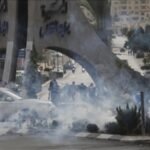
In the latest developments, Israeli troops detained eight Palestinians after alleging they had assaulted Israeli settlers near the village of Mukhmas, while human rights groups reported separate incidents involving settlers and Palestinian communities, News.az reports.
***
The latest events come as international organizations and rights groups continue to monitor security conditions in the West Bank, where tensions have remained high since the outbreak of the Gaza war in October 2023.
Here are the key questions and answers.
What happened in the latest incident?
According to the Israeli military, troops detained eight Palestinians after they allegedly chased and assaulted Israeli settlers who had entered the Palestinian village of Mukhmas a day earlier.
Separately, Israeli human rights organization Yesh Din released video footage that it said showed Israeli settlers setting fire to a Palestinian home in the village of Deir Dibwan while members of a family were inside. The organization said the incident occurred about two weeks earlier.
Reports also described additional confrontations in other parts of the West Bank. In al-Badoud, settlers reportedly confronted a group of Palestinians attempting to reach agricultural land. In al-Mughayyir, residents alleged that settlers threw stones at homes and attempted to pour toxic substances into water tanks. These reports have not been independently verified.
What is meant by settler violence?
The term “settler violence” is commonly used by the United Nations, human rights organizations and media outlets to describe incidents in which Israeli settlers are accused of attacking Palestinians or damaging Palestinian property in the West Bank.
Such incidents may include physical assaults, stone-throwing, arson, vandalism, damage to farmland and attacks on homes, vehicles or infrastructure.
Israeli authorities have said criminal offenses committed by settlers are investigated under Israeli law. Rights organizations have argued that many cases do not result in arrests or prosecutions, while Israeli officials maintain that law enforcement acts when sufficient evidence is available.
Who are Israeli settlers?
Israeli settlers are civilians living in Israeli settlements in the West Bank, including East Jerusalem.
Settlement construction has been one of the most disputed issues in the Israeli-Palestinian conflict for decades. Israel has cited historical, religious and security considerations in supporting settlement communities.
Most countries and the United Nations consider Israeli settlements in the West Bank to be contrary to international law. Israel disputes that interpretation and maintains that the legal status of the territory should be resolved through direct negotiations between the parties.
Why are tensions increasing in the West Bank?
The security situation in the West Bank has deteriorated since the start of the Gaza war in October 2023.
Israeli military operations, attacks by Palestinian armed groups, clashes involving settlers and Palestinians, and frequent security raids have all contributed to rising tensions.
Israeli authorities say military operations are aimed at preventing attacks and maintaining security. Palestinian officials and residents have accused Israeli forces of using excessive force and failing to prevent attacks by settlers.
The combination of ongoing violence, political disagreements and disputes over land has made the security environment increasingly volatile.
Why do disputes over land frequently lead to clashes?
Agriculture remains an important source of income for many Palestinian communities, and much of the farmland is located near Israeli settlements or areas subject to security restrictions.
Farmers have periodically reported difficulties accessing their land because of security concerns or confrontations with settlers. Israeli authorities sometimes coordinate access during harvest seasons, but disputes over ownership and access continue to generate tensions.
Because land is closely tied to economic livelihoods as well as political claims, local disputes can quickly escalate into broader confrontations.
What role do Israeli security forces play?
Israeli security forces say they are responsible for maintaining public order, preventing violence and protecting civilians.
Palestinian residents and several human rights organizations have accused Israeli forces of not intervening in some incidents involving settlers or of responding differently depending on those involved.
Israeli officials reject allegations of systematic bias and say security personnel act according to operational conditions and legal procedures.
Because many incidents occur in remote locations and involve conflicting accounts, establishing exactly what happened is often difficult.
What has the United Nations said about settlements?
The United Nations has repeatedly expressed concern over continued settlement expansion in the West Bank.
According to UN reports, settlement approvals and construction have increased since the outbreak of the Gaza war, reaching some of the highest levels recorded in recent years.
UN officials argue that continued settlement growth complicates efforts to achieve a negotiated two-state solution. Israel has challenged aspects of the UN’s legal interpretation and says issues relating to settlements should be addressed through direct negotiations.
How has the Gaza war affected the West Bank?
Although the fighting is centered in Gaza, the conflict has had significant effects on the West Bank.
Military activity has increased, security measures have tightened and incidents involving Israeli forces, settlers and Palestinians have become more frequent.
International organizations have also reported humanitarian concerns, including restrictions on movement, economic difficulties and displacement affecting some communities.
Analysts say the conflict in Gaza has contributed to higher tensions throughout the region.
Why is settlement expansion such a sensitive issue?
Settlement expansion has long been one of the main issues in efforts to resolve the Israeli-Palestinian conflict.
Palestinians argue that continued settlement growth reduces the land available for a future Palestinian state.
Israeli governments have defended settlement policies on a range of historical, religious and security grounds, although approaches have varied over time.
Because settlements are closely linked to future border negotiations, they remain one of the most difficult issues to resolve in peace talks.
What could happen next?
Security analysts expect tensions in the West Bank to remain high while fighting in Gaza continues and political negotiations remain stalled.
Further military operations, attacks involving settlers and Palestinians, and security incidents could contribute to additional instability.
International organizations continue to call for measures to protect civilians, reduce violence and encourage dialogue. Many observers believe that without progress on the broader political issues between Israelis and Palestinians, periodic outbreaks of violence are likely to continue.
The post Why is violence increasing in the West Bank? appeared first on azeritimes.com.
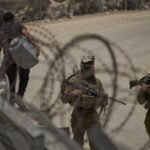
The latest fighting reportedly left at least two people dead and several others wounded, underscoring the fragile security situation in one of Syria’s most sensitive regions, News.az reports.
***
The renewed hostilities reflect deeper political and sectarian tensions that have intensified since the fall of former Syrian President Bashar al-Assad in December 2024. While Damascus accuses Druze factions of pursuing separatist ambitions, Druze leaders say they are defending their communities against government attacks and inadequate security.
Here are the key questions and answers.
What happened in the latest clashes in Suwayda?
Renewed fighting broke out in Syria’s southern Suwayda province between government security forces and Druze-led National Guard units, resulting in casualties on both sides.
According to Syrian authorities, two people were killed and around 16 others were wounded among what officials described as “rebel groups” after internal security forces repelled an attempted advance on the Tal Hadid area in western Suwayda.
The Druze-led National Guard offered a different account of the events. In a statement, it accused the Syrian army of launching the offensive first, claiming government forces carried out overnight attacks using drones, heavy machine guns and other weapons. The group said it responded to the attacks and inflicted confirmed casualties on government forces.
As is common in Syria’s conflict, the competing claims could not immediately be independently verified.
Where is Suwayda, and why is it important?
Suwayda is a province in southern Syria bordering Jordan and is home to the country’s largest Druze population.
For decades, the region remained relatively insulated from the worst violence of Syria’s civil war. Unlike many other provinces, Suwayda avoided prolonged large-scale combat and maintained a degree of local autonomy through community-based security arrangements.
Since the political transition that followed the collapse of Bashar al-Assad’s government in late 2024, however, Suwayda has become one of Syria’s most volatile regions. The province is now a focal point for tensions between the new authorities in Damascus and Druze community leaders seeking greater local control over security.
Because of its location near the Jordanian border and its strategic importance in southern Syria, stability in Suwayda is considered essential for both domestic security and regional relations.
Who are the Druze?
The Druze are a small Arabic-speaking religious minority whose faith emerged in the 11th century from Ismaili Islam but developed into a distinct religion with its own beliefs and traditions.
Today, Druze communities are concentrated mainly in Syria, Lebanon and Israel, with smaller populations in Jordan and elsewhere.
In Syria, the Druze have historically maintained a cautious relationship with successive governments, often prioritizing local autonomy and community self-defense over direct involvement in national political struggles.
Following Assad’s fall, many Druze leaders have insisted on maintaining independent local security structures rather than fully integrating into the new national military and security institutions.
Why are Syrian government forces and Druze groups fighting?
The current conflict stems from disagreements over security, governance and political authority following the collapse of the Assad government.
The new authorities in Damascus have sought to establish centralized control across Syria, including integrating local armed groups into national security institutions.
Many Druze leaders have resisted those efforts, arguing that local forces are better positioned to protect their communities. They accuse the government of failing to guarantee security and of pursuing policies that discriminate against religious minorities.
The government, meanwhile, accuses some Druze factions of rejecting state authority and pursuing separatist objectives that threaten Syria’s territorial unity.
These competing visions have repeatedly produced armed confrontations despite attempts to negotiate ceasefires.
Why do both sides blame each other?
Each side presents the conflict through a different political and military narrative.
Government officials describe military operations as efforts to restore state authority and respond to attacks by armed groups that refuse to recognize the government’s legitimacy.
Druze leaders, by contrast, argue that government forces initiate military operations against their communities and that local fighters act only in self-defense.
The absence of independent observers in many combat areas makes it difficult to establish exactly how individual clashes begin, meaning competing accounts frequently emerge after each confrontation.
How did the fall of Bashar al-Assad change the situation?
The overthrow of Bashar al-Assad in December 2024 fundamentally reshaped Syria’s political landscape.
The collapse of the long-standing government created a power vacuum in several regions, including Suwayda, where local armed groups assumed greater responsibility for maintaining security.
The new Sunni-led authorities inherited a country fragmented by years of civil war, with numerous local militias controlling territory and reluctant to surrender their weapons.
As Damascus attempted to reassert nationwide authority, tensions grew with communities seeking to preserve local autonomy, particularly in areas with distinct ethnic or religious identities.
Suwayda has become one of the clearest examples of these post-Assad political challenges.
Why did violence escalate despite a ceasefire?
Syrian Defense Minister Murhaf Abu Qasra announced a ceasefire in Suwayda in mid-July in an effort to halt widespread fighting.
Although the agreement reduced large-scale hostilities, it failed to resolve the underlying political disagreements between Damascus and Druze leaders.
Both sides continued accusing each other of violating the ceasefire through isolated attacks, troop movements and armed patrols.
Without a broader political settlement addressing local governance, security arrangements and the role of Druze armed groups, sporadic violence has continued despite the formal ceasefire.
What happened during the July fighting?
The violence that erupted in July represented the deadliest fighting in Suwayda since the political transition.
According to the Syrian Observatory for Human Rights (SOHR), more than 1,600 people were killed during clashes involving Druze fighters, Damascus-backed Bedouin tribesmen and government-linked forces.
The monitoring group said more than 700 of those killed were residents of Suwayda city, the majority of them Druze.
The fighting caused extensive destruction, displaced civilians and deepened mistrust between the Druze community and Syria’s new authorities.
Although casualty figures from conflict monitoring organizations cannot always be independently verified, the July violence highlighted the scale of instability in southern Syria.
Could the conflict spread beyond Suwayda?
There are concerns that continued instability could have broader consequences for Syria.
Persistent fighting in the south risks undermining the country’s fragile political transition and could encourage renewed violence in other regions where local armed groups remain influential.
The conflict may also affect neighboring Jordan by increasing security concerns along the border and potentially creating new displacement pressures.
For Syria’s leadership, stabilizing Suwayda has become an important test of its ability to govern a country that remains politically divided after more than a decade of conflict.
What could happen next?
The immediate outlook remains uncertain.
Both the Syrian government and Druze leaders have expressed support for dialogue at various points, but repeated clashes demonstrate the lack of trust between the two sides.
Future stability will likely depend on negotiations over local security arrangements, political representation and the integration—or continued independence—of Druze self-defense forces.
Without a durable political agreement, observers warn that temporary ceasefires may continue to collapse, leading to further cycles of violence in one of Syria’s most strategically and politically sensitive provinces.
The post Why has fighting resumed in Syria’s Druze heartland? appeared first on azeritimes.com.
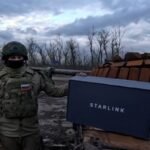
At the center of this communications network is Starlink, the satellite internet service operated by SpaceX, which has enabled Ukrainian troops to maintain secure communications, coordinate drone operations and stay connected even when traditional telecommunications infrastructure has been damaged, News.az reports.
***
Ukraine recently claimed to have destroyed a Russian electronic warfare system designed to interfere with Starlink, highlighting Moscow’s continuing efforts—and apparent difficulties—in disrupting the satellite network. While Russia has invested heavily in electronic warfare capabilities, Starlink’s unique architecture has made it one of the hardest communications systems to disable.
Here are the key questions and answers.
What happened in the latest incident?
According to Ukrainian electronic warfare expert Serhii Beskrestnov, known by the call sign “Flash,” Ukrainian forces destroyed a Russian electronic warfare system that was allegedly designed to jam Starlink satellite communications.
The claim was accompanied by aerial drone footage shared in mid-June, showing six white trailer-like units positioned in two rows. During the video, one of the units is struck by an explosive device and bursts into flames.
Beskrestnov, who became an adviser to Ukraine’s Minister of Defence in January 2026, identified the installation as a Russian electronic warfare complex intended to interfere with Starlink communications. Although Russia has not commented on the footage, the video reflects the growing battle between Ukrainian communications technology and Russian electronic warfare systems.
The reported strike also illustrates how electronic warfare equipment has become a high-priority target on the battlefield, alongside artillery, radar stations and air defense systems.
What is Starlink?
Starlink is a satellite-based broadband internet service developed and operated by SpaceX, the private aerospace company founded by Elon Musk.
Unlike traditional satellite internet systems that rely on a small number of satellites orbiting tens of thousands of kilometers above Earth, Starlink uses thousands of small satellites operating in low Earth orbit (LEO), approximately 550 kilometers above the planet.
These satellites communicate with user terminals—small satellite dishes that can be rapidly deployed almost anywhere with an unobstructed view of the sky. The terminals automatically connect to whichever Starlink satellites are passing overhead, creating high-speed internet access even in remote or war-damaged areas.
Because thousands of satellites continuously move across the sky, users are not dependent on a single satellite or ground station.
Why has Starlink become so important for Ukraine?
When Russia invaded Ukraine in February 2022, many cellular towers, fiber-optic cables and communications facilities were damaged or destroyed.
Starlink quickly filled this gap.
Thousands of terminals were delivered to Ukraine, allowing military units, government agencies, emergency responders and humanitarian organizations to remain connected despite widespread infrastructure damage.
Today, Starlink supports numerous military functions, including battlefield communications, command-and-control systems, intelligence sharing and drone operations.
Its portability also makes it particularly valuable. Soldiers can establish internet connectivity within minutes almost anywhere, even in frontline positions where conventional communications networks no longer function.
According to Ukrainian engineer and Starlink expert Oleg Kutkov, the network became a “game changer” because it offered an exceptionally reliable and easy-to-use communications channel.
Why is Russia trying to jam Starlink?
Electronic warfare has become one of the defining features of the war in Ukraine.
Rather than physically destroying every communications system, militaries often attempt to disrupt radio signals through jamming—broadcasting powerful electromagnetic signals that overwhelm legitimate communications.
If Russia could effectively jam Starlink, it could potentially disrupt battlefield communications, interfere with drone operations, slow military coordination, complicate intelligence sharing and reduce Ukraine’s operational flexibility.
Because so much of Ukraine’s modern battlefield network depends on digital communications, degrading Starlink would provide Russia with significant military advantages.
This explains why electronic warfare systems specifically designed to interfere with Starlink have become increasingly important targets for both sides.
Why is Starlink difficult to jam?
Starlink’s architecture makes it significantly more resilient than conventional satellite communications systems.
First, the network consists of thousands of satellites rather than a handful of large spacecraft. If one satellite moves beyond range, another rapidly replaces it.
Second, Starlink continuously adjusts its communication links between satellites and user terminals. This makes it difficult for electronic warfare systems to maintain effective interference.
Third, SpaceX regularly updates both the software running on satellites and the firmware installed on user terminals. These updates can modify frequencies, signal processing techniques and anti-jamming measures in response to new threats.
Because the system evolves continuously, Russian electronic warfare units often find themselves trying to counter technology that changes faster than conventional military equipment.
How does electronic warfare attempt to interfere with satellite internet?
Electronic warfare systems do not physically attack satellites.
Instead, they attempt to interfere with the radio signals traveling between satellites and ground terminals.
These systems may broadcast stronger signals on similar frequencies, introduce electronic noise or attempt to overwhelm receivers so that legitimate communications become difficult or impossible to decode.
The closer a jammer is to the Starlink terminal, the greater its chances of disrupting communications.
However, achieving consistent jamming is difficult because satellite links use sophisticated signal-processing techniques designed to resist interference.
Moreover, Starlink terminals can often reconnect quickly after temporary signal disruption.
Has Russia ever succeeded in disrupting Starlink?
Yes—but generally only on a limited and localized basis.
Throughout the war, Ukrainian military personnel have periodically reported temporary reductions in Starlink performance near active combat zones where Russian electronic warfare assets are heavily concentrated.
In response, SpaceX engineers have repeatedly modified Starlink’s software to improve resistance against new jamming techniques.
This ongoing technological competition has become something of an electronic arms race, with Russian engineers developing new interference methods while SpaceX continually updates the network to counter them.
Neither side has achieved a permanent advantage.
Why are electronic warfare systems becoming high-value targets?
Modern warfare depends heavily on information.
Destroying an electronic warfare system can restore communications, improve drone effectiveness and reduce enemy interference across a wide area.
Unlike tanks or artillery, electronic warfare systems often support multiple combat units simultaneously.
As a result, disabling a single jammer may improve communications for numerous Ukrainian formations operating nearby.
This explains why Ukraine increasingly prioritizes locating and destroying Russian electronic warfare installations using reconnaissance drones, precision artillery and long-range strike systems.
How has Starlink changed modern warfare?
Military analysts widely regard Starlink as one of the technologies that has transformed the conflict in Ukraine.
Before the war, satellite internet was generally viewed as a civilian communications service.
Ukraine demonstrated that commercially available satellite networks could support military operations on a large scale, enabling resilient communications even under constant attack.
The experience has prompted armed forces around the world to rethink military communications, recognizing that commercial satellite constellations may complement or even replace some traditional military communications systems in future conflicts.
The war has therefore become an important case study in how commercial space technology can influence battlefield operations.
What does the reported destruction of the Russian jammer mean?
If Ukrainian officials correctly identified the destroyed installation as a Starlink-jamming system, its loss could temporarily reduce Russian electronic warfare capabilities in that specific operational area.
However, Russia possesses numerous electronic warfare units deployed across different parts of the front, meaning the destruction of one system is unlikely to eliminate the broader threat.
Instead, the incident reflects the continuing technological contest between communications networks and electronic warfare.
As Ukraine expands its use of drones, precision weapons and satellite communications, Russia is expected to continue investing in more advanced jamming systems. Likewise, SpaceX and Ukrainian operators are likely to keep adapting Starlink to remain resistant to evolving electronic threats.
The struggle over electronic warfare has become one of the less visible—but increasingly decisive—dimensions of the war, with success often determined not only by firepower but also by which side can maintain reliable communications while denying them to the enemy.
The post Why is Russia struggling to jam Starlink in Ukraine? appeared first on azeritimes.com.
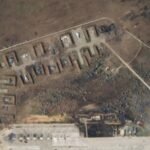
According to Ukraine’s Security Service (SBU), drones struck the Saky airbase for the second time in a week, damaging aircraft shelters and destroying or damaging several combat aircraft. Another strike reportedly hit the Hvardiiske airbase, targeting facilities used to store Iranian-designed Shahed drones and aviation equipment, News.az reports.
***
The attacks are part of Kyiv’s broader strategy of weakening Russia’s ability to launch missile, bomb and drone attacks from occupied Crimea. While the full extent of the damage has yet to be independently verified, the operation highlights Ukraine’s growing capability to strike high-value military targets deep behind the front line.
What happened in the latest Ukrainian strike on Crimea?
According to Ukraine’s Security Service (SBU), drones carried out coordinated strikes against two major Russian military airbases in occupied Crimea—Saky and Hvardiiske. Ukrainian officials said the operation focused on damaging aviation infrastructure that Russia relies on to conduct air operations against Ukraine.
At the Saky airbase, seven aircraft storage hangars were reportedly hit. These shelters housed several types of combat aircraft, including Su-30SM multirole fighters, Su-30 fighters and Su-24 frontline bombers. Preliminary Ukrainian estimates suggest that at least seven aircraft were either destroyed or sustained damage as a result of the attack.
The operation also targeted the Hvardiiske military airbase, where Ukrainian officials said two hangars containing Shahed attack drones and aviation support equipment were struck. Kyiv believes these facilities play a significant role in supporting Russian air operations over southern Ukraine.
Although Russia has not confirmed Ukraine’s assessment of the damage, the reported attacks represent another example of Kyiv’s increasing ability to carry out long-range drone operations against strategically important military installations.
Why is the Saky airbase considered so important?
The Saky airbase is one of Russia’s most valuable military aviation facilities in occupied Crimea. Located on the western coast of the peninsula, it has served as a major operating base for tactical aviation since the beginning of Russia’s full-scale invasion of Ukraine in February 2022.
Aircraft stationed at Saky regularly participate in missions targeting Ukrainian military positions, infrastructure and logistics hubs. Because of its location, the base allows Russian aircraft to reach southern Ukraine within a relatively short flight time while remaining under the protection of Russia’s layered air defense network.
Beyond serving as a launch point for combat aircraft, Saky also functions as a maintenance and logistics center where aircraft can be serviced, refueled and rearmed before carrying out additional missions. This makes the installation considerably more valuable than a simple runway, as it supports the sustained operation of Russia’s tactical aviation forces.
Repeated attacks on such an installation can complicate maintenance schedules, reduce aircraft availability and force Russia to disperse its aircraft to alternative locations farther from the battlefield.
What aircraft were reportedly damaged?
According to Ukrainian officials, the targeted hangars contained several important types of Russian military aircraft.
Among them were Su-30SM multirole fighters, which are capable of carrying out air superiority missions while also striking ground targets with guided missiles and precision bombs. These aircraft have been extensively used throughout the war to escort bombers, patrol contested airspace and launch stand-off weapons against Ukrainian targets.
The hangars also reportedly housed Su-30 fighters and Su-24 frontline bombers. The Su-24 has played a particularly important role in Russia’s air campaign because it can carry a wide variety of guided and unguided munitions. The aircraft has frequently been used to launch glide bombs and precision strikes against military targets.
If Ukraine’s assessment proves accurate, the loss or damage of several aircraft could temporarily reduce Russia’s operational capacity in Crimea. Replacing damaged aircraft is neither simple nor quick, particularly given Western sanctions affecting Russia’s defense industry and the limited production rate of advanced combat aircraft.
Why did Ukraine strike the airbase twice in one week?
The SBU described the latest operation as the second strike against the Saky airbase during the same week and said it forms part of a broader 40-day campaign targeting Russian military infrastructure.
Repeated attacks on the same military installation often serve several strategic purposes. The first strike may damage aircraft, infrastructure or fuel supplies, while follow-up attacks can target repair crews, replacement equipment or aircraft that have returned to the base after initial repairs.
Military planners also recognize that repeated attacks force the defending side to devote additional resources to air defense, engineering work and logistics. Instead of restoring normal operations, commanders may be compelled to relocate aircraft, redistribute maintenance equipment or suspend operations altogether.
Such a strategy aims not only to destroy physical assets but also to create persistent disruption that limits the effectiveness of enemy air operations over an extended period.
Why was the Hvardiiske airbase also targeted?
The Hvardiiske military airbase is another important component of Russia’s aviation network in Crimea. Like Saky, it supports operations conducted by Russian tactical aviation and provides facilities for storing equipment and drones.
According to Ukrainian officials, the latest strike damaged two hangars that contained Shahed drones and aviation equipment. Shahed drones, originally developed in Iran and now widely used by Russia, have become one of Moscow’s primary tools for conducting long-range attacks on Ukrainian cities and infrastructure.
Russia frequently launches large groups of Shahed drones to overwhelm Ukrainian air defenses before following up with cruise or ballistic missile strikes. Destroying drone storage facilities before launches occur is therefore considered a highly effective method of reducing Russia’s strike capability.
If confirmed, damage to drone storage infrastructure could temporarily slow Russian drone operations until replacement equipment is moved into the area.
Why are aircraft hangars valuable military targets?
Aircraft shelters may appear less important than combat aircraft themselves, but military analysts consider them among the highest-value infrastructure targets on an airbase.
Modern hangars protect aircraft from weather, surveillance and attack while also providing secure locations for maintenance, repairs and weapons loading. Damaging these structures can make it significantly more difficult to keep aircraft operational even if the aircraft themselves survive.
Without adequate shelter, aircraft become more vulnerable to follow-up drone strikes, missile attacks and satellite surveillance. Maintenance crews may also struggle to repair aircraft exposed to the elements or lacking specialized equipment housed inside protected facilities.
Consequently, destroying hangars can produce operational effects that last much longer than the initial attack itself.
Why has Crimea become a major focus of Ukrainian strikes?
Although active ground fighting largely takes place elsewhere, Crimea has become one of the most strategically significant regions in the war.
Since Russia annexed the peninsula in 2014, it has transformed Crimea into a heavily militarized hub hosting naval forces, fighter aircraft, missile units, logistics centers and command headquarters. Following the full-scale invasion in 2022, these facilities became essential for supporting Russian operations across southern Ukraine.
Crimea also serves as a logistical bridge between mainland Russia and occupied territories in southern Ukraine. Supplies, personnel and military equipment pass through the peninsula before reaching the front.
By targeting military infrastructure in Crimea, Ukraine seeks to undermine Russia’s ability to sustain operations while demonstrating that even heavily defended rear areas remain vulnerable to long-range drone attacks.
How has Ukraine’s long-range strike capability evolved?
Early in the war, Ukraine’s ability to strike deep inside Russian-controlled territory was relatively limited. Over the past two years, however, Kyiv has significantly expanded its domestic drone industry and improved the range, accuracy and survivability of its long-range unmanned systems.
Rather than relying solely on missiles supplied by Western partners, Ukraine has increasingly used domestically produced drones capable of traveling hundreds of kilometers to attack military airfields, ammunition depots, fuel facilities, command centers and strategic infrastructure.
These operations have become an important component of Ukraine’s military strategy because they force Russia to divert air defense systems away from the battlefield and toward protecting military facilities throughout occupied Crimea and even within Russia itself.
The growing frequency of such attacks indicates that Ukraine intends to maintain pressure on Russian military infrastructure rather than focusing exclusively on frontline combat.
What impact could these strikes have on Russia’s military operations?
The destruction of several aircraft alone is unlikely to dramatically alter the course of the war. However, repeated strikes against aviation infrastructure can gradually erode Russia’s operational capabilities.
Each damaged aircraft requires repair resources, replacement parts and maintenance personnel. Destroyed hangars reduce the efficiency of maintenance operations, while repeated attacks increase the psychological pressure on military personnel stationed at affected bases.
Russia may also decide to relocate aircraft farther from Ukraine to reduce their vulnerability. Although this improves aircraft survivability, it also increases flight times, fuel consumption and logistical complexity while reducing the number of sorties that can be flown each day.
Over time, these cumulative effects can reduce the tempo of Russian air operations and make it more difficult to sustain continuous missile and bombing campaigns.
Have Ukraine’s claims been independently verified?
As with many developments during wartime, independent verification remains limited immediately after the attack. Ukrainian officials have released preliminary assessments indicating that at least seven aircraft were destroyed or damaged, while Russia has not publicly confirmed those figures.
Open-source intelligence analysts will likely examine satellite imagery, commercial photographs and other publicly available information in the coming days to assess the scale of the damage. Previous Ukrainian strikes against Russian military facilities have often been confirmed through satellite imagery after official claims were initially disputed.
Until additional evidence becomes available, the exact extent of the damage should be regarded as preliminary. Nevertheless, the reported operation demonstrates Ukraine’s continuing ability to conduct long-range strikes against some of Russia’s most important military installations in occupied Crimea, reinforcing a campaign aimed at steadily degrading Moscow’s air power rather than seeking a single decisive blow.
The post Why is Russia’s Saky airbase a key target for Ukraine? appeared first on azeritimes.com.

The attack occurred in the Lubny district during an afternoon air raid alert. Initial reports from regional officials highlighted damage to specialized fueling station equipment, shattered window glazing, and a destroyed civilian vehicle. While early assessments noted only one casualty, the injury toll quickly rose to six people—including a Swedish volunteer who was caught in the area during the assault, News.Az reports, citing RBC-Ukraine.
Moments later, a second drone strike targeted another vehicle in the immediate vicinity of the filling station, though no additional injuries were reported.
***
The incident highlights an escalating pattern of deliberate attacks on civilian fuel infrastructure. The WOG gas station network had already initiated a highly restricted, special operating format across vulnerable regions of Ukraine in anticipation of worsening security conditions. While cross-border strikes on gas stations have been a constant reality for frontline zones like the Sumy region, recent waves of shelling have increasingly hit facilities further inland, including major infrastructure hubs throughout the Dnipropetrovsk and Poltava regions.
The post Russia is suddenly targeting fuel stations in Ukraine appeared first on azeritimes.com.

In his address, Mamdani contrasted what he described as two competing visions of America, claiming that powerful elites have long defined the country as a place where freedom is reserved for only a privileged few, News.Az reports, citing FOX News.
“The powerful have always known their answer. America, in their view, is an arena of supremacy where only a select few are allowed freedom, where not all are created equal,” Mamdani said.
***
He went on to argue that some believe America “belongs only to those with the right accent or the right shade of skin,” calling division “the oldest trick in politics.”
While acknowledging the country’s history, Mamdani said the United States has repeatedly overcome such divisions through progress, referencing the nation’s founding 250 years ago.
The remarks immediately drew criticism from conservative commentators during a live panel discussion, with former National Republican Senatorial Committee senior adviser Matt Whitlock accusing Mamdani of presenting a bleak picture of the country during a milestone national celebration.
“I’m actually grateful that he’s doing this on America 250 because, like President Reagan said, it is a time for choosing,” Whitlock said. “He’s presenting a contrasting view of a very different America than what we’re celebrating today.”
Whitlock argued that the United States remains “the greatest engine for freedom, prosperity and peace” in history and claimed Mamdani’s message focused instead on expanding government and raising taxes.
The discussion quickly broadened into a wider debate over the future direction of the Democratic Party, with critics arguing that democratic socialist candidates are gaining influence by energizing progressive voters in low-turnout primary elections.
Supporters of Mamdani pushed back against the criticism, arguing that patriotism includes recognizing the country’s shortcomings and striving to improve it.
One panelist pointed to the preamble of the U.S. Constitution, saying the phrase “to form a more perfect Union” reflects the idea that America is a nation constantly working toward greater justice rather than claiming perfection.
The exchange highlighted the increasingly sharp ideological divide over what patriotism means in modern America, as celebrations marking the nation’s 250th anniversary became the backdrop for competing visions of the country’s identity and future.
The post Zohran Mamdani: Not all are created equal – VIDEO appeared first on azeritimes.com.

Full Time: Australia 1-1 Egypt
Egypt advances to the around of 16 after defeating Australia via penalty shootout after playing to a 1-1 draw after 120 min
**23:50
Two own goals, one unforgettable record: Hany’s World Cup nightmare
Egypt defender Mohamed Hany has just written his name into the FIFA World Cup history books, but for all the wrong reasons.
During today’s match, Hany accidentally put the ball into the back of his own net. While an own goal is always a nightmare scenario for a defender, this one carried a particularly devastating sting. It marked his second own goal of the tournament, following a similar misstep against Belgium during the group stage.
With that unfortunate deflection, Hany officially broke the record for the most own goals scored by a single player in a single edition of the FIFA World Cup. In the tournament’s long and storied history, no other player has ever scored two own goals in the same year—making this a truly heartbreaking first for the Egyptian international.
**22:58
55′ The final touch comes off Egypt defender Mohamed Hany as the ball goes into his own net.
**
13′ Australia fail to clear it away properly, a cross comes in from the right and it’s headed home by winger Emam Ashour!
**22:00
A monumental, history-making showdown is officially underway at Dallas Stadium in Arlington, Texas, as Australia and Egypt clash in the Round of 32 of the 2026 FIFA World Cup. The stakes could not be higher for both nations. Neither Australia nor Egypt has ever progressed past the first knockout round in World Cup history.
The winner of this blockbuster match will instantly script a brand-new chapter for their football program by securing a coveted spot in the Round of 16. Beyond their own national milestones, both teams are carrying the heavy weight of continental expectations.
***
In this edition of the tournament, representation from their respective regions has been razor-thin: only one African nation has advanced to the Round of 16 so far, and the Socceroos represent one of the final hopes for Asia.
Egypt enters the match with a massive boost as captain Mohamed Salah returns to the starting lineup alongside Manchester City’s clinical forward Omar Marmoush.
Meanwhile, a rock-solid, unchanged Australian side is relying on the cohesive defensive chemistry that carried them through the group stages. With a packed, energetic crowd dominating the stadium in red and yellow, the battle for a historic knockout victory is officially on.
The post Australia vs Egypt score: FIFA World Cup 2026 updates appeared first on azeritimes.com.