
Day: May 18, 2026
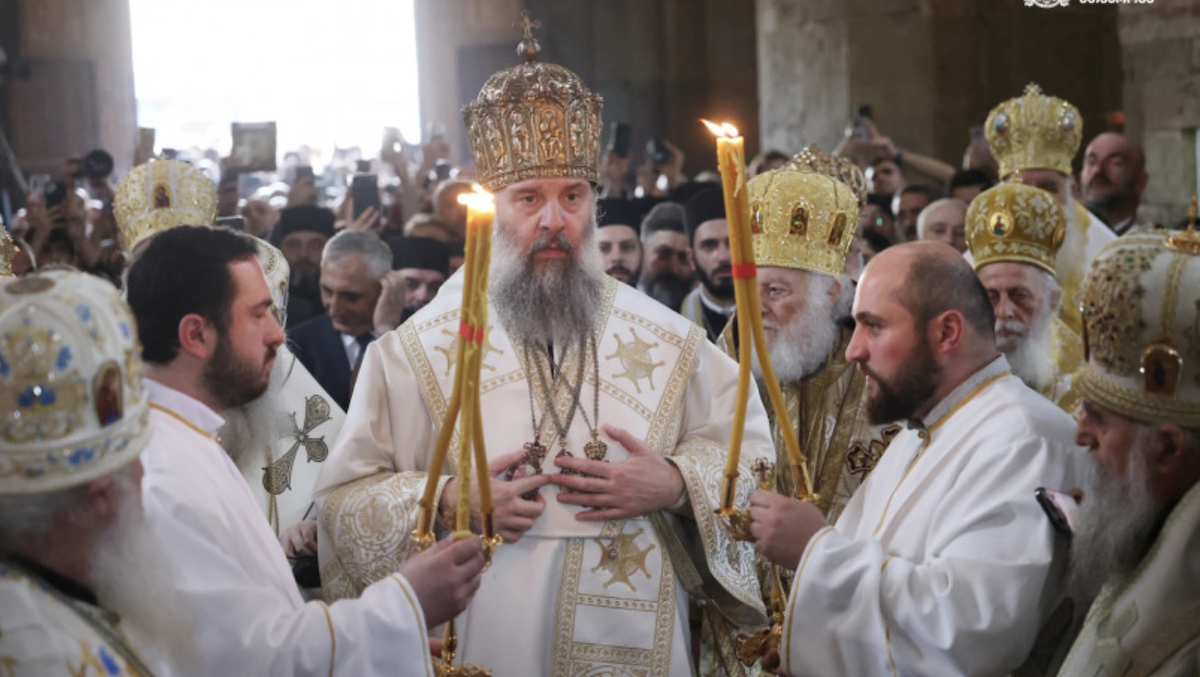
Georgia’s patriarch on family and demographics
New Catholicos-Patriarch of Georgia Shio III used his first public sermon to call for stronger legislation in response to the demographic crisis, against what he described as “gender ideology”, and in defence of family values.
His remarks focused on both the threat of population decline and issues including abortion and the protection of family values.
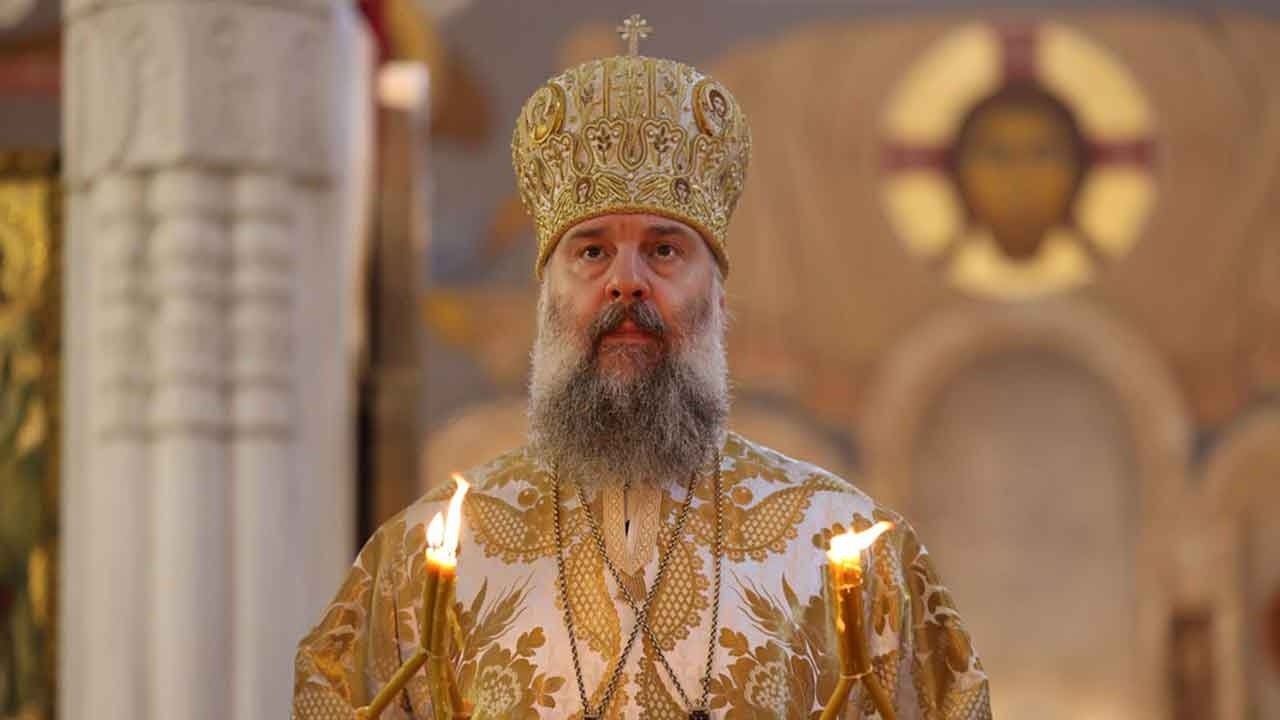
“Legislation must be strengthened to protect the family”
According to the Patriarch, the state should strengthen legal mechanisms that would “protect the family from harmful gender theories and ideology”.
He said some voices in society have called for abandoning such legislation. The Church, however, holds the opposite position. According to him, this approach should “grow stronger and become more firmly established”.
Shio III said he sees policies aimed at protecting the family as the foundation of the country’s “survival, reproduction and God’s grace”.
“On the demographic crisis”
In his sermon, the Patriarch paid particular attention to Georgia’s demographic situation. He said that if the country fails to address demographic problems and strengthen families, Georgia faces the risk that “other peoples will settle in the country and outnumber Georgians”.
According to him, other ethnic groups living in Georgia “love children”, “do not get rid of children” and “protect their religion”, which, he argued, allows them to reproduce more successfully.
The Patriarch added that, “God forbid”, such a scenario should happen. However, he said he considers the threat real if current trends continue.

Abortion as a “grave sin”
Shio III also addressed abortion within the family and described it as a “grave sin”.
“If a family commits such a grave sin as abortion, then, of course, no happiness can grow from such a foundation, and that family is doomed.
As we know from the Bible, the blood of those who were killed cries out to God for vengeance. On the other hand, where a child is born every two or three years — that angel sent by God — there is happiness. Because through their existence, they illuminate everything around them,” Shio III said.
Комментарии

Tamta Mikheladze, director of the Social Justice Center:
“I analysed the number of abortions in the country and compared them with birth rates.
The statistics show that both abortion rates and birth rates are declining at the same time. A reduction in abortions has not translated into higher birth rates. Since 2018, reproductive activity in the country has generally declined. This likely relates to migration among people of reproductive age, economic instability, sharply rising housing prices and weak social protection for families.
A closer look shows that abortion rates were especially high between 2011 and 2015 and exceeded 30,000 cases a year. The figure peaked in 2012 at 39,200 cases. Rates also remained very high in 2014 (33,500) and 2015 (33,400). Since 2018, the number of abortions has continuously declined. In 2024, it reached a historic low of 11,800. Compared with the 2012 peak, this marks a decline of around 70%.
Now let’s look at birth rates. Birth rates began rising in 2008. They peaked in 2014 at 60,635 births. Figures also remained high in 2009, 2010, 2015 and 2017. A decline began in 2018. By 2025, the birth rate had fallen to a historic low of 37,867 births. Compared with the historical peak, this marks a decline of around 37%.
Georgia therefore shows one clear trend: abortion rates and birth rates rose together and later declined together. Statistically, there is no clear direct correlation between lower abortion rates and higher birth rates. The data instead suggest a broader decline in reproductive activity. This may relate to migration among people of reproductive age, economic difficulties and, in my view, political depression.
The problem lies elsewhere. However, both the authorities and the Patriarchate look for explanations in another direction because they do not want to discuss the country’s real social and demographic challenges.”
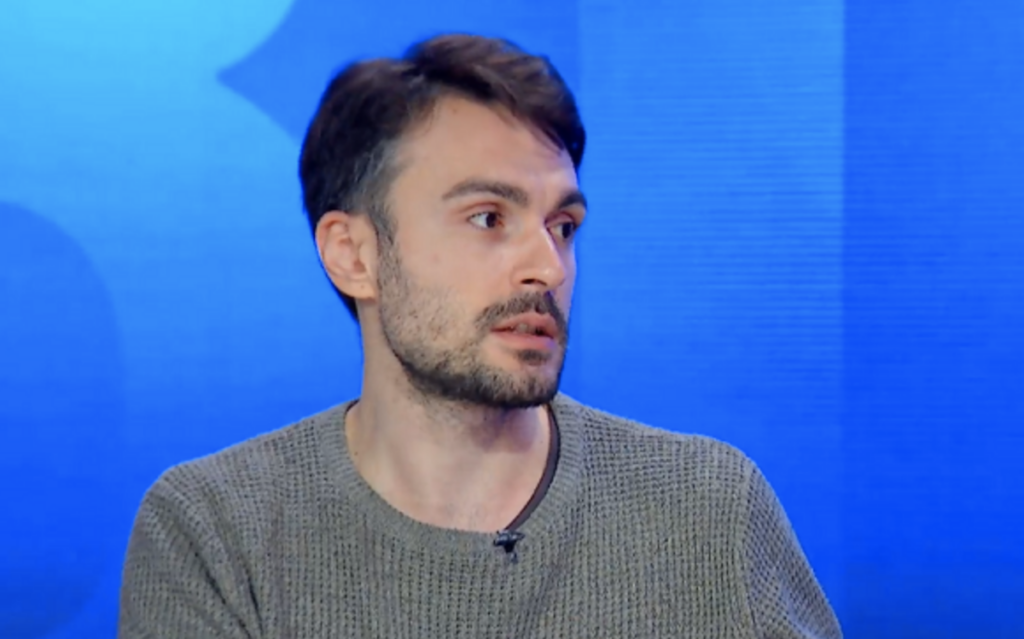
Shota Digmelashvili, executive editor of Forbes Georgia:
“The problem facing Georgian families is not ‘gender theories’. Georgian families face economic problems. These problems break families apart and leave children seeing their parents only through smartphone screens.
Georgia’s problem is not a low birth rate. In most cases, more people are born in the country than die. Yet the population continues to shrink because poverty, inequality and a lack of opportunities drive emigration.
The Church’s duty is, above all, to protect the poor and the oppressed. It should also unite the nation and rebuild broken bridges between people.
Instead, we see the religious pulpit used to strengthen a specific political party and the economic elites linked to it. We see the spread of private political narratives that serve to distract attention from the real problems facing the public.”
Georgia’s patriarch on family and demographics
Leaked Russian documents: hybrid attacks on Armenia
The Kremlin planned and carried out hybrid campaigns against Armenia, as well as several European countries and neighbouring states. An Armenian fact-checking platform gained access to a large collection of secret documents that confirm this.
The list of countries targeted by Russian operations includes France, Germany, Norway, Moldova and Ukraine. The list extends further.
Hackers appear to have caused the leak. The archive contains documents, correspondence, screenshots and other materials from the Social Design Agency. The organisation operates under the influence of Sergey Kiriyenko, first deputy head of Russia’s presidential administration.
The files include information about several projects targeting Armenia. They also contain reports on the results of what organisers described as “successful operations”.
The organisers allocated substantial funding to carry out these projects. Pricing documents for so-called “research” centres in Israel and Egypt support this. The files also detail payments for their services.
“The monthly operating costs of such a centre in Israel reached 1.5m roubles. Another 3m roubles covered content distribution and payments to influencers. The activities of the ‘Anti-Globalism’ institute in Egypt cost an estimated 5m roubles a month,” the publication says.
Daniel Ioannisyan, programme coordinator at the NGO Union of Informed Citizens, described the revelations as an “information bomb”.
“Sergey Kiriyenko has never appeared this exposed,” he said.
The revelations did not surprise the rights advocate.
“But while we previously only knew about this, we now have evidence and facts. I think diplomatic channels should clarify the situation. The Foreign Ministry should summon the Russian ambassador and demand explanations,” Ioannisyan wrote on his Facebook page.
What is known so far, along with reactions from Armenia’s social media sphere.
- ‘There will be another revolution on 7 June’ – Nikol Pashinyan confident of public support in election
- Armenian political groups spend heavily on Meta ads ahead of election campaign
- What’s behind Russia’s hostile response to Armenia’s deepening ties with EU?
- ‘Army of fake accounts backs one of prime ministerial candidates,’ Armenian fact-checkers say
What FIP uncovered
Documents obtained by the Fact Investigation Platform (FIP) point to coordinated political and information operations by Russian actors. The materials describe both completed and planned information campaigns by the Social Design Agency, which operates under the leadership of Sergey Kiriyenko.
“The tools include the creation of doppelgänger websites, the spread of fake news, the organisation of street protests, sabotage and other operations on the ground, as well as the involvement of experts and influencers to promote preferred narratives,” FIP.am reported.
The leaked archive contains information campaign strategies, documents outlining future plans and operational reports.
The materials show efforts to “fuel anger against Armenia and discredit Prime Minister” Nikol Pashinyan.
The Kremlin-backed agency used the same tools in European Union countries and neighbouring regions.
Many operations relied on false-flag tactics.
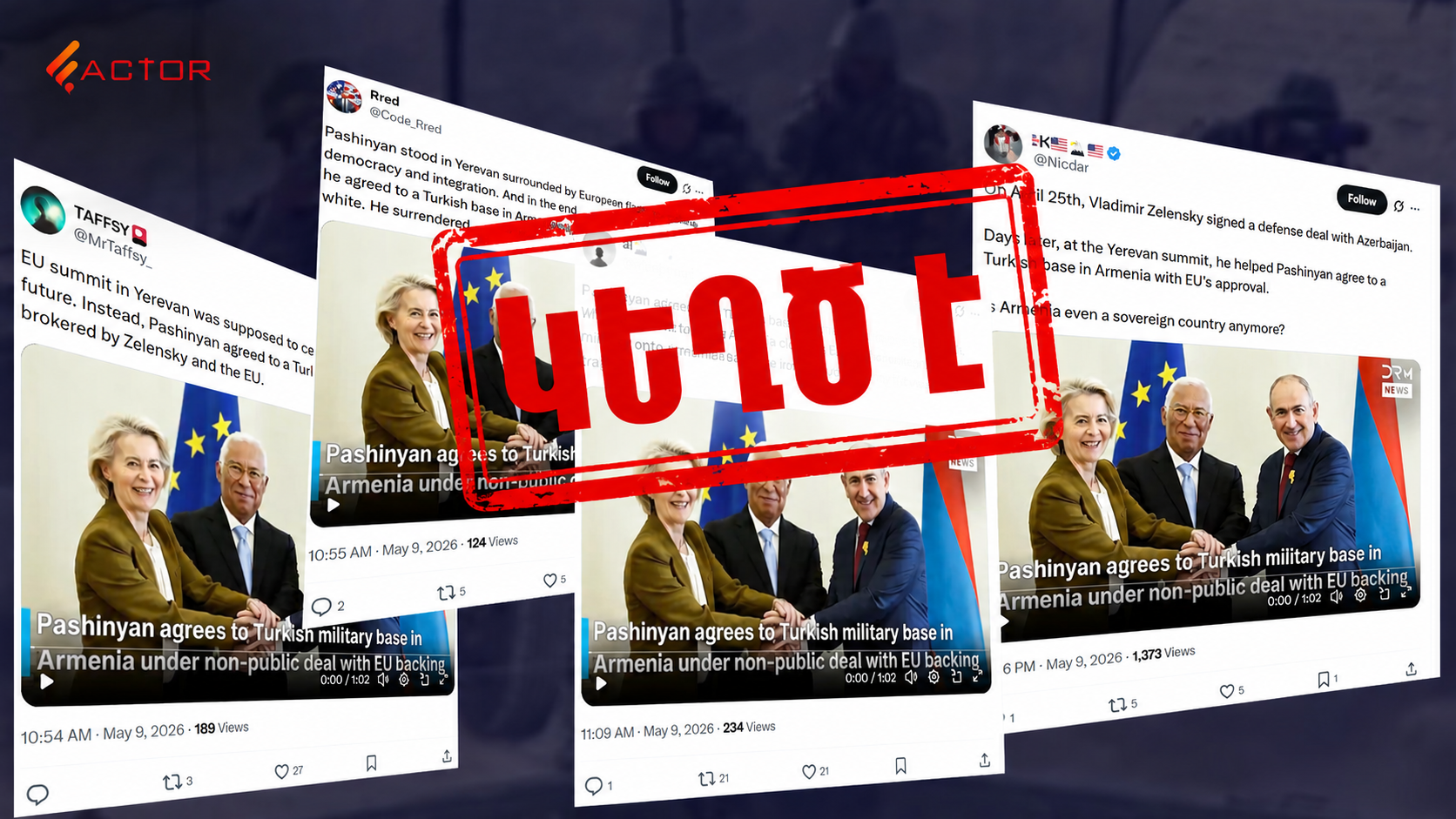
“For example, organisers designed some operations against Armenia to create the impression that Turkey coordinated them,” the publication says.
Participants communicated under pseudonyms, many of which remain easy to identify. For example, Sergey Vladilenovich Kiriyenko used the initials SVK. Another active participant was Sofiya Zakharova, head of the department for the development of information and communication technologies. She used the pseudonym Kristin Killer.
“Correspondence shows that staff report to Sofiya Zakharova, who uses the pseudonym Kristin Killer (colleagues also refer to her as Sofiya). The messages also mention her need to coordinate some financial matters with Sergey Kiriyenko (listed in correspondence as SVK),” the Fact Investigation Platform reported.
‘Marseille’ and other operations against Armenia
Among the campaigns carried out by the Social Design Agency, Armenian society already knows well the “Marseille” operation, which investigators exposed last year.
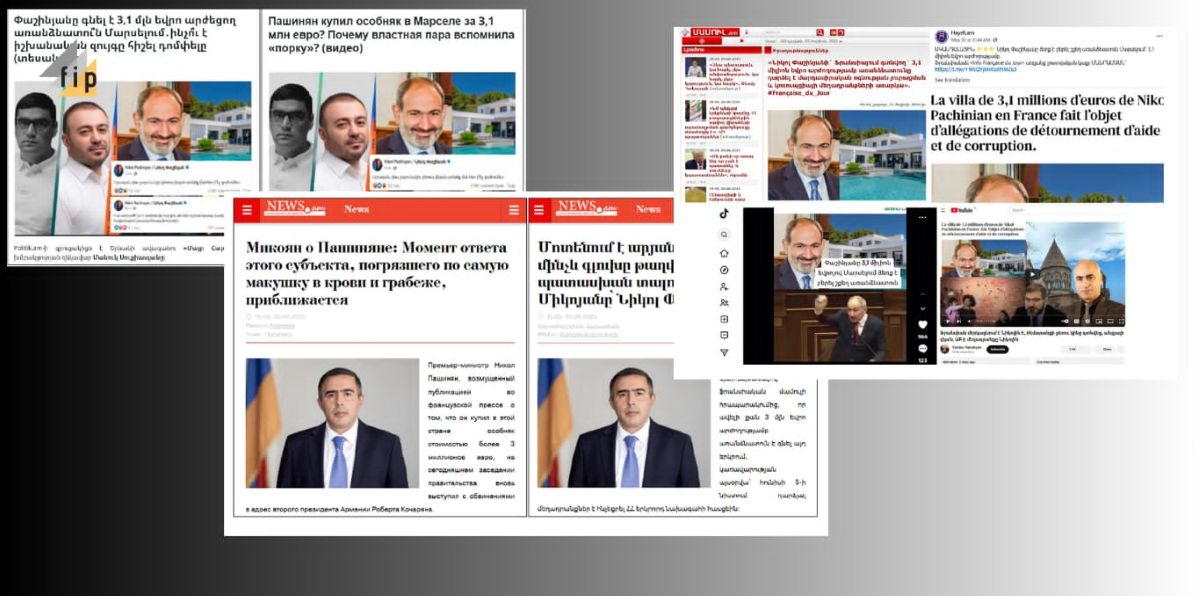
In June 2025, the French-language website infofrancaisedujour.fr published an article claiming that Prime Minister Nikol Pashinyan had allegedly bought a “luxury mansion” in Marseille. The article claimed he paid €3.1m for the property. Armenian websites and social media users widely shared the story. The Fact Investigation Platform later established that the French-language website, despite using a French domain, operated from the United States. Investigators also found that the article relied on unfounded claims and did not reflect reality. The website later shut down.
In one email addressed to Sofiya Zakharova, a person using the pseudonym Edward Bernays wrote that there had been “success in Armenia”. He added that “Armenian media and diaspora opinion leaders spread the story about the corruption scandal”.
The correspondence goes further. It states that organisers “managed to provoke domestic political confrontation” between the authorities and the opposition. The messages also recommend reviewing a full report on the “successful operation”.
The report includes:
- publications by Armenian media outlets and social media pages that reposted the fake article;
- screenshots of Facebook comments showing hate rhetoric generated by the materials.
“The report states that 17 agents took part in spreading the material. It gained around 10.6 million views, while content debunking it reached about 1.1 million views.”
The leaked documents also suggest that the agency controls the Russian-language website Yerevan1. The outlet’s main purpose involves shaping negative attitudes towards Armenian Prime Minister Nikol Pashinyan among Armenian communities in Russia.
The website regularly publishes articles critical of the Armenian authorities. One example involved an “astrological analysis of Nikol Pashinyan’s political future”, which appeared on the site in May 2026.
The documents also reveal projects that the agency led by Sergey Kiriyenko planned against Armenia:
- development of the “Self-Replenishing Knowledge Base – Armenia” project
(goal: create more than 50,000 Wikipedia-style clone websites); - SEO optimisation aimed at pushing selected content higher in search results
(goal: ensure AI systems such as ChatGPT provide answers about political figures that align with Kremlin interests); - launch of a “Pan-Armenian media platform”
(goal: influence Armenian communities in the US, Lebanon, Iran, France and other countries by promoting alliance with Russia, highlighting alleged threats from the West and opposing normalisation with Turkey).

‘Campaigns are coordinated by Russia’s presidential administration’
After analysing the leaked documents, the Fact Investigation Platform stated:
“The disinformation campaigns and various hybrid attacks that intensified against Armenia more than a year ago and reached a massive scale are
- part of a detailed and pre-planned large-scale strategy,
- and a single centre coordinates them — Russia’s presidential administration.”
FIP.am said the identified hybrid tools, media resources and projects show interference in Armenia’s domestic political life. According to the publication, organisers used them to destabilise the country.

Armenian users have actively discussed the revelations online.
Here are some of their comments:
“They spread disinformation 24/7. Who still doubts Russia’s methods?”
“Will you also leak EU documents and talk about its hybrid attacks?”
“Do not compare the EU with chauvinist, fascist Russia, where freedom of speech does not exist.”
“Armenians, listen and stay informed. At the same time, think clearly and defend statehood and peace. Even if you do not support” Nikol Pashinyan “, support your country and the peaceful future of your children.”
“This information needs to reach our opposition supporters. Maybe it will open their eyes. Maybe after seeing it, they will stop aligning themselves with Russia and acting like an obedient bride.”
“This is the most deceitful and monstrous country in the world. We must break away from it as soon as possible.”
Leaked Russian documents: hybrid attacks on Armenia
Pakistan on Monday condemned the drone attack on the Barakah Nuclear Energy Plant in the United Arab Emirates (UAE), saying that deliberate targeting of nuclear facilities constitutes a grave violation of international law and that such reckless actions carry potentially catastrophic and irreversible consequences for human life, AzerNEWS reports, citing Tribune.
Categories
Multiple-System Atrophy
The history of multiple-system atrophy reflects the varied clinical manifesta-tions of the disease. The term multiple-system atrophy was first coined in 1969 to pool three previously described neurologic entities: olivopontocerebellar atrophy, the Shy–Drager syndrome, and striatonigral degeneration.1 These entities correspond to multiple-system atrophy with predominantly cerebellar …

The Georgian authorities plan to create a new special unit within the Ministry of Internal Affairs responsible for monitoring and legally responding to hate speech, offensive campaigns and aggressive communication in public spaces.
The initiative was presented at a special briefing by Mamuka Mdinaradze, executive secretary of the ruling party Georgian Dream and deputy prime minister. According to him, the unit will operate proactively, meaning action will not depend solely on complaints from citizens.
At this stage, the authorities have not clarified which legal mechanisms the new body will rely on or what criteria will be used to determine what constitutes hate speech or offensive communication.

According to Mamuka Mdinaradze, the new unit will independently monitor the public sphere, prepare legal assessments and, when necessary, refer cases to the courts. Its activities will cover any form of public communication that contains hate speech, incitement or violations of human dignity.
The deputy prime minister linked the initiative to an idea put forward several months ago by Prime Minister Irakli Kobakhidze, which, he said, was intended to “open space for debate” and reduce polarisation in public discussion.
According to Mdinaradze, the authorities believe that the space for public debate has for years been polarised under the influence of “external actors”, accompanied by the entrenchment of aggressive and offensive rhetoric in both political and social life.
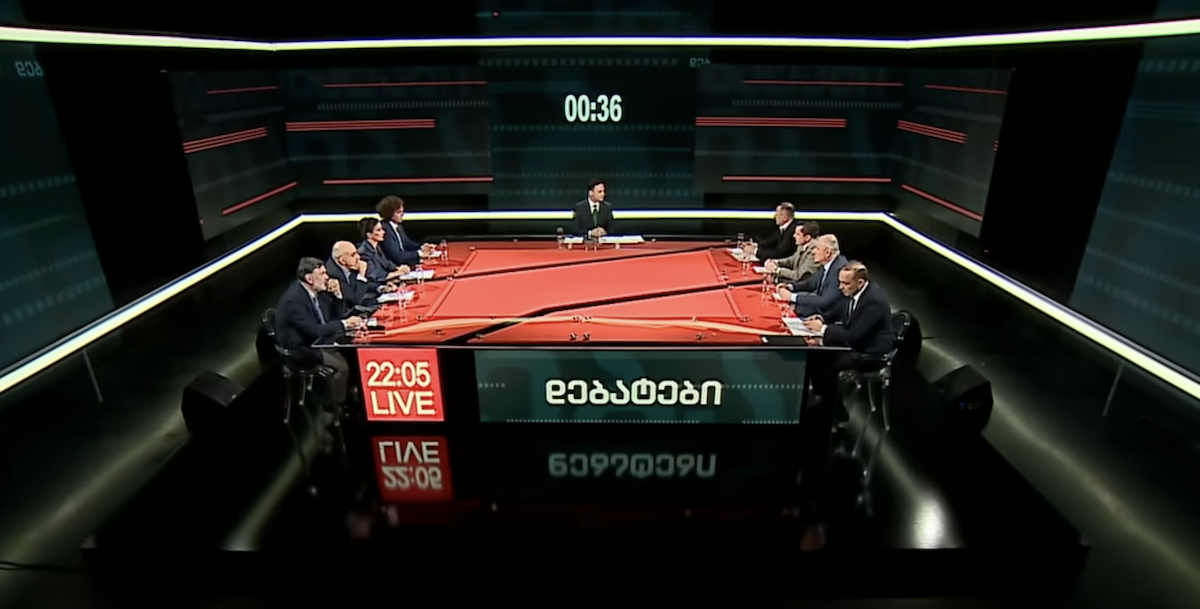
At the same time, Deputy Interior Minister Aleksandre Darakhvelidze said the new unit would work to identify actions involving hate speech, personal attacks, insults and violations of human dignity.
According to him, a distinction would be made between criticism that falls within the limits of freedom of expression and actions that, in the state’s assessment, amount to the promotion of hatred or violations of human dignity.
Darakhvelidze said such actions are not protected by freedom of expression under either Georgia’s Constitution or the laws of other countries.
The initiative also drew a response from Tbilisi Mayor Kakha Kaladze. According to him, offensive statements and social media posts do require regulation. He argued that criticism and insult are different things, and that no one has the right to systematically insult others.
Regulation of public communication in Georgia