
Kyiv is ready to open a new, mutually beneficial chapter in Ukrainian-Hungarian relations “without delay,” said Ukraine’s top diplomat Monday, AzerNEWS reports, citing Anadolu Agency.
Day: May 18, 2026
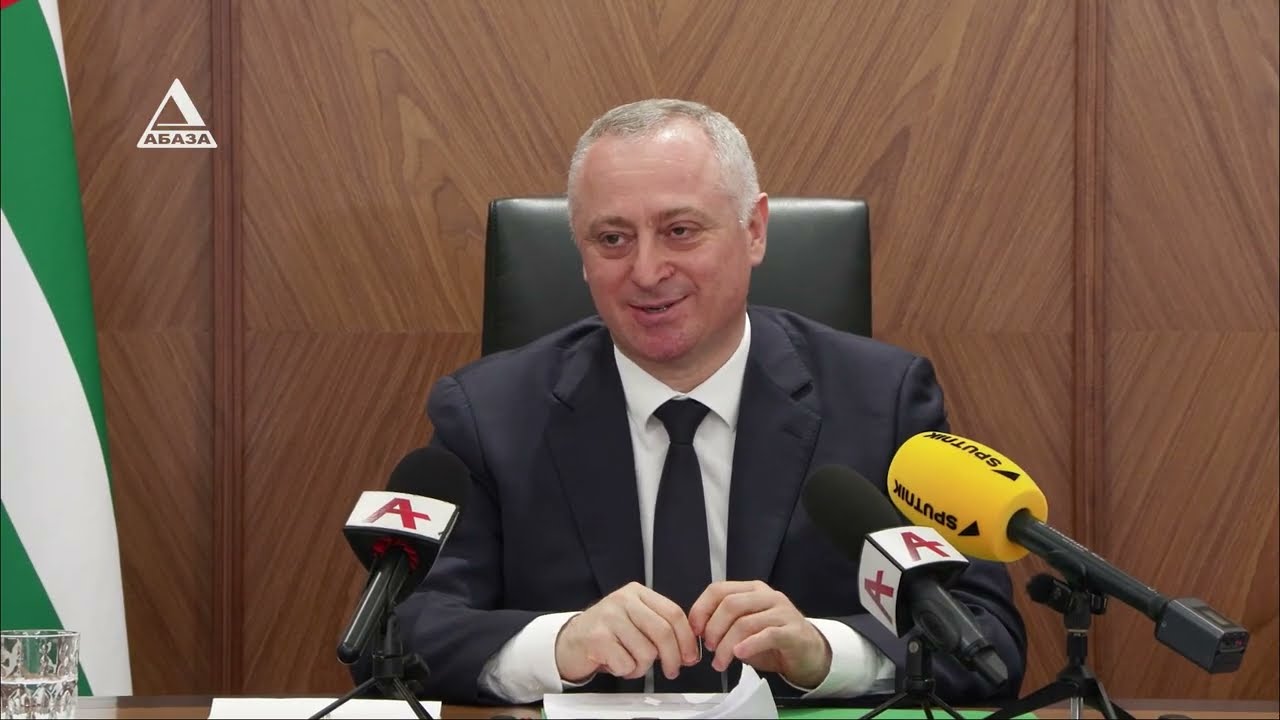
Abkhazia’s president holds press conference
Last week, Abkhazia’s President Badra Gunba held his first press conference since being elected.
Officially, the event was dedicated to the results of 2025 — the first year of his presidency. In reality, however, it turned into a review of key political and economic decisions, from tax reform to security and demographic issues.
Representatives of both state-run and private media attended the conference, although some popular outlets were not invited and no explanation was given.
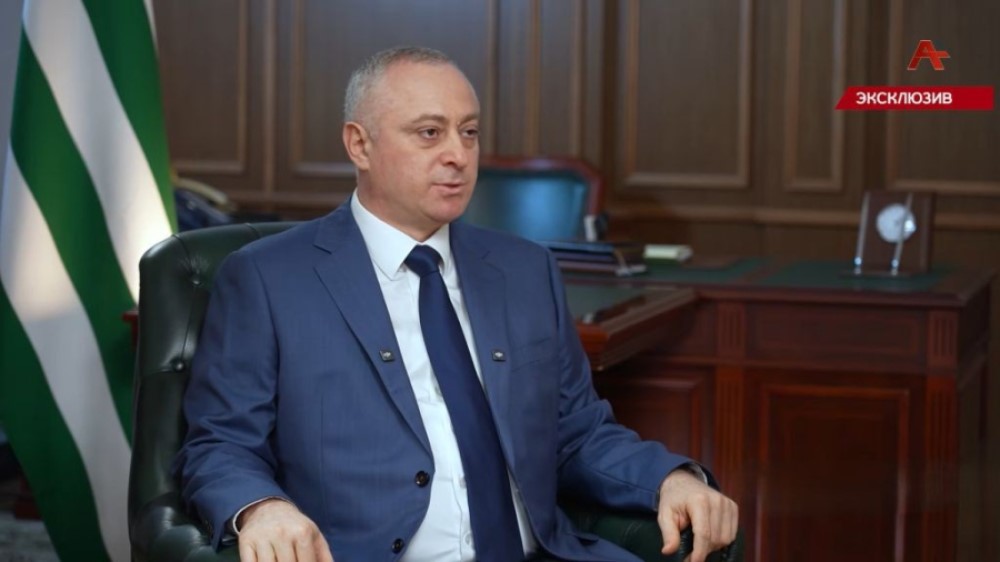
Economy: GDP growth and a stronger domestic budget
According to Badra Gunba, 2025 was a period of significant growth for Abkhazia.
“Abkhazia’s gross domestic product grew by more than 30% in 2025,” Gunba said.
Budget revenues reached 21.7bn roubles (about $252.3m) — 38% higher than a year earlier. More than 61% of total revenues are now generated from domestic sources.
In absolute terms, the economy brought in more than 1.3bn additional roubles (around $15.1m) in revenue, according to the president.
The main areas of spending were:
- 3.2bn roubles (about $37.2m) allocated to economic development
- More than 3bn roubles (around $34.9m) spent on education
- 2.2bn roubles (about $25.6m) allocated to healthcare
Cash registers and the fight against the “grey” economy
One of the most contentious topics was tax reform and the introduction of cash register systems.
According to the president, a programme to digitalise financial reporting has already been launched in cooperation with Russian tax authorities. More than 1,000 cash registers are expected to be installed across the republic by the end of 2026.
Gunba directly linked the reform to the problem of the shadow economy:
“The state can no longer allow the economy to remain in the grey zone. There can be no compromises here.”
In practice, the reforms aim to bring a significant share of small businesses into a transparent accounting system — a change the authorities describe as one of the most important tax reforms of recent years.
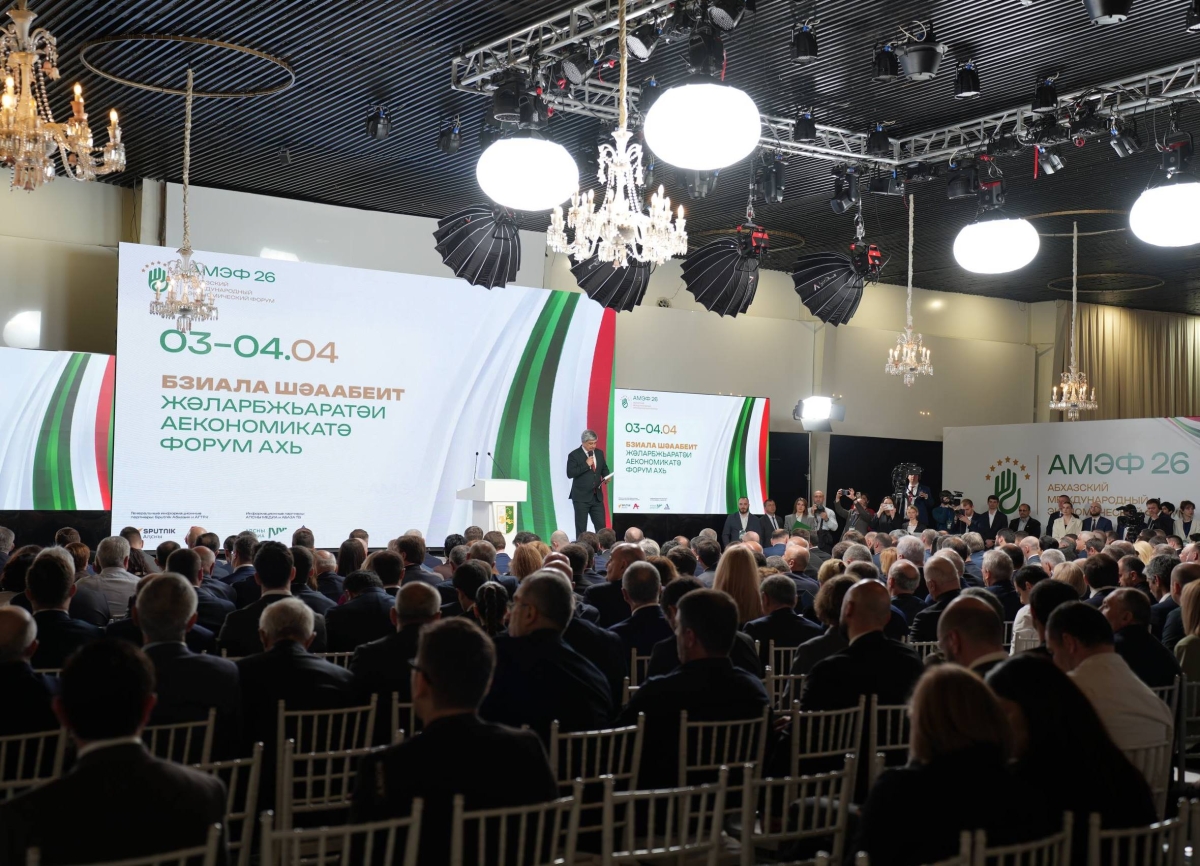
Infrastructure: airport, roads and transit
The president also focused on major infrastructure projects.
One of them remains the restoration of the airport in Sukhum. According to Badra Gunba, its reopening has become one of the main drivers of economic growth.
The authorities expect higher tax revenues, new jobs and further development of the tourism sector.
Transport infrastructure projects are also continuing, including railway modernisation and the expansion of transit through the port of Ochamchira.
External security and cooperation with Russia
The president also addressed external security issues, although he did not provide details, citing the sensitive nature of the topic.
Gunba said only that Abkhazia continues to cooperate with Russia in the fields of defence and security. According to him, this cooperation remains a key factor in maintaining stability amid the current international environment.
“We are actively working on our defence, but we cannot speak openly about it,” he said.
He also suggested that changes and reforms in this area are ongoing, although much of the work remains outside the public sphere.
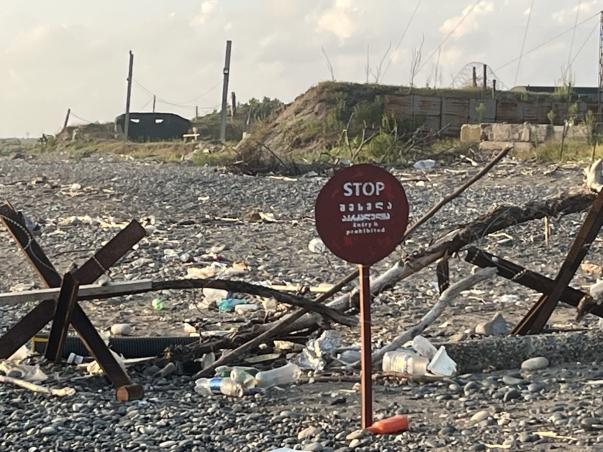
Youth: from KVN competitions to drug use
A separate part of the press conference focused on youth policy — one of the most sensitive issues.
The state is actively funding cultural and leisure projects, ranging from KVN competitions to festivals and educational initiatives. According to the president, however, such programmes have also faced regular criticism.
Badra Gunba acknowledged that problems exist in this area, but said abandoning an active youth policy was not an option.
“There are questions and problems in all areas, including youth policy, but we cannot focus solely on them,” he said.
According to the president, youth programmes are directly linked to security concerns, including growing drug use and the consumption of psychoactive substances among young people.
“Our task is to guide young people’s interests in the right direction in order to preserve our nation.”
Language and schools: early education and new payments
One of the most detailed sections focused on education policy, particularly efforts to preserve the Abkhaz language.
The authorities have increased salaries for teachers across all categories by 15–20%. Teachers of the Abkhaz language also receive an additional monthly payment of 5,000 roubles.
“It is at an early age that we must create conditions for the successful learning of the Abkhaz language,” the president said.
The plans include introducing new teaching methods in kindergartens and schools, as well as cooperation with the Bagrat Shinkuba Foundation for the Development of the Abkhaz Language.
Repatriation: the old model no longer works
The president acknowledged that the existing repatriation model has failed to deliver the expected results over recent decades.
“We need to completely rethink the concept of repatriation,” Badra Gunba said.
The plans involve expanding engagement with the diaspora not only in Turkey, but also in Russia, as well as with Abazins in the North Caucasus.
According to Gunba, an important part of the process will also be reconsidering settlement policies: moving away from the practice of housing repatriates in separate communities and towards a more integrated model, in which newcomers and local young families live within the same social and economic environment.
“This is about combining all programmes and resources to improve repatriation efforts while providing comprehensive support to young families at the same time,” Gunba said, adding that the state should pursue a unified demographic policy without separating population groups.
Forums and festivals: economy over criticism
Gunba also responded to criticism of large-scale public events. According to him, forums and festivals are not “celebrations for the sake of celebrations”, but tools for promoting economic development.
“We organise forums and festivals not to avoid existing problems. This is not something that should be manipulated,” he said.
As examples, the president pointed to interest from Russian companies in Abkhaz essential oils and the development of the wine industry, arguing that such platforms help promote local products and open access to new markets.
Security: kidnappings and law enforcement
Internal security was one of the key topics discussed at the press conference. In particular, attention focused on kidnappings, which remain a serious problem in Abkhazia, although the number of cases has declined in recent years.
In this context, Badra Gunba effectively appeared to pre-empt official statements from law enforcement agencies by speaking about the solving of a recent crime and the detention of suspects.
“We must ensure there is a clear understanding that punishment is inevitable — regardless of who a person is or whose relative they may be,” he said.
The president also stressed the need for stronger coordination between security agencies and thanked Russian counterparts for their involvement.
Conclusion
The press conference reflected the authorities’ current priorities: tighter tax discipline, a focus on infrastructure and education, and efforts to maintain social stability through youth programmes and cultural policy.
Terms, place names, opinions and ideas suggested by the author of the publication are her / his own and do not necessarily coincide with the opinions and ideas of JAMnews or its individual employees. JAMnews reserves the right to remove comments on posts that are deemed offensive, threatening, violent or otherwise ethically unacceptable.
Abkhazia’s president holds press conference
Tbilisi and Baku signed agreements on natural gas and electricity supply to Georgia, as well as a protocol foreseeing the resumption of railway service between the two capitals after a six-year pause, the Georgian government administration announced.
The agreements were signed after a May 18 meeting between Georgian Dream Prime Minister Irakli Kobakhidze and Azerbaijani President Ilham Aliyev in Baku, where the Georgian Dream government delegation attended the World Urban Forum (WUF13), held in partnership with the United Nations Human Settlements Programme (UN-Habitat).
The agreement came a month after Ilham Aliyev’s visit to Tbilisi, where he met, among others, Georgian Dream founder and Honorary Chairman Bidzina Ivanishvili.
According to a Georgian government administration press release, a package of agreements in the energy and transport sector includes “a 20-year intergovernmental agreement on the main terms of electricity supply and transit between Georgia and Azerbaijan” and “a 20-year extension of the 2003 agreement on the purchase and sale of gas from Azerbaijan,” which “guarantees the security of social gas supply.” The agreements were signed by Georgian Dream Economy Minister Mariam Kvrivishvili and Azerbaijan’s Economy Minister Mikayil Jabbarov and Energy Minister Parviz Shahbazov. The details and conditions of the agreements have not been disclosed.
In addition, the press release said the sides also signed “a protocol of the bilateral coordination council,” under which “the new section of the Baku-Tbilisi-Kars (BTK) railway will become fully operational” and “daily passenger railway service between Tbilisi and Baku will resume from May 26 after a six-year pause.” The document was signed by Mariam Kvrivishvili and Azerbaijan’s Minister of Digital Development and Transport, Rashad Nabiyev.
Describing the agreements as “important,” Georgian Dream Prime Minister Irakli Kobakhidze spoke with Georgian journalists, among others, about the agreement related to the Baku-Tbilisi-Supsa pipeline. He said, “This pipeline had, in practice, been shut down for the past three years and was not operating, as a result of which the country was not receiving potential revenue. Under the new agreement, together with the Azerbaijani side, the operation of this pipeline will be restored.” He added that the pipeline “remains in Georgia’s ownership, but its proper operation will be ensured in cooperation with the Azerbaijani side, as a result of which the country will receive tens of millions in revenue annually.”
Speaking of a broader connectivity theme, Kobakhidze said, “We, together with Azerbaijan, are connecting the Caspian Sea with the Black Sea, and therefore Europe with Asia, and the development of cooperation between Georgia and Azerbaijan has a truly strategic significance, and in this regard these agreements are of historical importance, of milestone significance.”
The agreements were signed after the meeting between Kobakhidze and Aliyev, also attended by ministers from both countries, during which they focused on the “strategic partnership” between Georgia and Azerbaijan and “the prospects for further deepening cooperation.” They also discussed the “positive dynamics” in bilateral trade and economic relations and highlighted the role of the Intergovernmental Commission on Economic Cooperation, with the Georgian delegation expressing readiness to host its next session “in the near future.”
The sides also discussed global and regional geopolitical challenges, emphasizing “the importance of peace for the sustainable and stable development of the region.” The meeting also addressed “regionally significant projects jointly implemented by Georgia and Azerbaijan and their role in strengthening connectivity.”
The Azerbaijani presidential administration additionally said in its press release that Aliyev “recalled with satisfaction his state visit to Georgia in April this year, noting the contribution of this visit to strengthening bilateral relations.”
Forum, Further Meetings
Prior to meeting Aliyev, Irakli Kobakhidze addressed the World Urban Forum, saying that alongside Georgia’s “strong economic growth” in recent years, the country’s key policy priorities have become “balanced territorial development and modern urban planning.” He added that “our objective is not only to expand infrastructure and improve quality of life, but to ensure that growth remains sustainable, regionally balanced, and centered around the needs of our citizens.”
Kobakhidze also held several other bilateral meetings.
During the one-on-one meeting with Tomáš Taraba, Slovakia’s deputy prime minister and minister of environment, “the parties discussed the positive dynamics in the development of bilateral relations and prospects for deepening cooperation in various fields,” with the Georgian government administration press release further saying Kobakhidze “emphasized the significance of protecting national interests and maintaining relations based on mutual respect and thanked the Slovak side for its support of the country.”
The meeting with William Ruto, President of the Republic of Kenya, “focused on Georgia’s favorable geographic location and business environment,” as Kobakhidze spoke about “the positive dynamics of economic growth and the opportunities offered by the country to investors in terms of access to multimillion consumer markets.”
Also Read: