
Day: May 7, 2026

During the meeting, Abdullayev noted that the close cooperation between Azerbaijan and Mongolia is built on mutual trust and understanding, providing a strong foundation for strengthening bilateral relations across all sectors, News.Az reports, citing AZERTAC.
***
The Chairman provided detailed information on the ongoing judicial-legal reforms and innovations in Azerbaijan, the activities and decision-making procedures of the Constitutional Court, and several of its key legal stances.
Banzragch praised bilateral relations between the two countries and the current level of cooperation, voicing his confidence that these ties would continue to strengthen.
During the meeting, the parties emphasized the importance of expanding mutual experience-sharing in the judicial-legal sphere and noted the significance of implementing joint initiatives to further deepen cooperation in this direction.
The meeting concluded with an exchange of views on the development prospects of bilateral relations and other matters of mutual interest, followed by a tour of the Constitutional Court building for the visiting guests.
The post Azerbaijan and Mongolia explore ways to expand judicial collaboration appeared first on azeritimes.com.

The arrests have drawn widespread attention because they involve women and children who were brought back to Australia from camps holding relatives of former Islamic State fighters.
***
The development has once again raised difficult questions for governments around the world about how to deal with citizens who travelled to conflict zones during the height of the Islamic State’s influence and later sought to return home.
What happened in Australia?
Australian federal police arrested women who had previously been repatriated from Syrian detention camps. Authorities allege the women maintained extremist links or engaged in activities connected to terrorism after their return.
The operation was carried out following a lengthy investigation involving intelligence and counterterrorism agencies. Officials stressed that the arrests were part of ongoing efforts to prevent extremist activity inside Australia and to monitor individuals considered high risk.
The case immediately became a major national security issue because the women had already undergone screening and monitoring upon returning to Australia.
Who are the women involved?
The women are believed to be Australian citizens or individuals with close ties to Australia who had travelled to Syria during the years when Islamic State controlled large territories in Syria and Iraq.
Many women who travelled to the region during that period joined husbands or relatives connected to the militant organization. Some claim they were coerced or manipulated into travelling, while others are accused of actively supporting extremist ideology.
Authorities have not publicly released all identities due to legal and security considerations.
Why were these women in Syria?
Thousands of foreign nationals travelled to Syria and Iraq between 2013 and 2019, when Islamic State declared a so called “caliphate” across parts of both countries.
Some joined as fighters, while others travelled as spouses, supporters or family members. After the collapse of Islamic State’s territorial control, many foreign women and children ended up in detention camps run by Kurdish forces in northeastern Syria.
These camps became highly controversial because governments struggled over whether to repatriate their citizens or leave them in the region.
What is Islamic State?
Islamic State, also known as ISIS or ISIL, is an extremist militant group that emerged from conflicts in Iraq and Syria.
The group became internationally notorious for mass killings, terrorist attacks, hostage taking and attempts to establish a radical Islamist state. At its peak, Islamic State controlled large territories and attracted thousands of foreign recruits from around the world.
A global military coalition eventually dismantled much of the group’s territorial control, but security agencies warn that its ideology and networks remain active in various regions.
Why did Australia bring these women back?
Australia initially resisted repatriating citizens from Syrian detention camps because of security concerns. However, pressure gradually increased from human rights organizations, lawyers and international agencies.
Supporters of repatriation argued that leaving women and children in unstable camps created even greater long term security risks. They warned that poor living conditions, radicalisation inside camps and lack of legal oversight could fuel future extremism.
Australian authorities eventually agreed to bring back some women and children under strict security arrangements.
How were the women monitored after returning?
Individuals repatriated from Syria were reportedly subjected to extensive security measures including surveillance, mandatory reporting requirements and deradicalisation programs.
Counterterrorism agencies closely monitored communications, movements and social networks of some returnees. Authorities also worked with psychologists, social workers and community organizations in attempts to reintegrate families into society.
Despite these measures, concerns remained that some individuals could continue to hold extremist beliefs.
Why are the arrests significant?
The arrests are significant because they may influence future government decisions on repatriation policies.
Critics of repatriation argue the case proves that former Islamic State affiliates remain a security threat even after returning home. Supporters of repatriation, however, argue that bringing citizens back allows governments to monitor and prosecute them more effectively than leaving them in unregulated camps overseas.
The case is also politically sensitive because terrorism remains a major issue in Australian domestic politics.
Could the women face terrorism charges?
Yes. Depending on the evidence collected by investigators, the women could face charges related to supporting a terrorist organization, extremist propaganda, financing terrorism or planning unlawful activities.
Australian counterterrorism laws are among the strictest in the world and allow authorities to prosecute individuals for a broad range of activities linked to extremist groups.
Court proceedings are expected to examine the extent of the women’s alleged involvement.
What challenges do governments face with returnees from Syria?
Governments around the world face several major challenges when dealing with returnees from Syria and Iraq:
Security concerns
Authorities fear some returnees may continue supporting extremist ideology or inspire others.
Legal difficulties
Gathering admissible evidence from conflict zones is often extremely difficult.
Human rights questions
Many returnees include children who may themselves be victims of war, indoctrination or exploitation.
Political pressure
Public opinion is often divided, with some citizens demanding strict punishment while others support rehabilitation.
Reintegration problems
Former detainees frequently struggle with trauma, stigma and social isolation after returning home.
How many Australians travelled to Syria and Iraq?
Australian authorities estimate that dozens of Australians travelled to Syria and Iraq during the rise of Islamic State. Some died in conflict, others were captured, and a number remained in detention camps for years.
Women and children formed a significant portion of those later repatriated.
The exact number of remaining Australians in Syrian camps has varied over time as governments conducted repatriation operations.
What are Syrian detention camps like?
The camps holding former Islamic State family members are widely described as overcrowded, dangerous and unstable.
Humanitarian organizations have repeatedly warned about violence, disease, food shortages and the spread of extremist ideology inside the camps. Children living there often lack education, healthcare and psychological support.
Security experts have described some camps as potential breeding grounds for future extremism if conditions remain unresolved.
How have other countries handled similar cases?
Different countries have adopted sharply different approaches.
Some European states actively repatriated women and children while prosecuting adults suspected of terrorism related offences. Others stripped citizenship from certain individuals or refused to bring them back.
The United States supported repatriation efforts and encouraged allies to take responsibility for their citizens. Meanwhile, some governments feared domestic political backlash if returnees were allowed home.
The issue remains controversial internationally.
Can women linked to extremist groups be rehabilitated?
Experts remain divided on the effectiveness of deradicalisation programs.
Some specialists argue rehabilitation and psychological support can help former extremists reintegrate into society, especially women who may have been manipulated or coerced.
Others warn that deeply entrenched extremist ideology can persist for years and may be difficult to reverse completely.
Most governments now combine rehabilitation efforts with intensive monitoring and legal oversight.
What role do children play in these cases?
Children are among the most sensitive aspect of the issue.
Many children born or raised in Islamic State territory experienced war, indoctrination and severe trauma. Human rights organizations argue they should primarily be treated as victims rather than security threats.
Governments have attempted to provide education, counselling and healthcare to help children reintegrate after returning home.
However, experts warn that long term psychological impacts may remain significant.
Could these arrests affect future repatriations?
Yes. The arrests may strengthen arguments from political groups opposed to repatriating citizens from conflict zones.
Governments may become more cautious and impose stricter conditions for future returns. At the same time, some analysts argue the arrests demonstrate that monitoring systems are functioning as intended because authorities identified potential threats before more serious incidents occurred.
The debate over repatriation versus abandonment is likely to continue.
Why is this story important internationally?
The Australian case reflects a wider global dilemma faced by many countries after the fall of Islamic State.
Governments continue struggling to balance national security, international law, human rights and domestic politics. The situation also highlights the long lasting consequences of conflicts in Syria and Iraq, even years after Islamic State lost territorial control.
Security analysts believe the handling of former Islamic State affiliates will remain a major issue for Western governments for years to come.
The post Why did Australia arrest women linked to IS after Syria return? appeared first on azeritimes.com.
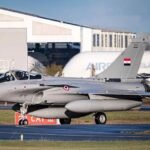
The two leaders reviewed the unit’s readiness and efforts aimed at enhancing operational capabilities and preparedness for various challenges, News.Az reports, citing Anadolu agency.
***
Earlier, Sisi was welcomed by bin Zayed upon arrival at the Abu Dhabi International Airport, the Egyptian presidency said in a statement.
The Egyptian leader affirmed Egypt’s solidarity with the UAE and stressed Cairo’s support for the country’s security and stability and its complete rejection of Iranian attacks on Emirati sovereignty.
“These attacks constitute a blatant violation of the principles of international law and the UN Charter, and a grave escalation that threatens the security and stability of the region and the world at large,” Sisi said, underlining the necessity of intensifying efforts to resolve the current crisis through dialogue and diplomacy.
Sheikh Mohammed, for his part, expressed appreciation for Sisi and stressed the UAE’s keenness to continue coordination with Egypt, the presidency said.
The two leaders also discussed ways to advance bilateral relations in various fields, especially trade and investment, and to intensify consultations on regional crises “in a way that preserves the unity and integrity of states and protects their peoples’ resources,” the statement said.
The UAE reported two days of drone and missile attacks from Iran earlier this week, though Tehran denied conducting any strikes on the Emirati territory.
Regional tensions have escalated since the United States and Israel launched strikes on Iran on Feb. 28, triggering retaliation from Tehran and disruptions in the Strait of Hormuz.
A ceasefire took effect on April 8 through Pakistani mediation, but talks in Islamabad failed to produce a lasting agreement. The truce was later extended by US President Donald Trump without a set deadline.
Since April 13, the US has enforced a naval blockade targeting Iranian maritime traffic in the strategic waterway.
The post UAE and Egyptian presidents inspect Egyptian fighter jet unit appeared first on azeritimes.com.
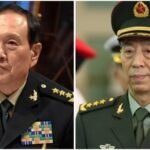
Former Chinese defence ministers Wei Fenghe and Li Shangfu were both sentenced to death with a two-year reprieve over graft charges, News.Az reports, citing Premium Times.
***
This is a type of sentence often used by Chinese courts in high-profile corruption cases, in which the death penalty is suspended and commuted to life imprisonment if no other crimes are committed during the reprieve period.
Reuters, quoting Xinhua, a state-owned Chinese media, reported that Mr Li was suspected of receiving “huge sums of money” in bribes while also bribing others.
An investigation which began in 2023 also found him performing his “political responsibilities” and seeking “personnel benefits for himself and others”.
“As a senior leading cadre of the party and the army, Li Shangfu betrayed his original mission … betrayed the trust of the Party Central Committee and Central Military Commission… and caused great damage to the party cause and national defence,” the report documenting the findings read, according to Reuters.
Mr Wei, on the other hand, was accused of accepting bribes in “money and valuables” and also allegedly “helped others gain improper benefits in personnel arrangements.
His actions were described as “extremely serious in nature, with a highly detrimental impact and tremendous harm.”
The military has always been at the centre of President Xi Jinping’s anti-corruption campaign. Since assuming power in 2012, he has led investigations, presided over sentencing, and dismissed several senior military officers.
Over the years, different officials were investigated, removed, jailed, or punished for taking bribes and abusing power.
This crackdown later reached the People’s Liberation Army Rocket Force, a force controlling China’s nuclear missiles and other long-range weapons, resulting in the arrest of a top general in the People’s Liberation Army, Zhang Youxia. Mr Youxia was a Politburo member and was once considered an ally of Mr Jinping.
It appears the two former defence ministers are the latest to be caught up and sentenced for corruption-related crimes in what has been described as an escalation of the campaign.
The post China hands death penalties to former defense ministers for graft appeared first on azeritimes.com.

Police said a suspect had been arrested following the explosion, which happened at the party office in the centre of The Hague shortly after 9 p.m. local time (1900 GMT), News.Az reports, citing Reuters.
***
Dutch Prime Minister Rob Jetten, who is also the leader of D66, said a bomb made of fireworks had been thrown through the letterbox in the frontdoor of the building in what he described as “a cowardly act of intimidation.”
The centrist, pro-EU D66 party last year won the election in the Netherlands in a surprise victory over the far right Freedom Party led by nationalist Geert Wilders.
Its head office was also damaged during an anti-immigration protest last year, when protesters smashed the windows of the party seen by many on the far right as serving a progressive elite.
The post Explosion at Dutch largest party HQ confirmed by police appeared first on azeritimes.com.