
Day: May 18, 2026

From 26 May, daily passenger rail services between Tbilisi and Baku will resume after a six-year break.
According to Georgia’s government administration, the decision became possible following high-level meetings and agreements reached in Azerbaijan.

Reports say that during Georgian Prime Minister Irakli Kobakhidze’s visit to Baku, Georgia and Azerbaijan signed a protocol under the bilateral coordination council. According to the document, the Baku–Tbilisi–Kars railway route will begin operating at full capacity.
The document was signed by Mariam Kvrivishvili, Georgia’s Minister of Economy and Sustainable Development, and Rashad Nabiyev, Azerbaijan’s Minister of Digital Development and Transport.

Other agreements
During the visit, the two sides also signed a package of agreements in the energy and transport sectors. The package includes a 20-year intergovernmental agreement on the main terms for electricity supplies and transit connections.
The sides also agreed to extend for another 20 years a 2003 agreement on the purchase and sale of gas from Azerbaijan. They described the extension as a guarantee of security for household gas supplies.
Mariam Kvrivishvili signed the documents on behalf of Georgia. On Azerbaijan’s side, the documents were signed by Mikayil Jabbarov, economy minister, and Parviz Shahbazov, energy minister.
During the meetings, both sides highlighted the “positive dynamics” in trade and economic relations between the two countries, as well as the role of the intergovernmental commission on economic cooperation. According to the Georgian side, Tbilisi is ready to host the commission’s next meeting.
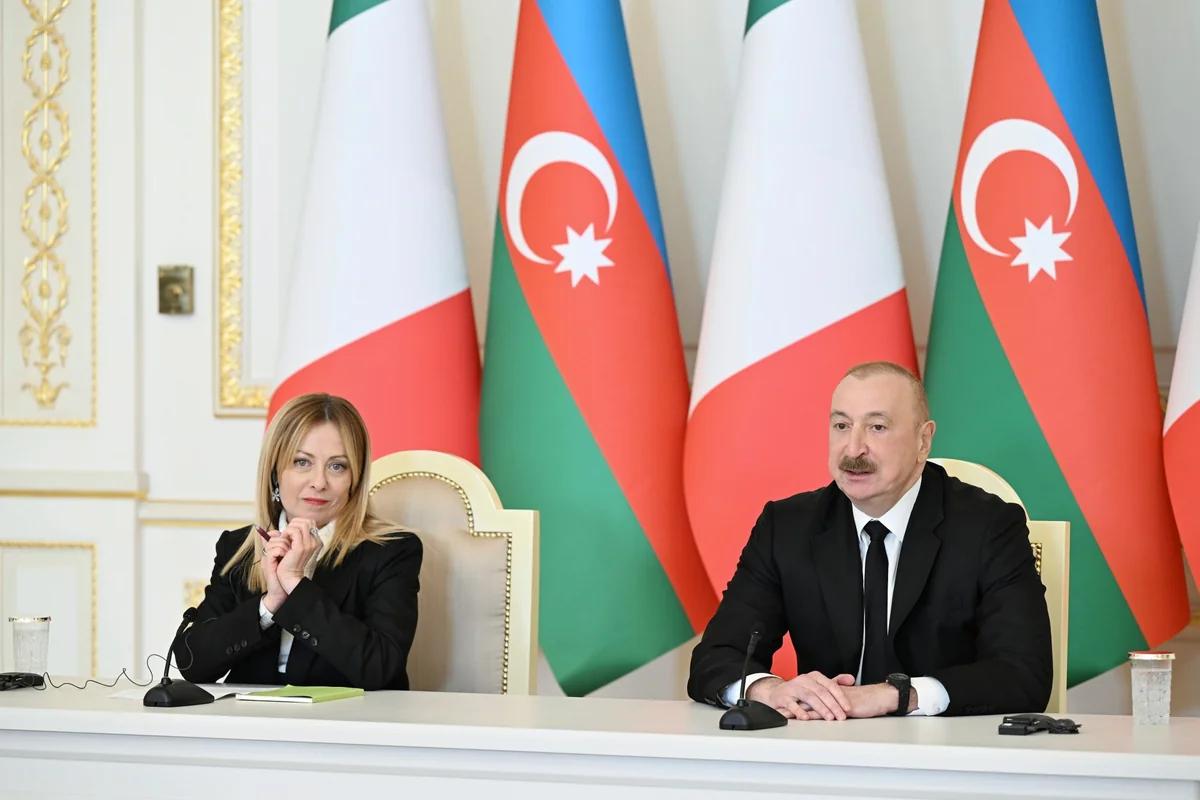
Alongside economic issues, the discussions also focused on regional and global geopolitical challenges. The two sides once again stressed the importance of peace in the context of the region’s stable development.
The meeting also covered jointly implemented regional projects and their role in strengthening transport and energy connectivity.
Georgian Prime Minister Irakli Kobakhidze and Azerbaijani President Ilham Aliyev attended the signing ceremony. According to the two sides, their presence further underlined the importance of strategic bilateral cooperation.
Rail link between Tbilisi and Baku

Reproductive health specialist Eka Kvirkvelia commented on remarks by Georgia’s new Patriarch, Shio III, about abortion. She said the most effective way to reduce abortion rates is not through bans, but through comprehensive sex education, access to contraception, social support and respect for women’s rights.
Kvirkvelia also stressed that a woman’s body is not the state’s demographic resource, the Church’s property or a collective project of society.

On 17 May, Georgia’s Patriarch Shio III said: “If a family commits a grave sin, such as abortion, then no happiness can grow from such a foundation. That family is doomed because, as we know from the Bible, ‘the blood of the slain cries out to God for vengeance’. On the other hand, where a child is born every two or three years, there is happiness, because through their existence, they bring warmth and light to everything around them.”

Eka Kvirkvelia: “Debate around abortion in Georgia often gets lost in emotional, religious and political polarisation. However, as a reproductive health specialist, I believe any discussion on this issue remains incomplete without the context of history, medicine and human rights.
Today, abortion in Georgia is legal at a woman’s request up to 12 weeks of pregnancy. Certain medical and social circumstances also allow access at later stages. Yet despite its legal status, stigma persists. Women who speak about abortion often face moral judgement, while the same society frequently remains silent about:
- the lack of sexual education;
- the cost and accessibility of contraception;
- domestic and sexual violence;
- teenage pregnancy;
- women’s economic insecurity.
This issue becomes especially dangerous when the state, religion or political groups view the female body as a demographic tool. Historically, authoritarian systems have often sought control over women’s reproductive functions. They have done so in the name of increasing birth rates, “saving the nation” or defending tradition and morality.
At such moments, society no longer sees women as independent individuals. Instead, it treats them as a “public body”. I would go further and say: a “public womb” or an “incubator”.
This rhetoric is particularly familiar in post-Soviet societies, where women’s sexuality and reproduction have often become subjects of collective control. That is why the demonisation of abortion forms part of a much broader social process: the politicisation of women’s bodies, control over sexuality and restrictions on autonomy.
Interestingly, society often condemns abortion more strongly than the circumstances that lead to unwanted pregnancies. We rarely hear questions such as:
- Why do many young people lack reliable sexual education?
- Why does contraception remain financially inaccessible for many?
- Why do women carry a disproportionately heavy burden of responsibility?
- Why does motherhood often remain a social obligation rather than a choice?
Georgia’s current social and economic realities form an important part of this picture. Many families live under financial instability. High prices, unstable incomes, housing problems and weak social protection systems often create conditions in which reproductive decisions become part of economic survival rather than free choice.
The healthcare system also matters in this context. In Georgia, medical insurance, along with state and private programmes, often fails to provide sufficient coverage for family planning, contraception or abortion itself.”
“[…] It is important that reproductive policy does not turn into a purely quantitative goal. A human rights-based approach means more than encouraging higher birth rates. It also means ensuring a genuine ability to choose — safely, consciously and without coercion.
Georgia also often shows a broader social problem: society sometimes treats a woman’s reproductive role not as an individual right, but as a public expectation. This creates stress, stigma and feelings of guilt among women, especially when they lack sufficient economic or institutional support.
That is why the issue of abortion is not simply a choice between ‘for’ and ‘against’. It is a system in which several factors intersect:
- economic realities;
- access to healthcare;
- education;
- social support;
- women’s autonomy.
As a doctor, I approach this issue with open eyes from the perspective of medicine and public health. The most effective evidence-based way to reduce abortion rates does not involve restrictions or stigma. It involves:
- sexual education;
- real access to contraception;
- social and economic support;
- stronger healthcare systems.
When these conditions remain weak, any policy focused solely on birth rates remains incomplete.
A woman’s body and her reproductive choices should not become tools of political competition, ideological control or social pressure.
As a doctor, I do not see a woman’s body as ideological territory that society should control. The purpose of medicine is not punishment, shame or moral coercion. The purpose of medicine is:
- safety;
- informed choice;
- prevention;
- health;
- protection of human dignity.
Once again: the most effective way to reduce abortion rates is not through bans, but through:
- quality sexual education;
- access to contraception;
- social support;
- respect for women’s rights.
A woman’s body is not the state’s demographic resource. It is not the Church’s property. And it is not a collective social project. A woman’s body belongs to the woman herself.”
Doctor’s view on abortion in Georgia