Categories
South Caucasus News

Disputed Parliament Approves New SSSG Head, State Minister Post for Mdinaradze


Georgia’s disputed parliament has approved changes in the country’s law enforcement and security services, under which Geka Geladze, who headed the Interior Ministry, became the new head of the State Security Service of Georgia (SSSG), and a new post of State Minister for Coordination of Law Enforcement Bodies was created in the Georgian Dream government, to be assumed by Mamuka Mdinaradze, who led the SSSG.

The approvals, along with the creation of the new position, were fast-tracked by the Georgian Dream-dominated parliament by the end of April, a week after Georgian Dream Prime Minister Irakli Kobakhidze announced the changes.

In addition to Geladze and Mdinaradze, the changes also affected the local Adjara government, with former head Sulkhan Tamazashvili appointed by Kobakhidze as the interior minister, succeeding Geladze, and Zurab Pataradze, former ambassador to Azerbaijan, approved by Adjara’s Supreme Council, a local legislative body also dominated by Georgian Dream members, as head of the regional government, succeeding Tamazashvili.

Who Became Who?

Geka Geladze, who served as Georgian Dream Interior Minister since May 2025, succeeded Mamuka Mdinaradze as chief of the State Security Service of Georgia (SSSG). 85 Georgian Dream MPs voted for his approval at the April 28 plenary session, while 12 lawmakers from ex-Prime Minister Giorgi Gakharia’s opposition For Georgia party voted against. Ahead of the plenary vote, Geladze was heard behind closed doors by the disputed parliament’s Defense and Security Committee.

Geka Geladze has thus become the fifth head of the agency since its establishment in 2015, after Vakhtang Gomelauri (2015–2019), Grigol Liluashvili (2019–2024), and Anri Okhanashvili, who served the shortest term from April to August 2025, and Mamuka Mdinaradze from September 2025 to April 2026. Under the rules of procedure, the Parliament of Georgia elects the SSSG head for a six-year term.

Mamuka Mdinaradze, who led the SSSG for eight months, has become a State Minister for Coordination of Law Enforcement Bodies, a freshly created position in the GD government. 84 MPs voted at the April 29 plenary session, in the third reading, to create the post, with 10 MPs voting against. Kobakhidze is expected to formally appoint Mdinaradze to the role soon.

Under the adopted legislation, Mdinaradze’s post will not have a separate administrative apparatus, with its functions instead to be carried out by the government administration, which will provide what the law describes as “material-technical” and “organizational” support. Mdinaradze will also serve as Vice Prime Minister in Irakli Kobakhidze’s cabinet.

While speaking to journalists on April 29, Kobakhidze said law enforcement agencies require coordination on “hundreds of issues” daily that he could not handle alone, making it “very important for this new element to appear.” He also pushed back against criticism that Mdinaradze’s new role indicated diminished authority.

Kobakhidze added that Mdinaradze had already been carrying out the function of “general coordination” of law enforcement bodies, but acknowledged that “perhaps this was not entirely correct.” He added that “what Mamuka Mdinaradze was already doing while heading the State Security Service will now be given a formalized form, which is correct.”

Sulkhan Tamazashvili, a UK-sanctioned official who has been chair of the Government of the Adjara Autonomous Republic since April 2025, has become the new Interior Minister, succeeding Geladze. The April 22 decree signed by Irakli Kobakhidze approved his appointment.

Zurab Pataradze, who was nominated by Georgian Dream-elected President Mikheil Kavelashvili to succeed Tamazashvili as chair of the Adjara government, was approved on April 28 by the Georgian Dream-dominated Supreme Council of Adjara for the post. He had previously served as chair of the Adjara government from 2016 to 2018 and has until now been Georgia’s ambassador to Azerbaijan.

Also Read:

Categories
South Caucasus News

США могут проиграть Китаю Луну?


Categories
South Caucasus News

President Cup 2026 Int’l Regatta kicks off in Mingachevir


The “President Cup 2026” International Rowing and Canoeing Regatta has kicked off in Mingachevir, AzerNEWS reports.

Categories
South Caucasus News

Andrzej_Poczobut_RU


«RSF рада освобождению польско-белорусского журналиста Андрея Почобута, которого произвольно заключили под стражу пять лет назад. Хотя его освобождение — отличная новость, оно произошло в рамках обмена пленными, что …

Categories
South Caucasus News

Farid Kazakov releases new music video dedicated to Int’l Dance Day and memory of Tamilla Shiraliyeva


Farid Kazakov has released a new music video in honor of International Dance Day, AzerNEWS reports.

Categories
South Caucasus News

@SouthCaucasus @AsadzadeUlviyya @RFERL Arm will have to renationalise both energy & transport infrastructure away from Russian ownership. It should get EU funding for that and&or EU companies.


Categories
South Caucasus News

Пакистан запускает Fatah-2 и Taimoor


Categories
South Caucasus News

Georgia National Guard deploys to help fight wildfires – News4JAX


Georgia National Guard deploys to help fight wildfires  News4JAX

Categories
South Caucasus News

Yerevan to host European Political Community summit: expectations in Armenia


EPC summit in Yerevan: expectations in Armenia

EPC summit in Yerevan: expectations in Armenia

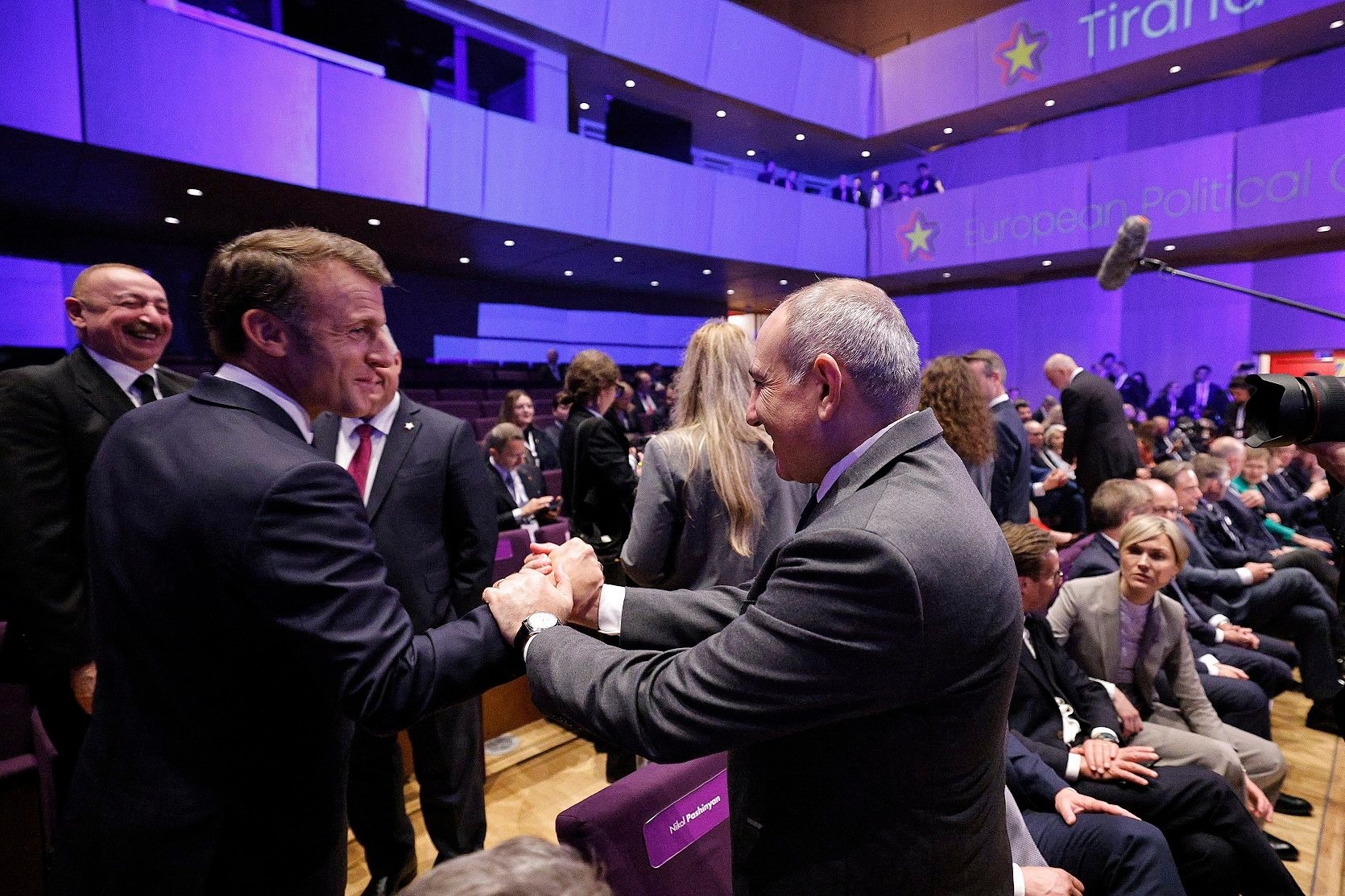
Next week, on 4 May, Yerevan will be at the centre of international attention. Armenia will host the eighth summit of the European Political Community under the slogan “Building the Future: Unity and Stability in Europe.”

Around 50 high-level delegations, including European heads of state and government, will attend. French President Emmanuel Macron will also travel to Armenia on a state visit. Armenia’s Foreign Ministry says the visit could mark “an important milestone”, as the two countries may finally formalise their strategic partnership.

International affairs expert Varduhi Harutyunyan says the summit offers a good opportunity to advance bilateral ties with different countries.

“It has already been officially announced that Armenia and France will sign a strategic partnership agreement. We can expect deeper cooperation in defence as well. We can also expect clearer outlines for strategic partnership with Germany, for example in the economy and infrastructure,” she said.

She also says the European Political Community summit will strengthen Armenia’s international standing. But, she adds, much will depend on whether the authorities can turn dialogue into durable partnerships.

The European Political Community was created in 2022 on the initiative of French President Emmanuel Macron. It aims to provide a platform for political coordination and dialogue among European countries, including EU members and states outside the bloc, to strengthen security and cooperation. The community brings together the 27 members of the European Union, the United Kingdom and 19 non-EU states.


What is already known about the Yerevan summit

So far, the official website of the European Political Community provides little detail about the upcoming event. The agenda and details of the planned discussions remain unpublished.

For now, organisers say talks in Yerevan will focus on democratic resilience, transport links, economic and energy security, and decisions in an evolving security environment.

“Participants will exchange ideas on how closer cooperation and coordinated action can help build a more resilient, secure and united European space.”

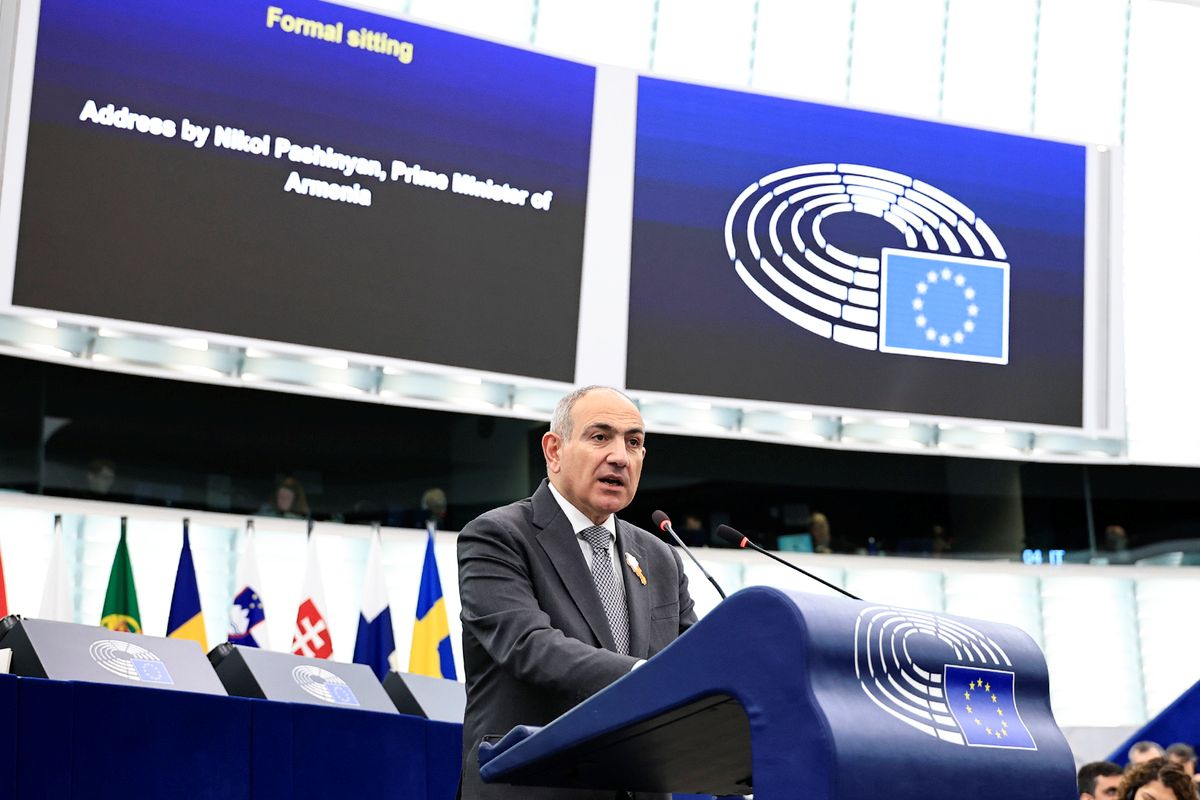
Armenian Prime Minister Nikol Pashinyan says the summit will address “major issues”, from hybrid threats and democratic resilience to connectivity and energy challenges. He says Armenia is honoured to host the summit and to “play an active role in shaping Europe’s future”.

“For Armenia, this summit is not only an important milestone in cooperation with European partners, but also an opportunity to reaffirm our firm and unwavering commitment to democratic values and the rule of law.”

A first Armenia-EU summit will also take place in Yerevan

The first-ever Armenia-European Union summit will take place in Yerevan on 4 and 5 May. Prime Minister Nikol Pashinyan will represent Armenia. António Costa, president of the European Council, and Ursula von der Leyen, president of the European Commission, will represent the EU. Armenia’s Foreign Ministry says both will also take part in the eighth summit of the European Political Community.

The Armenia-EU summit will focus on closer cooperation in the economy, energy, transport and other areas.

“Leaders will also discuss progress on peace, security, connectivity and prosperity in the South Caucasus, as well as current global and regional challenges.”

Armenia’s Foreign Ministry says the summit reflects unprecedented momentum in ties in recent years. It says the EU is a key partner for Armenia in carrying out reforms, as well as in trade and investment.

International affairs expert Varduhi Harutyunyan says the European Political Community has already played an important role in Armenia’s recent history. It was at the Prague summit on 6 October 2022, she notes, that Armenia and Azerbaijan made significant progress in their relations.

The two countries recognised each other’s territorial integrity and sovereignty at the level of heads of state. She says that later became a basis for broader normalisation, including the historic Washington summit.

“Perhaps the most important outcome for Armenia at the Prague summit was agreement on deploying an EU civilian monitoring mission. It was stationed on the Armenian side of the border immediately after the summit and made a significant contribution to stability on the Armenian-Azerbaijani border,” she said.

Harutyunyan says hosting the event in Armenia carries special symbolic importance. She notes Armenia ranks among the countries in the community with the lowest level of integration with the European Union.

“The choice of Armenia as host underlines mutual interest in deepening ties, as well as Armenia’s importance for Europe.”

She says participating states do not choose summit venues through rotation, but by mutual agreement. Under an informal arrangement, one summit takes place in an EU member state and the next in a non-EU country.

Harutyunyan says Armenia, as host, could put forward proposals to strengthen the summit format and give it new impetus.

In her view, the Yerevan summit will give Armenia a chance to showcase progress in democratic reforms.

She does not rule out additional financial support to strengthen democratic institutions, particularly in light of upcoming elections and growing hybrid threats.

The summit will also give Armenia an opportunity, she says, to raise issues of public concern, including resilience, economic security, opening transport links and attracting investment in energy. It could also open space for discussing bilateral agreements in those and other areas.

“The future mandate and work of the EU civilian monitoring mission [whose mandate expires in 2027] could also be discussed,” she said, noting the EU recently announced plans to send a second civilian mission to Armenia.

Varduhi Harutyunyan stresses that the summit has previously helped non-EU states achieve concrete results. She points to Moldova, which hosted the community’s second summit in 2023, as an example. She says the Chisinau summit helped produce concrete steps to support Moldova’s European course.

It also accelerated Moldova’s synchronisation with the European power grid and helped reduce dependence on Russian gas, including through 200 million euros in energy support. The European Union and participating states also imposed sanctions on organisations accused of destabilising Moldova’s government.

The expert also says Moldova’s army received 7 million euros in non-lethal military support ahead of the summit through the European Peace Facility.

“Although the purpose of this format is to address urgent pan-European challenges and develop a common strategy, it is also very important as a platform for bilateral and multilateral negotiations and for achieving concrete results,” she said.


Categories
South Caucasus News

Central Bank reports decline in Azerbaijan capital market activity


The total volume of transactions in Azerbaijan securities market reached 12.9939 billion manats in the first three months of this year, AzerNEWS reports, citing the Central Bank of Azerbaijan.