
The Karabakh conflict, a tragedy that for decades stalled regional development, displaced hundreds of thousands, and claimed countless lives, has finally been relegated to the dusty shelves of history.
Day: April 23, 2026
Categories
Интересное признание Трампа
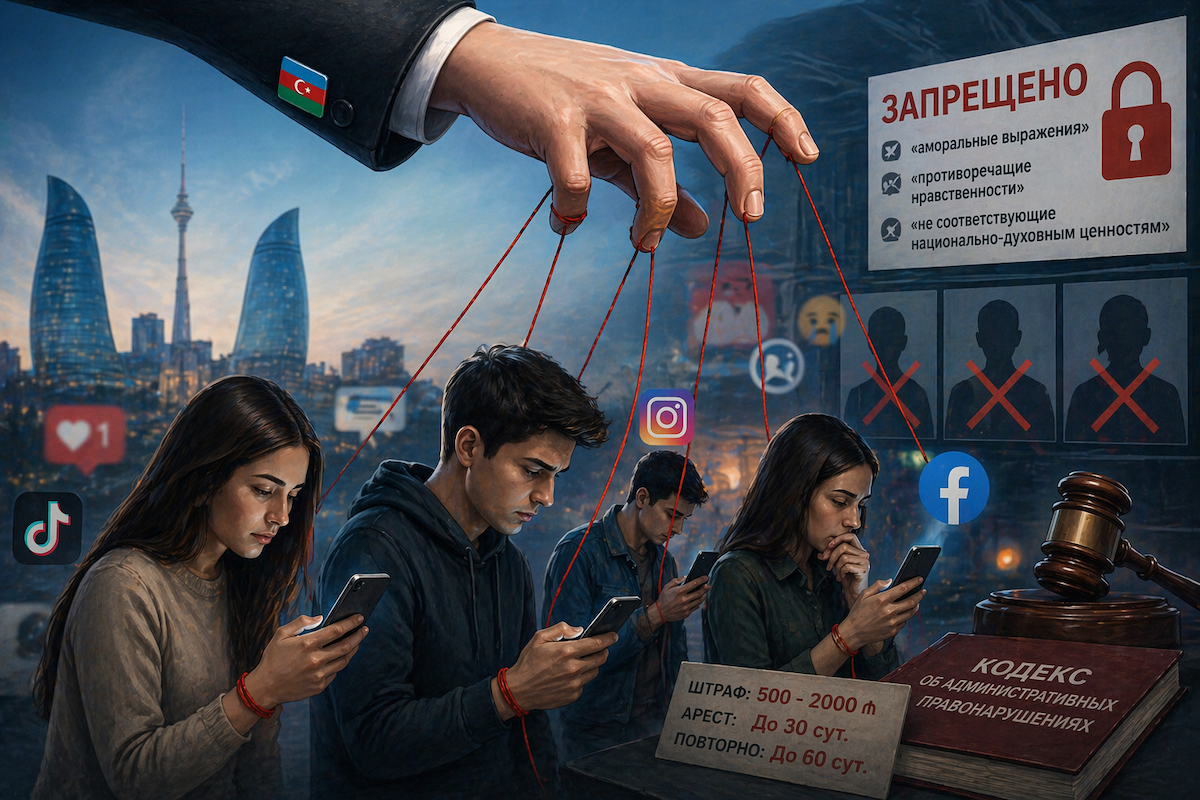
New law on social media in Azerbaijan
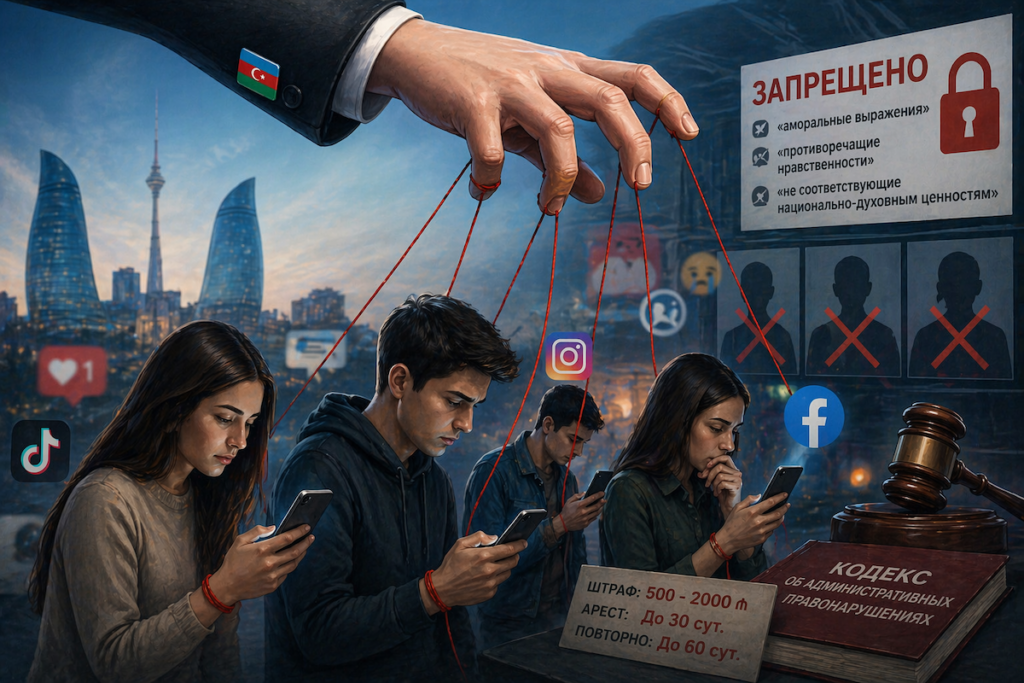
In Azerbaijan, “immoral expressions” have been banned on social media, users have begun to be penalized for content, and unofficial “blacklists” of artists are appearing on television while programs are being shut down. Formally, these measures are presented as protecting public morality. However, taken together, they appear to expand control over information and public discourse—and affect not only journalists or bloggers, but any social media user.
Material from Meydan.tv
New law and first penalties
On January 26, the president of Azerbaijan approved amendments to the legislation banning the dissemination online of “expressions contrary to morality,” as well as “depictions of the body that do not correspond to national and spiritual values.” At the same time, changes were made to the Code of Administrative Offenses: such actions are now punishable by fines or administrative arrest.
Sanctions range from 500 to 1,000 manats (approximately $294–$588 USD) or detention for up to 30 days. For a repeat violation within a year, the penalty increases to 1,000–2,000 manats (around $1,176 USD) or arrest for one to two months.
After the law came into force, six people have already been held accountable: four received administrative arrest, and two were fined.
Control goes beyond a single law
Alongside the adoption of the law, pressure on the media sphere is intensifying. Reports have emerged in the media about “blacklists” of artists who are banned from appearing on state television channels. A number of performers have effectively been removed from the air. In addition, some TV programs have been shut down or taken off broadcast.
Political commentator Ganimat Zahid believes that what is happening is part of a consistent policy of restricting freedom of speech.
According to him, independent media were pushed out of the country first, followed by independent journalism.
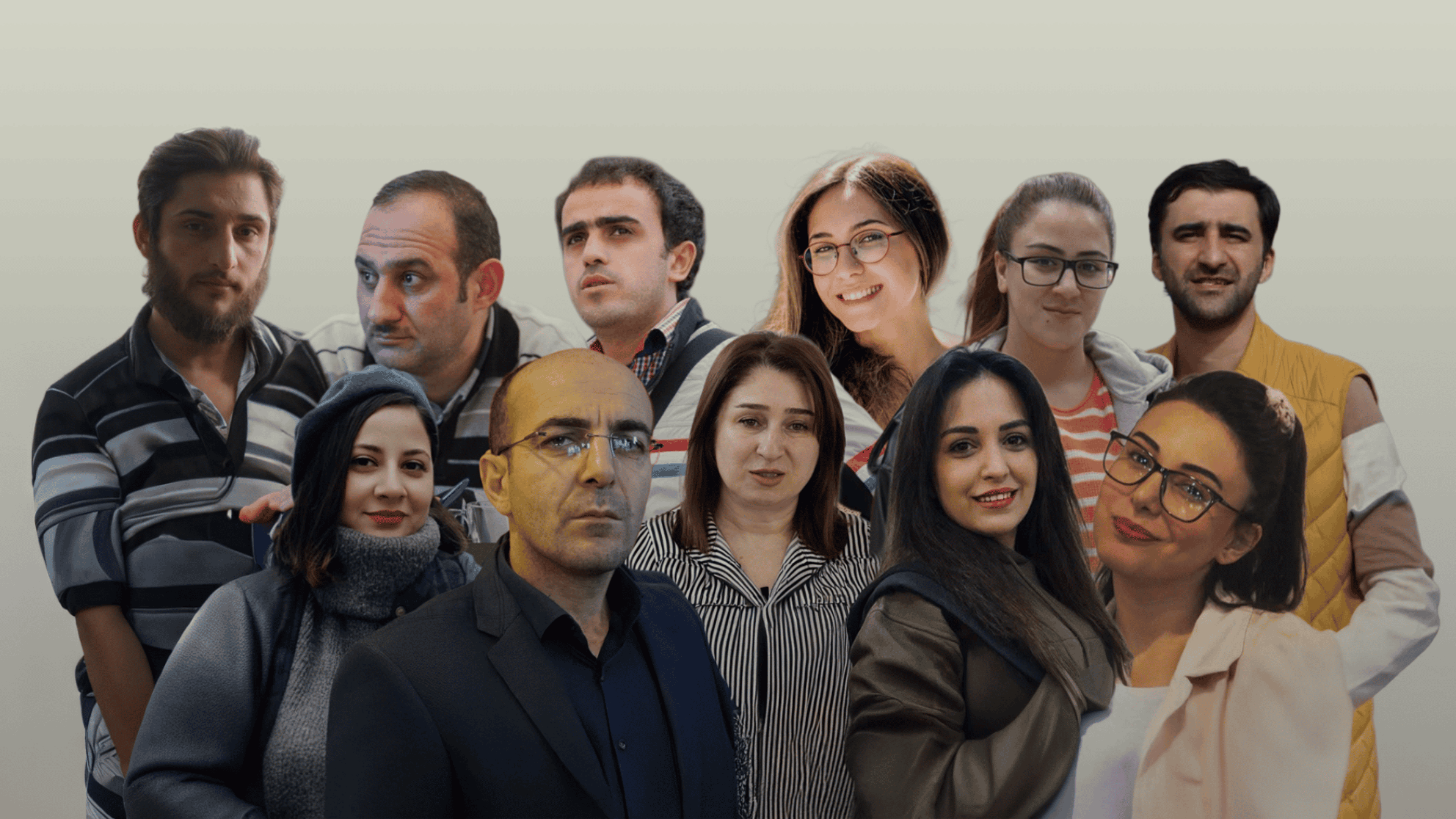
“After the authorities dealt with independent media and journalists, further tightening was inevitable. First, they created a media agency and introduced restrictive regulations, effectively forcing all media into a rigid framework. Then it became clear that even controlled platforms needed to be regulated,” he says.
From media to users
If earlier the main restrictions targeted traditional media, attention is now shifting to social media users.
Media expert Ahad Ahadli links this to the growing influence of independent content outside traditional institutions.
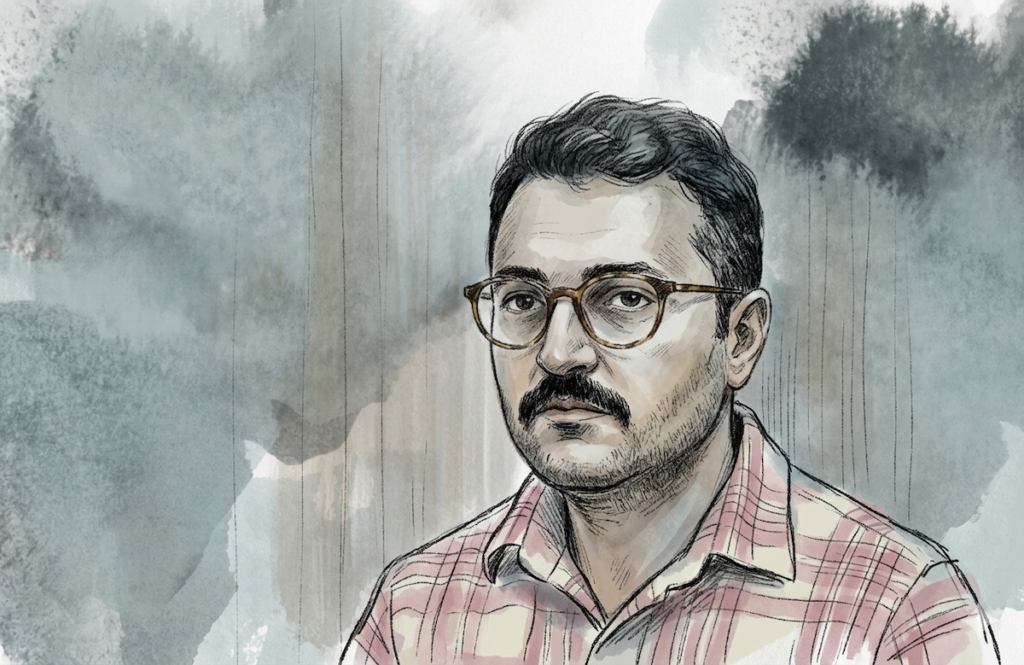
“About 2–3 years ago, pressure on the media began, and the institution of independent media in the country was pushed out and effectively dismantled. All independent outlets were forced to leave the country. After that, the government has been trying to further close off the public space, and the main reason is that these individuals—detained TikTokers or others—are quite popular. Their live streams and ability to broadcast independently pose a kind of threat to the authorities, because these actors operate outside its control.”
“Today, anyone can go live on YouTube, TikTok, or Instagram and express any point of view. I think what worries the authorities is precisely that there are people outside their control who are able to convey their thoughts to millions. This is one of the main reasons for concern,” he says.
In his opinion, the detentions and fines imposed on bloggers and users primarily serve as a means of intimidation.
“As part of this ‘closure’ process, the turn has now reached them. Yes, they are not imprisoned for long, but this is less about neutralization and more about intimidation. It is a signal both to the TikTokers themselves and to their audience, to those who leave comments: if you do not watch what you say and write, you may face the same fate,” the expert notes.
Vague wording and risks of abuse
Lawyer Fariz Namazlı points to a key problem with the new law—the lack of clear definitions.
The list of prohibited information includes categories such as “disrespect toward society” and “contradiction to national and spiritual values.” However, their meaning is not clarified in the law.
“Courts are supposed to explain what exactly falls under these formulations, but in practice this does not happen—they simply refer to the law. This opens the door to arbitrary enforcement,” the lawyer says.
According to him, another feature is that the state effectively assumes the role of the injured party, although in such cases, by logic, the initiator of proceedings should be a specific individual who believes their rights have been violated.
“Whoever considers themselves insulted should file a lawsuit themselves and prove that their honor and dignity have been harmed. Only after that can measures be applied,” he says.
Selective enforcement
According to Ganimat Zahid, the new law will be applied selectively and will not affect pro-government troll networks. He notes that such accounts do not express independent positions, but rather operate on assigned narratives within a unified system of control.
New law on social media in Azerbaijan
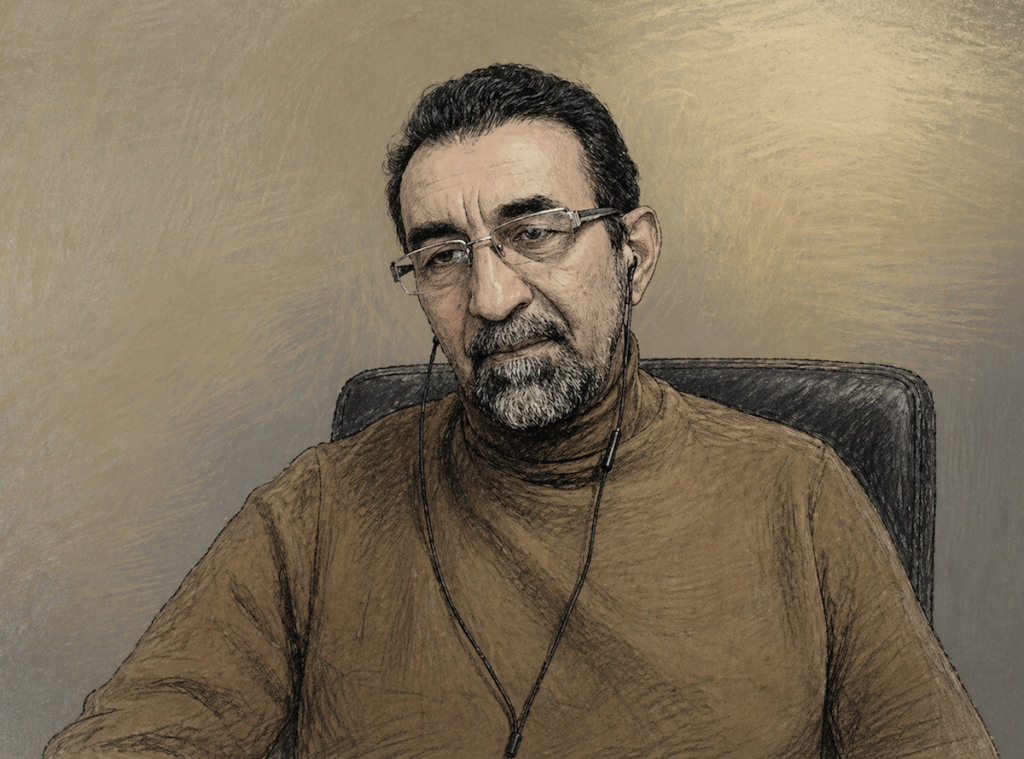
“Trolls are not carriers of independent opinion—they are usually given prepared talking points or limited room to improvise around them.”
Zahid believes that even under the new law, they will continue posting aggressive and insulting comments, but sanctions will not be applied to them. According to him, Azerbaijan already has a practice of selective enforcement of legislation, and this is likely to continue.
“The law will mainly be applied to people who express alternative views on social media.”
He adds that representatives of the younger generation are most likely to come under pressure first, since they more often use social networks to express their opinions, whereas the older generation is generally more conservative.
Fariz Namazlı adds that previously other legal provisions were used to pressure users—for example, charges of disobeying police. Now, a direct legal provision has been introduced.
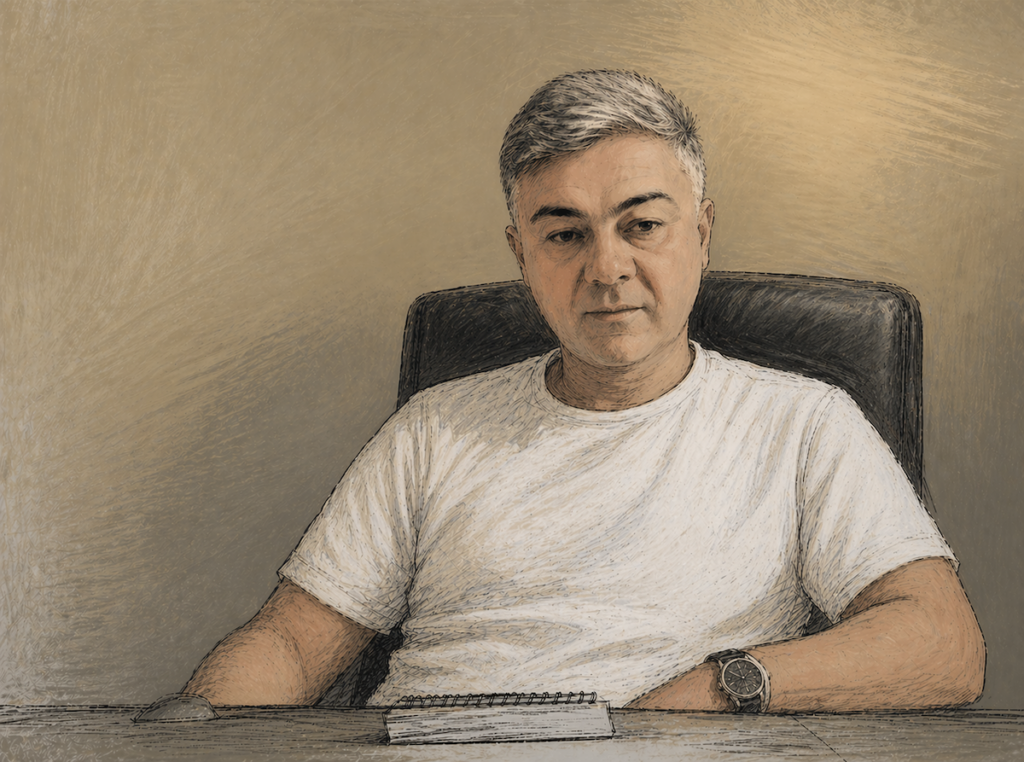
“Even for a minor post, a person can be held liable. At the same time, courts more often impose administrative arrest, although fines are also предусмотрed. This is done to intimidate,” he believes.
The report by Kavkazsky Uzel also notes that the wording on insulting public morality and showing clear disrespect toward society is defined vaguely in the law, which creates room for arbitrary interpretation by law enforcement and supervisory authorities.
Self-censorship as a result
One of the key consequences of such measures is the spread of self-censorship.
According to Ahad Ahadli, there are reports that not only authors of posts are being summoned by the police, but also people who leave comments or reactions.
“People may not be directly punished, but an example is made: if you do this, consequences are possible. This shapes behavior,” he says.
Ganimat Zahid also points to changes in the public environment: users themselves begin to demand punishment for others, tagging law enforcement agencies in posts.
“Just imagine: society itself, or certain members of it, not only become carriers of censorship but also start playing the role of its enforcers. Look—this is exactly the kind of social outcome that the authorities aim to achieve through restrictive measures and laws.”
In his view, this indicates that control is beginning to reproduce itself at the societal level.
Why this affects everyone
Although the rules are formally presented as a fight against “immoral content,” in practice the new regulations are reshaping a much broader range of interactions—from media work to everyday online communication.
In practice, there are already concrete cases: several people have received administrative arrests or fines for social media posts. The protocols cite the use of “unethical language” or “immoral display of body parts.”
One of the detainees, a 27-year-old woman, said she had taken nude photos for private correspondence. Another— a 30-year-old Instagram user with an audience of around 140,000—was fined 1,000 manats for a video which, according to law enforcement, violated moral standards.
Courts have issued rulings on short-term arrests—from 8 to 20 days—as well as fines.
At the same time, restrictions have also affected television: a number of artists and programs have been removed from broadcasting.
As a result, the new measures go beyond regulating individual cases. They are shaping an environment in which users begin to limit their own speech out of fear of possible consequences.
With support from “Mediatset”.
exchange
Mamuka Mdinaradze, the outgoing chief of the State Security Service of Georgia (SSSG), said wiretapping has increased, contributing to what he described as an “at least thirtyfold” rise in the flow of information to the agency. He assured, however, that wiretapping is conducted legally under court warrants.
“If about a year ago the flow of information was some figure X, today this figure […] has increased at least thirtyfold. If, say, 100 pieces of information were coming in for implementation, now more than 3,000 are coming in,” Mdinaradze, who has headed the agency since last September, and is set to assume a yet-to-be-created role of “State Minister for Coordination of Law Enforcement Bodies,” said in a late-night April 22 interview with pro-government Imedi TV.
Asked whether the increase was linked to more wiretapping, he said, “Including that…Yes, wiretapping has also increased, but it is carried out on the basis of a court order.”
“But if the number of court warrants has increased two- to two-and-a-half times, […] on the other hand, the information flow has increased 30 times or more,” he added, arguing that the increase in information flow is not solely due to more wiretaps.
“I may not be able to say much, but there are contact persons who provide this information, and there are many legitimate means, from material and technical resources to human resources, which have increased and ensure the inflow of information into the SSSG,” he said, adding that “this dynamic will continue to increase” under outgoing Interior Minister Geka Geladze, who is set to succeed him as the SSSG chief.
During a lengthy Imedi TV interview marking Mdinaradze’s return to public life, and in the context of increased wiretapping, he also mentioned Igor Blaževič, the senior adviser at the Prague Civil Society Centre, who Imedi TV previously claimed is linked to “revolutionary scenarios” in Georgia and has conducted “more than 10 trainings” for the Georgian opposition.
Mdinaradze said that “an investigation is underway at the SSSG in a criminal case that includes multiple wiretaps regarding Blaževič and involving him,” adding that there are legally obtained recordings made based on a court warrant in which “incriminating words, phrases and specific individuals” are mentioned.
During the interview, Mdinaradze also said that his recent visit to the Czech Republic was not related to Igor Blaževič.
On April 21, Georgian Dream Prime Minister Irakli Kobakhidze announced major changes in the country’s law enforcement and security leadership. Under the changes, Mamuka Mdinaradze is set to assume a new role of “State Minister for Coordination of Law Enforcement Bodies,” which is yet to be created, and will also become vice prime minister, alongside GD Foreign Minister Maka Botchorishvili. Interior Minister Geka Geladze is set to succeed Mdinaradze as the SSSG chief, and Adjara Government Chair Sulkhan Tamazashvili is set to replace Geladze as interior minister.
The disputed parliament is expected to fast-track their approvals at next week’s plenary session.
Also Read:
- 22/04/2026 – SSSG Arrests Georgian Citizen, Identifies Two More, Over Alleged Spying for Foreign Country
- 22/04/2026 – SSSG 2025 Report Talks of Alleged Attempts to Overthrow Government, Foreign Interference, Disinformation
- 07/02/2025 – RFE/RL’s Investigation Explores Concerns Over Georgia’s Expanding Surveillance System