Categories
South Caucasus News

How Israel helped Azerbaijan uncover Iran’s plot to attack Baku–Tbilisi–Ceyhan pipeline


Israel’s operation in Azerbaijan

Israel’s operation in Azerbaijan

It is reported that Israeli agencies — Mossad, Shin Bet and the Israel Defense Forces — took part alongside Azerbaijan’s State Security Service in a March operation to dismantle a network linked to Iran’s Islamic Revolutionary Guard Corps (IRGC).

On 6 March, Azerbaijan’s State Security Service said it had prevented large-scale terrorist and intelligence operations allegedly planned by the IRGC.

On the same day, Israel’s key security bodies — Mossad, Shin Bet (the internal security service) and the Israel Defense Forces — said in an unusual joint statement that they had dismantled a global Iranian network, including a cell in Azerbaijan.

Israeli media widely reported the development, highlighting that the operation in Azerbaijan had been carried out with Israeli support.
SSS operation: IRGC targets and detentions

Azerbaijan’s State Security Service (SSS) said that a series of counter-intelligence measures had prevented terrorist and sabotage acts allegedly planned by Iran’s Islamic Revolutionary Guard Corps (IRGC) in the country. The stated aims were to spread panic among the population, damage Azerbaijan’s international reputation and target strategic sites.

Intended targets included:

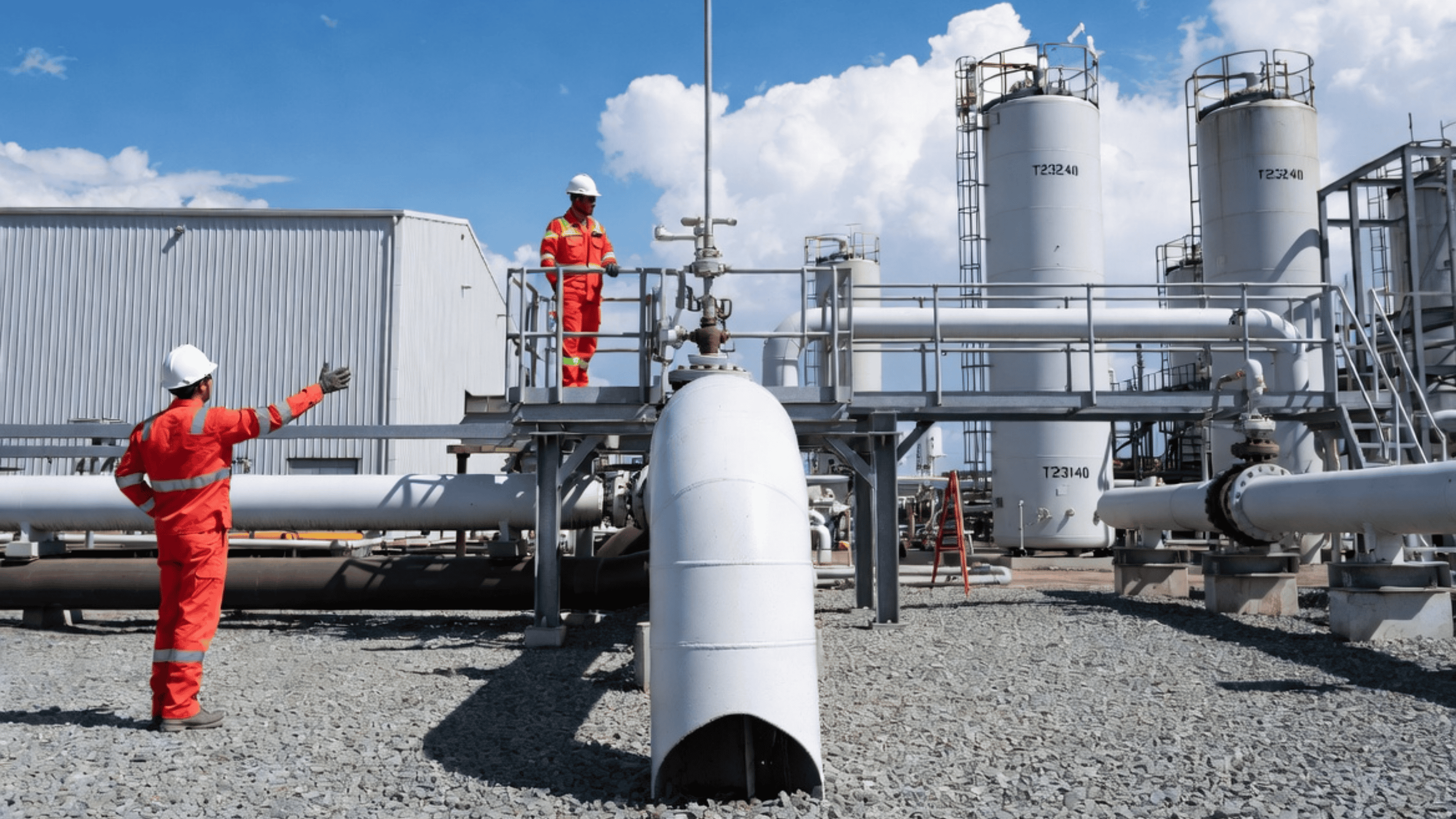
  • the Baku–Tbilisi–Ceyhan oil pipeline, a key piece of energy infrastructure;
  • the Israeli embassy in Baku;
  • a leader of the Mountain Jewish religious community;
  • an Ashkenazi synagogue in Azerbaijan.

The SSS said eight Azerbaijani citizens had been detained, while four Iranian citizens were declared wanted.

Some of those detained have already been sentenced to six years and six months in prison, while others have been placed in pre-trial detention. The investigation is ongoing.

Among the evidence cited is around 7.73kg of C-4 explosive, which was hidden in a container at the Hamam Bath wellness complex near the Shikhov settlement in Baku’s Sabail district.

SSS video footage is said to show suspects retrieving the container and later hiding it in Baku’s Nasimi district. Investigators say they have identified links involving Iranian citizens Behnam Sahibali Rustamzadeh and Yaser Rahim Zandkian, as well as Azerbaijani citizens Tarkhan Tarlan oglu Guliyev and Nijat Zaman oglu Agayev.

The IRGC has not issued an official response to these allegations.
Israel statement: “Terror network uncovered”

In an unusual joint statement, Israel’s Mossad, Shin Bet and the Israel Defense Forces said that a global Iranian terrorist network had been uncovered in recent months. The network was described as targeting Israeli and Jewish sites, as well as Western military objectives. A cell in Azerbaijan was presented as part of this network.

The cell, operating under the IRGC’s Unit 4000 — a special operations division — is said to have smuggled explosive drones into Azerbaijan and gathered intelligence on potential targets.

Among the reported targets were the Baku–Tbilisi–Ceyhan pipeline — a strategic route that carries around a third of Israel’s imported oil — as well as the Israeli embassy, a synagogue in Baku and leaders of the Jewish community.

Members of the cell were said to be acting under direct instructions from Iranian structures.

Network leadership and their reported fate:

  • Rahman Moghadam (or Makadam), head of Unit 4000 within the IRGC intelligence apparatus and a key figure in overseeing overseas operations, was reportedly killed in joint Israeli-US operations (known in Israel as “Rising Lion”);
  • Mohsen Suri, a member of Unit 4000 who held meetings with foreign cells, was also reported killed;
  • Majid Khademi, a senior IRGC intelligence official, was said to be involved in the overall coordination of the network;
  • Mehdi Yeke-Dehghan (“Doctor”) was reported to have directly coordinated operations in Azerbaijan and other countries, and linked to individuals detained in Turkey.

Israeli officials say the network became more active following the start of US-Israeli hostilities with Iran after 28 February, and attempted to establish new cells abroad.
Why the six-week gap?

The Jerusalem Post and other Israeli outlets note that Azerbaijan’s State Security Service announced the operation on 6 March, while Israel released more detailed information only on 20 April. The reasons for the delay have not been officially disclosed.

At the same time, Israeli officials emphasised that cooperation with Azerbaijan led to the exposure of a significant part of the network and the killing of several senior Iranian figures.

Israeli media report that Tel Aviv has previously assisted countries such as Azerbaijan in countering Iranian-linked threats, although the involvement of the Israel Defense Forces in overseas operations is rarely made public.

The mention of the IDF in the latest joint statement is therefore seen as an indication of the operation’s particular significance.

Israeli agencies also said they would continue working with international partners to prevent similar threats.

Categories
South Caucasus News

Massive fire, explosion in oil tanker in northern Myanmar – Several people are k*lled, injured


Categories
South Caucasus News

EU Council to discuss Azerbaijan-Armenia relations


The meeting will be chaired by Kaja Kallas, the European Union’s High Representative for Foreign Affairs and Security Policy.

Categories
South Caucasus News

Sokhumi ‘Shares’ Moscow’s Position on ‘Consequences’ of Georgia’s EU Membership – Civil Georgia


Sokhumi ‘Shares’ Moscow’s Position on ‘Consequences’ of Georgia’s EU Membership  Civil Georgia

Categories
South Caucasus News

Sokhumi ‘Shares’ Moscow’s Statement on ‘Consequences’ of Georgia’s EU Membership


The de facto foreign ministry of occupied Abkhazia said in an April 20 statement that Sokhumi “has taken note” of recent remarks by Russian Foreign Ministry spokesperson Maria Zakharova and “shares Russia’s position on the consequences of Georgia’s accession to the EU.”

During an April 16 press briefing, Zakharova said that if Georgia were to join the European Union, Russia “would have” to add Georgia to its list of states with “unfriendly regimes” and extend “retaliatory economic measures” against it.

The de facto ministry said it is “closely monitoring” developments in Georgia’s foreign policy and that Tbilisi’s course “does not contribute to strengthening trust in the region,” citing what it called “periodic statements by the Georgian side, military cooperation with NATO, refusal to sign with the Republic of Abkhazia a legally binding agreement on the non-use of force, and Georgia’s policy aimed at the international isolation of the Republic of Abkhazia.”

The de facto authorities further claimed that Georgia’s military cooperation with NATO, including joint exercises held on Georgian territory, is “a cause for serious concern,” adding that “such actions cannot but be viewed as a factor negatively affecting regional stability and increasing tensions.”

The statement also described as “another serious destabilizing factor” what it called Georgia’s refusal to sign “a legally binding agreement on the non-use of force with Abkhazia,” which it said is “the main objective” of the Geneva International Discussions. It added that Sokhumi raises the issue during every round of the talks and stresses “the importance of intensifying efforts to conclude this legally binding agreement.”

Sokhumi, Tskhinvali, and Moscow have been demanding that Tbilisi sign a “legally binding” agreement on the non-use of force with the de facto authorities of the two occupied regions since the 2008 Russo-Georgian war and Russia’s subsequent recognition of them as independent states. While Tbilisi made a unilateral pledge in 2010 to “never use force to roll back the Russian occupation and to restore its control over the occupied areas,” successive Georgian governments refused to sign such agreements directly with Sokhumi and Tskhinvali, fearing that it would amount to de facto recognition of their independence.

The de facto ministry further alleged that Tbilisi is “hindering the establishment of a stable security architecture in the region,” while claiming that the Abkhaz side “consistently prioritizes the safeguarding of our own security, sovereignty, and sustainable development.”

“Any integration processes involving Georgia must not pose a threat to the existing realities,” the statement concluded.

Also Read:


Categories
South Caucasus News

Georgia’s petroleum product exports up 700% in first quarter of 2026


Petroleum product exports from Georgia

In the first quarter of 2026, Georgia’s exports totalled $1.72bn, marking a 23.4% increase compared with the same period last year.

Passenger cars remained the leading export category, although their value fell to $365m, a year-on-year decline of 27%.

Over the same period, oil and petroleum products rose to second place, reaching $208m in exports — nearly seven times higher than in the first quarter of the previous year.

According to preliminary data published by Georgia’s National Statistics Office on 20 April, local exports — goods produced in Georgia excluding re-exports — totalled $1.12bn in the first three months of 2026, accounting for around 75% of total exports.

The rise in oil and petroleum product exports was particularly sharp. In the first quarter of 2025, exports in this category stood at just $26m, while in 2026 they increased to $208m, marking a 698% rise. An even more significant increase was recorded in local exports, where petroleum products saw a surge of 3,714%.

According to the statistics, around $200m of petroleum product exports came from domestic production, while re-exports accounted for just $8m.

Notably, Georgia produces very little crude oil. In the first quarter of 2026, all crude oil imported into the country came from Russia, with its value reaching $118m.

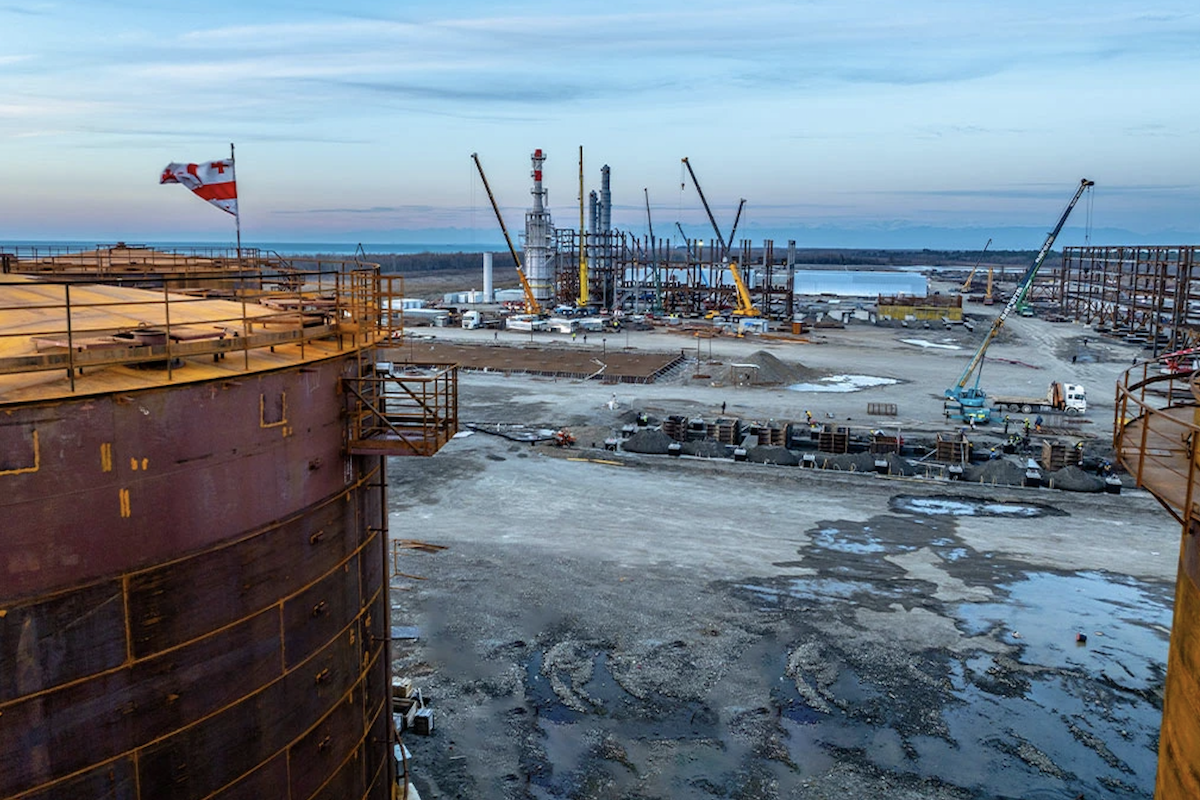
Available data suggest that the imported crude oil is likely refined locally and then exported. Since 2025, the Kulevi oil refinery has been operating in Georgia, initially processing Russian crude. Company representatives say efforts are under way to diversify supply sources, including towards Turkmen and Kazakh oil.

In terms of export geography, the main destination for petroleum products is Togo — a country in West Africa — which became Georgia’s largest export market in this category in the first quarter of 2026.

The list of export destinations is as follows:

  • Togo — $55.3m for 71,280 tonnes;
  • Turkey — $48.1m for 100,803 tonnes;
  • China — $22.8m for 29,238 tonnes;
  • Malta — $17.1m for 32,861 tonnes;
  • Morocco — $16.7m for 30,170 tonnes;
  • Singapore — $11.8m for 37,932 tonnes;
  • UAE — $11.8m for 34,816 tonnes;
  • Libya — $11.4m for 9,499 tonnes;
  • Cyprus — $3.5m for 13,164 tonnes;
  • Uzbekistan — $580,900 for 302.4 tonnes.

Kulevi terminal and possible sanctions

The European Union removed the Kulevi port, located on Georgia’s Black Sea coast, from a list of potential sanctions on 10 March 2026. The decision followed commitments by Tbilisi and the port’s operator, an Azerbaijani company, to comply with sanctions against Russia.

EU Sanctions Envoy David O’Sullivan informed Georgia’s Foreign Minister Maka Bochorishvili of the decision in a letter dated 5 March.

At an earlier stage, the EU had considered including the Kulevi terminal in its 20th sanctions package. Brussels had raised concerns about the port’s role in transporting Russian oil by sea and visits by so-called “shadow fleet” tankers. However, according to O’Sullivan’s letter, that position was revised after the Georgian authorities and the port operator made specific commitments.

He also noted that the Azerbaijani energy company SOCAR, which operates the Kulevi terminal, had agreed to conduct its activities in full compliance with EU sanctions, including adherence to the price cap on Russian oil and EU import bans.

According to the EU representative, these commitments played a decisive role in Brussels’ final decision not to include the Kulevi port in the 20th sanctions package.


Categories
South Caucasus News

Karabakh rebuild enters final phase as resettlement accelerates


Reconstruction and rehabilitation work in Karabakh is continuing at full speed, with the final year of the State Program for the liberated territories now underway, AzerNEWS reports.

Categories
South Caucasus News

Earthquake sets off brief tsunami alert and a megaquake advisory in northern Japan


Categories
South Caucasus News

Azerbaijan-Indonesia trade surges sharply with addition of growing energy ties


Trade turnover between Azerbaijan and Indonesia increased 4.6 times in the first quarter of 2026, exceeding $24.7 million, reflecting a notable expansion in bilateral economic relations, AzerNEWS reports.

Categories
South Caucasus News

Галибаф: Иран не примет ультиматумов