
The live clock is synced to atomic time, so you always see the exact East Standard Time or EDT without guessing—and without refreshing a dozen tabs because someone asked “are we in DST yet?”
Day: April 20, 2026
Categories
США нужны еще «Посейдоны»
Categories
США чистят Ормузский пролив
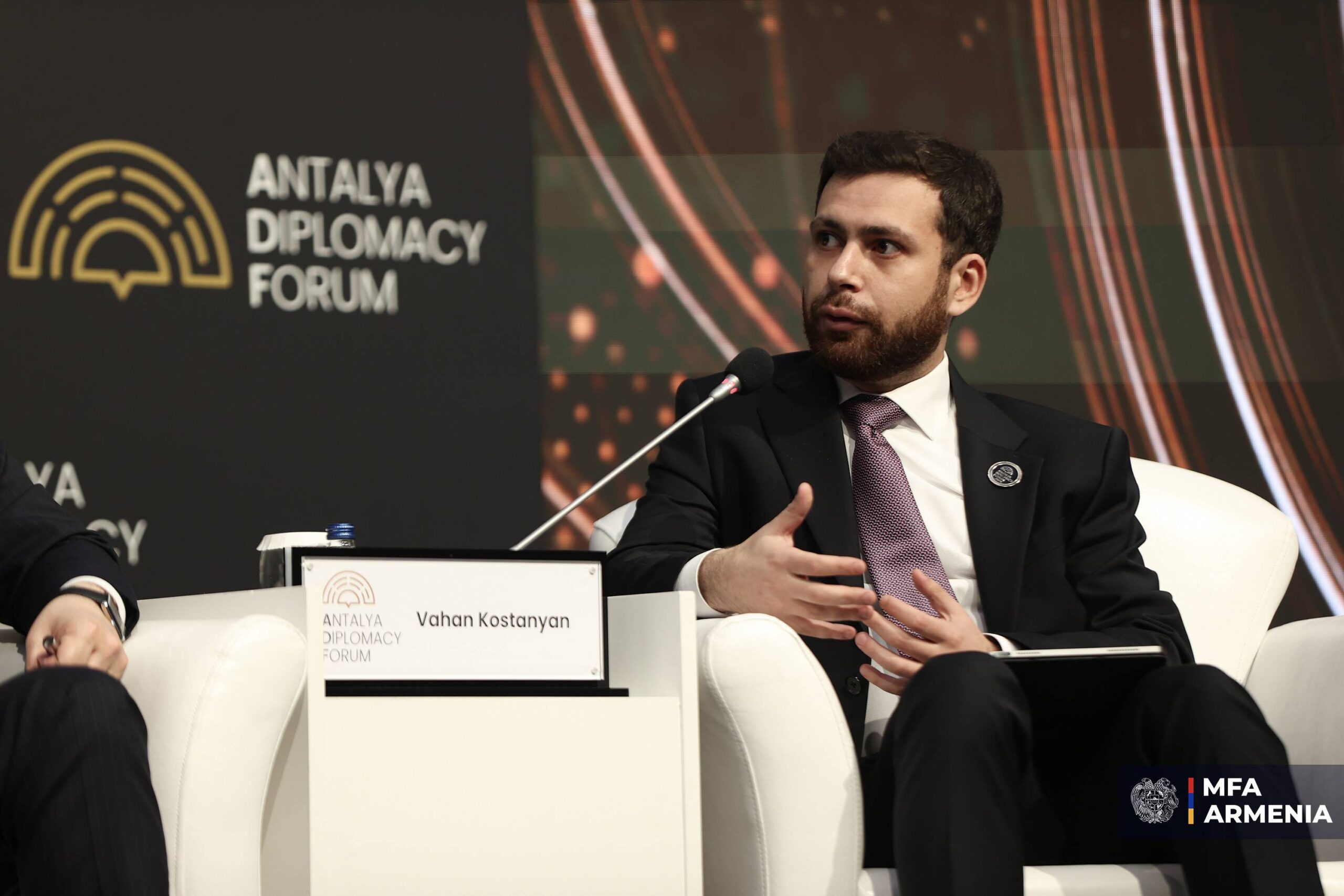
Armenian Deputy FM’s remarks at Antalya Forum
“Now, the stability that we have in the South Caucasus is the biggest competitive advantage that we have” Armenia’s Deputy Foreign Minister Vahan Kostanyan said during a panel discussion at the Antalya Diplomacy Forum.
He added that he finds it “even surprising to realise that the South Caucasus is now one of the most stable regions in the world”, at a time when instability is widespread, supply chains are disrupted and wars are ongoing.
“But the destruction of these supply chains, for example, is not going to last forever. And we need to be smart enough and quick enough to materialize the competitive advantages that we have” he said.
The panel, titled “The South Caucasus: An Emerging Strategic Hub”, also featured Hikmet Hajiyev, head of foreign policy at the Azerbaijani presidential administration; Levan Zhorzholiani, head of the Georgian government administration; and Akif Kılıç, chief foreign policy and security adviser to the Turkish president.
Kostanyan said it was symbolic that four representatives of the region were discussing cooperation and a shared vision for the future.
During the discussion, he also addressed the peace process with Azerbaijan, the normalisation of relations with Turkey, and Armenia’s prospects for European integration. He then outlined the key points of his remarks.
- Opinion: ‘Russia ‘blackmails’ Armenia with threat of gas price hikes’
- ‘Armenia could become a small transit hub’: economist on developments around Iran
- ‘Battle for scandal-loving voters’: Armenia’s pre-election mood
Achieving peace with Azerbaijan required political courage
So I believe that the historic event of August 8, which happened last year in Washington, will be a game-changer, not only for Armenia and Azerbaijan, but for the whole region, including Georgia and Türkiye. And this is an inclusive process.
You’re speaking about the uncertainties in the world. And at some point, it’s even shocking to think that, you know, South Caucasus is one of the most stable regions at the moment in the world, when the logistical chains and supply chains are disrupted everywhere, when there are ongoing wars, etc, etc. Now, the stability that we have in the South Caucasus is the biggest competitive advantage that we have. But the destruction of these supply chains, for example, is not going to last forever. And we need to be smart enough and quick enough to materialize the competitive advantages that we have.
And as it was coming to reaching peace, which took political courage, political decisions, now we need to move forward with new political, very important decisions on opening of the communications in the region, creating additional interlinkages between our countries, but also becoming a bridge and unimpeded connectivity between Europe, Central Asia, Far East. And at the end of the day, stability and peace were a very important layer of the developments that we had, for example, with Azerbaijan last year.
I guess Hikmet will share my opinion that peace between us is the most important guarantee for the independence of Armenia and Azerbaijan and for the sovereignty of Armenia and Azerbaijan.”
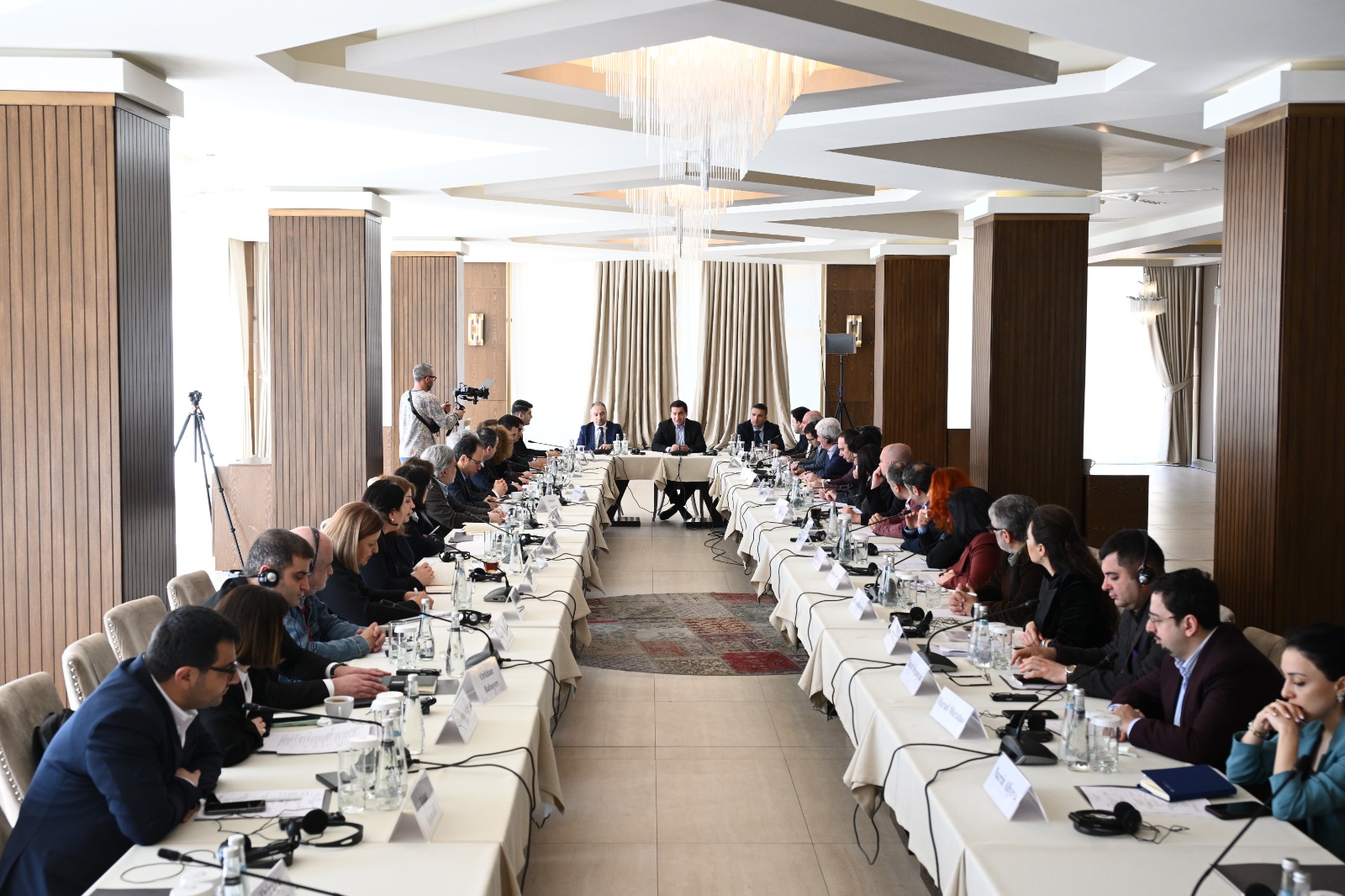
It is in Armenia’s interests to diversify its economy and become a transport hub
“It’s important that we are building economic ties. It was mentioned already that we started trade with Azerbaijan. Hopefully, in the near future we’ll also be exporting some goods from Armenia to Azerbaijan.
Energy security – this is one of the very important components of possible cooperation, not only bilaterally but also from a regional perspective. As it was rightly mentioned, a TRIPP project, which Armenia is going to carry out with our United States colleagues, is about multimodal connectivity, is about the railways, roads, but also about energy grids and pipelines. And here we have our own interest to diversify the energy supply to Armenia but also to become a transit hub for energy resources coming from Central Asia, Azerbaijan, and going to Europe.
We have an interest in the Black Sea Submarine Project, as Armenia currently is the biggest producer of green energy among South Caucasus three, and as Georgia and Azerbaijan are also working to increase our renewable capacities, investing a lot in solar, planning to have a new nuclear power plant built, etc.”
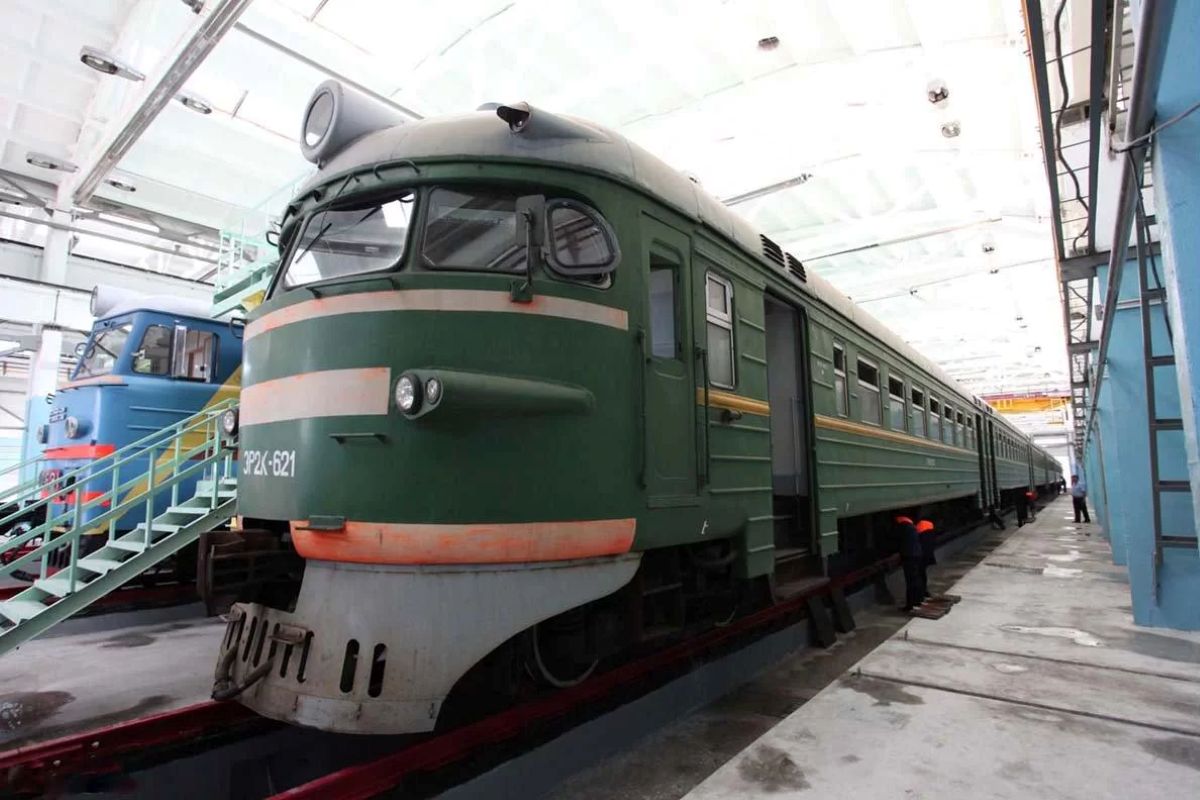
Partnership with the EU is the choice of the Armenian people
“Сooperation with the EU is very crucial for us. For us, it’s not only economic cooperation but this is also a choice of the people of Armenia, who have European inspirations. And we are currently working on different dimensions to start with gradual or sectoral integration with the European Union.
And in this regard, of course, Georgia’s European future is also very important for us, based on geography but from a philosophical point of view as well. And we also have a law adopted last year on launching the EU accession process of Armenia, which step-by-step the government of Armenia will be carrying out.
In the future, if we manage to become an EU member state, … and a Turkish colleague is smiling, given Turkish experience.”
Openness to new ideas requires open borders
“I cannot speak about the schedule in 2028 at the moment because we believe that we need to implement a vast majority of reforms. And for us, the process of EU integration, first of all, is about reforms, it’s about raising the quality and the standards of governance and economy, etc, in the country. But if in the future we become an EU member state – I cannot judge whether Türkiye will be an EU member state or not at the moment – but this will create additional economic opportunities for us as well as Türkiye is a member of the customs union. But hopefully, we’ll not wait that long with Türkiye to boost our economic relations as well.
Probably the last comment also to share the feeling that I had from the previous round of exchange, I should highlight that all the speakers sharing the panel have very open minds regarding the future. But I should also highlight that open minds require open borders. Hopefully, this will be changing in the near future.”
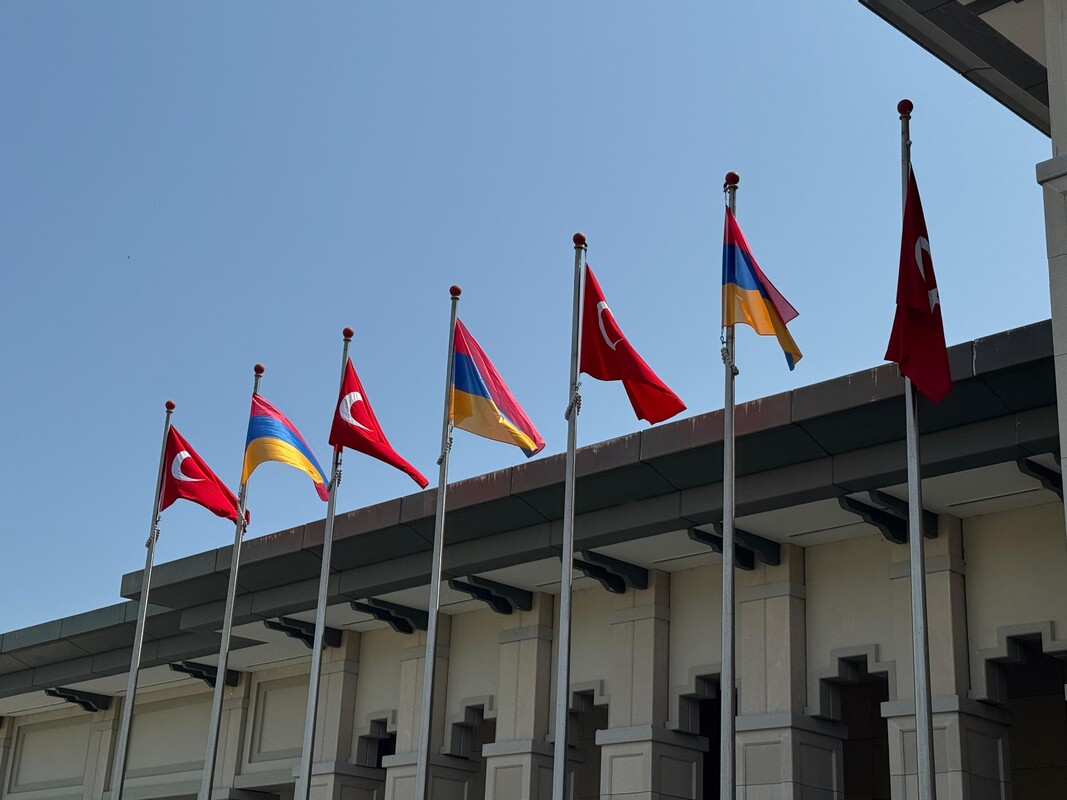
Armenian Deputy FM’s remarks at Antalya Forum
@SouthCaucasus @jamnewsge Nothing this corrupt congressman says is worth a dime.
— Natia (@Nataly161187) Apr 20, 2026
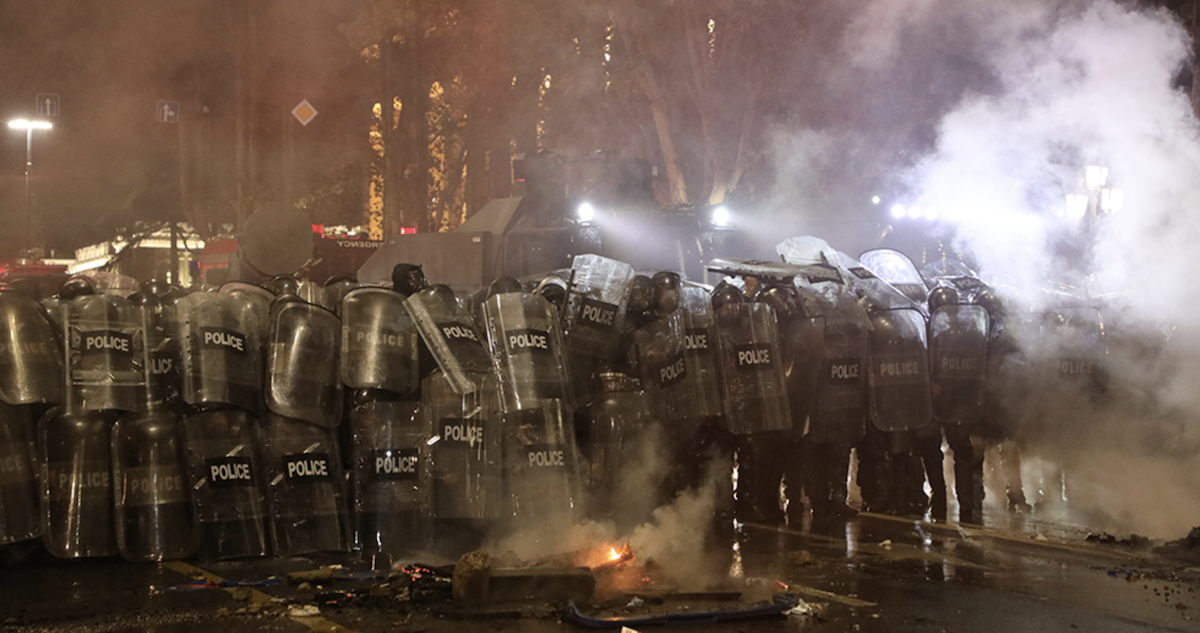
The Georgian Young Lawyers’ Association (GYLA) has filed a complaint with the European Court of Human Rights (ECHR) concerning individuals affected during pro-European protest rallies in November–December 2024. The organisation says law enforcement officers engaged in a systemic practice of torture and ill-treatment against demonstrators.
Speaking at a briefing on 20 April, GYLA chair Tamar Oniani said the case had been submitted on behalf of four applicants. She added that the application seeks to assess not only individual incidents, but the broader pattern of actions by the Georgian state.
GYLA argues that the violence used against protesters was not the result of isolated misconduct, but constituted a coordinated administrative practice aimed at suppressing pro-European protests and going beyond the bounds of a democratic order.
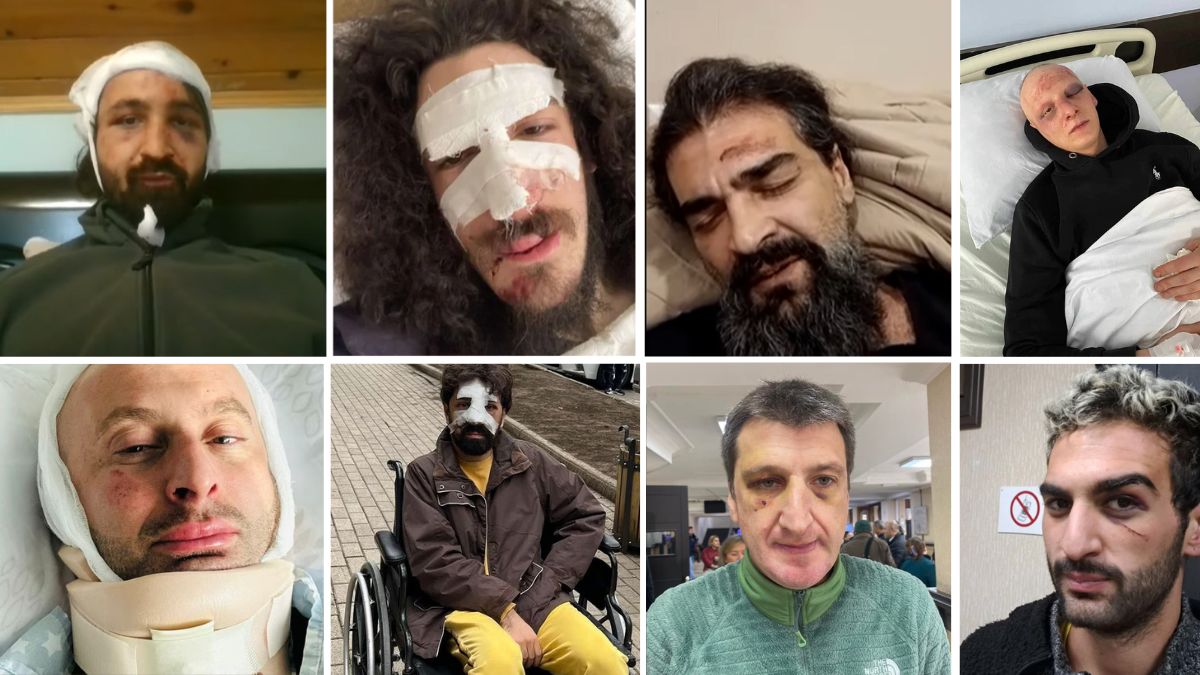
According to the organisation, one of the main aims of the complaint submitted to the ECHR is for the court to establish that the events of November–December 2024 were not a spontaneous or disproportionate response, but organised violence that laid the groundwork for a deterioration in the human rights situation in the country.
Based on the evidence, GYLA describes a systemic pattern of abuse:
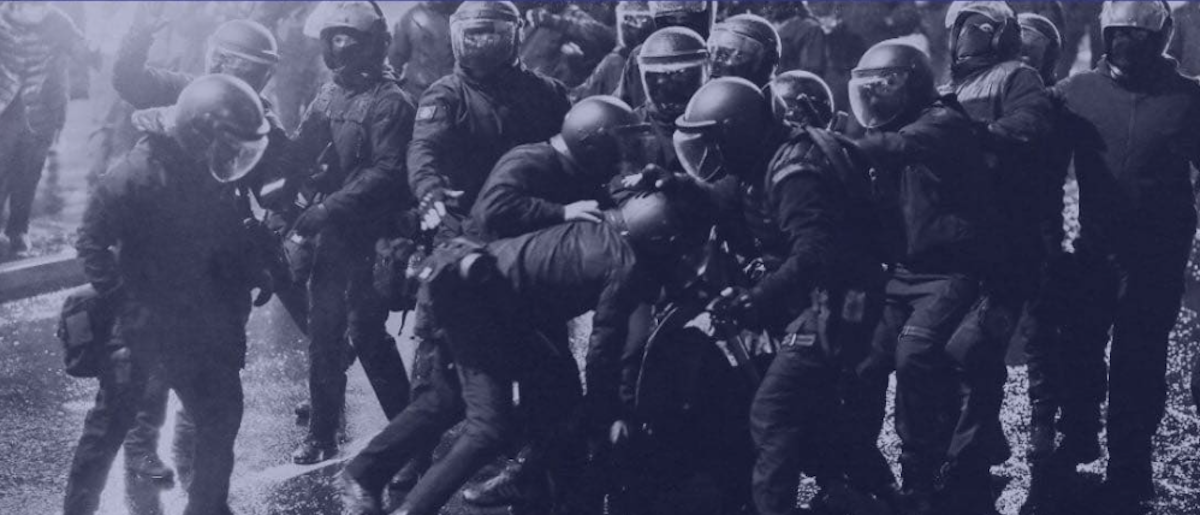
- alongside the dispersal of protests, special forces routinely carried out arbitrary detentions, beating detainees — often in groups — before moving them beyond police cordons and away from media cameras, where the violence intensified
- the abuse typically continued inside specially equipped vans, where officers, using reinforced gloves, as well as kicks and, in some cases, batons or other instruments, collectively assaulted detainees
- physical violence both after detention and inside the vans was accompanied by the confiscation of personal belongings, insults, humiliation and threats, including threats of rape, with blows often deliberately aimed at the head and face
- after repeated episodes of abuse inside the vehicles, detainees were handed over to patrol or criminal police officers, who transported them to stations and drew up falsified detention reports
- in many cases, psychological — and sometimes physical — abuse continued both during transport and inside police stations
According to GYLA, the systemic nature of the violence is demonstrated not only by the repetition of such cases, but also by the lack of accountability for those responsible. The organisation also highlights that senior officials publicly encouraged those involved in the violence, despite criticism from international organisations.
The complaint also addresses shortcomings in the investigation. According to GYLA, the process has been hindered by lack of access to evidence and institutional problems:
- state agencies have refused to provide investigators with CCTV footage, often citing “system malfunctions” or “damaged cameras”, even though footage from the same cameras is used as key evidence in domestic courts in cases against protesters
- the Interior Ministry has confirmed that special equipment was issued without individual identification numbers
- victims’ participation in the investigation has been limited, including being denied copies of case materials; access is restricted to partial review on-site at investigative bodies, leading the organisation to conclude that no effective investigative steps have been taken since March 2025
To date, no individuals have been charged, and no steps have been taken to establish the responsibility of state officials.
The complaint filed by GYLA concerns alleged violations of several articles of the European Convention on Human Rights, including the prohibition of torture, freedom of assembly, the prohibition of discrimination and the right to protection of property. Particular attention is given to Article 17, which prohibits the abuse of rights — a provision that, according to the organisation, is being applied in this context in relation to Georgia for the first time.
The case outlines four specific incidents which, according to GYLA, reflect a broader pattern. The applicants describe severe physical violence, insults and threats:
- one of them lost consciousness as a result of repeated beatings
- others sustained broken bones, bleeding and psychological trauma
- in one case, a detainee’s mobile phone was confiscated and never returned
GYLA sets out the following claims:
1. Violation of Article 3 of the Convention (prohibition of torture and inhuman or degrading treatment)
Substantive violation (in conjunction with Article 14 — prohibition of discrimination):
- Torture (applicants 1–3): prolonged, targeted and severe beatings, including threats of rape and abuse in confined spaces (vans), reaching the threshold of torture. These acts were aimed at punishing and intimidating the applicants because of their pro-European political views, amounting to discriminatory treatment
- Ill-treatment (applicant 4): the use of unnecessary and disproportionate force, as well as homophobic insults, constitutes degrading treatment
- Administrative practice: the cases indicate a pre-planned and coordinated system by law enforcement aimed at suppressing protests
Procedural violation (all four applicants):
- Misclassification of offences: the investigation is being conducted under “abuse of power” rather than “torture” or “inhuman treatment”, undermining its effectiveness
- Identification of perpetrators: masked officers cannot be identified; equipment was issued without individual numbers; no charges have been brought
- Access to evidence: state bodies have refused to provide CCTV footage
- Access to case materials: prosecutors have denied victims copies of case files
- Delays: no effective investigative steps have been taken since March 2025
- Institutional changes: the abolition of the Special Investigation Service and transfer of powers to the прокуратура have weakened investigative independence
2. Violation of Article 11 (freedom of assembly), in conjunction with Article 14
- Unjustified interference: detentions and violence lacked legal grounds, as the applicants were participating in a peaceful protest
- Discriminatory motive: violations were linked to their political views
3. Violation of Article 1 of Protocol No. 1 (property rights, applicant 3)
- Unlawful seizure of property: a mobile phone was taken
- Lack of effective investigation: no steps were taken to return the property or hold those responsible accountable
4. Violation of Article 17 (prohibition of abuse of rights)
- Systemic abuse of power: state actions were aimed at suppressing protest and went beyond the bounds of a democratic order
GYLA says it will continue strategic litigation at the ECHR and will regularly update the public on developments in the case.
GYLA files complaint with ECHR