
A continuación, ingrese el asunto, y llene los datos RUC del titular, de estar registrado en la Base de datos de la municipalidad filtrara los datos y se mostrarán automaticamente.
Day: April 16, 2026
Imedi TV, Georgia’s major pro-government channel, has claimed that Igor Blaževič, human rights advocate and senior advisor at the Prague Civil Society Centre, is linked to a “revolutionary scenario” for the Georgian opposition and has conducted “more than 10 trainings” for them, where he also gave “specific instructions.”
The April 16 reports by Imedi TV, both on air and in an online article, said the State Security Service of Georgia (SSSG) is “already aware” of “planned unrest” that is “currently in development.” According to the channel, the SSSG had received information regarding the alleged activities from “international colleagues” and is currently initiating a “legal response.”
Igor Blaževič is a Senior Advisor at the Prague Civil Society Centre, a Czech-based organization that supports changemakers, journalists, and thinkers in Eastern Europe, the Caucasus, and Central Asia.
In a televised report, Imedi described Blaževič as “one of the leaders” of the Centre, who, it claimed, is “writing a revolutionary scenario” for the Georgian opposition. The channel said that Blaževič conducted “another training” for the opposition “a few days ago,” and in total “more than 10 trainings,” during which, Imedi claimed, he also gave “specific instructions.”
The channel did not name any opposition politicians who have attended the alleged trainings, but it said that Davit Gunashvili of the activist movement “Pari” was among those present at the “latest training.” It said that Gunashvili declined to comment on the matter.
Imedi further claimed that Blaževič “instructed” TV Pirveli, a major opposition-leaning television channel, to “circulate unverified reports regarding potential government changes.”
TV Pirveli, which on April 15 said Georgian Dream was considering transferring Interior Minister Geka Geladze to the Defence Ministry and Defence Minister Irakli Chikovani to a “diplomatic mission,” has rejected Imedi TV’s claims that the channel was “instructed” by Blaževič to publish such information. It called on the Communications Commission, the state media regulator, to respond to what it described as Imedi’s “attempts to discredit independent media.”
Imedi further described Blaževič as “quite active on social media with posts on Georgia.” The channel said he, among other things, “openly supports protests and criticizes laws adopted by the Georgian Parliament, including the transparency law.”
Imedi TV then aired photos of Blaževič alongside several Georgian public figures, including lawyer Saba Brachveli, Professor Ghia Nodia, and Tina Khidasheli, former Defense Minister who now heads Civic Idea, an NGO. The aired photos were from the Forum 2000 Conference organized by the Prague Civil Society Centre in October 2025, where the three named individuals attended an expert panel on civil society in Georgia. The discussion was moderated by Igor Blaževič.
“[At the panel], they spoke about sanctions, resistance, and government change,” the channel said, “And now […] he [Blaževič] is writing a revolutionary scenario for the opposition.”
The channel also aired a phone call with Ghia Nodia, who told the journalist that he knows Blaževič, that he had met him during conferences “in various countries,” and that they had discussed, among others, “democracy,” and that protests, “as a component of democracy,” “could have been mentioned.”
The allegations follow similar reports by Imedi involving non-governmental organizations, online media, and universities, among others. The SSSG had similarly, on several occasions in the past, made claims about “training plots” allegedly involving foreign trainers, embassies, and foreign donor organizations.
Also Read:
- 20/10/2025 – Imedi TV: EU Commission Bypassed FARA to Fund Georgian NGOs
- 02/10/2025 – SSSG Chief Mdinaradze Talks October 4, ‘Radicals,’ Planned U.S. Visit in Interview With Imedi TV
- 24/07/2024 – SSSG Talks Coup, Terrorist Plot, Attack on Bidzina Ivanishvili by Former Georgian Officials, Law Enforcers in Ukraine
- 08/05/2024 – SSSG Warns of “Foreign Funded Provocations” During Rallies Against Agents’ Bill
Categories
Словения прощается с НАТО
Based on material from Ziarul de Gardă
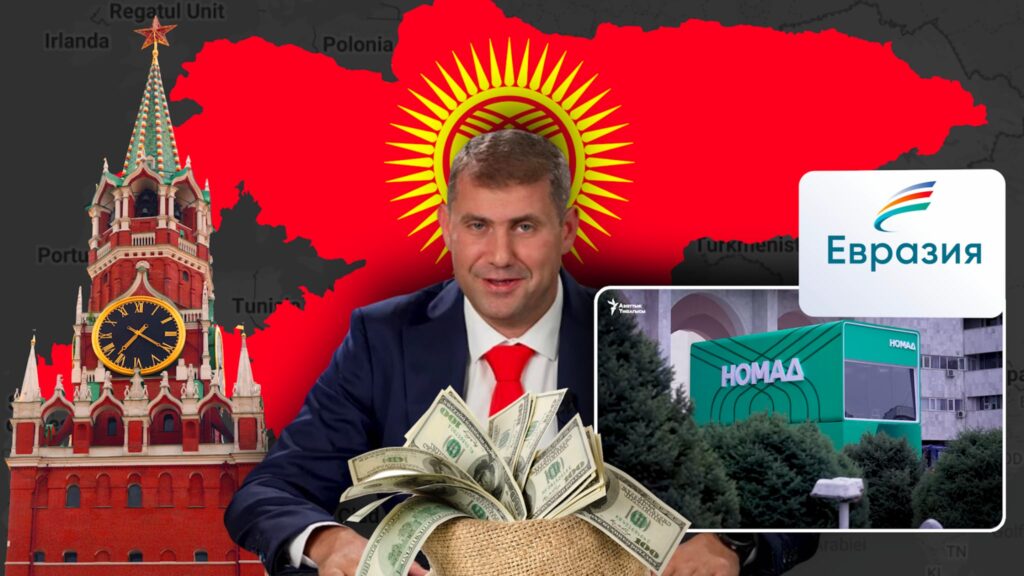
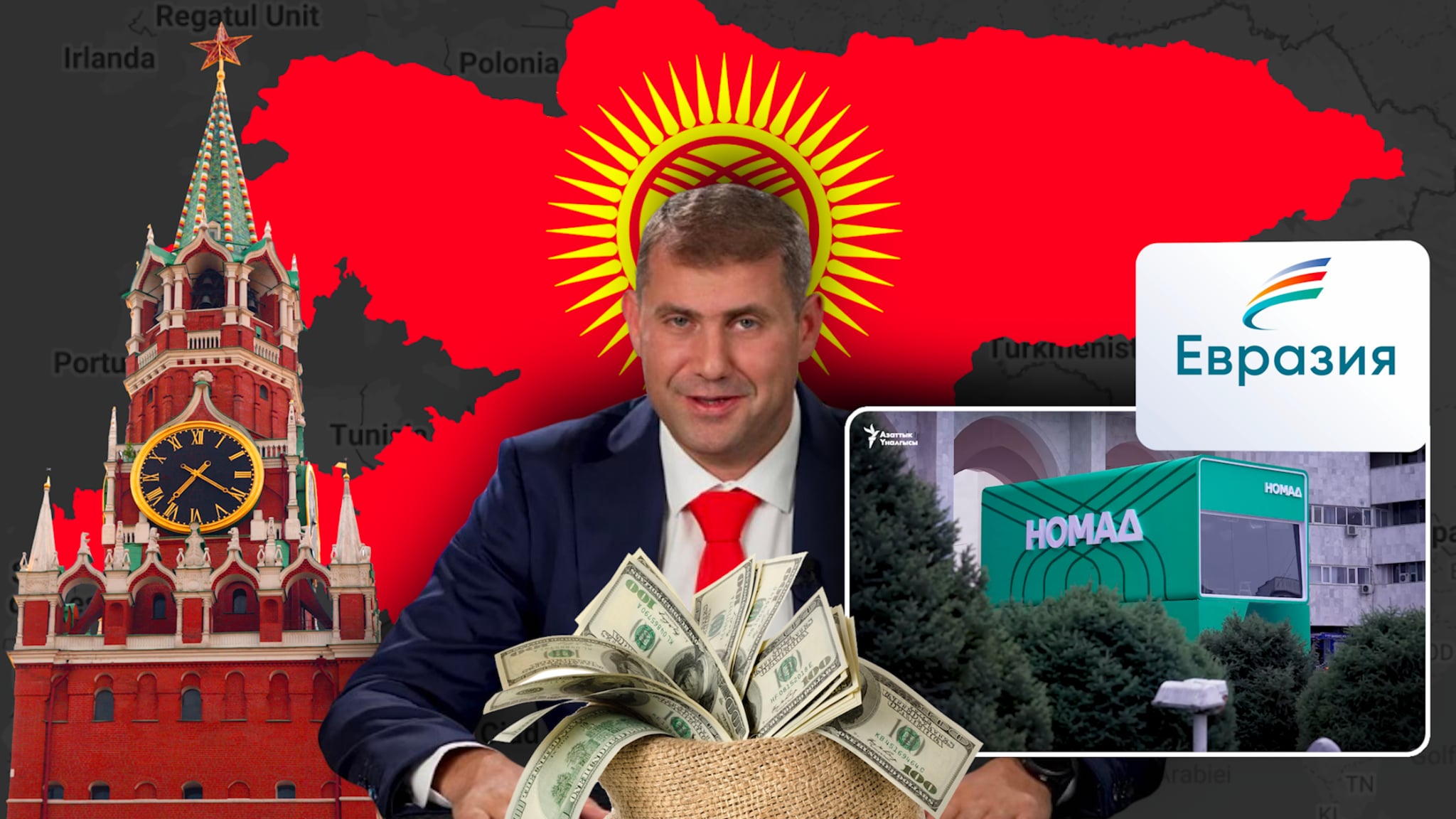
While the world’s attention is focused on the war in Ukraine, Central Asia is becoming one of the most favorable regions for the spread of Kremlin propaganda. In this murky media environment, an unexpected name is appearing more and more often—Ilan Shor, a fugitive oligarch from Moldova, convicted in the “billion-dollar theft” case and who first fled to Israel and then to Russia. He is increasingly becoming involved in questionable media projects not only in our country but also in other Commonwealth of Independent States countries.
Recently, the portal Meduza reported on the launch of a new TV channel in Kyrgyzstan called Nomad, which is linked to the propaganda channel RT (Russia Today), funded by the Kremlin, as well as to an organization controlled by fugitive oligarch Ilan Shor. According to Radio Azattyk, recruitment for the new channel was coordinated by editors who previously worked at the Kyrgyz branch of the Russian agency Sputnik.
The producer of the new channel is Anna Abakumova, a Russian citizen who previously worked in the RT media holding. Journalists at Nomad are trained at the “Eurasia” center—yes, the same center that organized trips and camps in Russia for Moldovan children, where they were exposed to pro-Kremlin narratives.
However, none of this would be possible without coordination with forces inside the country. Thus, in August 2025, the president of Kyrgyzstan, Sadyr Japarov, signed a controversial law requiring all media outlets to undergo official registration and limiting foreign ownership in them to a maximum of 35%. Critics warn that these rules could be used to restrict public debate and suppress critical voices.
Meanwhile, an active crackdown on independent journalists and media has begun through various methods. One example is Temirov Live, a YouTube channel created by investigative journalist Bolot Temirov. He exposed corruption among high-ranking officials but paid a high price for it: he was deported, and many of his colleagues were arrested.
In turn, Kloop, one of the largest investigative centers in Central Asia, is facing criminal cases, bans, threats, and attempts at discreditation. Journalists are under surveillance, they are being persecuted, and the website has become the target of numerous lawsuits and has been labeled “extremist.” This model closely resembles the Russian one, where independent media are accused of “extremism,” “defaming the state,” or are designated as “foreign agents.”
Radio Azattyk—the Kyrgyz branch of Radio Free Europe/Radio Liberty—has also become the target of lawsuits, bank account freezes, and restrictions under the pretext of spreading “fake news” and “destabilizing propaganda.”
All these pressures are not accidental—they allow alternative propaganda to spread without obstacles.
As surprising as it may sound, a key role in the spread of propaganda in Central Asia is played by a fugitive responsible for the largest banking fraud in the history of Moldova—Ilan Shor. But why does Moscow need Shor?
First, he has significant financial resources that are difficult to trace. In addition, the system created by Shor—a media and digital machine with TV channels, websites, and thousands of fake accounts—has long been operating in Moldova. Now this same model is being applied in Armenia, where political projects and media structures aligned with Moscow’s narratives are being supported. Moreover, Shor has already demonstrated his loyalty to the Kremlin: his parties and campaigns, funded from Russian sources, have consistently promoted anti-Western and pro-Russian rhetoric.
Today, Ilan Shor has become an active element in digital influence networks aligned with the Kremlin’s interests. The WatchDog.md community analyzed Facebook pages controlled by Shor and identified at least 146 active anonymous pages, along with hundreds more in reserve. WatchDog considers them part of a network of more than 2,167 pages, allegedly created by the Kremlin to influence political processes in Moldova and other European countries.
“These figures are only the tip of the iceberg,” WatchDog.md stated.
In addition, analysis by DFRLab showed that an advertising campaign funded by Ilan Shor on Meta (Facebook and Instagram) spread anti-EU messages and pro-Russian narratives aimed at undermining Moldova’s European integration.
In this context, a report by the Institute for Strategic Studies emphasized that Shor’s network cooperates with Russian subversive structures, using payments through Russian systems—Promsvyazbank (including “Mir” cards), transnational financing channels, or pilgrimages of clergy to Russia.
But Shor’s network is not limited to Facebook alone. An investigation by the BBC identified more than 90 TikTok accounts linked to pro-Kremlin campaigns. In turn, journalists from ZdG infiltrated networks organized by the former “Shor Party” and showed how citizens are recruited to participate in Russia-funded protests.
Another common element across all three countries—Moldova, Armenia, and Kyrgyzstan—is the organization “Eurasia,” which has been accused of involvement in election manipulation campaigns and pro-Kremlin geopolitical propaganda. Earlier, ZdG investigated how dozens of children from Moldova, through the “Eurasia” organization, ended up on holidays in a “re-education” camp for Ukrainian children.
Regarding the links between the organization “Eurasia” and Armenia, Radio Free Europe/Radio Liberty also reported that Armenian blogger close to Ilan Shor, Mika Badalyan, took part in an event organized by the “Eurasia” organization and in the creation of a pro-Eurasian network. Recently, Intelligence Online wrote that the NGO “Eurasia,” funded by Shor, is expanding its network in Armenia as well.
In addition, there is further evidence of links between Kyrgyz officials and both Moscow and Ilan Shor. According to The Insider, one of Kyrgyzstan’s central banks, Capital Bank of Central Asia, was accused of involvement in sanctions-evasion schemes connected to structures financed by Shor. This concerns not only propaganda but also a cross-border financial and information network.
Thus, Kyrgyzstan today represents a mirror of how the Kremlin exports its model of information control—quietly spreading through transnational networks and combining political interests, opaque financial resources, local cooperation, and a flexible media apparatus.
Media expert on hybrid attacks targeting Armenia
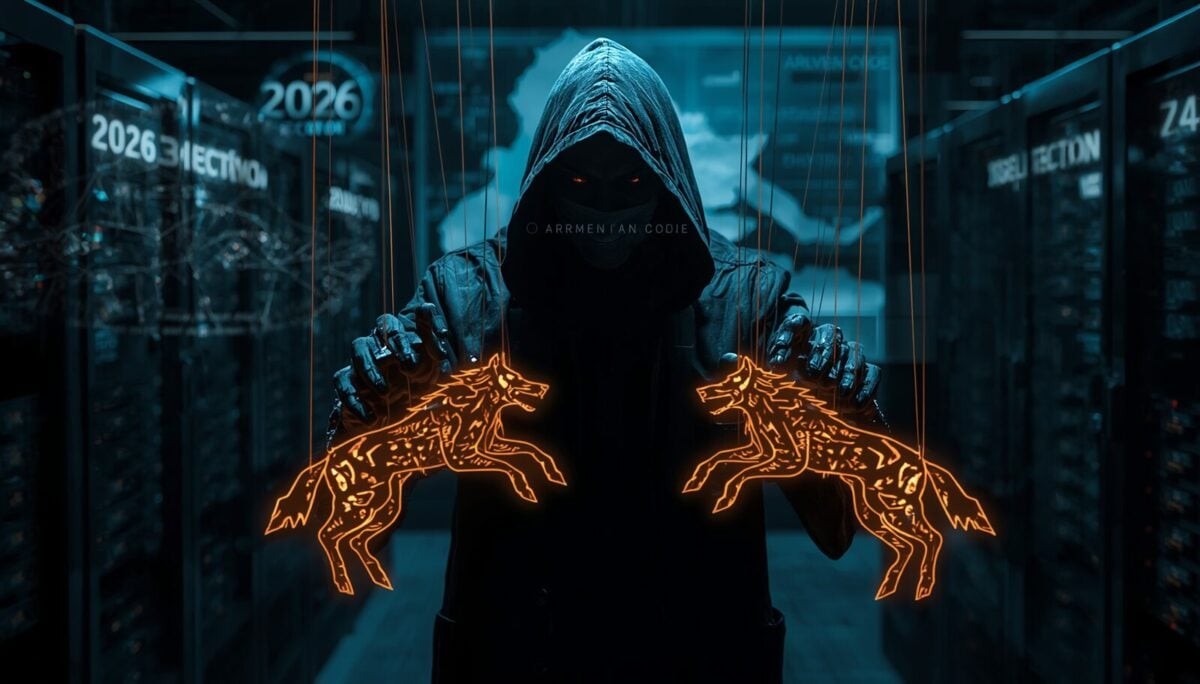
Ahead of Armenia’s parliamentary elections scheduled for 7 June, reports of various hybrid attacks have become more frequent. Information security expert Samvel Martirosyan has analysed the activity of two Telegram channels in particular: Armenian Code and Wolves of Turan. He says the same team operates both platforms, despite their apparent rivalry. He adds that their attacks target Armenia.
Martirosyan says he sees a coordinated hybrid attack against Armenia. He does not view as coincidental a statement by Wolves of Turan claiming that it launched “mirror actions” against critical Armenian online platforms “in response to attacks by the Armenian Code team” on Turkish and Azerbaijani websites.
The media expert argues that the motive is to create artificial grounds for a “cyber war” that serves specific geopolitical goals.
We are publishing a translation of Samvel Martirosyan’s article.
- ‘An army of fake accounts backs one of the prime ministerial candidates,’ Armenian fact-checkers say
- Poll: Will Armenia’s ruling party win June election?
- Opinion: ‘Russia has far more leverage over Armenia than over Moldova’
Article by information security expert Samvel Martirosyan
“As the June 2026 Armenian parliamentary elections approach, a sophisticated hybrid operation with the signs of cyberactivities, attacks against critical infrastructure and Foreign Information Manipulation and Interference (FIMI) operation has emerged in the digital shadows.
Two supposedly rival hacking groups — Armenian Code and Wolves of Turan — have appeared on Telegram, engaging in a performative “tit-for-tat” conflict that OSINT analysis suggests is a single, coordinated campaign designed to destabilize the region.”
OSINT (Open Source Intelligence) refers to investigations based on publicly available sources. These include social media platforms such as Facebook, Instagram and LinkedIn, as well as media reports, government registries, forums, maps and satellite imagery. The method involves searching for, collecting and analysing verified data to build profiles or assess a situation. It is a legitimate tool used by journalists, analysts and cybersecurity specialists.
In reality, a single unknown team stands behind the two supposedly opposing hacking groups and carries out the same external operation. Its members most likely speak neither Armenian nor Turkish, but Russian.

Digital twins generated from a single source
While these groups claim to represent opposing nationalist interests, their infrastructure reveals a synchronized birth:
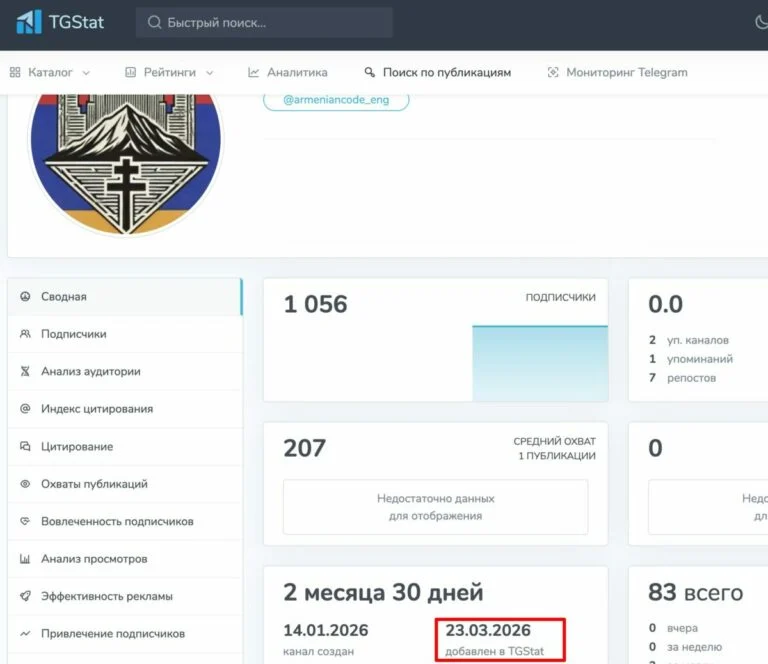
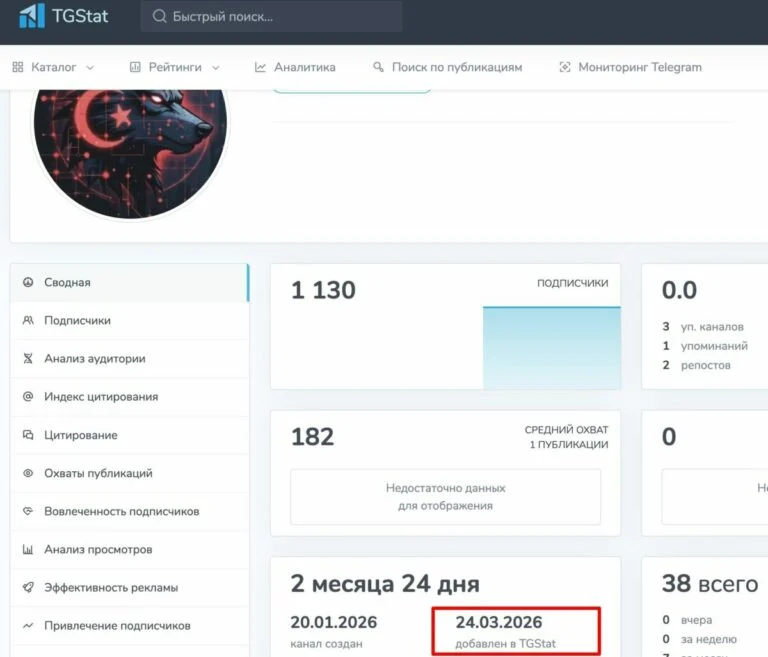
- Infrastructure Mirroring: Both groups registered their channels on the Russian analytical platform TGStat within 24 hours of each other.ой аналитической платформе TGStat с разницей в 24 часа.
- Coordinated Launch: Armenian Code (AC) was created on January 14, 2026. Just five days later, on January 19, the “rival” Wolves of Turan (WoT) emerged. AC channels on Telegram: Eng — @armeniancode_eng , Arm — @armeniancode_am. WoT channels on Telegram:Eng: @Wolves_of_Turan_eng. Tr — @Wolves_of_Turan
Visual and Structural Identity: Both groups operate identical English-translation bot structures and post formatting.
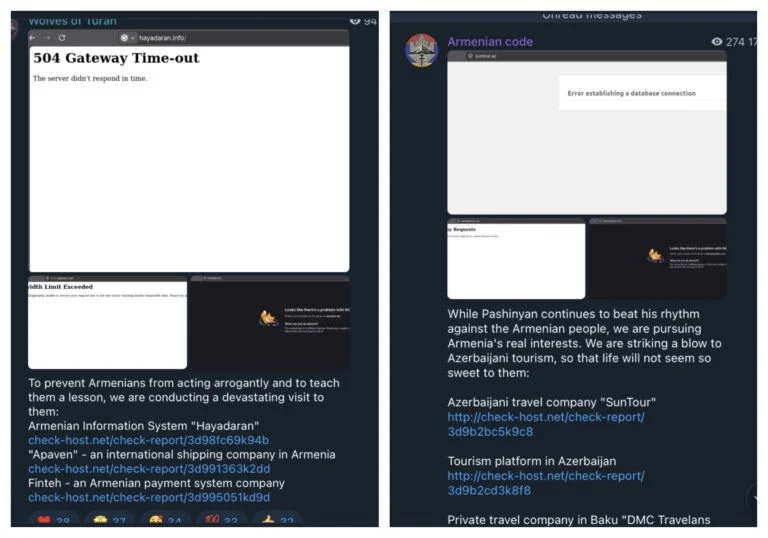
Hackers usually rely on third-party websites to provide objective proof of successful attacks. They create a separate link for each attack, confirming that it targeted a specific website at a specific time.
The Armenian Code and Wolves of Turan channels use the same website for this purpose, which is notable in itself. An even more telling detail suggests both channels share the same administrator. At one point, the common admin accidentally posted identical links on both supposedly opposing channels.
check-host.net/check-report/3d35ec43kb85
check-host.net/check-report/3d35ee5dk6e6
check-host.net/check-report/3d35ed41kc29
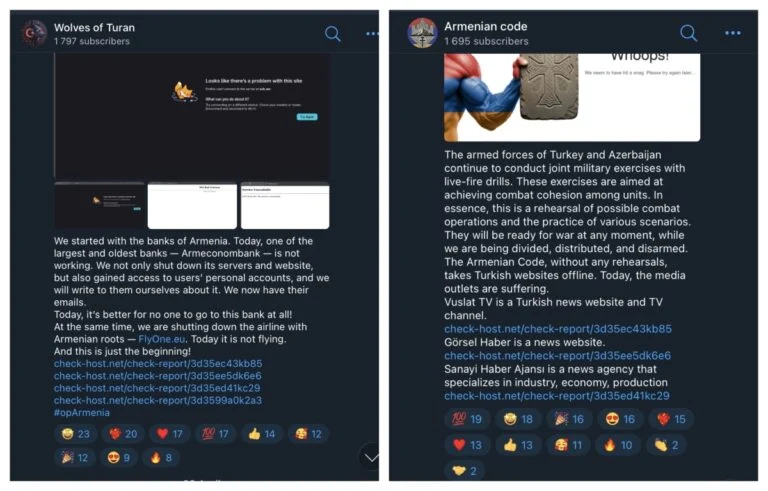
In this case, the manipulators became victims of their own tactics and accidentally posted the same links.
Linguistic Fingerprints: The “Russian” Syntax
Despite their posturing as Armenian and Turkish patriots, linguistic analysis by multiple LLMs (Gemini, ChatGPT, Grok) has identified significant markers of Russian-language thought patterns in their English content.
Translation Artifacts: The groups use specific calques (direct word-for-word translations) that are common in Russian political discourse but rare in native Armenian or Turkish digital culture.
Calques from Russian: Literal, slightly awkward English idioms that strongly suggest translation from Russian: “sit idly by with folded arms”, “absorbed it with our mothers’ milk”, “piece by piece”, “we will not miss a single attack and we will take revenge!”, “the call of blood”.
Cyrillic Artifacts: In AC post, the text says: opposition party “Hayk” (Аякве). The inclusion of the Cyrillic spelling Аякве next to the name strongly suggests the original draft was written in a Cyrillic-based script (likely Russian, as “Hayk” is an Armenian name, but the transliteration provided is Russian phonetics. And the real name of the political party is Hayaqve, not Hayk: this also shows automated translation without going deep into details by the unknown operator).

From Noise to Kinetic Impact: The April Escalation
In April 2026, the operation transitioned from information warfare to high-impact DDoS and SCADA attacks.
- Financial Sabotage: Wolves of Turan claimed responsibility for a “collapse of payments” in Armenia, successfully targeting Armenian largest banks, payment systems, insurance companies etc.
- Infrastructure Manipulation: Both groups claim to have accessed SCADA systems to manipulate water reservoirs, heating boilers, and irrigation systems in Baku and Yerevan.
A “Professional” Signature: The ability of a three-month-old “activist” group to paralyze national financial nodes and manipulate industrial control systems suggests state-sponsored or professional mercenary capabilities.
Conclusion: A Manufactured Crisis
The “Armenian Code” and “Wolves of Turan” are not enemies; they are two hands belonging to the same body. By manufacturing a “cyberwar,” the threat actor achieves several geopolitical goals in it`s false-flag operation:
- Economic Disruption: Eroding trust in Armenian banking and fintech stability, state and security institutions.
- Political Polarization: operation designed to inflame the Armenia–Turkey/Azerbaijan cyber (or broader) conflict before the June elections..
In the world of modern hybrid warfare, the most dangerous enemy is the one that pretends to be your own defender while secretly typing from the same room as your “attacker.”

Media expert on hybrid attacks targeting Armenia