
Day: April 16, 2026
today.az/news/politics/…
Critics say EP’s Miriam Lexmann fuels false hopes in #Armenia, while #EU pressure and lobbying fail to influence Baku’s позиции or deliver real results #Azerbaijan #EUPolitics #SouthCaucasus #Geopolitics #ForeignPolicy #Karabakh #InternationalRelations— Today.Az (@TodayAz97) Apr 16, 2026
Closure of airspace over Abastumani
From 16 April 2026, the Georgian government will change the rules governing airspace over the town of Abastumani, closing a zone used for international flight routes. The move will partially alter routes for passenger and cargo planes travelling between Europe and Asia, forcing aircraft to bypass the area.
The government says the decision is needed to support scientific and astronomical observations, as an observatory is located in Abastumani. However, an in-depth investigation by Radio Free Europe/Radio Liberty raises questions about whether the decision also reflects the personal interests of Bidzina Ivanishvili. In recent years, Abastumani has become the main residence of Georgia’s informal leader and his family.
_______________________________________________________
An investigation by Radio Free Europe/Radio Liberty found that the Georgian government created a new restricted-access zone called “Abastumani-2” under a decree adopted in February.
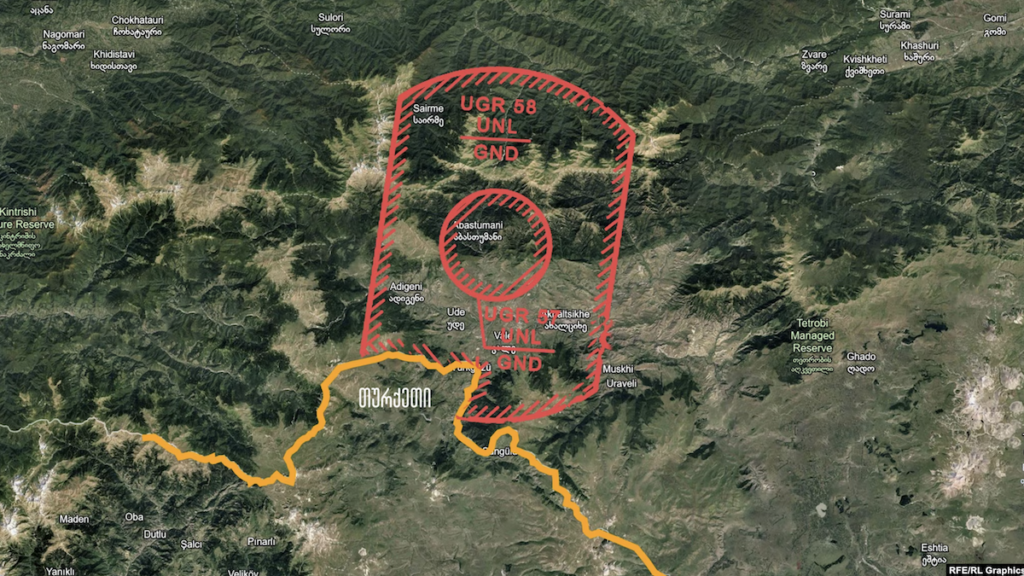
The new rules will take effect on 16 April and will close airspace with a diameter of about 52 kilometres over the town of Abastumani.
This is an almost unprecedented move for Georgia.
The zone stretches from the Turkish-Georgian border and covers Abastumani, the Adigeni region and parts of southern Georgia. As a result, manoeuvring space will shrink significantly in an area where flights already operate under difficult conditions due to the terrain.
The government says the restriction is based on a request from the astrophysical observatory in Abastumani.
Observatory director Alexander Tevzadze told Radio Free Europe/Radio Liberty that aircraft trails interfere with night-time observations and that the institution has called for broader restrictions for many years. He says the issue became even more pressing after the installation of a new telescope.
However, the investigation focuses on another aspect.
Sources from the aviation sector and government bodies told Radio Free Europe/Radio Liberty that the decision is not only about science. They say the closure of the airspace over Abastumani reflects “Bidzina Ivanishvili’s whim” rather than a scientific necessity.
Ivanishvili has owned a residence in Abastumani since 2020.
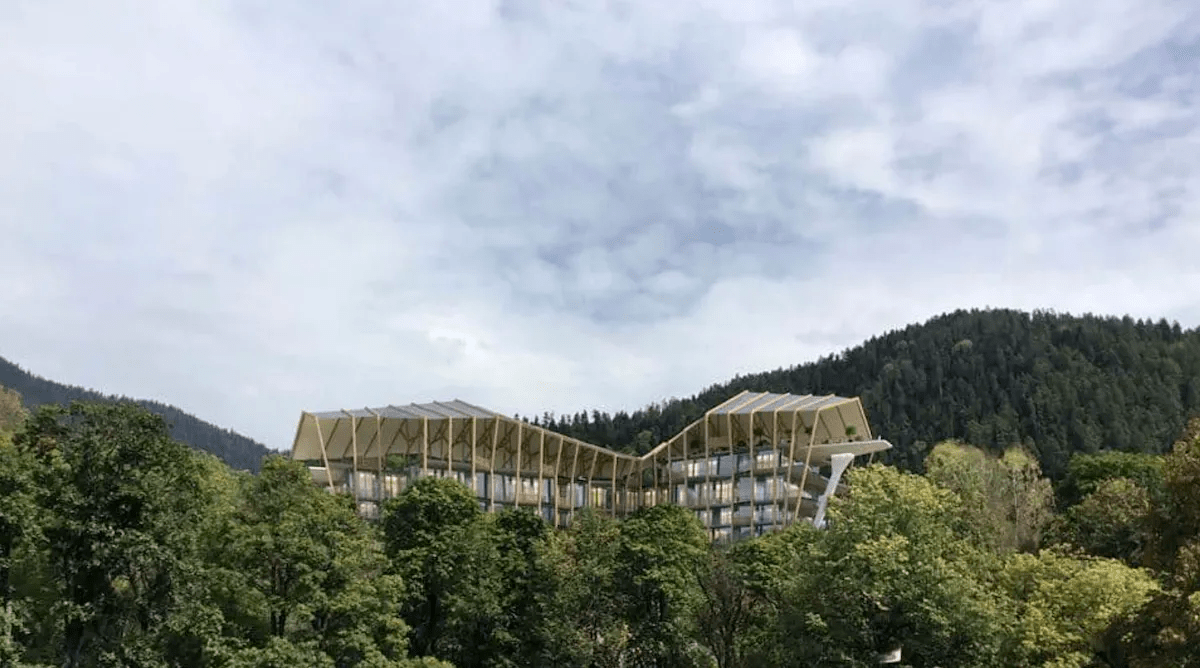
Since 2018, people linked to his family and inner circle have been buying land and property in the resort town. Residential houses, a hotel under construction and a helipad have since appeared there.
State investment in the region has also increased after Ivanishvili’s arrival.
According to Transparency International Georgia, the government spent about 250 million lari on various projects in Abastumani between 2018 and 2022. During that time, authorities altered a road construction project and built a bypass road, which caused environmental concerns.
The issue of restricting airspace over Abastumani dates back to 2019. At that time, authorities temporarily closed a small eight-kilometre zone at the observatory’s request. The restriction later became almost permanent, and officials created the “Abastumani-1” zone.
Civilian flights were almost entirely banned in that area. However, one exception remained: aircraft landing in or taking off from the zone were allowed to operate. According to the investigation, the only helipad in that zone belongs to Bidzina Ivanishvili.
The new restrictions, which cover a much larger area, now also apply to international routes.
The new zone affects at least three key air corridors, including M747 and N644, which connect Europe, Asia, the Middle East and the Caucasus. Airlines such as Lufthansa, Turkish Airlines, Emirates and Qatar Airways use these routes.
The change is particularly significant because the Caucasus has become one of the main air corridors between Europe and Asia.
Restrictions on Russian and partly Iranian airspace have increased traffic in the region. Official data show that traffic over Georgia has risen by 52% since 2019. In 2025 alone, more than 305,000 flights crossed the country’s airspace.
For Georgia, this is not just a matter of safety.
Transit flights are a significant source of budget revenue. Official figures show that Georgia earned 120 million lari from them in 2024.
Aviation industry representatives say the new restrictions will lengthen routes, increase fuel costs and reduce manoeuvring space. They warn that redirecting flights northwards will worsen congestion in an already challenging section of airspace shaped by the Caucasus terrain.
This could lead to higher costs for airlines, delays and additional air traffic management risks.
The European aviation body Eurocontrol told Radio Free Europe/Radio Liberty that Georgia began informing them about the changes in 2023, and that the planned restrictions are already reflected in route planning.
According to the organisation, the changes will extend some flight routes by about 10 kilometres.
- How does oligarch Bidzina Ivanishvili de facto rule Georgia?
- The oligarch’s hometown – the founding legend of the Georgian Dream
- Centuries old trees – the billionaire’s latest temptation
The “scientific” argument for closing the airspace also raises questions.
The observatory’s director says similar practices exist abroad, although he could not name specific examples in an interview. Journalists from Radio Free Europe/Radio Liberty also failed to find cases where airspace over a civilian site was restricted on such a scale.
Publicly available information suggests that leading observatories usually limit low-altitude flights, while modern methods filter out aircraft trails.
Astrophotographer David Dvali makes a similar point.
He says aircraft do interfere with astronomical observations, but not to the extent that would justify a large-scale ban on international transit flights. In his view, the observatory’s needs may serve more as a convenient argument than the real reason.
The investigation also highlights another detail.
State aircraft will still be allowed to fly within the restricted zone. Helicopters will also be able to take off and land in Abastumani.
What is Ivanishvili’s connection to Abastumani?
Abastumani, a high-altitude resort in the Samtskhe-Javakheti region, has long been known for its unique climate and scientific significance. It developed as a mountain and spa resort in the 19th century. In 1932, the Abastumani Astrophysical Observatory was established there, taking advantage of its exceptional astroclimate.
Bidzina Ivanishvili’s interest in Abastumani became clear in 2018. Local residents said at the time that the founder of Georgian Dream had promised to develop the resort and address its infrastructure problems. In 2019, Ivanishvili returned and said the resort should become “one of the best”.
It later emerged that by then, Ivanishvili’s family and associated figures had already begun actively buying property in Abastumani. According to Transparency International Georgia, of the 18 entities that acquired land there from August 2018, nine had direct links to Ivanishvili. Together, they purchased 52,443 square metres of land.
According to the same study, the state spent about 250 million lari on ongoing projects in Abastumani between 2018 and 2022.
The Radio Free Europe/Radio Liberty investigation says a sharp increase in state interest and investment in the resort began after Ivanishvili appeared in Abastumani. Open-source data indicate that Ivanishvili and companies linked to him own thousands of square metres of land there, several residential properties and a hotel under construction. He also owns a helipad.
The changes went beyond property acquisitions. Ivanishvili bought land and houses from local residents along the Otskhe River gorge. He then created a private residential space and surrounded parts of it with artificial rock formations. These interventions altered the natural landscape and created a secluded area.
Around the same time, Ivanishvili announced the “Abastumani experiment” and said the resort should become a region focused entirely on electric vehicles. This idea led to changes in the Abastumani–Bagdati road project. The government decided to build a new bypass road instead of following the original plan. The decision cost the budget tens of millions of lari and required cutting down part of a previously untouched coniferous forest.
In 2020, the environmental group Green Alternative said state agencies at different levels “committed numerous legal violations in order to rush through Bidzina Ivanishvili’s experiment.”
Closure of airspace over Abastumani
Money transfers to Georgia from abroad reached USD 320.60 million in March, marking a 9.8% increase compared to the same month last year, according to data from the National Bank of Georgia (NBG).
Once again, the largest share of these inflows came from the European Union and the United States, which together accounted for 64,4% of all transfers, totaling USD 206,58 million.
Transfers from EU countries alone totaled USD 145.58 million, representing 45.41% of overall inflows and a 10.71% increase compared to March 2025.
At the country level, the United States ranked first with USD 61 million (19.03%), followed by Italy with USD 55.29 million (17.25%). Other contributors included Russia with USD 38.2 million (11.91%), Germany with USD 28.33 million (8.84%) and Greece with USD 26.89 million (8.39%).
China recorded the sharpest year-on-year growth, with transfers increasing to USD 1.61 million. Significant growth was also reported from Armenia, up 40.71% to USD 1.42 million; Turkey, up 33.92% to USD 11.55 million; the Netherlands, up 30.15% to USD 2 million; and Spain, up 25.64% to USD 8.75 million.
By contrast, Kyrgyzstan saw the largest decline, with transfers falling 43.52% year-on-year to USD 3.97 million.
Meanwhile, money transfers from Georgia totaled USD 36.7 million in March 2026, up 14.5% from USD 31.2 million in March 2025.
Personal remittances to Georgia account for 11.9% of the country’s gross domestic product (GDP), according to the World Bank’s 2024 data.
Also Read:
- 31/03/2026 – Georgia’s GDP Up by 8.8% in February 2026
- 17/03/2026 – Money Transfers to Georgia Up 17% in February, EU and US Lead
- 16/02/2026 – EU, U.S. Remain Top Sources as Money Transfers to Georgia Rise 16.6% in January
- 26/01/2026 – Money Transfers to Georgia Rise 18% in December, EU and U.S. Remain Top Sources
Agreement on the AZAL crash case
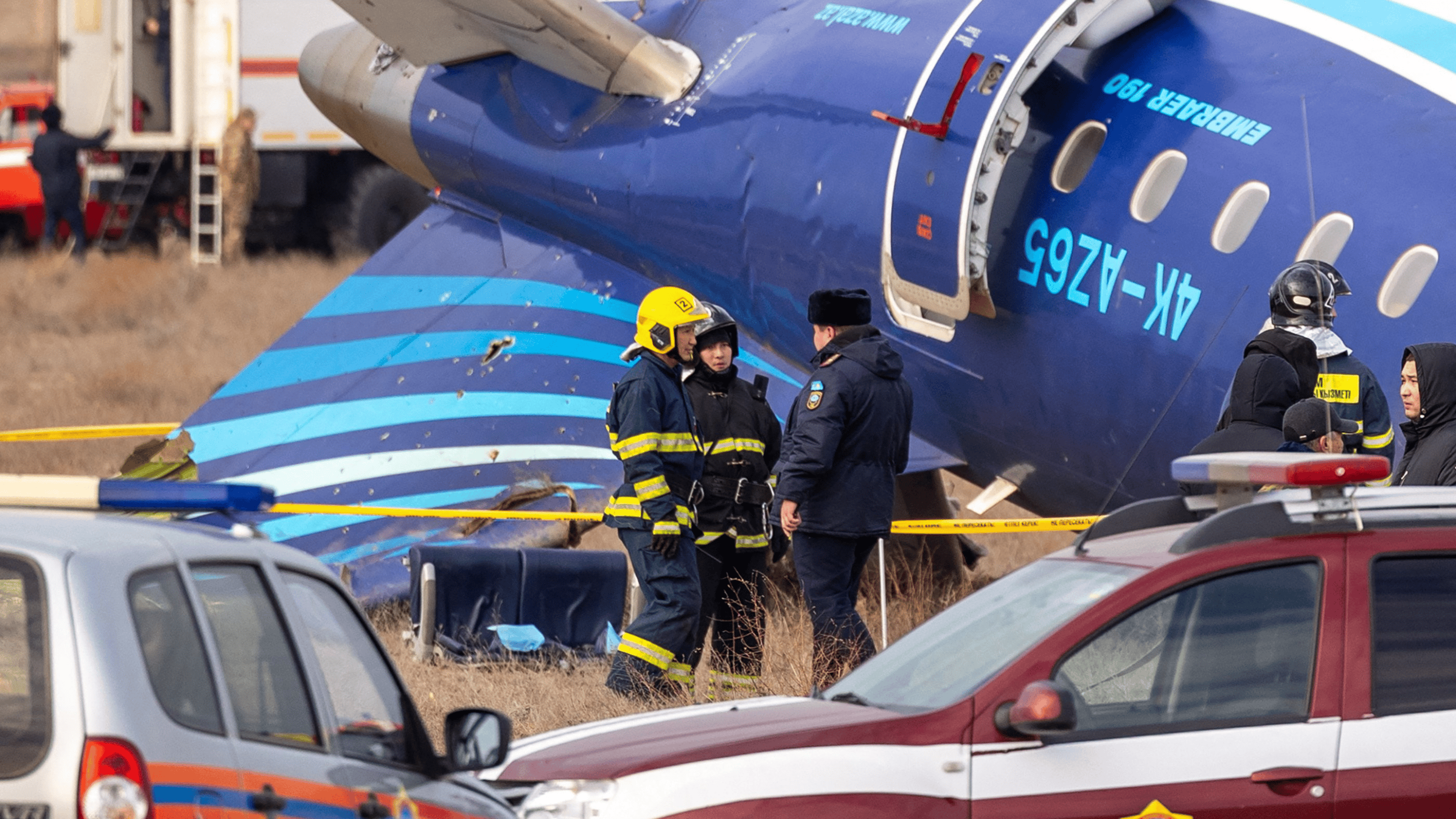
A joint statement by the foreign ministries of Azerbaijan and Russia on 15 April officially acknowledged that an Azerbaijani passenger plane operated by AZAL was unintentionally downed by Russian air defences on 25 December 2024.
The case, which had strained relations between the two countries for a year and a half, can now be considered closed.
During this period, Azerbaijan’s president and other officials consistently demanded that Moscow formally admit responsibility, punish those involved and pay compensation to the families of those killed and injured. The tragedy left 38 people dead and 29 survivors.
Of these three demands, two have effectively been met.
“In line with agreements reached by the presidents of Azerbaijan and the Russian Federation during their meeting in Dushanbe on 9 October 2025, the parties have reached an appropriate settlement of the consequences, including the issue of compensation payments,” the statement said.
According to the text, the tragedy resulted from the unintentional activation of an air defence system in Russian airspace.
The statement expressed deep condolences to the families of the victims and stressed that the decisions reflect a mutual intention to further develop cooperation based on allied relations.
Experts say the outcome of the 18-month standoff reflects the real balance of power and the nature of relations between Azerbaijan and Russia.
The crash: what happened
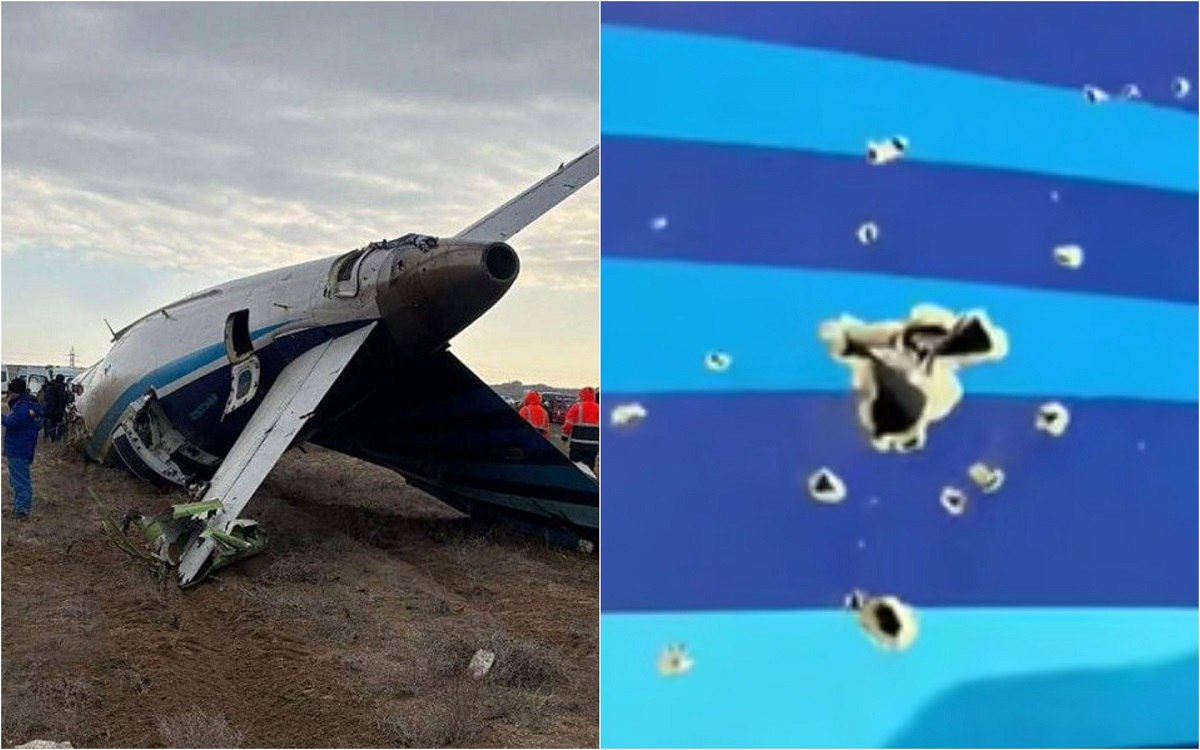
On 25 December 2024, an Embraer E190 operated by AZAL on a Baku–Grozny flight was damaged in Russian airspace near Grozny. There were 67 people on board: 38 were killed and 29 survived. The damage resulted from fire from a Russian Pantsir-S1 air defence system.
The aircraft later crashed during an emergency landing near the city of Aktau in Kazakhstan.
Azerbaijan immediately described the incident as the result of “external interference”. Officials pointed to shrapnel damage on the aircraft’s fuselage and GPS jamming signals recorded over Russian territory as evidence.
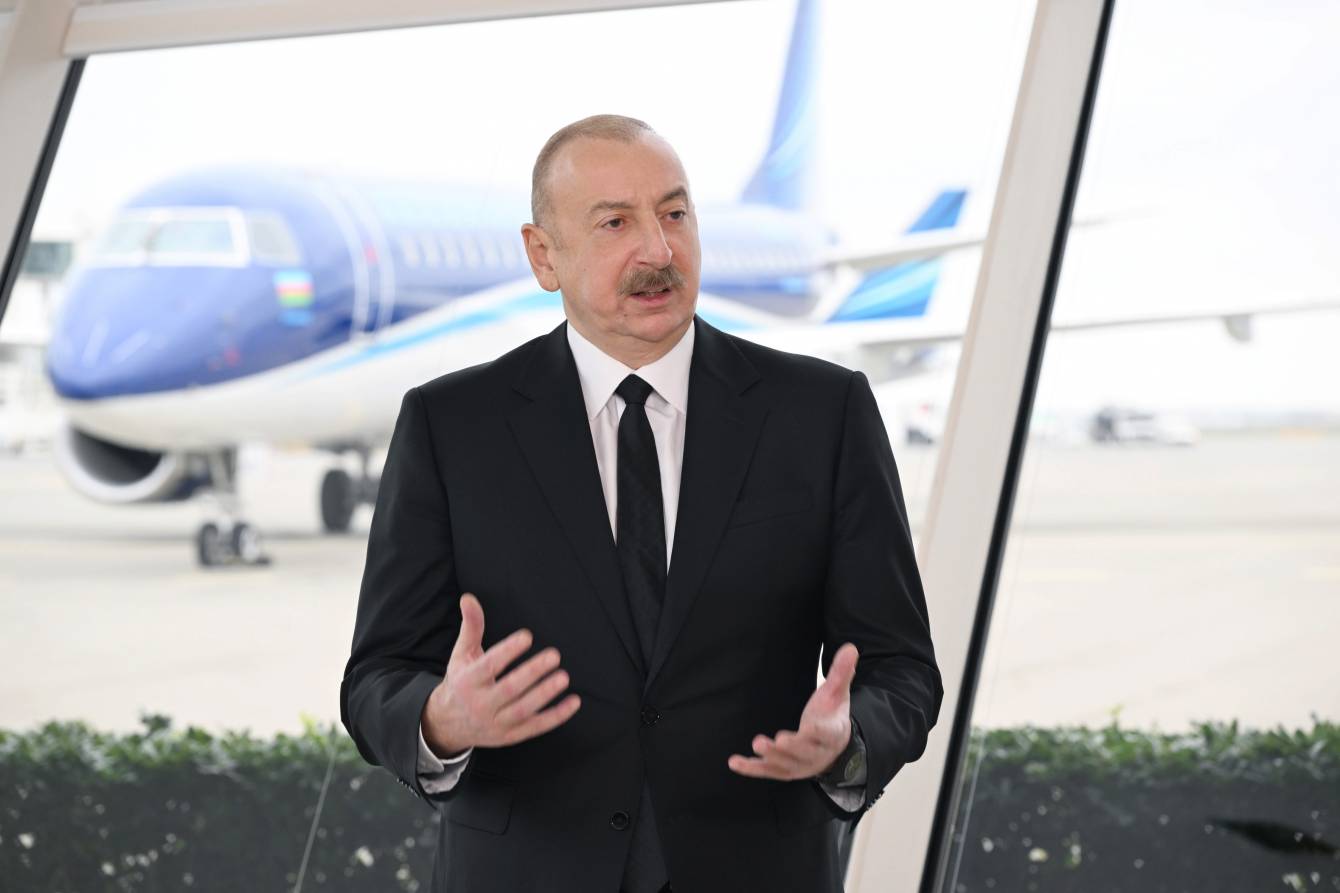
President Ilham Aliyev repeatedly demanded a formal apology from Russia, punishment for those responsible and compensation payments. For a long time, Baku stressed that full normalisation of relations would not be possible without resolving the issue, and sought to maintain a position of setting the terms in negotiations.
Partial recognition and promises in Dushanbe
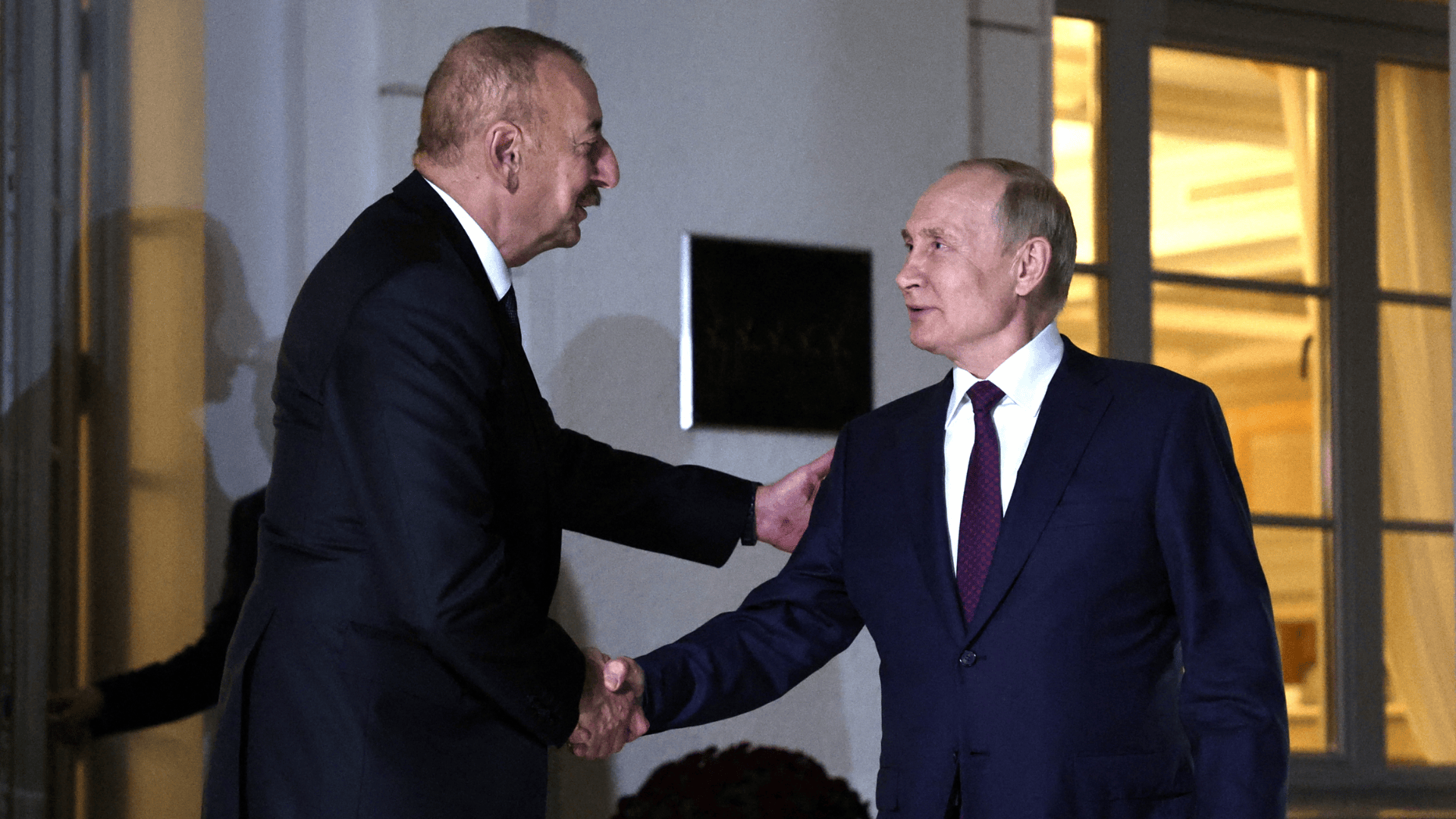
On 9 October 2025, during a meeting between Ilham Aliyev and Vladimir Putin in Dushanbe, the Russian president made his first public acknowledgment of the incident.
Putin said two missiles had been launched at Ukrainian drones and, due to a technical malfunction, exploded about 10 metres from the aircraft. He said the resulting shrapnel caused the damage.
Russia offered an apology and said that “compensation will be paid and those responsible will be punished”. Azerbaijan viewed the meeting as partial diplomatic progress.
Around the same time, Russia’s foreign ministry said the insurer AlfaStrakhovanie had already paid AZAL 1.003bn roubles, covering the insured value of the aircraft. It also said victims and families of those killed had received a total of 358.4m roubles.
Baku immediately objected, stressing that these payments were part of an insurance contract and could not be treated as compensation owed by the Russian state.
On 26 December, Foreign Minister Jeyhun Bayramov said the closure of the criminal case by Russia’s Investigative Committee raised “very serious questions”.
The “compensation agreement” announced in April therefore formalises payments that had already partly been made through insurance, while the demand to punish those responsible has effectively dropped from the agenda.
The Turan agency episode
Some time after the crash, the Turan news agency reported additional details. It said that around the same period, President Ilham Aliyev’s official aircraft also encountered GPS interference and possible targeting in Russian airspace while flying towards St Petersburg.
After receiving an early warning, the crew aborted the flight and returned.
The agency later removed the report, and authorities summoned its head to the state security service. Soon afterwards, the agency announced it would cease operations.
Why did Baku compromise? An expert view
Comment from an expert who requested anonymity
“The key question is why Azerbaijan agreed to a compromise.
The facts show that throughout 2025, Baku maintained a firm position. In April 2026, it accepted a softer formula and effectively closed the issue.
One explanation lies in shifting regional political calculations.
In 2025, officials in Baku and analysts close to the government pointed to major shifts. They spoke about a new phase in US-Azerbaijan relations, closer strategic ties between Israel and Azerbaijan, and a strengthening alliance with Turkey.
At the same time, international analysts suggested that cooperation between Azerbaijan and Israel could evolve into a trilateral format with Washington. Against the backdrop of tensions with Iran, Baku’s strategic importance appeared to be growing.
In March 2025, Ilham Aliyev himself said that the period of Antony Blinken’s tenure had “damaged” US-Azerbaijan relations, while expressing hope for a more positive approach from the new administration.”
However, the situation now looks different.
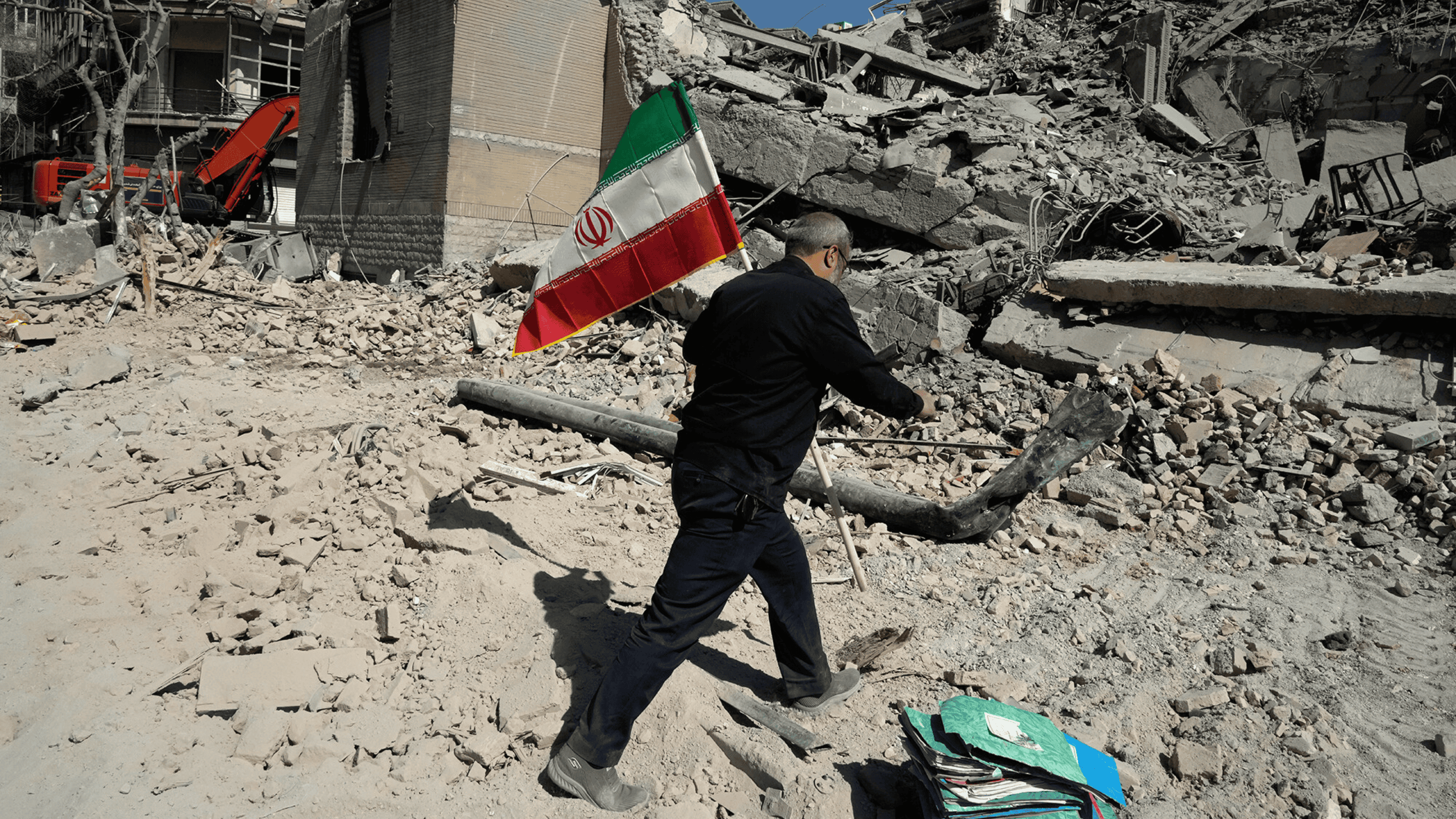
Azerbaijan has welcomed the ceasefire reached in the conflict involving the United States, Israel and Iran, where it had hoped to strengthen its position. A few days later, it resumed the work of its embassy in Tehran.
This suggests at least one thing: the scenario in which Iran would weaken and lose its role as a key regional player has not materialised.
In these circumstances, Baku appears to have concluded that maintaining open confrontation with both Tehran and Moscow at the same time would be too risky.
The 2022 declaration on “allied interaction” with Russia remains largely a formal framework. Reports have indicated that some Russian military personnel linked to the incident were later promoted.
The resulting agreement therefore resembles “limited-choice diplomacy”. Ilham Aliyev chose not to press all his key demands and instead to keep relations within controlled limits.
- Poland intercepts aircraft tyres bound for Russia, shipment linked to Azerbaijani firm
- Kremlin’s soft power plan for Azerbaijan: “Hundreds of millions of dollars wasted”
Agreement on the AZAL crash case