
Day: April 6, 2026
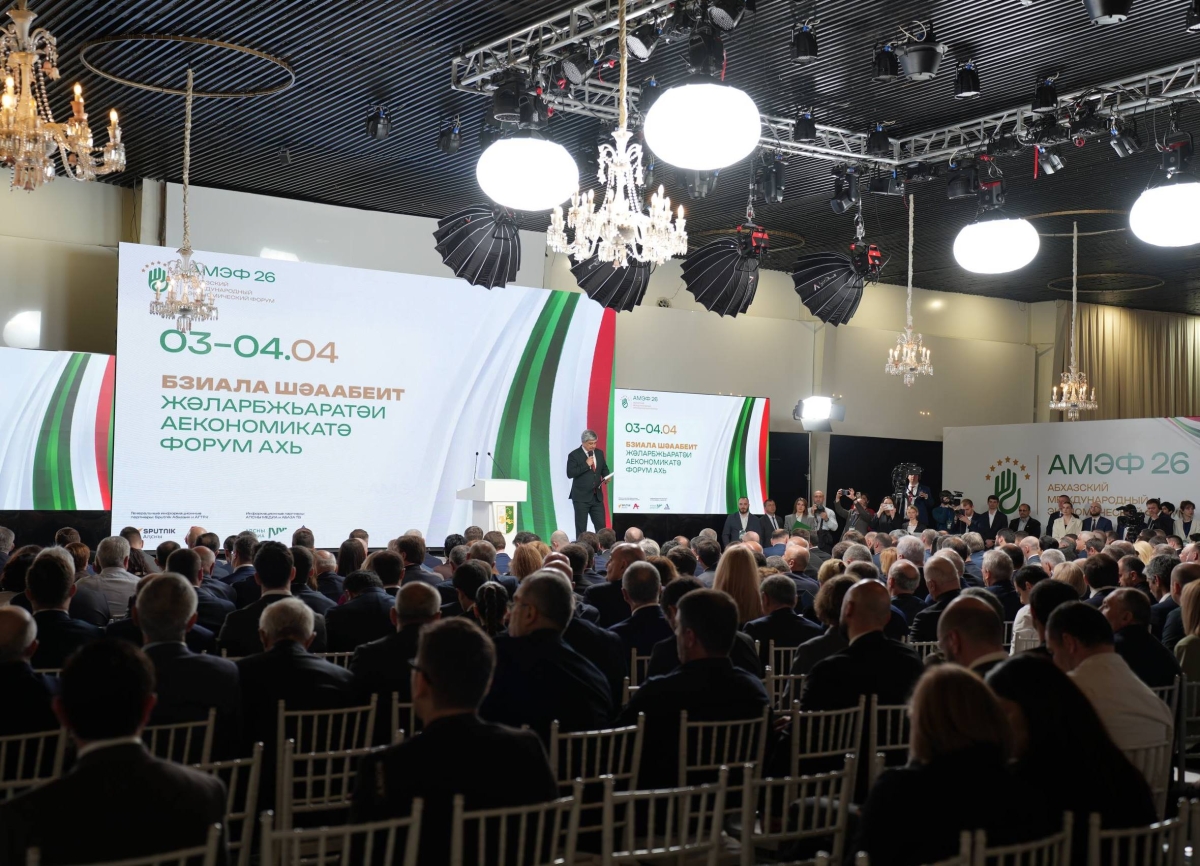
Abkhazia is set to attract 100 billion roubles (around $1.25bn) in Russian investment, following the Abkhaz International Economic Forum held on 2–3 April.
However, the opposition Telegram channel Respublika has reacted sceptically to what might appear to be positive news, pointing to potential pitfalls — or, as it puts it, to the same mistakes Abkhazia has made in the relatively recent past.

According to Respublika, the key takeaway from the forum is a clear signal of the scale and format in which Russia is prepared to engage with Abkhazia under new conditions and with a new team in the Kremlin.
“The situation appears as follows: on the one hand, the Russian side is opening up real opportunities; on the other, the Abkhaz side must be ready to act proactively and quickly turn these opportunities into results,” the channel writes.
And this, in its view, is where the main problem lies:
“Everything being implemented in Abkhazia today is largely driven by the Russian side. On the ground, there is a chronic lack not only of implementation, but of initiative itself. Instead of strategy, there is patchwork. Instead of development, there are minor day-to-day fixes. There is no large-scale — and, crucially, no systematic — vision.”
Respublika recalls 2010, often described as the “honeymoon period” in Russian–Abkhaz relations. At the time, Abkhazia had broad opportunities thanks to large-scale financial support from Russia — but it did not end well.
“A significant portion of the funds was embezzled. Multi-billion debts accumulated. Corruption and nepotism increased. Key sectors, including energy, were never properly reformed. Instead, bakeries were renovated — none of which are operating today,” the channel says.
Now, it argues, history is giving Abkhazia a second chance, with Russia once again offering an unprecedented level of support. Yet, it adds, the same lack of system, imitation of activity and performative efforts persist.
“Will we be able to use this opportunity this time, or will it once again be reduced to simply consuming resources?” the channel’s authors ask — a question that, in their framing, is largely rhetorical.
Terms, place names, opinions and ideas suggested by the author of the publication are her / his own and do not necessarily coincide with the opinions and ideas of JAMnews or its individual employees. JAMnews reserves the right to remove comments on posts that are deemed offensive, threatening, violent or otherwise ethically unacceptable.
Do Russian investments in Abkhazia help?
De facto officials of occupied Abkhazia, including Oleg Bartsits, the region’s so-called foreign minister, met with a delegation from Somalia that attended the International Economic Forum in Sokhumi on April 3-4.
The Somali delegation reportedly included envoys from the country’s foreign ministry, Adan Muna Abdi and Ismail Hassan Nuur. The Abkhaz side, in addition to Bartsits, was represented by de facto economy minister Teimuraz Mikvabiya and de facto culture minister Daur Kove.
Somalia does not recognize Abkhazia as an independent country. However, Adan Muna Abdi, according to local news agency Apsnypress, “noted the need to establish diplomatic relations between the two countries,” saying, “We will work to ensure that diplomatic relations are established between our countries. Thank you very much for welcoming us.”
Apsnypress also quoted de facto officials, including Bartsits, telling the Somali delegation, “We are glad that you were able to find the time to attend the international economic forum being held in Abkhazia these days. We thank you for your interest in the Republic of Abkhazia, and we hope that this first step will be further developed.”
According to the report, Bartsits also stated that the region has “a combat-ready army, modern technical equipment, and is also developing its own education and healthcare institutions in cooperation with our strategic ally and partner – Russia.”
He reportedly added that the region has “significant potential in transportation and logistics, which is why the national ports are being actively developed.” He further noted that the opening of the international airport in Sukhumi “allows us to look to the future with optimism and confidence.” He also emphasized that the regional authorities are “open to cooperation and aim to develop friendly relations with all countries willing to engage in constructive dialogue.”
Only five countries recognize Georgia’s Russia-occupied regions of Abkhazia and Tskhinvali/South Ossetia as independent states: Russia, Nicaragua, Venezuela, Nauru and Syria. Syria, the most recent to establish diplomatic ties with Abkhazia in 2018, has been urged by various Georgian and international actors to withdraw its recognition following the fall of Bashar al-Assad’s rule in 2024.
Also Read: