Categories
South Caucasus News

Aliyev: Georgia and Azerbaijan consider joint investment in third countries


Ilham Aliyev in Georgia

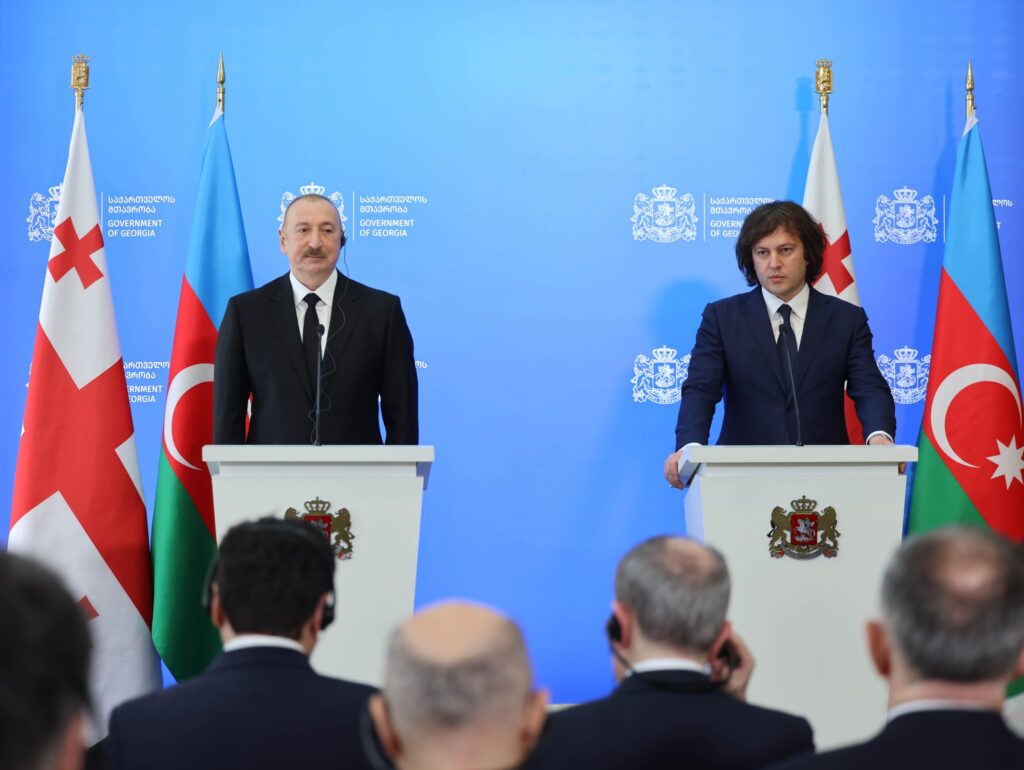
Georgia and Azerbaijan are considering the possibility of joint investment projects in third countries, Azerbaijani President Ilham Aliyev said at a briefing in Tbilisi on April 6, wrapping up his visit to Georgia. He did not specify sectors or partner countries.
Ilham Aliyev in Georgia

At a joint briefing with Georgian Prime Minister Irakli Kobakhidze, Azerbaijani President Ilham Aliyev highlighted the strong political and economic cooperation between the two countries, saying it rests on a solid foundation and is clearly growing.

He noted that Baku and Tbilisi consistently support each other’s territorial integrity and sovereignty in international organizations, and said this position “will remain unchanged in the future.”

Aliyev also pointed to Georgia’s economic performance, saying its investment climate supports capital growth.

Azerbaijani investments in Georgia have reached $3.6 billion, and first-quarter trends this year suggest further growth, he said.

He added that new investment projects in both countries were discussed, with particular focus on potential joint investments in third countries – an initiative he linked to the broader regional agenda, including security issues.
Georgian Prime Minister Irakli Kobakhidze, in turn, said Tbilisi is ready to continue high-level dialogue with Baku and deepen cooperation across various sectors.

“I emphasized President Ilham Aliyev’s personal role in developing our bilateral relations and reaffirmed Georgia’s readiness to support Azerbaijan.

I noted that Georgia welcomes the ongoing peace process between Azerbaijan and Armenia and strongly supports peaceful coexistence, constructive cooperation, and new initiatives in the region. We are always ready to contribute positively and facilitate dialogue and the peace process.

Cooperation among South Caucasus countries creates new opportunities for the entire region. Amid global political shifts, the importance of the Middle Corridor – as well as the Black Sea and the South Caucasus as a strategic space – is growing.

Georgia and Azerbaijan have repeatedly proven to be reliable and responsible partners, including in major international energy and transport projects,” Kobakhidze wrote on social media about the meeting.
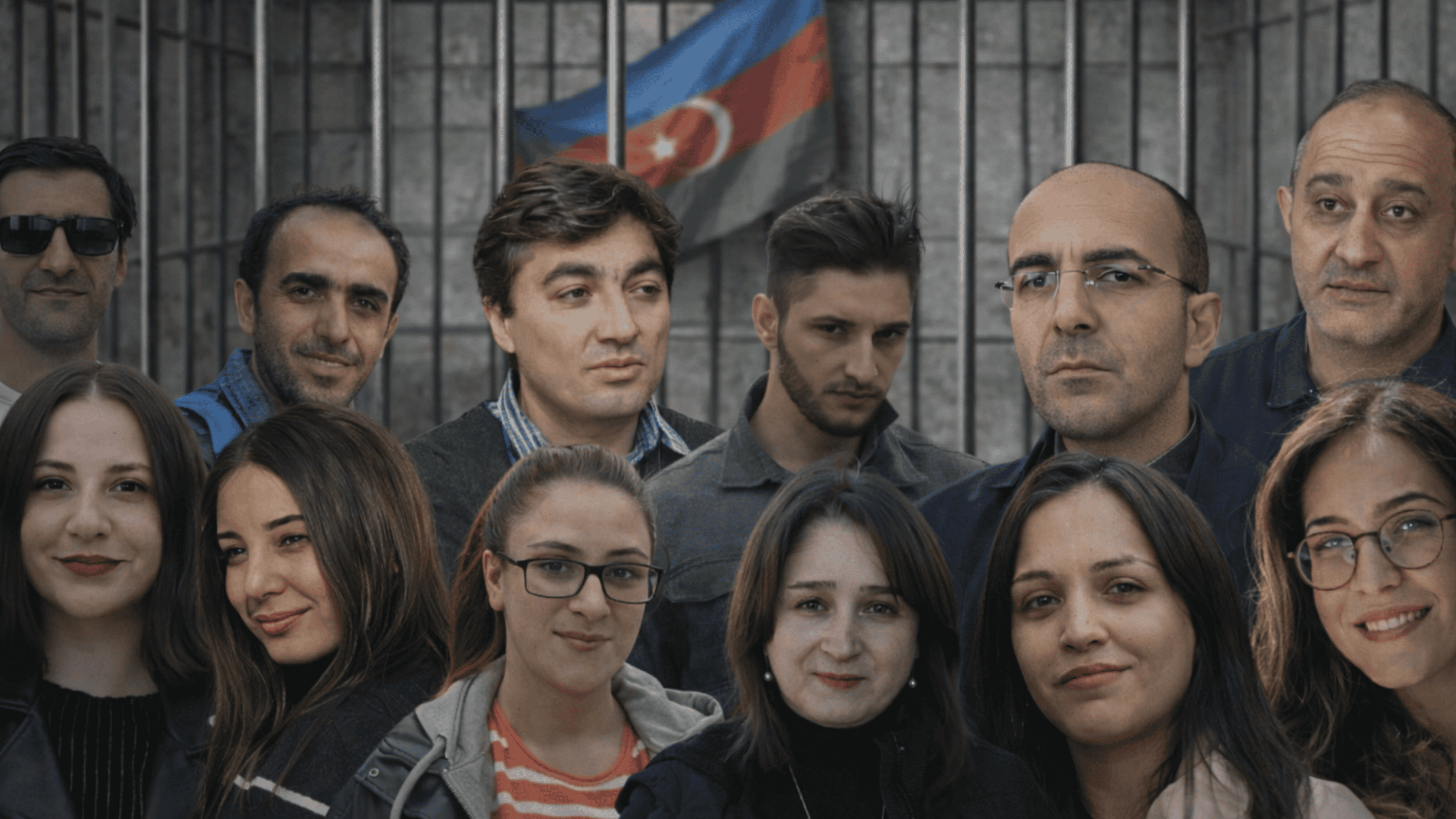
The President of Azerbaijan visited Georgia together with his wife. During the trip, he met with Prime Minister Irakli Kobakhidze and President Mikheil Kavelashvili. He also held a meeting with Bidzina Ivanishvili, founder of the ruling “Georgian Dream” party, oligarch, who is often described as Georgia’s shadow ruler.

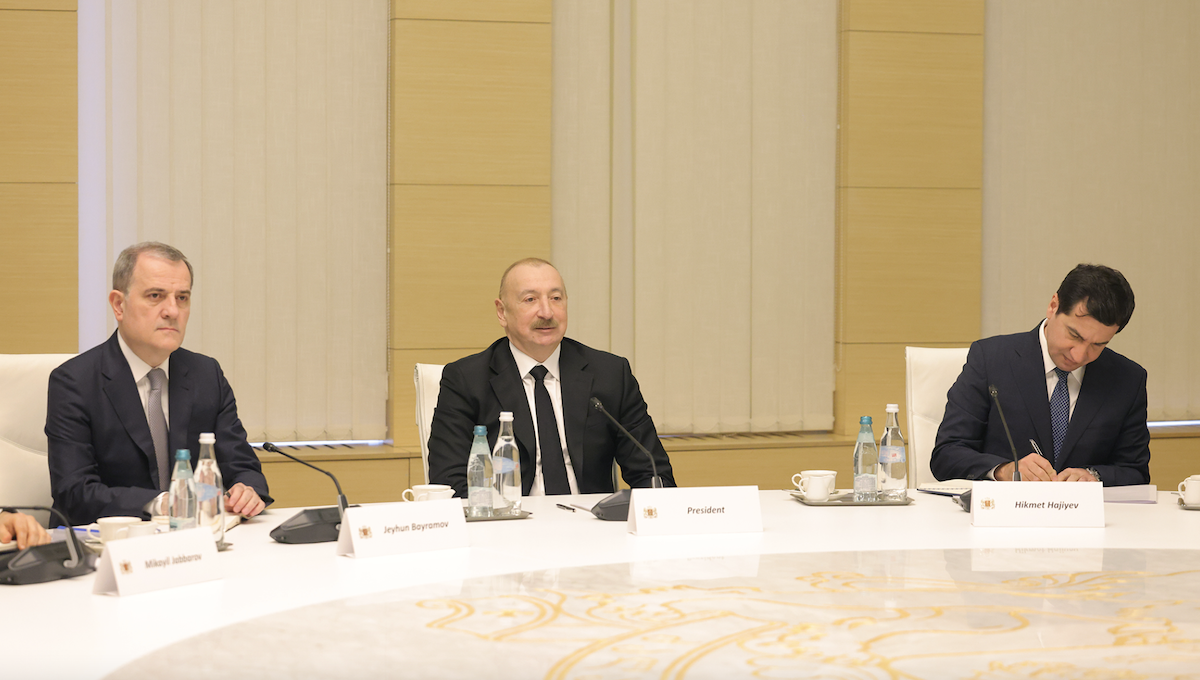
The Azerbaijani delegation included Foreign Minister Jeyhun Bayramov, presidential aide on foreign policy Hikmet Hajiyev, Economy Minister Mikayil Jabbarov, Energy Minister Parviz Shahbazov, and Minister of Digital Development and Transport Rashad Nabiyev.

News in Georgia


Categories
South Caucasus News

Araghchi: Trump wants to normalize war crimes


Iranian Foreign Minister Abbas Aragchi talked over the phone with his French counterpart Jean-Noel Barrot and told him that United States President Donald Trump’s latest threat to Tehran “amounts to normalizing war crimes and genocide,” Iran’s Foreign Ministry said in a readout on Monday, AzerNEWS reports.

Categories
South Caucasus News

План Пакистана по Ирану | Зеленский договорился с аш-Шараа


Categories
South Caucasus News

Caucasus Mountains – Wikipedia


Waterfall in Georgia, part of Dariali Gorge The northern slopes of the Greater Caucasus Mountains are covered by oak, hornbeam, maple, and ash forests at lower elevations while birch and pine forests take over at higher elevations. Some of the lowest areas of the region are covered by steppes and grasslands.
Categories
South Caucasus News

Armenia keeps CSTO membership in ‘maybe, maybe not, ask us later’ mode


A senior Armenian lawmaker on Monday did not rule out the possibility of Armenia withdrawing from the Collective Security Treaty Organization (CSTO) in the future, AzerNEWS reports via ArmenPress.

Categories
South Caucasus News

Former governor of Russia’s Kursk region sentenced to 14 years in prison


Categories
South Caucasus News

President Ilham Aliyev wraps up state visit to Georgia – News.az


President Ilham Aliyev wraps up state visit to Georgia  News.az

Categories
South Caucasus News

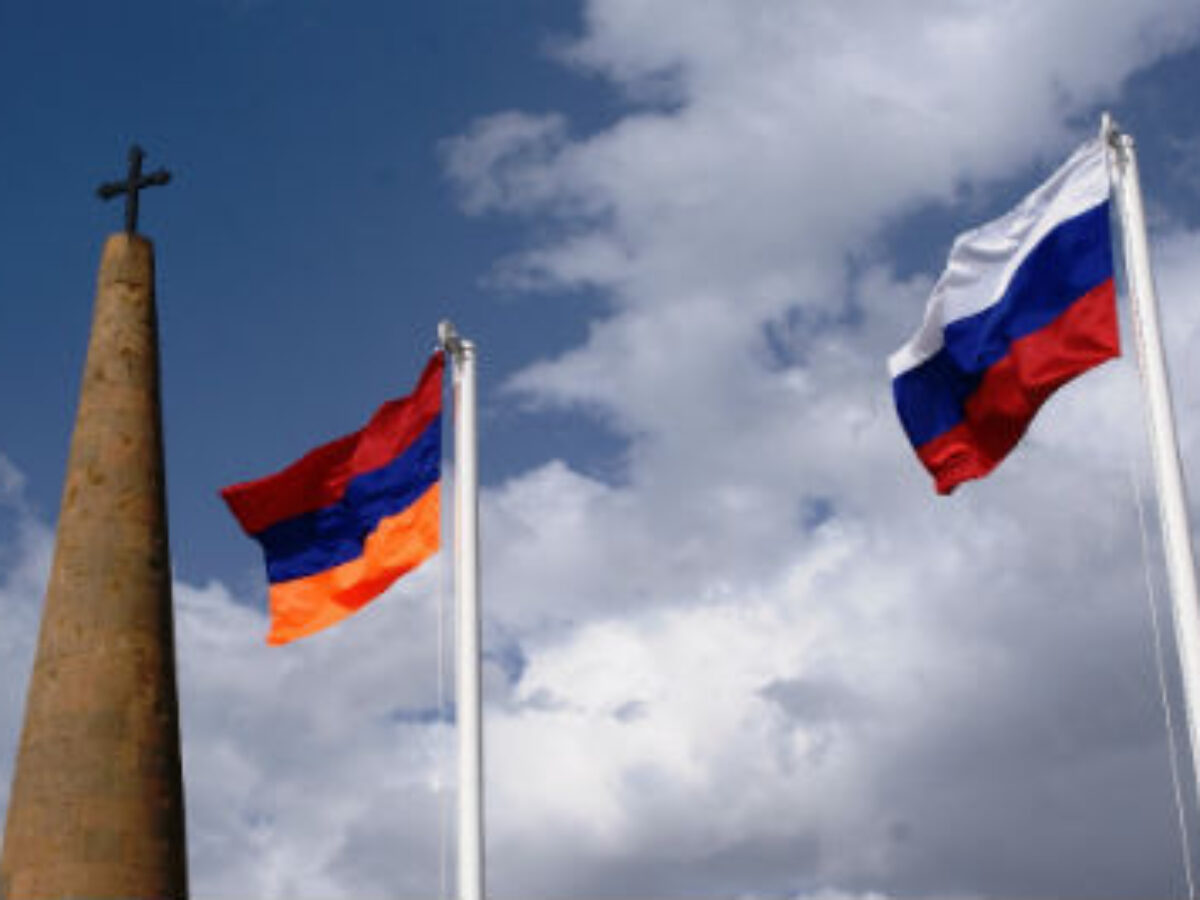
Opinion: ‘Russia ‘blackmails’ Armenia with threat of gas price hikes’


Russia threatens Armenia with gas price hikes

Russia threatens Armenia with gas price hikes

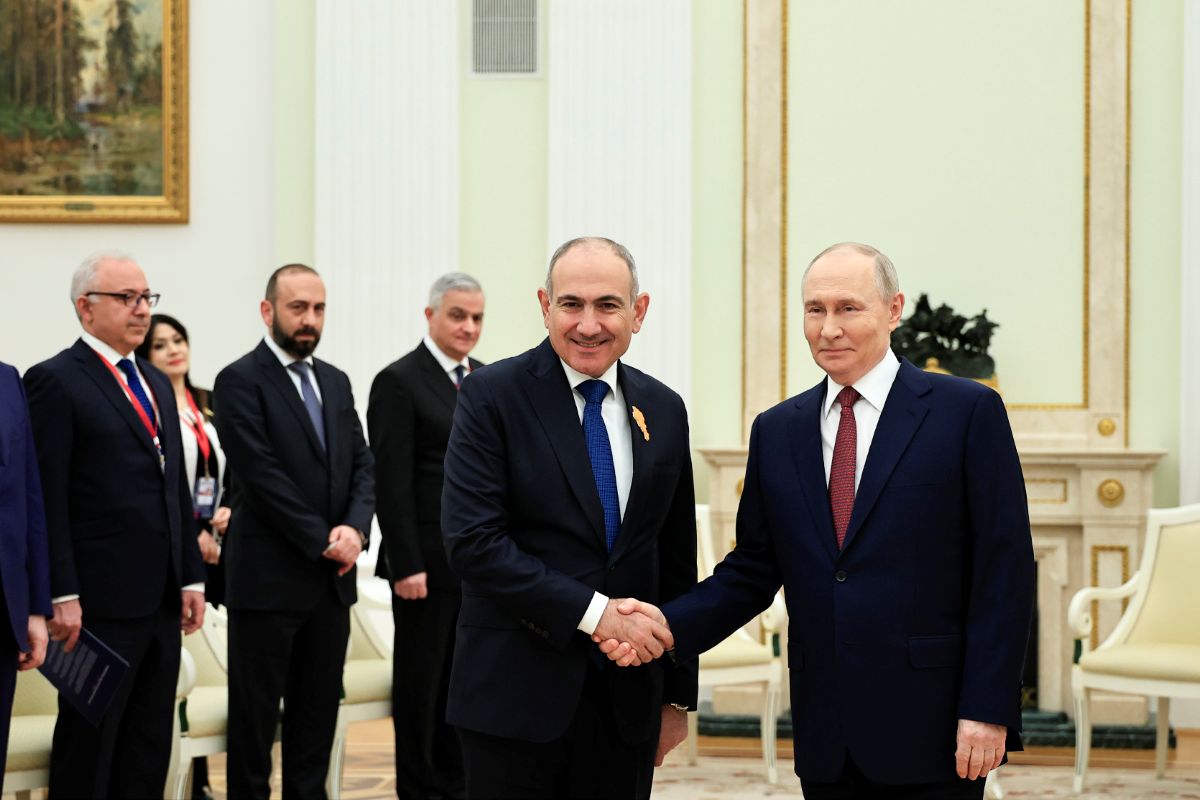
Statements by Russian President Vladimir Putin during a recent meeting with Armenian Prime Minister Nikol Pashinyan have been interpreted by Armenia’s expert community as a threat.

Putin said Moscow remains calm about Armenia’s desire to develop ties with the EU.
He also said Yerevan cannot expect to be a member of the European Union. It also cannot remain in the Russia-led Eurasian Economic Union. He also stated that Yerevan cannot expect to be a member of both the European Union and the Russia-led Eurasian Economic Union. He stressed that Armenia’s economy is growing steadily. He added that exports to EAEU countries have increased tenfold in recent years.

Putin also addressed energy issues. He warned that gas prices in Europe exceed $600 per 1,000 cubic metres. He added that Russia sells gas to Armenia for $177.5. He said this difference is significant.

“It is your decision in the end — the decision of your team and your experts — where, with whom, and on what basis to work,” Putin said.

The day after the meeting, Russian Deputy Prime Minister Alexei Overchuk also spoke on the issue. He said Armenian counterparts had “come close to a point after which we will have to structure our economic relations with this country differently”.

Armenian authorities say gas prices will not change. They argue that otherwise Armenia’s participation in the EAEU would lose its meaning.

They also do not rule out that, if gas prices change, Yerevan could leave Moscow-led structures. This includes both the Eurasian Economic Union and the CSTO military alliance.

At the same time, Armenian analysts say Russia would face losses if it took drastic steps against Armenia. They add that Yerevan could turn to alternative options, such as importing gas from Kazakhstan.

Reactions from Armenian authorities, as well as expert commentary, follow.


‘If gas prices change, Armenia will leave the EAEU and CSTO

Armenian journalists asked representatives of the ruling party whether Moscow had adopted an ultimatum-style tone towards Yerevan.

In response, National Assembly Speaker Alen Simonyan said Prime Minister Nikol Pashinyan spoke with Putin “from the position of an independent, sovereign state”. He added that discussions about prices for Russian goods and gas are not new and have continued for many years.

Simonyan said that if a decision is made to change prices, Armenia will decide to leave Russia-led integration blocs — the CSTO and the EAEU.

However, he does not believe the situation will reach that point. He also said that after their public statements, the two leaders held a “very good” conversation:

“We discussed this, and I will repeat: we have done nothing against Russia, we are doing nothing, and we are not going to do anything. At the same time, we have defended and will continue to defend Armenia’s interests.”

Economy Minister Gevorg Papoyan expressed confidence that gas prices will not change, as partners need Armenia to remain within Russian-led structures:

“Partners need Armenia to remain both in the CSTO and in the EAEU. And if Armenia is not meant to benefit, then why should it stay in this union? [In response] a process will begin in another union — and it will accelerate.”
Political analyst Ruben Meghrabyan said:

“The conversation between Pashinyan and Putin showed that Russia views gas as one of its levers of pressure on Armenia. We remember how Serzh Sargsyan was ‘brought in’, and as a result Armenia became a victim of trafficking into the so-called EAEU bloc — a structure we still cannot free ourselves from. Gas was one of the reasons back then as well.

This refers to 3 September 2013, when Armenia’s president Serzh Sargsyan announced in Moscow that the country would join the Russia-led Eurasian Customs Union. The decision came as a shock. Before that, Armenia had been negotiating an Association Agreement with the EU. Armenian analysts openly said at the time that Russia forced Sargsyan to commit to joining the Customs Union, which later evolved into the EAEU.

Armenia must resist this. The idea of transporting Kazakh gas to Armenia and Europe via Azerbaijan is quite promising.

This would make gas even cheaper for Armenia, since consumption in the country is not that high.

Armenia’s energy system does not depend heavily on gas. Gas is mainly used for fuelling cars, heating homes and cooking.

And now Putin has decided to blackmail us with gas, comparing it to the current price of 600 euros in Europe, amid a sharp market surge.

What should Armenia do? It must resist all of this. There should be no retreat in connection with this new Russian package of measures from 3 September [referring to the events of 3 September 2013], which Russia is now promoting.”
Civil society representative Daniel Ioannisyan said:

“Some groups in Armenia try to create the impression that Armenia lives off Russia like a parasite, and that if we fail to please the Kremlin, everything will collapse. That is not true. It is a false narrative promoted on Moscow’s instructions.

The reality is that if Russia blocks imports of Armenian goods or raises gas prices for us, Russia will also suffer.

If Russia takes such drastic steps, we could, first, leave the CSTO military alliance and remove the Russian military base from Gyumri. That would deal a major reputational blow to Russia. The whole world would see how much the former superpower has weakened.

We could also leave the EAEU. This would close a channel for importing certain Western goods through Armenia that are important for Russia’s economy.

It is important to note that customs duties paid to Armenia for goods imported through the country do not remain here.We transfer about 98.7% of them to other EAEU member states. Yes, they would lose that money as well.

In addition, the Russian economy and consumers would lose access to affordable food products from Armenia, which would further worsen rising prices in Russia. Not to mention ‘smaller’ steps such as shutting down Russian TV channels or nationalising railways.

If Russia significantly raises gas prices for us, we can buy gas from other countries. Russia would lose revenue from gas sales, just as it has already lost major income from gas exports to Europe.

I am not saying these scenarios are favourable or beneficial for us. But they are not beneficial for Russia either — and they are not masochists.”

Categories
South Caucasus News

Ilham Aliyev Visits Georgia, Meets Ivanishvili


Azerbaijani President Ilham Aliyev visited Georgia on April 6, in a trip that came a day after critical journalist Afgan Sadigov was deported to Azerbaijan. Aliyev, who arrived together with his wife and the state ministers, met with key Georgian Dream officials, including the party’s founder and Honorary Chairman Bidzina Ivanishvili.

The one-day visit concluded with Ivanishvili, who holds no government position, hosting Aliyev and his delegation at a luncheon at the Business Center in Tbilisi. Several key Georgian Dream officials attended, including Prime Minister Irakli Kobakhidze, Economy Minister Mariam Kvrivishvili, and Foreign Minister Maka Botchorishvili, as well as Government Administration Head Levan Zhorzholiani, and Georgia’s ambassador to Azerbaijan, Zurab Pataradze. The party also released footage of the meeting on its Facebook page, which contains no audio aside from background music.

Ivanishvili thanked Aliyev for his “fruitful” visit to Georgia and “noted that the friendly relations between Georgia and Azerbaijan are at the highest level, which is beneficial and brings gains for both countries,” Georgian Dream said in a press release.

Ivanishvili “emphasized the importance of deep and comprehensive economic relations between the two countries, the potential to fully utilize the transit corridor, and noted that strong partnership ultimately serves the national interests of both Georgia and Azerbaijan equally,” the press release said.

Ivanishvili further thanked Aliyev for “supporting the calm and stable situation in the South Caucasus region, and noted that in a world full of security challenges, it is vitally important that the leadership of both countries preserve peace and economic development at all costs.”

“During the meeting, the talks focused on the strong partnership in the energy sector and transport-energy projects, which are being jointly implemented by Georgia and Azerbaijan. The Baku-Tbilisi-Kars railway was highlighted for playing a key role in ensuring regional connections. Bidzina Ivanishvili noted that Georgia remains open to Azerbaijani investments, which have continued to grow actively in recent years.”

The press release further added that Aliyev thanked Ivanishvili for “generous hospitality” and noted that “Georgia is one of the most attractive, stable and interesting places for investments.” According to the release, he further focused on “bilateral projects, the importance of the energy corridor and Georgia’s active role in the export of Azerbaijani natural resources,” reaffirming his readiness to “jointly continue efforts to preserve peace and stability in the region.”

Before meeting with Ivanishvili, which concluded his one-day trip to Tbilisi, Aliyev met with Georgian Dream Prime Minister Irakli Kobakhidze and GD–elected President Mikheil Kavelashvili.

Visit Background and Other Meetings

Ilham Aliyev arrived at Tbilisi International Airport on the morning of April 6 with his wife, Mehriban Aliyeva, and a delegation. Georgian Dream Foreign Minister Maka Botchorishvili welcomed them at the airport. Aliyev first visited the Heroes Memorial and the Statue of Heydar Aliyev in Tbilisi, laying wreaths at both sites. He then met with Mikheil Kavelashvili and Irakli Kobakhidze.

The visit came a day after Georgia detained and deported Afgan Sadygov, a critical Azerbaijani journalist who actively participated in anti-government protests in Tbilisi, back to Azerbaijan, where he was briefly detained, following earlier reports that he was free in Baku after interrogation.

The visit marked Aliyev’s first official trip to Tbilisi since October 2023, when he met with then-Prime Minister Irakli Garibashvili. A number of Georgian Dream officials, including PM Irakli Kobakhidze and GD-elected President Mikheil Kavelashvili, have met with Aliyev on several occasions, both in Baku and at other international venues.

Meeting with Mikheil Kavelashvili

An official welcoming ceremony for the Azerbaijani president was held at 11 a.m. at Tbilisi’s Orbeliani Presidential Palace, where Mikheil Kavelashvili received his Azerbaijani counterpart. The national anthems of both countries were played.

The two then held a one-on-one meeting inside the presidential palace.

During the meeting, they discussed “the high-level strategic partnership between the two countries and their successful cooperation across various sectors,” Georgia’s presidential administration said in a press office, adding that Kavelashvili emphasized Georgia’s priority to “maintain” this partnership.

“It was emphasized that against the backdrop of current geopolitical developments, at a time when the international order is undergoing fundamental changes, maintaining stability and peace in the region is becoming increasingly important,” the press release said.

It added that Kavelashvili thanked Aliyev for supporting Georgia’s territorial integrity and sovereignty and for expressing condolences on the passing of late Patriarch Ilia II, and that Aliyev signed the official guest book following the meeting.

The Azerbaijani president’s administration said, among other points in its press release, that the sides emphasized “the significance of the joint transport and energy projects implemented by Azerbaijan and Georgia, noting their strategic and economic importance,” and highlighted “the role of the normalization process between Azerbaijan and Armenia in ensuring stability and security in the South Caucasus.”

Meeting with Irakli Kobakhidze

President Aliyev then met with Georgian Dream Prime Minister Irakli Kobakhidze at the government administration.

During the one-on-one meeting, the sides “emphasized the high level of strategic partnership between the two countries and their productive cooperation across various sectors,” the Georgian government said, adding that “particular attention” was paid to “deepening economic ties” and to “the role of the Azerbaijan-Georgia Intergovernmental Commission on Economic Cooperation.”

The two leaders also stressed “the importance of peace in the region,” with Kobakhidze noting that Georgia welcomes “ongoing dialogue between Armenia and Azerbaijan, which represents an important step toward regional stability and development.” They also discussed the situation in the Middle East, according to the press release, “highlighting the importance of diplomatic efforts to de-escalate tensions and restore peace.”

Following the one-on-one meeting, Kobakhidze and Aliyev extended talks with the participation of their respective cabinet members.

“The meeting focused on the growing trade and economic cooperation between the two countries and the importance of fully utilizing the existing potential in this regard,” the Georgian government administration said in a press release.

It added, “The discussion also covered close partnership in the energy sector and major regional transport and energy projects jointly implemented by Georgia and Azerbaijan. Among them, the Baku-Tbilisi-Kars (BTK) railway was highlighted as playing a key role in ensuring regional connectivity.”

The Georgian side included Foreign Minister Maka Botchorishvili, Economy Minister Mariam Kvrivishvili, Government Administration Head Levan Zhorzholiani, and Georgia’s ambassador to Azerbaijan Zurab Pataradze. The Azerbaijani side included Foreign Minister Jeyhun Bayramov, presidential aide Hikmet Hajiyev, Economy Minister Mikayil Jabbarov, Energy Minister Parviz Shahbazov, Minister of Digital Development and Transport Rashad Nabiyev, and Azerbaijan’s ambassador to Georgia Faig Guliyev.

Joint Media Statements

Following the meetings, Kobakhidze and Aliyev delivered statements in their native languages at a joint press briefing.

Kobakhidze began by thanking Aliyev for his visit to Georgia, describing him as a “valued friend” of the country and saying his visit is a “great honor.”

The GD prime minister then hailed the “exceptional historical friendship and good neighborly relations” that he said are “logically reflected in the strategic partnership” between Georgia and Azerbaijan. “We are pleased that this partnership, along with our relations and friendship, continues to develop dynamically in various directions,” Kobakhidze said, thanking Aliyev for his “personal efforts and engagement in this process.”

Kobakhidze then thanked Aliyev for his “firm support” of Georgia’s sovereignty and territorial integrity, adding that Georgia “has always, is and will remain a strong supporter of Azerbaijan’s national interests, sovereignty and territorial integrity.”

“We discussed issues related both to bilateral relations and to the future of the South Caucasus region as a whole,” Kobakhidze said, adding that Georgia welcomes the ongoing peace process between Azerbaijan and Armenia and that it will “always stand ready to make a positive contribution to the development of these relations and to support dialogue and the peace process.”

Underscoring the importance of “cooperation” among the South Caucasus countries in creating “new opportunities” for the region, Kobakhidze said, “We are observing global political changes, which further increase the importance of the Middle Corridor, including the strategic significance of the Black Sea and the South Caucasus.”

“Our countries, serving as a bridge between Asia and Europe, play a key role in connectivity. In this context, we attach particular importance to the development and modernization of transport and logistics infrastructure. Georgia and Azerbaijan have repeatedly demonstrated that they are reliable and responsible partners, including in international energy and transport projects.”

He also noted that Azerbaijan remains “one of Georgia’s largest trading partners” and expressed hope for deeper economic relations, including through “enhanced cooperation in increasing investments.”

Aliyev began by saying it is “always a great honor” to visit “brotherly” Georgia.

He praised the Georgian Dream government’s “achievements” and what he called Georgia’s “very impressive economic growth,” saying, “You have created a highly favorable investment environment, offering excellent opportunities for foreign investors, including Azerbaijani investors, to contribute further to this success, which in turn promotes political stability and economic growth. You are a guarantor that the policies of the Government of Georgia will continue to serve the well-being of the Georgian people.”

He also praised “significant success” in economic relations between the two countries, adding, “Today we discussed new opportunities and new investment projects. We may also consider joint investments in third countries.” He also spoke about energy security in the region and investments.

According to Aliyev, the sides also discussed “regional security and the current situation,” saying, “The new reality in the South Caucasus was not overlooked.”

“Countries in this region must remain focused on peace, stability and security, especially at a time when these principles are being challenged in various parts of the world,” Aliyev said, adding, “Our region must remain resilient against such developments. The South Caucasus should continue to be a region of peace, stability and cooperation.”

Also Read:


Categories
South Caucasus News

Lebanon rejects Israeli buffer zone


Lebanese Prime Minister Nawaf Salam said on Monday that Lebanese authorities oppose any form of Israeli presence in their territory, including a buffer zone in the south, AzerNEWS reports.