Categories
South Caucasus News

Georgia’s parliament approves increase in car customs clearance fees


Car import clearance costs to rise in Georgia

Georgia’s parliament has approved amendments to the Tax Code in a third and expedited reading, under which the cost of clearing imported passenger cars through customs will increase

Read more on this topic here.

The changes apply to both relatively new and older vehicles and are directly linked to higher excise rates. Under the new rules, cars aged between zero and six years will be taxed at 1.50 lari ($0.56) per cubic centimetre, compared with the previous system, which set a lower range of 0.8 ($0.30) to 1.5 lari ($0.56) for newer vehicles.

A sharper increase affects cars older than six years — the category most commonly imported into Georgia. In this case, the clearance cost is set at 4.5 lari ($1.67) per cubic centimetre, meaning the tax rises in direct proportion to engine size.

Excise duty on cars in Georgia is calculated based on two parameters — engine size and age. As a result, vehicles with larger engines and older cars become significantly more expensive at the import stage.

In practical terms, for a car older than six years, the formula is: engine capacity multiplied by 4.5 lari ($1.67).

Examples (rate: 4.5 lari):

  • Small car (1.5 engine): 1500 × 4.5 = 6,750 lari ($2,509)
  • Standard sedan (2.0 engine): 2000 × 4.5 = 9,000 lari ($3,345)
  • SUV / jeep (3.0 engine): 3000 × 4.5 = 13,500 lari ($5,018)

Irakli Kheladze, the rapporteur for the bill, said the changes will come into force on 2 April 2026. The move by the ruling party is likely to affect both the volume of car imports and price dynamics on the domestic market, particularly in the segment dominated by older, relatively affordable vehicles.

Car import clearance costs to rise in Georgia


Categories
South Caucasus News

Czech Republic backs Azerbaijan as key partner in Europe’s energy diversification drive


The Czech Republic has reaffirmed its view of Azerbaijan as a strategic partner in efforts to diversify Europe’s energy supply, according to the Czech Ministry of Industry and Trade, AzerNEWS reports via Trend.

Categories
South Caucasus News

President Ilham Aliyev receives participants of meeting of heads of government of OTS member states – Azerbaycan24


President Ilham Aliyev receives participants of meeting of heads of government of OTS member states  Azerbaycan24

Categories
South Caucasus News

President Ilham Aliyev receives participants of meeting of heads of government of member states of Organization of Turkic States – AzerNews


President Ilham Aliyev receives participants of meeting of heads of government of member states of Organization of Turkic States  AzerNews

Categories
South Caucasus News

President Ilham Aliyev receives participants of meeting of heads of government of member states of Organization of Turkic States


On April 2, President of the Republic of Azerbaijan Ilham Aliyev received Vice President of the Republic of Türkiye Cevdet Yilmaz, Prime Minister of the Republic of Uzbekistan Abdulla Aripov, Prime Minister of the Republic of Kazakhstan Olzhas Bektenov, Chairman of the Cabinet of Ministers of Kyrgyzstan Adylbek Kasymaliev, Deputy Chairman of the Cabinet of Ministers of Turkmenistan Nokerguly Atagulyev, Prime Minister of the Turkish Republic of Northern Cyprus Ünal Üstel, and Secretary General of the Organization of Turkic States Kubanychbek Omuraliev, AzerNEWS reports.

Categories
South Caucasus News

Azerbaijan-France trade rises as ties build on mixed recent trends


Trade turnover between Azerbaijan and France showed positive dynamics in the first two months of 2026, continuing a fluctuating trend observed in recent years, AzerNEWS reports.

Categories
South Caucasus News

Council of Europe experts urge Georgia to repeal repressive laws


Council of Europe on repressive laws in Georgia

On repressive laws in Georgia

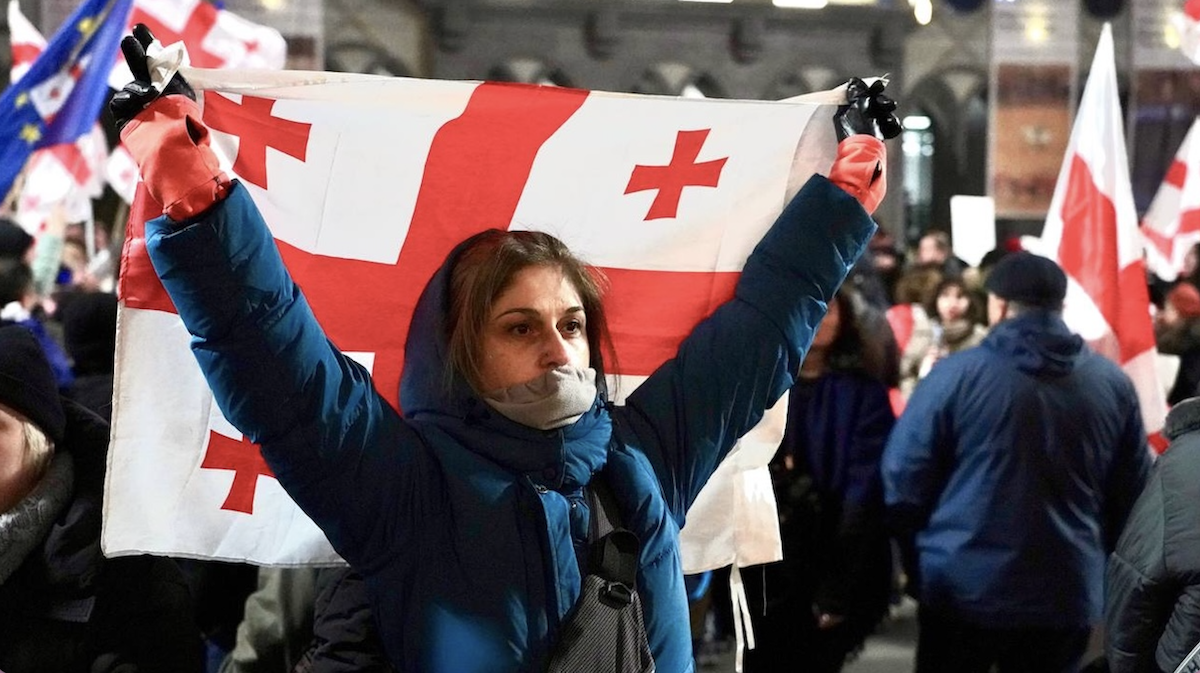
Council of Europe experts have urged the Georgian authorities to repeal legislative changes adopted in early March 2026, warning they pose a serious threat to the country’s democratic foundations and civil society

In a conclusion published on 1 April 2026, the Council of Europe’s expert body said the package of “repressive laws” significantly restricts freedom of association and expression, and undermines fundamental rights to privacy and participation in elections.

The expert body of the Conference of International Non-Governmental Organisations of the Council of Europe reviewed amendments adopted on 4 March 2026, which affected the law on grants, the law on political associations of citizens, the Criminal Code and other pieces of legislation.

According to the opinion, a significant portion of the amendments fails to meet the requirement of legality and raises serious doubts about whether they pursue a legitimate aim. Experts note that, given the scale of the restrictions and their impact, almost none of the provisions — with the exception of the criminalisation of foreign funding of political parties — can be regarded as necessary in a democratic society.

The expert council warns that, under current conditions, the enforcement of these laws would further aggravate the damage already inflicted on Georgia’s civil sector.

The document also stresses that the changes contradict the obligations Georgia has undertaken as a member of the Council of Europe, describing their adoption as “entirely unacceptable”.

On this basis, the experts call on the authorities not only to repeal the new laws, but also to suspend the implementation of provisions addressed in recommendations issued in 2024 and 2025.

Context

The legislative package approved on 4 March 2026 significantly broadens the definition of a “grant”, extending it to both financial and non-financial support if it can be used to influence the country’s domestic or foreign policy, including activities linked to the interests of a foreign state or political force.

The law also strengthens oversight by the State Audit Service over the issuing and receipt of grants. Funding provided to a branch operating in Georgia by a foreign legal entity without government approval may lead to sanctions, including fines amounting to twice the value of the grant.

In addition, violations of the grant law may entail criminal liability, with penalties ranging from fines and community service to imprisonment for up to six years.

The changes also affect the political sphere: individuals primarily working in organisations funded from abroad are barred from joining political parties for eight years. Restrictions imposed on political parties are also extended to entities that are not formally parties but are engaged in political activity.

The legislative package further tightens administrative liability for private companies if they become involved in public political activity.

One of the most controversial elements concerns amendments to the Criminal Code expanding the definition of “extremism”. Under the new provisions, public calls for actions against the constitutional order — including calls for disobedience to authorities or the creation of alternative structures — may be punishable.

Moreover, committing a crime motivated by non-recognition of constitutional authorities is treated as an aggravating circumstance, increasing the minimum sentence by at least one year.

According to the expert council, such wording allows for broad interpretation and raises the risk that the law could be used against dissent and critical voices.

On repressive laws in Georgia


Categories
South Caucasus News

Baku hosts OTS government heads meeting to advance economic and transport agenda


The second meeting of the heads of government and vice presidents of member states of the Organization of Turkic States (OTS) is being held in Baku at the Gulustan Palace.

Categories
South Caucasus News

Film ‘Nargin’ screened at Nizami Cinema Center


A feature-length documentary “Nargin” has been screened at Nizami Cinema Center on March 31, AzerNEWS reports.

Categories
South Caucasus News

Strasbourg court begins hearing case on Georgia’s FARA law, in potentially precedent-setting move


ECHR begins hearing case on Georgia’s FARA law

The European Court of Human Rights (ECHR) in Strasbourg has begun examining a case concerning Georgia’s law “On the Registration of Foreign Agents” (FARA). The court noted that the case may be granted “impact case” status, meaning it would be prioritised due to its broader significance.

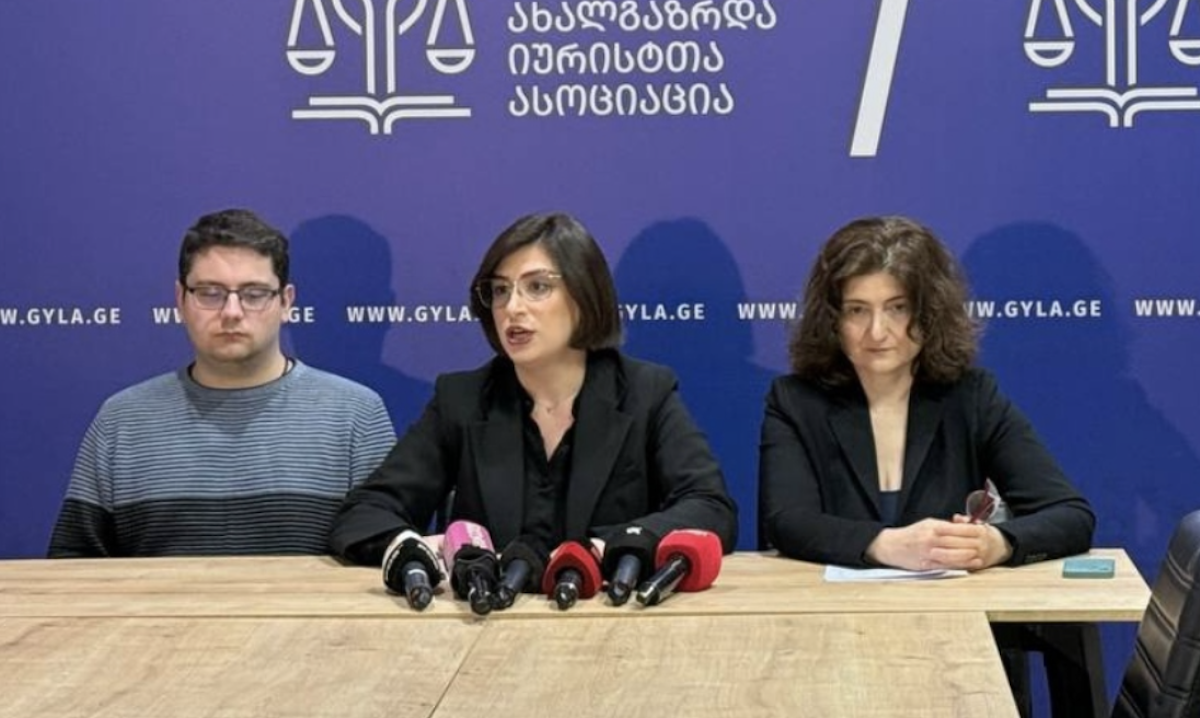
The launch of the case was announced on 1 April at a briefing in Tbilisi, held at the office of the Georgian Young Lawyers’ Association (GYLA). The application to Strasbourg was filed by the organisation itself, along with the media outlets Studio Monitor and News Georgia.

The FARA law, adopted by the ruling Georgian Dream party, came into force on 31 May 2025. The legislation targets and restricts the activities of civil society and the media. Under its provisions, almost any activity can be interpreted as foreign interference, and virtually any individual or organisation can be designated a foreign agent.

Controversial law and its context

According to GYLA, the law “On the Registration of Foreign Agents” violates both Georgia’s constitution and its international human rights obligations. The organisation argues that its purpose is to restrict, discredit and persecute the independent civil sector and media, including through the use of criminal liability.

The authorities present the law as an analogue of the US FARA legislation, but critics stress that the two operate in fundamentally different historical and legal contexts. In their view, directly transplanting such laws into a different system cannot produce the same results and often leads to very different political outcomes.

Significance of the Strasbourg proceedings

The ECHR’s decision to accept the case under all the submitted articles points to its seriousness. In its correspondence, the court also noted that the case may be granted “impact” status — typically reserved for fundamental legal questions.

This means that:

  • The case will be examined as a priority;
  • The ruling could set a precedent;
  • Its implications may extend beyond Georgia to other Council of Europe member states.

According to the Georgian Young Lawyers’ Association, the case concerns rights guaranteed under the European Convention on Human Rights, including:

  • Freedom of assembly and association (Article 11)
  • Freedom of expression (Article 10)
  • Right to an effective remedy (Article 13)
  • Prohibition of discrimination (Article 14)
  • Limits on the use of restrictions on rights (Article 18)

ECHR questions to the Georgian authorities

Alongside opening proceedings on the merits, the Strasbourg court has put a series of specific questions to the Georgian authorities, addressing both the substance of the law and its practical consequences:

  • Victim status — can the applicants be considered victims?
  • Right to privacy — does the obligation to disclose information constitute interference with private life?
  • Freedom of expression and association — does the law restrict these rights?
  • Stigmatisation — does the term “foreign agent” have a chilling or harmful effect?
  • Definition of “foreign power” — is it sufficiently clear, or does it allow room for abuse?
  • Proportionality of sanctions — are the penalties proportionate to the alleged violations?
  • Discrimination — does the law result in differential or unequal treatment?
  • Effective remedy — were there genuine mechanisms available to protect rights?
  • Ulterior motives — is the law being used for purposes beyond those declared, such as political pressure or the suppression of critical voices?

The government has been given until 21 July 2026 to submit its position, after which the applicants will respond with their arguments.

Parallel proceedings and broader impact

According to GYLA, the Strasbourg court is close to completing its examination of another major case — a complaint brought by 136 organisations and four individuals against an earlier “foreign agents” law — pointing to the court’s active engagement with issues affecting civic space in Georgia.

Government representatives acknowledge the case’s potential to set a precedent, but do not see this status as giving any particular advantage to the applicants. In their view, the final ruling is likely to have implications not only for Georgia, but also for existing or proposed regulations in other European countries.

Commentary

Tamar Oniani

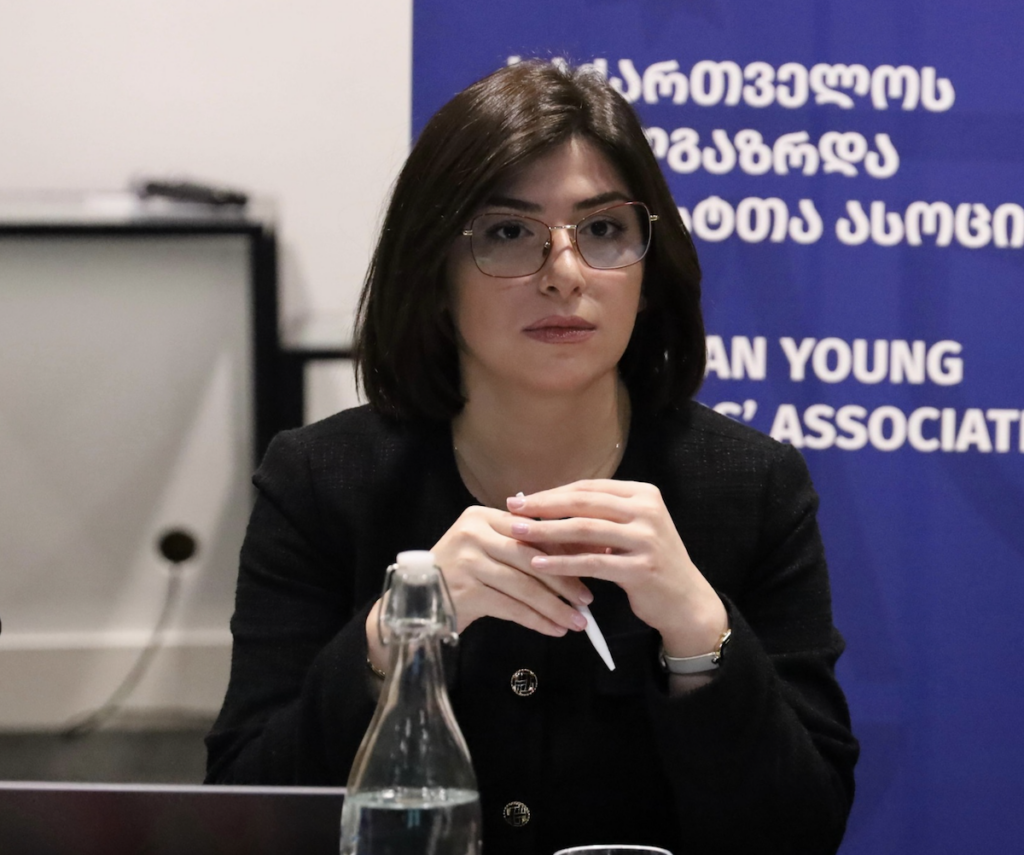
Tamar Oniani, chair of the Georgian Young Lawyers’ Association:

“The Georgian Dream party presents this law as an analogue of the US Foreign Agents Registration Act (FARA). In reality, however, the US FARA — adopted in 1938 — is, in its historical context and as interpreted by the US Department of Justice and independent courts, aimed not at restricting independent civil society or media organisations, but at exposing the activities of agents acting on behalf of hostile foreign powers. It applies in cases where individuals funded from abroad do not act autonomously and are fully directed by a principal.

It is important for Georgian society to understand that the real substance of legislation is not determined solely by its text. The direct transplantation of laws from other countries does not ensure identical outcomes. A legal norm that may have the same wording across jurisdictions and periods can produce entirely different results, depending on the structure of the legal system, the political environment and institutional mechanisms.”

НоFARA law in Georgia