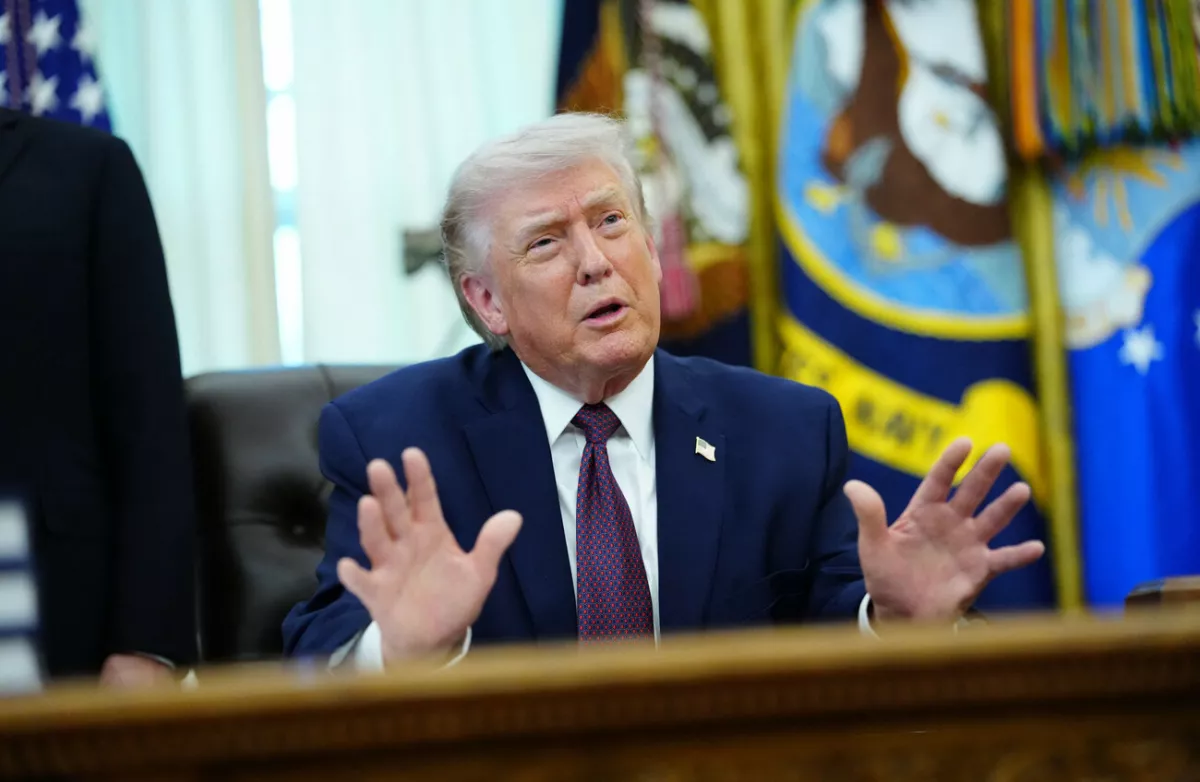
US President Donald Trump said Americans lack the patience to wait for the US to seize Iranian oil. “We could just take their oil,” Trump said at an event at the…
 The South Caucasus News - SouthCaucasusNews.com
Concerns are mounting across Georgia as animal rights defenders have raised alarms over “disappearing” street dogs in what authorities claim to be temporary transfers to carry out “veterinary manipulations” to manage the hyperpopulation of homeless animals aimed to protect both animals and humans.
Fears intensified after local activists first reported a raid in Zugdidi, Western Georgia, where the National Food Agency (NFA) collected dozens of dogs, saying they were only temporarily transferred to a shelter in Kutaisi as part of the newly-launched state program. Later, residents in Gori, Eastern Georgia, raised further alarms after spotting smoke at a local state shelter, fearing that stray dogs had been brought there and cremated. Public agencies have dismissed cremation reports as a lie.
Homeless dogs and cats, numbering in the tens of thousands in Georgia, have long been a public concern. Sterilization and vaccination are widely accepted as methods to control breeding and reduce street populations, though activists, animal lovers, and rights organizations say the animals must not be euthanized for that purpose. In 2025, the NFA reported treating 9,136 animals as part of a pilot program in several regions.
The newly approved 2026 state program allocates more than GEL 4.6 million to “identify, sterilize, castrate, and vaccinate” homeless dogs and cats. A controversial clause in the decree prohibits returning dogs to areas near educational institutions, medical facilities, public catering establishments, markets, hotels, and children’s or sports playgrounds. While the decree notes that alternative release locations “must be changed,” it does not specify where the animals should be relocated, which animal rights defenders say is “not only vague – failing to specify the proximity in question – but also lacks clear meaning,” raising fears it could enable euthanasia or unsafe releases.
Activists, however, note that dogs have been disappearing before the controversial clause took effect, and are collected from territories that are not yet covered by the pilot state program.
On March 30, dozens of homeless dogs were taken from the streets of Zugdidi, a town in western Georgia, to Kutaisi for what the authorities said were veterinary procedures as part of the program. The activists said some of the dogs taken had already been vaccinated and sterilized. On April 1, after public alarms, NFA said 28 of them were returned “to the environment,” but activists said the dogs were released outside the town, near a highway, instead of the town where they had been originally picked up.
Zero Strays Georgia, a non-profit animal organization, published a video showing residents of Zugdidi arriving to retrieve the dogs in what appears to be a sparsely populated area. The organization warned that releasing animals outside their home range, in uninhabited areas with scarce food and highway traffic, amounts to a “slow, painful death.” NFA said the remaining dogs will also be returned “to the environment” after “necessary veterinary manipulations” without specifying where.
Local activists, including Salome Partsvania, who documented footage of dogs confined in cages inside transport vehicles when they were first taken, noted uncertainty about when they would be returned. Partsvania cited a woman accompanying the state raid, reportedly saying the animals would be “released into nature.”
Thousands of activists, citizens, and more than 40 animal rights organizations issued a joint statement demanding that dogs be returned to the exact locations from which they were taken and that caretakers be notified in advance. The statement also demanded that authorities carry out revaccination on-site rather than transferring already treated animals to shelters. Parallel concerns have been reported in Kakheti and Imereti, and some cases reportedly involved sheltered dogs taken from children during walks.
Concerns further intensified after animal rights defender Tamaz Elizbarashvili’s Facebook page on April 1 published a video in which a woman, crying in a car, recorded what she said was smoke continuing for hours to rise from the premises of the Gori state shelter. She said dogs were brought to the building around midnight and the smoke smelled like hair and flesh, prompting fears that animals had been cremated.
The NFA dismissed accusations that dogs were burned as “totally ungrounded” and “fake,” saying, “The spread of lies of this nature crosses all moral boundaries and represents a deliberate attempt to mislead the public.” The agency added, however, that the “incinerator” on the premises is legally used “to dispose of medical waste and deceased animals from veterinary care and related tests of shelter animals as part of infection prevention measures.”
The statement also noted that the overpopulation management program has so far been launched on a pilot basis in Imereti, Kakheti, and Zugdidi Municipality. It added that the agency “is gradually returning dogs taken from these locations to areas adjacent to where they were picked up.” It added that animals taken from schools, kindergartens, and hospitals are instead relocated away from their original sites.
The developments follow protest demonstrations over the past weekend in Tbilisi and Batumi, as protesters alleged the cases of “euthanasia” and rallied against the practice of taking the dogs from the streets. Following the recent reports, a rally has been planned for April 4 in Tbilisi and Batumi.
Facing accusations, Tengiz Chaligava, deputy head of the National Food Agency’s Animal Health Department, said that information about any dog being transferred will now be posted in advance on social media and that everyone will know beforehand where dogs will receive vaccinations, castrations, or sterilizations.
Also Read:
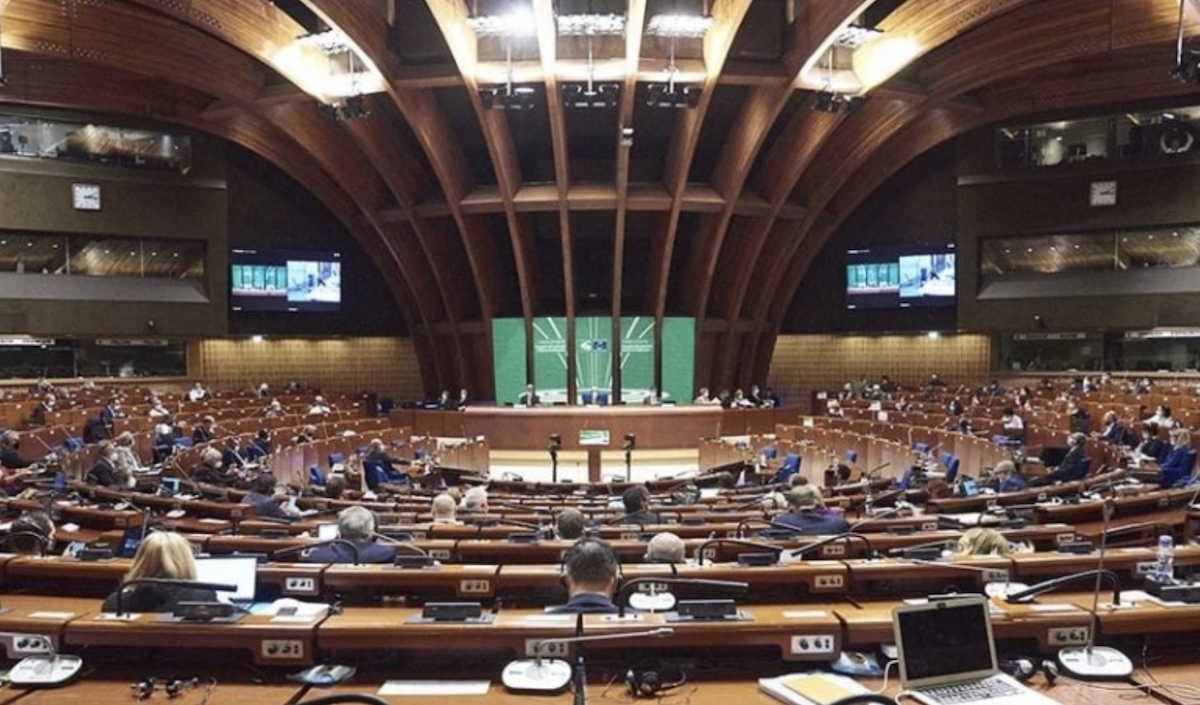
The Congress of Local and Regional Authorities of the Council of Europe has adopted a sharply critical resolution on Georgia, backed by 97 members, with 12 voting against.
The resolution says the Congress is “seriously concerned” about the state of local democracy in Georgia, a country long regarded as an important member of the Council of Europe.
According to the statement, the Congress found that local democracy is under threat amid rapid democratic backsliding, one-party dominance in local authorities, and the failure to implement previous recommendations aimed at restoring democratic standards.
The assessment stresses that the challenges facing the democratic system are no longer isolated incidents, but systemic in nature, affecting both institutional structures and the broader political environment.
According to the Congress, Georgia is showing signs of rapid democratic backsliding. The document points to high political polarisation, one-party control over local authorities, and the failure to implement recommendations issued by international partners over many years.
Much of the criticism relates to the municipal elections of 4 October 2025, which the Congress says were marked by a lack of political dialogue and competition. A fact-finding report highlights widespread boycotts, frequent and problematic changes to electoral legislation, and insufficient representation of women.
Particular concern is raised over alleged pressure on opposition leaders and candidates, including bans, intimidation and reported arrests.
The resolution also states that groups holding views different from those of the authorities — particularly young people, civil society and the media — are increasingly subject to legal and administrative pressure. According to the Congress, this trend restricts fundamental freedoms and narrows the diversity of the public space.
One of the most alarming points highlighted is that the 2025 elections were held without the participation of reputable international and domestic observation missions — including the Congress itself. At the same time, the rights of those observers who were present were significantly restricted, further reducing the transparency of the process.
The resolution notes that the authorities failed to ensure political dialogue and restore trust in the electoral process. As a result, elections in half of the country’s municipalities effectively became one-party contests, while in others there were allegations of pressure on opposition candidates. Attempts to ban opposition parties and legal cases brought against their representatives have, according to the Congress, further reduced political pluralism.
Taken together, these factors meant that the conditions necessary for free, fair and inclusive elections were not met. The Congress believes that current developments are moving Georgia further away from its European commitments, particularly those under the European Charter of Local Self-Government.
In the resolution, members of the Congress call on the Georgian authorities to urgently resume political dialogue at all levels through an inclusive process involving all stakeholders, aimed at reducing polarisation.
The Congress called on the ruling Georgian Dream party to:
Despite its strong criticism, the Congress said it remains ready to continue cooperation with the Georgian authorities, including through a monitoring mission aimed at assessing compliance with the European Charter of Local Self-Government.
Council of Europe Congress resolution on Georgia