Amazon A to Z Login FAQ answers questions about accessing work schedules, pay details, and essential resources for Amazon employees.
Categories
 The South Caucasus News - SouthCaucasusNews.com
In the first three months of 2026, Kyrgyzstan exported honey worth 37.3 million soms (about 426,600 U.S. dollars), with Uzbekistan remaining the largest importer of Kyrgyz honey, News.az reports, citing Xinhua.
***
The ministry said it will continue efforts to support domestic honey producers, expand export opportunities for domestic products, improve product quality standards, explore new international markets and enhance the competitiveness of Kyrgyz beekeeping.
The post Kyrgyzstan’s honey exports more than double in Q1 2026 appeared first on azeritimes.com.

US military officials visited Poland to review the progress of investments in military infrastructure, News.Az reports, citing Militarnyi.
***
This includes, in particular, investments in the General Tadeusz Kościuszko military complex in Poznań (Camp Kościuszko).
Construction is also underway on new facilities at one of the Polish Air Force’s key air bases — the 33rd Transport Aviation Base in Powidz.
At the 33rd Base, the delegation reviewed the progress of work on the airbase’s mobile system facilities and a large fuel depot.
Another project is a helicopter parking area, as well as the first phase of construction of barracks, along with a kitchen and dining hall.
These investments are also significant in the context of Poland’s efforts to ensure a permanent US military presence. Recently, Donald Trump announced that the US will send 5,000 troops to Poland.
The post Poland expands infrastructure for American troop presence appeared first on azeritimes.com.
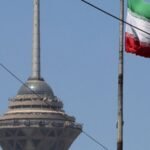
But Iran says it should not be described as ‘imminent’, and President Trump insists he won’t sign any deal that leaves Iran with a path to a nuclear weapon, News.Az reports, citing Channel4.
***
Trump also wants any agreement to include Saudi Arabia, Qatar and other Arab states normalising their ties with Israel.
The post Iran says deal with US not close despite progress appeared first on azeritimes.com.
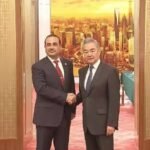
Wang, also a member of the Political Bureau of the Communist Party of China Central Committee, made the remarks when meeting with Asim Munir, Pakistan’s Chief of Defence Forces and Chief of Army Staff, News.az reports, citing Xinhua.
***
Wang welcomed Munir and Pakistani Prime Minister Shehbaz Sharif’s visit to China together, noting that the two countries have maintained a high level of political mutual trust, practical cooperation and international coordination, setting a model for state-to-state relations.
He said the Pakistani military has always been an important force in promoting China-Pakistan cooperation and is believed to make new contributions to deepening the traditional friendship between the two countries.
Noting that the four major global initiatives and the Belt and Road Initiative have played a key role in promoting world peace and development and have been widely welcomed by the international community, Munir said the Pakistani side firmly supports and actively participates in these initiatives.
The Pakistani military will continue to fully promote the building of a Pakistan-China community with a shared future and the China-Pakistan Economic Corridor, Munir said.
Munir briefed Wang on the latest progress in mediating the U.S.-Iran conflict, saying that an agreement is close to being reached and the Pakistani side is willing to continue its all-out efforts. Wang said China appreciates and supports Pakistan’s mediation efforts.
The post China-Pakistan friendship has always been rock-solid, unbreakable: Chinese FM appeared first on azeritimes.com.