
Day: May 7, 2026
Categories
Встреча Пезешкиана с Хаменеи
The court handed down the first prison sentences against a group of ten people tried over the October 4, 2025, election-day unrest, including prominent political figures who organized the rally that grew into tensions at the presidential palace in what Georgian officials would later describe as a foreign-orchestrated coup attempt.
Among those found guilty by Tbilisi City Court Judge Irakli Khuskivadze and given seven-year prison sentences each are Paata Burchuladze, the prominent opera singer and activist who organized the rally; Murtaz Zodelava and Irakli Nadiradze of the opposition United National Movement, both identified as rally organizers; retired Colonel Lasha Beridze; and Paata Manjgaladze of the opposition Strategy Aghmashenebeli, who denied being among the organizers.
Burchuladze, Zodelava, and Nadiradze had been charged with “attempted seizure or blockade of strategic and particularly important facilities, committed by a group” (Article 222²), “organization and leadership of group violence” (Article 225¹), and “incitement to change the constitutional order of Georgia through violence” (Article 317). Beridze was charged under Articles 222² and 225¹, while Manjgaladze was charged under Article 225¹.
Former Interior Ministry official Irakli Shaishmelashvili, currently abroad, who was charged with publicly calling for the violent overthrow of Georgia’s constitutional order and state government, was sentenced to two years in absentia. Protesters Irakli Chkhvirkia, Nika Gventsadze, and Tornike Mchedlishvili, charged with participation in group violence and attempting to seize a strategically important facility, were each sentenced to five years in prison. Another protester, Guri Zhvania, charged with participation in group violence, was also sentenced to five years in prison.
Addressing the court, Paata Burchuladze said he had “nothing to justify” and remains convinced that he is “on the right path.” He added that “Georgia will never surrender,” continuing, “the people are wise and patriotic. That mob of state traitors that has seized power today will disappear like a terrible nightmare, and the skies will clear across all of Georgia.”
In his final statement before the verdict, Irakli Nadiradze rejected the charges. “I do not admit guilt. If anyone created organized groups, it was [Bidzina] Ivanishvili. No matter how much time passes, everyone will eventually be held accountable,” he said, according to TV Pirveli, which covered the trial.
“I believe the charges are so absurd,” Paata Manjgaladze said before the court, adding that he had not been an organizer of the October 4 unrest. He said that his criminal case “contains no evidence,” including no “information, object, document, audio and video material” that would confirm his guilt.
October 4 Unrest
The October 4 mass rally, timed to coincide with the partially boycotted municipal elections, was announced in late July by Paata Burchuladze, who described the event as a “national assembly.” He vowed to “peacefully overthrow” the Georgian Dream government, predicting that the “power transfer” would be completed by 8 p.m of October 4.
Burchuladze addressed the crowd of tens of thousands shortly before 7 pm, reading out a declaration that proclaimed power had returned “to the Georgian people.” He also called on the Interior Ministry to “obey” the people and demanded the arrest of several senior Georgian Dream officials, including party founder Bidzina Ivanishvili.
Murtaz Zodelava, ex-Prosecutor General and opposition figure, then took the stage and called on a group of “male force” to “take over the keys of the Presidential Palace as the first step.” Soon afterward, a smaller group of protesters moved toward the Presidential Palace on Atoneli Street, tore down railings surrounding the compound, and attempted to enter the premises, but were repelled by riot police who emerged from the palace.
Over 60 people have been charged in connection with the October 4 events. Most of them were placed in pre-trial detention, including former UNM-era Minister Bacho Akhalaia, who was arrested later on accusations of leading the unrest. Four individuals – Giorgi Chakhunashvili, Mariam Mekantsishvili, Ia Darakhvelidze, and Eva Shashiashvili were released on bail. Alongside Shaishmelashvili, protesters Anton Uperi and Anton Vardanidze were charged in absentia.
Georgian Dream officials have described the events as a foreign-orchestrated coup attempt, while some critics have questioned whether the outcomes were part of a trap allegedly set by the authorities, including by suggesting that the palace railings may have been deliberately left loosely attached.
Also Read:
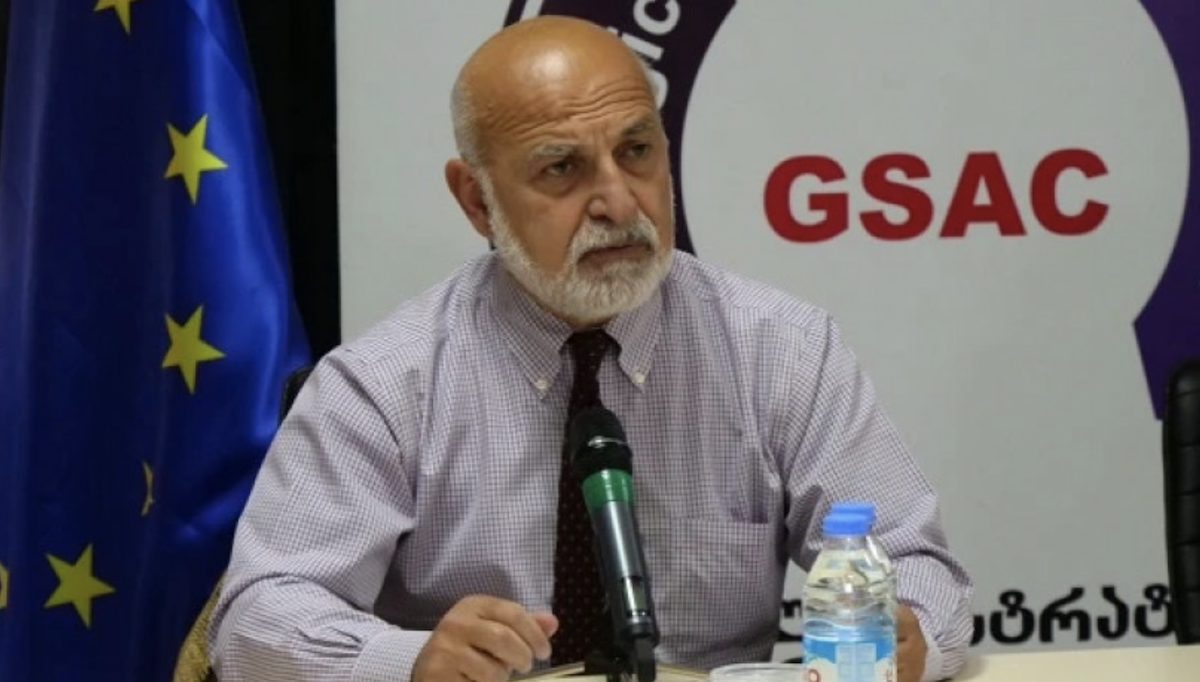
“Holding the [European Political Community] summit in Yerevan shows that European leaders have confidence in Nikol Pashinyan,” said Valeri Chechelashvili, head of geopolitical studies at the Centre for Strategic Analysis and a former Georgian ambassador to Ukraine.
However, Chechelashvili said he did not believe Armenia could fully replace Georgia in the region. He added that Armenia understood its path towards Europe would be faster alongside Georgia.
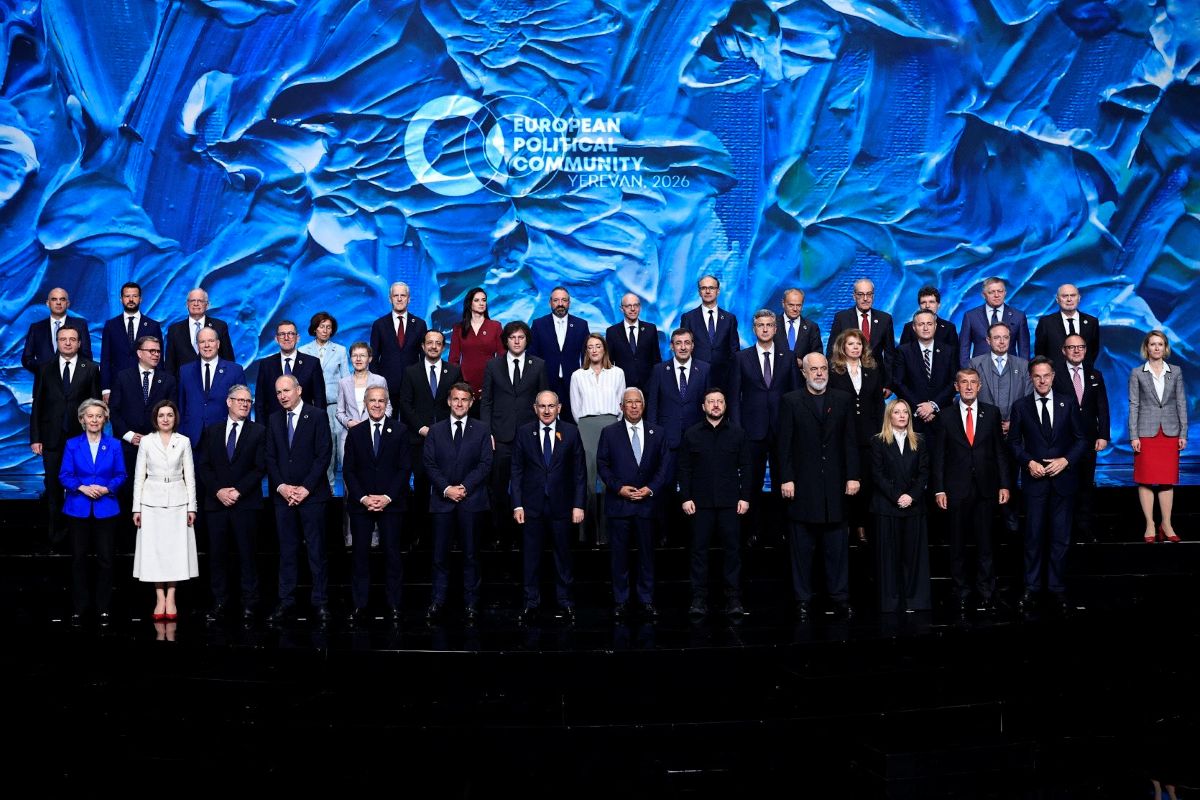
The analyst also commented on the meeting between Ukrainian President Volodymyr Zelenskyy and Georgian Prime Minister Irakli Kobakhidze during the summit. He said the talks could not have taken place without the approval of Bidzina Ivanishvili, honorary chairman of the ruling Georgian Dream party.
According to Valeri Chechelashvili, Ivanishvili understands that Russia is weakening and losing influence, and that Georgia’s leadership is preparing to adjust its political course.
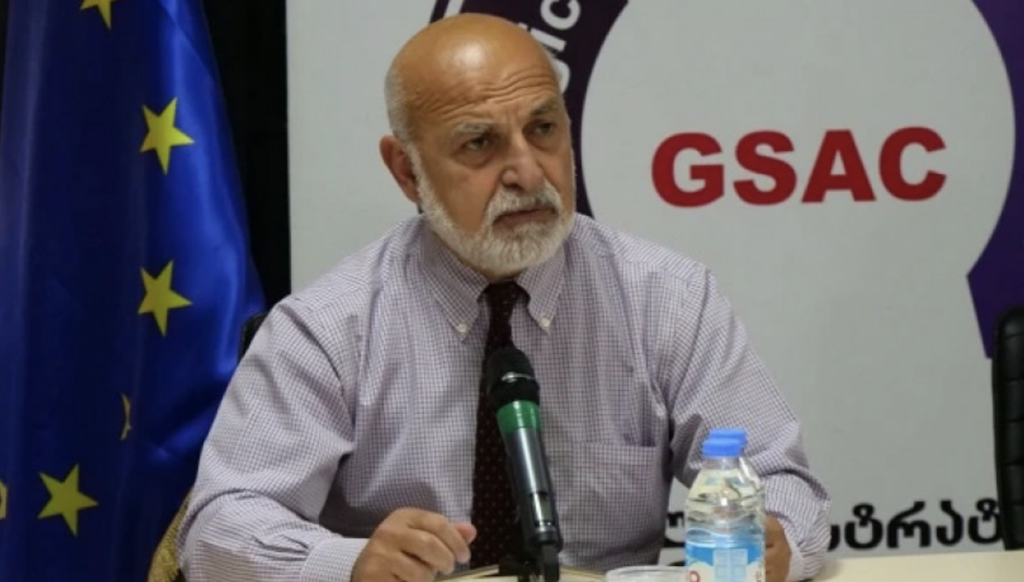
Valeri Chechelashvili:
“Armenia cannot fully replace Georgia in the region, because geography and geopolitics cannot be ignored — and the Armenians themselves understand this better than anyone. Just remember Nikol Pashinyan’s speech at the European Parliament, where he effectively acted as an advocate for Georgia in its relations with the European Union.
“Armenia clearly understands that it will move towards Europe much faster together with Georgia than without it.
“And Georgia understands this too. We will be far more successful in the process of European integration if we move forward hand in hand. The difference is that Armenia is currently showing courage, political vision and determination, while our government — and especially the speaker of parliament — is unfortunately intensifying anti-European rhetoric. Naturally, Europe is watching this very closely.”
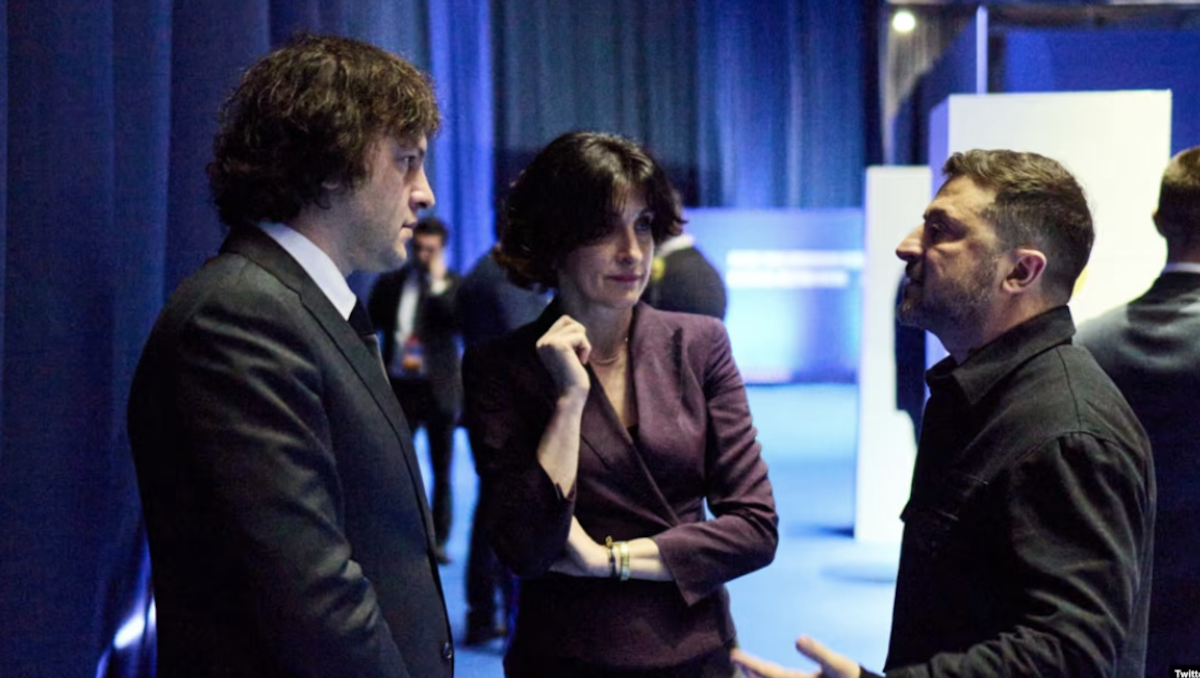
“I have to admit, I did not expect the meeting between Volodymyr Zelenskyy and Irakli Kobakhidze to take place. It came as a very pleasant surprise to me. But when I think about it, I come to several conclusions.
“It is clear why Zelensky wanted the meeting. He is the president of a country at war, and he is interested in maintaining relations with all potential partners. Ukraine and Georgia also share centuries-old ties and a special kind of connection.
“What is far more interesting is why the Georgian side agreed to the meeting and, as Mr Kobakhidze himself admitted, agreed immediately.
“First of all, I do not think Kobakhidze would have made such a decision on his own. Most likely, the decision was made in Tbilisi. And who would he have called from Yerevan? Formally, Georgia’s top official is the prime minister — meaning Kobakhidze himself. But he would not have been able to make a strategic decision of this scale independently. Of course, he called Bidzina Ivanishvili, and Ivanishvili gave his approval.”
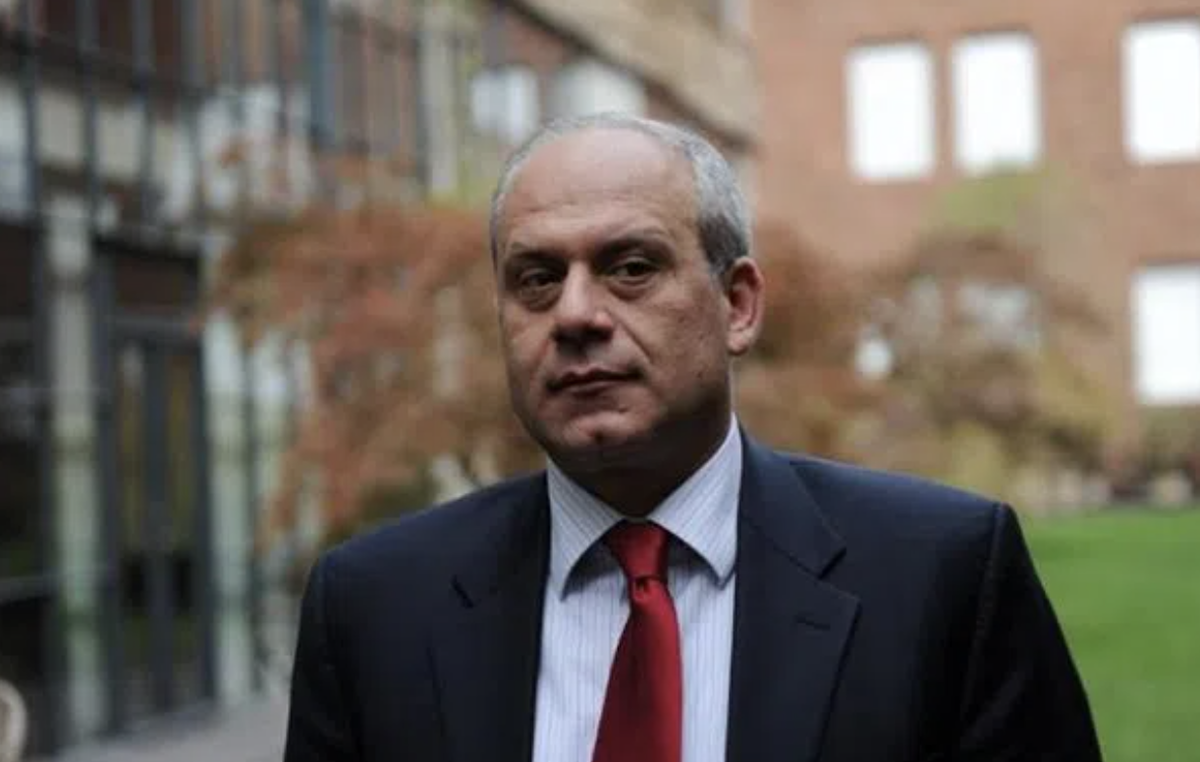
“This leads me to another conclusion: within Georgian Dream there has been a reassessment of Russia’s role and the extent of its potential influence over Georgia and the South Caucasus.
“I think people within Georgian Dream already understand this very well — and probably Mr Bidzina Ivanishvili more than anyone else. If anyone has access to first-hand information, including from oligarchic circles, it is him. They understand that Russia is weakening, its influence is declining and the time has come to restructure foreign policy and make certain political adjustments.
“If this is indeed the case, then I believe we will soon see a Ukrainian ambassador returning to Tbilisi and a Georgian ambassador returning to Kyiv. Other steps could follow after that.”
Tbilisi view on Yerevan summit