
Armenia steps out of Moscow’s shadow: What the Yerevan summit revealed Latest news from Azerbaijan
Day: May 5, 2026
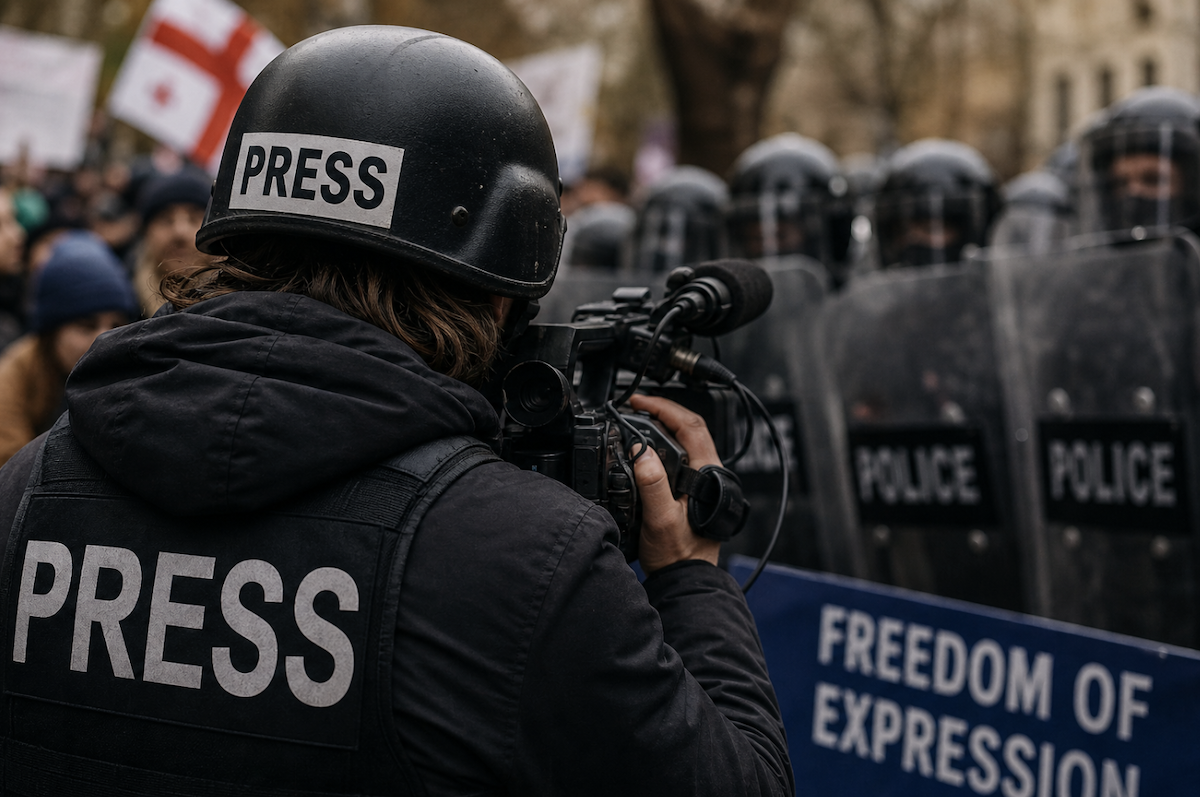
On World Press Freedom Day, the co-chairs of the Media Freedom Coalition — the United Kingdom and Finland — issued a joint statement. Several other European member states also joined, including Austria, Belgium, Germany, Denmark, Ireland, Iceland, Latvia, Lithuania, Luxembourg, the Netherlands, Norway, Poland, Sweden and Estonia.
The statement focuses on media freedom in Georgia. It says there are worrying trends in the country.
“We are seeing worrying trends in Georgia. According to Reporters Without Borders (RSF), Georgia’s position in the World Press Freedom Index has sharply declined. The country ranked 77th in 2022 and 135th in 2026, marking a significant decline. RSF describes Georgia’s media environment as ‘difficult’ and points to interference in journalistic work, violence against journalists, and laws that restrict freedom of expression. At least 50 journalists have been injured, beaten, detained or prevented from carrying out their professional duties during demonstrations. These attacks are unacceptable. Journalists must be able to investigate, report and question those in power without fear.
In a report under the OSCE Moscow Mechanism, the rapporteur highlights the systemic nature of violence during protests in Tbilisi and other Georgian cities in 2024–2025, including violence against journalists.
The Council of Europe’s Commissioner for Human Rights, in a recent report, points to a lack of accountability over allegations of unlawful detentions and the use of excessive force against protesters and journalists during the 2024–2025 protests. The report also refers to legislation restricting freedom of expression, peaceful assembly and association.
The case of Mzia Amaglobeli illustrates what is at stake. Her detention, treatment and arrest following the 2025 protests have been widely condemned as unjust and politically motivated. We again call for her release. The arrest of a journalist such as Mzia Amaglobeli is an attempt to intimidate others in the profession.
Freedom of expression and media freedom are protected under Article 19 of the Universal Declaration of Human Rights. This includes the right to think, speak, listen and write freely. These freedoms form the foundation of any democratic society. Without them, citizens cannot make informed decisions, hold their government to account or engage in open and safe debate about their country’s future.
On World Press Freedom Day, we once again reaffirm our commitment to protecting the safety of journalists everywhere,” the statement said.
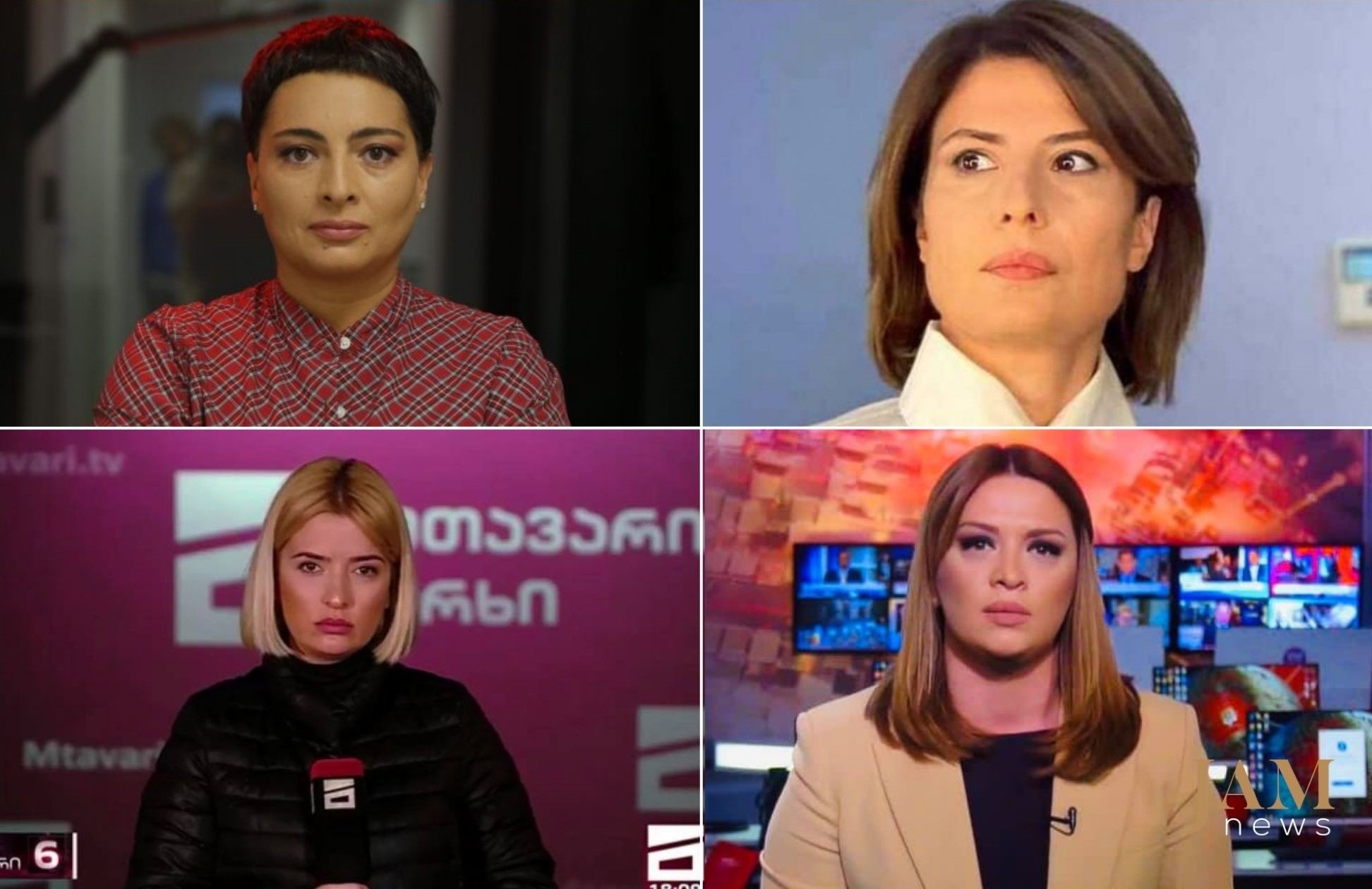
Media Freedom Coalition statement on Georgia
Formula TV, Georgia’s major opposition-leaning channel, announced on May 4 that its broadcast had been temporarily suspended for part of its audience due to an outstanding debt to Stereo Plus, an operator that distributes the channel’s free-to-air signal via a digital multiplex to viewers without cable television.
The channel said it is working to raise the necessary funds, and shared bank account details for those willing to donate.
Earlier, in March, TV Pirveli, another major pro-opposition channel, also reported its satellite broadcasting was halted due to unpaid fees. The shutdown in TV Pirveli’s case mainly affected viewers in regions and remote areas, where online streaming and on pay TV platforms were less available.
The issues come as Georgian broadcasters face financial hurdles amid tightened laws, including a ban on foreign funding introduced through amendments to the Law on Broadcasting last April.
In December, Transparency International-Georgia, a local watchdog group, reported that “17 regional broadcasters” halted operations in 2025 due to financial difficulties. The watchdog then warned that other major critical broadcasters, Formula TV and TV Pirveli, are also facing financial difficulties and the “risk of closure.”
Also Read:
On 5 May, the European Parliament is due to vote on its annual report on Georgia. MEPs will consider both the main document and proposed amendments. Some proposals call for sanctions against several major pro-government broadcasters.
According to amendments published on 19 March on the European Commission website, some MEPs are calling for restrictive measures against the TV channels Imedi, Rustavi 2 and POSTV. The report describes these outlets as a “de facto communications arm” of the ruling Georgian Dream party, which it says systematically spreads disinformation and hostile propaganda.
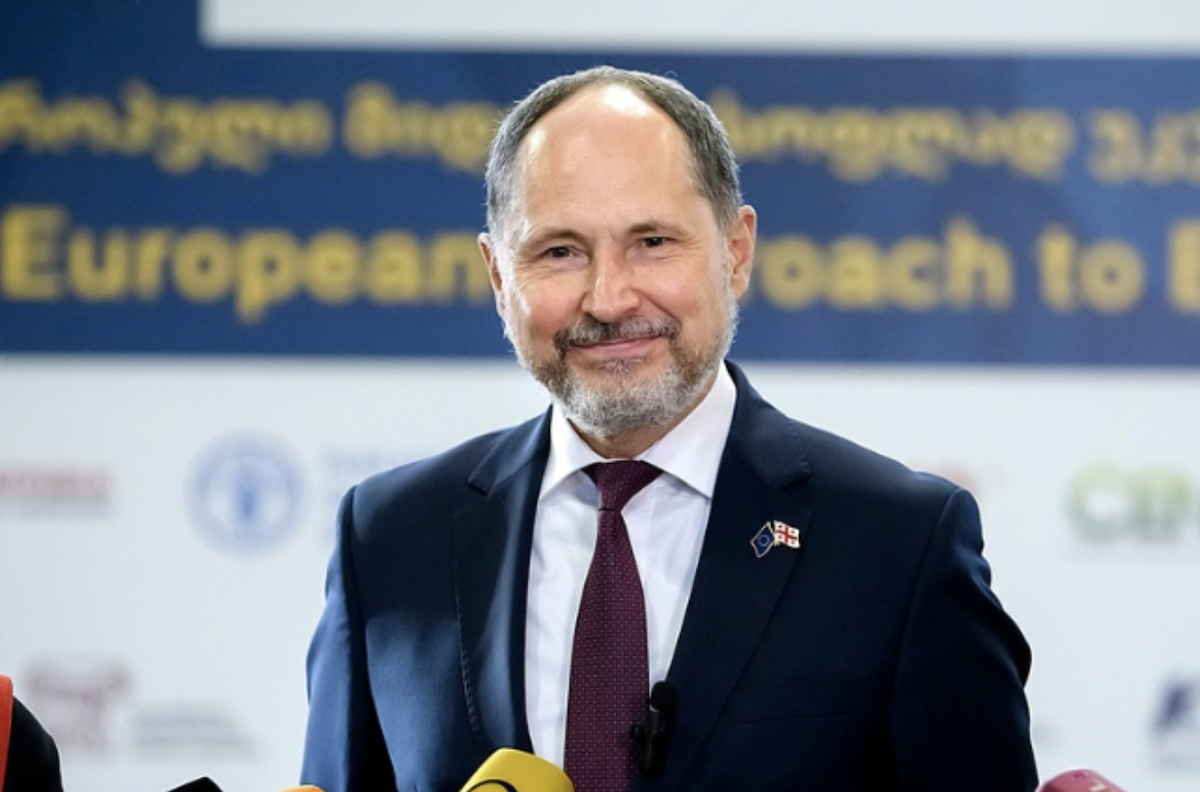
The report focuses in particular on information campaigns targeting representatives of the European Union. It condemns “demeaning narratives” and “manipulative reporting” targeting EU institutions and officials, including the EU Ambassador to Georgia Pawel Herczynski, which it says aim to undermine public trust in the EU.
MEPs stress that the deliberate spread of disinformation cannot be regarded as good-faith journalism and should not be protected by media freedom provisions. According to the report’s authors, such actions instead amount to political propaganda aimed at strengthening authoritarian control and pulling the country away from its European path.
In this context, the report also highlights Georgia’s status as an EU candidate country. It says such practices run counter to the commitments the country made when it obtained that status. The report adds that disinformation campaigns and restrictions on media pluralism undermine the fundamental principles of democratic accountability and freedom of expression.
One of the amendments calls on EU institutions and member states to consider “appropriate and proportionate” sanctions against individuals and entities responsible for organising and financing these campaigns. It also refers to the possible use of the EU’s global sanctions regime if such actions continue.
Separately, Amendment 125 raises the possibility of extending sanctions to members of the leadership of Georgia’s National Communications Commission and the Public Broadcaster, as well as individuals from Imedi and POSTV whom the report says are responsible for spreading “deliberately misleading information” about the war in Ukraine.
The report notes that the United Kingdom has already imposed sanctions on the channels. It also calls on the European Union to review their accreditation with EU institutions and to consider similar measures in member states.
Sanctions against Georgian TV channels