
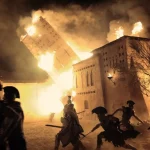
Christopher Nolan never disappoints. The Odyssey is the latest testament of that. A movie beyond brilliance. Gritty realism, epic fantasy, breath-taking visuals, insane special effects, bombastic music and emotional highs. It leaves you a cathartic mess but morally better. Insane attacks, a deliberate multiracial cast chaired by Lupita Nyong’o as Helen of Troy and Zendaya as the goddess Athena. A distinguished choice of actors is fused with the genius of the communicative signifiers used to tell a harrowing tale.
By Emad Aysha
Like so many Chris Nolan movies, the story is told forwards and backwards at the same time, and in the process, mysteries are set up and resolved, while extra layers of meaning are added along the way. All done in a way that gets your heart racing in key sequences, à la Oppenheimer (2023). Just on steroids!
We’re first introduced to the city-state of Ithica with the royal family quaking under the absence of its legendary king, Matt Damon, aka Odysseus, all these years after the success at Troy. The crown prince Telemachus (Tom Holland) is too tempestuous to take the throne, and the queen Penelope (Anne Hathaway) is running out of time.
A new breed of enemy, the Sea Peoples, is on the horizon, and the queen needs to wed again if she is to protect her kingdom and, critically, keep it united. Her suitors, chief among them Antinous (Robert Pattinson), are slowly exerting their influence on the royal palace.
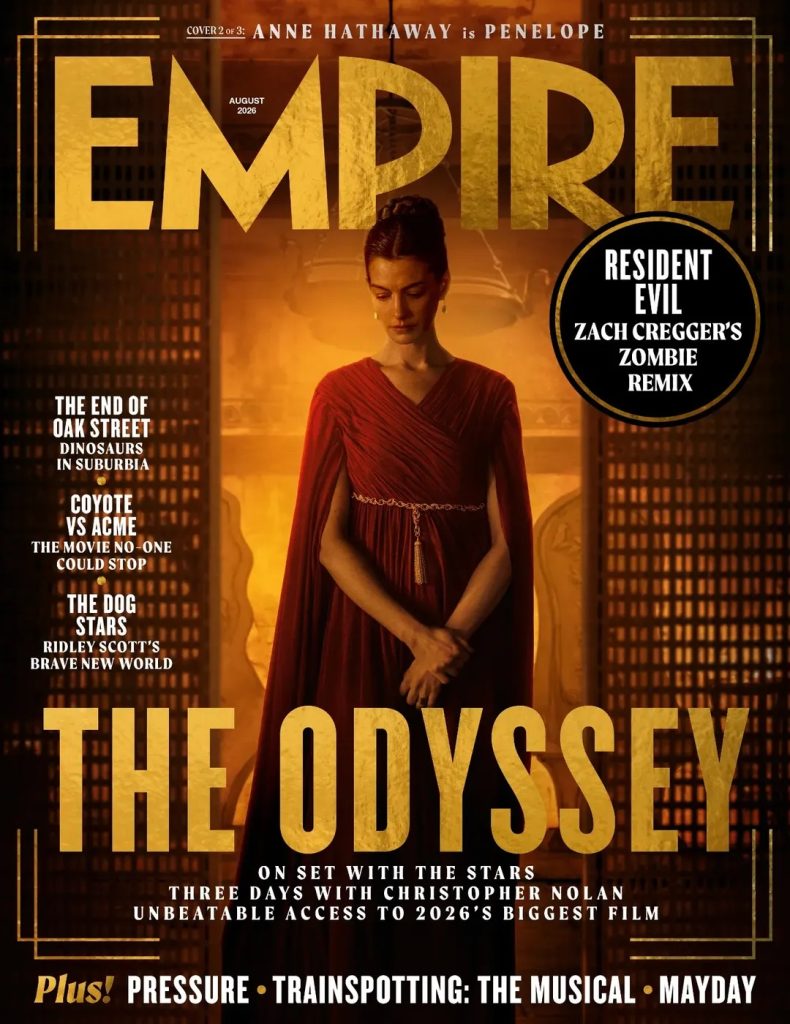
LADY IN WAITING: This is what the hero Odysseus has to look forward to, if and when he gets back. Talk about memories of better times; for the ‘current’ age of darkness.
Penelope still believes he is alive. Alas, it was the good king himself who told her to wed again since he may never make it back. Good for her, he is alive, just minus his memories. A single woman has taken him in, Calypso (Charlize Theron).
She feeds him the intoxicating lotus flower at first but does help him to remember, even if it means she’s going to lose him to his old life. That’s how we see the war’s aftermath, through his belated recollections.
To Odysseus’s considerable credit, the war was organised democratically; volunteers were picked through lots. (The same way Athenians invented elections.) The king himself had to go, or else Agamemnon would lay his kingdom to the ground, a tyrant who murdered his own daughter to make it to the shores of Troy.
This is when the movie’s coded imagery begins to kick in. Anne Hathaway, while as Elfin as they come, has brown eyes, whereas Agamemnon’s daughter is racially mixed. Later, when we see Helen, safely back with her hubby, face scarred in punishment, you get the point.
She’s being portrayed as a slave, a visual signifier from Europe’s history of imperial plunder in Africa. That’s pretty much the story of the Trojan Wars, a pretext for conquest as Odysseus himself tells us.
Agamemnon also wears dark armour that makes him look like a killing machine, with a skeletal neckpiece dangling from behind. We never see his face, making him all the more menacing. And when you see him lit up at the gates of Troy in the conquest scene, he looks like a robot god.
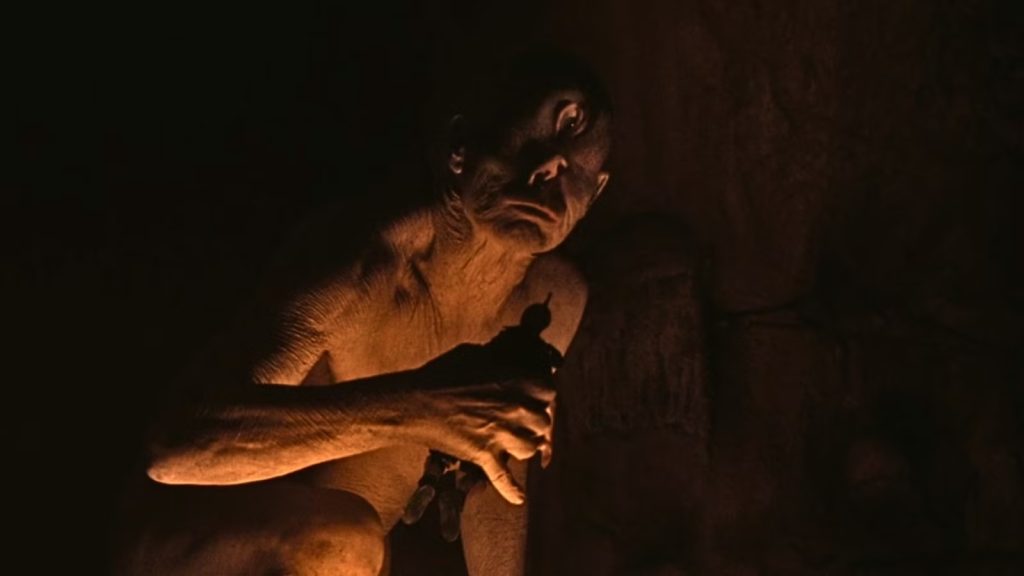
MEAT GRINDER: Another stroke of visual genius was to give the Cyclops an inverted eye, like a deformed ‘human’ being. It makes him easier to relate to and so more sympathetic.
The beating sound you hear in the background, drums-a-go-go, is the sound of a heart racing towards expectation and plunder. But we hear it again when Odysseus reclaims the throne. A battle cry for justice, also signifying that the Greeks have become their own worst enemy.
As for Zendaya, let’s say that the Trojans worshipped Athena too. As much as the Greeks and Odysseus personally. The multiracial character of the heroes and villains is, in part, meant to signify the Greeks’ openness to the surrounding world.
Their civilisation was built up through trade, as we’re told again by the good king. The other reason for this choice is to point out that there are no clear good guys or bad guys. The Trojans themselves are dressed in white, but wear masks – like actors or hypocrites in ancient Greece.
They even slay the boy soldier Sinon (Elliot Page), a brave lad who took his elder brother’s place in the war. The now grown-up and conceited Robert Pattinson. A draft dodger in effect. (Hint, hint!)
Everybody, for some reason, thought Elliot Page was going to be Achilles. The needed girlish childlike innocence that communicates bravery and unquestioning loyalty. (He’s like Argos, the loyal dog of Odysseus, and the loyal servant Eumaeus [John Leguizamo].)
Another lamb to the slaughter. The scene where he rises from the dead is ‘creepy’. And the detractors also didn’t catch on to the ultra-Nordic-looking cast members, like Charlize Theron. Tom Holland’s sword-master teacher, Mentor (Ryan Hurst), is played by someone who looks like a Viking.
Odysseus’s own ship looks like a Viking ship, without the distinct battering ram shape of ancient Greek warships. Then there’s the witch, the aptly named ‘Circe’, played by the ultra-English Samantha Morton.
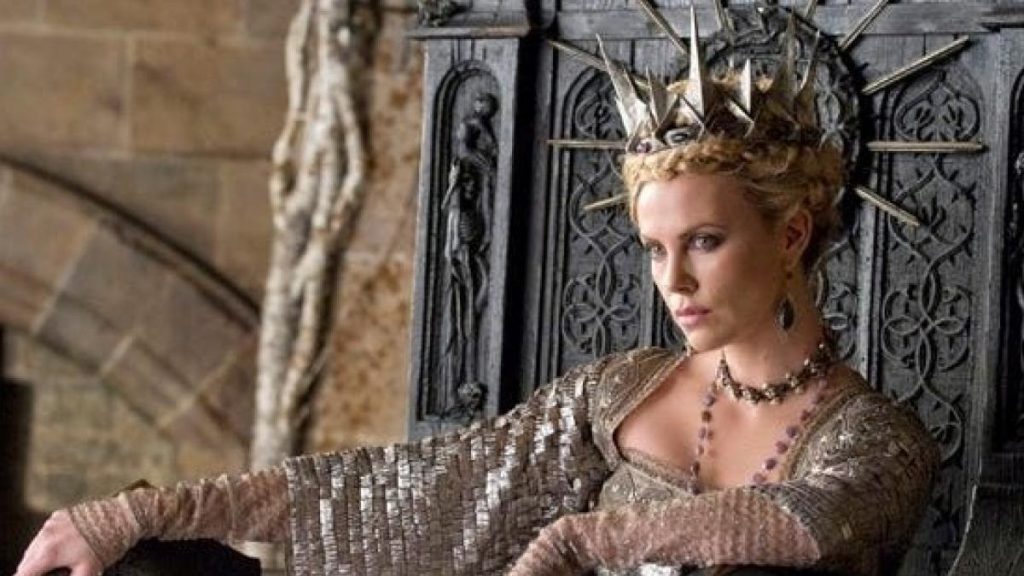
NARCO BLONDE: Charlize Theron in a screenshot from ‘Snow White and the Huntsman’ (2012). An adequate choice here since you can’t quite tell who’s side she’s on.
The scene where she turns Odysseus’s men into pigs helps explain Philip K. Dick’s story “Strange Eden” (1954), in which a would-be coloniser tries to possess an exotic alien woman. He turns into a lion-like animal in the end. And there’s a lion in this sequence.
Even the look of the movie owes a lot to Iphigenia (1977) and Electra (1962), down to the run-down castles. You’re also reminded of Jason and the Argonauts (1963) and Clash of the Titans (1981), with natural lighting and hand-knit sweaters to boot.
Myths all borrow from each other, old and new. The Cyclops scene has a Grendel-like quality. He only attacks when provoked by a trespass. Also crunching the head fist, helmet and all.
The many living rocks you see in SF are reminiscent of the rock monsters in The Odyssey, too, yet another borrowing from mythology.
Odysseus is a man haunted by free will and his sense of personal responsibility. It’s only when he makes peace with the gods that he can get back home. Calypso’s advice was to let the storm waves carry him.
Odysseus, for his part, is very like Beowulf, always believing in a fair fight. Even when hunting. The lesson the Greeks forgot, which turned them into a forerunner of the Sea People – leading by bad example. International law, anyone?
A true Greek epic, and one we’re more in need of today than ever before. The end has Odysseus and Penelope going to the uncharted land of the West. They’re trying to carry what’s left of their dying civilisation in the form of myth because writing will soon disappear too.
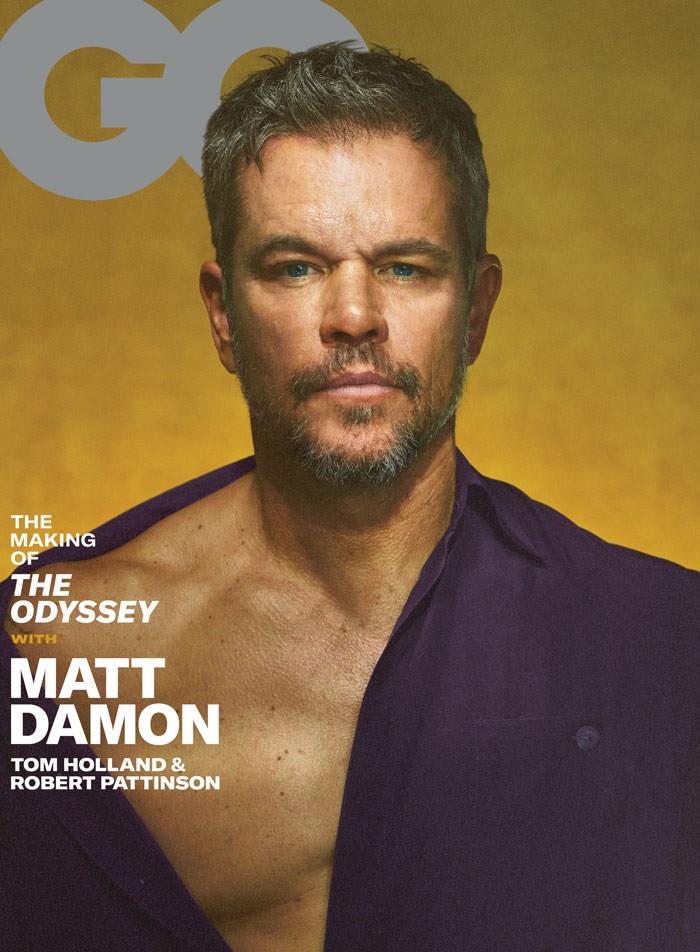
DAMON SLAYER: I initially had misgivings about casting the titular hero when production began but its good to have your expectations dashed once in a while!
But even they know that people will forget the lessons of Troy, making the same mistakes all over again. Poor Wolfgang Peterson would be rolling over in his grave if he knew how Trump outdid Bush.
All the more reason to watch this movie, detractors be damned. Xenophobes and bleeding heart liberals alike!
The post The Odyssey – Reviving the skeletal remains of this century’s Greek myths first appeared on The Liberum.