Categories
Selected Articles

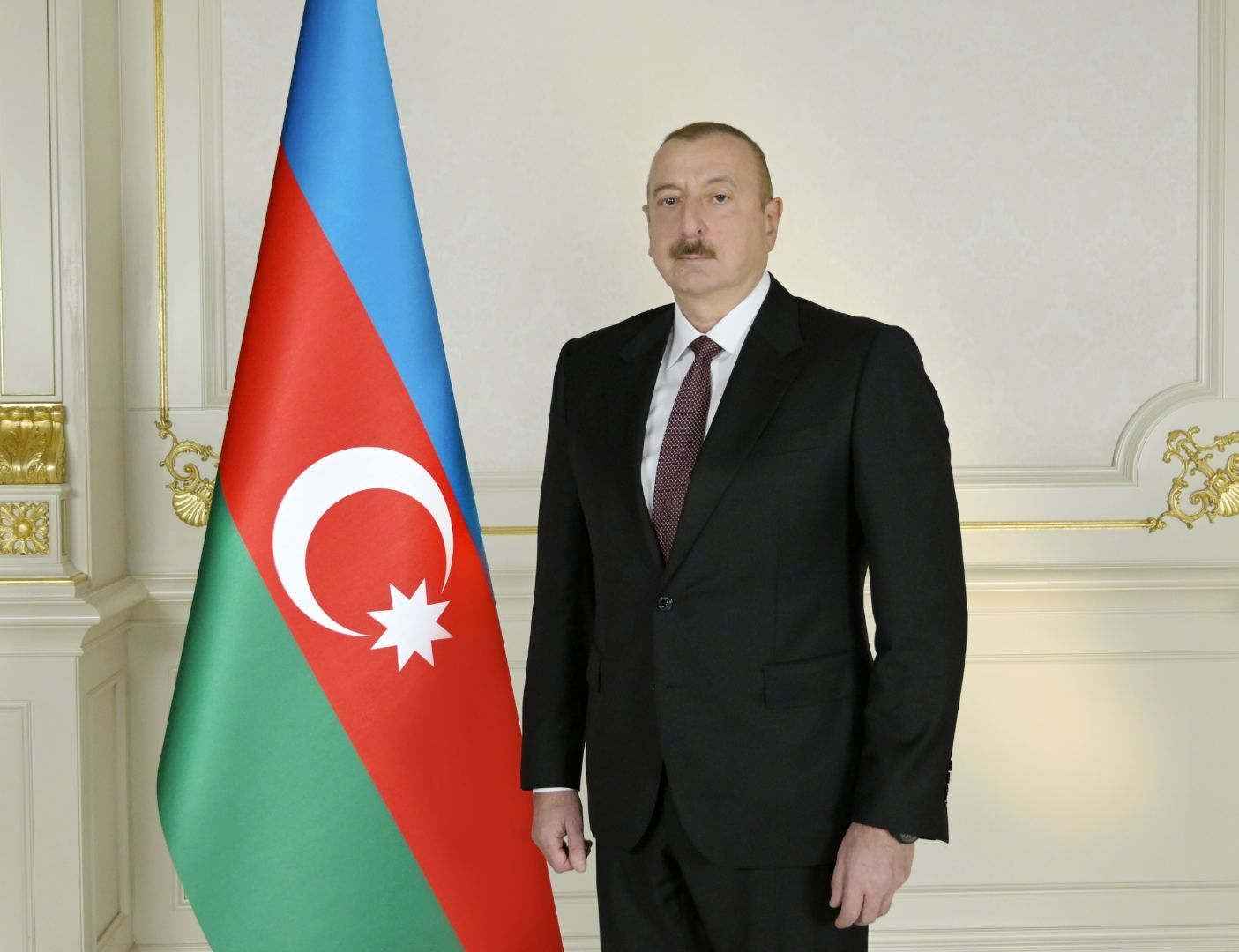
President Ilham Aliyev congratulates Azerbaijan’s Jewish community


ilham_aliyev_main_photo_200320_3.jpg

President of the Republic of Azerbaijan Ilham Aliyev has
congratulated the Jewish community of Azerbaijan on the New Year –
Rosh Hashanah.

The letter reads:

Esteemed Mr. President,

On my own behalf and on behalf of the people of Azerbaijan, I am
happy to extend my cordial congratulations and sincerest wishes to
you and through you to the friendly people of Israel on the
occasion of the upcoming Jewish New Year – Rosh Hashana.

I wish that this bright holiday, which brings a new spirit to
people and gives new hopes for the future, brings you and your
family, your friendly people and your country good days, peace,
prosperity, abundance and blessings.

I am sure that we will continue to make joint efforts to further
strengthen and expand Azerbaijan-Israel friendship and cooperation
in line with the will of our peoples, who always cherish their
national and moral values.

Sincerely,

Ilham Aliyev

President of the Republic of Azerbaijan

Baku, 12 September 2023

Follow us on Twitter @AzerNewsAz


Categories
Selected Articles

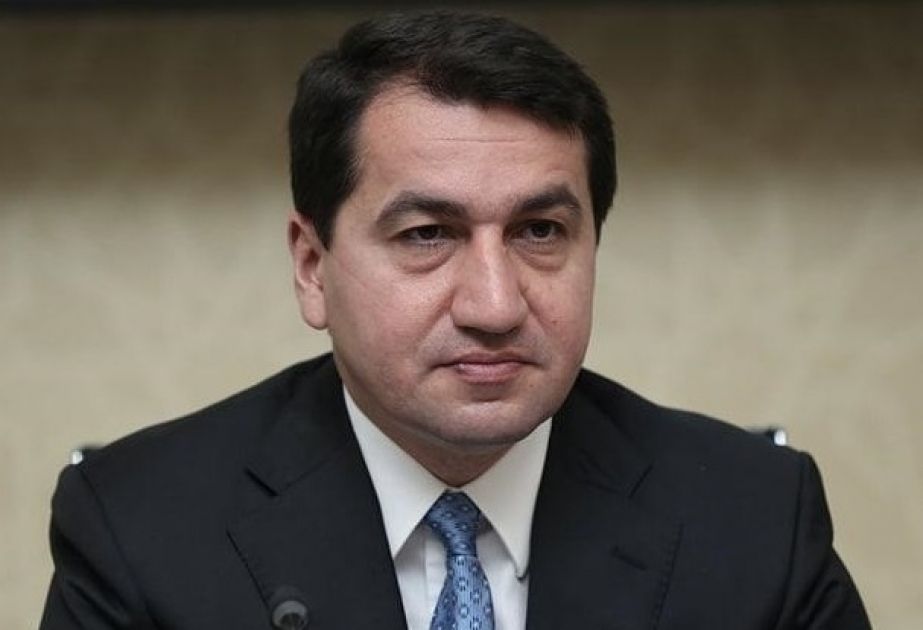
Assistant to President: Senator Menendez lies to Senate instead of answering corruption allegations


15976845843908435538_1200x630.jpg

The Assistant to the President of the Republic of Azerbaijan
Hikmat Hajiyev, shared a post on his X (former twitter) page in response to the
pro-Armenian senator of the US Congress Bob Menendez’s biased
speech against Azerbaijan in the senate. The Azerbaijani official
said that the senator, who unilaterally serves the Armenians, lied
before the Foreign Relations Committee about the Armenian minority
in Garabagh and shared fake photos, Azernews reports.

“Instead of answering serious corruption allegations,
congressman Menendez lies to the Senate Foreign Relations Committee
with false information and fake pictures. The person presented in
the picture died of cancer. Armenians themselves are ashamed to use
this naked lie any longer after provided substantial
criminal-medical evidence. This kind of lobbyism, ‘moneytalkism,’
sheer lie and racist hate against Azerbaijanis and others undermine
the image and global reputation of the United States Congress.
Shameful!”

Instead of answering serious corruption
allegations, congressman Menendez lies to the Senate Foreign
Relations Committee @SFRCdems
with false information and fake pictures. The person presented in
the picture died of cancer. Armenians themselves are ashamed to use
this naked lie… https://t.co/c2R18szRJr

— Hikmet Hajiyev (@HikmetHajiyev)
September 13, 2023

Pro-Armenian Bob Menendez, who was accused of corruption in
2015, tried to present a picture of an Armenian resident of
Garabagh, who died of cancer, as if he died of hunger.

Bob Menendez repeatedly made biased statements against
Azerbaijan in the US Congress. Menendez’s aggressive speech in the
senate stems from his extreme hatred for Azerbaijan and his
Turkophobic sentiment. It seems that Bob Menendez could not digest
the recent successful political steps taken by the Azerbaijani
leadership in exposing the Armenian provocations, and for this
reason, he vomited his hatred in front of the congress tribune with
all his might.

Follow us on Twitter @AzerNewsAz


Categories
Selected Articles

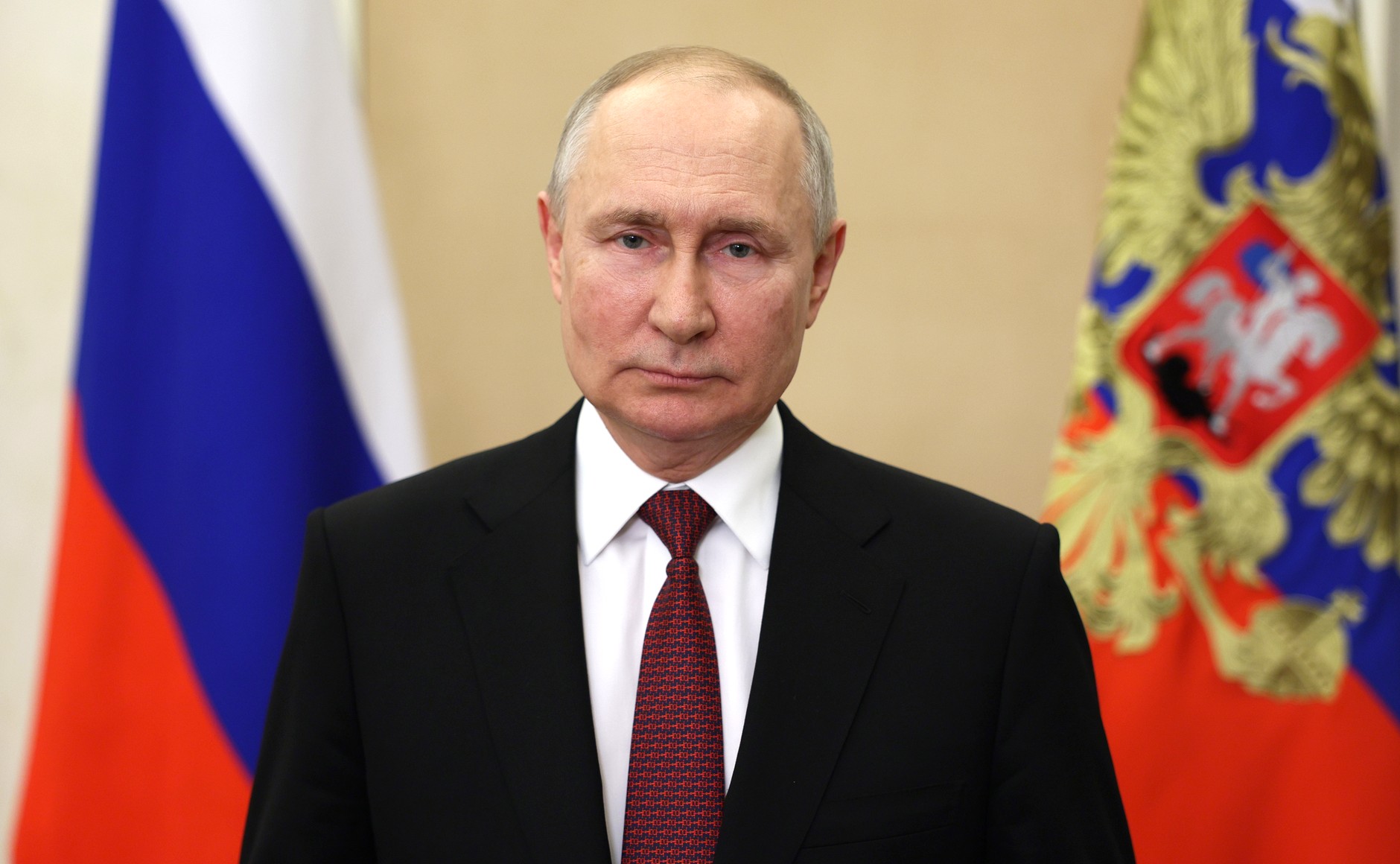
Putin Grows More Paranoid of Potential Threats to Power


Putin-paranoid-Sept-2023.jpg

Until June 2023, Russian President Vladimir Putin was apparently quite confident in his power and the lack of any true challenge to it. Anti-Putin activists were successfully squeezed out of the country, the most vociferous were imprisoned or killed. The more measured dissatisfied voices largely stayed silent. The Russian elites were seemingly willing to endure the president’s exhaustive foreign policy agenda, consistently supporting him in the public sphere (The Moscow Times, June 8).

However, Yevgeny Prigozhin’s “march for justice” broke that coerced calm. It turned out that several thousand armed men could move freely throughout Russia, take control of critical military facilities and major cities, as well as fire on the military aircraft that tried to stop them. Most importantly, none of Putin’s most ardent supporters came out to meet Prigozhin and defend Moscow with their forces. Some supporters allegedly even tried to flee from danger (Current Time TV, June 24; Vesma, June 27).

The Wagner Group’s mutiny shone a light on Putin’s weak side, demonstrating that it is possible to pressure the Russian president when possessing adequate resources. Thus, his image as a “strong leader” was irreparably damaged. At first, he characterized the march on Moscow as “treasonous” and a “betrayal,” promising to crush the “mutineers”; by the end of the day, his aggressive stance had all but evaporated. In this, the lasting damage to Putin’s image should be emphasized, as even the destruction of Prigozhin’s private jet cannot erase from memory how weakly and inadequately the Kremlin leader behaved on June 24 (Vazhnie Istorii; Meduza, June 24). It is unlikely that the Russian elites have forgotten that, in stopping the Wagnerites, Belarusian President Alyaksandr Lukashenka had to be involved.

As a result, Putin is now undoubtedly more suspicious of his entourage than he was when seeking to tighten his inner circle earlier this year, which has affected his approach to foreign policy (see EDM, April 10). The Russian president did not attend the BRICS summit in South Africa in person due to security concerns. He also abandoned the idea of attending the G20 summit in India in person. Foreign Minister Sergei Lavrov was designated to replace Putin as Russia’s head of state at both events (Lenta.ru, July 19, TASS, August 25)

Summits often involve face-to-face communication between heads of state who determine the main areas of their interaction. If the head of state is unable to participate, it is logical to replace them with the next most senior person. However, in the Russian sense, the next most senior official is not Lavrov, but rather Prime Minister Mikhail Mishustin.

Mishustin is often considered a possible compromise figure for a post-Putin Russia (24TV, October 20, 2022). He is an experienced administrator who has dealt primarily with economic issues. As such, Mishustin is one of the most informed Russian officials in regard to the true state of the domestic economy. At the same time, he is not a member of the siloviki clans, and he does not seem to share the extreme anti-Western views widely shared within Russia’s security services (Current Time TV, November 11, 2022). Thus, it is logical to assume that, once in power, Mishustin would be more likely to offer Ukraine and the West negotiations for a peaceful settlement of the war than other potential successors.

According to the Russian Constitution, it is the head of government who assumes the duties of the president in the case of the latter’s incapacity (Constitution.ru, accessed September 5). This was the case, for example, after the resignation of President Boris Yeltsin, when then–Prime Minister Putin acted as head of state until the presidential elections in the spring of 2000.

Prior to Prigozhin’s rebellion, Mishustin regularly traveled abroad. For example, in May 2023, he visited Beijing where he was received by Chinese President Xi Jinping (Government.ru, May 24). However, after the events of June 24, the prime minister’s foreign activities sharply decreased. He did not attend the BRICS summit, though, as the individual in charge of the economy, he would have been most effective in discussing all the issues on the agenda, including various economic integration projects. He will also not replace Putin at the G20 summit, where the state of the global economy is set to be the primary subject of discussion.

This suggests that, following the attempted coup, Putin has become wary of any contact between Mishustin and the leaders of other states, especially China and India. Both Beijing and New Delhi are important partners for Moscow, but they are increasingly concerned about Putin’s adventurous and unpredictable foreign policy. Within these circumstances, it is natural for a suspicious, aging dictator to fear that a younger, far less odious leader could negotiate more effectively in exchange for “some adjustment” in the Kremlin’s policies.

These considerations can be applied to the same extent to another potential “successor”—namely, Moscow Mayor Sergey Sobyanin. Overall, Sobyanin might carry even more weight within the Kremlin “power vertical” than Mishustin, having formerly served as the governor of Tyumen region, head of the Presidential Administration and head of the Government Staff (Mos.ru, accessed September 5). Nevertheless, as mayor, his foreign contacts are more effectively and legally restricted.

Lavrov, unlike Mishustin and Sobyanin, does not possess such administrative and political weight. Nor is he an independent player. For two decades in office, he has proven himself to be Putin’s faithful weathercock, incapable of defending his own opinions, much less pursuing his own ambitions. Therefore, it is safe to say that Putin does not feel especially threatened by Lavrov.

Overall, it seems that Mishustin may represent the greatest direct threat to Putin. If this is indeed true, that likely means the Russian premier will no longer serve as the head of the Russian delegation at major international events, though he will likely be able to maintain his contacts in the Commonwealth of Independent States and Collective Security Treaty Organization. It will also give credence to speculation that tensions are growing within the Russian elites due to the failing war and have been further aggravated by Prigozhin’s mutiny and subsequent demise. And Putin’s increasing suspicions may lead him to commit more mistakes that could further exacerbate this tenuous situation.

Categories
Selected Articles

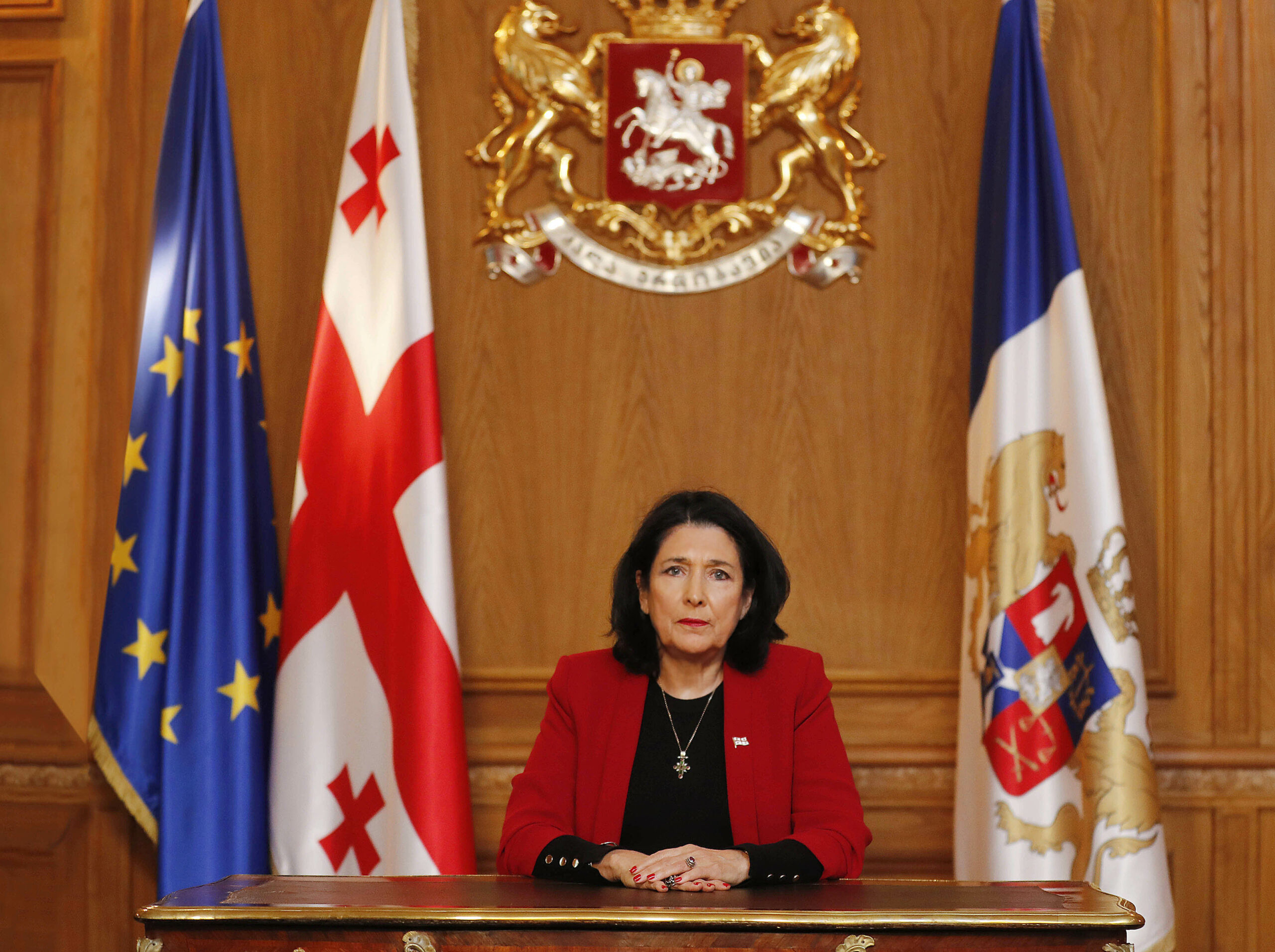
Georgian Government Launches Impeachment Proceedings Against Pro-European President


Zourabichvili-sept-2023-scaled.jpg

On September 1, the ruling Georgian Dream party announced the initiation of impeachment procedures against President Salome Zourabichvili (Facebook.com/KobakhidzeOfficial, September 1). The ruling party’s discontent stems from Zourabichvili’s recent visits to Berlin, Brussels and Paris. Georgia is a parliamentary republic. In Georgia’s constitution, the president has weak powers and is merely the formal leader of the country. The president does possess representative functions, giving the position the right to represent Georgia in the international arena, though that requires government approval.

In the most recent cases, the Georgian Dream government did not grant Zourabichvili the necessary permissions. She, nevertheless, proceeded to visit each European capital. The Georgian president used personal funds, public transport or personal contacts in traveling to meet with German President Frank-Walter Steinmeier (Facebook.com/SalomeZourabichvili, August 31), European Council President Charles Michel (Facebook.com/CharlesMichel, September 1) and French President Emmanuel Macron (Facebook.com/FormulaGE, September 6). Official Georgian diplomatic missions did not take any part in organizing the visits.

The ruling party accuses Zourabichvili of a “gross violation” of the constitution. Party officials point out that, according to the country’s constitution, Georgia’s domestic and foreign policy is carried out by the government. Thus, the president does not have the right to make visits without the government’s consent.

Zourabichvili was still in the European Council meeting with Michel when she learned of the impending impeachment. The possible impeachment shocked officials in Brussels, as the Georgian president’s European tour was predicated on one goal: to convince her European colleagues to award Georgia official European Union candidate status.

Many European politicians have expressed solidarity with Zourabichvili in this. The chairman of the Committee on Foreign Affairs of the German Bundestag, Michael Roth, on his X (formerly known as Twitter) page recently expressed such sentiments: “President Zourabichvili is a true European leader.” He went on to describe that it is not Zourabichvili who is threatening Georgia’s EU candidate status, but the Georgian Dream party with its poor governance and this impeachment attempt (Twitter.com/MiRo_SPD, September 1). On September 8, EU foreign policy chief Josep Borrell, during a visit to Georgia, mentioned that the possible impeachment “risks to further increase the counterproductive polarization” within the country (Eeas.europa.eu, September 8).

The Georgian Dream government has given no sign that it will reverse its decision. Even so, it has little chance of successfully implementing the impeachment procedure. If the Georgian Constitutional Court confirms the violation of constitutional norms by Zourabichvili, the final decision on impeachment must be made by Georgia’s parliament. And Georgian Dream does not have the necessary votes in the legislative body to independently implement the impeachment procedure without the opposition’s support.

Considering Georgian Dream’s recent pro-Russian and pro-Chinese tilt, the opposition will almost certainly not support the authorities (see EDM, May 25, August 10). Moreover, Zourabichvili is a rather controversial figure. She has no party affiliation but was elected to the presidency with active support from the ruling party. She initially had low popularity ratings among the population, and Georgian Dream had to use enormous resources to promote her election. Zourabichvili has gradually begun to distance herself from the ruling party since becoming president.

Notably, the Georgian president can still wield her weak powers in effective ways. The right to pardon prisoners is one tool Zourabichvili has already used to put pressure on the ruling party. She recently pardoned an opposition media manager arrested on dubious claims, greatly angering the government. Now, a possible pardon for former President Mikheil Saakashvili is on the agenda. While Zourabichvili has repeatedly stated that she will never do this, her progressive falling out with Georgian Dream may cause her to reconsider her position. Some in the opposition refuse to believe in the sincerity of the president’s pro-Western direction until she pardons Saakashvili. In fact, it has been reported that “the opposition presented conditions to the president: if she pardons former President Saakashvili, then they will not join the impeachment(Tagesschau.de, September 1). Yet all parties deny that this ever happened.

The government further accuses Zourabichvili of deliberately preventing Georgia from obtaining the long-awaited EU candidate status with her visits to Europe. Paradoxically, Georgian Dream party leader Irakli Kobakhidze also claims that the president is trying to take credit for recent successes in the EU integration process (Facebook.com/KobakhidzeOfficial, September 1). Zourabichvili is generally greeted more kindly than the Georgian Dream leaders in Europe. Her attention to the Georgian population’s pro-European sentiments has made her into the standard-bearer for pro-EU Georgians (Eurasianet, June 2).

Russian politicians and officials have increasingly criticized Zourabichvili and praised the Georgian Dream government. Dmitry Medvedev, deputy chairman of the Russian Security Council and former president, characterizes the current Georgian government as “pragmatic.” He also notes that “in Georgia, there are still ‘rabid, crazy, strange people.’ … Here is the current president of Georgia—she is a Frenchwoman who categorically opposes the development of her country’s economy” (RT, August 26). Zourabichvili was indeed born and raised in France, possesses dual Georgian-French citizenship and was once the French ambassador to Georgia.

Nevertheless, the Georgian public’s solidarity with its president is growing. Zourabichvili, upon her return from Europe, made a special address to the nation. In her remarks, she seemed full of hope and practically threatened the government herself: “You [the Georgian people] elected me as a supporter of Europe. … Let them not dream of my resignation. Moreover, I will travel everywhere, I will go to all the capitals of Europe. Georgia will never return to the Russian yoke. We will stand together for our rightful place in Europe. If the authorities understand this—it will be good. Otherwise, their future depends on it” (Facebook.com/SalomeZourabichvili, September 7).

It remains unclear how the current conflict will end. Previously, the ruling party repeatedly threatened Zourabichvili with impeachment or a lawsuit in the Constitutional Court. The previous conflict between the president and the government arose when she refused to appoint some Georgian Dream ambassadorial candidates (Agenda.ge, March 30, 2022).

The picture seems to be more or less the same for both Brussels and Moscow: the pro-Russian government is threatening to impeach the pro-European president. The Kremlin is certainly pleased with these developments, while the EU and Georgian society are alarmed as to what this portends for the country’s future.


Categories
Selected Articles

CIA offered analysts monetary incentives to change their position on Covid origins: Whistleblower – WION


CIA offered analysts monetary incentives to change their position on Covid origins: Whistleblower  WION

Categories
Selected Articles

First on FOX: CIA accused of offering money to officials to alter views on COVID origins – Fox News


First on FOX: CIA accused of offering money to officials to alter views on COVID origins  Fox News

Categories
Selected Articles

CIA whistleblower claims agency offered official money to change views on COVID origins – Fox News


CIA whistleblower claims agency offered official money to change views on COVID origins  Fox News

Categories
Selected Articles

Did the CIA bribe analysts to reject Covid-19 China lab-leak theory? Scientists have doubts – Yahoo Finance


Did the CIA bribe analysts to reject Covid-19 China lab-leak theory? Scientists have doubts  Yahoo Finance

Categories
Selected Articles

Putin criticizes Trump arrest, trial: ‘Shows the rottenness of the American system’ – Fox News


Putin criticizes Trump arrest, trial: ‘Shows the rottenness of the American system’  Fox News

Categories
Selected Articles

Will Donald Trump go to prison? – The Independent


Will Donald Trump go to prison?  The Independent