
#CaspianSea #SouthCaucasus #StrategicImportance
— Georg Erber (@PhraAthit) Mar 16, 2026
Day: March 15, 2026
@McFaul @SouthCaucasus I’ve been told repeatedly that Russia was winning though? Doesn’t look like it 🤷♂️
— Ben 🌻🍉🎗️ (@FreeUkraine91) Mar 15, 2026

Retired Turkish rear admiral and lecturer at Cihat Yaycı has warned that the growing activity of militant organizations in northwestern Iran could trigger serious geopolitical consequences for the wider region, including the South Caucasus and Azerbaijanб, News.az reports.
In a recent interview, Yaycı discussed the increasing presence of organizations connected to the PKK network, including PJAK, YPG, and the Syrian Democratic Forces.
***
According to the Turkish analyst, these groups are gradually concentrating their forces in northwestern Iran, particularly in territories located near Türkiye and Azerbaijan.
Yaycı argued that describing these organizations simply as “Kurdish groups” is misleading, claiming that they include militants of different nationalities and function primarily as armed networks rather than ethnic movements.
“These organizations consist of militants coming from different countries and backgrounds,” he said, emphasizing that they should be viewed as militant organizations operating within a broader geopolitical framework.
One of the central points raised by Yaycı concerns the demographic and geopolitical importance of Iran’s northwestern regions, particularly West Azerbaijan province.
The area borders Türkiye and lies close to Azerbaijan, making it strategically significant in regional politics.
According to Yaycı, millions of ethnic Azerbaijani Turks live across northern Iran, including major cities such as Tabriz, Urmia and other surrounding areas.
He estimated that the Turkic population in Iran may represent more than 40 percent of the country’s population, making it one of the largest ethnic communities in the country.
Yaycı warned that tensions in these regions could have serious consequences if militant groups attempt to strengthen their presence in areas populated by Azerbaijani Turks.
He also referred to reports suggesting that fighters linked to PJAK have been deployed to parts of West Azerbaijan province and other nearby districts.
According to him, such developments could increase tensions in areas where different communities coexist.
Another major issue raised by Yaycı concerns the movement of militant fighters across several Middle Eastern conflict zones over the past decade.
According to the Turkish analyst, fighters linked to these networks were previously active in Türkiye, Syria and Iraq before gradually being redeployed to Iran.
He argued that political developments in Syria and Iraq created opportunities for these organizations to reorganize and relocate their fighters.
“When pressure on these organizations decreases in one theater, they tend to move their forces to another region,” Yaycı said.
In his assessment, militants who left Türkiye in earlier years regrouped in Iraq and Syria before eventually shifting toward Iran’s northwestern territories.
He suggested that these movements reflect a broader geopolitical struggle in which militant networks are used as instruments within regional power competition.
Yaycı also raised concerns about the potential geopolitical implications of these developments.
According to him, instability in northwestern Iran could disrupt the strategic geographic link between Türkiye and Azerbaijan.
The region forms part of an important corridor connecting Türkiye, Iran and the South Caucasus, and any destabilization there could affect broader regional connectivity.
Yaycı warned that the emergence of armed militant networks near these borders could increase security risks in the wider region.
He also addressed Azerbaijan directly, calling for vigilance regarding developments in Iran’s northwestern territories.
“If militant groups consolidate their presence in this region, their activities could eventually affect neighboring countries,” he said.
According to Yaycı, Azerbaijan’s energy resources and strategic location make it particularly important in regional geopolitical calculations.
The South Caucasus hosts major energy infrastructure linking the Caspian region with European markets, which increases the strategic importance of stability in the surrounding regions.
Yaycı suggested that militant activity in Iran could potentially create new security challenges near these critical energy corridors if the situation escalates.
Another concern he raised involves the potential for ethnic tensions to be exploited by external actors.
The analyst argued that attempts to redefine or reshape political and ethnic dynamics in northwestern Iran could create instability in areas where Azerbaijani Turks form a significant share of the population.
He stressed that any attempt to inflame ethnic divisions could have serious consequences for the broader region.
At the same time, Yaycı emphasized that the issue should not be viewed as an ethnic confrontation but rather as a security challenge linked to militant organizations and geopolitical competition.
He concluded that regional governments should closely monitor developments and coordinate their security policies in order to prevent militant networks from expanding their influence.
“In a volatile geopolitical environment, cooperation among regional states is essential to prevent instability from spreading,” Yaycı said.
The Turkish analyst warned that developments in northwestern Iran should be watched carefully, as they could influence the broader security environment of the Middle East and the South Caucasus.
The post Cihat Yaycı : “Militants leaving Türkiye and Syria are moving to Iran” – VIDEO appeared first on azeritimes.com.
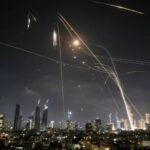
Over the past 24 hours, Iran has launched several large-scale missile attacks on Israeli cities using new types of weapons, News.Az reports, citing Al Jazeera TV channel.
According to reports, during the attacks, Iran deployed ballistic missiles armed with cluster munitions. These munitions are capable of separating into several individual warheads and hitting targets within a radius of up to 10 kilometers. In addition, large ballistic missiles carrying warheads of significant destructive power were launched.
***
As the channel emphasizes, Saturday was “one of the most intense” days in terms of Iranian missile attacks. Between morning and midday, 10 successive waves of attacks were recorded. The strikes targeted several areas, including Tel Aviv.
As a reminder, on February 28, the US and Israel launched a military operation against Iran. As a result, Supreme Leader Ali Khamenei and several high-ranking officials were killed. Following this, Iran began striking targets not only in Israel but also in countries hosting US and allied military bases: Saudi Arabia, Qatar, the United Arab Emirates, Oman, Bahrain, Iraq, and Cyprus.
The post Iran used new ballistic missiles in attack on Tel Aviv appeared first on azeritimes.com.
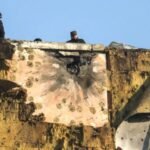
The Russian capital, Moscow, has once again been subjected to a massive drone attack, News.Az reports, citing Moscow Mayor Sergei Sobyanin statement.
According to him, during the day, air defense systems shot down 44 Ukrainian unmanned aerial vehicles flying in the direction of Moscow.
***
Due to the drone attack at Moscow’s Sheremetyevo Airport, temporary restrictions on aircraft takeoffs and landings were imposed. As part of the airport’s security measures, a “Carpet Mode” was introduced.
The post Moscow has been hit by another massive drone attack: 44 drones have been shot down appeared first on azeritimes.com.
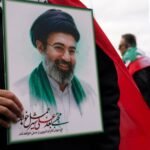
Earlier this month, Mojtaba Hosseini Khamenei – the second son of slain Ayatollah Ali Khamenei – was elected as Iran’s new supreme leader. At that time, reports mentioned that the decision was allegedly taken under pressure from the Iranian Revolutionary Guard Corps (IRGC)

US intelligence reportedly briefed President Donald Trump and a small group of his close advisors that Iran’s late Supreme Leader Ayatollah Khamenei had reservations about his son succeeding him.
According to a report by CBS News, the former leader was ‘wary’ of his son assuming power as he was perceived as ‘not very bright’ and was aware that Mojtaba Khamenei ‘had issues in his personal life’. He was viewed as ‘unqualified to be a leader,’ reported the outlet – citing sources aware of the intelligence input.
Earlier this month, Mojtaba Hosseini Khamenei – the second son of slain Ayatollah Ali Khamenei – was elected as the country’s new supreme leader. At that time, a report by Iran International mentioned that the decision was allegedly taken under pressure from the Iranian Revolutionary Guard Corps (IRGC).
Ayatollah Khamenei was killed during US-Israel’s joint strikes on Iran, which were launched on Saturday, 28 February. Hours later, the same day – Iran retaliated — with exposions reported across Abu Dhabi, Dubai, among other Middle East hubs, which are also home to US military bases.
How did Trump react to the input?
Trump reportedly told people close to him that he is unsure about whether the intelligence input about Mojtaba Khamenei matters. The POTUS believes Iran is essentially leaderless right now, with the younger Khamenei possibly dead, reported CBS News.
On Friday, US State Department
‘Leadership gone…’
Trump had publicly suggested that Iran’s late supreme leader, Ali Khamenei, had little confidence in his son as a potential leader.
“Their leadership is gone. Their second leadership is gone. Now their third leadership is in trouble, and this is not somebody that the father even wanted,” Trump said in an interview with Fox News on Friday.
Trump also described the new supreme leader as a “lightweight” and said such a figure would be an “unacceptable” leader for Iran. He further suggested that he would like some level of oversight over who eventually becomes Iran’s next leader.
On Friday, US Defense Secretary Pete Hegseth had claimed that Mojtaba Khamenei is wounded and “likely disfigured”. Although he did not provide evidence for Mojtaba Khamenei’s condition but criticised the absence of a video or audio statement, calling it “a weak” communication
The post Did Khamenei doubt son Mojtaba as successor? ‘Unqualified, not very bright’: US intel briefed Trump appeared first on azeritimes.com.