Categories
Selected Articles

U.S. Military Exercises in Russia’s Backyard Cause Alarm at the Kremlin


im-849058_1694452446577_1694452578351.jp

In a possible sign of the geopolitical realignment driven by Russia’s invasion in Ukraine, U.S. forces commenced on Monday 10 days of joint exercises with Armenian soldiers. About 175 Armenian soldiers will train with about 85 soldiers from U.S. Army Europe and Africa Command outside the capital of Yerevan.

Since the breakup of the Soviet Union, Armenia has been an important security partner for Russia and houses one of a small handful of military bases the Kremlin maintains on foreign soil. The country has also remained a member of the Collective Security Treaty Organization, a security alliance of former Soviet countries, which Moscow has developed as an answer to the North Atlantic Treaty Organization.

But Armenia has increasingly worked to shrug off Russian influence, particularly in the wake of Russia’s invasion of Ukraine. Earlier this year, Prime Minister Nikol Pashinyan directly denied a Russian announcement that the CSTO would host exercises this year in Armenia. He also refused to send troops for those exercises, which were ultimately held in Belarus earlier this month.

A senior State Department official acknowledged that the U.S. is looking to bolster its partnerships with countries that had traditionally leaned on Moscow for economic and military cooperation, although that official dismissed the notion that was the reason for the joint exercises with Armenia.

“We’re always looking for an opportunity to deepen our bilateral ties with these countries,” the official said.

Armenia has hosted NATO forces previously for training. U.S. officials said the joint exercises with Armenia had been long in the works and would be focused on peacekeeping operations.

Last week, Kremlin spokesman Dmitry Peskov expressed “alarm” over the exercises.

The exercises come amid growing regional tensions between Armenia and neighboring Azerbaijan as well as Yerevan’s growing frustration with Russia’s failure to enforce a 2020 cease-fire it brokered between the two countries while the Kremlin is mired in the Ukraine war.

While part of Armenia’s turn to the West reflects a generational shift of younger people who see their future tied to Europe and the U.S., it is also driven by Armenia’s frustration with Russia. It says Moscow, distracted by Ukraine, has failed to fulfill security guarantees in Nagorno-Karabakh, a territory that lies inside Azerbaijan but has been disputed, often violently, between Azerbaijan and Armenia for three decades.

The enclave, predominantly Armenian with a population of approximately 120,000, broke away from Azerbaijan in the 1990s.

After heavy fighting with Armenia in 2020, Azerbaijan has since reasserted control around the territory. At the time, Russia brokered a cease-fire, promising to stop the violence and ensure freedom of movement for both sides through the Lachin Corridor, the main road connecting Nagorno-Karabakh to Armenia and a critical route for the delivery of food, fuel and medicine to the enclave.

But Azerbaijan has since imposed a de-facto blockade on that corridor. Last month, the United Nations urged Azerbaijan to lift the blockade to “alleviate the suffering of thousands of people in Nagorno-Karabakh and allow for the unimpeded flow of humanitarian assistance to the civilian population.”

Azerbaijan says it is preventing the import of weapons into the territory from Armenia, a claim Armenia has denied.

Over the past week, Azerbaijan has built up troops around the enclave and on the border of Armenia, a move that Pashinyan said had aggravated the regional political and military situation.

Previously, Moscow also failed to come to Armenia’s aid in 2021 through the CSTO when the country accused Azerbaijan of advancing inside Armenian territory.

“Armenia is overly dependent on Russia and that is our biggest strategic vulnerability and our biggest mistake, something we have to change with the West and other partners,” said Areg Kochinyan, president of the Yerevan-based Research Center on Security Policy.

“It’s not just that Armenians are no longer seeing Russia as a partner, it’s that they’re starting to call it a traitor,” he added.

So far, Armenia has been careful not to provoke Russia, which invaded Georgia in 2008 and Ukraine last year over the countries’ attempts to break out of its orbit. Nonetheless, Moscow has increasingly criticized pro-Western Armenian rhetoric and its expressions of frustration as “bordering on rudeness.” Russia’s Foreign Ministry also said last week that it summoned the Armenian ambassador to the ministry to protest increasingly anti-Russian rhetoric among Armenian officials.

As tensions rise between Russia and Armenia over Nagorno-Karabakh, the U.S. has played an increasingly active role in the region, condemning the humanitarian crisis inside Nagorno-Karabakh and calling for Azerbaijan to reopen the Lachin Corridor.

Washington played a role in negotiating a cease-fire when hostilities flared up last year. Secretary of State Antony Blinken also held meetings with Pashinyan and Azerbaijani President Ilham Aliyev this year.

The current military exercises in Armenia have raised concern in Azerbaijan that the U.S. can’t be an honest broker in its conflict with Yerevan, despite repeated efforts by Blinken, as well as European and U.N. officials, to hold talks with both sides to ease tensions.

A senior State Department official described the exercises as part of an “ongoing partnership” with Armenia and dismissed claims that they signaled any type of bias, adding that “transparency is the way to go on so many of these issues.”

Write to Vivian Salama at vivian.salama@wsj.com and Thomas Grove at thomas.grove@wsj.com

Categories
Selected Articles

PM Pashinyan meets former Italian Prime Minister Romano Prodi


Categories
Selected Articles

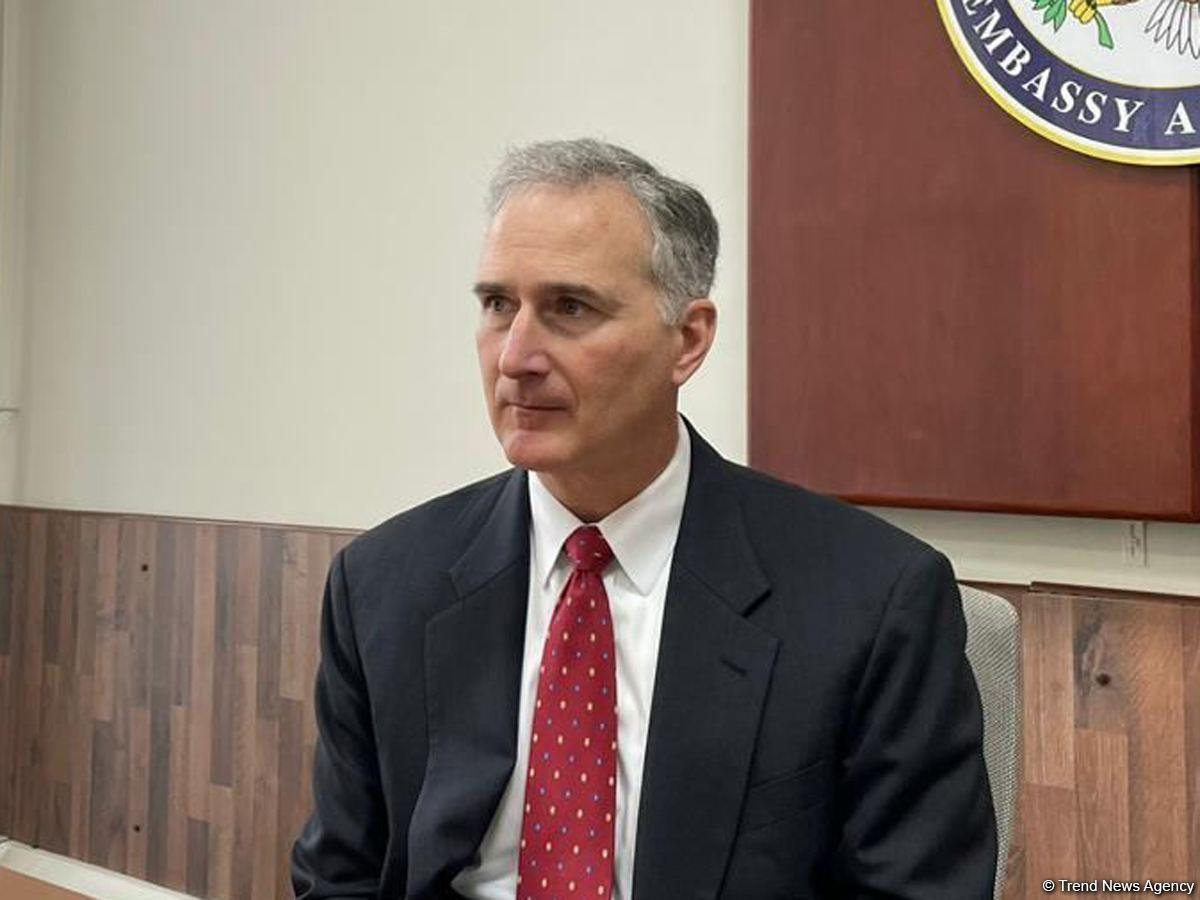
Armen Grigoryan, Louis Bono discuss situation around Karabakh


default.jpg

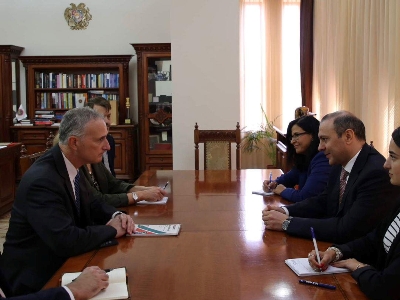
Armen Grigoryan, Secretary of the Security Council of Armenia, on Thursday received Louis Bono, Senior Advisor for Caucasus Negotiations of the US Department of State and the OSCE Minsk Group Co-Chair from the US, the Office of the Security Council of Armenia informs Armenian News-NEWS.am.

The interlocutors discussed the situation around Nagorno-Karabakh, the humanitarian crisis there and efforts to overcome it, as well as matters related to the normalization of Armenian-Azerbaijani relations.

!

This text available in   Հայերեն and Русский

Print


Categories
Selected Articles

Ranking Member Risch Opening Statement at Hearing on Assessing the Crisis in Nagorno-Karabakh | United States Senate Committee on Foreign Relations


sharelogo.jpg

WASHINGTON – U.S. Senator Jim Risch (R-Idaho), ranking member of the Senate Foreign Relations Committee, today gave the following opening remarks at a full committee hearing on assessing the crisis in Nagorno-Karabakh. Witnesses included The Honorable Yuri Kim, acting assistant secretary at the Bureau of European and Eurasian affairs at the State Department.

Ranking Member Risch gave the following remarks:

“Thank you, Mr. Chairman. And thank you to our witness for being here.

“The ongoing instability in Europe and Eurasia has made clear the need for a strong U.S. policy on the Caucasus – a region that continues to grow in importance due to its proximity to regional problematic actors Russia, Iran, and Turkey.

“Tensions are rising again between Armenia and Azerbaijan over Nagorno-Karabakh. The United States must push back on policies that disregard the best interests of Armenia and Azerbaijan and run counter to U.S. interests. We should be able to do both.  

“This morning, I hope to hear from our witness about the efforts the U.S. government is taking to bring this conflict to a peaceful and sustainable resolution, and to reassure our friends about the U.S. remaining engaged. I share the chairman’s concerns in this regard.

“Assistant Secretary Kim, I understand that you were involved last weekend in talks to help open the Lachin Corridor and allow goods to flow again into the contested region. I hope you will detail for us the specifics of what was agreed and whether an end to this humanitarian crisis in in sight.

“Ending this conflict would bring peace to a fractured region and remove one of Russia’s key levers of influence in the region. If we fail to form and implement an effective policy, we could see a return of Russian influence, or even see China establishing a stronger foothold in the region.

“The United States, along with our European allies, have an important role to play in the future of the Caucasus. Our action in response to the crisis in Nagorno-Karabakh will be key to broader U.S. policy toward the region. I look forward to hearing your assessments and more importantly your plans to face the challenge.

“Mr. Chairman, back to you.”

These remarks have been lightly edited for clarity. Witness testimony is available on foreign.senate.gov.

###


Categories
Selected Articles

Us State Department’s Senior Advisor For Caucasus Negotiations Visits Armenia


TNA_9363dimage_story.jpg


Categories
Selected Articles

louis bono – Google Търсене


Categories
Selected Articles

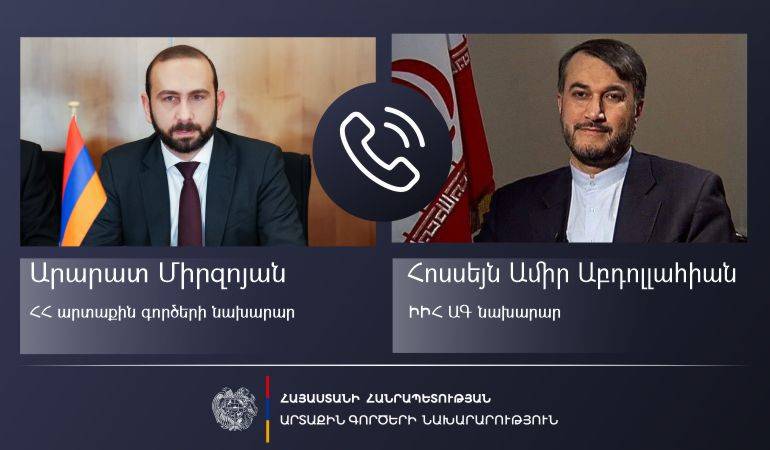
Phone conversation of the Foreign Ministers of Armenia and Iran


13 September, 2023

Phone conversation of the Foreign Ministers of Armenia and Iran

On September 13, Minister of Foreign Affairs of Armenia Ararat Mirzoyan had a telephone conversation with Hossein Amir Abdollahian, the Minister of Foreign Affairs of the Islamic Republic of Iran.

Following a telephone conversation between the Prime Minister of Armenia and the President of Iran a few days ago, the Foreign Ministers of the two countries discussed issues on stability and security in the South Caucasus.

Touching upon the latest regional developments, Minister Mirzoyan emphasised the importance of the efforts and messages of partners, aimed at restraining further escalation of the situation on the  Armenia-Azerbaijan state border and bringing Azerbaijan back to the constructive track. The need to address the rights and security issues of the people of Nagorno-Karabakh in the context of achieving lasting peace in the region was also emphasised. 

During the phone conversation, the sides also discussed issues regarding  bilateral relations.

Both sides reiterated their willingness to continue the dialogue on different platforms and formats.


Categories
Selected Articles

Iran-Azerbaijan tensions mount as Baku engages with Israel


The story: Tensions between Azerbaijan and Iran are worsening amid signs of closer collaboration between Azerbaijan and Israel. The Israeli foreign minister’s talk of an agreement on a “united front against Iran” with his visiting Azerbaijani counterpart has prompted Tehran to demand an explanation from Baku.

The mounting tension also comes in the wake of the attempted assassination of an Azerbaijani lawmaker known for his critical view of the Islamic Republic. Local media have linked the incident to Iran.

The coverage: Israeli Foreign Minister Eli Cohen told reporters in Jerusalem on Mar. 29 that he had “agreed” with…

Registering helps us deliver original coverage of the region’s most important issues.


Categories
Selected Articles

Why Israel Backs Azerbaijan in Nagorno-Karabakh Conflict: It’s Not About Armenia


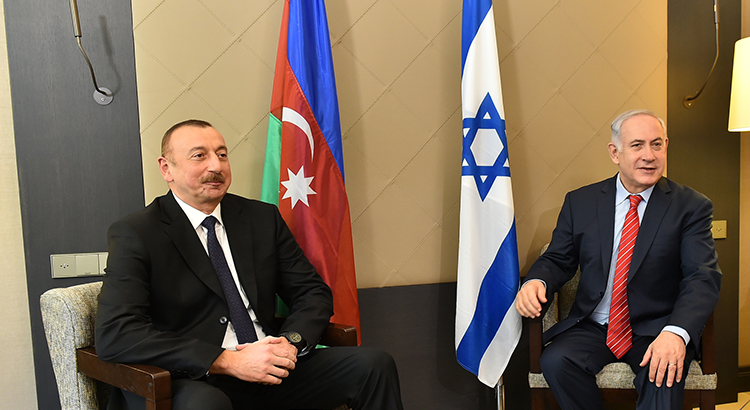
Ilham_Aliyev_and_Benyamin_Netanyahu_in_D

Amidst the devastation caused by the recent earthquakes in Turkey on 6 February, Iranian Foreign Minister Hossein Amir Abdollahian made a strong statement warning against the threat posed by the Zionist regime to peace and stability in the region. Specifically, he pointed to Israel’s involvement in the Nagorno-Karabakh conflict, where Azerbaijan emerged victorious with significant support from Israel in the form of technology and arms. But why did Israel get involved in a conflict thousands of miles away, with no direct interests? In this post, we’ll take a closer look at Israel’s strategic partnerships with Azerbaijan and Turkey, and how they tie into its involvement in the Nagorno-Karabakh conflict.

On 8 March, following devastating earthquakes in Turkey a month earlier, Iranian Foreign Minister Hossein Amir Abdollahian visited Turkey to show solidarity. During his visit, he met with his counterpart, Turkish Foreign Minister Mevlüt Çavuşoğlu. In a key moment of the press conference afterwards he noted:

“We see the presence of the Zionist regime in the region as a major threat to peace and stability. Wherever this regime is involved, there has been insecurity and crisis. The Islamic Republic of Iran warns the parties to pay close attention to the behavior of the Zionist regime. They should not allow its presence in the region.”

The Iranian Foreign Minister was referring to the Nagorno-Karabakh (NK) Conflict and specifically to Israel’s role in it. Between 27 September and 10 November 2020, the second NK war saw Azerbaijan emerge victorious over Armenia. However, what was surprising was the extent of Israel’s involvement in the conflict, with the country providing significant support in the form of technology and arms to Azerbaijan. This raises the question: why did Israel become involved in this conflict?

At first glance, Israel’s involvement may seem puzzling. After all, the country is located thousands of miles away from the region and has no direct interests in the conflict. However, a closer look reveals that Israel’s involvement is tied to its strategic partnerships with Azerbaijan and Turkey, both of which have become important regional allies for Israel. The alliance between Israel and Azerbaijan recently celebrated 30 years of diplomatic ties, that include but are not limited to, energy cooperation, arms trading, diaspora politics, memory politics of the Armenian genocide, and counter-intelligence of the Iranian nuclear project.

The NK Conflict: Historical Context

The NK conflict is a complex issue with significant relevance for many academic disciplines, including ethnic conflict studies and post-Soviet conflict studies. It also affects policy making in terms of great power struggles involving Russia, Turkey, Iran, the United States, and the European Union.

In 1988, as part of the disintegration of the Soviet Union, NK was made an autonomous region. However, tensions quickly escalated when the Armenians residing in NK declared their desire to secede from Azerbaijan and join the Republic of Armenia. This led to the first round of violence and war in NK, which lasted from 1988 to 1994. During this period, Azerbaijan lost control of several sub-regions in and around Nagorno-Karabakh, including Kalbajar, Lachin, Fuzuli, Aghdam, Jabrayil, Gubadli, and Zengilan. This process led to the occupation of 20 percent of Azerbaijani lands and the displacement of hundreds of thousands of people.

The United Nations (UN) Security Council responded to the conflict by adopting several resolutions, including 822, 853, 874, and 884, which condemned the occupation of Azerbaijani territories and called for the cessation of hostilities and the withdrawal of all occupying forces. However, the NK conflict remained unresolved, and tensions continued to simmer between Armenia and Azerbaijan.

During the interwar period from 1994 to 2020, Armenia continued its occupation of the above sub-regions. The second NK war, also known as the 44 days war, began on 27 September 2020, with a counter-offensive operation along the entire front as the Azerbaijani army began liberating the territories that had been occupied by Armenia since the first NK war. The second war demonstrated the strength of the Azerbaijani army and ended with the decisive victory of Azerbaijan.

Thus, in practice, how does Israel back Azerbaijan in the Nagorno-Karabakh conflict? Between September and November 2020, Israel’s defence industries were very busy as the ‘Second Nagorno-Karabakh (NK) War’ was launched between Armenia and Azerbaijan. Israel actually played a key role: during this conflict in the South Caucasus, Israel’s technology and arms were put to use extensively by Azerbaijan’s military against Armenia. The evidence documented in various news outlets demonstrates Israel’s support in the conflict: Baku’s alliance with Israel and Turkey enabled its military to assume a winning position on the battlefield against Yerevan. The Stockholm International Peace Research Institute (SIPRI) reported that Israel supplied 60 per cent of all Azerbaijan’s arms imports between 2015 and 2019.

The NK Conflict and Geopolitical Puzzle

Israel’s involvement in NK is part of a larger geopolitical puzzle; both Israel and Turkey have been using this conflict: not only as a ‘laboratory’ to examine the quality of their arms, but also to counter Iran’s aggressive ambitions in the region and to use NK as a ‘security buffer’. The arms Israel exported to the NK conflict during the 44 days of the war in 2020 left little doubt that Jerusalem seeks to support Azerbaijan in NK as a proxy war zone against Iran’s aggressiveness in the region that combines Holocaust denial, nuclear threats, and statements about the destruction of Israel and Zionism. Therefore, in other words, Israel, Turkey and Azerbaijan could be seen as one side in the conflict.

On the other side, the alliance between Iran, Armenia, and Russia is a significant factor in the NK conflict. These countries share historical and cultural ties and have long-standing diplomatic relations. During the 2020 war, Iran provided logistical support to Armenia, including the transportation of military equipment and personnel, while Russia supplied weapons and ammunition.

The potential implications of Netanyahu’s victory in the 2022 Israeli elections and his anti-Iran sentiment are indeed evident in numerous statements made by him and his government. Netanyahu has been a vocal critic of Iran and its nuclear program, arguing that it poses an existential threat to Israel’s security. While previous Israeli prime ministers, such as Naftali Bennett, Yair Lapid, and Ariel Sharon, emphasized their commitment to countering Iran and its nuclear program, Netanyahu took this to an unprecedented level by weaponizing the issue to an art form. In fact, during his famous 2015 address to the American Congress about the nuclear deal that allies were pursuing with Iran, Netanyahu went behind President Obama’s back and criticized the agreement by stating, “This is a bad deal — a very bad deal.”

Netanyahu’s previous actions as prime minister are likely to influence his actions in the region the future. This could lead to an increase in Israel’s presence in the South Caucasus, more pressure on Iran, greater support for Azerbaijan, and can explain the belligerent statements by the Iranian foreign minister above.

In conclusion, as long as the pieces of this firm geopolitical puzzle remain in play – particularly Iran and Israel’s mutual hostility – Jerusalem will maintain its high-profile support, training, and supply of arms to Azerbaijan.

For a longer form analysis of this topic, see Ben Aharon, Eldad (2023): Between Geopolitics and Identity Struggle: Why Israel Took Sides with Azerbaijan in the Nagorno-Karabakh Conflict, PRIF Report 1/2023, Frankfurt/M.


Categories
Selected Articles

Azerbaijani, Israel discuss prospects for inter-parliamentary cooperation


Azerbaijani, Israel discuss prospects for inter-parliamentary cooperation

Baku, September 4, AZERTAC

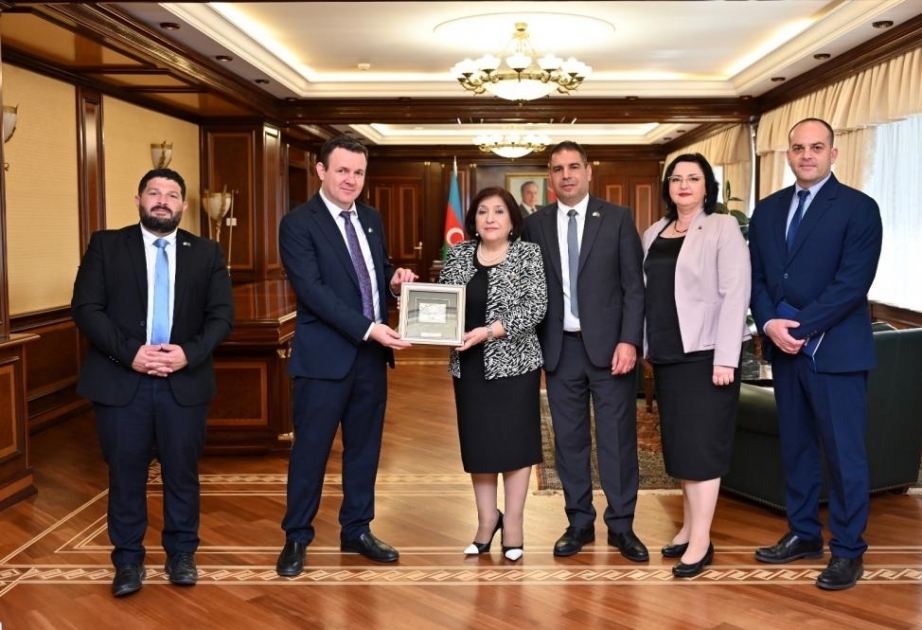
Speaker of Azerbaijani Milli Majlis Sahiba Gafarova has met with members of the Israel-Azerbaijan inter-parliamentary friendship group Evgeny Sova, Osher Shkalim, Tatiana Mazarsky and Almog Cohen.

Touching upon the friendly and partnership relations between Azerbaijan and Israel, Speaker Sahiba Gafarova emphasized the exceptional role of active political dialogue, high-level visits and meetings in the development of relations between the two countries.

She noted that Azerbaijanis and Jews have lived together for centuries in peace, friendship and mutual understanding.

During the meeting, the sides discussed issues of cooperation between the parliaments of Azerbaijan and Israel. They also noted the activity of friendship groups and the importance of mutual visits of members of parliament in the development of relations between the two countries’ legislative bodies.