
ShinyHunters declared a de facto war on the FBI: What will happen now? – Predictions – Google Search google.com/search?q=ShinyHun…
Month: September 2026
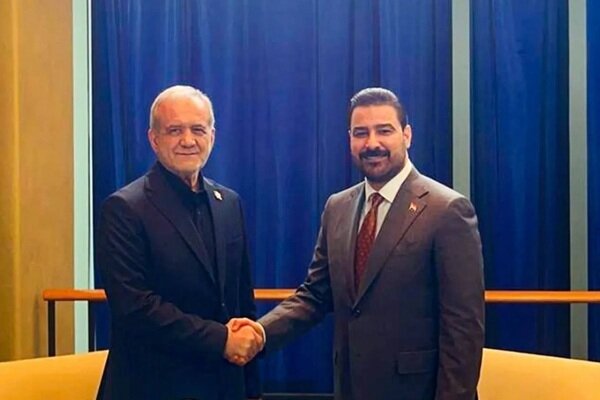
“The Real Turkey” — #95: Erdogan praises Allah that Pashinyan is Prime Minister of the RA alphanews.am/en/projects/the…
Video
Video
#ShinyHunters #FBI #DataBreach
ShinyHunters’ FBI Data Breach Threat share.gemini.google/IQ4SotFy…
The threat posed by ShinyHunters is exceptionally significant—not just because of the sheer volume of data allegedly stolen, but due to the group’s highly unusual motivation and the catastrophic counterintelligence risks it presents to federal law enforcement.
ShinyHunters’ FBI Data Breach Threat share.gemini.google/IQ4SotFy…
The threat posed by ShinyHunters is exceptionally significant—not just because of the sheer volume of data allegedly stolen, but due to the group’s highly unusual motivation and the catastrophic counterintelligence risks it presents to federal law enforcement.
On September 22, 2026, ShinyHunters claimed to have breached the FBI’s recruitment portal ( FBIjobs.gov) via a zero-day vulnerability in Oracle PeopleSoft. They allege they exfiltrated 2 to 3 terabytes of data encompassing almost all current FBI employees and applicants.
Here is a breakdown of why this one-week threat is critical and what it implies for national security.
The Extortion Demand: Ego Over Economics
Unlike traditional ransomware attacks, ShinyHunters explicitly stated this breach is not financially motivated. Instead, they issued a one-week deadline for the FBI to publicly retract or remove a Quarter 2 2026 FLASH advisory published in May. That advisory characterized ShinyHunters as a group that makes “exaggerated” or “false” claims to extort victims.
By demanding the retraction, the group is engaging in reputation-driven extortion. They are attempting to publicly humiliate the FBI and prove their capabilities are lethal, which makes the threat of publication highly credible; they have no financial incentive to hold the data back if the FBI refuses to negotiate.
Significance of the Compromise
While the FBI has only confirmed an investigation into “unauthorized activity” and taken the portal offline, media outlets have verified a sample of approximately 5,000 records containing highly sensitive personal information.
Severe Counterintelligence Risks: The stolen data allegedly includes agents’ home addresses, personal phone numbers, and spousal information, including Social Security Numbers. In the hands of hostile foreign intelligence services or transnational criminal syndicates, this is a roadmap for targeted harassment, stalking, extortion, or recruitment.
Applicant Data Exposure: Compromising applicant data is a unique vulnerability. It exposes individuals who never formally joined the agency, potentially flagging them to foreign adversaries if they eventually pursue careers elsewhere in the intelligence community or defense sector.
Potential Systemic Access: ShinyHunters claims the breach extended beyond human resources into the FBI’s MedLink and Criminal Justice Information Services (CJIS). If true, this elevates the breach from an administrative disaster to an operational crisis that could compromise ongoing law enforcement investigations and expose medical vulnerabilities of field personnel.
Strategic Implications
If the data is fully released—or sold selectively on the dark web—the implications will ripple outward:
Tradecraft and Operational Paralysis: Modern intelligence tradecraft relies on the anonymity and safety of its operatives. Unmasking field agents and their families forces the agency to expend massive resources on physical security, relocations, and operational reshuffling, effectively neutralizing affected agents.
The Third-Party Vulnerability Loophole: The breach highlights a persistent structural flaw in federal cybersecurity: exploiting third-party HR and administrative platforms. By targeting an Oracle PeopleSoft vulnerability hosted on AWS GovCloud, the hackers bypassed the FBI’s core classified networks, proving that peripheral, public-facing infrastructure is often the most viable vector for crippling intelligence agencies.
Erosion of Institutional Authority: A successful, public extortion of the United States’ premier domestic intelligence agency by a cybercriminal group emboldens other threat actors. It signals that federal agencies are susceptible to the same public-shaming tactics used against private corporations.
The FBI is now caught in a highly visible standoff: retract an official intelligence assessment at the behest of a criminal syndicate, or refuse and risk the mass exposure of its workforce.
–
AI Mode:
The cybercrime group ShinyHunters’ threat to publish hacked [Federal Bureau of Investigation (FBI)]( nytimes.com/2026/09/23/us/po…) records within a week carries profound national security and operational significance. The group claims to have compromised the bureau’s online jobs portal ( FBIjobs.gov), stealing a major tranche of highly sensitive data covering almost all current and former FBI employees, as well as job applicants. [1, 2, 3, 4]
This situation represents a major escalatory stunt by a notorious cyber-extortion syndicate.
## How Significant is the Threat?
*
* Verified Operational Breach: While the overall scale is still being investigated by the bureau, the breach itself is real. ShinyHunters temporarily defaced the [FBI recruitment site]( cyberscoop.com/shinyhunters-…), and independent verification of a data sample containing roughly 5,000 real employee records confirms they hold genuine, highly sensitive information. [1, 3, 5, 6]
* High-Stakes Exposure: The stolen records go far beyond basic corporate data. They reportedly contain names, home addresses, phone numbers, Social Security numbers, job assignments, spouse details, and even medical information. [2, 5, 7]
* A “Forever” Threat: Cybersecurity experts note that when law enforcement personnel data leaks, it doesn’t have an expiration date. Past historical leaks of similar data have been weaponized by malicious actors for over a decade to dox, harass, and threaten investigators. [8]
*
## What Might It Imply?## 1. Severe Counterintelligence and Operational Risks
Exposing the home addresses, personal phone numbers, and family details of agents undermines their safety and the integrity of ongoing investigations. Foreign intelligence agencies, organized crime syndicates, and domestic extremists could use this directory to target agents for blackmail, social engineering, or physical intimidation. [2, 3]
## 2. Retaliation Over “Brand” Reputation
Unlike typical ransomware or extortion threats aimed purely at financial payout, ShinyHunters is explicitly demanding that the FBI retract or remove a Public Service Announcement (PSA) issued in May 2026. The FBI’s advisory accused the group of engaging in low-level sextortion schemes and bluffing about data access. ShinyHunters claims it breached the portal to defend its criminal “brand,” seeking to force the top law enforcement agency to admit it circulated disinformation. [4, 9, 10, 11]
## 3. Exploitation of the Supply Chain
The FBI noted that the exact “point of breach is still undetermined,” highlighting that the hackers may have targeted a third-party contractor or shared enterprise service responsible for managing FBIjobs.gov rather than breaking directly into the FBI’s highly secured operational core networks. This emphasizes a persistent vulnerability: government cybersecurity is only as strong as its weakest vendor link. [3]
## 4. The Likelihood of Leaks
Because the FBI is structurally incapable of capitulating to cybercriminals by retracting legitimate public safety alerts, the ultimatum is effectively a dead end. Given ShinyHunters’ long track record of dumping data when demands are ignored—seen recently in data dumps involving institutions like [Harvard University]( facebook.com/WIONews/posts/s…)—there is a very high probability that a massive dataset of FBI personnel records will be leaked or sold on the dark web once the one-week deadline expires. [4, 12]
[1] [ reuters.com]( reuters.com/world/shinyhunte…)
[2] [ nytimes.com]( nytimes.com/2026/09/23/us/po…)
[3] [ forbes.com]( forbes.com/sites/antoniopequ…)
[4] [ nbcnews.com]( nbcnews.com/tech/security/fb…)
[5] [ thewellnews.com]( thewellnews.com/artificial-i…)
[6] [ cyberscoop.com]( cyberscoop.com/shinyhunters-…)
[7] [ mashable.com]( mashable.com/tech/shinyhunte…)
[8] [ usnews.com]( usnews.com/news/top-news/art…)
[9] [ politico.com]( politico.com/news/2026/09/22…)
[10] [ federalnewsnetwork.com]( federalnewsnetwork.com/cyber…)
[11] [ govinfosecurity.com]( govinfosecurity.com/cyber-ex…)
[12] [ facebook.com]( facebook.com/WIONews/posts/s…)
–
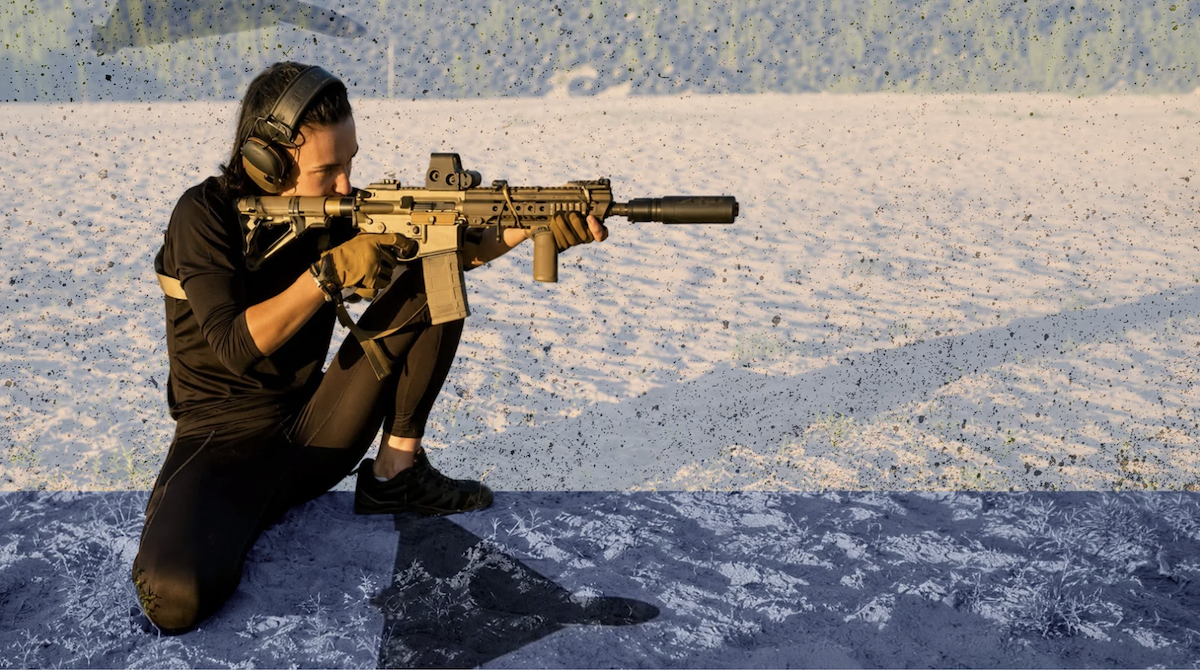
Olha Bihari, Ukraine’s drone commander
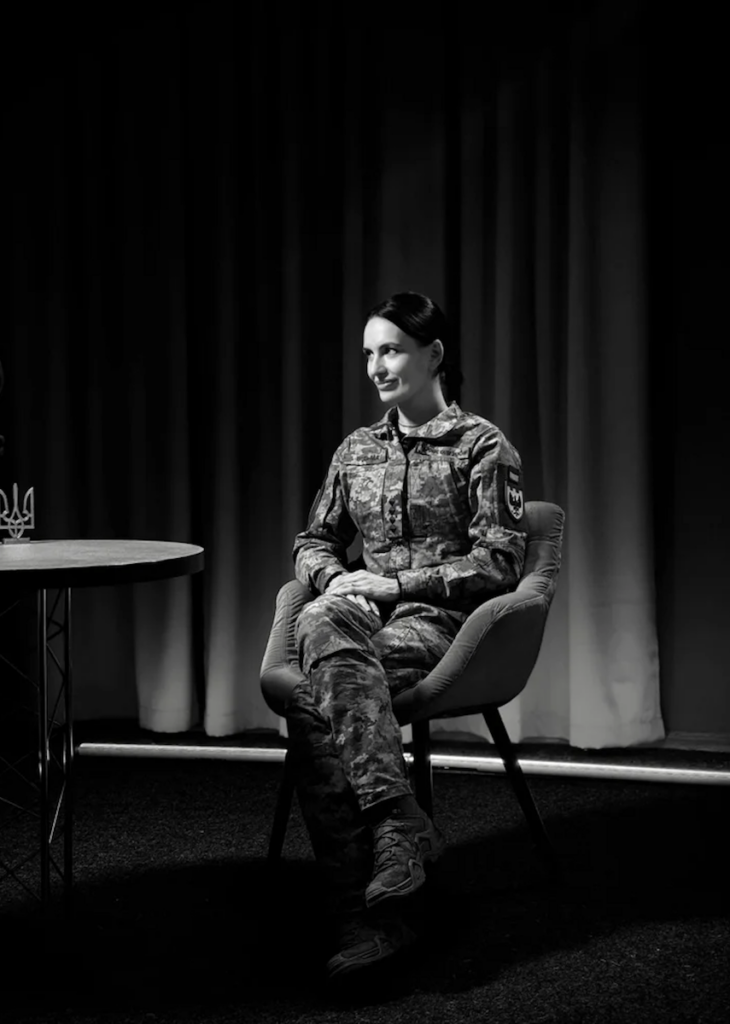
Thirty-four-year-old Olha Bihari, who goes by the call sign “Witch,” heads the Unmanned Systems Directorate of Ukraine’s 20th Army Corps. Before joining the military, she studied neuroscience, later earned a law degree and worked in human rights advocacy.
After Russia’s full-scale invasion, Bihari went to the recruitment office with her mother and younger brother. Her other brother has been fighting since 2015. Today, four members of the family are at war.
In an interview with the Ukrainian publication Hromadske, Bihari spoke about her family, commanding troops, losses, unmanned systems and why a modern military must rely on technology and data analysis.
Based on a report by Hromadske
Kramatorsk, family and war
Olha was born in Kramatorsk. She says Ukrainian identity was an important part of her family history.
Her paternal grandfather was an engineer and a dissident from the Prykarpattia region of western Ukraine. His family had ties to the Ukrainian Insurgent Army (UPA) and the Organization of Ukrainian Nationalists (OUN). He was monitored by the KGB, never joined the Communist Party and continued to speak Ukrainian.
In the 1990s, her grandfather joined the People’s Movement of Ukraine and campaigned for the country’s independence. He later became involved in public life in Kramatorsk.
Her maternal grandmother came from a Cossack family in the Poltava region. The family maintained Ukrainian traditions at home, sang folk songs and celebrated traditional holidays.
- ‘In Kramatorsk, we look to the sky’: Life in Ukrainian city under Russian air strikes
- Freedom was not so simple: How a defender of Mariupol is learning to live after captivity
- ‘My idea of happiness is 120 dead Russian soldiers a day’: Ukrainian drone unit commander Saratsyn
Olha wanted to become a scientist and studied neuroscience. But after the Maidan, she decided not to leave the country to pursue a scientific career abroad. She earned a law degree and, starting in 2019, worked in human rights advocacy.
After Russia launched its full-scale invasion, on Feb. 25, 2022, Olha, her mother and her younger brother went to a military recruitment office. By then, her other brother had already been fighting since 2015.
▇ “No one even considered not serving. How could we? You are either a victim or a defender.”
Before the war, Olha’s mother worked as a journalist. She later trained as a military psychologist and now serves in Ukraine’s Unmanned Systems Forces.
Her younger brother was studying law and went to war at 18. Olha suggested that he finish his studies first.
“Olya, what’s the point of studying to defend people’s rights? If the Muscovites come for us, it won’t help,” he replied.
“We knew very well what occupation was like and, in general, what that whole romance of Russian unity among peoples smelled like,” Bihari said. Photo courtesy of Hromadske.
When the whole family is at the front
According to Bihari, serving together helps the family understand one another. They have a family group chat where they share photos and news every day.
Once, Olha ran into her younger brother in a village near the front. Knowing that his sister barely slept and sometimes did not have time to buy food, he came to cook her dinner and leave enough food for several days.
But when family members are in danger, professional composure cannot keep fear at bay.
During the fighting for Bakhmut, one of Bihari’s brothers found himself surrounded.
“I thought I was going to lose my mind. In those days, I lived on coffee. I had no right to show my emotions, because I could demoralize my troops.”
She did not call her brother. Instead, she called his commander, trying to find out what was happening and whether there was a way to evacuate him.
Bihari generally does not tell her family about her own dangerous missions. If a guided aerial bomb lands nearby or an FPV drone strikes her vehicle, she tells them about it only after she returns.

From neuroscience and law to command
In the spring of 2022, Bihari began serving in the territorial defense infantry near Kyiv. She had no military experience.
According to her, much of what happened in those first weeks was driven by initiative. About 200 people joined the unit, most of them civilians. There was not even a complete personnel roster.
Bihari began gathering data, establishing communication with the command and learning how to navigate military documentation.
▇ “Whoever was willing to take responsibility did so.”
That was how she gradually found herself in a command role.
In 2023, Bihari went to Bakhmut as the acting commander of an infantry platoon. It was there, she said, that she fully understood the importance of planning.
“Casualties are not a matter of chance. They are the result of how well you planned the logistics, scheduled the time of deployment and organized the actions of your units.”
She later completed leadership courses at the Ukrainian Ground Forces Academy.
Bihari has served in infantry, artillery and unmanned systems. She considers organizing units and training personnel her greatest achievements.
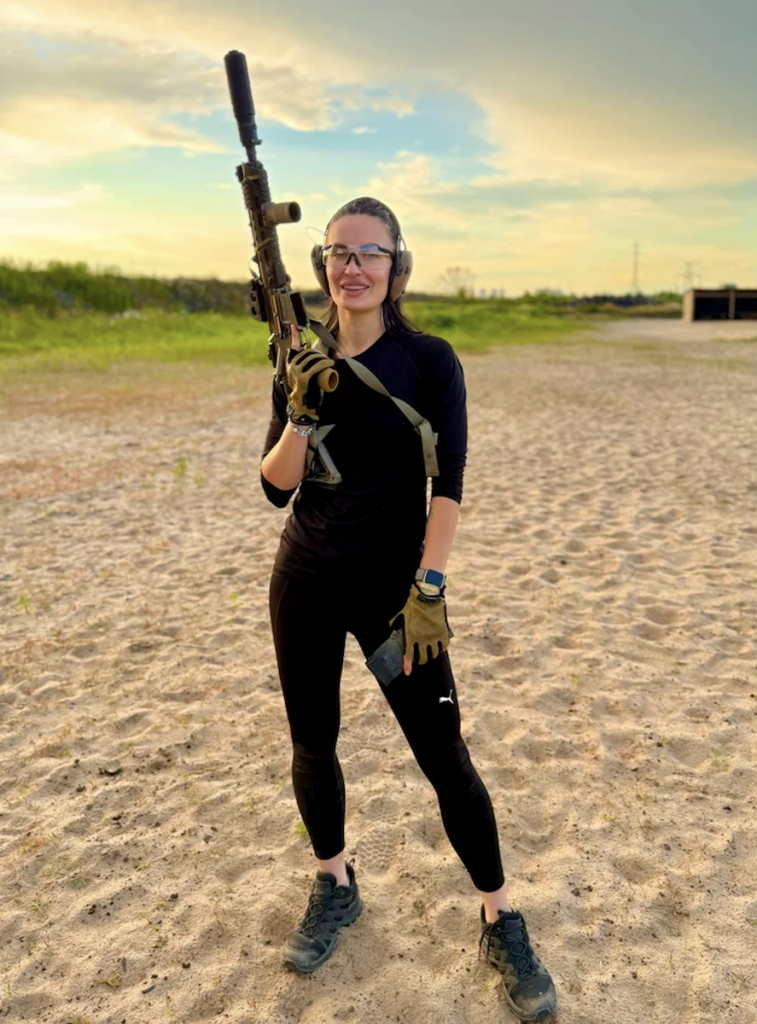
“Most casualties are the result of poor planning”
Bihari believes one of a commander’s main responsibilities is to understand each person’s capabilities.
She recalls a serviceman who was afraid to go out to positions. After talking to him, she realized the problem was not that he was unwilling to serve. In her view, he had simply been assigned to the wrong role.
Bihari transferred him to electronic intelligence, where he became a successful specialist.
“Everyone has their strengths. If a commander has problems with personnel, I always step in.”
She connects her approach to command with her scientific background: analysis, methodology and forecasting.
▇ “Most casualties in the military are either the result of emotions taking over and you acting reactively rather than proactively, or a failure in planning.”
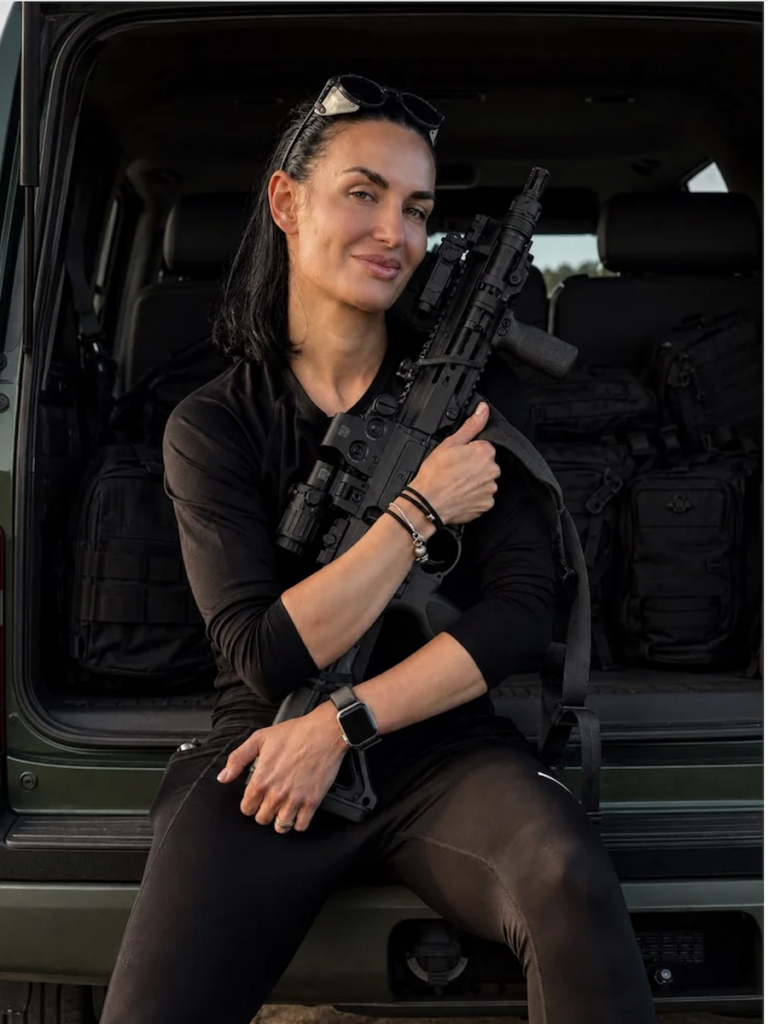
“Most casualties in the military are either the result of emotions taking over or a failure in planning,” Bihari said. Photo courtesy of Hromadske.
“We can no longer fight a war in excel”
These days, Bihari’s day begins at around 5 a.m. with a briefing to her senior commander on the situation at the positions.
After that, she always sets aside 10 minutes for coffee and planning. From the many tasks before her, she chooses one priority that she intends to devote most of her resources to.
Bihari describes unmanned systems as a “delivery service.” Drones can carry out strikes, remotely mine areas, deliver ammunition, food, fuel and water, and robotic systems are also used to evacuate the wounded.
A significant part of her work involves data analysis.
Bihari says she digitized military management processes because it is impossible to handle such a volume of information manually.
▇ “We can no longer fight a war in Excel. We have to see earlier, understand faster and act ahead of events, because the enemy has the advantage in numbers, while we have to rely on intelligence and technology.”
She analyzes thousands of strike, logistical and other tasks, identifies weak points and then works with specific units.
She receives around 300 phone calls a day. The fewest she can remember having in a day is 128. On top of that come video conferences and meetings.
Bihari does not use artificial intelligence to analyze military data. She says much of the information is classified or intended for official use only, making it impossible to upload it to external systems.
Three hours of sleep, a son and a manicure
Bihari says she is not very emotional. When a problem arises, her principle is simple: find a solution first, reflect later.
During an especially difficult period, she slept an average of three hours and 40 minutes a day for three months.
“I went to the car, closed the doors, screamed it out, came back — and that was it. I was fine. I could keep working.”
She has no days off and has not taken a vacation in more than a year. She unwinds by reading books on military leadership and planning, and by driving and riding her motorcycle.
She barely sees her son now. When they do meet, they speak to each other in English.
At the same time, Bihari has kept a habit instilled by her grandmother in childhood — taking care of her nails. She does her own manicures, sometimes sacrificing two hours of sleep to do it.
“Nails are actually very useful. I’ve used them to fix a car and even to pull a fragment out of my leg.”
Injuries and attitudes toward sexism
Bihari has not officially reported her injuries. She says she feels uncomfortable going to a military hospital with a minor shrapnel wound when there are soldiers there who have undergone amputations.
She also says her hearing has deteriorated following concussions.
Asked about sexism in the military, Bihari says she tries to analyze not the comments themselves but the reasons behind a person’s behavior.
She responds to flirting and inappropriate compliments with a direct question.
“What do you want? Why did you say that? Are you trying to build some kind of relationship with me, or do you just want to chat?”
She says such conversations usually stop after that.
Bihari also uses her public profile to raise money. One charitable campaign raised six million hryvnias for winter uniforms for female service members.
She considers financial independence essential. She started working at the age of 12.
“If you want to see people around you rather than resources, you need to be able to stand on your own. And that is the principle I live by.”
Exchange
Categories
Газ из США вместо России

Наши новости в социальных сетях:
https://t.me/cbctvaz
https://www.youtube.com/user/wcbcaz
https://www.facebook.com/cbctvaz
https://www.instagram.com/cbc.az/
WhatsApp: https://bit.ly/2DV9NSD
Web: https://cbctv.az
CBC Азербайджан – международный круглосуточный канал на русском языке. Вещает от европейской части России до полуострова Индостан, от Балканского полуострова до восточной границы Китая
#новости #политика
Categories