Categories
Articles, Blog, and Tweets Blogs and Tweets

RT by @mikenov: RT by @mikenov: 🤔🇵🇱🇺🇦 Ukraine is not sharing drone technology with Poland due to historical differences, — Polish Defense Minister ✈️ He said that negotiations on transferring MiG-29 fighter jets to Kyiv in exchange fo


🤔🇵🇱🇺🇦 Ukraine is not sharing drone technology with Poland due to historical differences, — Polish Defense Minister

✈️ He said that negotiations on transferring MiG-29 fighter jets to Kyiv in exchange for access to Ukrainian drone technology have been ongoing for several months.


Categories
South Caucasus News

Russia renews call for Georgia to sign non-use of force agreement at Geneva talks


67th round of the Geneva International Discussions

After the 67th round of the Geneva International Discussions, Russia‘s Foreign Ministry said Moscow remained committed to the talks and again called for a legally binding agreement on the non-use of force between Georgia, Abkhazia and South Ossetia.

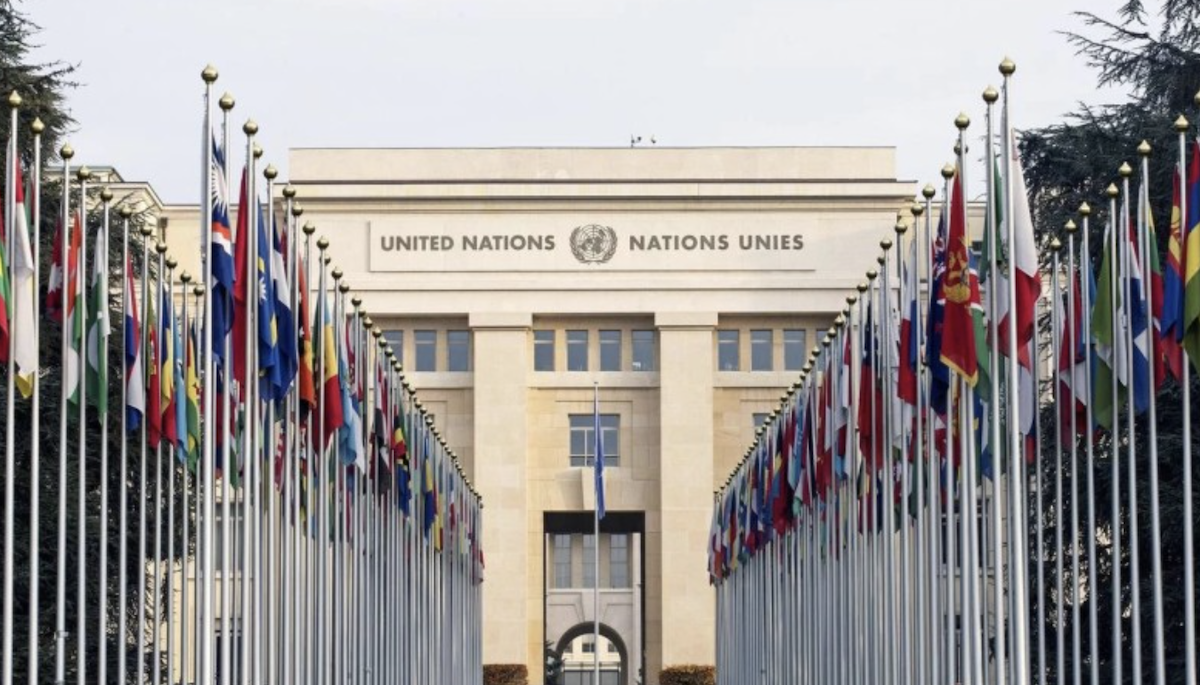
The discussions took place in Geneva from 30 June to 1 July under the co-chairmanship of the United Nations, the Organization for Security and Co-operation in Europe (OSCE) and the European Union. Representatives of Georgia, Russia, the United States, Abkhazia and South Ossetia took part.

The Geneva International Discussions were established after the August 2008 war. The talks take place regularly under the co-chairmanship of the European Union, the United Nations and the Organization for Security and Co-operation in Europe (OSCE). Representatives of Georgia, Russia and the United States attend, alongside representatives of the self-proclaimed authorities in Tskhinvali (South Ossetia) and Abkhazia. Georgia, the United Nations and most of the international community regard the two regions as parts of Georgia under Russian occupation.

According to Russia’s Foreign Ministry, Moscow sees the Geneva format as providing “a reliable framework for continuous direct dialogue between Tbilisi, Sukhumi and Tskhinvali”. It says the talks aim “to restore post-conflict relations”.

The ministry also argued that “the existing mandate should now produce practical steps to ensure the security of Abkhazia and South Ossetia”. It said “a legally binding non-use of force agreement between Georgia and the two sovereign republics is needed”. According to the ministry, such an agreement would give fresh momentum to the negotiations and strengthen regional stability.

Moscow argues that such an agreement has become more necessary amid deepening cooperation between NATO and Georgia.

The statement says NATO is conducting military exercises and other training activities in Georgia. Russia describes those activities as a security risk.

The Russian Foreign Ministry also said the current situation was “relatively calm”. It credited the mechanisms established under the Geneva International Discussions, including regular rounds of talks, 24-hour hotlines and meetings of the Incident Prevention and Response Mechanism (IPRM) in Ergneti, near the Georgian-South Ossetian conflict zone.

Moscow also called for the restoration of the equivalent mechanism that previously operated in Gali, Abkhazia. It also urged the sides to begin “the process of delimiting Georgia’s state border with Abkhazia and South Ossetia”.

The statement also criticised Georgia’s position on humanitarian issues. The Russian Foreign Ministry accused Tbilisi of politicising the issue and said this was hindering constructive dialogue within the Geneva International Discussions.

Moscow also criticised the annual UN General Assembly resolution, initiated by Georgia, on the right of internally displaced people and refugees to return to their homes.

According to the Russian Foreign Ministry, discussing the issue at the UN breaches an agreement that such matters should be addressed within the Geneva International Discussions, where, it said, “representatives of Abkhazia and South Ossetia have an opportunity to present their views.”

Following the August 2008 war between Georgia and Russia, direct dialogue between the two countries came to an end. Under the 12 August 2008 ceasefire agreement, the sides established the Geneva International Discussions as a forum where representatives of Russia, Georgia, Sukhumi and Tskhinvali, together with international organisations, could discuss a range of humanitarian and security issues.

The participants hold four rounds of talks each year.

67th round of the Geneva International Discussions


Categories
Articles, Blog, and Tweets Blogs and Tweets

RT by @mikenov: RT by @mikenov: 🇷🇺🇺🇦 Overnight, Russia launched a major combined missile and drone attack targeting Kyiv and multiple regions across Ukraine, according to reports. Explosions, fires, and damage were reported in the capital and


🇷🇺🇺🇦 Overnight, Russia launched a major combined missile and drone attack targeting Kyiv and multiple regions across Ukraine, according to reports. Explosions, fires, and damage were reported in the capital and other cities as air defenses responded.

The strikes come amid an intensifying Russian offensive, with concerns that additional attack waves could follow.

#Ukraine  #Russia  #UkraineWar  #RussiaUkraineWar  #Kyiv  #BreakingNews  #Geopolitics  #OSINT  #Defense  #Military  #MissileStrike  #Drones  #WarUpdates  #Europe  #Conflict


Categories
Azerbaijan Airlines plane crashes in Kazakhstan

‘We are not discussing the Trump Route project with Russia’ – Armenia’s deputy foreign minister – JAMnews


‘We are not discussing the Trump Route project with Russia’ – Armenia’s deputy foreign minister  JAMnews

Categories
South Caucasus News

‘We are not discussing the Trump Route project with Russia’ – Armenia’s deputy foreign minister


Yerevan responds to Galuzin on TRIPP

Yerevan responds to Galuzin on TRIPP

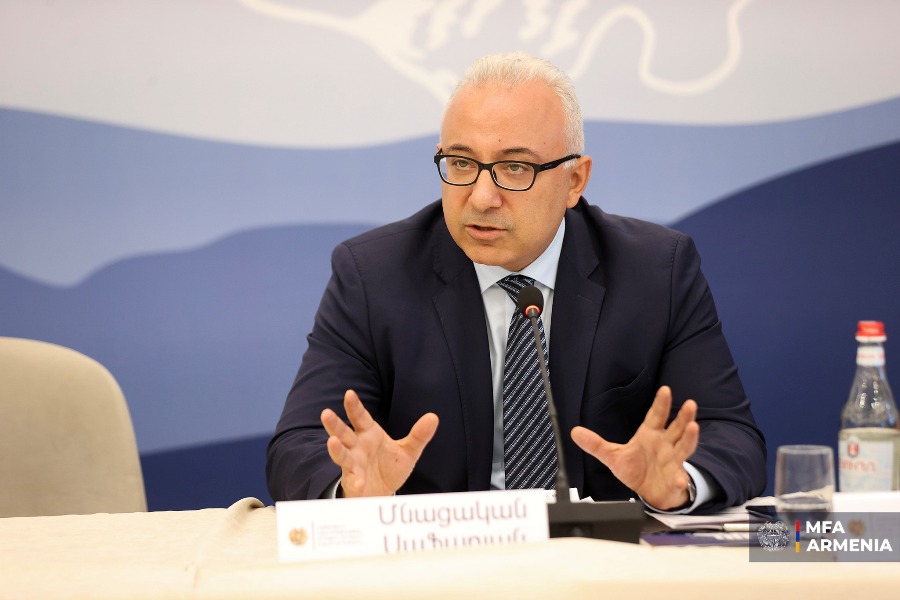
“We are not discussing TRIPP [the Trump Route project] with the Russian side,” Armenian Deputy Foreign Minister Mnatsakan Safaryan said in response to journalists’ questions about recent statements from Moscow.

Russian Deputy Foreign Minister Mikhail Galuzin had said that the Armenian-US bilateral project “would only benefit from Russia’s participation”. He also argued that Moscow’s views should be taken into account.

Responding to those remarks, Yerevan reaffirmed its long-standing position, saying the issue is not part of the bilateral agenda between Armenia and Russia.

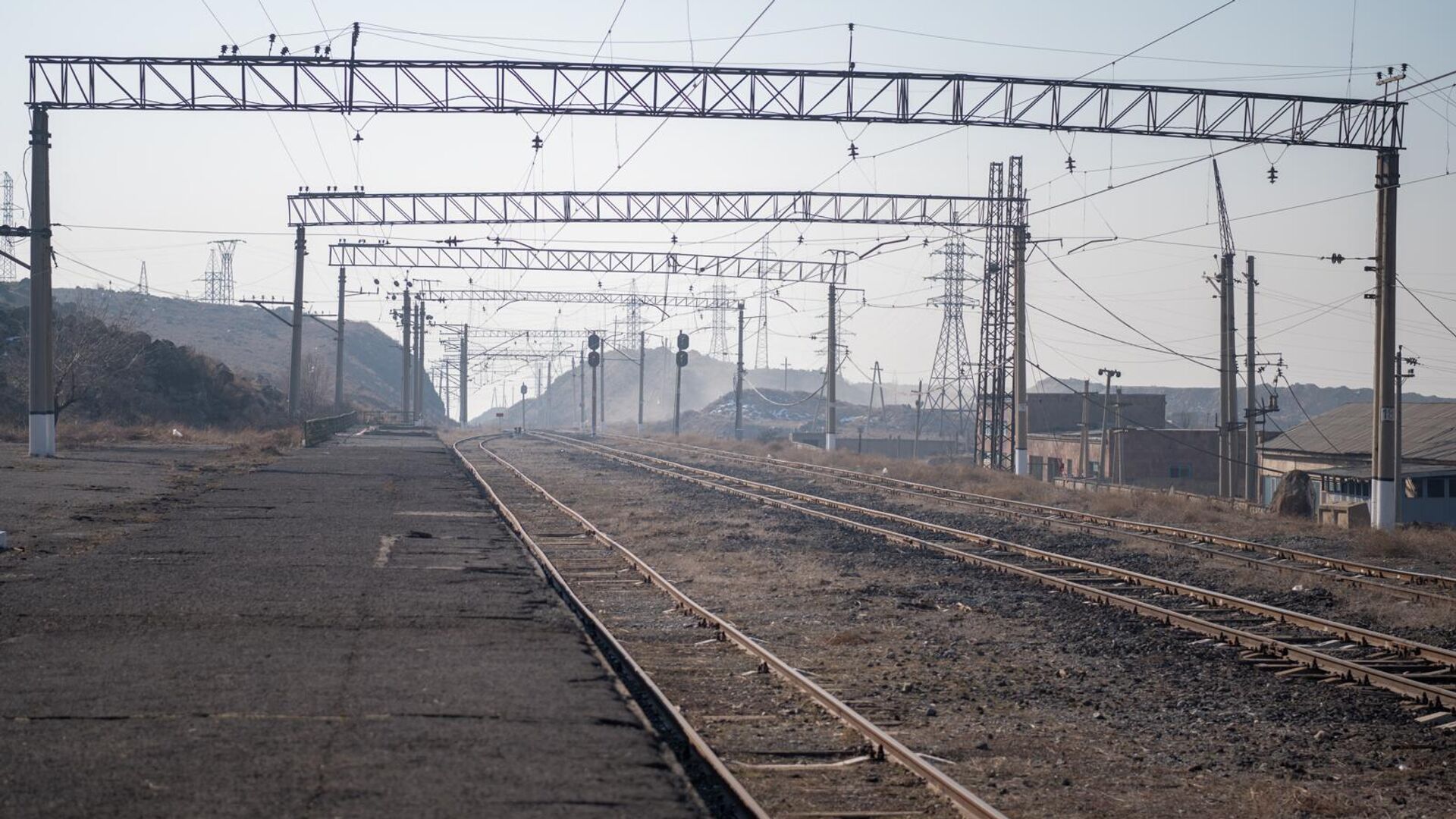
The Trump Route for International Peace and Prosperity (TRIPP) is a proposed transport corridor linking Azerbaijan with its exclave of Nakhchivan through Armenian territory. The route would pass through Armenia’s southern Syunik province. It would form part of the Armenian government’s Crossroads of Peace initiative, which aims to reopen regional transport links in all directions.


Safaryan: “I would rather not speculate about the future”

“At this stage, TRIPP is moving forward as an Armenia-US project. We have signed an agreement, and implementation is now under way,” Deputy Foreign Minister Mnatsakan Safaryan said.

Journalists asked whether he considered Russian participation in the Trump Route project possible.

“I would rather not speculate. I do not think it is appropriate to say anything about the future at this stage,” he replied.

Asked how transit under TRIPP would operate given Armenia’s membership of the Russian-led Eurasian Economic Union (EAEU), Safaryan said the bloc’s customs regulations would apply.

“Our customs authorities implement the EAEU’s customs rules, so we do not see any problems in that regard,” he said.

Safaryan did not directly answer questions about when work on the ground, including railway construction, would begin.

Details of the Russian deputy foreign minister’s remarks

In an interview with RTVI, Russian Deputy Foreign Minister Mikhail Galuzin commented on plans to reopen transport routes in the South Caucasus. He recalled that Armenia, Russia and Azerbaijan had discussed the issue in a trilateral format in 2022 and 2023.

“The discussions and dialogue within the trilateral working group stopped through no fault of our own. It is now extremely difficult to resume them because, as I understand it, Armenia has promised 49% of the authorised capital of the future railway to the American side,” Galuzin said.

Armenia and the United States have signed a framework agreement on strategic cooperation to implement the Trump Route project. Under the agreement, the two countries will establish a joint Armenian-US company. The US side will hold a 74% stake, while the Armenian government will own the remaining 26%. After the initial 49-year term expires, the Armenian government’s share will increase to 49%.

Galuzin expressed scepticism about the prospects for the Trump Route project. Rather than focusing on Russia’s interests, he argued that the initiative could face opposition from Iran and China.

He said that “some experts believe” China was unlikely to accept US control over “a section of the transport and logistics corridor linking Central Asia and Europe”. He also questioned whether Tehran, following the recent US and Israeli military strikes against Iran, “would welcome” an American presence north of its borders.

Armenian officials, however, say they have addressed all of Iran’s concerns. Iran has not issued any recent statements opposing the project’s implementation.

At the same time, Galuzin argued that Russian participation would benefit the project. He cited several reasons why Moscow should be involved:

  • Armenia’s rail network is operated by South Caucasus Railway, a subsidiary of Russian Railways;
  • transit through Armenia should comply with the regulations of the Eurasian Economic Union (EAEU);
  • the Trump Route will pass through an area where Russian border guards serve alongside their Armenian counterparts.

“One way or another, Russia’s position, as well as that of the EAEU, must be taken into account,” he said.

Galuzin also argued that the Trump Route should use Russia’s broad-gauge railway standard to ensure “seamless connectivity” with Azerbaijan.


Categories
Articles, Blog, and Tweets Blogs and Tweets

Global Conflict Escalates as Security and AI Reshape #Geopolitics – Global #Security #News – Audio Post https://globalsecuritynews.org/c3416a328be12f4af772e1f0831501e5/ Summary Russia’s large-scale missile and drone strikes on Kyiv mark a dangerous esca


Global Conflict Escalates as Security and AI Reshape  #Geopolitics – Global  #Security  #News – Audio Post
globalsecuritynews.org/c3416…
Summary
Russia’s large-scale missile and drone strikes on Kyiv mark a dangerous escalation in the Ukraine war, with civilian infrastructure increasingly targeted. Meanwhile, global security dynamics shift as nations invest in counter-drone technology, nuclear policy, and AI-driven defense strategies. Economic and political tensions—from Iran’s unsold oil to U.S. domestic fractures—further complicate stability.

Key Stories
Russia launches massive strike on Kyiv, killing at least 13 civilians — Russia’s overnight attack on Kyiv involved 74 missiles and 496 drones, targeting residential areas and killing at least 13 people. Ukraine’s Air Force described it as a 570-target strike package, signaling a brutal escalation in tactics.

Pentagon invests $500 million in counter-drone systems amid rising threats — The U.S. Department of Defense signed a $500 million contract to acquire counter-drone technology, reflecting growing concerns over drone warfare in conflicts like Ukraine. The move underscores a broader shift toward asymmetric defense capabilities.

EU and NATO allies ramp up pressure on Russia with sanctions and nuclear policy shifts — EU’s Kaja Kallas called for tougher sanctions after the Kyiv strike, while Lithuania and Finland lifted nuclear weapons bans, signaling a hardening stance against Moscow. The moves suggest a strategic realignment in response to Russian aggression.

Iran’s floating oil stockpile highlights economic and geopolitical strain — Iran has 58–68 million barrels of unsold oil at sea, with most cargoes lacking clear buyers. The glut may indicate sanctions evasion efforts or a collapse in demand, exacerbating regional instability.

AI and defense partnerships accelerate as tech giants collaborate — Adobe and Google Cloud expanded their strategic partnership to advance creative AI, reflecting a trend of tech firms integrating AI into defense and security applications. The collaboration may reshape both commercial and military innovation.


Categories
South Caucasus News

Gaza marks 1,000 days of war, with much of its population still displaced


Categories
South Caucasus News

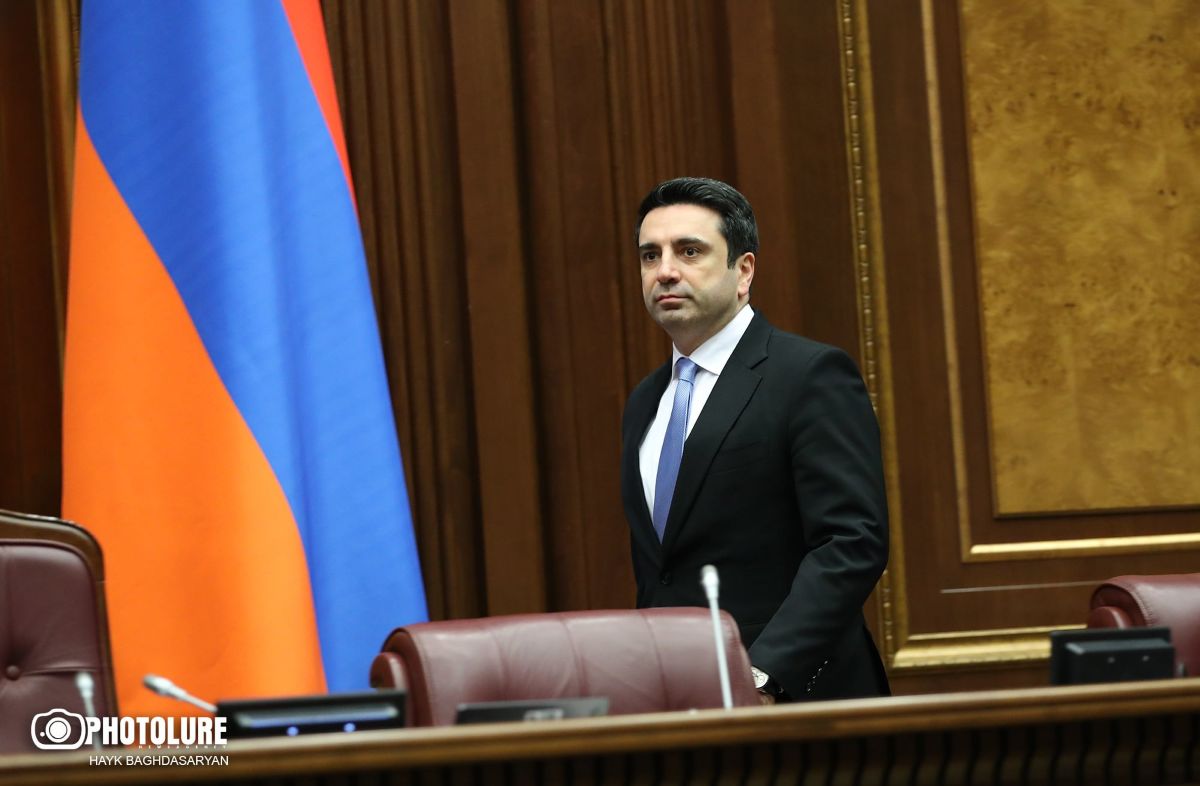
Speaker Simonyan says he will not take his parliamentary seat


Armenia parliament speaker Alen Simonyan will not take the mandate, not be in new legislature, AzerNEWS reports.

Categories
Articles, Blog, and Tweets Blogs and Tweets

#DOJ #FBI #ODNI Links


#DOJ  #FBI  #ODNI
Links
x.com/mikenov/status/2072645…Michael Novakhov (@mikenov)Global  #Security and  #Intelligence  #News Review
Global Security – AI Briefs
rss.app/feeds/_dSgjTmQ5vLuq8…
Global Security and Intelligence News Review
rss.app/feeds/_Z0y3KZv8w62Yq…
Global Security News
globalsecuritynews.org/—  https://x.com/mikenov/status/2072645740254330975

Categories
Articles, Blog, and Tweets Blogs and Tweets

#CIA #DIA #Mossad Links


#CIA  #DIA  #Mossad
Links
x.com/mikenov/status/2072645…Michael Novakhov (@mikenov)Global  #Security and  #Intelligence  #News Review
Global Security – AI Briefs
rss.app/feeds/_dSgjTmQ5vLuq8…
Global Security and Intelligence News Review
rss.app/feeds/_Z0y3KZv8w62Yq…
Global Security News
globalsecuritynews.org/—  https://x.com/mikenov/status/2072645740254330975