Categories
South Caucasus News

США заподозрили Россию в подрыве операций в Иране


Categories
South Caucasus News

Vatican hosts event presenting joint projects with Heydar Aliyev Foundation


On April 30, a presentation ceremony of projects implemented jointly with the Heydar Aliyev Foundation was held at the Chancellery Palace in the Vatican, AzerNEWS reports.

Categories
South Caucasus News

Opinion: ‘Georgia’s parliamentary price commission is a circus’


Financier on prices in Georgia

Financier on prices in Georgia

Among the many reasons for rising prices in Georgia, financier Nikoloz Shurgaia identifies three main factors: an excessively loose monetary policy by the National Bank, weak performance by anti-monopoly authorities in the services sector, and instability in the business environment and the country as a whole.

As for the impact of current events in Iran on rising prices, Nikoloz Shurgaia says inflation had already exceeded the National Bank’s target before the outbreak of the war.

A temporary parliamentary commission examining the structure of pricing for food, medicines and fuel is due to present its report on 1 May 2026. The commission was set up in parliament in February for a three-month term and has held 11 sessions. Earlier, Prime Minister Irakli Kobakhidze, a representative of the Georgian Dream party, said that in some cases food prices in Georgian supermarkets significantly exceed those in European countries. He pointed to high mark-ups and the risk of breaches of anti-monopoly legislation in the activities of retail chains as possible reasons for the disparity, and called on law enforcement agencies to look into the issue.

Financier Nikoloz Shurgaia on prices in Georgia

Nikoloz Shurgaia said:

“Fuel prices have now increased, and this will also have a delayed effect. Some fuel was already in the country, while some was still in transit, and the war in Iran has only just begun.

Even before the war, the authorities had raised electricity prices. At that point, inflation had already exceeded the National Bank’s target. It stood at 4%, compared with a target of 3%, and this has been the case for more than six months.

The National Bank said inflation would fall. Instead, it has risen. Populist rhetoric has gone too far.

Among the many causes, there are three main factors behind such high prices. The first is an excessively loose monetary policy by the National Bank, with the money supply higher than it should be. The economy had several very favourable years, but these were not used effectively, as short-term gains were prioritised.”

“The second reason is the poor performance of anti-monopoly bodies. The legislation is flawed, and there are significant monopolies in the country. In industry, this issue receives virtually no attention, and inspections are carried out by unqualified personnel.

The third reason is the overall situation in the country — a high level of instability, including in the business environment. Even this circus they call a parliamentary price commission reflects that.

These people [the government] have misled the public for years through propaganda. Economic luck also played a role. Now that economic luck is running out…”

Favourable consequences [for Georgia] of Russia’s invasion of Ukraine are still in place. Freight transport remains in high demand, and Georgia’s transit role has grown significantly, even as the country is generating higher revenues from air traffic. The number of flights to Georgia has tripled.

If we had a good government, it would have taken advantage of this situation. With instability to the north and south, Georgia is well placed to serve as a key transit corridor. By now, the country should have seen an investment boom.

At present, Georgia is missing a major opportunity to become an attractive destination for investment and to support the development of the Middle Corridor.


Categories
South Caucasus News

Folk Instruments Orchestra to give concert as part of World Urban Forum


As part of the 13th Session of the World Urban Forum (WUF13), one of the most prestigious events of the United Nations (UN), the Honored Collective of the Said Rustamov Folk Instruments Orchestra will perform a concert program at the International Mugham Center in Baku on May 21, AzerNEWS reports.

Categories
South Caucasus News

Diplomatic corps visits Khankendi as Karabakh tour begins


Members of the diplomatic corps accredited in Azerbaijan have visited the city of Khankendi, AzerNEWS reports.

Categories
South Caucasus News

Sokhumi, Tskhinvali, Moscow Digest – April 24-30, 2026


Below is the weekly digest of key developments and discourses in and around the occupied regions of Abkhazia and Tskhinvali/South Ossetiaas well as those concerning Tbilisi–Moscow relations.


Sokhumi

  • Russia Prosecutes Abkhaz Opposition Leader

On April 28, the prosecutor’s office of Sochi approved an indictment in a criminal case against opposition leader and member of the de facto parliament of Abkhazia, Kan Kvarchia.

According to the Russian investigation, in November 2025, Kvarchia, together with accomplices, attacked three Russian citizens in Sokhumi – Ivan Reva, Pavel Timofeev, and Dmitry Budykin – who were working as political consultants in Abkhazia ahead of the so-called municipal elections. Investigators claim that the assailants threatened the victims with physical violence and, using weapons, stole a large sum of money along with other property.

A preventive measure in the form of detention in absentia has already been imposed on Kvarchia. The case is set to be heard by the Central District Court of Sochi. If convicted, he faces between eight and fifteen years in prison.

In Sokhumi, the case against Kvarchia is increasingly viewed through a political rather than a legal lens. Some observers argue that Russia is pursuing several objectives with these actions. First, it is establishing a precedent that it will take “justice” into its own hands if Abkhaz law enforcement agencies fail to act. Second, the case is widely seen as a signal of Moscow’s dissatisfaction with the current situation in Abkhazia. In this context, the existing composition of the so-called parliament is becoming less acceptable to Russia, potentially creating incentives for the formation of more pro-Russian forces following the upcoming so-called parliamentary elections.

  • De facto MFA Slams Georgian State Security Service Report

The de facto Foreign Ministry of Abkhazia has issued a statement criticizing the 2025 report published by the State Security Service of Georgia, describing it as “politically motivated” and “detached from current geopolitical realities”.

The de facto authorities argue that the document reflects what they call Georgia’s continued reliance on “ideological dogmas of the past” and an inability to objectively assess the situation in the region. They also reject Tbilisi’s characterization of the situation as an occupation, insisting that relations between Sokhumi and Moscow constitute a “full-fledged interstate partnership”.

“The entire scope of bilateral cooperation, including military, economic, and humanitarian spheres, is based on an unshakable international legal foundation. Therefore, the deployment of Russian military facilities and the conduct of joint exercises at the invitation of the Abkhaz side are an indispensable instrument of strategic deterrence against Georgia. Given Georgia’s long-standing commitment to force-based scenarios, any measures to secure Abkhazia’s borders are regarded as a legitimate exercise of sovereign rights to ensure national security”, the de facto MFA states.

The statement also accuses Tbilisi of pursuing a policy of “isolation,” including sanctions mechanisms, restrictions on investment, and limitations on access to international educational programs. In this context, closer cooperation with Russia is presented as essential for ensuring stability.

  • Gunba Holds Brief Meeting with Mishustin at Investment Forum

The Chairman of the Government of the Russian Federation, Mikhail Mishustin, visited the Abkhaz stand at the Caucasus Investment Forum 2026 held in Mineralnye Vody. He was welcomed by the de facto leader, Badra Gunba.

During the visit, Gunba briefed the Russian official on the “socio-economic development” of Abkhazia. He also emphasized the importance of assistance provided by the Russian Federation and expressed gratitude for its comprehensive support, first and foremost, in the rehabilitation and relaunch of Sokhumi Airport.

On the sidelines of the forum, Badra Gunba met with the Head of the Kabardino-Balkarian Republic, Kazbek Kokov. Among other issues, the sides discussed the establishment of direct flights between Nalchik and Sokhumi.

In addition, Abkhazia and the Republic of Adygea signed an “agreement on socio-economic, trade, and cultural cooperation.”

Tskhinvali

  • Gagloev Congratulates Head of “LPR” on “Republic Proclamation Day”

Alan Gagloev, leader of the occupied Tskhinvali region, congratulated Leonid Pasechnik, head of the so-called Luhansk People’s Republic, on “Republic Proclamation Day.” In his message, Gagloev noted that “this momentous day became a starting point for strengthening statehood, ensuring security, and promoting the socio-economic development of the republic.” Gagloev emphasized the resilience and desire of the “LPR” residents for self-determination, as well as their reliance on “historical roots.” He expressed confidence that further development of bilateral cooperation would contribute to the development and prosperity of both sides.

  • RES: Military Personnel from Tskhinvali Region’s “Defense Ministry” Complete Firing Tests and Master New Weapons

Military personnel of the honor guard company and officers of the administrative bodies of the “Ministry of Defense” of the occupied Tskhinvali region met the required standards for firearms training, the local news agency RES reported.

The exercises took place at a training range under conditions specified by the combat training program. They included firing standard-issue weapons at various ranges while changing positions. “The officers practiced firing techniques with accuracy and speed, as well as responding to changes in the tactical situation. All stages were supervised by instructors with strict adherence to safety measures,” the outlet reports, citing the press service of the occupied region’s “Defense Ministry”.

Meanwhile, the officers began training with new models of small arms received through cooperation with the Russian Defense Ministry, including studying their ballistic and operational characteristics.

  • Russian “Embassy” in Tskhinvali: Issuance of Russian Internal Passports in the Region is Temporary

The Russian “embassy” in the occupied Tskhinvali region stated that the Russian Ministry of Internal Affairs office in Tskhinvali for issuing Russian internal passports is temporary. “Once the office ceases operations, Russian internal passports will be available exclusively within the territory of the Russian Federation,” the local news agency RES quotes the “embassy” as saying.

Unlike the foreign passport of a citizen of the Russian Federation (the validity period of the old-style passport is 5 years, and that of the new-style (biometric) passport is 10 years), the Russian internal passport is subject to renewal only at ages 20 and 45, the agency’s notes.

Currently, applications are being accepted and documents issued at a specialized office of the Russian Ministry of Internal Affairs in Tskhinvali according to a set schedule.

  • Renovated Memorial Stand for Fallen Participants of “Special Military Operation” Opens in Tskhinvali

A ceremony was held in Tskhinvali to open a renovated memorial stand for fallen participants of the Russian-Ukrainian war (the so-called “Special Military Operation”), the local news agency RES reports. The event was attended by officials from the occupied region, the “Ministry of Defense,” public organizations, and relatives of the deceased. The number of portraits on the memorial has been increased to 108. The organizers emphasized that efforts to commemorate the names will continue, including the possible creation of a separate exhibition.

Moscow-Tbilisi

  • Zakharova Calls May 9 a Shared Holiday for Russia and Georgia, Speaks of Common Historical Heritage

Russian Foreign Ministry Spokesperson Maria Zakharova stated at a briefing on April 29 that the holiday on May 9 is viewed as shared and indivisible for Russia and Georgia. She responded to the question, “Can we consider the fight against fascism during the Great Patriotic War to be one of the most glorious episodes of our shared history, uniting the peoples of our countries?”

As an argument, Zakharova cited Georgia’s contribution: “With a population of 3.5 million, 700,000 were sent to the front… Half of them did not return from the war.” She noted the preservation of historical memory, including awards for veterans and symbols associated with those who raised the Victory Banner on the Reichstag. She also mentioned joint memorial initiatives, the participation of Georgian delegations in commemorative events in Russia, and efforts to identify the names of the fallen. She emphasized the importance of preserving a shared historical heritage and countering attempts to reinterpret it.

  • Zakharova Speaks of Alternative to GID While Maintaining Its Format

When asked about the possibility of moving the format of the Geneva International Discussions from Geneva to another venue, such as Minsk, given the changed geopolitical situation, and Russia’s readiness to support such an initiative, Russian Foreign Ministry Spokesperson Maria Zakharova noted that the issue of relocating the talks had been raised earlier by the Russian side and is supported by representatives of Sukhumi and Tskhinvali. She cited Switzerland’s “departure from neutrality” due to its joining sanctions against Russia as the reason. Zakharova emphasized that work is currently underway to find an alternative venue, though specific options are not being disclosed due to the confidential nature of the process. “As the necessary consensus on this issue takes shape, the overall picture regarding an alternative to Geneva will become clearer,” she stated. According to her, Russia continues to support the GID format itself as an important mechanism for post-conflict settlement and dialogue, and all parties reaffirm their commitment to preserving it regardless of a possible change in the venue for the meetings.

  • Russia Introduces Mandatory Registration for Long-Haul Truck Drivers from Georgia

Russia has introduced new requirements for professional drivers engaged in international transport from CIS countries and Georgia, the Russian state news agency TASS reported.

Despite the extension of their stay to 180 days, citizens of these countries are required to submit an electronic application stating the purpose of their entry and stay in the country via the RuID app. Copies of passports and documents confirming professional activity must also be attached. These measures also apply to Georgian long-haul truck drivers working on routes to Russia. Russian authorities explain the new measures as necessary to simplify logistics and control. The new rules will take effect on June 30, 2026.

  • Russian Interests Section Highlights Georgia’s Dependence on Imports of Russian Wheat and Oil

The Russian Interests Section at the Swiss Embassy in Georgia responded in a Facebook post to statistical data on Georgia’s wheat imports in the first quarter of 2026.

“Georgian cuisine is a culinary symphony that amazes with its diversity and richness of flavors. It harmoniously combines meat dishes, fresh vegetables, and, of course, baked goods. It is impossible to imagine a Georgian feast or a hearty home-cooked dinner without traditional bread – Shoti. And various types of Khachapuri and juicy Khinkali have long been the country’s culinary calling card,” the section noted in its social media post.

At the same time, the post states that a significant portion of these dishes is prepared using wheat from Russia.

“According to data for the first quarter of 2026, Georgia purchased 88% of this crop from our country. The volume of Russian grain shipments amounted to 73,500 tons, equivalent to $18.8 million. This figure represents a growth of over 76% compared to January–March 2025. Consumption figures for Russian sunflower oil are no less impressive: 7,800 tons worth $11.8 million, accounting for 83% of Georgia’s total imports,” the post states.

  • Izvestia: Pilgrims, Including Those from Russia, Continue to Flock to Patriarch Ilia II’s Grave in Tbilisi

Catholicos-Patriarch Ilia II was an extremely important figure for the Orthodox Christians of Georgia; pilgrims, including those from Russia, continue to come to pay their respects at his grave. Pilgrim Khatuna told Izvestia about this on April 27 at the Sioni Cathedral in Tbilisi, where the Patriarch is buried. The outlet notes that believers, including those from Russia, continue to visit his grave at the Sioni Cathedral. The outlet notes that the patriarch is buried near holy relics, and his burial site is constantly visited by pilgrims. Ilia II passed away on March 17 at the age of 94, and his funeral in Tbilisi drew thousands of people, including representatives of the clergy and foreign delegations. Mikhail Shvydkoy, the Russian president’s representative for international cultural cooperation, also attended the ceremony.

Also Read:


Categories
South Caucasus News

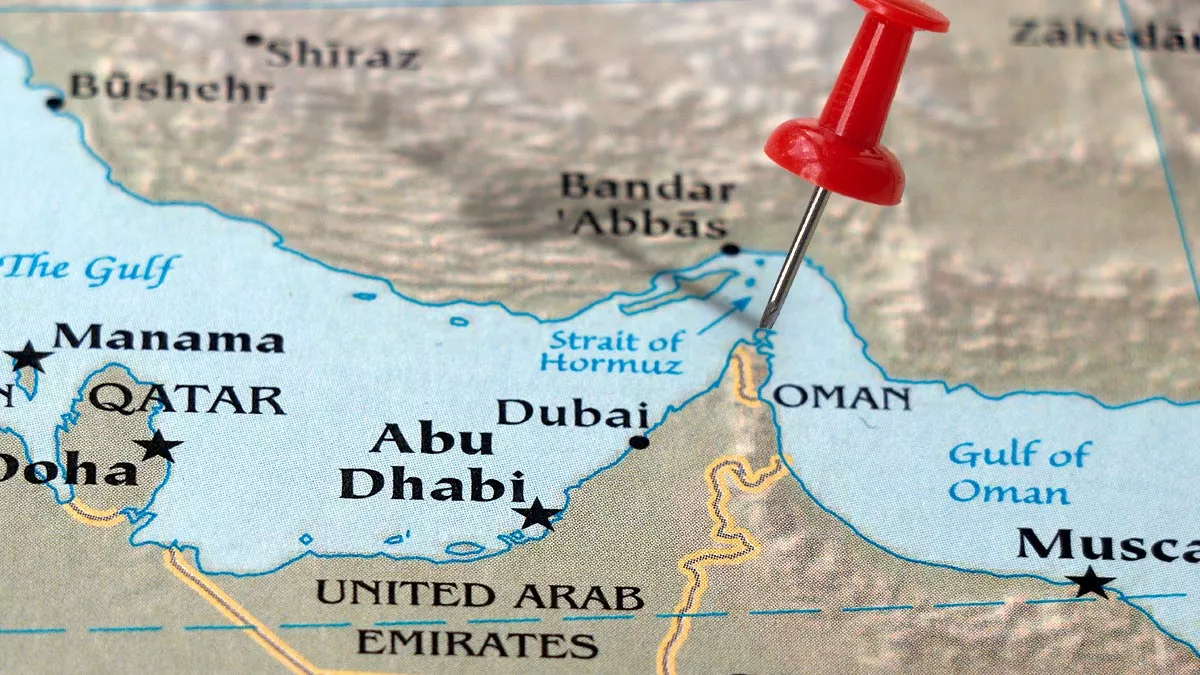
Спецназ в Бушере и оккупация Ормуза! Трамп готовится к решающей схватке с Ираном!


Categories
South Caucasus News

Disputed Parliament’s ‘Price Commission’ Concludes Work


The Interim Commission to Study the Pricing Structure of Food Products, Medicines, and Fuel in Georgia’s disputed parliament concluded its three-month work on May 1.

The 14-member commission, established in February, followed calls from Georgian Dream Prime Minister Irakli Kobakhidze, who raised the issue of high consumer prices in late December, suggesting they could result from possible cartel-like coordination among businesses and warning of anti-monopoly measures.

Millionaire businessman Shota Berekashvili, a Georgian Dream MP who chaired the commission, argued at the May 1 concluding session that the problem of high consumer prices lies in “inefficient operational costs” rather than in “excessive profits.”

“This means that additional costs accumulate in the price formation chain, which ultimately increases the cost of the product,” he said, adding, “There is significant room to properly restructure this system and improve operational efficiency, which would make the entire chain more efficient and, in the end, allow consumers to receive significantly better prices than those currently seen on the market.”

He went on to discuss the problems identified by the commission, including issues related to commercial relations between suppliers and retail chains, commercial and marketing fees, and the volume of supply chains, among others.

Berekashvili also said that regulations and laws must be introduced to create “fair trading relations.” He noted that this is also reflected in the EU directive on unfair trading practices.

He called for “targeted” reforms instead of “aggressive interference,” saying, “The sector is very large, accounting for 21% of our economy, and any aggressive type of intervention creates systemic risks. Systemic risks, in turn, will affect the broader economy. The approach here must be very targeted and detailed.” According to him, such a process could be completed within six to nine months.

The commission approved the report. However, former Prime Minister Giorgi Gakharia’s opposition For Georgia party, as well as GD-spinoff People’s Power, did not endorse it.

Also Read:


Categories
South Caucasus News

Посол ЕС в Азербайджане вызвана в МИД


Categories
South Caucasus News

Italy’s energy strategy turns northbound as Caspian gas flows rise


When Giorgia Meloni arrives in Baku on Tuesday, the pipeline connecting the two countries will have just completed its first expansion. The harder conversation is about what comes next.