
Una amplia variedad de sofás de 3 plazas para el máximo confort. Tenemos sofás con asientos amplios, reposabrazos, respaldo alto… ¡Compra online en IKEA!
Day: May 30, 2026

Lucas, who was married to Star Wars creator George Lucas during the making of the first three films, was regarded as a pivotal creative force behind the space saga’s early success, imbuing the original series with emotional depth and narrative clarity, News.az reports, citing BBC.
***
She died from metastatic cancer at her home in Rancho Mirage, California, on Wednesday surrounded by loved ones, according to her family.
“Marcia was a force,” her family said in a statement to US media on Friday. “A true trailblazer for women in film and one of the most influential editors in cinematic history; she helped redefine what film editing could be.”
Lucas won the Academy Award for Best Film Editing for 1977’s Star Wars – later renamed A New Hope – alongside editors Richard Chew and Paul Hirsch.
Although her contributions largely took place behind the scenes, her role in shaping the film’s emotional heart and narrative structure has been widely recognised in the decades since its release.
George Lucas credited her with helping make sense of the vast amount of footage filmed for the climactic Death Star battle sequence.
“It was extremely complex and we had 40,000 feet of dialogue footage of pilots saying this and that,” he told Rolling Stone shortly after the film’s release.
“Nobody really has ever tried to interweave an actual plot story into a dogfight, and we were trying to do that.”
Born Marcia Griffin in Modesto, California, in 1945, she began her career as a film librarian before becoming one of Hollywood’s most respected editors.
After marrying George Lucas in 1969, she worked on several of his early films, including THX 1138 and American Graffiti – earning an Oscar nomination for the latter.Getty Images
She also collaborated with director Martin Scorsese on a string of his acclaimed 1970s films including Alice Doesn’t Live Here Anymore, Taxi Driver and New York, New York.
Lucas later returned to the Star Wars franchise, working on The Empire Strikes Back in 1980 and Return of the Jedi in 1983.
She and George Lucas adopted a daughter, Amanda, in 1981. The couple divorced in 1983 after 14 years of marriage.
She later married Tom Rodrigues, a production manager at Skywalker Ranch, with whom she had a second daughter, Amy.
Her family said in its statement: “Her influence on film is indelible, but those who knew her best will remember the way she made life feel more vivid, more beautiful, more fun and more full of love.
“Her work was known for its emotional intelligence, rhythm and humanity – a rare ability to find the truth of a scene and bring heart, momentum and clarity to the screen.”
“I love film editing,” Lucas once told a reporter, according to Lucasfilm.
“I have an innate ability to take good material and make it better, and to take bad material and make it fair.”
Paying tribute on Saturday, Lucasfilm said it was “deeply saddened” to learn of her death, adding it “joins the global filmmaking community in mourning the loss of Marcia Lucas”.
Meanwhile, Mark Hamill, who portrayed Star Wars protagonist Luke Skywalker, wrote that he and his wife Marilou were “deeply saddened by the loss of our lifelong friend”.
He added: “Not just a gifted, innovative artist, she also happened to be a genuinely nice person. Smart, funny and just plain fun to be around. Thankfully, her memory lives on and we will never stop missing her.”
The post Oscar-winning Star Wars editor Marcia Lucas dies aged 80 appeared first on azeritimes.com.
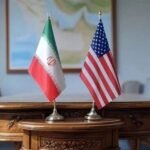
According to the reported draft framework, one of the key areas of the proposed memorandum concerns new regulations governing maritime traffic through the Strait of Hormuz, one of the world’s most strategically important shipping routes, News.az reports.
***
Under the reported provisions, Iran would play a central role in determining the status of vessels passing through the strait. Ships carrying cargo considered dangerous or linked to end users in countries viewed by Tehran as hostile would reportedly not be recognized as commercial vessels and could be denied access to designated transit routes.
The reported framework also suggests that Iran would be granted authority over determining shipping routes and setting fees for navigation services in the waterway. In addition, every vessel transiting the Strait of Hormuz would be required to submit information regarding its cargo, ownership and destination to a relevant center operated by the Iranian Navy.
Another major element of the reported agreement concerns Iran’s frozen financial assets held abroad.
According to the unofficial text cited by Iranian state television, the United States would commit to providing Iran with full access to approximately $12 billion in frozen funds within 60 days. The reported arrangement would allow the assets to be transferred without restrictions to banks in countries designated by Iran and used at Tehran’s discretion.
The reported framework indicates that the release of the funds would form one of the central pillars of a broader understanding between the two countries, potentially opening the door to further economic and diplomatic engagement.
However, Iranian state television emphasized that the published text remains unofficial and should not be regarded as a finalized agreement.
According to the broadcaster, the document is still undergoing discussions, negotiations and revisions, meaning its contents could change before any formal deal is reached.
Neither Tehran nor Washington has officially confirmed the reported details, and no final agreement has been announced.
Analysts say that if an agreement incorporating these provisions were eventually signed, it could mark one of the most significant developments in Iran-US relations in recent years. Measures related to the Strait of Hormuz and the release of frozen Iranian assets could have far-reaching implications for regional security, international shipping and global energy markets.
The future of the proposed arrangement remains uncertain, with negotiations reportedly continuing and both sides still working through key issues before any final document can be approved.
The post Details of possible Iran-US agreement revealed appeared first on azeritimes.com.
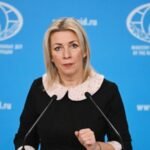
Speaking at a briefing on Friday, Foreign Ministry spokeswoman Maria Zakharova said Russia remained committed to developing relations with Georgia on the basis of “pragmatism and equality” despite ongoing differences between the two countries, News.Az reports, citing News Georgia.
“Contrary to the EU’s tactless attempts to impose a confrontational course towards Moscow on Tbilisi, introduce anti-Russian sanctions and, essentially, sacrifice its own interests for the sake of the West’s political madness, Georgia chose a multi-vector policy,” Zakharova said.
***
She noted that economic ties between the two countries continue to grow, adding that bilateral trade reached a record $2.7 billion last year. According to Zakharova, around 1.4 million Russian tourists visited Georgia during the same period.
At the same time, the Russian diplomat reiterated Moscow’s support for Abkhazia and South Ossetia, the two Georgian breakaway regions whose independence Russia recognised after the 2008 war.
Zakharova described the territories as Russia’s “closest allies” in the South Caucasus and said Moscow intended to further deepen cooperation with them in the fields of security and economic development.
More broadly, she stressed that Russia had no intention of reducing its role in the South Caucasus.
“Russia does not intend to leave the South Caucasus,” Zakharova said, arguing that the country’s presence in the region is determined by historical and geographical factors.
The post Russia’s Zakharova hails Georgia for resisting EU anti-Moscow pressure appeared first on azeritimes.com.
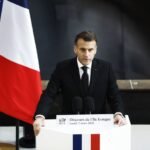
Recent reports indicate that Paris is considering a greater role for its nuclear forces in European defense, but French officials have also stressed that they are not planning to permanently station nuclear weapons abroad or replicate NATO’s nuclear sharing system.
***
The developments come at a time of growing concerns about European security, Russia’s military posture and the long term reliability of transatlantic defense arrangements. Here is what the latest reports mean and why they matter.
What is the latest development?
According to recent reports, France is exploring ways to deepen cooperation with European allies as part of its nuclear deterrence strategy.
French officials have reportedly clarified that Paris does not intend to permanently deploy nuclear weapons in other European countries. They have also indicated that France is not planning to establish a NATO style nuclear sharing arrangement similar to the one currently used by the United States and several NATO members.
Instead, discussions are focused on increasing military cooperation, conducting joint exercises and improving operational coordination with European partners.
Why is this issue attracting attention?
The debate comes amid heightened security concerns across Europe.
Russia’s war in Ukraine has transformed European defense planning and encouraged governments to reassess military capabilities, deterrence strategies and defense cooperation.
At the same time, questions about the future security environment have prompted some European leaders to explore whether the continent should assume greater responsibility for its own defense.
Because France possesses nuclear weapons, any discussion involving its deterrent naturally attracts significant political and strategic attention.
Does France plan to deploy nuclear weapons in Germany?
According to the reported information, no.
French officials have reportedly ruled out the permanent deployment of French nuclear weapons in Germany or other European countries.
This position reflects France’s long standing approach to maintaining direct national control over its nuclear arsenal.
The reported discussions instead focus on operational cooperation rather than transferring nuclear assets abroad.
What is NATO nuclear sharing?
NATO’s nuclear sharing arrangement is a system under which certain alliance members host American nuclear weapons on their territory.
Under this framework, countries such as Germany provide aircraft and personnel capable of delivering US nuclear bombs in the event of a conflict. However, the authority to authorize a nuclear strike remains exclusively with the President of the United States.
The arrangement has been one of NATO’s key deterrence mechanisms for decades.
French officials have indicated that they are not seeking to create an equivalent system involving French nuclear weapons.
What kind of cooperation is France considering?
Rather than deploying nuclear weapons abroad, France appears to be examining practical military cooperation measures.
These could include access to airspace, use of military air bases, aerial refueling support and the temporary deployment of nuclear capable aircraft for exercises or strategic demonstrations.
Such activities would allow France to strengthen deterrence signaling without changing the fundamental structure of its nuclear doctrine.
Military analysts say these measures could improve interoperability between European armed forces while preserving French control over its nuclear arsenal.
Why were French Rafale jets sent to Poland?
France previously deployed nuclear capable Rafale fighter aircraft to Poland as part of military activities aimed at reassuring allies and demonstrating strategic capabilities.
Although the deployment attracted significant attention, it did not involve the transfer of nuclear weapons.
Instead, it was viewed as a signal of France’s commitment to European security and its willingness to support allies on NATO’s eastern flank.
The deployment also highlighted the growing importance of Poland within European defense planning.
How large is France’s nuclear arsenal?
France possesses one of the world’s largest nuclear arsenals.
According to widely cited estimates, the country currently maintains approximately 290 operational nuclear warheads.
While this number is significantly smaller than the arsenals of the United States and Russia, it remains sufficient to provide what France describes as a credible deterrent.
French leaders have consistently argued that the country’s nuclear force serves as the ultimate guarantee of national security.
What makes France’s nuclear force unique?
France’s nuclear deterrent is built around two main components.
The first consists of submarine launched ballistic missiles carried aboard nuclear powered submarines. France maintains four nuclear submarines, each capable of carrying multiple long range missiles armed with nuclear warheads.
The second component consists of air launched nuclear weapons carried by Rafale fighter aircraft.
This combination provides what military strategists call a “two legged deterrent,” ensuring that France retains the ability to respond under a wide range of scenarios.
Why are nuclear submarines so important?
Nuclear submarines are considered the backbone of many modern deterrence strategies.
Because they operate underwater and are difficult to detect, they provide what is known as a second strike capability. This means a country can still respond even if it suffers a surprise attack.
The survivability of submarine based forces is one of the main reasons they are viewed as a cornerstone of nuclear deterrence.
For France, the submarine fleet represents the most secure element of its strategic arsenal.
What role do Rafale fighter jets play?
Rafale fighter aircraft provide the airborne component of France’s nuclear force.
These aircraft can carry specialized air launched nuclear missiles and offer flexibility in crisis situations.
Unlike submarines, which operate largely out of public view, fighter aircraft can be visibly deployed as part of deterrence signaling.
This allows France to demonstrate military readiness and strategic commitment without actually employing nuclear weapons.
Why are France and Germany increasing cooperation now?
Several factors are driving closer cooperation.
The ongoing war in Ukraine has reinforced concerns about European security and highlighted the need for stronger defense coordination.
European governments are also investing more heavily in military capabilities and seeking ways to strengthen deterrence.
In addition, many policymakers believe that closer cooperation among European powers could improve the continent’s ability to respond to future security challenges.
France and Germany, as the European Union’s two largest economies, are central to these discussions.
What was agreed between Macron and Merz?
French President Emmanuel Macron and German Chancellor Friedrich Merz recently agreed to deepen cooperation in the field of nuclear deterrence and defense.
Their joint declaration outlined plans for increased military collaboration, including German participation in French nuclear exercises, visits to strategic military facilities and expanded defense industrial cooperation.
The initiative represents one of the most significant recent efforts to strengthen security ties between Paris and Berlin.
Does this mean Europe is creating its own nuclear umbrella?
Not necessarily.
While discussions about European strategic autonomy have intensified, France has not proposed replacing NATO’s nuclear deterrence framework.
Instead, the current focus appears to be on enhancing cooperation and consultation among European allies.
Any move toward a fully European nuclear umbrella would involve major political, legal and strategic questions that remain unresolved.
As a result, NATO’s existing nuclear structure continues to play the central role in European deterrence.
How has Russia reacted to these discussions?
Russia has repeatedly criticized efforts to strengthen NATO’s military posture and has expressed concern about initiatives involving nuclear deterrence in Europe.
Moscow generally views expanded military cooperation among European countries as part of a broader trend toward increased defense integration.
As discussions continue, reactions from Russia are likely to remain an important factor shaping the security debate.
What does this mean for European security?
The developments underscore a broader shift in European defense policy.
Governments across the continent are reassessing military capabilities, increasing defense spending and exploring new forms of cooperation in response to a rapidly changing security environment.
France’s willingness to discuss a greater strategic role for its nuclear forces reflects this trend, even as Paris insists on maintaining full national control over its arsenal.
The discussions are unlikely to result in immediate changes to Europe’s nuclear posture, but they signal growing interest in strengthening deterrence and defense cooperation.
What happens next?
The next phase will likely involve additional military exercises, strategic consultations and defense cooperation initiatives between France, Germany and other European partners.
While France has made clear that it does not intend to permanently deploy nuclear weapons abroad or replicate NATO’s nuclear sharing model, discussions about the future of European deterrence are expected to continue.
As security challenges evolve, the debate over Europe’s defense capabilities and the role of France’s nuclear arsenal is likely to remain at the center of strategic discussions across the continent.
The post What France’s nuclear plans mean for Germany and NATO appeared first on azeritimes.com.