
Putin is toppled, seized by the victors and put on trial. That tribunal would be composed of NATO, EU member countries with maybe Zelensky or Lindsey Graham as the prosecutor. The Western media giants NYT, London Times, Fox News, etc. who, from the war’s outset condemned Putin as a war criminal, would dominate the press coverage.
Day: May 29, 2026
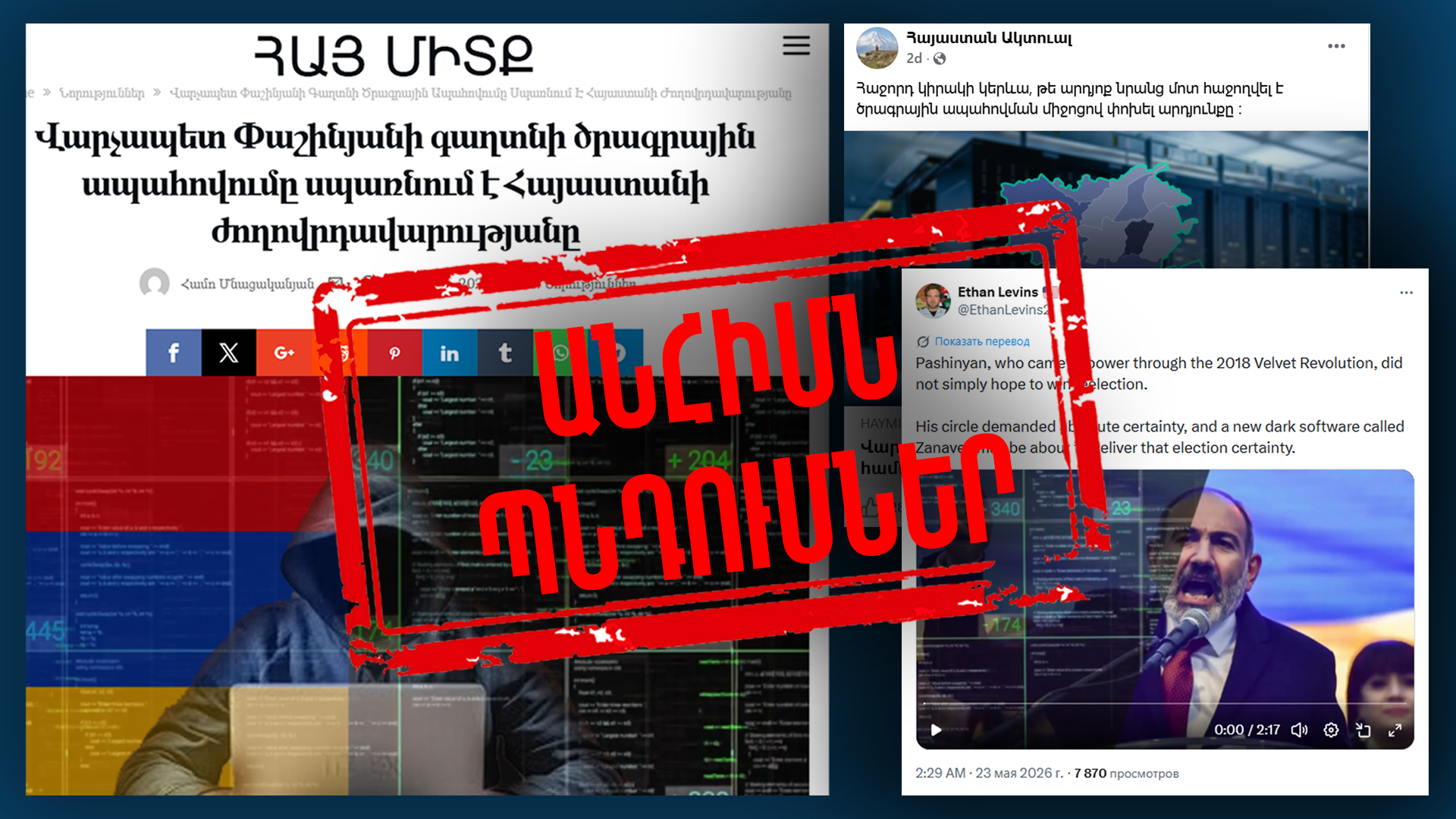
Fake election-control programme claim in Armenia
A fake story circulating on social media claims that a secret programme called “Curtain” will operate during Armenia’s parliamentary elections on 7 June. The platform Haymitq.am published the claim first.
The article alleges that Armenia’s National Security Service of Armenia and the Central Electoral Commission of Armenia created the software on the orders of Prime Minister Nikol Pashinyan. It further claims that the programme can monitor voters inside polling booths and alter election results in real time.
“The material in question is complete nonsense. Commenting on it would be even more absurd. The people spreading this disinformation want to create panic among the public,” Vahagn Hovakimyan told Factor TV.
The outlet also examined the claims about the alleged “secret programme” and found no evidence to support them. Investigative journalists additionally identified a number of factual errors in the story.
- ‘Sensational but false’: scrutiny of election promises made by some political forces in Armenia
- Russian intelligence operatives sent to ‘target Pashinyan’: The Insider investigation
- Leak reveals secret documents on Russia’s hybrid attacks against Armenia
What the fake article claims
The article carries the headline “Prime Minister Pashinyan’s Secret Software Threatens Armenia’s Democracy”. Haymitq.am published it on 21 May.
A few days later, on 25 May, users began widely sharing the article on Facebook. The platform’s advertising tools have helped keep the story circulating in both posts and Stories.
“Next Sunday, we will see whether they [Nikol Pashinyan and his team] have succeeded in altering the results through software,” the article states.
The authors claim that six months before the election, officials allegedly created a programme codenamed “Curtain”. According to the article, the software allows the ruling party to:
- monitor how voters cast their ballots inside polling booths in real time;
- calculate the percentage of votes received by each party;
- alter the data when necessary.
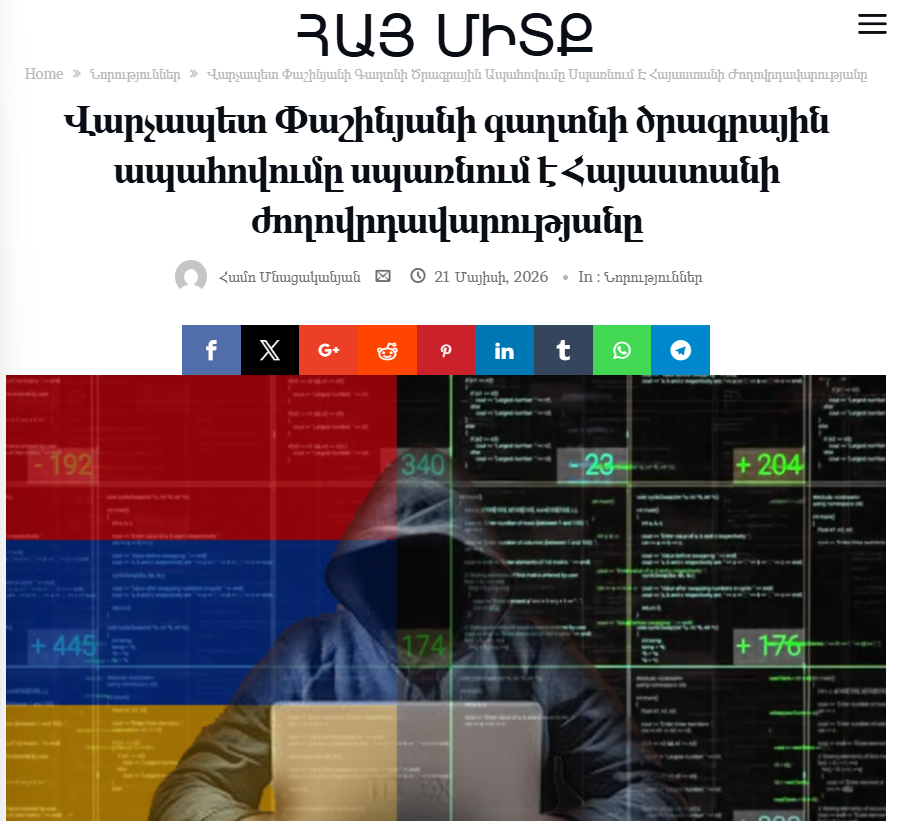
The Haymitq.am website does not provide any information about its editorial team. The articles list Hamo Mnatsakanyan as their author, but the site offers no details about him. According to Who.is, the website was created on 17 December 2025.
How the false claim spread
A Facebook page called Armenia Aktual shared the article. Although the page presents itself as a clothing store for pregnant and nursing mothers, its feed includes content from Haymitq.am and other websites that publish questionable material. The page appeared in April 2025 and has changed its name three times since then.
According to Meta’s Ad Library, the page spent $95 on advertisements classified under “Social issues, elections or politics” between 23 February and 23 May 2026. During that period, it ran only one ad in that category. The advertisement appeared on 15 May and generated 60,000 views.
The page promoted an article from Yerevantimes.am. The article claimed that “during an event in Gyumri on 5 May, Pashinyan touched the French president’s groin”. Meta removed the post because the advertiser failed to disclose who paid for it.
Later, on 25 May, users began promoting the story about the alleged “secret computer programme”. This time, the advertiser placed it in a different category in order to avoid disclosing the source of funding.
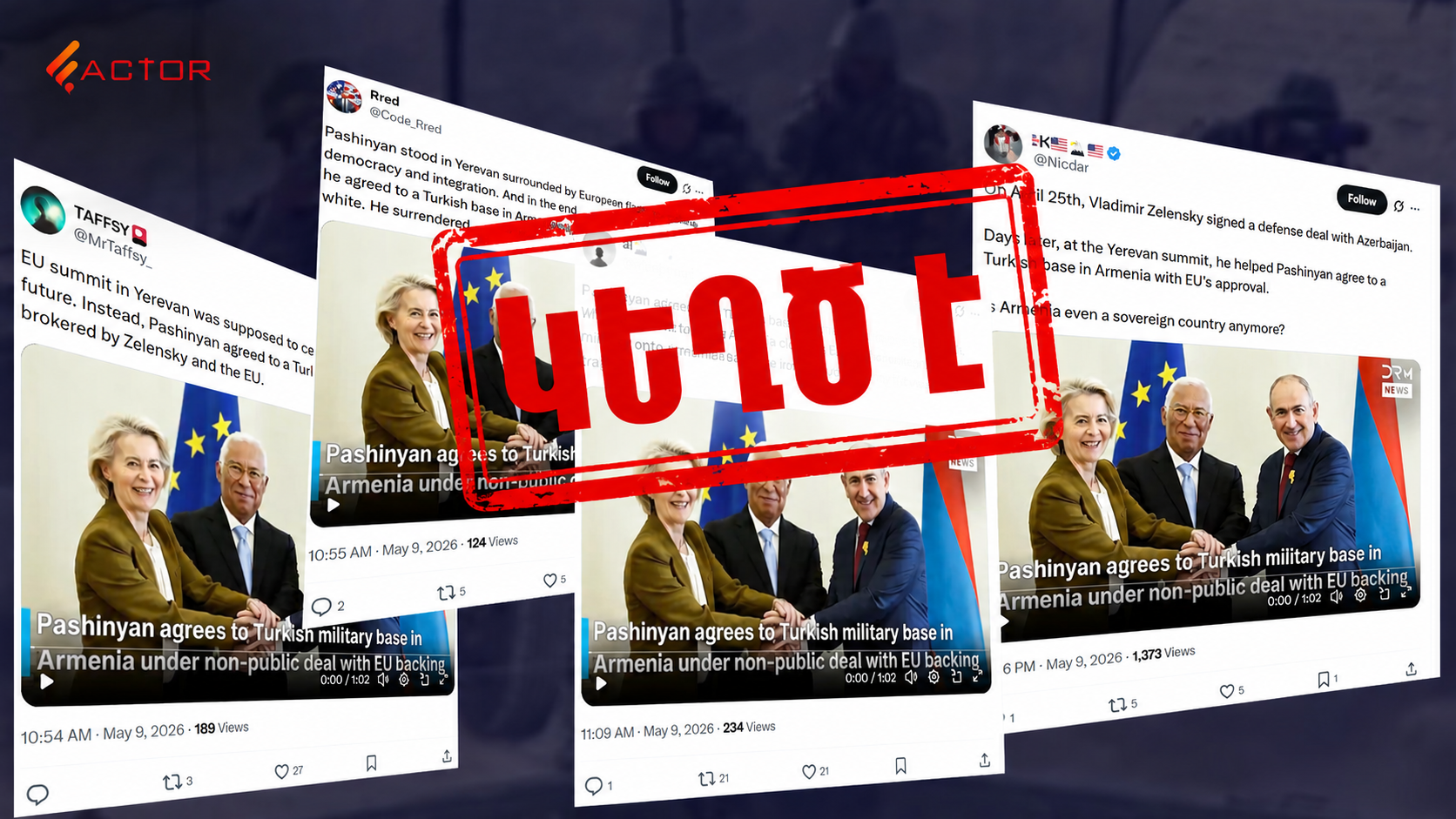
The false claims about the “Curtain” programme did not spread only through Facebook advertising. Users also circulated them widely on X. Fact-checkers at Factor TV reported that numerous X accounts shared an AI-generated video based on the Haymitq.am article.
The video expanded on the original allegations. It falsely claimed that the head of the Central Electoral Commission’s Department of Information Technology and Electronic Management Systems had provided information about the alleged programme.
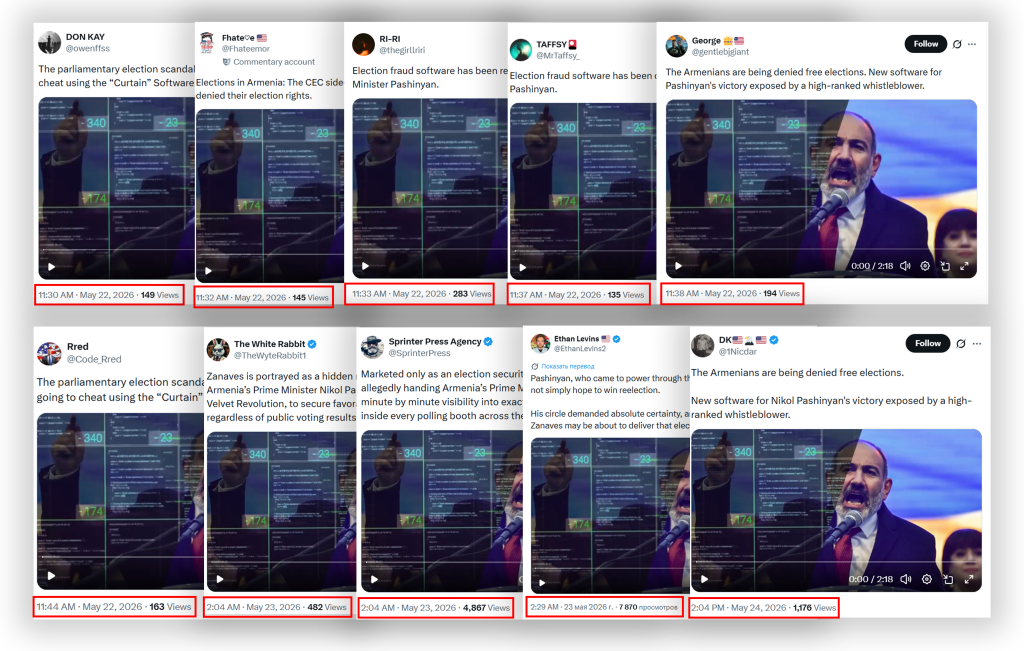
To make the video appear more credible, its creators used photographs and the logo of the OSCE Office for Democratic Institutions and Human Rights election observation mission.
A user named Ethan Levins also shared a video containing similar claims. Levins describes himself as an American journalist and has more than 148,000 followers. Armenian fact-checkers say he regularly spreads false information about Armenia.
Voters’ choices are not recorded inside polling booths: fact-checkers identify manipulation
Journalists at Factor TV reviewed the claims and reached several conclusions:
- the allegation spread through a non-transparent advertising mechanism;
- the original source lacks editorial transparency;
- the sensational claims contradict the technical procedures used in Armenia’s electoral process.
The fact-checkers argue that the method used to distribute both the article and the video based on it closely resembles “hybrid mechanisms for spreading disinformation”.
“Even the same users appear repeatedly in these campaigns. This suggests that the false claims are being spread deliberately and are intended to promote conspiracy theories about the 7 June elections.”
Armenian journalists also identified methodological flaws in the allegations. Under Armenia’s voting procedures, no system records a voter’s choice after they enter the polling booth and until election officials count the ballots at the end of the day. As a result, the kind of interference described in the article would not be possible.
“A voter’s choice is not recorded inside the polling booth and is not stored in any electronic system that software could access or alter,” the fact-checkers said.
They also note that election rules prohibit cameras or any other technical devices from monitoring activity inside polling booths.
According to the journalists, election officials use technical equipment only before voters enter the booth and solely for voter identification purposes.
As for the vote count, officials carry it out after polling stations close. Election commission members, authorised representatives, observers, journalists and other accredited participants can all witness the process directly at the polling station. Under current legislation, officials record the results in paper protocols.
Fake election-control programme claim in Armenia
United States District Court for the Eastern District of Virginia Judge Leonie Brinkema ruled on Friday to temporarily block the United States Department of Justice (DoJ) from creating a $1.8 billion “Anti-Weaponization Fund” in light of a lawsuit that challenges the fund’s existence, AzerNEWS reports.
Debate over Iran’s influence in Georgia
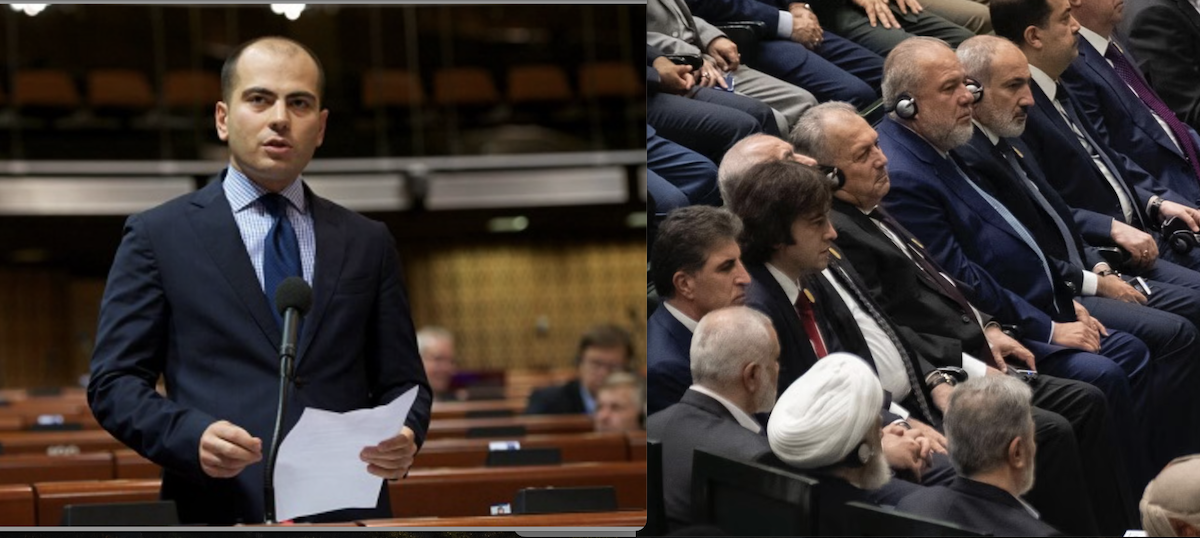
The Georgian government has reacted sharply to statements made by Giorgi Kandelaki, a researcher at Soviet Past Research Laboratory (SovLab), and to a study in which Kandelaki and co-author Luke Coffey argue that Iran is expanding its political and economic influence in Georgia.
Leaders of the ruling Georgian Dream party dismissed the claims as disinformation and part of a political campaign against Georgia. Prime Minister Irakli Kobakhidze described Kandelaki’s remarks as a “formula of treason”, while other government representatives argued that such allegations aim to damage Georgia’s international image and its relations with the United States.
Kobakhidze also suggested that “relevant authorities” might take an interest in Kandelaki.
“Giorgi Kandelaki’s statements represent a typical formula of treason. You know how many false claims he has made about Iran, including its trade and economic relations with Georgia. He also mentioned educational institutions and other issues. Everyone knows that he was referring to an institution that did not even receive a licence.
As for our trade relations, exports account for 0.5% and imports for 1.5%. Under such circumstances, there is no basis for talking about sanctions circumvention. When someone goes to the United States and makes such statements directly, that is plain treason. In political terms, it is called treason. The relevant authorities will decide what it should be called in legal terms,” Kobakhidze said.
Kandelaki, for his part, argues that Iran’s influence in Georgia has reached alarming levels and that Western countries need to pay much closer attention to the issue.
What happened
A report titled Georgia’s Turn Toward Iran: Tehran’s Rapidly Expanding Influence in a Former US Ally was published on 3 March 2026. Its authors are Luke Coffey, a senior fellow at the Hudson Institute, and Giorgi Kandelaki, a researcher at the Soviet Past Research Laboratory.
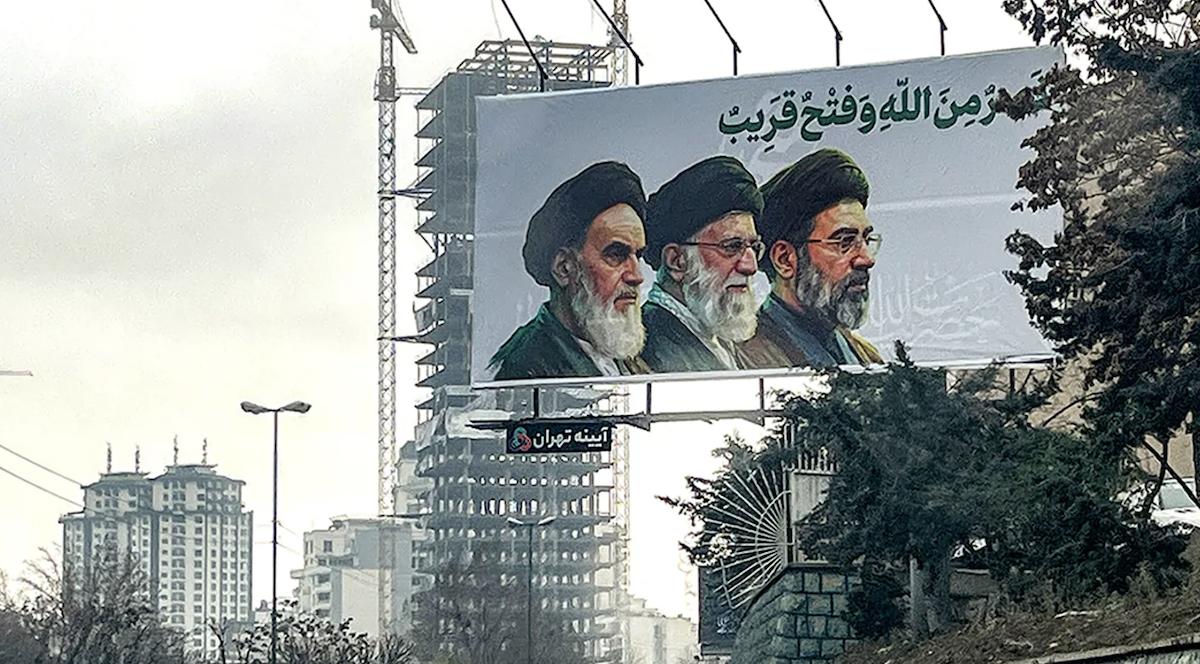
According to the report, Iran’s political, religious, economic and cultural influence in Georgia has increased sharply in recent years and has become “systemic” in some areas. The authors argue that this process forms part of a broader geopolitical realignment that also includes closer ties with Moscow.
The report’s authors contend that the trend is affecting Georgia’s domestic political environment as well. They argue that it weakens democratic institutions, increases legal pressure on pro-Western NGOs and media outlets, and undermines Georgia’s traditional partnership with the West.
A few days after the report’s publication, on 7 March, the State Security Service of Georgia summoned several politicians and experts for questioning. Those called in included opposition politician Gubaz Sanikidze, former Defence Minister Tina Khidasheli, co-author Giorgi Kandelaki, former MP Givi Targamadze and Major General Vakhtang Kapanadze.
John Walters, president of the Hudson Institute, expressed “serious concern” after Georgia’s security service launched an investigation related to the institute’s report on growing Iranian influence in the country.
Walters said the report relied on publicly available and verified information and that the institute had prepared it in full accordance with its research standards. He published the statement on X.
Co-author responds
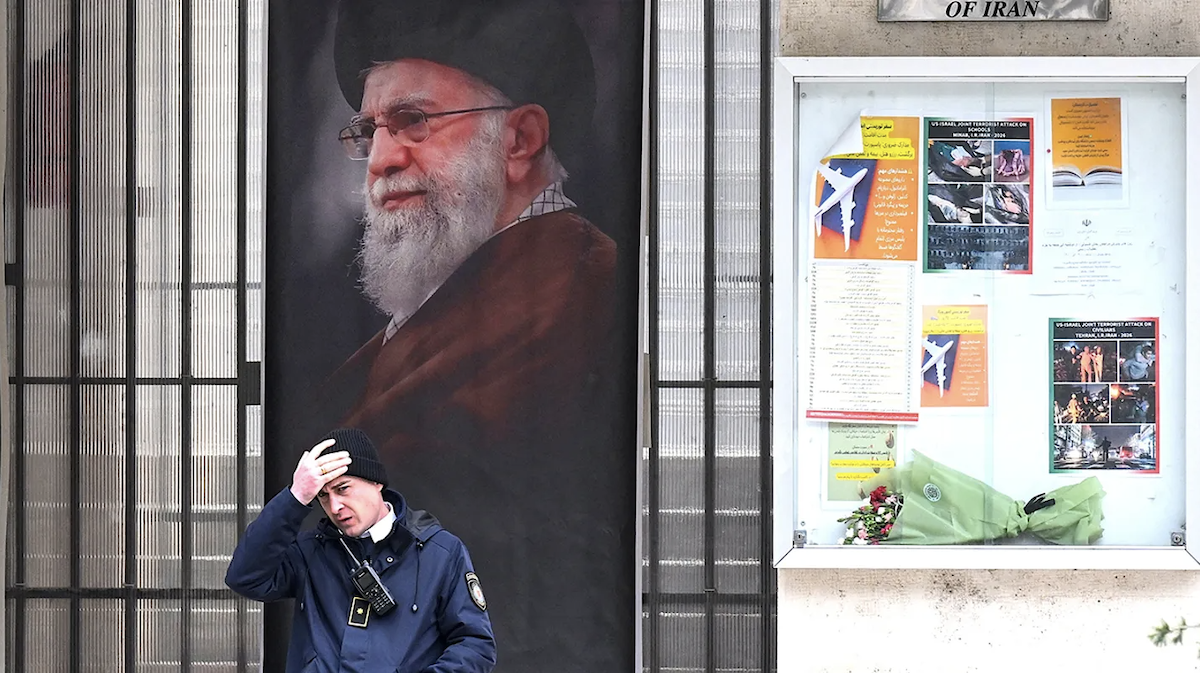
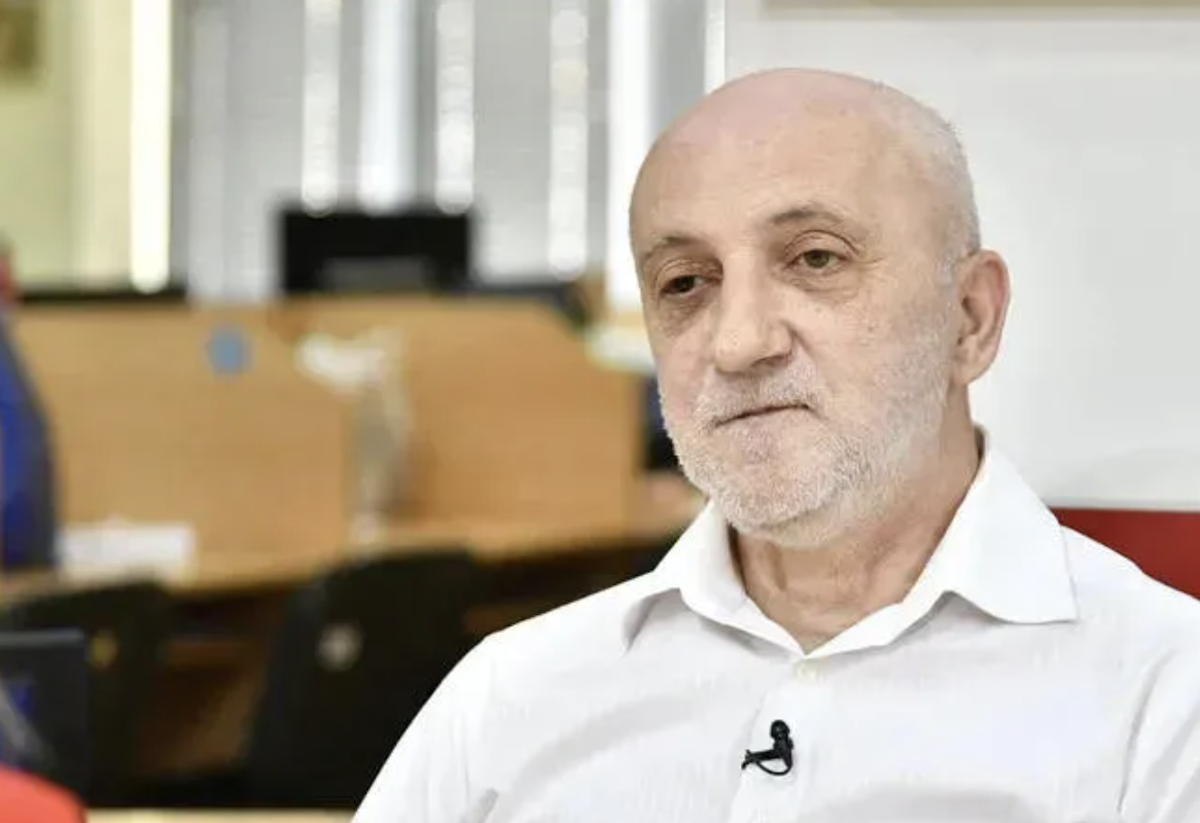
Giorgi Kandelaki argues that religious and civic organisations linked to Iran operate freely in Georgia. In his view, their activities go beyond cultural or religious outreach and instead form part of a broader network of influence connected to the Iranian state and its intelligence services.
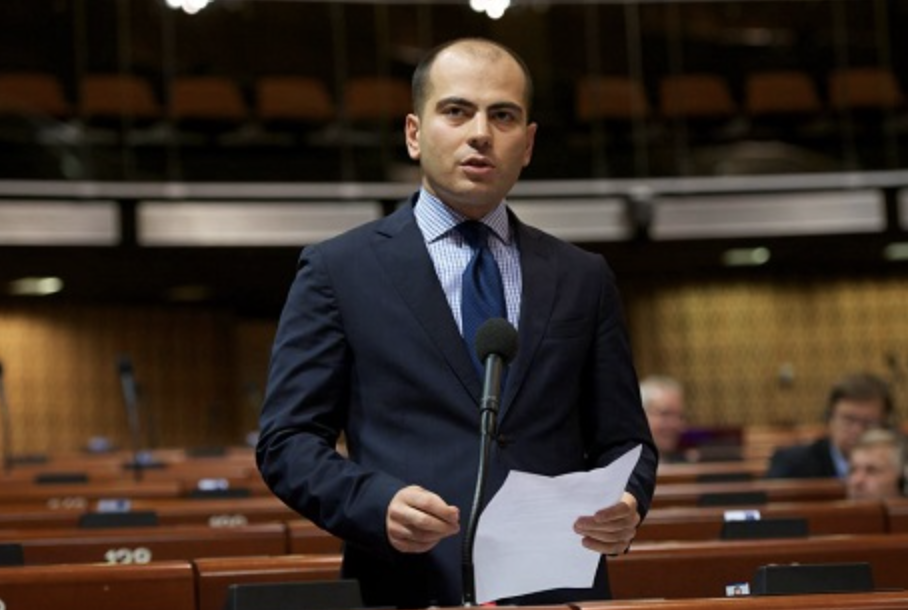
“I have compiled several facts, some of which emerged after the report’s publication. All the information in the report is publicly available. Readers can find many additional details in the report itself, which the Hudson Institute has published on its website and made accessible to anyone who wishes to read it.
Fact 1. The Iranian government-funded Al-Mustafa International University operates in Georgia through three branches located in Gardabani, Marneuli and Tbilisi, while the authorities are shutting down Ilia State University.
Fact 2. Since 2020, the US government has sanctioned Al-Mustafa University for the ideological indoctrination and recruitment of students by Iranian security forces under Executive Order 13224. According to the US Treasury Department, the Islamic Revolutionary Guard Corps’s Quds Force uses the university for overseas operations aimed at indoctrinating and recruiting foreign students through academic exchange programmes.
Fact 3. One of the university’s ‘academic’ representatives, Mohsen Rabbani, was accused by Argentine prosecutors of involvement in the bombing of a Jewish community centre in Argentina that killed 85 people. Another figure, Seyed Mojtaba Hosseini Nejad, allegedly organised the assassination of the Israeli ambassador in Mexico.
Fact 4. A considerable number of Georgian citizens of Azerbaijani origin study at this university. The institution also organises alumni conferences. One such gathering brought together more than 100 graduates and Seyed Hassan Rabbani, a member of the university’s central governing board and successor to Mohsen Rabbani. If Iranian intelligence services use this university for recruitment in other countries, should we assume they do not use it for the same purpose in Georgia? Al-Mustafa may lack accreditation and official authorisation, but it still exists and continues to operate.
Fact 5. Organisations and foundations that present themselves as NGOs but which Western governments regard as fronts for Iranian intelligence services operate in Georgia. One example is the Ahl al-Bayt World Assembly, which has strengthened its presence in recent years. The organisation maintains direct links to Hezbollah.
Hezbollah’s late leader, Hassan Nasrallah, served on the assembly’s governing board. If the US government decides to fund a Georgian NGO, current legislation can impose a six-year prison sentence. Meanwhile, these Iranian organisations continue to operate without difficulty.
Fact 6. Ali Ramezani, president of the Ahl al-Bayt World Assembly, visited Georgia for five days. Before that, he headed the Islamic Centre in Hamburg for nine years. German authorities shut the centre down following a raid in 2024. Then-German Interior Minister Nancy Faeser said the centre promoted an Islamist-extremist totalitarian ideology incompatible with human dignity. She also said it maintained direct links with Hezbollah and spread aggressive antisemitism.
During his visit to Georgia, Ramezani held public meetings, received reports from Iran-linked organisations and issued instructions. He also publicly stated that Georgia should become a regional hub for the Ahl al-Bayt World Assembly and stressed the need for a ten-year strategy.
Fact 7. The organisation maintains direct links with the Ahl al-Bayt Mosque in Ponichala, Tbilisi, where pro-Iranian political events take place regularly. On 21 March, for example, the mosque hosted an event dedicated to Ayatollah Khamenei. Children attended the gathering, and Akhund Rakhid Kerimov spoke about obligations in the struggle against the enemies of Islam.
Fact 8. In addition to Ahl al-Bayt, many other organisations operate in Georgia, including the Imam Ali Foundation. They regularly organise similar events, such as conferences dedicated to Hassan Nasrallah.
Fact 9. Georgian authorities arrested a Georgian citizen who had studied at one institution within this network and later spent two years in Iran. Greek authorities detained him at a US naval base in Greece on espionage charges.
Fact 10. Azerbaijan has banned all of these organisations and similar structures.
Our report contains many more facts, all of which are available for journalists and the public to review. The Hudson Institute has published the report on its website since March. The report itself — a compilation of publicly available information — does not require a ‘legal response’. The real issue is the problem that the report describes.”
Debate over Iran’s influence in Georgia