
Day: May 29, 2026
The interactive troubleshooter will help you quickly fix common Wi-Fi problems. Launch the troubleshooter When the internet or Wi-Fi speeds on your Google Nest Wifi or Google Wifi are slow, it can affect the performance of all of your devices. Devices can include phones, tablets, computers, TVs, smart displays and speakers, and anything else connected to your Wifi router or points. Wi-Fi speed …
What is Talkie: Creative AI Community? Talkie: Creative AI Community is one of the best next-generational AI chatbots, allowing many communicative features without complex usage systems. Players only need to log into the application and access the simple interface that inhabits Talkie. You can have beautiful and heart-warming conversations with multiple characters, each given a specific …
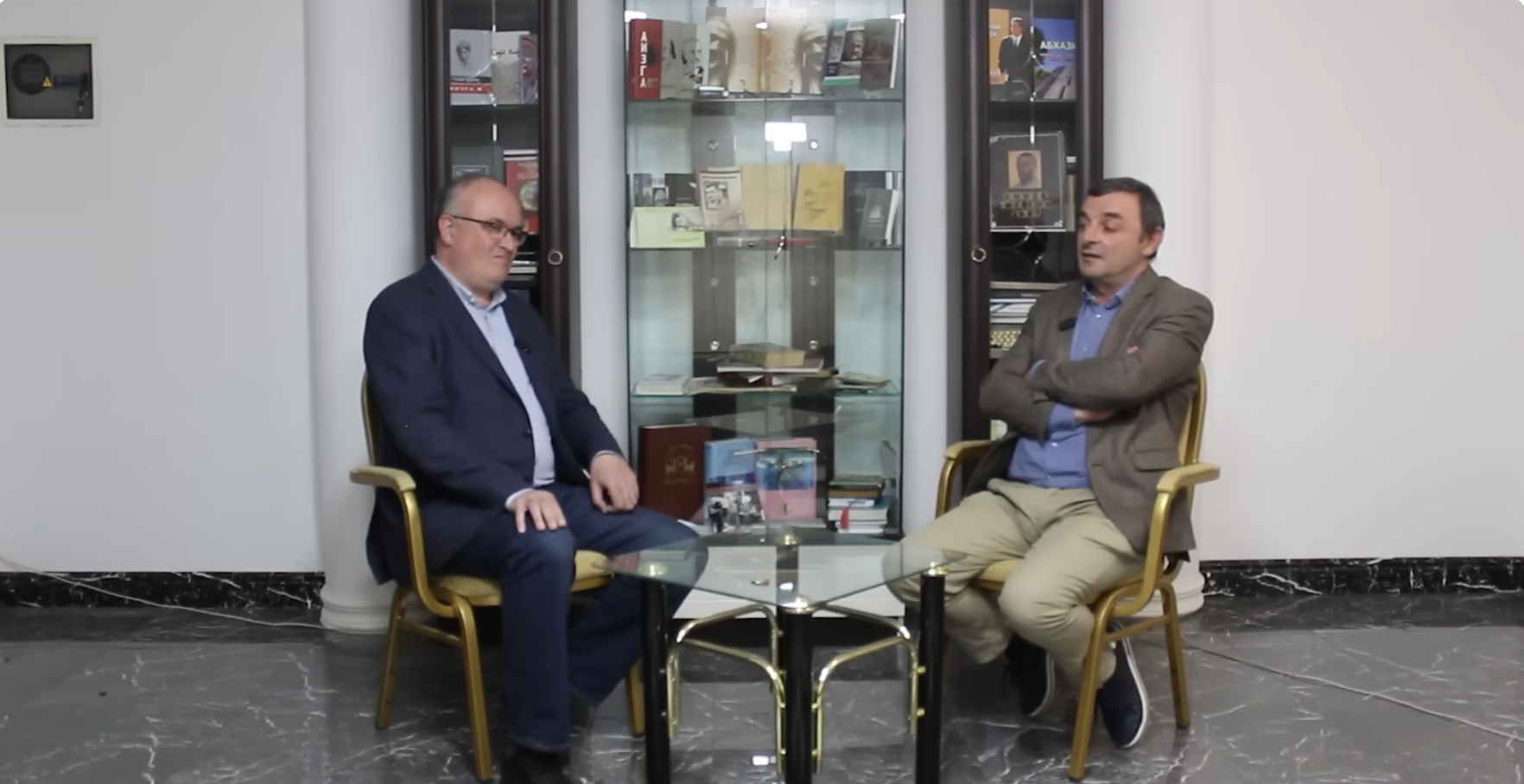
Georgian attitude towards Abkhaz
Inal Khashig, editor of the Chegemskaya Pravda newspaper, and political analyst Astamur Tania discuss the sharp increase in aggressive rhetoric regarding Abkhazia within the Georgian segment of social networks over the past 2–3 years.
Main Theses and Arguments
A massive attack by Georgian users and trolls with intrusive slogans (for instance, “Georgia is Abkhazia”) has been recorded on social networks, contrasting with the relative calm of previous years.
- The formation process of the Georgian nation (late 19th — early 20th century) was initially built on an attempt to incorporate various sub-ethnic groups (Megrelians, Svans) and independent ethnicities, including Abkhaz, into a single political project. This stage was accompanied by the construction of mythology. The First Republic of Georgia after the collapse of the Russian Empire was evaluated by foreign observers as a chauvinistic state.
- The integration of Megrelians into the Georgian nation concluded successfully, despite attempts to suppress their self-awareness. With the Abkhaz, this scenario failed: they traversed their own path of consolidation and formed a national-state entity, the existence of which Tbilisi denies.
- During the Soviet period, nationalism was displaced by communist ideology. Following its collapse, it once again became the main banner of society. Most of Georgia’s conflicts are a consequence of this ethnocentric approach.
- Tbilisi utilizes the humanitarian issue for political purposes, inflating the number of refugees up to 300–500 thousand (which exceeds the pre-war number of the Georgian population in Abkhazia) and blocking the mechanisms for their actual, phased registration.
- The refusal of Georgia’s current authorities to pursue a European course has deprived society of its former “beacon.” Lacking a new platform, ideologues have returned to the time-tested theme of “restoring territorial integrity.”
- The illusion from two years ago that Moscow would “gift” Abkhazia in exchange for Tbilisi’s loyalty has been replaced by a new one — the expectation of the “collapse of Russia,” after which Georgia hopes to resolve the Abkhaz question on its own.
- Any internal crisis in Georgia could prompt political forces to consolidate the electorate on an anti-Abkhaz and anti-Ossetian wave, which would result in a catastrophe for the entire region.
- The Georgian Orthodox Church under the late Ilia II acted from narrow national, rather than Christian, positions. Hope remains that the new Patriarch Shio will choose a more peace-oriented course.
- The intelligentsia and scientists are duty-bound to find the courage to speak the truth to society and guide it toward rational behavior, instead of indulging the radical sentiments of the crowd.
Inal Khashig: Hello! You are watching “Chegemskaya Pravda”.
Today we are going to talk about Georgia. I am often reproached for paying too much attention to this topic, but, nevertheless, the Georgian-Abkhaz conflict exists. Georgia is our neighbor, which is not going anywhere. In our turbulent times, one way or another, we will touch upon this topic and talk about it. Even if some people really dislike it, it seems to me to be of utmost importance.
Naturally, I will discuss this with our permanent political expert, Astamur Tania. Astamur, good afternoon!
I have noticed — and, it must be said, not only I — that for the last two, or even three years, a massive information attack has been underway in the Abkhaz direction. There was a period after the war and after 2008 when a certain stagnation set in: Georgian society recalled the Abkhaz topic rather by inertia. Now, however, this topic has received some additional impetus.
This is particularly noticeable in social networks. Even on the pages of users who do not have Georgians as friends, a mass attack by Georgian trolls (or someone else, I do not know) is unfolding. They write clichés in the spirit of “Georgia is Abkhazia”, “Abkhazia is Georgia”, about the “Apsua”, and so on. That is, there is aggressive behavior towards Abkhazia and the future of Georgian-Abkhaz relations, which differs markedly from what it was just a few years ago.
Surely you notice this too. In your opinion, what is the cause of all this?
Astamur Tania: Of course, this is primarily conditioned by history — the history of the formation of the Georgian nation. This is a relatively recent process that took place in the late 19th and early 20th centuries.
Back then, the leaders of the Georgian national movement faced the task of forming a single political nation from various sub-ethnic groups, and sometimes from different — albeit related — ethnicities, such as the Megrelians and Svans. By the way, part of this project was also the idea of incorporating the Abkhaz into the Georgian nation. But one must understand that a nation does not always imply a common ethnic origin. It is a higher degree of societal consolidation based on developed ideological, economic, and other foundations.
The conditions for the formation of nations in the Caucasus appeared in the 19th and 20th centuries, and first of all, this affected Georgia. In Europe, similar processes began shortly before that — in some countries as early as the 17th century, with the development of capitalism. But we will not delve into that.
Of course, at the stage of nation formation, there is always the construction of a national mythology, and a very high degree of nationalism is observed. Now, by the way, some write in our public forums as if Megrelians are not Georgians. It seems to me to be a fruitless conversation. Yes, linguistically, the Megrelians are very distant from the Eastern Georgians; they are a distinct ethnicity. But the process of their incorporation into the Georgian nation has already been completed, so convincing them that they are not Georgians is completely meaningless.
Inal Khashig: Do you mean that they became part of the Georgian project?
Astamur Tania: Yes, that is how they perceive themselves. It is their business to which nation they assign themselves. Of course, there was a time when the Megrelian ethnic self-awareness was actively fought against: the publication of books, newspapers, and so on was prohibited. There were such attempts, by the way, but in the end, they were all suppressed.
Inal Khashig: There were attempts of reincarnation…
Astamur Tania: Yes, and those attempts were suppressed. The process of consolidation of the Georgian nation is complete. Naturally, they failed to pull off the same thing with the Abkhaz. And this stage of nation formation is precisely characterized by a high degree of nationalism.
By the way, even the first independent Georgian state, formed after the collapse of the Russian Empire, was characterized by all foreign observers as chauvinistic. And this chauvinism, which was used back then to create the Georgian nation within the boundaries of the ancient Georgian kingdom, has unfortunately remained an enduring pattern in the Georgian mass consciousness.
The Georgians are, of course, a cultured, outstanding, and very charming people. They successfully know how to synthesize the cultural achievements of different peoples, which speaks of a high creative potential. But their collective self-awareness is poisoned by the venom of chauvinism.
There were periods when this base ideology was suppressed. For example, in Soviet times, it was fought against as “bourgeois nationalism.” People were persecuted and repressed for such views, so these sentiments were driven, as they say, underground, while communism was the official ideology. But as soon as the communist ideology collapsed, the only banner left in the hands of Georgian society was the banner of nationalism.
Then came the period you are talking about — attempts to integrate Georgia into European political, economic, and military structures. We see that this did not lead to results. And the point is not only in the difficult external context or that someone from the outside created obstacles, but that Georgian society itself, in terms of its parameters, is, to put it mildly, not entirely European.
Moreover, what is happening now? We see that as a result of this European integration, a significant part of economically and creatively active people are leaving Georgia altogether and moving to Europe. This means that present-day Georgia is not quite a comfortable environment for them. Now we are witnessing a disillusionment with the liberal idea. Because an ideological vacuum has formed, roughly speaking, the exact same banner of nationalism is left in the hands of Georgian society once again. And they are returning to their former state.
At the same time, there is a total lack of understanding that Georgia’s past, present, and, possibly, future misfortunes and failures are connected precisely with this approach — both inside the country and outside. After all, it is not only about the Georgian-Abkhaz or Georgian-Ossetian conflicts. We know that there are very tense relations with the Armenians, and complicated relations with the Azerbaijanis. And all this is a consequence of precisely such approaches.
Now they are trying to claim that someone from the outside was provoking something all the time. But Georgian tanks rolled in here! And they had a very simple task, which was initially declared — the liquidation of Abkhaz national institutions, that is, the liquidation of the Abkhaz nation. They were ready to tolerate us as an ethnicity, but not as an independent national project. And to this day, they do not want to reconcile themselves to the fact that the Abkhaz are a nation.
After all, we have also walked the path of national consolidation. For us, this is a passed stage, and we can no longer exist in any form other than a national-state one. But this realization, unfortunately, does not seem to reach Georgian society. Therefore, we will again witness the appearance of followers of Ingorokva, and all sorts of similar pseudo-scientific nonsense, and aggressive attacks. All this will be repeated.
This problem needs to be worked on. I think that both Abkhaz and Georgians should think about this, since the Georgian side is interested in this no less.
Inal Khashig: In development of this topic, I want to add: what has been observed over the last 2–3 years strikingly coincides with the following processes. Since the early 1990s, the new Georgian state had a certain goal — society saw its country as the “Switzerland of the South Caucasus.” Under Saakashvili, Georgia was called a “beacon of democracy,” there was an explicit course towards the West, the European Union, and so on.
Over the past two or three years, however, an explicit 180-degree turn has occurred. A feeling has arisen that the Georgian authorities themselves are abandoning the European path of the country’s development. And when you have been within the same ideological framework for 30 years, and then you deprive society of this orientation, this “beacon” and the striving towards a goal, you must provide some alternative.
In parallel with the European vector, the slogans “let us return Abkhazia” and “let us restore territorial integrity” have always existed. And now, it seems to me, “Georgian Dream” and those ideological institutions responsible for developing conceptual platforms have found nothing better than to return to what was left. Previously, it was the European path plus the restoration of territorial integrity. Now there is no European path (for various reasons), but this topic remains, which can be deployed as a residual principle.
Astamur Tania: We must forecast. For now, I do not see that it is the Georgian authorities who are acting as the direct conduits of this ideology. The situation is much deeper — these are old patterns in the mass consciousness.
We need to understand the following: in any possible crises in Georgia — political or economic — disparate political forces may try to unite around the anti-Abkhaz and anti-Ossetian theme, under the slogan of the so-called “restoration of integrity.” At the same time, no one is saying directly right now that this restoration must occur through the destruction of the Abkhaz people, although soon, perhaps, they will stop hiding this too. Some political figures may face the temptation to use these slogans as common ground for the consolidation of Georgian society.
I think this temptation will be great, although such a step would be a catastrophe. I understand that for us too this will have the most severe consequences, but for Georgia itself it will turn into a catastrophe, because water does not flow back into the old channel. It is impossible to enter the same river twice: Georgia now has a completely different context and a different demographic situation.
We are observing a strange picture: since the collapse of the Soviet Union, the population of Georgia has decreased by about one and a half times, but for some reason, the number of refugees they officially count is still estimated at 300 or even 400 thousand people.
It must be admitted that the attitude toward these people on the part of the Georgian leadership is rather cynical. I want to remind you: when the mass exodus of refugees occurred, the Abkhaz side signed an agreement with the Georgian side on their return. Even housing in Abkhazia, which other people were forced to occupy, was deliberately not registered as property — only a temporary warrant was issued. A detailed procedure for the phased return of refugees was developed. It clearly stated that they were obliged to recognize our constitution and our legislation. It was also indicated that persons who committed war crimes or were members of illegal armed formations could face criminal prosecution on the territory of Abkhazia. Corresponding registration cards were compiled. Under this procedure, more than a thousand people were supposed to return per month.
However, back then the Georgian authorities stated that this was insufficient: that the process would drag on for 10 or even more years, and a mass return needed to be ensured. As a result, they refused to register even those refugees who had returned to Abkhazia unilaterally.
Moreover, the Georgian side forbade international organizations from keeping records of them. For what purpose? They needed the refugee factor itself as an instrument of pressure. That is precisely why, by the way, they did not care much about their accommodation and resettlement within the territory of Georgia itself.
The refugee factor was necessary for them to solve political tasks — that same territorial integrity. This was never treated as a purely humanitarian issue.
Inal Khashig: If you remember, on March 1, 1999 — I remember this day like it was today — President Vladislav Ardzinba announced the unilateral return of Georgian refugees to the Gali district. On that specific day, they did not begin to return, but subsequently, this served as a signal, and people started returning.
Astamur Tania: More than 40 thousand people returned to our territory back then.
Inal Khashig: Yes, more than 40 thousand. At the same time, the United Nations High Commissioner for Refugees did not recognize them for a long time, and their official reports listed only a few hundred people.
Astamur Tania: That is, they officially listed only those who had been registered under the agreed procedure at the initial stage. And then the Georgian side disrupted this registration process. On the eve of the war, 240 thousand Georgians lived in Abkhazia. But at the same time, in the late 1990s and early 2000s, more than 60 thousand Georgians already lived here. Where do they count 300 thousand refugees from? I do not understand.
Inal Khashig: At some point, Saakashvili spoke even of half a million.
Astamur Tania: And at the same time, no one remembers the tens of thousands of Ossetians who were expelled from the territory of Georgia.
In general, you know, if you look at history, it sometimes looks very metaphorical. The dynasty of Georgian kings is Armenian by origin; it received the rights to a significant part of the territory of Georgia thanks to a marriage with the Abkhaz royal family. And after Queen Tamar, it is effectively an Ossetian dynasty, because Tamar’s husband was David Soslan, and their son, by the way, bore a second — Abkhaz — name. To this day, Georgian historians have not managed to translate the name Lasha from the Georgian language.
At the same time, they engage in the search for some mythic “ancient Abkhaz.” It turns out amazingly: Georgia itself is divided into clear historical regions with their own borders, inhabited by specific sub-ethnic and ethnic groups. But when they speak of Abkhazia, they claim that the indigenous population there is Georgian, which for some reason is represented simultaneously by Rachians, Kakhetians, Megrelians, and Svans. And all of them are “indigenous” there. How could this happen on a single separate territory of Abkhazia? And their toponyms there are entirely Georgian.
Inal Khashig: And yet the name “Georgia” itself originates from Turkic.
Astamur Tania: How does it turn out that this “indigenous” population is represented by completely different Georgian sub-ethnic groups, which within Georgia itself sometimes do not even border each other? But in Abkhazia, they are all indigenous. It turns out that the Abkhaz are newcomer “Apsuas”, and they are the indigenous ones. And it is the same story with the toponyms. You read their studies: on the territory of Abkhazia, they find Georgian, Svan, and Megrelian toponyms — anything you like except Abkhaz ones.
An amazing place, Abkhazia! An international ethnographic commission needs to be created separately to study this phenomenon.
Let me emphasize once again: all the existing problems between the Abkhaz and Georgian peoples do not lie at the everyday level. At the everyday level, everything has always been fine between us. We have many similar customs, we had very close friendly, kinship, and cultural ties. But as soon as it came to history or politics, the sharpest contradictions began.
History must not be used to form the image of an enemy.
History should be dealt with by historians.
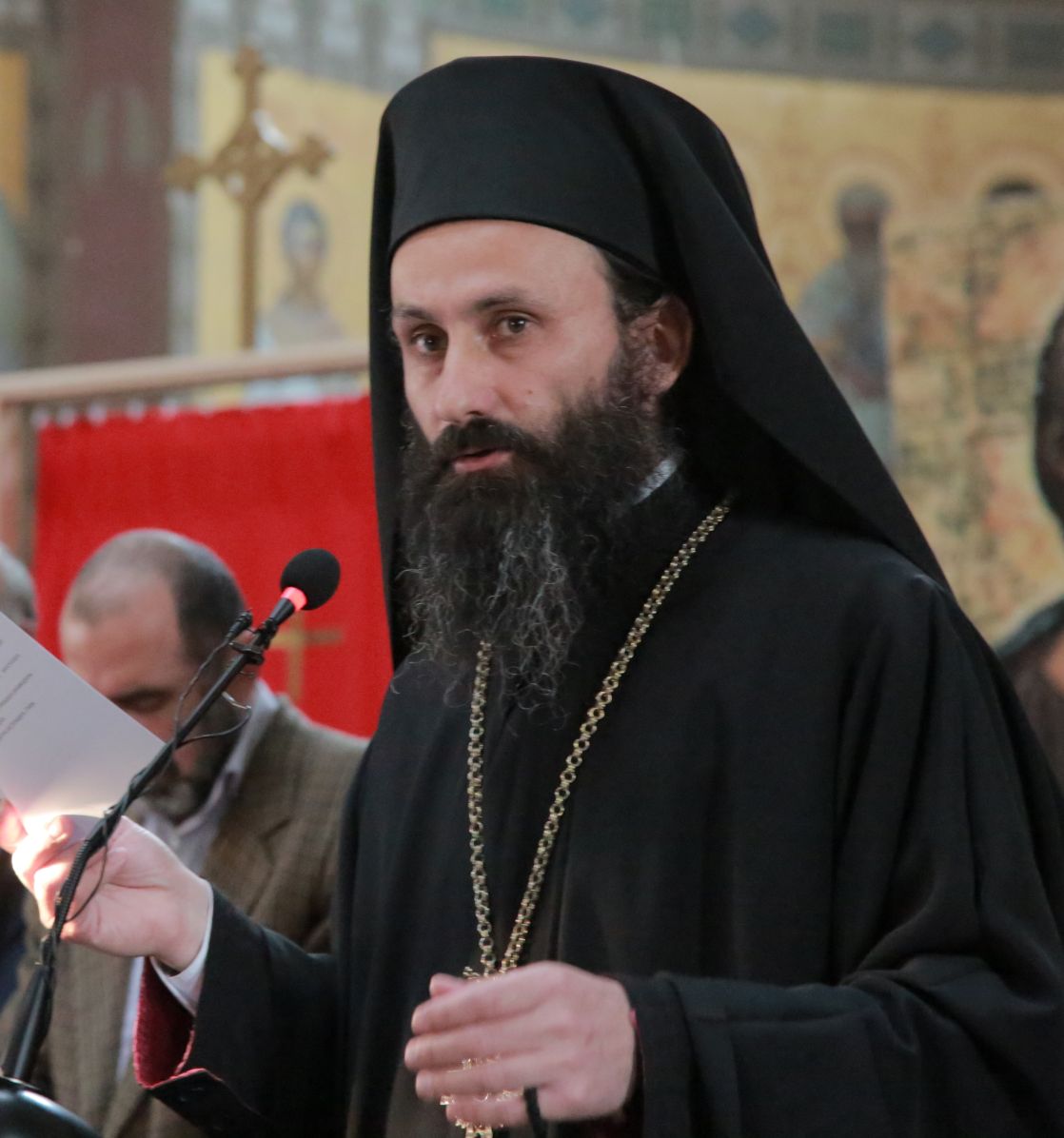
Inal Khashig: Continuing this topic. Catholicos-Patriarch Ilia II recently passed away in Georgia, and quite recently a new patriarch, Shio, was elected to the throne. The authority of Ilia II in Georgian society was absolute. In Abkhaz society, understandably, the attitude towards him was the opposite — with a negative sign, but for Georgians, he was the number one figure. And now, in the process of discussing and electing the new Catholicos, I felt that the successor is being viewed through the prism of inflated expectations — as a person who must figuratively replace Ilia II.
There were many discussions. Already after the election of Shio, I read a long interview with political scientist Archil Sikharulidze, conducted by Anastasia Kaskelova — a very inquisitive, high-quality Russian journalist. And I got the feeling as if I had been dipped into the atmosphere of the late 1980s and early 1990s, at the very peak of the aggravation of Georgian-Abkhaz relations. Things like this were voiced there: “we will return to suppress the Abkhaz,” “they live too compactly, we need to resettle and scatter them across Georgia or across the world.” As for the Abkhaz clergymen receiving education in the theological seminaries of Russia, a mandatory condition is proposed: to assign Georgian priests to them so that the entire educational process is under control. Such things… this is pure late eighties.
Astamur Tania: This is, of course, connected with past patterns. But there are new notes there too.
Inal Khashig: New notes… In my opinion, these notes lead rather to the first half of the 20th century — to the twenties and thirties. This smack of a certain fascism, you know?
Astamur Tania: Yes, yes, exactly that.
Inal Khashig: Absolute, total contempt for the Abkhaz. The Abkhaz are looked upon exclusively as a problem that simply needs to be dissolved. Not to resolve the conflict, not to agree on something, but precisely to dissolve.
Astamur Tania: Yes, after all, according to their logic, one does not even need to speak with the Abkhaz.
Inal Khashig: Exactly, not to speak. Just dissolve them, as if throwing them into acid so that they disappear there.
Astamur Tania: And there are also expectations that Russia’s position in the region will somehow change, and this can be taken advantage of. Either it will develop such internal problems that it will be forced to leave. These expectations can always be read very clearly.
Inal Khashig: As for illusions regarding Russia. Exactly two years ago, precisely in May, the Georgian government cherished the hope (having certain informal contacts with Moscow) that Russia under some guise would present Abkhazia to Georgia — return it in exchange for Tbilisi’s abandonment of the European path. There were illusions of creating a confederation and the like.
Astamur Tania: You and I have discussed this more than once.
Inal Khashig: Yes, more than once. There was an illusion that Moscow would return something to them.
Astamur Tania: With them, someone always has to return something: either Russia or the West.
Inal Khashig: And back then, by the way, the rhetoric regarding the Abkhaz was completely different. Words were heard that “we are brothers.” During that period, no one called us “Apsua,” I paid special attention to this.
Astamur Tania: Well, in radical public forums and comments, we always remained “Apsua.”
Inal Khashig: No, understandably, some uncontrollable outbursts occurred, but the general leitmotif of official or near-official rhetoric boiled down to the fact that “the Abkhaz are our brothers, we must make peace.” There was such a soothing rhetoric. But when this illusion vanished, and “Georgian Dream” realized that Moscow was not going to “gift” them Abkhazia, the escalation began anew.
Astamur Tania: For now, I would not assert that this originates directly from the government.
Inal Khashig: Well, on the part of the authorities too, rhetoric about “occupied territories” and the fact that “until they are returned to us, there will be no development” is often heard. This is also present. But now another aspect has appeared regarding Russia, the focus has shifted.
If two years ago the scenario “we will reach an agreement with Russia, and it will return Abkhazia to us” was considered, now there are no longer any illusions that Russia in its right mind will present something to someone. Another illusion has appeared: “Russia will collapse, and then we will deal with the Abkhaz ourselves.” This is precisely the interpretation I see when entering social networks.
Astamur Tania: Yes, such sentiments exist because, unfortunately, the Georgian political elite is incapable of forming an image of a bright and happy future. A bright future for them is an invented past. Hence the problems.
At the same time, geopolitical realities are completely unassessed. To begin with, the very fact of Russia’s presence in the Caucasus objectively creates a framework of security in the region, including for Georgia. Whatever their bilateral relations may be, this happens automatically, and not out of some special love for Georgia. Russia is a large regional player with its own internal and external interests. If we imagine that it is abruptly pulled out of the region, the situation will by no means necessarily unfold in Georgia’s favor. But they give little thought to this there.
Inal Khashig: Even in the scenario that they consider ideal for themselves.
Astamur Tania: Another point — the demographic situation has cardinally changed. At one time, when the Georgian population in Abkhazia was significant, they proved incapable of dialogue. Now everything has changed: demography, economy, new generations have grown up.
The problem with settling territories exists within Georgia itself as well; there they experience serious demographic pressure. Due to objective reasons, the Turkic factor will grow on the territory of Georgia.
As I have already said, the most active layers of Georgian society are leaving the country. This process is of a mass character, the population dynamic is negative. By the way, the new patriarch also spoke openly about this.
It seems to me that the task of the Georgian political elite (not for me to advise them, of course) is to objectively assess the surrounding world, their real capabilities, and look for ways of peaceful coexistence with neighbors. For this, serious ideological conclusions will have to be made. After all, this concerns not only the Abkhaz, but directly the Armenians as well. We observe attempts to erase the role of the Armenian population in the formation of Georgian statehood and urban culture. Yet Tbilisi historically was in many ways an Armenian city.
Georgia is a very fragile state formation, and the intra-societal consensus there is also fragile. If this society does not take a step away from chauvinism towards the formation of sober views, if they do not turn this page and develop a rational, emotionally stable attitude towards the surrounding world, they will have big problems. And we will too, naturally. We must understand that at any moment we can expect trouble from that side.
By the way, you recalled the interview with Sikharulidze. Now someone will say that it is not representative. But I think that it is very representative indeed, because no one publicly contradicts him in the Georgian field. Secondly, it is good that such materials appear: this allows us to maintain a sober view and understand what is happening with our neighbors. We must realistically assess the situation in Georgia.
Of course, the overall picture does not look too joyful yet. But it seems to me that the sober political elites of both peoples must work with this reality in the direction of detente and removing irritating factors. Because, as you correctly said, our neighborhood is not going anywhere, it cannot be canceled. It is better to have good, trusting relations with neighbors. All the more so because there are very many examples of accord between Abkhazians and Georgians in history. Although they now deny our right to be ourselves, if they carefully study their own history, they will see that the period of conflictual relations spans a little over a hundred years. And it is directly connected precisely with the processes of nation formation — both in Georgia and in Abkhazia.
A great responsibility lies on the scientific community, on the intelligentsia. Scientists must not indulge the moods of the crowd. They must find the courage in themselves to say things that orient society toward rational models of behavior.
You mentioned the church. Regarding the Georgian Orthodox Church, there is a well-known cliché: “the church is the mother.” But for the Abkhazians, the Georgian church has never been a mother; it has always been a stepmother, since it acted not from Christian, but from narrow national positions. It positioned and positions itself as a mother-church exclusively for Georgians.
Inal Khashig: Well, historically, after all, an independent Abkhazian Catholicosate also existed.
Astamur Tania: Yes, and it had no relation whatsoever to the Tbilisi see.
Inal Khashig: And during Stalin’s times, all this was already…
Astamur Tania: Yes, that is all a passed stage. But let us recall the Soviet period, when the Abkhazian SSR existed. The church see here was headed by Metropolitan Ilia II — after all, he served for a rather long time on the territory of Abkhazia. But the impression was created as if the Georgian church was directly interested in ensuring that Christianity did not spread among the Abkhazians. So that later it could be asserted from high rostrums that the Abkhaz are exclusively “pagans and Muslims.” We remember, after all, that such statements were made even from the UN rostrum in the early nineties.
That is, there was no brotherly, Christian love.
One wants to hope… I understand that for Georgians the merits of Ilia II are immense, but this has no relation to us; we have our own assessment of his activity. And yet, judging by your words, the new Catholicos produces a more balanced impression. One wants to believe that he will not follow the well-trodden destructive path, but will try to speak the language of humanism.
I, by the way, have never heard the Georgian church seriously speak about reconciliation, about brotherhood, or about our common spiritual values. Nothing of the sort was voiced.
One wants to hope that this church will finally begin to play a truly Christian role. Otherwise, why is such an organization needed at all? Without this, it will remain merely an ordinary political institution that will fizzle out over time. Sooner or later, any exalted mythology goes into decline, and along with it, the church loses its authority too. Therefore, religious institutions must be above politics and remember what their Founder said.
Inal Khashig: Which founder do you mean right now?
Astamur Tania: I am talking about Christ and not about Noe Zhordania.
Inal Khashig: Well, on this note we will wrap up. Today we spoke about Georgia and, I think, we will return to this topic more than once — times are turbulent now.
I say goodbye to you. Let me remind you that today our guest was our permanent political observer, Astamur Tania. Astamur, thank you very much.
Astamur Tania: And thank you.
Inal Khashig: Wishing everyone a good mood and the long-awaited summer! We have indeed missed the warmth. Until next time!
Astamur Tania: Until next time.
Categories