
Reuters: Kremlin planning to bring 100,000 Russia-based Armenians to Armenia to sway elections Українська правда
Day: May 29, 2026
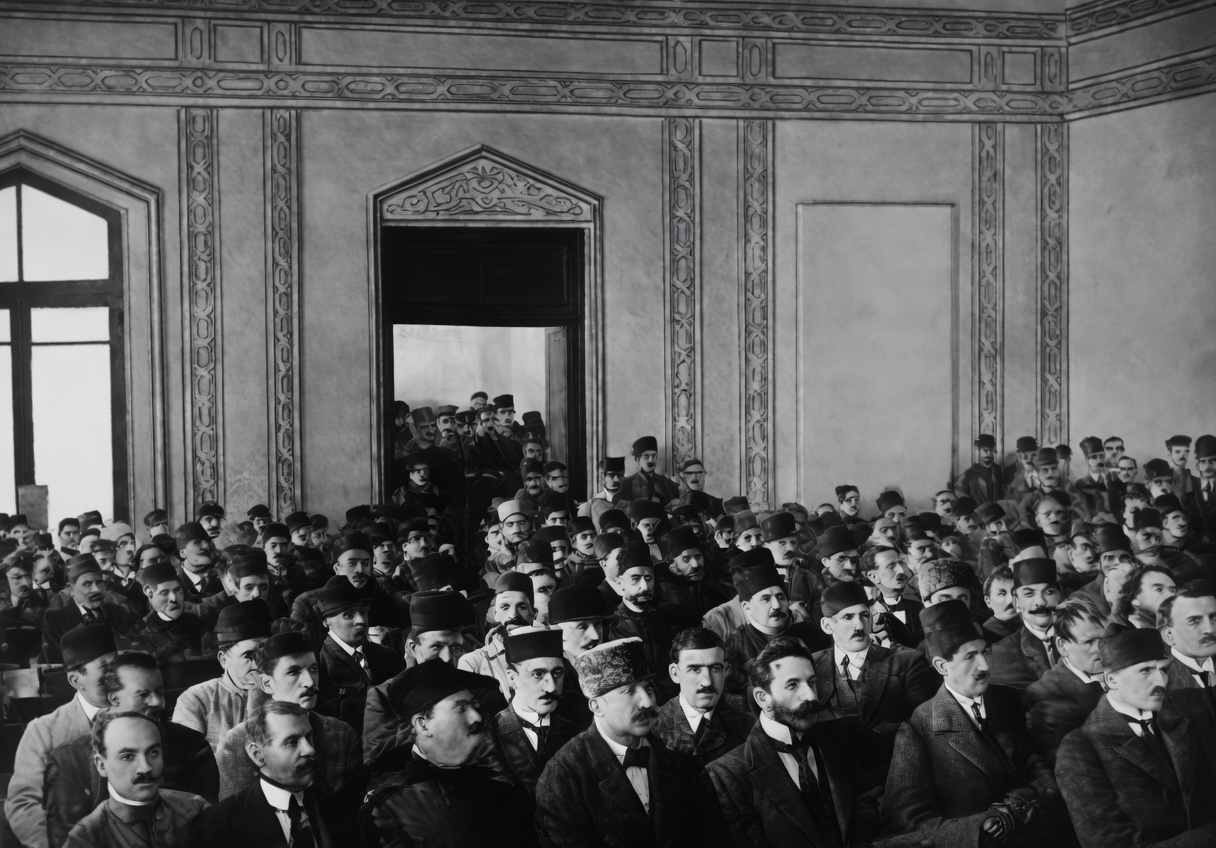
Independence Day in Azerbaijan
Today, 28 May, officially observed in Azerbaijan as Independence Day, symbolises both the legacy of the 1918 republic and the restoration of independence in 1991.
The history of 28 May dates back to 1918, when the Azerbaijani National Council adopted the Declaration of Independence in Tbilisi.
On that day, the Azerbaijan Democratic Republic was proclaimed. Official sources describe it as the first parliamentary, secular and democratic republic in the Muslim East.
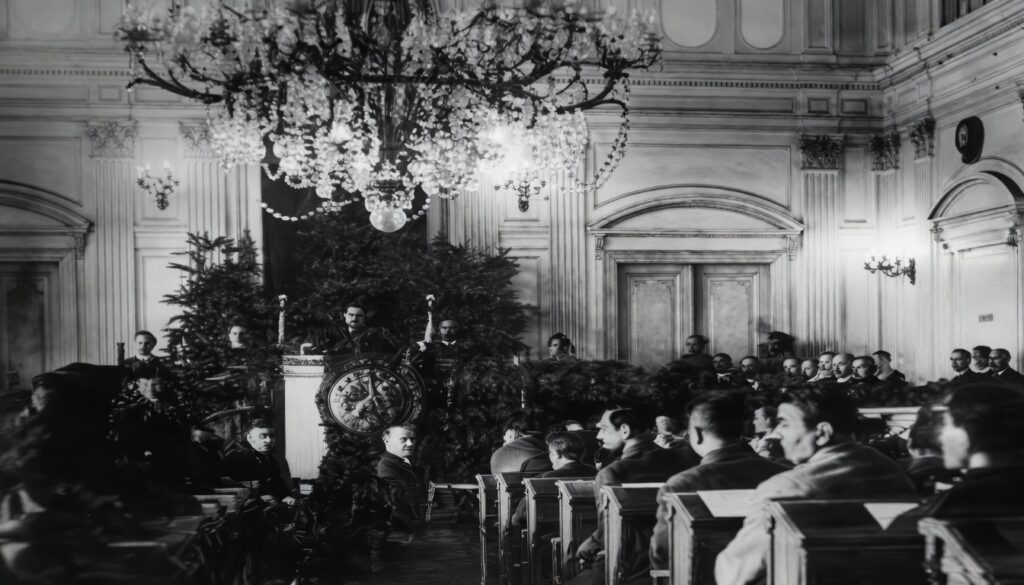
The National Council was headed by Mammad Amin Rasulzade.
The council tasked Fatali Khan Khoyski with forming the first provisional government.
Alimardan bey Topchubashov is widely regarded as one of the key figures of parliamentary diplomacy, while Hasan bey Aghayev played a leading role in parliamentary leadership. Nasib bey Yusifbeyli is closely associated with the republic’s state-building and education policies.
Rasulzade’s phrase, “Once raised, the flag will never fall!”, has also become one of the most recognisable political symbols associated with the memory of independence.
Twenty-three months of the republic
The Azerbaijan Democratic Republic existed for just 23 months. Despite its short lifespan, it accumulated significant experience in state-building.
In November 1918, lawmakers adopted a law establishing a 120-seat parliament. The parliament, which opened in December, included representatives of various political parties and ethnic groups.
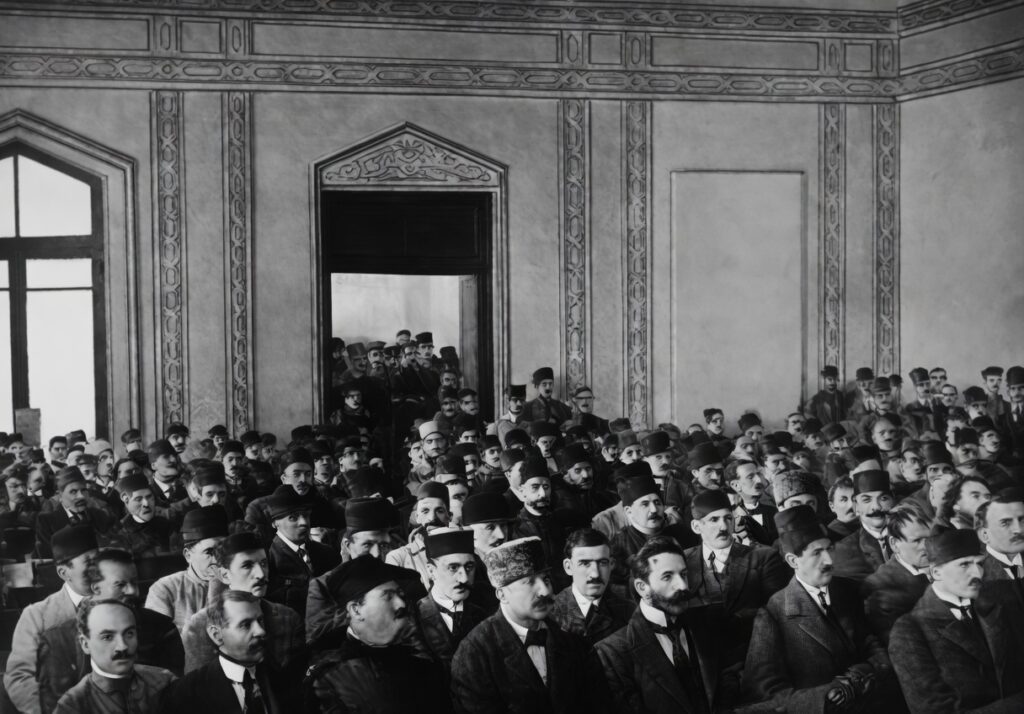
The Declaration of Independence promised legal and political guarantees to citizens regardless of nationality, religion, social background or gender. The database of the Inter-Parliamentary Union notes that Azerbaijan became the first Muslim-majority country to grant women the right to vote and stand for election.
Official documents also list the creation of a national army, the founding of the country’s first university, the expansion of education and the establishment of a national education system among the republic’s key achievements. Although the arrival of the Bolsheviks on 28 April 1920 brought this period to an end, the idea of state independence remained alive in the political consciousness.
Name change and the debate it sparked
Since 1990, Azerbaijan had marked 28 May as Republic Day.
However, the Law on Independence Day, adopted on 15 October 2021, renamed 28 May as Independence Day, while 18 October became Restoration of Independence Day.
The official justification for the law states that Azerbaijan proclaimed its independence in 1918 and restored it in 1991 as the legal successor to the Azerbaijan Democratic Republic.
In its explanation, the Milli Majlis said the change aimed to “more accurately reflect the essence and content of the historical periods”.
However, this legal clarification sparked a broader political and symbolic debate.
BBC News Azerbaijani also explored what the distinction means in everyday life by asking the question: “Independence Day or Republic Day — does the difference matter to the people of Baku?”
Under the new system, 28 May retained its status as a public holiday, while 18 October remained a working day.
At the time, Arif Hajili, then chairman of the Musavat Party, described the move as an attempt to reduce the significance of 18 October and the popular movement that led to it.

The government’s statehood narrative
The government of Ilham Aliyev seeks to demonstrate respect for the legacy of the Azerbaijan Democratic Republic. To mark the ADR’s centenary in 2018, authorities organised large-scale state events, and official speeches referred to the year as the “Year of the Azerbaijan Democratic Republic”.
That same year, the Republican Alternative (ReAl) movement planned a march in central Baku on 28 May. Organisers dedicated the event to the republic’s centenary and the preservation of its historical legacy. Although the march remained peaceful, police stopped it, citing a lack of official authorisation.
Police detained several activists. Azer Gasimli, one of the main organisers and ReAl’s leader at the time, received 30 days of administrative detention. Authorities also sentenced four other ReAl activists to between 10 and 30 days on similar charges, including resisting police and disobeying law enforcement officers. In total, police summoned dozens of participants for questioning and warned them against taking part in similar events in the future.
At the end of 2023, Ilham Aliyev signed a decree marking the 140th anniversary of Mammad Amin Rasulzade. The document describes Rasulzade as one of the founders of the ADR, chairman of the National Council and a figure who played a significant role in advancing the ideal of independence.
At the same time, the centre of gravity in this historical narrative clearly shifts to the period after 1993. The “History” section of the presidential website portrays the years from 1991 to 1993 as a period of crisis, internal conflict and weak governance, while presenting 15 June 1993 as National Salvation Day.
Official materials explicitly state that Heydar Aliyev preserved Azerbaijan’s state independence through a “saving mission”. The same materials describe him as the “architect and founder of the modern independent Azerbaijani state”.
Contradictions and competing approaches
The deepest contradiction lies in the gap between the collective, parliamentary and relatively pluralistic model of the Azerbaijan Democratic Republic and the strong presidential system of modern Azerbaijan. The ADR parliament included eleven different factions and groups, reserved seats for minorities and functioned as the highest state authority. Under the current Constitution, executive power rests with the president, who appoints and dismisses the prime minister, ministers and vice-presidents.
In 2016, the Venice Commission noted that constitutional amendments had significantly strengthened presidential powers and further weakened parliament. In its 2025 report, Freedom House said power remained concentrated in the hands of Ilham Aliyev and his family, while pressure had weakened the formal opposition over many years. Official Baku, however, presents this model as a guarantor of stability, sovereignty and effective governance.
This leads to a second contradiction: the coexistence within a single state narrative of the collective legacy of Mammad Amin Rasulzade and the founders of the ADR, alongside the image of Heydar Aliyev as the state’s “founder”, “saviour” and “architect”. On the one hand, the state celebrates Rasulzade’s anniversary and marks the ADR’s centenary. On the other, official narratives place Heydar Aliyev at the centre as the principal creator of the modern Azerbaijani state.
Scholars of memory politics often describe this phenomenon as a form of selective remembrance. One analytical paper prepared for Heinrich Böll Foundation argues that independent Azerbaijan’s memory policy rests on two pillars: commemoration of the “First Republic” and the personality cult surrounding Heydar Aliyev. Pro-government discourse also attributes special titles to him, including “National Leader” and “Great Leader”.
In this context, some view the renaming of 28 May as a historical clarification, while others see it as another step away from the history of collective state-building and towards a personalised statehood narrative centred on a single leader.
Today, the political legacy of the ADR, and particularly the tradition of the Musavat Party, survives largely at a symbolic and historical level. Whether its liberal-democratic values remain compatible with Azerbaijan’s current political reality is an open question.
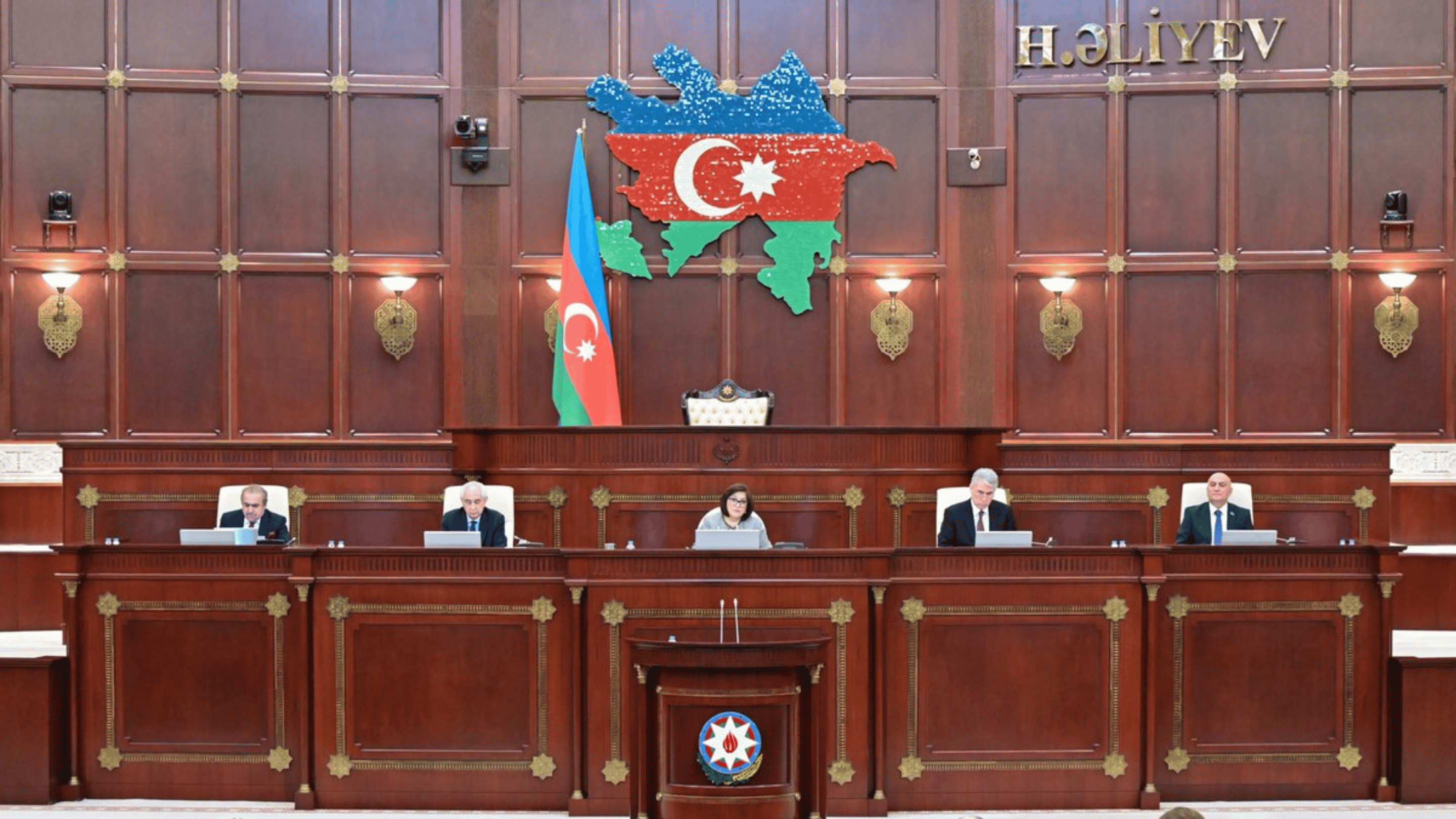
Independence Day in Azerbaijan
Below is the weekly digest of key developments and discourses in and around the occupied regions of Abkhazia and Tskhinvali /South Ossetia.
Sokhumi
- Abkhazia Proposes Stricter “Election” Rules and Ban on Foreign Involvement
De facto MPs are considering sweeping “amendments” to the “constitutional law” governing so-called parliamentary elections. The proposed amendments were unanimously approved by the de facto “parliamentary committee on state and legal policy” for further consideration in a “second reading”.
According to the draft “legislation”, foreign citizens, stateless persons, foreign and international organizations, as well as international public movements, would be prohibited from participating in or influencing “electoral processes” in Abkhazia. In addition, conducting public opinion polls or sociological research related to the elections will be prohibited from the moment they are officially announced. Criminal liability for violations would be introduced, with penalties including substantial fines or imprisonment for up to three years.
The initiative reportedly originates from the de facto presidential administration. An explanatory note attached to the “bill” states that the measures are aimed “exclusively at protecting national sovereignty”.
Another key part of the “reform package” concerns eligibility requirements for “parliamentary candidates”. If adopted, only “citizens” of Abkhazia with higher education who have permanently resided in the region for at least five consecutive years before “election” day would be eligible to run for “parliament”. More specifically, “candidates” would be disqualified if they spent more than two months abroad in any given year during that period.
The draft “law” would also introduce mandatory examinations in Abkhaz and Russian. The testing would be conducted by a special linguistic commission under the de facto central election commission.
The proposals have already sparked debate among political actors and the public. The “United Abkhazia” has argued that some of the proposed restrictions could negatively affect political participation and social stability.
In particular, the party criticized plans to raise the minimum age requirement for “parliamentary candidates”, claiming that young people have historically played a significant role in Abkhazia and should not be artificially excluded from public life.
The party also voiced concern over the proposed residency restrictions, noting that many Abkhazians study, receive medical treatment or conduct business in Russia, and that the restrictions could unintentionally affect them. Its members additionally cautioned against the possible politicization of the proposed language testing system, arguing that it should remain transparent and not become a mechanism to exclude opponents from “elections”.
The “amendments” are expected to continue moving through the de facto parliament in the coming weeks.
- Appeal by Abkhaz Political Groups Ahead of Armenian Elections Sparks Controversy
Several opposition groups in Abkhazia have sparked controversy after issuing a joint appeal to the Armenian community in Abkhazia ahead of Armenia’s upcoming parliamentary elections on June 7.
In the statement addressed to the head of the Armenian community, the signatories described the vote as a crucial moment for Armenia’s future and for stability in the South Caucasus. They urged Armenian citizens to support opposition forces that consider alliance and “unbreakable friendship” with Russia to be fundamental principles.
The appeal was signed by several opposition organizations, including the Veterans’ Organization Aruaa, the Forum for National Unity, and the Abkhaz People’s Movement led by opposition figure Adgur Ardzinba. The first two groups recently joined the “consultative council of political forces” established by de facto president Badra Gunba to facilitate political engagement, while Ardzinba has repeatedly expressed readiness for dialogue with Gunba in recent months.
The appeal triggered criticism from another part of the opposition, which described it as interference in the internal political affairs of another state. According to a statement by Aidgylara, against the backdrop of the deeply negative reaction within Abkhaz society to external interference in Abkhazia itself, attempts to influence the elections in Armenia appear particularly questionable, especially given the serious and still unresolved consequences of foreign political technologists’ unlawful involvement in the “electoral process”. Notably, Aidgylara is led by the opposition leader and de facto MP Kan Kvarchia, who is facing imprisonment in Russia in connection with the “political technologists” case.
- Abkhazia Criticizes Georgian Statements on “Reunification”
The de facto foreign ministry of occupied Abkhazia has responded to the recent statements by Georgian political and religious leaders regarding the “future reunification” of Georgia with Abkhazia and Tskhinvali region/South Ossetia, calling the rhetoric a “threat to Abkhazia’s sovereignty and security”.
The de facto ministry claims that references to “reconciliation” and “reunification” may appear peaceful to the international community, but are perceived in Abkhazia “through the prism of real threats and historical experience”.
According to the statement, Georgian rhetoric about the “inevitability” of reunification ignores the will of the Abkhaz people and their right to self-determination. The de facto ministry also pointed to Adjara as what it described as an example of a region that “lost its political identity and autonomy within Georgia”.
The statement argued that if Tbilisi genuinely sought peaceful relations, it should officially acknowledge responsibility for the 1990s conflicts, recognize Abkhazia’s “independence” and sign a legally binding agreement on the non-use of force.
The de facto ministry also claimed that the concept of “mythical reunification” masks what it described as “revanchist plans for renewed aggression by a five-million-strong state against the small Abkhaz people,” and called on Georgian political leaders to abandon “false rhetoric and illusions”.
- Heavy Flooding Hits Occupied Abkhazia
A special working commission has been established in Abkhazia to coordinate efforts to deal with the aftermath of severe flooding caused by heavy rains in the eastern districts of the region.
The heaviest damage was reported in the Tkvarcheli district, where 11 settlements were flooded. Strong water flows damaged bridges and washed away roads, cutting several villages off from outside access.
Landslides were also reported in two villages in the Gali district. According to local de facto authorities, the affected areas were quickly cleared through the joint efforts of Russia’s FSB “border guards” in Abkhazia, municipal workers and local residents.
Heavy rainfall hit the Gulripshi, Ochamchire and Tkvarcheli districts during the night of May 24-25. De facto President Badra Gunba visited the affected districts and instructed local “administrations” to assist in recovery and cleanup efforts.
Tskhinvali
- Gagloev Highlights Russia’s Role in Remarks Marking Anniversary of “Independence Act”
Alan Gagloev, the de facto leader of the occupied Tskhinvali region, delivered an address marking the anniversary of the adoption of the “Independence Act” by the self-proclaimed region on May 29, 1992, highlighting it as “the final stage in the formation of statehood.”
“We remember well how it all began. In the late 1980s, the nationalist authorities of the Georgian SSR launched a policy of repression against the Ossetian people: the suppression of the Ossetian language, the rewriting of history, and the restriction of political and cultural rights. For our people, this was a direct challenge, an attempt to strip them of their dignity and their right to be masters of their own land,” Gagloev stated.
He noted Russia’s role in supporting the region after the war and the development of allied relations. The address also highlighted the tasks of further developing economic and social spheres, the priority of citizens’ well-being, and the responsibility of youth for the future.
- Gagloev Donates Icons to Churches in Tskhinvali, Emphasizing Importance of Spiritual Values
Alan Gagloev, the de facto leader of the occupied Tskhinvali region, donated two icons to churches in Tskhinvali, the local news agency RES reports.
The Holy Trinity Church received an icon of the Mother of God, painted about 200 years ago in the Kuban region and delivered via a clergyman from Russia. It was delivered by members of the Night Wolves motorcycle club for the May 9 events. The Holy Mother of God Church received the Resurrection of Christ icon, previously donated by representatives of the People’s Front. During the ceremony, the significance of such gifts “for strengthening spiritual traditions and social unity” was emphasized. Gagloev noted the importance of preserving religious values, expressing confidence that the icons would become a symbol of faith, peace, and prosperity for the region’s parishioners.
- Russian MFA: Tskhinvali, Moscow Have Reached a Level of Deepened Integration
Akhsar Dzhioev, the so-called head of the occupied Tskhinvali region’s “foreign ministry,” held a meeting with Marat Kulakhmetov, the “ambassador” of the Russian Federation in Tskhinvali, who conveyed to Dzhioev a congratulatory message from Russian Deputy Foreign Minister Yuri Galuzin on the occasion of “Diplomatic Worker Day.”
Galuzin’s message highlights “the selfless work of the leadership and staff of the South Ossetian Ministry of Foreign Affairs in strengthening the country’s international standing following the republic’s declaration,” the local news agency RES reports.
Special attention was paid to the signing by Putin and Gagloev on May 9 of the “Treaty on Deepening Allied Cooperation.” According to Kulakhmetov, “thanks to the joint efforts of the foreign ministries of the two countries, it was possible in a relatively short time to elevate Russian-South Ossetian relations to the level of an allied partnership, and currently – onto the path of deepened integration.”
- Putin Signs into Law Treaty with Tskhinvali “On Deepening Cooperation”
Vladimir Putin signed a law ratifying the treaty with the occupied Tskhinvali region on deepening cooperation in the political, economic, and defense spheres, the local news agency RES reports. The treaty was signed in Moscow on May 9, 2026.
The treaty stipulates that Moscow and Tskhinvali “will take further steps aimed at creating a single economic space, improving the well-being and standard of living of citizens, and ensuring a phased transition to a unified system for external borrowing and foreign investment,” the report notes.
Also Read:
- 22/05/2026 – Sokhumi, Tskhinvali, Moscow Digest – May 15-21, 2026
- 08/05/2026 – Sokhumi, Tskhinvali, Moscow Digest – May 1-7, 2026