Categories
South Caucasus News

What is behind the latest XRP $20 prediction and can Ripple really reach that level?​


While bullish analysts point to historical XRP cycles, technical indicators and regulatory developments as reasons for optimism, other market observers warn that the cryptocurrency’s current chart structure remains weak and vulnerable to further declines.

***

Why is XRP under pressure despite positive regulatory news?

XRP initially climbed after the Senate Banking Committee advanced the CLARITY Act earlier this month. The legislation is viewed as a major development for the crypto industry because it could formally define certain digital assets, including XRP, as commodities rather than securities under U.S. law.

The move was expected to reduce regulatory uncertainty surrounding Ripple and XRP, especially after years of legal disputes involving the U.S. Securities and Exchange Commission.

However, despite the positive political momentum, XRP failed to sustain its gains. The token has since fallen back toward the lower end of its multi month trading range.

Analysts say the problem is not necessarily the news itself, but broader market conditions. Trading volumes across the crypto market remain relatively weak and investors continue to show caution after months of volatility in digital assets.

Market participants also note that many traders used the regulatory rally as an opportunity to take profits rather than establish long term positions.

Where is XRP trading now?

XRP traded around $1.33 on May 26, down more than 1% during the session. The cryptocurrency remains significantly below its October 2025 peak near $3.65.

Technical analysts highlight several key levels currently shaping the market:

  • Resistance remains around $1.51 to $1.57

  • The 50 day exponential moving average sits near $1.40

  • The 200 day exponential moving average stands around $1.67

  • Major support remains between $1.26 and $1.30

  • A breakdown below support could expose the $1.11 level

Some bearish analysts even argue that a deeper decline toward $0.53 remains possible if market conditions deteriorate sharply.

Why are some traders still predicting XRP could hit $20?

Despite the weak short term structure, several traders continue to present highly bullish long term scenarios for XRP.

One of the most discussed forecasts came from trader @ninedex23 on X, who outlined a weekly chart analysis suggesting XRP could eventually reach a primary target of $5 and potentially extend toward $20 in a strong bull cycle.

The prediction is based on several technical signals:

  • Fibonacci support levels holding over multiple years

  • A long term MACD bullish crossover

  • Recovery from historically oversold stochastic readings

  • Long term channel growth patterns dating back to 2014

According to the trader’s analysis, XRP could repeat a pattern similar to the explosive rally seen during the 2017 to 2018 crypto bull market, when the token surged from below $0.10 to above $3.

Supporters of the bullish case also point to growing institutional interest in crypto assets, XRP ETF inflows and Ripple’s expanding payment and infrastructure business.

What are major financial institutions predicting for XRP?

Institutional forecasts remain far more conservative than the $20 target.

Standard Chartered has projected XRP could potentially reach $8 by the end of 2026 if several conditions are met, including:

  • Full passage of the CLARITY Act

  • Strong institutional demand

  • Significant ETF inflows

  • Improvement in overall crypto market liquidity

Other research firms have projected more moderate scenarios between $2 and $3 for the end of 2026.

At the same time, many analysts stress that XRP first needs to reclaim several important resistance levels before any major bullish breakout becomes realistic.

Can XRP realistically reach $20 in 2026?

A move to $20 would require an enormous increase in XRP’s market capitalization and would likely depend on a combination of factors occurring simultaneously:

  • A broad crypto bull market

  • Major institutional adoption

  • Regulatory clarity in the United States

  • Significant growth in Ripple’s payment ecosystem

  • Sustained ETF inflows

  • Strong retail investor participation

Many analysts believe such a move is unlikely in the near term, especially while XRP remains below major technical resistance zones.

Still, XRP has historically been one of the most volatile large cryptocurrencies in the market, meaning sharp rallies cannot be completely ruled out during periods of speculative momentum.

What are traders watching next?

The immediate focus remains on whether XRP can hold support above the $1.26 to $1.30 range.

If the token stabilizes and reclaims the $1.57 resistance area, traders may begin discussing a broader recovery toward $1.80 and potentially higher levels.

However, if support fails, bearish momentum could intensify and push XRP toward lower yearly lows.

For now, the debate between bullish long term projections and bearish short term technical signals continues to divide the crypto market as investors wait for the next major catalyst.

The post What is behind the latest XRP $20 prediction and can Ripple really reach that level?​ appeared first on azeritimes.com.


Categories
South Caucasus News

Azerbaijan marks 28 May Independence Day with nationwide celebrations​


the holiday has also been observed in the territories liberated from occupation for the past five years, symbolizing national unity and the restoration of state sovereignty, News.az reports.

***

The ADR was established in the wake of the 1917 February Revolution in Russia, which led to the collapse of the monarchy and sparked national liberation movements across the former empire. Declared on May 28, 1918, the ADR became a pioneering model for democratic governance in the Turkic and Islamic world.

Founded by Mammad Emin Rasulzada, the ADR introduced several progressive reforms, including universal suffrage with voting rights for women, gender equality, the creation of a national army, currency, and banking system, as well as the establishment of diplomatic ties and international recognition. The first state to formally recognize the ADR was the Ottoman Empire on June 4, 1918.

Fatali Khan Khoyski served as the first head of the provisional government. After a brief period in Tbilisi, the National Council moved to Ganja, and in September 1918, the national government relocated to Baku following the expulsion of Dashnak-Bolshevik forces with support from the Ottoman army.

On November 9, 1918, the tricolor flag of Azerbaijan was officially adopted, replacing the previous red banner, further solidifying the identity of the newly formed republic.

Despite only 23-month existence, the ADR left a lasting legacy. It was overthrown by Bolshevik forces in 1920, leading to Azerbaijan’s forced incorporation into Soviet Russia. The country regained its independence following the dissolution of the Soviet Union in 1991.

A monument commemorating the ADR’s Declaration of Independence stands in Baku.

From 1991 until 2021, the national holiday was known as Republic Day. However, following a decision by the Azerbaijani Parliament on October 15, 2021, the holiday was officially renamed Independence Day. The law was signed by President Ilham Aliyev on the same day.

Independence Day is a public holiday in Azerbaijan and is marked annually with celebrations across the country.

The post Azerbaijan marks 28 May Independence Day with nationwide celebrations​ appeared first on azeritimes.com.

Categories
South Caucasus News

How a German teenager landed a Cessna near the Kremlin and humiliated the Soviet air defense system​


The flight went down in history not only as an audacious aviation incident, but also as a political blow to the reputation of the Soviet Union. Rust took off from Helsinki in a rented Cessna 172 and managed to cross the Soviet border, flying hundreds of kilometers all the way to Moscow. His aircraft was detected by Soviet radar several times, but due to confusion, poor coordination, and hesitation within the command system, the Soviet air defense network failed to stop him.

Rust later explained his act as an attempt to build an “imaginary bridge” between East and West. He claimed he wanted to draw attention to the idea of peace during the Cold War and show that dialogue between the two blocs was possible. In Moscow, however, the incident was perceived very differently. For the Soviet state, it looked like a public humiliation: a young pilot from West Germany had managed to do what seemed impossible — fly through one of the most heavily guarded airspaces in the world and reach the walls of the Kremlin.

West German teenager Mathias Rust creates an international incident when he  lands a Cessna 172 illegally in Moscow's Red Square - May 28, 1987 : r/ aviation

Source: BBC

Rust initially intended to land closer to the Kremlin itself, but he reportedly abandoned that idea because he feared the authorities could quickly detain him and conceal the entire incident. Instead, he landed on Bolshoy Moskvoretsky Bridge, near St. Basil’s Cathedral, and then taxied toward Red Square. Passersby gathered around the aircraft in disbelief, looking at the German teenager and his small plane in the very center of the Soviet capital. Shortly afterward, Rust was arrested by Soviet authorities.

The most painful part of the incident for the Soviet Union was not simply the border violation, but the ease with which it happened. The Soviet air defense system was considered one of the most powerful in the world. After the 1983 tragedy involving Korean Air Lines Flight 007, which was shot down by Soviet forces, the command structure became more cautious about using force against civilian aircraft. In Rust’s case, that caution played a role. His plane was seen and tracked, but no clear decision was made to intercept it or force it to land. At different points along the route, it may have been mistaken for a training aircraft or a domestic civilian plane, while bureaucratic confusion deepened the failure.

After his arrest, Mathias Rust was put on trial in the Soviet Union. He was charged with violating border-crossing rules, breaching aviation regulations, and hooliganism. He was sentenced to four years in prison, but served about 14 months before being released after a pardon. Yet the main consequences of the flight were not about Rust himself. They unfolded inside the Soviet leadership.

Following the incident, Soviet Defense Minister Marshal Sergei Sokolov was dismissed, as was Alexander Koldunov, the commander-in-chief of the Soviet Air Defense Forces. The scandal also triggered a wider wave of personnel changes across the military establishment. For Mikhail Gorbachev, the episode became a politically useful moment. He was pushing forward with perestroika and seeking to reduce the influence of conservative elements within the Soviet military elite. Rust’s flight gave him a powerful argument: a system that had absorbed enormous resources for decades and claimed to be impenetrable had failed to stop one small aircraft.

On 28 May 1987, Mathias Rust, an 18-year-old teenager pilot from West  Germany, penetrates Soviet air defences and lands his small Cessna plane on  Bolshoy Bridge, next to the Red Square. The

Source: BBC

In historical memory, the landing of the Cessna near Red Square remains a symbol of late Soviet weakness. It showed that a huge military machine could be vulnerable not only to external pressure, but also to bureaucracy, fear of responsibility, poor communication, and internal disorder. A young pilot without weapons or political power managed to create an international scandal that shook Moscow more deeply than many official statements from Western leaders.

May 28, 1987 became the day when the Soviet security system lost part of its myth of invulnerability. Rust’s aircraft was small, but the effect of its landing was enormous. It landed not merely near Red Square, but in the very center of the Soviet political myth of strength, control, and absolute state vigilance. That is why the episode is still remembered as one of the most striking and symbolic moments of the final years of the Soviet Union.

The post How a German teenager landed a Cessna near the Kremlin and humiliated the Soviet air defense system​ appeared first on azeritimes.com.

Categories
South Caucasus News

“Out of 50 people, only 5 remain, the rest are dead”; shocking confessions from the invader


Categories
South Caucasus News

Putin visits Tokayev seeking guarantees, but Kazakhstan has many options


Russian President Vladimir Putin’s state visit to Kazakhstan should not be viewed as a routine diplomatic trip. Formally, the agenda includes talks with President Kassym-Jomart Tokayev, participation in the Eurasian Economic Forum, and a meeting of the Supreme Eurasian Economic Council. But the real significance of the visit is much broader. Kazakhstan has become one of the key arenas where the interests of Russia, China, the West, Central Asia, and major energy corridors intersect.
Putin’s visit, scheduled for 27–29 May, carries the highest diplomatic status — a state visit. According to Russian media, the programme includes top-level talks, the signing of documents, participation in Eurasian Economic Union events, and separate negotiations between Putin and Tokayev. A joint statement on the “seven foundations of friendship and good-neighbourliness between the peoples of Russia and Kazakhstan” is also expected.
The first and most obvious reason for the visit is energy. Russia wants to consolidate its role as one of Kazakhstan’s key infrastructure partners. One of the central issues is nuclear energy. Moscow and Astana are expected to sign an agreement defining the parameters for the construction of Kazakhstan’s first nuclear power plant. For Kazakhstan, this is a strategic project: the country is one of the world’s largest uranium producers, but it has not had operational nuclear power generation since the BN-350 reactor was shut down in 1999.

Source: Kazinform
For Russia, the project is not only economic but also political. If Moscow secures a leading role in building Kazakhstan’s first nuclear power plant, it will create a long-term technological and financial link between Astana and Russia’s nuclear industry. A nuclear power plant is not a one-time deal. It means decades of maintenance, supplies, personnel training, financing, and political interaction. This is why the nuclear project can be viewed as one of the main reasons behind the current visit.
The second reason is oil transit and energy logistics. During the trip, the two sides are expected to discuss expanding the transit of Russian oil to China through Kazakhstan, including via the Atasu–Alashankou route. The parties had previously discussed increasing supplies, but this expansion has not yet been fully implemented.
For Russia, this issue is especially important amid Western sanctions and the reorientation of export flows towards the East. Kazakhstan is becoming not merely a neighbouring country for Moscow, but an important transit corridor to China. The more complicated Russia’s European direction becomes, the greater the importance of Kazakhstan’s infrastructure. In this sense, Astana is gaining additional weight: routes passing through its territory may become part of the new energy architecture of Eurasia.
The third reason is the Eurasian Economic Union. Putin arrived in Kazakhstan not only for bilateral talks, but also to take part in the Eurasian Economic Forum and the meeting of the Supreme Eurasian Economic Council. For Moscow, this is an opportunity to demonstrate that integration formats in the post-Soviet space still matter despite the war in Ukraine, Western sanctions, pressure from the West, and the growing independence of Central Asian states.
Russia is interested in preventing the EAEU from turning into a purely formal structure. Kazakhstan, meanwhile, seeks to use its participation in the union pragmatically: to gain economic benefits while avoiding political dependence. Therefore, Putin’s visit to Astana is also an attempt to strengthen Russia’s influence within Eurasian institutions, where Kazakhstan plays one of the central roles.
The fourth reason is the struggle for influence in Central Asia. Kazakhstan is pursuing a multi-vector foreign policy. Astana maintains close relations with Russia, actively develops ties with China, and strengthens contacts with the EU, the United States, Türkiye, and the Gulf states. For Moscow, this is a sensitive issue: Kazakhstan remains Russia’s close partner in several formats, but it no longer appears to be a country prepared to automatically follow Russia’s foreign policy line.
This is why Putin came to Astana at a time when Central Asia has become an arena of active diplomatic competition. China is expanding its economic presence, the West is interested in critical minerals, energy, and transport routes, Türkiye is strengthening ties through Turkic formats, while Kazakhstan is seeking to become an independent centre of regional politics. For Russia, it is important not to lose its position within this system.
The fifth reason is the personal diplomacy between Putin and Tokayev. Russian media have emphasised the special status of the visit, while the fact that it is another state visit within a relatively short period is being presented as proof of the high level of relations between the two countries. Tokayev personally met Putin in Astana, which also signalled special attention to the visit.
But behind this diplomatic courtesy lies a more complicated reality. Kazakhstan is too important for Russia to limit relations to formal contacts. It is the largest country in Central Asia, the region’s biggest economy, and a crucial partner in terms of borders, transit, energy, security, and trade. Any cooling of relations with Astana would be a serious strategic blow to Moscow.

Source: Kremlin
The sixth reason is symbolic. Ahead of the visit, Putin gifted Kazakhstan four Amur tigers as part of a programme aimed at restoring the tiger population. At first glance, this is soft diplomacy and a symbolic gesture. But such symbols also matter: Moscow wants to demonstrate that relations with Astana are not only about oil, gas, nuclear energy, and geopolitics, but also about humanitarian, environmental, and cultural projects.
At the same time, the main intrigue of the visit lies not in the ceremonies, but in how far Kazakhstan is prepared to go in deepening cooperation with Russia. Astana is interested in partnership with Moscow, but it does not want to become a junior ally. Kazakhstan needs technologies, investment, transit revenues, and stable relations with its northern neighbour. At the same time, it seeks to preserve room for manoeuvre between Russia, China, and the West.
This is why Putin’s visit to Kazakhstan can be described as Moscow’s attempt to secure its place in the new regional reality. Russia can no longer view Central Asia as a space of automatic influence. Now, every major deal, every transport route, every energy project, and every political format requires active competition.
For Kazakhstan, the visit is an opportunity to gain maximum practical benefits while emphasising its own role as an independent Eurasian centre. For Russia, it is a chance to demonstrate that despite international isolation in the Western direction, it still retains strong positions in Eurasia.
Therefore, Putin came to Kazakhstan not only for talks with Tokayev and participation in the EAEU summit. He came for energy, transit, the nuclear project, political influence, and confirmation that Kazakhstan remains one of Moscow’s key partners. But Astana is now playing a far more sophisticated game: it receives Putin, signs documents, discusses major projects, and at the same time continues to build its own multi-vector policy, in which Russia is important but no longer the only centre of gravity.

The post Putin visits Tokayev seeking guarantees, but Kazakhstan has many options appeared first on azeritimes.com.

Categories
South Caucasus News

Vuelos Baratos – Pasajes en Avión | JetSMART Chile


Vuelos Baratos por Chile y Sudamérica Con Aviones Nuevos. En JetSMART Encontrarás Pasajes Baratos para que todas las personas Tengan la posibilidad de Volar. Vuela Más Paga Menos JetSMART Vuela SMART

Categories
South Caucasus News

Russia’s Rosatom eyes role in second Kazakhstan nuclear plant, as Balkhash deal nears


Kazakhstan has approved construction of the ​plant, with state-run China National Nuclear Corporation (CNNC) ​selected as the main constructor, News.az reports, citing Reuters.
“We have not yet ⁠been officially informed of the Kazakh side’s decision regarding ​the second plant, either in terms of configuration or ​location. As soon as we receive such information officially – possibly in the next few days – we will proceed immediately to practical ​negotiations”, Likhachev said.
Likhachev added that Russia and Kazakhstan are ​set to sign an intergovernmental agreement and a preliminary contract covering ‌timelines ⁠and pricing for the country’s first nuclear power plant, Balkhash NPP, during Russian President Vladimir Putin’s visit to Kazakhstan starting on Wednesday.
Speaking about the Balkhash project, Likhachev ​said Kazakhstan ​had held talks ⁠with companies from South Korea, China and France on possible participation, adding Rosatom ​had no objections.However, the plant’s technical design, ​specifications and ⁠supply of key heavy engineering equipment will ultimately be handled by Rosatom, he said.
Likhachev said Rosatom plans to ⁠begin ​active construction at the site in ​2027 and expects completion in the mid-2030s.

The post Russia’s Rosatom eyes role in second Kazakhstan nuclear plant, as Balkhash deal nears appeared first on azeritimes.com.

Categories
South Caucasus News

Widespread devastation in Odesa as daytime Russia strike injures several


Categories
South Caucasus News

Watch Cartoon Online


Watch full episodes in high quality online. Enjoy your favorite anime series without ads!

Categories
South Caucasus News

‘Sensational but false’: scrutiny of election promises made by some political forces in Armenia


False election promises in Armenia

False election promises in Armenia

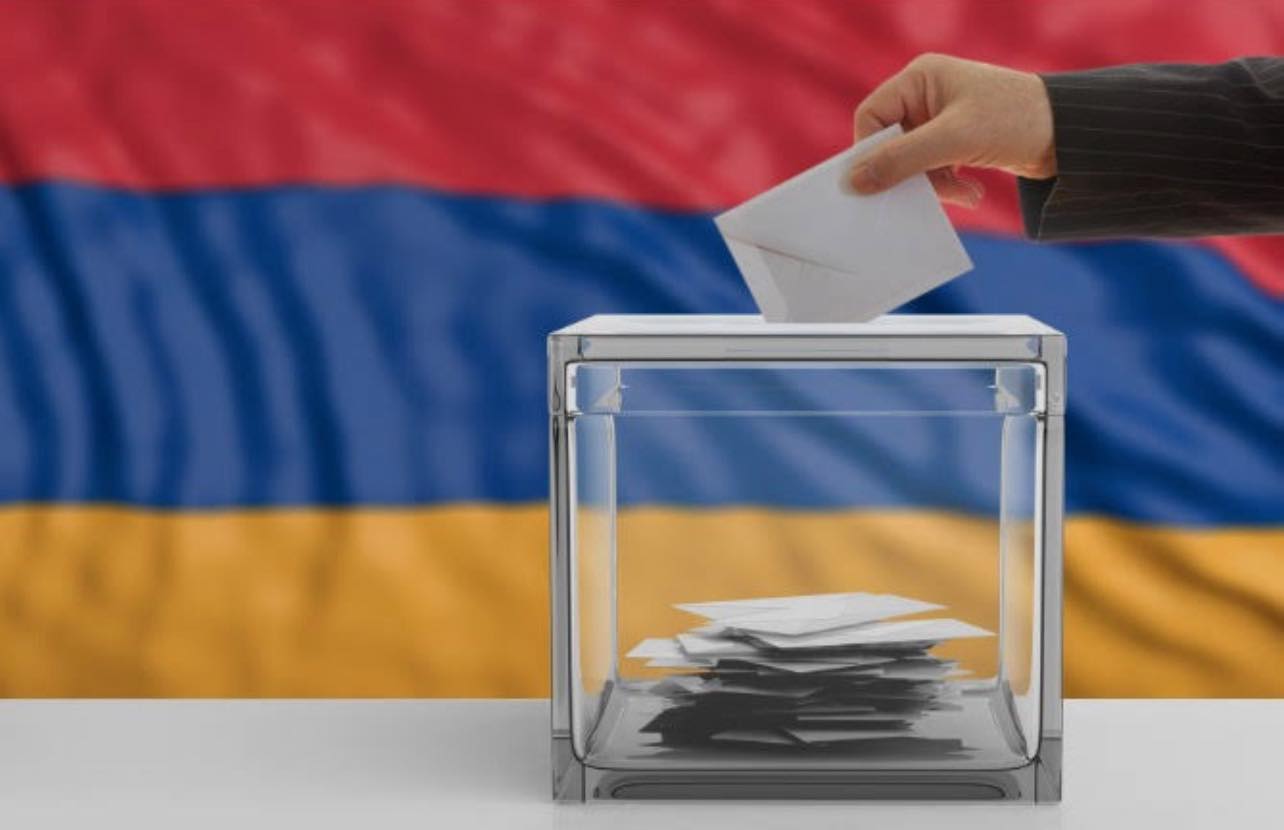
Only a few days remain before Armenia’s parliamentary elections. Eighteen political parties are actively campaigning. In particular, they are travelling across the regions, meeting voters and making numerous promises.

Experts from the analytical centre Armenian Council monitored and analysed these promises. After completing their review, they said some of them were “not only unrealistic, but often had no connection to reality”.

Among the promises, analysts highlighted a sensational statement by the opposition Strong Armenia party. Its leader is Russian businessman and dollar billionaire Samvel Karapetyan, who is currently under house arrest over calls to seize power.

In an address to voters, Karapetyan promised that, if he came to power, he would adopt what he described as the country’s most important law within a week. He said it would be called the “Safarov Prevention Law”. According to the businessman, the legislation would ban Azerbaijanis from “buying our land, our homes or receiving our land as gifts”.

Experts from the Armenian Council warn that this is a false claim. They stress that the main purpose of the “sensational” statement is to attract public attention.

“Legislation already exists and remains in force prohibiting foreign citizens from acquiring land ownership rights,” the analysts remind readers.

In their view, such false promises rely on voters being poorly informed.

However, the experts themselves believe Armenian citizens are sufficiently informed. They say sociological research supports this conclusion. Moreover, political analysts at the centre expect the upcoming elections to confirm their assessment.

JAMnews is publishing excerpts from the Armenian Council article, together with explanations of which participants in the election campaign made the false promises mentioned in the analysis.


A law “preventing” Azerbaijanis from living in Armenia

“The main contender for the leading opposition positions in the parliamentary elections, a force that follows Russian narratives and policies, announced what it described as a ‘historic’ decision.

According to their false claim, if they come to power, they will ban foreign citizens from acquiring land ownership rights. To achieve this, they say they will adopt a law that will ‘prevent Azerbaijanis from settling in Armenia’.

However, Article 60, Paragraph 6 of Armenia’s Constitution already states: ‘Foreign citizens and stateless persons do not enjoy the right to own land, except in cases prescribed by law.’

In turn, Article 4, Paragraph 3 of Armenia’s Land Code states:

‘Foreign citizens and stateless persons cannot hold ownership rights to land. They may only use land. The only exception applies to people holding special residency status in Armenia.’

In essence, legislation already exists and remains in force prohibiting foreigners from acquiring land ownership rights.”

Why does Karapetyan propose a “Safarov Prevention Law” and who is Safarov?

In 2004, Azerbaijani army officer Ramil Safarov killed Armenian lieutenant Gurgen Margaryan with an axe while he slept in Budapest.

Both men had travelled to Hungary to attend a three-month English-language programme organised by North Atlantic Treaty Organization under the Partnership for Peace initiative.

A court sentenced Safarov to life imprisonment. Later, on 31 August 2012, Hungary extradited him to Azerbaijan.

Immediately after his return, President Ilham Aliyev pardoned Safarov. Authorities also promoted him to the rank of major and granted him an apartment.

In response to Safarov’s extradition, Armenia suspended diplomatic relations with Hungary the same day.

The two countries restored relations only ten years later, in 2022. One factor behind that decision was the return of five Armenian prisoners from Azerbaijan in late December 2021 through Hungarian mediation

Groundless claims about the “return” of Azerbaijanis

“In another case, a promise to create 300,000 jobs, despite lacking serious foundations, is accompanied by false and baseless warnings about the resettlement of 300,000 Azerbaijanis in Armenia.

The political strategists behind this force likely decided to combine these two figures in the hope of creating a cumulative effect.”

The Strong Armenia party promises to create 300,000 jobs. At the same time, it actively promotes claims about the “return of 300,000 Azerbaijanis to Armenia”.

Party leader Samvel Karapetyan says Armenia’s main task is to stop this process. He claims that Prime Minister Nikol Pashinyan and Azerbaijani President Ilham Aliyev planned it together.

Karapetyan also warns that, if Azerbaijanis resettle in Armenia, “his team’s economic programmes will become impossible to implement”. He argues that “the jobs will go to Azerbaijanis”.

Armenian authorities have repeatedly rejected opposition claims about the “return of Azerbaijanis”.

Foreign Minister Ararat Mirzoyan said only a day earlier that the claim was “a product of a sick imagination”.

Today, Nikol Pashinyan stated that “the oligarch should stand trial” for actions directed against Armenia’s state interests.

The prime minister considers attempts to introduce the non-existent issue of resettling 300,000 Azerbaijanis into Armenia’s domestic political agenda to be contrary to the country’s interests.

Lukashenko as a “symbol of marginalisation” and Belarusian guarantees

“The leader of another political force promises to find ‘guarantors’ who ‘will come and establish lasting peace’.

Interestingly, representatives of this force do not even hide the fact that, in their view, the list of guarantors could include Belarusian President Alexander Lukashenko, whom they describe as a symbol of marginalisation in the civilised world.

Nor do these newly emerged ‘experts in geopolitical guarantees’ appear concerned with how a president who turned his country into a Russian outpost intends to guarantee anything anywhere.”

Prosperous Armenia leader and businessman Gagik Tsarukyan has repeatedly promoted the idea of a “guaranteed peace”.

Moreover, he believes Armenia needs several guarantors in the peace process with Azerbaijan.

In one of his Facebook posts, Tsarukyan openly named possible guarantors. In his opinion, they could include Pakistan, Russia and Belarus:

“French President Emmanuel Macron called Lukashenko yesterday after a long pause to discuss improving relations and other important issues. When I say that we can and should work with Belarus and gain serious benefits, the authorities call me an oligarch and a Belarusian spy.”

Contradictory promises: lower taxes and higher pensions

“One political force promises to ‘cut taxes’ while simultaneously ‘raising pensions’.

Anyone with a basic understanding of economics and at least some familiarity with political science theories can see that these two actions cannot happen at the same time.”

Prosperous Armenia promises citizens “decent pensions and a reasonable tax policy”.

According to its election programme, the party plans to:

  • cut property tax by half.
  • align the minimum pension with the minimum consumer basket;
  • increase and index pensions annually in line with inflation;
  • create 10 tax-free industrial zones across Armenia’s 10 regions;
  • exempt microbusinesses with annual turnover of up to 60 million drams ($164,000) from turnover tax;