
Day: May 26, 2026
Categories
怎样读懂美国的地址? – 知乎
Categories
Drama – Wikipedia
Drama is the specific mode of fiction represented in performance: a play, opera, mime, ballet, etc., performed in a theatre, or on radio or television. [1] Considered as a genre of poetry in general, the dramatic mode has been contrasted with the epic and the lyrical modes ever since Aristotle ‘s Poetics (c. 335 BC)—the earliest work of …
Não consigo acessar pasta no drive por email vinculado ao Hotmail No meu trabalho foi compartilhada no drive uma pasta com fotos, a minha conta do hotmail está vinculada a outra conta do google e sempre que eu entro no google por meio desta conta acaba entrando no gmail, que não tem acesso a pasta. Como resolvo?

The measures focus on what London described as “shadow financial systems” underpinning Russia’s war economy, including the Kremlin-backed A7 network, which it said had been used to route funds, finance procurement and exploit foreign banking systems to evade restrictions, News.Az reports, citing Reuters.
***
The package also targets crypto exchanges and entities operating Russia-focused platforms, including a Kyrgyz bank and multiple firms registered in jurisdictions including Georgia and the United Arab Emirates, alongside individuals tied to the network.
Britain said it was “tracking down and shutting off” payment routes fuelling Moscow’s invasion of Ukraine.
“We will continue to act fast and decisively, alongside our allies, to expose, disrupt and dismantle these networks, and ensure those enabling Russia’s aggression face consequences,” foreign minister Yvette Cooper said in a statement.
The Russian embassy in London did not immediately respond to a request for comment.
Among those sanctioned was Huobi Global S.A., one of the world’s largest crypto exchanges, founded in China in 2013 and now known as HTX.Britain’s sanctions list said Huobi was involved in providing funds, economic resources, goods or technology to individuals and entities in Russia’s financial sector.
A spokesperson for HTX said in an email: “Regulatory compliance remains our absolute top priority at HTX. We proactively monitor and strictly adhere to regulatory frameworks in all jurisdictions where we operate globally, including the UK.”
The Financial Conduct Authority, Britain’s markets regulator, filed a lawsuit against HTX last October, accusing it of unlawfully promoting crypto asset services to British consumers.
The FCA did not immediately respond to a request for comment.The move comes nearly a week after Britain said it would defer a ban on imports of diesel and jet fuel derived from Russian crude refined in third countries to ease supply pressures, a decision it said was a phased approach rather than any easing of sanctions.
The post UK imposes sanctions on Russian cryptocurrency networks appeared first on azeritimes.com.
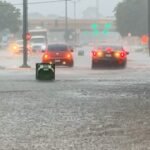
Around 15 million people across the southern United States were under flood alerts on Tuesday, stretching from Louisiana to Georgia, as the region prepared for another round of heavy rainfall and thunderstorms that could dump up to 2 inches of rain in certain areas, News.Az reports, citing NBC News.
Forecasters also warned that excessive rainfall could impact a broad zone extending from the Carolinas to western Texas.
In addition to flooding concerns, parts of southwest Texas, including Midland and Fort Stockton, could experience severe weather such as large hail, damaging winds, and a few tornadoes.
***
Photos and videos shared over the Memorial Day weekend showed flooding in several locations, including a submerged driveway in Mississippi and vehicles stranded in deep water across the Dallas-Fort Worth metroplex after intense downpours.
In New Orleans, a flood watch remained in effect on Tuesday until 7 p.m. local time. Rain showers and thunderstorms are expected to continue through the evening, with forecasts calling for up to 1 inch of rainfall in most areas, while isolated locations could receive as much as 2 inches.
Atlanta is also under a flood watch until 11 p.m. local time Tuesday, with up to 0.75 inches to 1.25 inches likely, and up to 2 inches possible in isolated areas.
Both New Orleans and Atlanta could get hit with hourly rainfall rates of 1 to 3 inches, so even areas not under a flood watch could face flash flooding Tuesday.
There’s more precipitation expected in the region throughout the week, with rainfall amounts to be determined.
The post Millions face flood threat as heavy rains batter US South appeared first on azeritimes.com.

According to maritime tracking reports and researcher Jorge Piñon, director of the Latin America and Caribbean Energy Program at the University of Texas, the vessel went from traveling at about 1.3 knots on Monday to reaching 10.5 knots, a change suggesting a more defined destination, although tracking platforms still did not show a specific port of arrival, News.Az reports, citing UPI.
***
“It is not only the change in route, but also the speed. After more than 30 days in limbo, the Universal has made a clear southeast course change entering the South Atlantic, far from Cuban shores,” Piñon told Cuban outlet 14ymedio.
“Its speed has increased from 1.3 knots to 10.5 knots, which indicates a determined destination.”
The Universal is carrying an estimated cargo of between 250,000 and 270,000 barrels of diesel and had been monitored since April as a possible fuel shipment to Cuba.
The vessel departed from the Russian port of Vysotsk on Jan. 18 and crossed the English Channel on April 8 escorted by a Russian frigate, with an estimated arrival in the Caribbean by late April.
However, the ship never reached Cuba.
Instead of advancing toward the island, it remained for more than a month at minimal speed or nearly adrift in the North Atlantic, about 1,000 miles from Cuban shores, without declaring a port of destination.
On April 27 it was sailing at 3.4 knots on a northwest course and by May 13 had reduced its speed even further, deepening uncertainty about its route.
The situation had already prompted warnings among sources consulted last week by UPI.
On Wednesday, May 20, the specialized account Russian Forces Spotter said the Universal situation appeared “more politically sensitive” than that of the tanker Anatoly Kolodkin, the only Russian cargo shipment that managed to reach Cuba this year.
“In the KOLODKIN case, Russia visibly signaled state protection through naval escort operations, and Washington ultimately tolerated the delivery into Cuba despite sanctions pressure,” Russian Forces Spotter said.
“With UNIVERSAL, the prolonged stop mid-Atlantic could suggest stronger external pressure or operational issues.”
The source added that the fact the Universal had not resumed movement until that moment was “notable” and could be part of a broader risk calculation by Moscow.
“The combination of increased U.S. surveillance, sanctions enforcement, and the political sensitivity around Cuba may make these voyages more complicated than before,” it said.
Even so, the source warned it was still difficult to distinguish between geopolitical pressure and a more routine operational problem.
The difference with the Anatoly Kolodkin is central to understanding the case. That vessel arrived in Matanzas on March 31 carrying about 730,000 barrels of crude, a shipment that temporarily eased Cuba’s situation but was exhausted only weeks later.
The Universal case also contrasts with the tone of support Moscow had shown weeks earlier.
In early April, Russian Foreign Minister Sergey Lavrov said Russia would not abandon Cuba amid the energy crisis.
Russian Energy Minister Sergey Yevgenyevich Tsivilyov also stated that “a Russian vessel broke the blockade; a second is being loaded at this moment. We will not leave the Cuban people in difficulty,” referring to the Anatoly Kolodkin shipment and to a second cargo that at the time appeared destined for the island.
However, weeks later, the Universal ended up spending a month practically stationary in the North Atlantic without ever reaching Cuban waters.
Analyst Sebastian A. Arcos, interim director of the Institute for Cuban Studies, also urged caution regarding the Universal.
He said there is not enough information to determine what is happening with the vessel, but stated that the absence of active enforcement of a U.S. maritime quarantine does not mean there are no deterrent effects on Cuba’s fuel suppliers.
“We do know that the U.S. is not actively enforcing the current fuel quarantine around Cuba, and there have been no boardings or interceptions at sea by U.S. Navy units,” Arcos said.
“It appears that the risks of crossing Mr. Trump, including tariffs, is deterring any help from Russia or Mexico.”
Arcos argued that Cuba’s energy problem is not limited to fuel shortages, but also to the structural deterioration of the electrical grid.
“The key energy problem in Cuba is not necessarily lack of fuel, but lack of generating capacity and overall decrepitude of the electrical infrastructure,” he said.
He added that Cuban domestic crude, because of its corrosive composition, has accelerated the deterioration of power plants in a context of chronic economic collapse and low investment.
Historian Lillian Guerra, professor of Cuban and Caribbean history and director of the Cuba Program at the University of Florida, said reports from citizens on the island indicate that the Russian oil previously received “has definitively run out.” She also argued that one tanker, or even two, would not solve the crisis.
“Trump’s May 1 executive imposing secondary sanctions, particularly on any entity or individual that invests or seeks to support the ‘energy sector’ controlled by the state in Cuba has little or no impact on Russia, as we have seen,” Guerra said.
“But this tanker, like the last, is a band aid on a cardiac arrest. It will make no difference and prolong, not minimize suffering.”
Cuba’s internal crisis has continued escalating in parallel with the vessel’s movements.
Energy and Mines Minister Vicente de la O Levy acknowledged on May 14 that the country had no reserves of fuel oil or diesel.
“We have absolutely no fuel oil and absolutely no diesel left. We no longer have reserves,” he said in remarks cited by Cuban and international media.
According to 14ymedio, Cuba’s Electric Union projected an impact of 2,147 megawatts during peak hours this week, with only 1,133 megawatts available against an estimated maximum demand of 3,250 megawatts.
The same report said the Antonio Guiteras thermoelectric plant, the country’s largest generating unit, had once again gone offline, while the floating Regla power plant remained paralyzed because of fuel shortages.
The deterioration of the electrical system has triggered protests and pot-banging demonstrations in Havana. Local Cuban media reported demonstrations on Monte Street in Old Havana, where residents demanded food, electricity and freedom after prolonged hours without electrical service.
The Universal’s course change does not yet confirm that Cuba has definitively lost that cargo, but it does mark the first clear operational movement after weeks of uncertainty.
If the vessel ultimately declares a destination other than Cuba, the island would be left without an immediate source of imported diesel at a time when its electrical system is operating at the limit, with insufficient generation, damaged plants and a population increasingly exposed to prolonged blackouts.
The post Tanker carrying Russian diesel diverts from Cuba after weeks at sea appeared first on azeritimes.com.
The Council of the European Union said the measures would remain in place for another year, warning it remained “unwavering in its condemnation of human rights violations and repressions in Russia,” News.Az reports, citing Anadolu agency.
***
The sanctions apply to “72 individuals and one entity,” according to the Council.
Those listed under the regime are subject to an asset freeze, meaning any assets held within the EU are blocked, while EU nationals and companies are prohibited from making funds available to them.
The individuals also face travel bans preventing them from entering or passing through EU territory.
The Council said it was “deeply concerned about the continuing deterioration of the human rights situation” in Russia, particularly “in the context of Russia’s war of aggression against Ukraine.”
The framework was first introduced in March 2024 as part of the EU’s response to “accelerating and systematic repression in Russia.”
The measures were established shortly after the death of Russian opposition leader Alexei Navalny, sparking international condemnation and renewed scrutiny of the Kremlin’s treatment of political opponents.
Under the sanctions regime, the EU can target people and organizations deemed responsible for “serious human rights violations or abuses,” the “repression of civil society and democratic opposition” and for “undermining democracy and the rule of law in Russia.”
The package also includes trade restrictions on exports to Russia of equipment that could be used for “internal repression” or for the “monitoring or interception of telecommunications.”
Relations between Brussels and Moscow have deteriorated sharply since Russia’s full-scale invasion of Ukraine in 2022, with the EU imposing multiple rounds of sanctions against Russian officials, businesses and institutions.
The post EU extends Russia human rights sanctions until 2027 appeared first on azeritimes.com.