
Day: May 25, 2026
The National Bank of Georgia (NBG) said it purchased USD 333.3 million through the Bmatch trading platform in April, bringing the country’s international reserves to USD 6.47 billion. Total net purchases in January-April 2026 reached USD 833 million.
The April purchase follows net sales of USD 16.2 million in March and net purchases of USD 429.3 million in February and USD 86.6 million in January. It also follows the NBG’s broader policy of building up foreign exchange reserves over the past year.
The NBG reiterated that “international foreign exchange reserves are an important guarantee of a country’s macroeconomic stability” and that it increases reserves “when market conditions allow.”
The central bank will publish updated data on June 25, 2026.
Also Read:
Categories
Nikkie de Jager – Wikipedia
В этой инструкции — о том, как поменять адрес почты (логин) вашей учетной записи Майкрософт, если возникла такая необходимость. Один нюанс: при смене вам потребуется иметь доступ и к «старому» адресу (а если включена двухфакторная аутентификация — то возможность получать коды по смс или в приложении) для подтверждения изменения E-mail.
Armenian Prime Minister Nikol Pashinyan announced on May 24 the opening of the Turkish railway route through Georgia for Armenian exports and imports, following the opening of the Azerbaijani railway route.
“This is a major development for our country’s economic life,” Pashinyan wrote on Facebook. According to him, the railway runs between the Georgian city of Akhalkalaki and Kars in Turkey.
The announcement comes as Georgia seeks a role in regional connectivity projects amid the ongoing peace process between Armenia and Azerbaijan.
In December, a train carrying Azerbaijani fuel passed through Georgia to Armenia for the first time in decades, in what was seen as another sign of easing regional tensions.
More recently, Georgia and Azerbaijan signed agreements on natural gas and electricity supplies to Georgia, as well as a protocol on resuming railway service between Tbilisi and Baku after a six-year suspension.
Also Read:
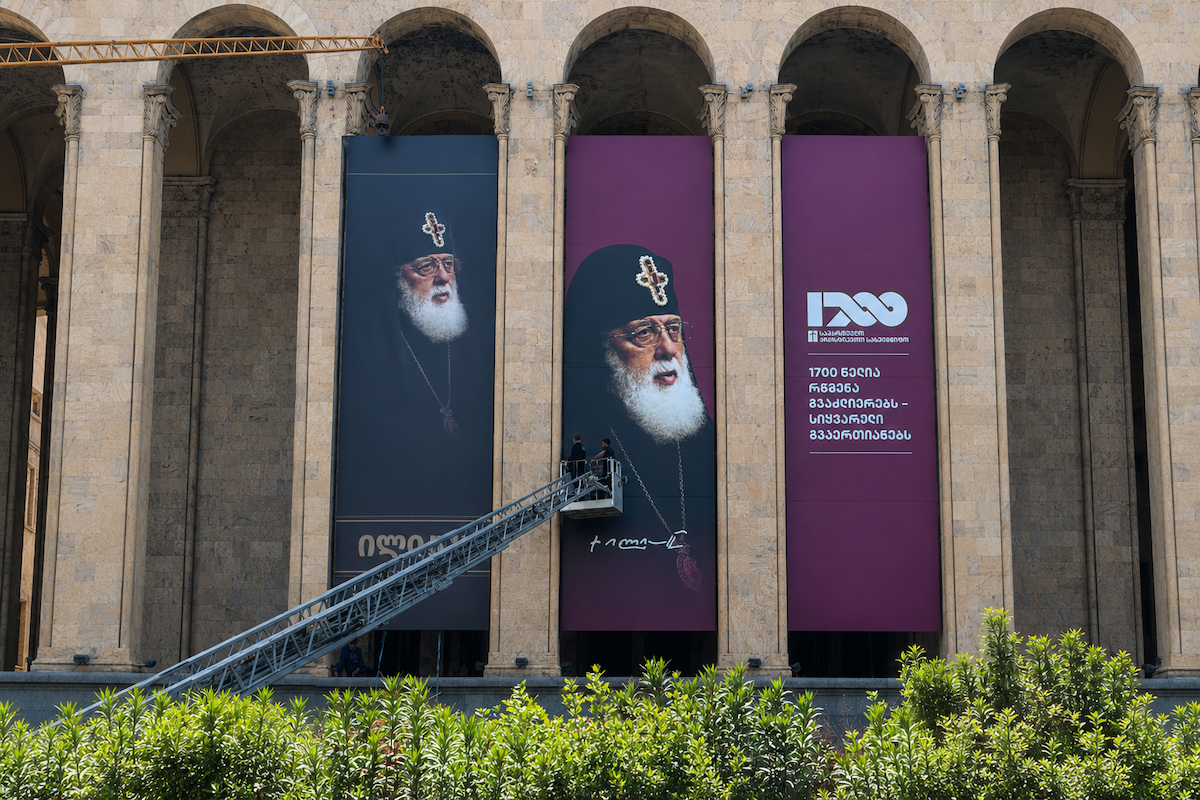
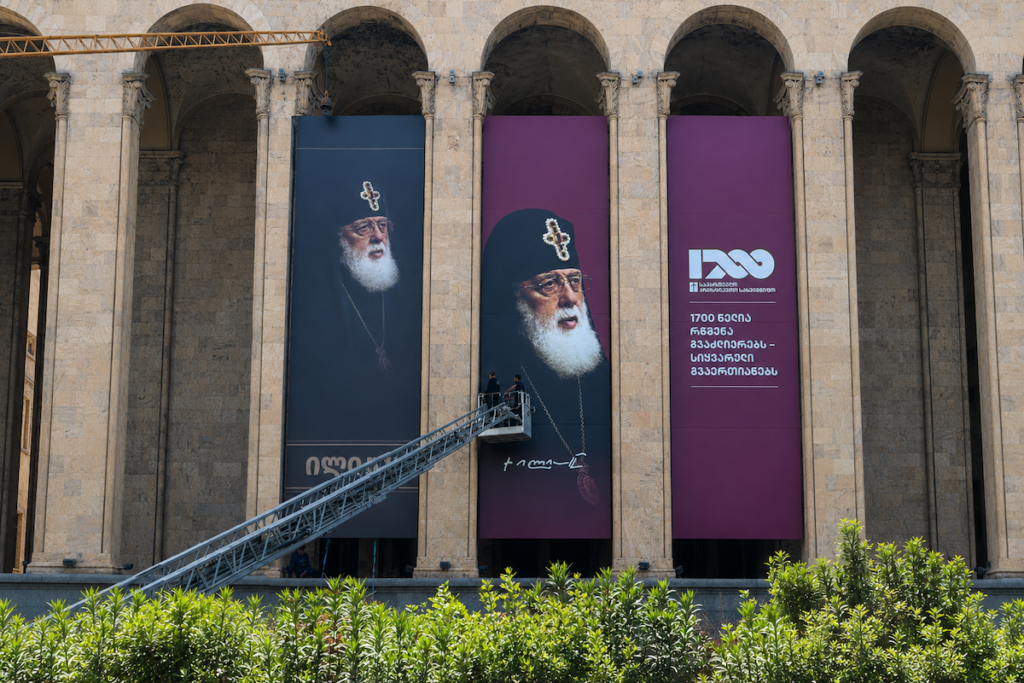
On 26 May, Georgia marks its national holiday, Independence Day. This year, the authorities placed a clear religious emphasis on the occasion. A banner featuring the late Patriarch Ilia II appeared on the parliament building, where Georgian and European Union flags had hung in previous years. The banner carried religious slogans including “Georgian Christian state” and “1,700 years since the Christianisation of Georgia”.
The move raised questions among some Georgians: why has the official message surrounding 26 May shifted from statehood to religious identity? And what message does the state send to citizens who belong to other faiths?
Why 26 May?
On 26 May 1918, in Tiflis (modern-day Tbilisi), the National Council of Georgia adopted the country’s Act of Independence at the former residence of the Viceroy of the Caucasus. At 17:10, officials announced the birth of the Democratic Republic of Georgia.
The first Georgian republic lasted 1,028 days. In 1921, Soviet Russia conquered Georgia, beginning a period of rule that lasted for the next 70 years.
For decades, authorities prohibited public references to 26 May and the First Republic.
On 9 April 1991, Georgia’s Supreme Council, led by Zviad Gamsakhurdia, declared the restoration of independence on the basis of the Act of 26 May 1918. For that reason, 26 May is more than a historical date. It marks the political and legal foundation of the modern Georgian state.
What has changed?
Critics of the banner argue that it represents more than a change in holiday decoration. In their view, it reflects an attempt to redefine the meaning of the day by shifting a civic and republican event into the sphere of religious identity.
Writer Lasha Bugadze described the appearance of the patriarch’s portrait on the parliament façade and the disappearance of EU symbols as “part of the broader discourse reflected in the actions and behaviour” of the ruling Georgian Dream party during an interview with Formula TV.
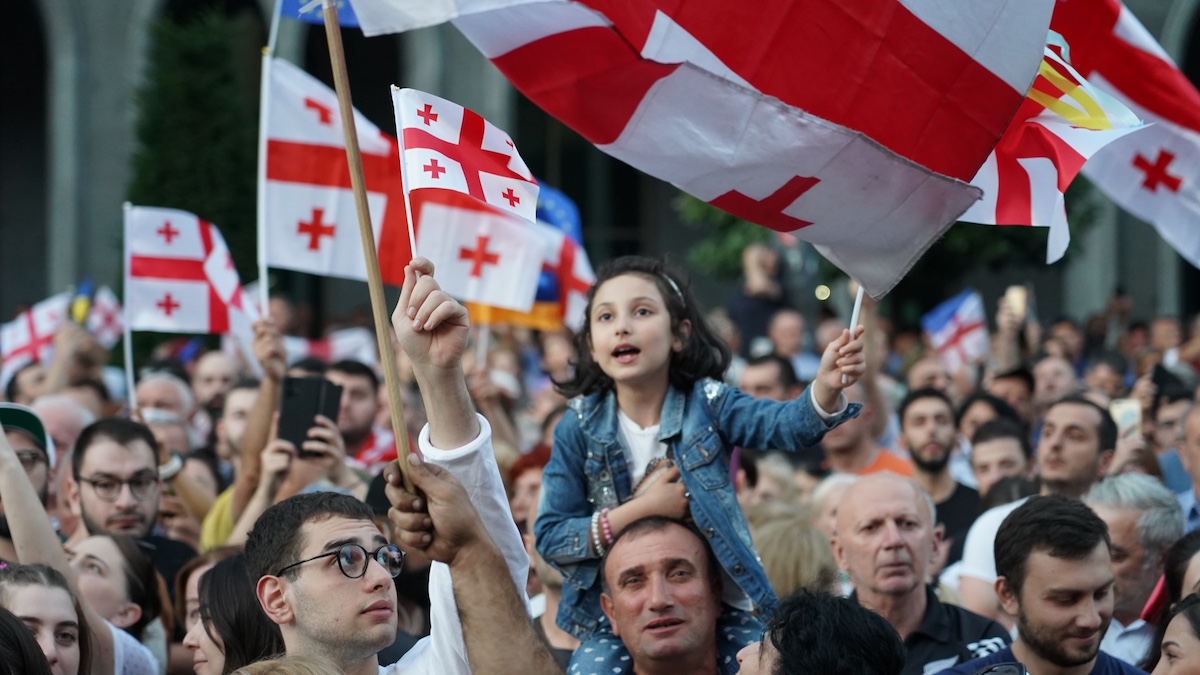
According to Lasha Bugadze, the move fits into a broader political logic in which those in power manipulate history, religion and traditions while presenting themselves as the only legitimate heirs to the national past.
“Authoritarians, dictators and populists manipulate precisely those themes connected to history, religion and tradition,” he says.
Bugadze argues that today’s authorities seek to portray themselves as the true continuation of history, faith and national identity:
“Like all authoritarians and dictators, they manipulate history and claim that they are the successors of the late Ilia II and heirs to 1,700 years of Christian history.”
Religion as a political language
Critics of the new approach to marking 26 May say the issue is not that Christianity occupies an important place in Georgia’s history — that is a historical fact rather than a subject of political dispute. The issue, they argue, lies elsewhere: 26 May is not a date in the religious calendar. It marks the birth of an independent republic.
For that reason, many see the slogan “Georgian Christian state” not as respect for tradition, but as an attempt to shift the meaning of Independence Day from a civic and political space into one centred on religious identity.
Screenwriter Keti Devdariani describes the process as “parasitising” religion:
“This is parasitism on religion because propaganda always relies on emotions. That is why they either exploit different elements of our identity, including religion, or appeal to emotions — fear, hatred, love and resentment.”
According to her, “a complete substitution of meanings is taking place… a symbolic dismantling of the secular state”.
Devdariani does not believe Georgia will become a theocratic state. However, she argues that the authorities use religious symbolism as a tool of political legitimisation.
According to Bugadze, 26 May is a “date of freedom” that remained banned for 70 years:
“The Bolsheviks and Red Russia banned 26 May. Russian politics — whether white, red or Putinist — cannot tolerate this date of freedom and considers it unacceptable.”
For that reason, he argues, the debate over the meaning of 26 May is not simply about banners or design choices. It is a debate over what society should remember on Independence Day.
A secular state and a multi-faith society
Under its constitution, Georgia is a secular state. The state is not a political extension of any religion, even though the majority of the population identifies as Orthodox Christian.
Georgia is also a multi-faith country. According to the 2014 census, 398,677 Muslims lived in the country, accounting for almost 11% of the population. Georgia is also home to Catholics, members of the Armenian Apostolic Church, Jews, other religious groups and citizens who do not identify with any religion.
Against that backdrop, critics argue that choosing “Georgian Christian state” as the official slogan for Independence Day is problematic.
Samira Ismailova, a representative of the Azerbaijani community and founder of the Civil Equality Platform, says that as a Muslim and a citizen of Georgia, she finds the current messaging surrounding 26 May “offensive” and “outrageous”:
“This slogan creates dangerous ground because it divides Georgia’s citizens. National identity is framed in a way that makes other ethnic and religious groups living in Georgia simply disappear. This is not only morally painful, but also harmful to society.”
At the same time, she says the approach taken by the ruling Georgian Dream party did not surprise her:
“People already constantly see us as guests. As an Azerbaijani Muslim, I do not see myself as someone secondary in this country. I do not believe anyone here is dominant while I am somehow less important.”
However, Samira Ismailova says she does not expect a response on the issue from the Public Defender’s Office.
“Unfortunately, there is no state institution left in the country today that is committed to protecting these values,” she says.
Новости в Грузии